
Information Session - CDDRL Senior Honors Program
Walter P. Falcon Lounge
About the topic: A major challenge faced by President Obama is how to modernize the system of global governance to adapt to the rising influence of emerging powers and to more effectively address new, cross-cutting challenges. The Obama Administration has pursued a variety of strategies in this respect from the reform of existing institutions to the creation of new multilateral processes and mechanisms. How effectively these efforts are working - and to what extent these institutions actually change the behavior of states - remains an open question. Drawing on his experiences at the National Security Council, Weinstein will discuss the Obama Administration's approach to global governance, and in particular the efforts of the Administration to shape a more effective anti-corruption regime internationally, through the G-20 and the creation of the Open Government Partnership.
About the Speaker: Jeremy Weinstein is Associate Professor of Political Science and Senior Fellow at FSI. He serves as director of the Center for African Studies, and is an affiliated faculty member at CDDRL and CISAC. He is also a non-resident fellow at the Center for Global Development in Washington, D.C.
From 2009 to 2011 he served as Director for Development and Democracy on the National Security Council staff at the White House. He played a key role in the National Security Council’s work on global development, democracy and human rights, and anti-corruption. Among other issues, he also was centrally involved in the development of President Obama’s Policy Directive on Global Development and associated efforts to reform and strengthen USAID, promote economic growth, and increase the effectiveness of U.S. foreign assistance; led efforts to develop a robust international anti-corruption agenda, including the creation of the G-20 Action Plan on Anti-Corruption, the Open Government Partnership, and played a significant role in developing the Administration’s policy in response to the Arab Spring, including focused work on Egypt, Tunisia, Bahrain, Syria, Yemen, and others.
CISAC Conference Room
Confucian Humanism as World Governance
Dialogue with FRANCIS FUKUYAMA, Olivier Nomellini Senior Fellow at FSI, Stanford University
Tu Weiming, has been instrumental in developing discourses on dialogue among civilizations, Cultural China, reflection on the Enlightenment mentality of the modern West, and multiple modernities. He is currently studying the modern transformation of Confucian humanism in East Asia and tapping its spiritual resources for human flourishing in the global community. He is a Fellow of the American Academy of Arts and Sciences (AAAS), and a Member of the International Philosophical Society (IIP).
Francis Fukuyama, has written widely on issues relating to democratization and international political economy. His most recent book, The Origins of Political Order, was published in April 2011. He is a resident in FSI’s Center on Democracy, Development and the Rule of Law at Stanford University, a senior fellow at the Johns Hopkins SAIS Foreign Policy Institute, and a non-resident fellow at the Carnegie Endowment for International Peace.
This event is co-sponsored by the Center on Democracy, Development and the Rule of Law’s ‘The Governance Project’ and the Confucius Institute at Stanford University
CISAC Conference Room
Encina Hall, C148
616 Jane Stanford Way
Stanford, CA 94305
Francis Fukuyama is the Olivier Nomellini Senior Fellow at Stanford University's Freeman Spogli Institute for International Studies (FSI), and a faculty member of FSI's Center on Democracy, Development and the Rule of Law (CDDRL). He is also Director of Stanford's Ford Dorsey Master's in International Policy, and a professor (by courtesy) of Political Science.
Dr. Fukuyama has written widely on issues in development and international politics. His 1992 book, The End of History and the Last Man, has appeared in over twenty foreign editions. His book In the Realm of the Last Man: A Memoir will be published in fall 2026.
Francis Fukuyama received his B.A. from Cornell University in classics, and his Ph.D. from Harvard in Political Science. He was a member of the Political Science Department of the RAND Corporation, and of the Policy Planning Staff of the US Department of State. From 1996-2000 he was Omer L. and Nancy Hirst Professor of Public Policy at the School of Public Policy at George Mason University, and from 2001-2010 he was Bernard L. Schwartz Professor of International Political Economy at the Paul H. Nitze School of Advanced International Studies, Johns Hopkins University. He served as a member of the President’s Council on Bioethics from 2001-2004. He is editor-in-chief of American Purpose, an online journal.
Dr. Fukuyama holds honorary doctorates from Connecticut College, Doane College, Doshisha University (Japan), Kansai University (Japan), Aarhus University (Denmark), the Pardee Rand Graduate School, and Adam Mickiewicz University (Poland). He is a non-resident fellow at the Carnegie Endowment for International Peace. He is a member of the Board of Trustees of the Rand Corporation, the Board of Trustees of Freedom House, and the Board of the Volcker Alliance. He is a fellow of the National Academy for Public Administration, a member of the American Political Science Association, and of the Council on Foreign Relations. He is married to Laura Holmgren and has three children.
(October 2025)
A screening of RFK IN THE LAND OF APARTHEID. A high point of the film is Kennedy's meeting with one of the unknown giants of African history - the banned President of the African National Congress, and Nobel Peace Prize winner, Chief Albert Lutuli - living under house arrest in a remote rural area. The film travels with Robert Kennedy to Soweto, South Africa's largest black township, where he meets thousands of people and gives voice to Chief Lutuli's silenced call for a free South Africa.
Bechtel Conference Center
CDDRL
Stanford University
Encina Hall, C147
616 Jane Stanford Way
Stanford, CA 94305-6055
Larry Diamond is the William L. Clayton Senior Fellow at the Hoover Institution, the Mosbacher Senior Fellow in Global Democracy at the Freeman Spogli Institute for International Studies (FSI), and a Bass University Fellow in Undergraduate Education at Stanford University. He is also professor by courtesy of Political Science and Sociology at Stanford, where he lectures and teaches courses on democracy (including an online course on EdX). At the Hoover Institution, he co-leads the Project on Taiwan in the Indo-Pacific Region and participates in the Project on the U.S., China, and the World. At FSI, he is among the core faculty of the Center on Democracy, Development and the Rule of Law, which he directed for six and a half years. He leads FSI’s Israel Studies Program and is a member of the Program on Arab Reform and Development. He also co-leads the Global Digital Policy Incubator, based at FSI’s Cyber Policy Center. He served for 32 years as founding co-editor of the Journal of Democracy.
Diamond’s research focuses on global trends affecting freedom and democracy and on U.S. and international policies to defend and advance democracy. His book, Ill Winds: Saving Democracy from Russian Rage, Chinese Ambition, and American Complacency, analyzes the challenges confronting liberal democracy in the United States and around the world at this potential “hinge in history,” and offers an agenda for strengthening and defending democracy at home and abroad. A paperback edition with a new preface was released by Penguin in April 2020. His other books include: In Search of Democracy (2016), The Spirit of Democracy (2008), Developing Democracy: Toward Consolidation (1999), Promoting Democracy in the 1990s (1995), and Class, Ethnicity, and Democracy in Nigeria (1989). He has edited or coedited more than fifty books, including China’s Influence and American Interests (2019, with Orville Schell), Silicon Triangle: The United States, China, Taiwan the Global Semiconductor Security (2023, with James O. Ellis Jr. and Orville Schell), and The Troubling State of India’s Democracy (2024, with Sumit Ganguly and Dinsha Mistree).
During 2002–03, Diamond served as a consultant to the US Agency for International Development (USAID) and was a contributing author of its report, Foreign Aid in the National Interest. He has advised and lectured to universities and think tanks around the world, and to the World Bank, the United Nations, the State Department, and other organizations dealing with governance and development. During the first three months of 2004, Diamond served as a senior adviser on governance to the Coalition Provisional Authority in Baghdad. His 2005 book, Squandered Victory: The American Occupation and the Bungled Effort to Bring Democracy to Iraq, was one of the first books to critically analyze America's postwar engagement in Iraq.
Among Diamond’s other edited books are Democracy in Decline?; Democratization and Authoritarianism in the Arab World; Will China Democratize?; and Liberation Technology: Social Media and the Struggle for Democracy, all edited with Marc F. Plattner; and Politics and Culture in Contemporary Iran, with Abbas Milani. With Juan J. Linz and Seymour Martin Lipset, he edited the series, Democracy in Developing Countries, which helped to shape a new generation of comparative study of democratic development.
Download full-resolution headshot; photo credit: Rod Searcey.
A year has passed since the Egyptian uprising, one of the defining moments of the democratic wave that surged across the Arab world. Since Jan. 25, 2011, three long-standing Arab dictatorships have toppled and citizen movements continue to challenge entrenched autocratic regimes. Reflecting on this pivotal moment, five scholars at Stanford's Center on Democracy, Development, and the Rule of Law talk about how these events changed the course of democracy – if at all – and what they mean for the region as a whole.
What are the prospects for democracy in the Arab world today?
Larry Diamond: The near-term prospects for democracy are mixed and uncertain – but far better than they were a year ago. Within the space of a single year, Tunisia has become an electoral democracy – the first in the Arab world since Lebanon fell apart in the mid-1970s. This is an astonishing achievement, and Tunisia’s prospects to build democracy are quite good. Egypt has a chance to turn the corner politically, but it depends on whether the Muslim Brotherhood will evolve in a truly democratic and tolerant direction, and whether the military will step back from power. Libya must still disarm its militias and build democratic institutions and a viable state. Syria and Yemen remain much more deeply troubled, with a risk of civil war.
In examining the arc of history, was the Arab Spring inevitable? Should we have been surprised by what happened?
Francis Fukuyama: Economic growth and technological change foster the rise of a middle class that fosters demands for political participation. This is the social basis for democratic revolutions around the world. Some people argued that cultural factors – Islam, Arab passivity –would prevent this from unfolding in the Middle East, but this has clearly been proven wrong. These structural shifts do not imply inevitability, since it is human agents who must translate social demands into political action. This is why the general phenomenon of a revolt may have been predictable, but the timing absolutely uncertain.
Have living conditions improved in the Arab world, or are they worse for the average citizen?
Lina Khatib: The Arab Spring has brought immense change in the lives of Arab citizens. Political taboos have been broken, and the wall of fear that used to govern their everyday lives has crashed down. The Arab world still has some way to go before it can be called democratic in the full sense. While the economy in particular has taken a hit in the current period of transition and uncertainty – making conditions worse for many in the short term – the average Arab citizen today can actually look forward to seeing freedom of expression, human rights, and political and economic reform. These are no longer unrealizable dreams.
What are some of the lessons U.S. policymakers have learned from the Arab Spring?
Jeremy M. Weinstein: A number of fundamental ideas that underpinned 30 years of U.S. policy in the Middle East were upended by the events of 2011. The idea that Arabs do not care about democracy, are politically apathetic, and are too frightened to resist oppressive regimes has been disproved. The notion of authoritarian stability is now questioned, and it is no longer taken for granted that “the autocrats we know” are the safest bet to secure U.S. interests. And the fear of Islamists is slowly receding among policymakers as they confront the electoral success of Islamist parties and begin to directly engage a new cadre of leaders.
How did Arab monarchies weather the storm and avoid the experiences of Egypt, Libya, and Tunisia?
Ahmed Benchemsi: Except in Bahrain, where security forces opened fire on unarmed crowds, Arab monarchies generally managed to outflank their respective protesters in a peaceful way. They did so either by implementing illusory reforms while in fact playing for time (in Morocco and Jordan) or by buying off the opposition with huge social spending (in the Gulf). As this last tactic may remain effective for some time, non-oil monarchies’ victories are more likely to prove short-lived. New rounds of popular anger could be spawned sooner rather than later by, if anything, growing economic difficulties. These will be harder to quell by subterfuges.
Looking forward, are you hopeful that democracy will prosper in the Arab world?
Diamond: Yes, I am quite hopeful that democracy will develop in the Arab world, but I think there will be wide variation among Arab countries in the near term, and much will depend on whether there emerges an instance of clear democratic success that inspires other countries. This is why I think we should bet heavily now on Tunisia, while also intensively engaging Egypt, the largest Arab country.
Fukuyama: In the long run yes, in the short run, no – a safe answer.
Khatib: Even if democracy takes decades to materialize, the Arab world has finally taken the first steps in what – as history has taught us – is always a long and difficult journey, and that’s an important milestone.
Weinstein: All of us know that the road to democracy is uncertain and filled with obstacles. But I take comfort in the fact that no one could have predicted a 2011 in which Ben Ali, Mubarak, Gadhafi, and Saleh would leave the stage. Something profound has changed in the region, and I am confident that – having lost their fear – citizens will make their voices heard as the struggle for democracy continues.
Benchemsi: For democracy to have a real chance in the Arab World, liberals must build grassroots organizations – ones that would be large and strong enough to challenge both autocratic regimes and Islamist groups. When this is done, I will have reason for optimism.
Abstract
Will mobile phones transform the lives of the world’s poor? In this talk, I describe how innovative sources of data can provide new insight into the social and economic impacts of Mobile Money and other phone-based services in sub-Saharan Africa. I will focus on a series of related projects in Rwanda, which exploit a terabyte-scale database of phone calls, text messages, and mobile money transfers to explore patterns of social interaction and, ultimately, provide insight into the role of mobile phones in the Rwandan economy. Taken together, the results indicate that phones have had a positive impact on the lives of some people but, absent intervention, the benefits may not reach those with the greatest need.
Joshua Blumenstock is a Ph.D. candidate at U.C. Berkeley’s School of Information. His research focuses on the economic and social impacts of information and communication technologies in developing countries. In recent work, Blumenstock has shown how terabyte-scale data collected by mobile operators can be used to provide insight into the structure of informal insurance networks (Rwanda/Uganda); the socioeconomic impacts of mobile banking (Pakistan/Mongolia); and the effectiveness of anti-corruption campaigns (Afghanistan). He has received fellowships from the National Science Foundation, the Thomas J. Watson Foundation, and the Harvard Institutes of Medicine. Blumenstock holds a Master's degree in Economics from U.C. Berkeley, and Bachelor’s degrees in Physics and Computer Science from Wesleyan University in Middletown, CT.
Sloan Mathematics Center
Abstract
Weinstein recently returned from two years on the National Security Council staff at the White House where we played a key role in thinking through a 21st century approach to fighting corruption and strengthening governance. One important initiative was President Obama’s Open Government Partnership (OGP), a multilateral effort involving more than 50 countries, hundreds of civil society groups, and leading technology companies, with the goal of making governments more transparent, more accountable, and more effective. Weinstein will offer a behind-the-scenes perspective on the creation of OGP, and discuss its promise and potential pitfalls.
Jeremy Weinstein recently returned to Stanford after serving as Director for Development and Democracy on the National Security Council staff at the White House between 2009 and 2011. In this capacity, he played a key role in the National Security Council’s work on global development, democracy and human rights, and anti-corruption, with a global portfolio. Among other issues, Weinstein was centrally involved in the development of President Obama’s Policy Directive on Global Development and associated efforts to reform and strengthen USAID, promote economic growth, and increase the effectiveness of U.S. foreign assistance across the board; led efforts at the White House to develop a robust international anti-corruption agenda, which included the creation of the G-20 Action Plan on Anti-Corruption, the design and launch of the Open Government Partnership, and the successful legislative passage and subsequent internationalization of a ground-breaking extractive industries disclosure requirement; and played a significant role in developing the Administration’s policy in response to the Arab Spring, including focused work on Egypt, Tunisia, Bahrain, Syria, Yemen, and others. Before joining the White House staff, Weinstein served as an advisor to the Obama campaign and, during the transition, served as a member of the National Security Policy Working Group and the Foreign Assistance Agency Review Team.
Sloan Mathematics Center
Abstract:
The 2012 Republic of China presidential and legislative elections to be held on January 14th mark the fifth presidential and seventh national legislative direct elections in Taiwan. Incumbent ROC President Ma Ying-jeou of the Kuomintang (KMT) enjoyed a landslide victory in 2008 over Democratic Progressive Party (DPP) candidate Hsieh Chang-ting, winning by over 2.2 million votes. Subsequent revelations of corruption by former President Chen Shui-bian of the DPP and various members of his administration further damaged the DPP's public image and electoral prospects.
In the intervening years, however, current DPP candidate Tsai Ing-wen and other members of the DPP have worked to revitalize their party's image, and as chairperson of the DPP Tsai established a special internal investigative committee to root out corruption in the party. A potentially complicating new factor in the race is the first-ever presidential bid by the People's First Party (PFP), led by candidate James Soong. Polling results to date have indicated the potential for a very close race between Ma and Tsai, with Soong also pulling a substantial portion of the vote that may affect the electoral outcome.
On the legislative side, the KMT won 81 out of 113 total seats in the Legislative Yuan in the 2008 elections, a circumstance that has facilitated the passage of various controversial measures supported by the Ma administration, including in particular the Economic Cooperation Framework Agreement (ECFA) with mainland China, and a significant shift in the composition of this body is likely to have a pronounced impact.
Regardless of the outcome, the results of the 2012 elections promise to offer much insight into the popular attitudes of the Taiwanese people and the prospects for future democratic consolidation and development in Taiwan. Ten days following the elections, Professors Shelly Rigger and Eric Chen-hua Yu will join us for a panel discussion to analyze the outcomes of these elections and discuss their relevance to the US and the world.
Speaker Bios:
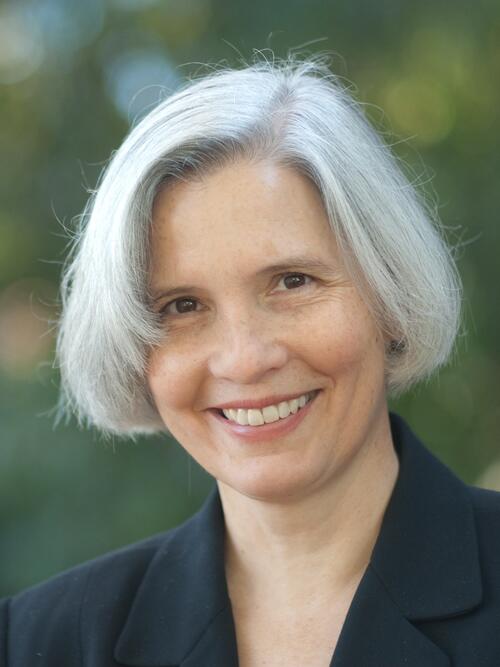
Eric Chen-hua Yu is an assistant research fellow of the Election Study Center and
jointly appointed as an assistant professor of political science at National Chengchi University in Taiwan. Before he returned to Taiwan to serve in his Alma mater in 2009, he has been a research fellow and program manager of Center on Democracy, Development, and the Rule of Law at Stanford’s Freeman Spogli Institute for International Studies since 2006. His research interests include public opinion, electoral politics, quantitative methods, and American politics. He also participates in a number of joint survey projects such as Taiwan Election and Democratization Studies (TEDS) and World Value Survey. Yu recently published academic articles on Taiwan’s domestic politics in Taiwan Political Science Review, Journal of Electoral Studies, Review of Social Sciences, and Japanese Journal of Electoral Studies. Yu received a MS (2000) in Public Policy Analysis from the University of Rochester, and a Ph.D. in political science (2006) from Columbia University.
CISAC Conference Room
616 Serra St.
Encina Hall
Stanford, CA 94305
Eric Yu was a research fellow and program manager for the Democracy in Taiwan program at CDDRL. His research interests included public opinion, electoral politics, federalism, and quantitative methods. He worked with Election Study Center at National Chengchi University (Taiwan) on a multi-year research project examining the relationship between public opinion and policy output at the local level in Taiwan. This project aimed to explore the extent to which local policy-makings respond to public opinions across a variety of policy dimensions. His recent studies also include the development of Taiwanese public attitudes toward cross-strait relations, the emergence of the third force under the new "single-district, two-ballot" electoral system for Taiwan's legislative elections, and mass policy preferences and their implications for political parties in Taiwan.
Yu received a BA (1995) in Political Science from the National Chengchi University in Taiwan, a MS (2000) in Public Policy Analysis from the University of Rochester, and a Ph.D. (2006) in Political Science from Columbia University.