Corruption
-

This event is co-sponsored by the Arab Studies Table

Abstract:

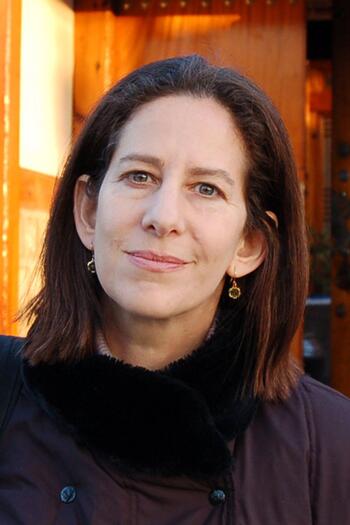
Ahmed Benchemsi, a Stanford visiting scholar and award-winning Moroccan journalist, will introduce "FreeArabs.com". The new media outlet aims to provide the Arab Spring secular generation with a global platform, a digital haven for speaking out, building ties and developing a strong network. Under the editorial line "Democracy, Secularism, Fun" and with a newsy and arty activist tone, Free Arabs will expose corruption and authoritarianism in the Middle East, invoke genuine democracy as a challenge to Islamists, and fight to restore the real meaning of secularism (ie, freedom of choice) in a region where this word has long been demonized by both oppressive governments and religious zealots.

Speaker Bio:

Ahmed Benchemsi is a visiting scholar at Stanford University's Program on Arab Reform and Democracy at the Center on Democracy, Development and the Rule of Law. His focus is on "The seeds of secularism in the post-Spring Arab world".

Before joining Stanford, Ahmed was the publisher and editor of Morocco's two best-selling newsweeklies TelQuel (French) and Nishan (Arabic), which he founded in 2001 and 2006, respectively. Covering politics, business, society and the arts, Ahmed's magazines were repeatedly cited by major media such as CNN, BBC, Al Jazeera and more, as strong advocates of democracy and secularism in the Middle East and North Africa.

Ahmed received awards from the European Union and Lebanon's Samir Kassir Foundation, notably for his work on the "Cult of personality" surrounding Morocco's King. He also published op-eds in Le Monde and Newsweek where he completed fellowships.

Ahmed received his M.Phil in Political Science in 1998 from Paris' Institut d'Etudes Politiques (aka "Sciences Po"), his M.A in Development Economics in 1995 from La Sorbonne, and his B.A in Finance in 1994 from Paris VIII University.


Image


Encina Ground Floor Conference Room

CDDRL
616 Serra Street
Encina Hall
Stanford, CA 94305

0
Visiting Scholar Program on Arab Reform and Democracy
Benchemsi_headshot.jpg MPhil

Ahmed Benchemsi is a visiting scholar at Stanford University's Program on Arab Reform and Democracy at the Center on Democracy, Development and the Rule of Law. His focus is on the democratic grassroots movement that recently burgeoned in Morocco, as in Tunisia and Egypt. Ahmed researches how and under what circumstances a handful of young Facebook activists managed to infuse democratic spirit which eventually inspired hundreds of thousands, leading them to hit the streets in massive protests. He investigates whether this actual trend will pave the way for genuine democratic reform or for the traditional political system's reconfiguration around a new balance of powers - or both.  

Before joining Stanford, Ahmed was the publisher and editor of Morocco's two best-selling newsweeklies TelQuel (French) and Nishan (Arabic), which he founded in 2001 and 2006, respectively. Covering politics, business, society and the arts, Ahmed's magazines were repeatedly cited by major media such as CNN, BBC, Al Jazeera and more, as strong advocates of democracy and secularism in the Middle East and North Africa.

Ahmed received awards from the European Union and Lebanon's Samir Kassir Foundation, notably for his work on the "Cult of personality" surrounding Morocco's King. He also published op-eds in Le Monde and Newsweek where he completed fellowships.

Ahmed received his M.Phil in Political Science in 1998 from Paris' Institut d'Etudes Politiques (aka "Sciences Po"), his M.A in Development Economics in 1995 from La Sorbonne, and his B.A in Finance in 1994 from Paris VIII University.

Ahmed Benchemsi Visiting Scholar and award-winning Moroccon journalist Speaker Stanford University
Seminars
-

In this talk, Mayling Birney presents evidence that China uses a distinctive form of governing, what she calls a “rule of mandates” in contrast to a rule of law. Under a rule of mandates, standards for accountability are relative rather than absolute, as lower officials are effectively directed to adjust the local implementation of the center's own laws and policies in order to meet the center's highest priorities. In China, this governing system has helped promote stability and growth, yet curtailed the potential impact of rule of law and democratic reforms. Birney demonstrates this impact by drawing on evidence from original surveys, interviews, and archival work. Yet she also explains why this governing system is likely to become more problematic for China in the future, potentially jeopardizing even the economic growth and stability it has thus far supported.

---

Dr. Mayling Birney (London School of Economics) is a comparative political scientist with a special expertise in China. She is currently finishing a book about China’s distinctive form of authoritarian governing, in which she highlights its consequences for stability, justice, rule of law, and political reform. Prior to arriving at LSE, Dr. Birney was jointly appointed as a fellow in the Princeton University Society of Fellows and a lecturer in the Woodrow Wilson School.  She has also served as a fellow at the Brookings Institution and as a Legislative Aide in the United States Senate. She holds a PhD in political science from Yale University, an MSc in economics from LSE, and a BA in government from Harvard University.

Philippines Conference Room

Mayling Birney Lecturer, Political Economy of Development Speaker LSE
Seminars

The fourth annual conference of the Program on Arab Reform and Democracy (ARD) organized in collaboration with the University of Tunis, El Manar and the Centre d'études maghrébines à Tunis (CEMAT), took place in Tunis on March 28 and 29, 2013. The conference theme 'Building Bridges: Towards Viable Democracies in Tunisia, Egypt, and Libya' examines the cornerstones of democratic transition in those countries.

The conference engaged leading scholars, policymakers, and practitioners from all three countries, as well as international experts, to reflect on the process of democratization in those countries from a comparative perspective. The key issues the conference addressed are:

  • Constitution drafting
  • National dialogues and civil society
  • Political coalitions and Islamism
  • Political participation and pluralism
  • Economic policy
  • Arab relations with the USA and Europe

The conference agenda and report are available for download from the links below.


Sheraton Hotel, Tunis, Tunisia

Conferences
-

Anupma Kulkarni is currently a Fellow of the Stanford Center for International Conflict and Negotiation (SCICN) and Co-director of the West Africa Transitional Justice (WATJ) Project, a cross-national study on the impact of truth commissions and international criminal tribunals from the perspective of victims of human rights violations in Ghana, Liberia, Nigeria and Sierra Leone.  Dr. Kulkarni received her PhD in Political Science from Stanford University and was Assistant Professor at Arizona State University from 2007-2009.  She has been a MacArthur International Peace and Cooperation Fellow at CISAC and a Visiting Scholar at the Center for Democracy, Development and Rule of Law.  Her research specializes in transitional justice, the ways in which post-war and post-authoritarian societies address matters of memory and accountability for human rights violations as part of the larger project of effecting democratic change and political and social reconciliation.  Her book manuscript, Demons and Demos: Truth, Accountability and Democracy in Post-Apartheid South Africa, is based on her award-winning fieldwork in South Africa.  She is also co-authoring, with David Backer, The Arc of Transitional Justice: Violent Conflict, Its Victims & Pursuing Redress in Ghana, Liberia, Nigeria and Sierra Leone, a book based on primary research conducted under the auspices of the WATJ Project, made possible through generous support from the National Science Foundation.

CISAC Conference Room

Anupma Kulkarni Fellow Speaker Stanford Center for International Conflict and Negotiation (SCICN)
Shiri Krebs Predoctoral Fellow Commentator CISAC
Seminars
Authors
News Type
News
Date
Paragraphs

Joseph Felter, a senior research scholar at the Center for International Security and Cooperation and retired U.S. Army Special Forces colonel, spent much of his military career in areas impacted by insurgency and civil war, gaining firsthand knowledge about the complex nature of threat environments. Later, as a Stanford Ph.D. student in political science, Felter was struck by the significant barriers confronting scholars conducting research on the dynamics of politically motivated violence and conflict. 

Prior to deploying to Afghanistan in late 2009, Felter joined forces with Jake Shapiro, an assistant professor of politics and international affairs at Princeton University, to build a team of researchers and establish the Empirical Studies of Conflict Project (ESOC). They wanted to make conflict analysis easier for academic colleagues and create mechanisms that would allow them to share their results with military and government decision-makers. 

They spent the last four years building a team of scholars from across multiple universities committed to conducting high-quality, evidence-based conflict research. The team developed an open-source website devoted to compiling micro-data and analysis on insurgency, civil war and other politically motivated violence around the world. The site launched this week, with the stated goal of “empowering the nation’s best minds with the quality of data and information needed to address some of the most enduring and pressing challenges to international security.” 

The U.S. government and its allies produce massive amounts of data for their internal use, ranging from public opinion surveys and administrative tracking data on spending, to detailed incident reports on conflict. But this information is rarely made available outside official channels.

The site hopes to empower the nation’s best minds with the quality of data and information needed to address some of the most enduring and pressing challenges to international security." - Felter

“Consequently, military commanders and government policymakers are denied a significant pool of expertise, and outside scholars lose the potential to better support national security priorities,” said Felter, former director of the Combating Terrorism Center at West Point and commander of the International Security Assistance Force’s Counterinsurgency Advisory and Assistance Team in Afghanistan, reporting directly to both U.S. Army Gens. Stanley McChrystal and David Petraeus. 

The independent research by the Empirical Studies of Conflict Project is supported in part by a variety of research grants including a substantial one from the Defense Department’s Minerva Research Initiative, administered through the Air Force Office of Scientific Research. The Institute on Global Conflict and Cooperation at UC San Diego and the Hoover Institution at Stanford have provided critical resources and archival support. Private supporters include the Palo Alto-based data analysis software company, Palantir Technologies, which made a significant donation of software licenses for use by ESOC researchers. 

Felter said the website is designed to make it easier for other conflict scholars to do the kind of research that can make for better decisions and more efficient allocation of resources by military leaders and civilian policymakers, thereby enhancing security and good governance worldwide. 

CISAC's Joe Felter, left, and Eli Berman of UCSD on a research mission in Chamkani, eastern Afghanistan in April 2010.
Photo Credit: Joe Felter


“Decisions of great consequence are made by leaders of operational units in the field and by government decision-makers, based on the best information and analysis available to them at the time,” Felter said. “I’ve advised senior leaders in Iraq and Afghanistan and can attest that more and better data-driven analysis is in great demand. The stakes are high; literally life and death in some cases. We hope this website and the data it makes available to the broader scholarly community can help inform important decisions and policymaking.” 

The ESOC website supports three of ESOC’s core objectives:

  • To answer key analytical questions for policymakers and those on the ground in insecure areas to help them manage conflicts and respond to security threats;

  • To harness the expertise of leading scholars and provide them with the detailed sub-national data required to provide cutting-edge analytical support to policymakers at government agencies and non-governmental organizations;

  • And to maintain a repository of quality data across multiple cases of conflict and make these data available to a broad community of scholars, policy analysts and military strategists.

"One of the critical barriers to getting more top-notch research done on policy-relevant problems in the areas of security and development is the huge investment it takes to build data on areas experiencing or emerging from conflict,” said Shapiro, a Navy veteran who teaches at Princeton’s Woodrow Wilson School of Public and International Affairs. 

“The ESOC website is designed to dramatically lower that barrier by making available a broad range of data which took our team years to develop,” he said. “In doing so, we hope to promote careful empirical work on how to reduce conflict, rebuild order, and apply scarce aid and security resources more effectively." 

The site is devoted to data on Afghanistan, Colombia, Iraq, Pakistan, Philippines and Vietnam, with more countries to be added in coming years. There are hundreds of maps, geographical, demographic and socioeconomic data files, links to publications and university databases and other materials related to the study of conflict. 

Felter said that as a result of their research, ESOC members have uncovered significant new findings, some of which has been shared with decision-makers in the field. “In Afghanistan, for example, we were able to provide empirical evidence that conflict episodes resulting in civilian casualties led to an increase in attacks against coalition forces in Afghanistan. These findings were briefed to senior leaders in the International Security and Assistance Force as well as to the Chairman of the Joint Chiefs of Staff.” 

“I’ve advised senior leaders in Iraq and Afghanistan and can attest that more and better data-driven analysis is in great demand. The stakes are high; literally life and death in some cases." - Felter 

 They also were able to facilitate the release of data on insurgent attacks and aid spending in Iraq to test theories on what led to the dramatic reduction in violence in 2007. With aid spending, they found that the use of impromptu humanitarian relief projects could help gain popular support and cooperation, leading to a reduction in insurgent violence, but that large-scale aid projects could have the opposite effect. 

"Four years ago, practitioners would ask us how to best implement development projects in Afghanistan, Iraq, and other conflict zones. We could only shrug,” said Eli Berman, a UC San Diego economics professor, research director for international security at the UC Institute on Global Conflict and Cooperation, and ESOC member. “Today, we can confidently give advice based on solid evidence: projects are likely to be violence-reducing if they are modest – say less than $50,000 – secure from destruction and extortion, informed by development experts and conditional on government forces controlling the territory.” 

Felter and Shapiro hope that new discoveries by ESOC researchers and by scholars working with micro-conflict data made available by ESOC can help shape American counterinsurgency doctrine as it evolves going forward.

“ESOC works collaboratively with other institutions dedicated to making data available to the scholarly community, such as West Point’s Combating Terrorism Center, where ESOC researchers are engaged in a  new joint project  building data from recently released documents from the Iraqi insurgency,” Felter said.

Other ESOC members include:

  • James D. Fearon, Theodore and Frances Geballe Professor in the School of Humanities and Sciences and Professor of Political Science at Stanford University

  • David D. Laitin, the James T. Watkins IV and Elise V. Watkins Professor of Political Science at Stanford University.

  • Jeremy M. Weinstein, Associate Professor of Political Science and Senior Fellow at Stanford's Freeman Spogli Institute for International Studies. He serves as director of the Center for African Studies, and is an affiliated faculty member at CISAC and the Center on Democracy, Development, and the Rule of Law

Somali mother and child.
Photo Credit: Nicholai Lidow

All News button
1
-

Abstract:

Why have militarized crackdowns on drug cartels had wildly divergent outcomes, sometimes exacerbating cartel-state conflict, as in Mexico and, for decades, in Brazil, but sometimes reducing violence, as with Rio de Janeiro's new 'Pacification' (UPP) strategy?  CDDRL-CISAC Post Doctoral Fellow Benjamin Lessing will distinguish key logics of violence, focusing on violent corruption--cartels' use of coercive force in the negotiation of bribes. Through this channel, crackdowns can lead to increased fighting unless the intensity of state repression is made conditional on cartels' use of violence--a key difference between Mexico and Brazil.

Speaker Bio:

Benjamin Lessing is a recent Ph.D. in Political Science from the University of California, Berkeley. He is a joint postdoctoral fellow at the Center on Democracy, Development and the Rule of Law (CDDRL) and the Center on International Security and Cooperation (CISAC), and will join the Political Science faculty at University of Chicago as assistant professor in 2013.

Lessing studies 'criminal conflict'—organized armed violence involving non-state actors who, unlike revolutionary insurgents, are not trying to topple the state. His doctoral dissertation examines armed conflict between drug trafficking organizations and the state in Colombia, Mexico and Brazil. Additionally, he has studied prison gangs’ pernicious effect on state authority, and the effect of paramilitary groups’ territorial control on electoral outcomes. 

Prior to his graduate work, he conducted field research on the licit and illicit small arms trade in Latin America and the Caribbean for international organizations like Amnesty International, Oxfam, and the Small Arms Survey, as well as Viva Rio, Brazil’s largest NGO, and was a Fulbright Student Grantee in Argentina and Uruguay.


CISAC Conference Room

Benjamin Lessing Post-doctoral Fellow Speaker CDDRL and CISAC

Dept. of Political Science
Encina Hall, Room 436
Stanford University,
Stanford, CA

(650) 724-5949
0
Senior Fellow at the Freeman Spogli Institute for International Studies
Graham H. Stuart Professor of International Relations
Professor of Political Science
beatriz_magaloni_2024.jpg MA, PhD

Beatriz Magaloni Magaloni is the Graham Stuart Professor of International Relations at the Department of Political Science. Magaloni is also a Senior Fellow at the Freeman Spogli Institute, where she holds affiliations with the Center on Democracy, Development and the Rule of Law (CDDRL) and the Center for International Security and Cooperation (CISAC). She is also a Stanford’s King Center for Global Development faculty affiliate. Magaloni has taught at Stanford University for over two decades.

She leads the Poverty, Violence, and Governance Lab (Povgov). Founded by Magaloni in 2010, Povgov is one of Stanford University’s leading impact-driven knowledge production laboratories in the social sciences. Under her leadership, Povgov has innovated and advanced a host of cutting-edge research agendas to reduce violence and poverty and promote peace, security, and human rights.

Magaloni’s work has contributed to the study of authoritarian politics, poverty alleviation, indigenous governance, and, more recently, violence, crime, security institutions, and human rights. Her first book, Voting for Autocracy: Hegemonic Party Survival and its Demise in Mexico (Cambridge University Press, 2006) is widely recognized as a seminal study in the field of comparative politics. It received the 2007 Leon Epstein Award for the Best Book published in the previous two years in the area of political parties and organizations, as well as the Best Book Award from the American Political Science Association’s Comparative Democratization Section. Her second book The Politics of Poverty Relief: Strategies of Vote Buying and Social Policies in Mexico (with Alberto Diaz-Cayeros and Federico Estevez) (Cambridge University Press, 2016) explores how politics shapes poverty alleviation.

Magaloni’s work was published in leading journals, including the American Political Science Review, American Journal of Political Science, Criminology & Public Policy, World Development, Comparative Political Studies, Annual Review of Political Science, Cambridge Journal of Evidence-Based Policing, Latin American Research Review, and others.

Magaloni received wide international acclaim for identifying innovative solutions for salient societal problems through impact-driven research. In 2023, she was named winner of the world-renowned Stockholm Prize in Criminology, considered an equivalent of the Nobel Prize in the field of criminology. The award recognized her extensive research on crime, policing, and human rights in Mexico and Brazil. Magaloni’s research production in this area was also recognized by the American Political Science Association, which named her recipient of the 2021 Heinz I. Eulau Award for the best article published in the American Political Science Review, the leading journal in the discipline.

She received her Ph.D. in political science from Duke University and holds a law degree from the Instituto Tecnológico Autónomo de México.

Director, Poverty, Violence, and Governance Lab
Co-director, Democracy Action Lab
CV
Date Label
Beatriz Magaloni Associate Professor of Political Science Commentator Stanford
Seminars

The Program on Human Rights at the Center on Democracy, Development, and the Rule of Law, together with Stanford Summer Session are proud to offer a special session on human rights June 25 - July 25, 2012. The new course entitled, New Global Human Rights presents the question of human rights from an interdisciplinary perspective, taking into account the 21st century context, which requires that both state and non-state actors are included in the movement for rights for all. The course will examine emerging trends in international human rights with an analysis of new categories of human rights victims, actors, and technologies. Other related courses will be offered to allow students to build a summer schedule that allows them to engage in the academic study of human rights in a truly transformative way.

Keynote speaker: Honorable Fatu Bensouda, Chief Prosecutor of the International Criminal Court (ICC).

Fatu Bensouda Chief Prosecutor Speaker International Criminal Court
Conferences
-

Mr. William R. Pace has served as the Convenor of the Coalition for an International Criminal Court since its founding in 1995. He is the Executive Director of the World Federalist Movement-Institute for Global Policy (WFM-IGP) and is a co-founder and steering committee member of the International Coalition for the Responsibility to Protect. He has been engaged in international justice, rule of law, environmental law, and human rights for the past 30 years. He previously served as the Secretary-General of the Hague Appeal for Peace, the Director of the Center for the Development of International Law, and the Director of Section Relations of the Concerts for Human Rights Foundation at Amnesty International, among other positions. He is the President of the Board of the Center for United Nations Reform Education and an Advisory Board member of the One Earth Foundation, as well as the co-founder of the NGO Steering Committee for the United Nations Commission on Sustainable Development and the NGO Working Group on the United Nations Security Council. He is the recipient of the William J. Butler Human Rights Medal from the Urban Morgan Institute for Human Rights and currently serves as an Ashoka Foundation Fellow. Mr. Pace has authored numerous articles and reports on international justice, international affairs and UN issues, multilateral treaty processes, and civil society participation in international decision-making.

Bechtel Conference Center

William Pace Covenor Speaker International NGO Coalition for the ICC (CICC)
Lectures

This two day workshop will bring together scholars whose research actively engages problems of electoral irregularities.  Irregularities range from high levels of pre-election violence to electoral fraud to vote-buying and patronage. All these tactics potentially affect the outcomes of elections and all disempower citizens in their attempts to have their voices heard in the polity. On the whole, scholars who have concentrated on understanding patronage and clientelism have not interacted with those working on electoral fraud, and neither group has talked at great length to those expert in electoral violence. This workshop will bring together scholars with specific expertise in each of these topics in order to establish a new dialogue across expertise. 


Agenda (subject to change):

Day One: April 12, 2013

8:30-9:00 am Breakfast

9:00-9:10 am—Welcoming Remarks Beatriz Magaloni, Stanford University; Miriam Golden, UCLA

9:10-10:30 am—Panel 1: Electoral Fraud, Integrity, and Violence (1)

  • Karen Ferree, UCSD: “Violating the Secret Ballot: The Political Logic of Fraud in Ghana’s 2008 Elections”
  • James Long, Harvard University: “Scalable Information and Communications Technology Reduces Electoral Fraud in Fragile Democracies
  • Discussant: Miriam Golden, UCLA

10:30-10:45 am Break

10:45-12:10 pm—Panel 2: Electoral Fraud, Integrity, and Violence (2) 

  • Isabela Mares, Columbia University: “The supply of electoral intimidation: Evidence from Imperial Germany”
  • Eric Kramon and Miriam Golden: “Electoral Violence and Fraud in the 2012 Ghanaian Elections: Polling Station Results”
  • Discussant: James Fearon, Stanford University 

12:10-2:00 pm Lunch

2:00-3:25 pm—Panel 3: Electoral Fraud, Integrity, and Violence (3)

  • George Ofosu, UCLA: “Transitional Multiparty Elections: Do Military Regimes Perform Better at Promoting Fair Elections?”
  • Joseph Asunka, UCLA: “Electoral investment through formal institutions”
  • Discussant: Beatriz Magaloni, Stanford University

3:25-3:40 pm Break

3:40-5:00 pm—Panel 4: Clientelism 

  • Mike Callen, UCSD, and Saad Gulzar, NYU: “Clientelism and Health Worker Absence: Evidence from a Field Experiment in Pakistan”
  • Nahomi Ichino, Harvard: “Crossing the Line: Local Ethnic Geography and Voting in Ghana”
  • Discussant: Barbara Geddes

Day Two: April 13, 2013

9:00-9:30 am Breakfast

9:30-11:00 am—Panel 5: Clientelism and Vote Buying 

  • Sarah Brierley, UCLA: “Buying votes or buying time? Gift giving as an extension of the political party network in Ghana”
  • Simeon Nichter, UCSD: “Voter Buying: Shaping the Electorate through Clientelism”
  • Discussant: Fred Finan, University of California, Berkeley 

11:00-11:15 am Break

11:15-11:45 am—Concluding Session and Discussion


CISAC Conference Room

Dept. of Political Science
Encina Hall, Room 436
Stanford University,
Stanford, CA

(650) 724-5949
0
Senior Fellow at the Freeman Spogli Institute for International Studies
Graham H. Stuart Professor of International Relations
Professor of Political Science
beatriz_magaloni_2024.jpg MA, PhD

Beatriz Magaloni Magaloni is the Graham Stuart Professor of International Relations at the Department of Political Science. Magaloni is also a Senior Fellow at the Freeman Spogli Institute, where she holds affiliations with the Center on Democracy, Development and the Rule of Law (CDDRL) and the Center for International Security and Cooperation (CISAC). She is also a Stanford’s King Center for Global Development faculty affiliate. Magaloni has taught at Stanford University for over two decades.

She leads the Poverty, Violence, and Governance Lab (Povgov). Founded by Magaloni in 2010, Povgov is one of Stanford University’s leading impact-driven knowledge production laboratories in the social sciences. Under her leadership, Povgov has innovated and advanced a host of cutting-edge research agendas to reduce violence and poverty and promote peace, security, and human rights.

Magaloni’s work has contributed to the study of authoritarian politics, poverty alleviation, indigenous governance, and, more recently, violence, crime, security institutions, and human rights. Her first book, Voting for Autocracy: Hegemonic Party Survival and its Demise in Mexico (Cambridge University Press, 2006) is widely recognized as a seminal study in the field of comparative politics. It received the 2007 Leon Epstein Award for the Best Book published in the previous two years in the area of political parties and organizations, as well as the Best Book Award from the American Political Science Association’s Comparative Democratization Section. Her second book The Politics of Poverty Relief: Strategies of Vote Buying and Social Policies in Mexico (with Alberto Diaz-Cayeros and Federico Estevez) (Cambridge University Press, 2016) explores how politics shapes poverty alleviation.

Magaloni’s work was published in leading journals, including the American Political Science Review, American Journal of Political Science, Criminology & Public Policy, World Development, Comparative Political Studies, Annual Review of Political Science, Cambridge Journal of Evidence-Based Policing, Latin American Research Review, and others.

Magaloni received wide international acclaim for identifying innovative solutions for salient societal problems through impact-driven research. In 2023, she was named winner of the world-renowned Stockholm Prize in Criminology, considered an equivalent of the Nobel Prize in the field of criminology. The award recognized her extensive research on crime, policing, and human rights in Mexico and Brazil. Magaloni’s research production in this area was also recognized by the American Political Science Association, which named her recipient of the 2021 Heinz I. Eulau Award for the best article published in the American Political Science Review, the leading journal in the discipline.

She received her Ph.D. in political science from Duke University and holds a law degree from the Instituto Tecnológico Autónomo de México.

Director, Poverty, Violence, and Governance Lab
Co-director, Democracy Action Lab
CV
Date Label
Beatriz Magaloni Moderator Stanford
Miriam Golden Moderator UCLA
Workshops
-

Speaker Bio:

Greg Distelhorst is a Ph.D. candidate in the MIT Department of Political Science and a predoctoral fellow at Stanford University's Center on Democracy, Development, and the Rule of Law. His dissertation addresses public accountability under authoritarian rule, focusing on official responsiveness and citizen activism in contemporary China. This work shows how citizens can marshal negative media coverage to discipline unelected officials, or "publicity-driven accountability." These findings result from two years of fieldwork in mainland China, including a survey experiment on tax and regulatory officials. A forthcoming second study measures the effects of citizen ethnic identity on government responsiveness in a national field experiment. His dissertation research has been funded by the U.S. Fulbright Program, the Boren Fellowship, and the National Science Foundation. A second area of research is labor governance under globalization, where he has examined private initiatives to improve working conditions in the global garment, toy, and electronics supply chains.

For more on Greg's research, please visit:

http://web.mit.edu/polisci/people/gradstudents/greg-distelhorst.html

Encina Ground Floor Conference Room

Encina Hall
616 Serra Street
Stanford, CA 94305-6055

0
Research Affiliate
Distelhorst_HS.jpg

Greg Distelhorst is a Ph.D. candidate in the MIT Department of Political Science and a predoctoral fellow at Stanford University's Center on Democracy, Development, and the Rule of Law. His dissertation addresses public accountability under authoritarian rule, focusing on official responsiveness and citizen activism in contemporary China. This work shows how citizens can marshal negative media coverage to discipline unelected officials, or "publicity-driven accountability." These findings result from two years of fieldwork in mainland China, including a survey experiment on tax and regulatory officials. A forthcoming second study measures the effects of citizen ethnic identity on government responsiveness in a national field experiment. His dissertation research has been funded by the U.S. Fulbright Program, the Boren Fellowship, and the National Science Foundation. A second area of research is labor governance under globalization, where he has examined private initiatives to improve working conditions in the global garment, toy, and electronics supply chains.

For more on Greg's research, please visit:
Governance Project Pre-doctoral Fellow 2012-2013
Greg Distelhorst Pre-doctoral Fellow (The Governance Project), 2012-2013 Speaker CDDRL
Seminars
Subscribe to Corruption