Information Technology

We invite the CDDRL community to join the Leadership Network for Change for our first online event of the year, next Wednesday at 12 PM Pacific time.  Leadership Network for Change alumni Amira Yahyaoui, Nancy Okail, Abdelrahman Mansour, and Mohamad Najem will serve as panelists, while Freeman Spogli Institute and Hoover Institution Senior Fellow Larry Diamond will moderate and oversee a Q+A session at the end of the panel.  Join our panelists as they elaborate on regional developments through the lens of different fields, including human rights, tech in democracy, and changes to policy and activism throughout the COVID-19 pandemic.

The Leadership Network for Change is a network of mid-career, global public policy reformers who have all completed one of CDDRL's practitioner programs (Draper Hills Summer Fellows Program, The Leadership Academy for Development, and the Ukrainian Emergin Leaders Program). To find out more about these programs and our network, you can visit the individual program pages on CDDRL's main website. 

Online, via ZOOM: REGISTER

Abdelrahman Mansour Founder of "We Are All Khaled Said" FB Page
Mohamad Najem Advocacy and Policy Director, Social Media Exchange
Nancy Okail Former Executive Director of TIMEP
Amira Yahyaoui Founder of Mos.com

Image
Digital Activism and Authoritarian Adaptation in the Middle East Agenda (1 of 2)

Image
Digital Activism and Authoritarian Adaptation in the Middle East Agenda (2 of 2)

Panel 1: Digital Activism

Tuesday, May 25, 2021 | 9-10:30 am PT

Opening Remarks: Marc Lynch, Eileen Donahoe, and Larry Diamond

Moderator: Hesham Sallam

  • Wafa Ben-Hassine: “The Hyper-Aware and Not-So-Aware: What's Next for the MENA Region's Activists and Society at Large Vis-a-Vis the Internet?”
  • Adel Iskander: “Re(Membering) Culture and Heritage: Egypt's Latest Political Turf War”
  • Zachary Steinert-Threlkeld: “Civilian Behavior on Social Media During Civil War”
  • Joshua Tucker: “Beyond Liberation Technology? The Recent Uses of Social Media by Pro-Democracy Activists”


Panel 2: Authoritarian Abuses of Internet Technologies

Thursday, May 27, 2021 | 9-10:30 am PT

Moderator: Marc Lynch

  • Marwa Fatafta: “Transnational or Cross-Border Digital Repression in the MENA Region”
  • Andrew Leber: “Social Media Manipulation in the MENA: Inauthenticity, Inequality, and Insecurity” (Co-authored paper with Alexei Abrahams)
  • Marc Owen Jones: “Tracking Adversaries: The Evolution of Manipulation Tactics on Gulf Twitter”
  • Xiao Qiang: “Chinese Digital Authoritarianism and Its Global Impact”


Panel 3: Government Reshaping of Norms and Practices to Constrain Online Activity

Tuesday, June 1, 2021 | 9-10:30 am PT

Moderator: Eileen Donahoe

  • Ahmed Shaheed: “Binary Threat: How State Cyber Policy and Practice Undermines Human Rights in the Middle East and North Africa Region”
  • Mona Elswah, Mahsa Alimardani: "The Hurdles Involved in Content Moderation in the MENA Region"
  • Mohamed Najem: “The Role of the Gulf in Governing Digital Space in the Arab Region”
  • James Shires: “The Techno-Regulation of Critical Communications Infrastructures and Their Political Potential in the Gulf”
  • Alexei Abrahams: “The Web (In)Security of Middle Eastern Civil Society and Media”


Panel 4: Cross-Border Information Operations

Thursday, June 3, 2021 | 9-10:30 am PT

Moderator: Larry Diamond

  • Alexandra Siegel: “Official Foreign Influence Operations: Transnational State Media in the Arab Online Sphere”
  • Hamit Akin Unver: “Russian Disinformation Operations in Turkey: 2015-2020”
  • Shelby Grossman and Renee DiResta: “In-House vs. Outsourced Trolls: How Digital Mercenaries Shape State Influence Strategies”
  • Nathaniel Gleicher: “Covert Manipulation, Overt Influence, Direct Exploit: Understanding and Countering Influence Operations in the Middle East and Beyond”
-

Please note the event time has been changed to 10:30AM (PT) to 12:00PM (PT).


This is a virtual event. Please click here to register for the talk. 


This event is presented in partnership with Global:SF and the State of California Governor’s Office of Business and Economic Development.
 

U.S.-China economic relations have grown increasingly fraught and competitive.  Even amidst intensifying tensions, however, our two major economies remain intertwined.  While keeping alert to national security concerns, the economic strength of the United States will depend on brokering a productive competition with China, the world’s fastest growing economy.  Precipitous decoupling of trade, investment, and human talent flows between the two nations will inflict unnecessary harm to U.S. economic interests -- and those of California.  

Chinese trade and investments into California have grown exponentially over the last decade.  But they have come under increasing pressure following geopolitical and economic tensions between the two nations, particularly in the science and technology sectors.  This session will explore the role of Chinese economic activity in California in the context of the greater US-Chinese relationship. 


Portrait of Ambassador Craig AllenCraig Allen began his tenure in Washington, DC, as the sixth President of the United States-China Business Council, a private, nonpartisan, nonprofit organization representing over 200 American companies doing business with China. Ambassador Allen began his government career in 1985 at the Department of Commerce’s International Trade Administration (ITA) where, from 1986 to 1988, he worked as an international economist in ITA’s China Office. In 1988, Allen transferred to the American Institute in Taiwan, where he served as Director of the American Trade Center in Taipei. He returned to the Department of Commerce for a three-year posting at the US Embassy in Beijing as Commercial Attaché in 1992. In 1995, Allen was assigned to the US Embassy in Tokyo where he was promoted to Deputy Senior Commercial Officer in 1998. Allen became a member of the Senior Foreign Service in 1999. Starting from 2000, he served a two-year tour at the National Center for APEC in Seattle where he worked on the APEC Summits in Brunei, China, and Mexico. In 2002, Allen first served as the Senior Commercial Officer in Beijing where he was later promoted to the Minister Counselor rank of the Senior Foreign Service. After a four-year tour in South Africa, Ambassador Allen became Deputy Assistant Secretary for Asia at the US Department of Commerce’s International Trade Administration. He later became Deputy Assistant Secretary for China. Ambassador Allen was sworn in as the United States ambassador to Brunei Darussalam on December 19, 2014 where he served until he transitioned to take up his position as President of the US-China Business Council.
 

Image
Portrait of David Cheng
David Cheng is the chair and managing partner of Nixon Peabody’s China and Asia-Pacific practice. He is qualified in both the United States and Hong Kong. He focuses on cross-border transactions, litigations and investigations, advising on issues ranging from acquisitions, capital financing (initial public offering), intellectual property protection and disputes to fraud, FCPA and SEC investigations. He has a client portfolio from all over the world, including the United States, Middle East, Europe, Japan, Singapore, Taiwan, mainland China and Hong Kong.
 

james greenJames Green has worked for over two decades on U.S.-Asia relations. For five years, Green was the Minister Counselor for Trade Affairs at the U.S. Embassy in Beijing (2013-2018).  As the senior official in China from the Office of the United States Trade Representative (USTR), Green was deeply involved in all aspects of trade negotiations, trade enforcement, and in reducing market access barriers for American entities.  In prior government service, Green worked on the Secretary of State’s Policy Planning Staff and at the State Department’s China Desk on bilateral affairs. He also served as the China Director of the White House’s National Security Council.  In the private sector, Green was a senior vice president at the global strategy firm founded by former Secretary of State Madeleine Albright and was the founding government relations manager at the American Chamber of Commerce in Shanghai, Asia’s largest AmCham.  Currently, Green is a Senior Research Fellow at Georgetown University's Initiative for U.S.-China Dialogue on Global Issues and hosts a U.S.-China Dialogue Podcast.  He was most recently named as APARC's inaugural China Policy Fellow
 

Image
Portrait of Anja Manuel
Anja Manuel is Co-Founder and Principal, along with former Secretary of State Condoleezza Rice, former National Security Advisor Stephen Hadley and former Secretary of Defense Robert Gates, in Rice, Hadley, Gates & Manuel LLC, a strategic consulting firm that helps US companies navigate international markets. She currently serves on two corporate boards: Overseas Shipping Group, Inc., a NYSE listed energy transportation company, and Ripple Labs Inc., a leading blockchain payments company. Manuel also serves on several advisory boards, including Former Governor Brown’s California Export Council. From 2005-2007, she served as an official at the U.S. Department of State, responsible for South Asia Policy. She is a frequent commentator on foreign policy and technology policy, for TV and radio (NBC/MSNBC, Fox Business, BBC, Bloomberg, Charlie Rose, NPR, etc.) and writes for publications ranging from the New York Times, to the Financial Times, Fortune, The Atlantic, and Newsweek, among others. She is the author of the critically acclaimed This Brave New World: India, China and the United States, published by Simon and Schuster in 2016. A graduate of Harvard Law School and Stanford University, Manuel now also lectures and is a Research Affiliate at Stanford University. She is the Director of the Aspen Strategy Group and Aspen Security Forum -- the premier bipartisan forum on foreign policy in the U.S. -- and is a member of the Council on Foreign Relations.


This Session is part of a larger conference series titled “The New Economy Conference – California’s Place in the New Global Economy”.   The New Economy Conference will broadcast public programs from April 21-May 25 on a weekly basis, designed to inform and identify the impact of COVID-19 on the economic competitiveness and resilience of the State of California.  Topics addressed will include Challenges and Opportunities Post-COVID in California (4/21); the International Dimension (4/28), Investing in the New Economy and Keeping Businesses in California (5/5); Sustainability and Urbanism (5/12); Navigating Chinese Investment, Trade and Technology (5/19); and Where do We Go from Here? (6/09).

 

Via Zoom Webinar. Register at: https://www.globalsf.biz/session-5-nec 

Amb. Craig Allen <br><i>President of US-China Business Council</i><br><br>
David K. Cheng <br><i>Chair and Managing Partner of China & Asia Pacific Practice, Nixon Peabody LLP</i><br><br>
James Green <br><i>Senior Research Fellow, Initiative for U.S.-China Dialogue on Global Issues, Georgetown University</i><br><br>
Anja Manuel <br><i>Co-Founder and Principal, Rice, Hadley, Gates & Manuel LLC</i><br><br>
Seminars
-

This is a virtual event. Please click here to register and generate a link to the talk. 
The link will be unique to you; please save it and do not share with others.

As US-China competition intensifies, experts debate the degree to which the current strategic environment resembles that of the Cold War. Those that argue against the analogy often highlight how China is deeply integrated into the US-led world order. They also point out that, while tense, US-China relations have not turned overtly adversarial. But there is another, less optimistic reason the comparison is unhelpful: deterring and defeating Chinese aggression is harder now than it was against the Soviet Union. In this talk, Dr. Mastro analyzes how technology, geography, relative resources and the alliance system complicate U.S. efforts to enhance the credibility of its deterrence posture and, in a crisis, form any sort of coalition.


Photo of Oriana MastroOriana Skylar Mastro is a Center Fellow at Stanford University’s Freeman Spogli Institute for International Studies (FSI). Within FSI, she works primarily in the Shorenstein Asia-Pacific Research Center (APARC) and the Center for International Security and Cooperation (CISAC) as well. She is also a fellow in Foreign and Defense Policy Studies at the American Enterprise Institute and an inaugural Wilson Center China Fellow.
Mastro is an international security expert with a focus on Chinese military and security policy issues, Asia-Pacific security issues, war termination, and coercive diplomacy. Her research addresses critical questions at the intersection of interstate conflict, great power relations, and the challenge of rising powers. She has published widely, including in Foreign Affairs, International Security, International Studies Review, Journal of Strategic Studies, The Washington Quarterly, The National Interest, Survival, and Asian Security, and is the author of The Costs of Conversation: Obstacles to Peace Talks in Wartime (Cornell University Press, 2019).

She also continues to serve in the United States Air Force Reserve, for which she works as a Strategic Planner at INDOPACOM. Prior to her appointment at Stanford in August 2020, Mastro was an assistant professor of security studies at the Edmund A. Walsh School of Foreign Service at Georgetown University. She holds a B.A. in East Asian Studies from Stanford University and an M.A. and Ph.D. in Politics from Princeton University.


Image
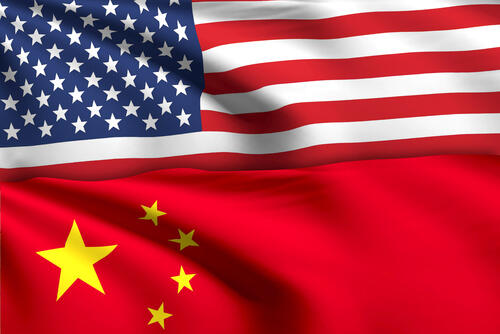
American and Chinese flags
This event is part of the 2021 Winter/Spring Colloquia series, Biden’s America, Xi’s China: What’s Now & What’s Next?, sponsored by APARC's China Program.


Via Zoom Webinar. Register at: bit.ly/2MYJAdw

Oriana Skylar Mastro Center Fellow at the Freeman Spogli Institute for International Studies
Seminars

In recent years, we have witnessed a worldwide trend of "democratic depression" in both young and established democracies, where the backsliding from democracy is facilitated by various forces such as populism, nationalism, partisan polarization, and post-truth. Korea is no exception. While the signs of democratic decline are subtle and disguised under the rule of law, they are producing piecemeal erosions of liberal democracy and pluralism in many corners of the Korean society. As a timely warning against the gradual decline of democratic norms and values, this 3-part conference seeks to examine the forces that endanger the Korean democracy and aims to offer some concrete policy prescriptions to remedy the existing and growing signs of democratic decline.

Topics Discussed:

Day 1: November 12, 2020 (4PM-7PM)

  • Political culture and polarization: Pitfall of political over-participation or “street-democracy"
  • Underdevelopment of party politics: Factionalism, weak institutionalization, and poor appreciation
  • Erosion in balance of power: Courts losing legitimacy and respect with politicization
  • Uses and misuses of nationalism in politics

Day 2: November 13, 2020 (4PM-6PM)

  • Two divergences in South Korea’s Economy: Regional and generational disparities
  • Challenges of post-truth: Politicization and polarization of the press, social media, disinformation
  • Education and its impact on civic value and generational gap

Day 3: November 19, 2020 (4PM-6:15PM)

  • Politicization of civil society: Losing function as watchdog of power, former democratic activists becoming new authoritarian leaders
  • How the rise of populist regime affects foreign policy
  • Korean democracy in comparative perspectives

The conference papers will be published as an edited volume.

Via Zoom

Conferences
Authors
News Type
Q&As
Date
Paragraphs

Does a tracking system making laws more enforceable actually improve society? Ahmed examines how technology firms and the Chinese government build databases and information sharing procedures that monitor the behavior of individuals, corporations, legal institutions, and government representatives, with the end goal of building a society where those individuals and corporations follow the law.

Read the rest at Stanford HAI

Hero Image
photo of woman
All News button
1
Subtitle

Does a tracking system making laws more enforceable actually improve society?

-

This event is co-sponsored with the Cyber Policy Center and the Center for a New American Security.

* Please note all CISAC events are scheduled using the Pacific Time Zone


Seminar Recording: https://youtu.be/KaydMdIVtGc


About the Event: The United States is steadily losing ground in the race against China to pioneer the most important technologies of the 21st century. With technology a critical determinant of future military advantage, a key driver of economic prosperity, and a potent tool for the promotion of different models of governance, the stakes could not be higher. To compete, China is leveraging its formidable scale—whether measured in terms of research and development expenditures, data sets, scientists and engineers, venture capital, or the reach of its leading technology companies. The only way for the United States to tip the scale back in its favor is to deepen cooperation with allies. The global diffusion of innovation also places a premium on aligning U.S. and ally efforts to protect technology. Unless coordinated with allies, tougher U.S. investment screening and export control policies will feature major seams that Beijing can exploit.

On early June, join Stanford's Center for International Security and Cooperation (CISAC) and the Center for a New American Security (CNAS) for a unique virtual event that will feature three policy experts advancing concrete ideas for how the United States can enhance cooperation with allies around technology innovation and protection.

This webinar will be on-the-record, and include time for audience Q&A.


About the Speakers: 

Anja Manuel, Stanford Research Affiliate, CNAS Adjunct Senior Fellow, Partner at Rice, Hadley, Gates & Manuel LLC, and author with Pav Singh of Compete, Contest and Collaborate: How to Win the Technology Race with China.


Daniel Kliman, Senior Fellow and Director, CNAS Asia-Pacific Security Program, and co-author of a recent report, Forging an Alliance Innovation Base.


Martijn Rasser, Senior Fellow, CNAS Technology and National Security Program, and lead researcher on the Technology Alliance Project

Virtual Seminar

Anja Manuel, Daniel Kliman, and Martijn Rasser
Seminars
-

This is a virtual event. Please click here to register and generate a link to the talk. 
The link will be unique to you; please save it and do not share with others.

Data-intensive technologies such as AI may reshape the modern world. We propose that two features of data interact to shape innovation in data-intensive economies: first, states are key collectors and repositories of data; second, data is a non-rival input in innovation. We document the importance of state-collected data for innovation using comprehensive data on Chinese facial recognition AI firms and government contracts. Firms produce more commercial software and patents, particularly data-intensive ones, after receiving government public security contracts. Moreover, effects are largest when contracts provide more data. We then build a directed technical change model to study the state's role in three applications: autocracies demanding AI for surveillance purposes, data-driven industrial policy, and data regulation due to privacy concerns. When the degree of non-rivalry is as strong as our empirical evidence suggests, the state's collection and processing of data can shape the direction of innovation and growth of data-intensive economies.

Image
Portrait of David Yang
David Yang’s research focuses on political economy, behavioral and experimental economics, economic history, and cultural economics. In particular, David studies the forces of stability and forces of changes in authoritarian regimes, drawing lessons from historical and contemporary China. David received a B.A. in Statistics and B.S. in Business Administration from University of California at Berkeley, and PhD in Economics from Stanford. David is currently a Prize Fellow in Economics, History, and Politics at Harvard and a Postdoctoral Fellow at J-PAL at MIT. He also joined Harvard’s Economics Department as an Assistant Professor as of 2020.

Via Zoom Webinar.
Register at: https://bit.ly/2VlhaMm

David Yang Prize Fellow in Economics, History, and Politics; Department of Economics, Harvard University
Seminars
Authors
Herbert Lin
News Type
Commentary
Date
Paragraphs

In a Lawfare post earlier this year, I questioned the wisdom of referring to cyber operations as psychological operations. These campaigns are the bread and butter of U.S. Cyber Command’s operational activities. My interest in this question stemmed from two recent articles, one on NPR and one in the Washington Post. The former discussed past activities of U.S. Cyber Command and the latter discussed possible future activities. Taken together, both articles used terms such as “information warfare,” “information operations,” “psychological operations” and “influence operations” to describe these activities.

I closed that post with a promise to comment on the doctrinal and conceptual confusions within Defense Department policy regarding all of these concepts. This post makes good on that promise.


Read the rest at Lawfare Blog

Hero Image
lin herbert 1
All News button
1
News Type
News
Date
Paragraphs

The headlines about the United States and China have been dominated by the spread of COVID-19 and trade deal negotiations. Experts in U.S.-China relations have warned against preemptive disengagement in a time of increased need for international cooperation and coordination, even as tensions between the two countries continue to escalate in the media.

From Adam Segal's perspective, as an expert in security issues, technology development, and Chinese domestic and foreign policy at the Council on Foreign Relations, one of the emerging considerations that will prominently affect the tone and timbre of the relationship between the United States and China in the coming years is how the two nations compete with one another in technological and scientific research and innovation. He delved further into this topic in a lecture as part of the China Program's winter/spring colloquia series.

[To get more stories like this delivered to your inbox, sign up for our newsletters]

As Segal and others describe, both the United States and China benefitted immensely from the globalization of scientific research and collaboration, but in recent years, both have also become wary of sharing talent and resources too broadly or across too many sectors. As a result, each country has taken various measures in an attempt to gain and regain perceived advantages over the other.

As China has tried to move up the so-called economic value chain from being an overwhelmingly manufacturing and heavy industry-based economy to being a leader in tech and digital economies, it has simultaneously tried to wean itself from a dependence on foreign technological infrastructure. In its efforts to create indigenous innovation and technological growth, it has openly tried to court talent and intelligence from overseas. To the United State's rising concern, however, the Chinese government has been less open about the means used to accomplish this aim.

On its part, the United States has upped its efforts to expand cybersecurity research and initiatives. The Trump administration has very vocally critiqued companies such as Huawei and urged allies to step back from business with the telecom and networking giant. Similarly, allegations of espionage against native Chinese and Chinese-American scientists and academics have escalated in recent months.

Segal argues that these simmering tensions signify the growing awareness each country has of the other's increasing capabilities in the cybersphere, as well as a heightened understanding and awareness of the shortcomings of their own systems.

"I think technology, which had usually been a fifth, sixth, seventh on the agenda in the U.S.-China relationship, is going to continue to be one of the defining issues that structure the relationship, and increasingly is one not just about concerns about national security, but about values and how we think about how technology is applied, and governance issues."

To watch Segal's full lecture, click the video below or find it on our YouTube channel. A transcript of his remarks is available

Hero Image
Adam Segal lectures at APARC
All News button
1
Subscribe to Information Technology