


Japan in the Bay Area: From Competition to Collaboration
-
The Bay Area Council Economic Institute and the Walter H. Shorenstein Asia-Pacific Research Center Japan Program invite you to a forum on the critical transformations underway in Japan’s economy and the unique synergies that connect it to the Bay Area. The program will include a discussion of the high-level findings of a new report by the Bay Area Council Economic Institute on Japan’s economic engagement in the San Francisco/Silicon Valley Bay Area, and the role the region is playing as California and Japan look to expand trade and investment and accelerate innovation. Leading experts and practitioners from both Japan and the Bay Area will join us for this discussion.
This event is brought to you by the Shorenstein Asia-Pacific Research Center Japan Program and the Bay Area Council Economic Institute, in cooperation with the Japan Society of Northern California.
Agenda
1:00pm Welcome
Jim Wunderman, President & CEO, Bay Area Council
Hon. Tomochika Uyama, Consul General of Japan
Takeo Hoshi, Director, Shorenstein APARC Japan Program
1:10pm Introduction of Bay Area Council Economic Institute Report: High-Level Findings
Sean Randolph, Senior Director, Bay Area Council Economic Institute
1:30pm Observations and Silicon Valley Overview
Kenji Kushida, Research Scholar, Stanford University
1:45pm Panel 1: The Emerging New Japan
Kanetaka Maki, Associate Professor, Waseda Business School
Mio Takaoka, CFO, Medical Note and Partner, Arbor Ventures
Takeshi Ebihara, Founding GP, Rebright Partners
Emre Yuasa, Principal, Globis Capital Partners
Sean Randolph, Senior Director, Bay Area Council Economic Institute (Moderator)
2:45pm Panel 2: Japanese Companies in Silicon Valley Creating Value in New Ways
Hiroshi Menjo, Managing Partner, Net Service Ventures
Tsunehiko Yanagihara, Executive VP, Mitsubishi Corp M-LAB
Gen Isayama, General Partner & CEO, World Innovation Lab
Dennis Clark, Managing Director, Honda Innovations
George Saikalis, SVP & CTO, Hitachi America, Ltd.
Kenji Kushida, Research Scholar, Stanford University (Moderator)
4:00pm Closing Remarks
Bechtel Conference Center
Encina Hall
616 Serra Mall, Stanford, CA 94305
Panel Discussions
Kyle Bagwell
(650) 723-3251
3606-kyle-bagwell01.jpg
0
kbagwell@stanford.edu
Donald L. Lucas Endowed Professor in Economics
Professor of Economics
Senior Fellow at the Stanford Institute for Economic Policy Research
Kyle Bagwell is the Donald L. Lucas Endowed Professor in Economics at Stanford University. He is also a Senior Fellow of the Stanford Institute for Economic Policy Research, a Research Associate of the National Bureau of Economic Research and a Faculty Affiliate of the Stanford Center on Global Poverty and Development.
Bagwell works in the fields of International Trade, Industrial Organization and Game Theory. His research examines a range of theoretical and empirical questions relating to the purpose and design of GATT/WTO. He also explores theories of competition and cooperation in settings where asymmetric information is present. His research has been published in numerous academic journals, and in a book, The Economics of the World Trading System, co-authored with Robert W. Staiger and published by The MIT Press (2002).
Bagwell holds undergraduate degrees in Economics and Mathematics from SMU (1983) and a Ph.D. in Economics from Stanford University (1986). Prior to joining Stanford at the start of 2009, he was a faculty member at Northwestern University (1986-96) and at Columbia University (1996-2008). He was the Kelvin J. Lancaster Professor of Economic Theory at Columbia (2000-08).
Bagwell has served on the editorial boards of numerous academic journals, and he was an Editor at The Rand Journal of Economics (1996-2002). He was a National Fellow of the Hoover Institution (1991-92) and a Fellow at CASBS at Stanford (2014-15). He was the Director of the Stanford Institute for Theoretical Economics (2010-13), and a Reporter for the American Law Institute in its study of Principles of Trade Law: The World Trade Organization (2002-12). He is also a Fellow of the Econometric Society (2005).
Affiliated faculty at The Europe Center
Affiliated faculty at the Stanford Center on Global Poverty and Development
CV
Document
kyle_bagwell_july_2021_cv.pdf
(193.67 KB)
Heather Rahimi
Encina Hall East, 4th Floor, E406
Stanford, CA 94305-6055
0
hrahimi@stanford.edu
Heather Rahimi_0118a small.png
MA
Heather Rahimi has worked within both the private and public sector of international education promoting cross-cultural exchange and supporting students' studies abroad. Her passion for international education was first sparked studying abroad in Buenos Aires, Argentina while completing her B.A. in Spanish and Anthropology from Northern Arizona University. Since then, she has jumped on any opportunity to travel and learn more about different cultures around the world. In addition to travels throughout the Middle East and Europe, she also spent time in Peru on an archaeological dig and a semester in South Korea working in student affairs at the University of Utah Asia Campus. Heather speaks fluent Spanish and holds a Master of Arts in International Education Management from Middlebury Institute of International Studies.
Communications Manager, Stanford Center on China's Economy and Institutions
Hide publication sections
Off
Dual Labor Markets and Economic Globalization: Theory and Evidence from Japanese Manufacturing
-
Labor market duality refers to the coexistence of temporary workers with low dismissal costs and permanent workers with high dismissal costs within the same firms. The prevalence of temporary employment is a common feature in several countries, such as Continental European countries. Further, since the 1980s, the Japanese labor market has been experiencing a substantial increase in temporary jobs. The quality of temporary jobs tends to be lower than that of permanent jobs (e.g., the former includes lesser job security, lower wages, and fewer training opportunities compared to the latter). For this reason, the causes and consequences of widespread temporary employment have both policy and academic implications. To date, most of the research on this topic has focused on the supply side of labor markets (demographic changes in workforce), macroeconomic impacts (business cycles), and labor-market institutions. However, since the majority of temporary workers tends to be involuntary, the demand-side analysis is important, as well. It has rarely been examined how market competition would affect firms’ demand for temporary and permanent labor, particularly within the context of economic globalization.
Our study attempts to fill this gap. By proposing a heterogeneous-firm trade model with a dual labor market, we examine the relations between the demand for temporary and permanent workers and economic globalization. Our model highlights intensified product market competition as a driving force behind the shift in demand from permanent to temporary workers. In addition, our model demonstrates that international outsourcing effectively reduces labor adjustment costs, which decreases the demand for permanent workers. Using industry-level data from the Japanese manufacturing sector, we empirically test the relations between the demand for temporary and permanent workers and economic globalization and find that they support most of our theoretical predictions.
Hitoshi Sato joins the Walter H. Shorenstein Asia-Pacific Research Center (Shorenstein APARC) during the 2018–2019 academic year from the Institute of Developing Economies (IDE-JETRO), a national research institute in Japan, where he currently serves as a senior chief research fellow. Sato’s field of study is international trade, and his current research interests include the relationships between internationalization of firms and labor markets. His research efforts have been published in journals, books, and policy reports, including the Journal of Japanese and International Economies. Further, Sato has been appointed as a consulting fellow by the Research Institute of Economy, Trade and Industry since 2013. He received his PhD in economics from the University of Wisconsin–Madison in 2006.Image

Philippines Conference Room Encina Hall, 3rd Floor 616 Serra Mall, Stanford, CA 94305
Hitoshi Sato
616 Serra StreetEncina Hall E301Stanford, CA94305-6055
0
hisato@stanford.edu
hitoshi_sato.jpg
Ph.D.
Dr. Hitoshi Sato joins the Walter H. Shorenstein Asia-Pacific Research Center (APARC) for the 2018 year from the Institute of Developing Economies (IDE-JETRO) in Japan, where he serves as Senior Chief Research Fellow. He will be working on the internationalization of firms, management practices, and development. Dr. Sato received his Ph.D. from the University of Wisconsin, Madison.
Visiting Scholar at APARC
Seminars
American Universities in China: Lessons from Japan
-
[[{"fid":"230391","view_mode":"crop_870xauto","fields":{"format":"crop_870xauto","field_file_image_description[und][0][value]":"\"American Universities in China: Lessons from Japan\" by Dennis T. Yang","field_file_image_alt_text[und][0][value]":"\"American Universities in China: Lessons from Japan\" by Dennis T. Yang","field_file_image_title_text[und][0][value]":"\"American Universities in China: Lessons from Japan\" by Dennis T. Yang","field_credit[und][0][value]":"","field_caption[und][0][value]":"\"American Universities in China: Lessons from Japan\" by Dennis T. Yang","thumbnails":"crop_870xauto","alt":"\"American Universities in China: Lessons from Japan\" by Dennis T. Yang","title":"\"American Universities in China: Lessons from Japan\" by Dennis T. Yang"},"type":"media","field_deltas":{"1":{"format":"crop_870xauto","field_file_image_description[und][0][value]":"\"American Universities in China: Lessons from Japan\" by Dennis T. Yang","field_file_image_alt_text[und][0][value]":"\"American Universities in China: Lessons from Japan\" by Dennis T. Yang","field_file_image_title_text[und][0][value]":"\"American Universities in China: Lessons from Japan\" by Dennis T. Yang","field_credit[und][0][value]":"","field_caption[und][0][value]":"\"American Universities in China: Lessons from Japan\" by Dennis T. Yang","thumbnails":"crop_870xauto","alt":"\"American Universities in China: Lessons from Japan\" by Dennis T. Yang","title":"\"American Universities in China: Lessons from Japan\" by Dennis T. Yang"}},"link_text":null,"attributes":{"alt":"\"American Universities in China: Lessons from Japan\" by Dennis T. Yang","title":"\"American Universities in China: Lessons from Japan\" by Dennis T. Yang","style":"height: 230px; width: 144px; margin: 0px 10px; float: left;","class":"media-element file-crop-870xauto","data-delta":"1"}}]]Dennis T. Yang is member of the U.S. Foreign Service and is currently based in Kathmandu, Nepal, serving as the Regional English Language Officer overseeing Nepal, Sri Lanka, Bangladesh, and the Maldives. In addition to his recent publication, American Universities in China: Lessons from Japan, he is author of The Pursuit of the Chinese Dream: Chinese Undergraduate Students at American Universities. Dennis earned a Ph.D in International Education from NYU, an Ed.M in International Educational Development from Columbia, an M.A. in East Asian Studies from Duke, and a B.A. in Sociology from Boston University.
American Universities in China: Lessons from Japan discusses the aspirations and operations of American universities in China through the lens of previous American universities’ expansion efforts in Japan. This talk will provide an explanation of the factors that contributed to the rise and decline of American universities in Japan in order to examine and predict the sustainability of American universities in China today. Through a review of historical documents, interviews with stakeholders in Japan and China, and an analysis of the cultural contexts of both the Japanese and Chinese higher education systems and the position of American universities within these environments, this book/talk seeks to address the potential success or failure of the American university abroad.
Lunch will be served. Presented in collaboration with the National Consortium for Teaching about Asia.
Goldman Conference Room
Encina Hall, 4th Floor
616 Serra Street, Stanford, CA 94305
Dennis T. Yang
Regional English Language Officer
U.S. Department of State
Lectures
Institute highlights the teaching of Asia and the Asian-American experience
News Type
News
Date
Paragraphs
—SPICE: Offering teacher institutes since 1973—
In 1973, the roots of the Stanford Program on International and Cross-Cultural Education (SPICE) were established with the creation of the Bay Area China Education Program, which focused on the development of K–12 curriculum materials and teacher professional development. Only a year prior, President Richard Nixon had made his historic trip to China and many American students were able to view contemporary images of China on television for the first time in their lifetimes. Teachers who attended SPICE institutes on China in the 1970s often commented that they were at a loss about how to teach about China.
Forty-four years later, a new generation of educators expressed similar sentiments at a SPICE institute. However, the challenge wasn’t so much about the teaching of China but rather the teaching of North Korea. Thus, when Pulitzer Prize-winning author Adam Johnson spoke about his book, The Orphan Master’s Son, a New York Times bestselling novel about North Korea, teachers were riveted by his comments. Teachers were interested not only in ways that his novel could help them better understand contemporary North Korea but also in ways they could use the book to help their students gain a more balanced view of North Korea. The 22 teacher participants received copies of The Orphan Master’s Son to use in their teaching and were offered two SPICE curriculum units titled Inter-Korean Relations: Rivalry, Reconciliation, and Reunification and Uncovering North Korea.
Co-sponsored by the National Consortium for Teaching about Asia (NCTA), the SPICE summer institute, July 24–26, 2017, had the objectives of (1) deepening teachers’ understanding of Asia, U.S.–Asian relations, and the Asian-American experience; (2) providing teachers with teaching resources; and (3) creating a community of learners. The institute featured lectures by Stanford faculty (like Johnson), U.C. Berkeley faculty, and other experts on a range of Asia- and Asian-American-related topics closely aligned with the History-Social Science Framework for California Public Schools standards, which were recently revised. Interactive curriculum demonstrations by SPICE staff were also offered.
One such standard focuses on recent economic growth in China. Following a lecture by Thomas Fingar, Shorenstein Asia Pacific Research Center Fellow, on “Recurring Themes in U.S.–China Relations,” a curriculum demonstration on the SPICE curriculum unit, China in Transition: Economic Development, Migration, and Education, was offered by its author, Rylan Sekiguchi of SPICE. One teacher remarked, “I teach about China, and it was so helpful to hear someone with such deep expertise [Fingar] speak about U.S.–Chinese history in a way that enriches my knowledge and understanding to bring back some bigger themes to my teaching. I can’t wait to bring this content back to my students [through the SPICE curriculum].” Other scholarly lectures on Japan and Korea were also followed by curriculum demonstrations by SPICE staff. This coupling of lectures and curriculum demonstrations has been a hallmark of SPICE since its inception.
Updated History-Social Science Framework standards on the Asian-American experience were also addressed at the institute. Dr. Khatharya Um, Associate Professor of Ethnic Studies at the University of California at Berkeley, introduced the diverse cultural and historical backgrounds of the Asian-American student population which often comprises a significant percentage of students in schools in areas like the San Francisco Bay Area and Los Angeles. She emphasized the importance of acknowledging individual circumstances in minority student populations and breaking down commonly cited stereotypes of Asian Americans as being a critical element of effective teaching. One of the topics that she addressed was stereotypes of Japanese Americans that arose following the Japanese attack of Pearl Harbor. Her lecture was coupled with the sharing of first-hand experiences by Dr. Joseph Yasutake, who was interned at the age of nine. Dr. Yasutake’s talk stimulated discussions on civil liberties, race relations, discrimination, and American identity among the teachers. “Hearing history from one who has experienced it as well as studied and taught the history is really wonderful,” said one institute participant. “This combination brings a great amount of authority and well as authenticity to the narrative he [Yasutake] provides.” The SPICE curriculum unit, Civil Rights and Japanese-American Internment, was recommended as a resource for teachers.
The institute brought together both experienced mentor teachers and those new to the field. Naomi Funahashi, who organized and facilitated the institute, remains in communication with many of the teachers and has noticed that a community of learners, who are committed to a long-term exploration of Asian and Asian-American studies, has grown from the institute. She reflected, “One of the unexpected outcomes of the institute was the recommendations that many of the teachers have written in support of their students’ applications to my online class on Japan called the Reischauer Scholar Program. My hope is that some of my students will someday attend SPICE institutes as teachers and that SPICE institutes will continue to serve teachers as they have since 1973 for many decades to come.”
SPICE is currently recruiting teachers to attend its 2018 summer institute for middle school teachers (June 20–22, 2018) and summer institute for high school teachers (July 23–25, 2018).
To stay informed of SPICE-related news, follow SPICE on Facebook and Twitter.
Hero Image

All News button
1
Hitoshi Sato
616 Serra StreetEncina Hall E301Stanford, CA94305-6055
0
hisato@stanford.edu
hitoshi_sato.jpg
Ph.D.
Dr. Hitoshi Sato joins the Walter H. Shorenstein Asia-Pacific Research Center (APARC) for the 2018 year from the Institute of Developing Economies (IDE-JETRO) in Japan, where he serves as Senior Chief Research Fellow. He will be working on the internationalization of firms, management practices, and development. Dr. Sato received his Ph.D. from the University of Wisconsin, Madison.
Visiting Scholar at APARC
The Long Road to Making Money
-
Making Money: How Taiwanese Industrialists Embraced the Global Economy is a record of a thirty-year research project that Gary G. Hamilton and Kao Cheng-shu began in 1987. A distinguished sociologist and university administrator in Taiwan, Kao and his research team (which included Prof. Hamilton during his frequent visits to Taiwan) interviewed over 800 owners and managers of Taiwanese firms in Taiwan, China, and Vietnam. Some were re-interviewed over ten times during this period. The length of this project allows them a vantage point to challenge the conventional interpretations of Asian industrialization and to present a new interpretation of the global economy that features an enduring alliance between, on the one hand, American and European retailers and merchandisers and, on the other hand, Asian contract manufacturers, with Taiwanese industrialists becoming the most prominent contract manufacturers in the past forty years.
Gary G. Hamilton is a Professor Emeritus of International Studies and Sociology at the University of Washington. He specializes in historical/comparative sociology, economic sociology, with a special emphasis on Asian societies. He is an author of numerous articles and books, including most recently Emergent Economies, Divergent Paths, Economic Organization and International Trade in South Korea and Taiwan (with Robert Feenstra) (Cambridge University Press, 2006), Commerce and Capitalism in Chinese Societies (London: Routledge, 2006), The Market Makers: How Retailers Are Changing the Global Economy (co-editor and contributor, Oxford University Press, 2011; paperback 2012), and Making Money: How Taiwanese Industrialists Embraced the Global Economy (with Kao Cheng-shu, Stanford University Press, 2018).Image
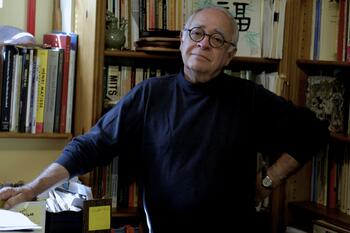
This event is organized by the Taiwan Democracy and Security Project, part of the U.S.-Asia Security Initiative at Shorenstein APARC. Formerly the Taiwan Democracy Project at CDDRL.
Gary G. Hamilton
<i>Professor Emeritus of International Studies and Sociology, University of Washington</i>
Lectures
Gilhong Kim
616 Serra StreetEncina Hall E301Stanford, CA94305-6055
0
gilhongk@stanford.edu
gilhong_kim.jpg
Ph.D.
Dr. Gilhong Kim joins the Walter H. Shorenstein Asia-Pacific Research Center for the 2018 year as visiting scholar. He currently serves as the Senior Director and Chief Sector Officer of the Sustainable Development and Climate Change Department at the Asian Development Bank. He will be conducting research on technological development and impact in the Asia-Pacific.
Visiting Scholar at APARC