History
Paragraphs

A concise and accessible introduction to the gender histories of eastern Europe and the Soviet Union in the twentieth century. These essays juxtapose established topics in gender history such as motherhood, masculinities, work and activism with newer areas, such as the history of imprisonment and the transnational history of sexuality.

By collecting these essays in a single volume, Catherine Baker encourages historians to look at gender history across borders and time periods, emphasising that evidence and debates from Eastern Europe can inform broader approaches to contemporary gender history.


All Publications button
1
Publication Type
Books
Publication Date
Journal Publisher
Palgrave MacMillan
Authors
Katherine Jolluck
Paragraphs

The name "world war" was given to the war of 1914-1918 because of its kaleidoscopic character: its fronts extended from the East to the West, on several seas and several continents. Yet the memory and cultural experience of this conflict are closely linked to the western front, which, it is true, is a particularly tragic terrain for examining the paradoxes and horrors of modernity that this war may have represented . Of course, other theaters of operations have played a role in a number of special contexts - Gallipoli has been of great importance to the formation of Australian national identity

All Publications button
1
Publication Type
Journal Articles
Publication Date
Journal Publisher
Annals. History, Social Sciences
Authors
Paragraphs

Friedrich Kittler’s farewell words of 15 July 2011, delivered at the original building of the Institute for Cultural History and Theory at the Humboldt University of Berlin, where he had taught during the final eighteen years of his academic career, are of course not among his most intellectually important texts. Rather, this address belongs to those documents whose specific status and relevance depends on a temporal relation to their author’s life dates. Kittler’s death on 11 October 2011 made the improvised Sophienstraße address his last public statement and thus gave it the aura of a legacy. What he said to his students and a few colleagues on that occasion is a random snapshot that, due to the posthumously dramatic perspective from which it conjures up his personality for us, has become a monument. As such, as a monument and as a legacy, I want to comment on those few sentences pronounced shortly before the end of his life by one of my dearest and most admired friends from my own German generation of scholars and intellectuals.

All Publications button
1
Publication Type
Journal Articles
Publication Date
Journal Publisher
Critical Inquiry
Authors
Hans Ulrich Gumbrecht
-

Damian Collins MP is a member of the House of Commons, and Chairman of the Parliamentary Select Committee for Cuture, Media and Sport. He graduated in modern history from the University of Oxford, and 'Charmed Life, the phenomenal world of Philip Sassoon'Damian Collins MP is a member of the House of Commons, and Chairman of the Parliamentary Select Committee for Culture, Media and Sport. He graduated in modern history from the University of Oxford, and Charmed Life, the phenomenal world of Philip Sassoon is his first book.


No RSVP required.  For more information, please contact jewishstudies.stanford.edu.

*This is an author event; the bookstore will be on-site selling copies of Collins' book.

This event is co-sponsored by the Taube Center for Jewish Studies, the Department of History, and The Europe Center.


Lane History Corner (Building 200)
Room 307


Damian Collins Member of Parliament, UK Speaker Member of Parliament, UK
Lectures
-

The Italian civil war and the Nazi occupation of Italy occurred at a critical juncture, just before the birth of a new democracy and when, for the first time in a generation, Italians were choosing political affiliations and forming political identities. In this paper we study how these traumatic events shaped the new political system. We exploit geographic heterogeneity in the intensity and duration of the civil war, and the persistence of the battlefront along the “Gothic line” cutting through Northern-Central Italy. We find that the Communist Party gained votes in the post-war elections where the Nazi occupation and the civil war lasted longer, mainly at the expense of the centrist and catholic parties. This effect persists until the early 1990s. Evidence also suggests that this is due to an effect on political attitudes. Thus, the foreign occupation and the civil war left a lasting legacy of political extremism and polarization on the newborn Italian democracy.

Guido Tabellini is the Intesa Sanpaolo Chair in Political Economics at Universita' Bocconi.

This seminar is part of the Comparative Politics Workshop in the Department of Political Science and is co-sponsored by The Europe Center.

Guido Tabellini Bocconi University
Seminars
Paragraphs

Human rights are a complex concept with distinct parts, whose histories are often independent from one another. Histories of human rights are almost always partial histories, and we cannot reduce their history to that of one part. This article challenges one of the central tenets of the early-modern history of human rights, namely that it was the “discovery” of subjective rights in the late medieval period that was the critical move in the development of human rights. It examines in particular the work of Richard Tuck, and exposes his debt to the French legal historian Michel Villey and to Leo Strauss. In so doing, it disputes the existence of a “modern school” of natural law theory, and sketches an alternative history of natural rights, which passes from the Huguenot monarchomachs and the English Levellers to the American and French revolutionaries.

All Publications button
1
Publication Type
Journal Articles
Publication Date
Journal Publisher
Humanity: An International Journal of Human Rights, Humanitarianism, and Development
Authors
Number
3
-

Abstract: The formal constitutional character of the presidential office – that is, the method of electing the president, and the powers both granted and denied to the president -- was defined by the men who drafted the Constitution in Philadelphia in the summer of 1787 and has, for all practical purposes, remained largely unchanged ever since.

The presidency’s place in American political culture, however, is another matter, because in the 230 years since the Constitution was framed, that culture has evolved -- in many ways dramatically -- along with the society and the economy it reflects.

The tension between the static constitutional character of the presidency and the dynamic political culture, society, and economy in which it is embedded – and especially the technologies, even more especially the communication technologies that have emerged over the last century -- will be the main focus of this paper.

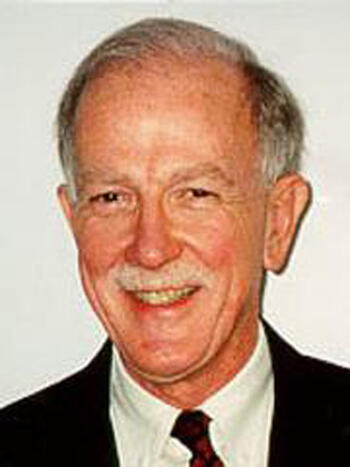
About the Speaker: David M. Kennedy is the Donald J. McLachlan Professor of History, Emeritus, at Stanford University. 

His teaching has included courses in the history of the twentieth-century United States, American political and social thought, American foreign policy, national security strategies, American literature, and the comparative development of democracy in Europe and America.

Reflecting his interdisciplinary training in American Studies, which combined the fields of history, literature, and economics, Kennedy's scholarship is notable for its integration of economic and cultural analysis with social and political history, and for its attention to the concept of the American national character. His 1970 book, Birth Control in America: The Career of Margaret Sanger, embraced the medical, legal, political, and religious dimensions of the subject and helped to pioneer the emerging field of women's history.  Over Here: The First World War and American Society (1980) used the history of American involvement in World War I to analyze the American political system, economy, and culture in the early twentieth century. Freedom From Fear: The American People in Depression and War, 1929-1945 (1999) recounts the history of the American people in the two great crises of the Great Depression and World War II. With Thomas A. Bailey and Lizabeth Cohen, Kennedy is also the co-author of a textbook in American history, The American Pageant, now in its sixteenth edition. He is a frequent contributor to the New York Times, the Los Angeles Times, The Atlantic, and other publications and media outlets.

Birth Control in America was honored with the John Gilmary Shea Prize in 1970 and the Bancroft Prize in 1971. Over Here was a Pulitzer Prize finalist in 198. Freedom From Fear won the Pulitzer and Francis Parkman Prizes, in 2000.

Professor Kennedy has been a visiting professor at the University of Florence, Italy, and has lectured on American history in Italy, Germany, Turkey, Scandinavia, Canada, Britain, Australia, Russia, and Ireland. He has served as chair of the Stanford History Department, and as director of Stanford's Program in International Relations, as well as Associate Dean of the School of Humanities and Sciences. He founded Stanford’s Bill Lane Center for the American West, was its Director from 2003-2013, and remains a member of its Advisory Council. In 1995-96, he was the Harmsworth Professor of American History at Oxford University. He is an elected Fellow of the American Academy of Arts and Sciences as well as the American Philosophical Society. From 2002 to 2011 he served on the Board of the Pulitzer Prizes (chair, 2010-2011) joined  the Board of the New York Historical Society in 2008, and in 2013 became a Trustee of the California Academy of Sciences. Since 2000, he has served as the Editor of the Oxford History of the United States. Secretary of Agriculture Tom Vilsack in 2015 appointed Kennedy to the Advisory Council for the Pacific Northwest National Scenic Trail, which will run from Glacier National Park in Montana to the Pacific shore in Washington State. 

Encina Hall, 2nd floor

Y2E2
Bill Lane Center for the American West
Rm 173

(650) 721-3186
0
DavidKennedy_high-res_head_shot.jpg

David M. Kennedy is the Donald J. McLachlan Professor of History, Emeritus, at Stanford University. 

His teaching has included courses in the history of the twentieth-century United States, American political and social thought, American foreign policy, national security strategies, American literature, and the comparative development of democracy in Europe and America.

Reflecting his interdisciplinary training in American Studies, which combined the fields of history, literature, and economics, Kennedy's scholarship is notable for its integration of economic and cultural analysis with social and political history, and for its attention to the concept of the American national character. His 1970 book, Birth Control in America: The Career of Margaret Sanger, embraced the medical, legal, political, and religious dimensions of the subject and helped to pioneer the emerging field of women's history.  Over Here: The First World War and American Society (1980) used the history of American involvement in World War I to analyze the American political system, economy, and culture in the early twentieth century. Freedom From Fear: The American People in Depression and War, 1929-1945 (1999) recounts the history of the American people in the two great crises of the Great Depression and World War II. With Thomas A. Bailey and Lizabeth Cohen, Kennedy is also the co-author of a textbook in American history, The American Pageant, now in its sixteenth edition. He is a frequent contributor to the New York Times, the Los Angeles Times, The Atlantic, and other publications and media outlets.

Birth Control in America was honored with the John Gilmary Shea Prize in 1970 and the Bancroft Prize in 1971. Over Here was a Pulitzer Prize finalist in 198. Freedom From Fear won the Pulitzer and Francis Parkman Prizes, in 2000.

Professor Kennedy has been a visiting professor at the University of Florence, Italy, and has lectured on American history in Italy, Germany, Turkey, Scandinavia, Canada, Britain, Australia, Russia, and Ireland. He has served as chair of the Stanford History Department, and as director of Stanford's Program in International Relations, as well as Associate Dean of the School of Humanities and Sciences. He founded Stanford’s Bill Lane Center for the American West, was its Director from 2003-2013, and remains a member of its Advisory Council. In 1995-96, he was the Harmsworth Professor of American History at Oxford University. He is an elected Fellow of the American Academy of Arts and Sciences as well as the American Philosophical Society. From 2002 to 2011 he served on the Board of the Pulitzer Prizes (chair, 2010-2011) joined  the Board of the New York Historical Society in 2008, and in 2013 became a Trustee of the California Academy of Sciences. Since 2000, he has served as the Editor of the Oxford History of the United States. Secretary of Agriculture Tom Vilsack in 2015 appointed Kennedy to the Advisory Council for the Pacific Northwest National Scenic Trail, which will run from Glacier National Park in Montana to the Pacific shore in Washington State. 

Senior Fellow Emeritus at the Center for International Security and Cooperation
CV
Donald J.McLachlan Professor of History, Emeritus Director Emeritus, Bill Lane Center for the American West Stanford University
Seminars
Subscribe to History