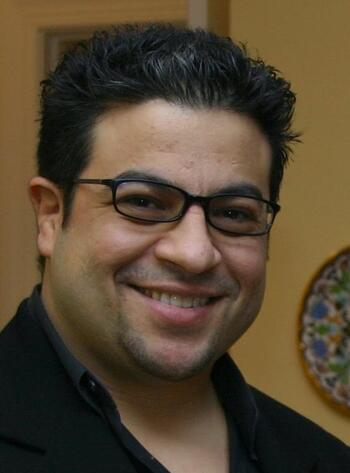
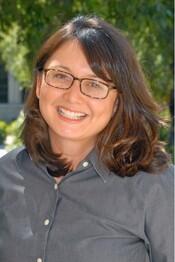
Daniel Sneider, associate director for research at the Walter H. Shorenstein Asia-Pacific Research Center, provides an in-depth analysis of how the agreement on the “comfort women” issue between Japan and South Korea was reached late last year. In Japanese publication Toyo Keizai Online, Sneider writes that – after at least four years of negotiations between the two governments – political leadership in Seoul and Tokyo as well as pressure from the Obama administration can be credited for the breakthrough.
Earlier in December, David Straub, associate director for the Korea Program, said the agreement is a sign of progress. He said it vindicates the victims and is a positive development for Korea-Japan relations.
South Korean Foreign Minister Yun Byung-Se (Right) shakes hands with his Japanese counterpart Fumio Kishida (Left) during their meeting at the Foreign Ministry in Seoul Dec. 28, 2015. | Reuters/Jung Yeon-je/Pool
The breakthrough agreement on the comfort women issue between Japan and South Korea on Dec. 28,2015, was the culmination of at least four years of negotiations between the two governments. South Korean President Park Geun-hye and Japanese Prime Minister Shinzo Abe pushed for the agreement; the Obama administration provided persistent pressure while resisting a mediation role. The danger of the agreement falling apart is apparent to officials in Washington and Seoul, and hopefully Tokyo too, writes Sneider.
From Voltaire’s correspondence with Catherine the Great, to Adam Smith’s travels on the European continent, mediated and unmediated communication was the lifeline of the Enlightenment. Where historians once spoke of the Enlightenment in national terms (e.g., the “Scottish Enlightenment” vs. “German Enlightenment”), they are increasingly recognizing the ways in which the communication networks that spread across countries provided the infrastructure for thinking in a new, “European” fashion. What’s more, the recent influx of metadata from the correspondences of major Enlightenment figures now allows scholars to study these networks at both the micro and macro levels. We are therefore well poised to produce far clearer maps of how the Enlightenment spread out across Europe and beyond, to European colonies. And we can trace the return of knowledge from the periphery back to the center’s capitals.
This 2-day conference, convened by Dan Edelstein, will assemble some of the leading scholars who are using data-driven scholarship to study the information networks that made the Enlightenment possible, and contributed to create a new sense of European identity.
April 29, 10:00am – 5:30pm
9:30am-10:00am Breakfast & Coffee
10:00am - 12:00pm Correspondence & Communication Pierre-Yves Beaurepaire, “Experiencing the 'Communication Process' of the Enlightenment: Three Case Studies” Charlotta Woolf, “Un ami des philosophes modernes": The Networks of Swedish Ambassador Gustav Philip Creutz in Paris, 1766-1783” Andrew Kahn, “The Enlightenment Correspondence of Catherine the Great: the Digital Project”
12:00pm – 1:00pm Lunch
1:00pm - 3:00pm Science & Technology Paola Bertucci, “Artisanal Networks: The République des lettres and The Société des arts” Jessica Riskin, “Lamarckiana” Paula Findlen, “Imagining a Community: The Scientific Networks of Laura Bassi, Emilie du Chatelet, and Maria Gaetana Agnesi”
3:00pm-3:30pm Coffee break
3:30pm - 5:30pm Religious Networks Thomas Wallnig, “Catholic Early Enlightenment in Central Europe? - Abbot Gottfried Bessel between Order, Church, Court and Booktrade” Christopher Warren, “Quaker Networks and Quaker Enlightenment” Claude Willan, “The English Enlightenment Network”
Sponsored by The Europe Center, The Stanford Humanities Center, The French Culture Workshop, The France-Stanford Center, and The Division for Literature, Cultures, and Languages.
From Voltaire’s correspondence with Catherine the Great, to Adam Smith’s travels on the European continent, mediated and unmediated communication was the lifeline of the Enlightenment. Where historians once spoke of the Enlightenment in national terms (e.g., the “Scottish Enlightenment” vs. “German Enlightenment”), they are increasingly recognizing the ways in which the communication networks that spread across countries provided the infrastructure for thinking in a new, “European” fashion. What’s more, the recent influx of metadata from the correspondences of major Enlightenment figures now allows scholars to study these networks at both the micro and macro levels. We are therefore well poised to produce far clearer maps of how the Enlightenment spread out across Europe and beyond, to European colonies. And we can trace the return of knowledge from the periphery back to the center’s capitals.
This 2-day conference, convened by Dan Edelstein, will assemble some of the leading scholars who are using data-driven scholarship to study the information networks that made the Enlightenment possible, and contributed to create a new sense of European identity.
April 28, 1:00pm – 5:30pm
1:00pm - 3:00pm Historical Network Theory Ruth Ahnert & Sebastian Ahnert, “Quantitative Network Analysis and Early Modern Correspondence” Dan Edelstein, “How to Study Networks Without ‘Edgy’ Data” Nicole Coleman, “Fibra: A Graph-Drawing Tool for Social Network Analysis”
3:00pm - 3:30pm Coffee break
3:30pm - 5:30pm Paris, Capital of Enlightenment Nicholas Cronk, “The invention of Voltaire's correspondence” Maria Comsa, “Theatrical Networks in 18th-Century France” Melanie Conroy & Chloe Edmondson, “French Salons in the Age of Enlightenment”
Sponsored by The Europe Center, The Stanford Humanities Center, The French Culture Workshop, The France-Stanford Center, and The Division for Literature, Cultures, and Languages.
States make war, and wars make states. The second clause of Tilly's dictum assumes that the fiscal effort that states exert to wage war persists over time. This paper investigates the effect of war on long-term fiscal capacity as a function of two types of war financing instruments: taxes and loans. Tax-waged wars are argued to exert lasting effects on state capacity, as new taxes require enhancements of the state apparatus as well as complementary fiscal innovations. Loan-waged wars may not contribute to long-term state capacity, as countries might default once the war is over, thus preempting any persistent fiscal effect. Importantly, the way war is waged might be endogenous. To cope with this possibility, I exploit unanticipated crashes in the nineteenth-century international capital markets, which temporarily banned warring states from borrowing regardless of their (un)observed characteristics. The analysis shows that countries that fought wars while the international credit markets were down have today higher fiscal capacity, measured by income tax ratios as well as the size of the tax administration. Altogether, the paper advances the conditions under which wars exert positive and lasting effects on state building.
Didac Queralt is a junior professor at the Institute of Political Economy and Governance (IPEG) in Barcelona. He received his Ph.D. from the NYU Politics Department in September 2012.
His research lies at the intersection of comparative political economy and international relations, with a focus on the political economy of fiscal capacity building in Europe (East and West) and the Americas. Using formal methods, he investigates tax compliance in scenarios of low fiscal capacity, as well as the replacement of old forms of taxation (e.g. trade taxes) by modern extractive technologies (e.g. income taxation) that result from deliberate investment in the tax administration. He analyzes the theoretical predictions using contemporary data from developing economies in Latin America and Eastern Europe, as well as historical data for European powers in the pre-modern era.
In addition, he investigates the origins of direct taxation in the Western World, both with macro- and micro-data, as well as the electoral politics underlying the expansion of the fiscal state. Currently, he is involved in a quasi-experimental test of the legacy of pre-modern wars on state capacity, and an field experiment on tax progressivity in Colombia,
This seminar is part of the Comparative Politics Workshop in the Department of Political Science and is co-sponsored by The Europe Center.
Encina Hall West, Room 400 (Graham Stuart Lounge)
Didac Queralt
Junior Professor
Speaker
Institute of Political Economy and Governance (IPEG), Barcelona
David Straub, associate director of the Korea Program, says that the recent "Comfort Women" agreement vindicates the victims and should be good for overall Korea-Japan relations.
After nearly five years since the start of the uprising, Syria finds itself divided and embattled, with no end in sight. More significantly, more than half of the Syrian population is displaced and the death toll surpassed 300,000 by all counts. The Syrian tragedy persists and, more than any other case of mass uprising in the region, continues to be shrouded in political power-plays and contradictions at the local, regional, and international levels. Defined increasingly by an absence of a clear favorable outcome, considering existing parties to the conflict, the logic of the lesser evil reigns supreme. This lecture is an attempt to understand the roots and dynamics of the tragic Syrian uprising, with particular attention to its background and to the recent Russian intervention.
Speaker Bio
Image
Bassam Haddad is Director of the Middle East Studies Program and Associate Professor in the Department of Public and International Affairs at George Mason University, and is Visiting Professor at Georgetown University. He is the author of Business Networks in Syria: The Political Economy of Authoritarian Resilience (Stanford University Press, 2011). Haddad is currently editing a volume on Teaching the Middle East After the Arab Uprisings, a book manuscript on pedagogical and theoretical approaches. His most recent books include two co-edited volumes: Dawn of the Arab Uprisings: End of an Old Order? (Pluto Press, 2012) and Mediating the Arab Uprisings (Tadween Publishing, 2013). Haddad serves as Founding Editor of the Arab Studies Journal a peer-reviewed research publication and is co-producer/director of the award-winning documentary film, About Baghdad, and director of the critically acclaimed film series, Arabs and Terrorism, based on extensive field research/interviews. More recently, he directed a film on Arab/Muslim immigrants in Europe, titled The "Other" Threat. Haddad is Co-Founder/Editor of Jadaliyya Ezine and serves on the Editorial Committee of Middle East Report. He is the Executive Director of the Arab Studies Institute, an umbrella for five organizations dealing with knowledge production on the Middle East and Founding Editor of Tadween Publishing.
[[{"fid":"221861","view_mode":"crop_870xauto","fields":{"format":"crop_870xauto","field_file_image_description[und][0][value]":"Bassam Haddad January 21","field_file_image_alt_text[und][0][value]":"","field_file_image_title_text[und][0][value]":"","field_credit[und][0][value]":"","field_caption[und][0][value]":"","field_related_image_aspect[und][0][value]":"","thumbnails":"crop_870xauto"},"type":"media","attributes":{"width":"870","class":"media-element file-crop-870xauto"}}]]
CISAC Central Conference Room Encina Hall, 2nd Floor 616 Serra St Stanford, CA 94305
Bassam Haddad
Associate Professor
George Mason University
With the nearing of the fifth anniversary of the January 25 Revolution, this panel examines the nature of politics under the rule of the current military sponsored regime in Egypt. What implications will the recent legislative elections have for political stability and the cohesion of the ruling coalition? How is the regime responding to the various economic challenges it currently confronts? In what ways has the persistence of state repression affected and shaped the space for political contestation and resistance?
Panelists
Joel Beinin Donald J. McLachlan Professor of History,
Stanford University
Lisa Blaydes Associate Professor of Political Science,
Stanford University
Amr Hamzawy ARD Visiting Scholar,
CDDRL, Stanford University
Nancy Okail Executive Director,
The Tahrir Institute for Middle East Policy
(via Skype)
Hesham Sallam Associate Director, ARD
CDDRL, Stanford University
Moderator:
Larry Diamond Senior Fellow, FSI;
Senior Fellow Hoover Institute,
Stanford University
Image
Joel Beinin is the Donald J. McLachlan Professor of History and Professor of Middle East History. He received his A.B. from Princeton University in 1970, his M.A. from Harvard University in 1974, and his A.M.L.S. and Ph.D. from the University of Michigan in 1978 and 1982. He also studied at the American University of Cairo and and the Hebrew University of Jerusalem. He lived in Egypt in 1969, 1980-81, 1985, 1986, 1994, 2004-05, and 2006-08 and in Israel in 1965-66, 1970-73, 1987, 1988, 1993, and 1993. He has taught Middle East history at Stanford University since 1983. From 2006 to 2008 he served as Director of Middle East Studies and Professor of History at the American University in Cairo. His research and writing focuses on workers, peasants, and minorities in the modern Middle East and on Israel, Palestine, and the Arab-Israeli conflict. Beinin has written or edited nine books, most recently Social Movements, Mobilization, and Contestation in the Middle East and North Africa; co-edited with Frédéric Vairel (Stanford University Press, 2011) and The Struggle for Worker Rights in Egypt (Solidarity Center, 2010). His articles have been published in leading scholarly journals as well as The Nation, Middle East Report, The Los Angeles Times, The San Francisco Chronicle, Le Monde Diplomatique, and others. He has appeared on Al-Jazeera TV, BBC radio, National Public Radio, and many other TV and radio programs throughout North America, and in France, Egypt, Singapore, and Australia, and has given frequent interviews to the global media. In 2002 he served as President of the Middle East Studies Association of North America.
Image
Lisa Blaydes is an Associate Professor of Political Science at Stanford University. She is the author of Elections and Distributive Politics in Mubarak’s Egypt (Cambridge University Press, 2011). Professor Blaydes received the 2009 Gabriel Almond Award for best dissertation in the field of comparative politics from the American Political Science Association for this project. Her articles have appeared in the American Political Science Review, International Studies Quarterly, International Organization, Journal of Theoretical Politics, Middle East Journal, and World Politics. During the 2008-2009 and 2009-2010 academic years, Professor Blaydes was an Academy Scholar at the Harvard Academy for International and Area Studies. She holds degrees in Political Science (PhD) from the University of California, Los Angeles and International Relations (BA, MA) from Johns Hopkins University.
Image
Larry Diamond is a senior fellow at the Hoover Institution and at the Freeman Spogli Institute for International Studies. He also serves as the Peter E. Haas Faculty Director of the Haas Center for Public Service at Stanford. For more than six years, he directed FSI’s Center on Democracy, Development, and the Rule of Law, and he continues to lead its programs on Liberation Technology, Arab Reform and Democracy, and Democracy in Taiwan. He is the founding co-editor of the Journal of Democracy and also serves as Senior Consultant at the International Forum for Democratic Studies of the National Endowment for Democracy. His sixth and most recent book, In Search of Democracy (Routledge, 2016), explores the challenges confronting democracy and democracy promotion, gathering together three decades of his work on democratic development, particularly in Africa and Asia. He has also edited or co-edited more than 40 books on democratic development around the world.
Image
Amr Hamzawy is a visiting scholar at the Program on Arab Reform and Democracy. He studied political science and developmental studies in Cairo, The Hague, and Berlin. After finishing his doctoral studies and after five years of teaching in Cairo and Berlin, Hamzawy joined the Carnegie Endowment for International Peace (Washington, DC) between 2005 and 2009 as a senior associate for Middle East Politics. Between 2009 and 2010, he served as the research director of the Middle East Center of the Carnegie Endowment in Beirut, Lebanon. In 2011, he joined the Department of Public Policy and Administration at the American University in Cairo, where he continues to serve today. Hamzawy also serves as an associate professor of political science at the Department of Political Science, Cairo University. His research and teaching interests as well as his academic publications focus on democratization processes in Egypt, tensions between freedom and repression in the Egyptian public space, political movements and civil society in Egypt, contemporary debates in Arab political thought, and human rights and governance in the Arab world. Dr. Hamzawy is a former member of the People’s Assembly after being elected in the first Parliamentary elections in Egypt after the 25th of Jan 2011 revolution. He is also a former member of the Egyptian National Council for Human Rights. Hamzawy contributes a daily column and a weekly op-ed to the Egyptian independent newspaper Shorouk.
Image
Nancy Okail is the Executive Director of TIMEP. She brings more than 15 years of experience promoting democracy and development in the Middle East and North Africa region to this role. Prior to joining TIMEP, Dr. Okail was the director of Freedom House’s Egypt program. She has also worked with the Egyptian government as a senior evaluation officer of foreign aid and has managed programs for Egyptian pro-democracy organizations that challenged the Mubarak regime. She was also one of the defendants convicted and sentenced to prison in the widely publicized case of 43 non-governmental organization workers charged with using foreign funds to foment unrest in Egypt. She holds a Ph.D. from the University of Sussex in the U.K. where her dissertation examined the power relations of foreign aid.
Image
Hesham Sallam is a Research Associate at CDDRL and serves as the Associate-Director of the Program on Arab Reform and Democracy. He is also a co-editor of Jadaliyya ezine and a former program specialist at the U.S. Institute of Peace. His research focuses on Islamist movements and the politics of economic reform in the Arab World. Sallam’s research has previously received the support of the Social Science Research Council and the U.S. Institute of Peace. Past institutional affiliations include Middle East Institute, Asharq Al-Awsat, and the World Security Institute. He is editor of Egypt's Parliamentary Elections 2011-2012: A Critical Guide to a Changing Political Arena (Tadween Publishing, 2013). Sallam received a Ph.D. in Government (2015) and an M.A. in Arab Studies (2006) from Georgetown University, and a B.A. in Political Science from the University of Pittsburgh (2003).
Abstract: The 1995 launch of a sounding rocket from Andoya in Norway allegedly misinterpreted as an attack in Russia and the so-called "Cuban Missile Crisis" in 1962 have one thing in common: they have both been referred to as "the closest we came to nuclear war." The 1962 crisis has mostly been studied from an American perspective due to the availability of documentary evidence and of the Kennedy tapes, until the 1990s when Cuba and the Soviet Union were given a voice, with the rest of the world still largely absent from the understanding of the event. The 1995 close call has been controversial and is remembered in conflicting ways: an alarmist and an untroubled one.
In this presentation, I will offer new findings on those two cases, based on previously untapped primary sources on the experience of and threat perception during the so-called "Cuban Missile Crisis" in 13 countries worldwide and on an oral history workshop I organized in London for the 20th anniversary of the 1995 "Black Brant event", which gathered for the first time Norwegian, American and Russian participants in the event. By focusing on those two events as exemplary cases of near use of nuclear weapons, I will outline a research program on such cases and its implication for social sciences and for the teaching of post-1945 world history to the next generations.
About the Speaker: Benoît Pelopidas is a CISAC affiliate and lecturer in International Relations at the School of Sociology, Politics and International Studies (SPAIS), University of Bristol. He was a postdoctoral fellow at CISAC for the 2011-2012 academic year.
He received his Ph. D. in political science from Sciences Po (Paris) and the University of Geneva in 2010 and was a postdoctoral fellow at the James Martin Center for Nonproliferation Studies in 2010-2011. Since 2005, he has been teaching international relations at Sciences Po (Paris), the University of Geneva and the Monterey Institute of International Studies (Graduate School of International Policy and Management).
In 2010, he won the "outstanding student essay prize" from the Doreen and Jim McElvany Nonproliferation Essay Competition and in 2011, he was awarded the "Best Graduate Paper 2010" from the International Security Studies Section of the International Studies Association. Also in 2011, he won the SNIS Award 2010 for the Best Thesis in International Studies from the Swiss Network for International Studies. A book based on his dissertation is forthcoming in French by Sciences Po University Press.
He published When Empire Meets Nationalism: Power Politics in the US and Russia (with Didier Chaudet and Florent Parmentier; Ashgate, 2009) as well as articles in The Nonproliferation Review, the European Journal of Social Sciences, the Swiss Political Science Review, and the French Yearbook of International Relations. His research focuses on epistemic communities in international security, renunciation of nuclear weapons as a historical possibility, the uses of nuclear history and memory and French nuclear policies.
Lecturer in International Relations at the School of Sociology, Politics and International Studies (SPAIS)
University of Bristol, United Kingdom
Join us Wednesday to celebrate International Education Week! We’ll be conducting our first open webinar at the 2015 Global Education Conference (#globaled15). Drop in to receive some free classroom resources and chat about historical memory, media literacy, perspective/bias, and the legacies of WWII in East Asia.
What: “Divided Memories: Comparing History Textbooks in China, Japan, South Korea, Taiwan, and the United States” webinar (Full description: http://tiny.cc/r1bv5x) When: Wed, Nov 18 @ 4:00pm PST / 7:00pm EST Where: Online at tiny.cc/SPICEatGEC15 (Choose your time zone to view full conference schedule.)
During and after the webinar, use hashtag #DividedMemories to live-tweet with us and our friends at Shorenstein APARC.
616 Jane Stanford Way
Encina Hall, C332
Stanford, CA 94305-6060
(650) 725-1486
0
rybo@stanford.edu
rylan_sekiguchi.jpg
Rylan Sekiguchi is Manager of Curriculum and Instructional Design at the Stanford Program on International and Cross-Cultural Education (SPICE). Prior to joining SPICE in 2005, he worked as a teacher at Revolution Prep in San Francisco.
Rylan’s professional interests lie in curriculum design, global education, education technology, student motivation and learning, and mindset science. He received his Bachelor of Science degree in Symbolic Systems at Stanford University.
In 2010, 2015, and 2021, Rylan received the Franklin Buchanan Prize, which is awarded annually by the Association for Asian Studies to honor an outstanding curriculum publication on Asia at any educational level, elementary through university.
Rylan has presented teacher seminars across the country at venues such as the World Affairs Council, the American Museum of Natural History, and the Art Institute of Chicago, and for organizations such as the National Council for the Social Studies, the International Baccalaureate Organization, the African Studies Association, and the National Consortium for Teaching about Asia. He has also conducted presentations internationally for the East Asia Regional Council of Overseas Schools in Thailand, Malaysia, and the Philippines; for the European Council of International Schools in Spain, France, and Portugal; and at Yonsei University in South Korea.