Society

FSI researchers work to understand continuity and change in societies as they confront their problems and opportunities. This includes the implications of migration and human trafficking. What happens to a society when young girls exit the sex trade? How do groups moving between locations impact societies, economies, self-identity and citizenship? What are the ethnic challenges faced by an increasingly diverse European Union? From a policy perspective, scholars also work to investigate the consequences of security-related measures for society and its values.
The Europe Center reflects much of FSI’s agenda of investigating societies, serving as a forum for experts to research the cultures, religions and people of Europe. The Center sponsors several seminars and lectures, as well as visiting scholars.

Societal research also addresses issues of demography and aging, such as the social and economic challenges of providing health care for an aging population. How do older adults make decisions, and what societal tools need to be in place to ensure the resulting decisions are well-informed? FSI regularly brings in international scholars to look at these issues. They discuss how adults care for their older parents in rural China as well as the economic aspects of aging populations in China and India.

Authors
News Type
Q&As
Date
Paragraphs


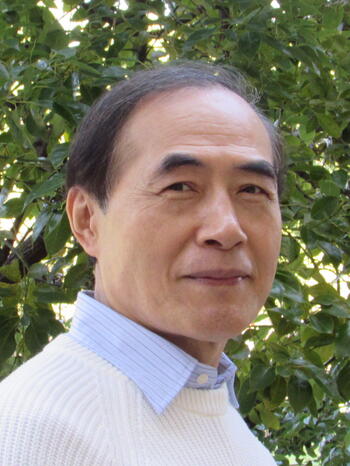
The Freeman Spogli Institute for International Studies would like to extend the warmest best wishes to Senior Fellow and Raymond A. Spruance Professor of International History, David Holloway. After over 30 years as an expert in political science and history at Stanford University, Holloway will retire on September 1, 2018.


David Holloway was co-director of the Center for International Security and Cooperation (CISAC) from 1991 to 1997, and director of FSI from 1998 to 2003. His research focuses on the international history of nuclear weapons, science and technology in the Soviet Union, and the relationship between international history and international relations theory. He is best known for his book Stalin and the Bomb: The Soviet Union and Atomic Energy, 1939-1956 (Yale University Press, 1994) which was chosen by the New York Times Book Review as one of the best books of 1994. Holloway has also actively contributed to the Bulletin of the Atomic Scientists, Foreign Affairs, and other scholarly journals over the course of his career.


As a member of our institute, Holloway’s quiet warmth and kindness have always been infectious, both inside and outside of the classroom. The depth and insight of his work over the years, not to mention his dedication to FSI and the Stanford Community at large, has been an inspiration. He will be sorely missed. We all wish him the very best with this new chapter in his life and with the completion of his latest book, a complete global history of nuclear weapons, non-proliferation, and international politics, due to be published in 2019.


We caught him to hear his views on recent developments in U.S.-Russia relations one last time and to talk about his time at Stanford.


At the NATO summit, Trump claimed that Germany “is a captive of Russia.” Is there any foundation to this claim?

I don't think so. Trump made the statement in connection with the Nord Stream Oil Pipeline. A lot of people have criticized Germany for building this because it will increase German reliance on Russia. Critics believe that by sending oil through Germany, Russia will potentially have more freedom to interfere in Ukrainian territories. However, the German government has reassured the international community that they would help Ukraine if Russia does use the pipeline to push for recognition of the annexation of Crimea. In Germany’s defense, I think they feel that they have to have economic relations with Russia unless they are in a state of war or close to one – it is the only logical arrangement.


How do you think we can reconcile the disjunction between the U.S. president’s pro-Putin statements and position at the Helsinki press conference with the fact that his administration is implementing sanctions against Russia? 

The policies certainly look contradictory. Trump has not said anything critical about Putin (which is remarkable when he is quite willing to say critical things about everybody else), yet, as you say, his administration has imposed tough sanctions. Why is Trump so reluctant to support his own administration? And why is it that he wanted to meet Putin in the first place? We just don’t know.

On a related note, the Chinese claim that Trump is a very good tactician/strategist and that his behavior at the Helsinki summit was “Kissinger-in-reverse.” That is, it was intended to weaken Russia's ties to China by offering better ties with the U.S. and potentially with Western Europe. Thus, the Chinese see Trump’s performance not as a sign of incompetence and incoherence (as many do in the West), but as further evidence of his coherent strategy.

We often ascribe a malicious masterplan or intentional nefariousness to adversaries. For my part, while possible that the president has a master-plan, I think it is most likely that he does not. Trump has created a backlash against Russia in the U.S. which will make it even more difficult for U.S.-Russian relations to improve in years to come.


There have been a number of articles written about Trump’s push for increased allied investment in NATO; he started by pushing for all members to meet the 2 percent GDP investment quota, but then demanded that they invest 4 percent. Is demanding 4 percent feasible?

The truth is that every American president has pushed the European members of NATO to spend more on defense. Even Obama did it. However, Trump has done it much more openly and offensively. I think the push for 4 percent was more a case of showmanship; the stance he was taking was, “You're not even at 2 percent but you should really be at 4 percent!”

What is the impact of all of this?  I have certainly seen many Europeans turn around say that the E.U. cannot rely on the U.S. anymore. If we have a Trump administration for another six years and/or a U.S. administration in 2020 that takes a similar line, I think we could well see the end of NATO. 


The President’s remarks referred to the fact that only 9 of NATO’s 29 members have reached the 2 percent quota. Yet many NATO advocates are counter-arguing that many of the remaining 21 nations have significantly increased their defense spending. How would you weigh in?

I would agree with NATO advocates and add that the reason why expenditure got so low in the first place is that, after the end of the Cold War, Europe seemed peaceful. I think the 2014 annexation of Crimea by Russia somewhat changed this perception, and the parts of the continent most under threat are the Baltic States and Georgia. As a side note, we should also remember that NATO troops have fought and died in Iraq and Afghanistan alongside the U.S. It is not that they have been doing nothing.


The President claims he vastly improved U.S.-Russian relations at the Helsinki summit. Others, like FSI Director Michael McFaul, claim that the summit was further evidence that we are in an era of “Hot Peace” with Russia. What do you think?

Before I answer your question, I want to say that I think it is good to have Russian and American leaders talking to each other. These are the two largest nuclear powers; I think that there should be open communication on military issues and nuclear issues most particularly.

The world isn't at stake in the same way it was during the Cold War. Yet, there are still fears of military conflict, and we have a new phenomenon: election hacking. The question of Russian meddling in the last U.S. election is complicated by Trump's relationship with Russia. The press conference at Helsinki was so extraordinary, not least because, if Trump really wanted to open a dialogue with Russia, he greatly damaged his chances by virtue of his own behavior. If, instead, he had insisted that Putin did interfere—openly declared his trust in his own intelligence services—I do not believe that the Russians would have walked away. I believe they have an interest in having a dialogue with the United States.


Some political scientists argue that we are now in a new Cold War in Asia, namely with North Korea and/or a possible North Korean-Chinese alliance. Do you agree?

I think of the Cold War as having three elements. First, after World War II there was a geopolitical element: the USSR wanted to control Eastern Europe both for security reasons and for ideological reasons. Second: the U.S. and its West European allies were motivated to help spread principles of liberal democracy and market capitalism, the Soviet Union’s Communist Party wanted to rule via centralized government control and a centrally-planned economy. Third, we had a military element: the arms race and the build-up of huge military confrontations.

Based on these three elements, I'm inclined to see what's going on now more as a breakdown of the international system created after World War II and that the U.S. had dominated. America is not as powerful as it once was. First, Russia turned out not to be a great fit for the established international system, for a variety of reasons. Second, China has risen to become an economic powerhouse that seeks to extend its influence – not (primarily) by military means but through the “belt and road” initiative investment, by building infrastructure in surrounding states. There was always a difficult relationship between the U.S. and China, but nothing like what the U.S.-Soviet relation was at the height of the Cold War.


With everything that has happened in the last few years, which event is going to prove a truly pivotal point for contemporary history when we look back in 20 or 30 years' time?

I think that the ten-day trip that Trump took to Europe was pivotal. The attacks on NATO, not to mention the way he treated Britain (Theresa May in particular), and what we know about his conduct during his meeting with Putin… I think we may look back on that week as a pivotal moment in the breakup of the transatlantic relationship. I don't know what it portends for U.S.-Russian relations, but I think it has made those relations much worse.


Let’s talk about your career here at Stanford. What brought you to FSI originally?

I had an invitation to come for a visit of three years. I was teaching in Edinburgh at the time, and I got a letter from Condi Rice, who was the assistant director of CISAC back then. After the three years, I decided I wasn’t going back. What was so attractive about FSI was the people. I know it may sound rather cliché, but there was such a great sense of possibility about the place. If you had an idea, instead of hearing people say, “Oh, we've never done it that way,” people would say, “Oh, yeah, let's see if we can help you do that!”


What is your fondest memory from your time at Stanford?

That's very difficult. I think one of my best memories is when Gorbachev came to speak at Stanford back in 1990. He gave a speech in the Stanford Memorial Auditorium, and the place was packed; it was at the height of Gorbo-mania. In the course of the speech he thanked some of us at FSI for helping to bring about the improvement in US-Soviet relations…Bill Perry, Pief Panofsky, Sid Drell, and myself. And that was – that's a pleasant moment to remember.


What advice would you give an undergrad starting at Stanford?  And what advice would you give a graduate student hoping to have a career in political science, history, or policy?

To the undergrad, my advice is rather obvious: at Stanford, you have this chance to look around and to try different things, new subjects and programs. Take full advantage of that!

To graduate students: I think most assume that when you choose to be a graduate student, you're choosing to be a specialist in a discipline. That’s true! Yet, at the same time, it is also very important to look around and see what there is outside your discipline, to learn how to communicate with people, particularly ones with other interests and in other fields.

We talk a lot about interdisciplinary work. But truly interdisciplinary work is very difficult. When I came to Stanford, I thought it fantastic that FSI had specialists in such diverse fields all in one place. At the time we had John Lewis who was a China specialist. Sid Drell was a physicist with a lot of experience working on national security issues. Phil Farley spent a long time in the State Department working on arms control issues. I learned a lot from Sid Drell; I wasn't doing physics, but we wrote something together. That kind of possibility and opportunity was incredible. I continued to love this about Stanford over the past 30 years, and I've been very grateful for all of these opportunities. 

As a last thought, I remember a conversation I had with John Hennessy when he was Dean of Engineering, and I was director of FSI. I remember telling him that, much to my surprise, a lot of our best supporters were (and continue to be) engineers. He said, “That’s obvious! No engineer thinks that his discipline alone can solve a problem. You have to work with other people when you're doing something!”

Then he said, “Engineers are also not averse to trying to raise money!” [laughter]


Hero Image
David Holloway, CISAC
All News button
1
News Type
News
Date
Paragraphs

"Public policy education is ripe for an overhaul. Rethinking how it should be done has been one of my major preoccupations over the past decade, and is the focus of work that we are doing now at Stanford in restructuring our Masters in International Policy (MIP) Program. It is also at the core of several mid-career programs we run at the Center on Democracy, Development, and the Rule of Law (CDDRL), such as the Leadership Academy for Development (LAD). The essence of the needed transformation is to shift the focus from training policy analysts to educating leaders who can accomplish things in the real world," writes CDDRL Director Francis Fukuyama. Read here.

Hero Image
rsd18 077 0114a
All News button
1
0
Global Affiliate Visiting Scholar, 2018-20
Shizuoka Prefectural Government
yosuke_hatano.jpeg MA

Yosuke Hatano is a global affiliate visiting scholar at the Walter H. Shorenstein Asia-Pacific Research Center (Shorenstein APARC) for 2018-19 and 2019-20.  Hatano has over seven years experience in the global energy trading business and energy infrastructure development projects at both private companies and in the private sector, including time as a branch office representative in Indonesia.  He joined the local government of the Shizuoka prefecture in 2014 and has experience in tourism promotion and destination marketing.  He has also engaged in the policies for small- and medium-sized enterprises promoting and developing the regional economy and industry.  Most recently, Hatano worked on international general affairs between the Shizuoka and the world.  He received his masters degree in international relations from Waseda University in 2007.

0
Global Affiliate Visiting Scholar, 2018-19
PetroChina
fullsizeoutput_bd9d.jpeg PhD

Jiazhong Fang is a global affiliate visiting scholar at the Walter H. Shorenstein Asia-Pacific Research Center (Shorenstein APARC) for 2018-19.  Fang works as the President and CEO of PetroKazakhstan Inc., a joint venture of PetroChina Company Ltd. and Kazkhstan national oil company, KazMunayGas (KMG).  Prior to this position, he has over 20 years of experience working internationally for PetroChina Overseas in Africa and central Asia, mainly focusing on exploration and development of oilfields.  He earned his PhD of Petroleum Engineering at the China Petroleum University, and his Master and Bachelor degree of Geology at Northwest University of China.  

News Type
Commentary
Date
Paragraphs

"What is different today is the speed and extraterritorial reach of disinformation. Over-restriction on content undermines our democratic values, but understanding the mechanisms of manipulation opens up the solutions." Our Eileen Donahoe, Executive Director of CDDRL's Global Digital Policy Incubator, said in the podcast "Digital Media: Combatting Threats in the Era of Fake News." Listen here.

Hero Image
fake news 2127597 1920
All News button
1
-

After a successful launch of the first “Essential Interpersonal Dynamics” (EID) China program in July 2018, we are pleased to announce that the 2nd session will take place in August 23-26, 2018, at the Stanford Center at Peking University. The program aims to help increase our ability to forge strong relationships with others, to improve emotional intelligence and leadership through better communications with self and others. The program is adapted from Interpersonal Dynamics, one of most acclaimed and long-running programs at the Stanford Graduate School of Business, known to many as “Touchy Feely”. 

The program is being launched following a 2-year pilot overseen by Interpersonal Dynamics faculty member Leslie Chin in which the program design was adapted to Chinese culture and context. Participants will be awarded a certificate issued jointly by Dr. David Bradford, Stanford Graduate School of Business Eugene O’Kelly II Senior Lecturer Emeritus in Leadership and Co-founder of the Interpersonal Dynamics Program, and Leslie Chin, Interpersonal Dynamics faculty member and lecturer in Management. 


Program dates: August 23 – 26, 2018

Venue: Stanford Center at Peking University, Beijing

Language: English

Program fee: RMB 18,600

Deadline for registration: August 2, 2018


Schedule:

August 23        17:00 – 21:00 (dinner included, from 17:00 – 17:30)

August 24        9:00 – 21:00 (lunch & dinner included)

August 25        9:00 – 21:00 (lunch & dinner included)

August 26        10:00 – 14:00 (lunch included)


Given the small group size and interactive nature of the program, successful applicants must commit to staying throughout the program. Interviews are required for admission. For more information, please contact lapli@stanford.edu


To register, please fill in the form by August 2nd:

http://web.stanford.edu/~lapli/essentialAug2018.fb


Stanford Center at Peking University
The Lee Jung Sen Building
Langrun Yuan
Peking University
No.5 Yiheyuan Road
Haidian District
Beijing, P.R.China 100871

Workshops
-

There are many urgent problems facing the planet: a degrading environment, a healthcare system in crisis, and educational systems that are failing to produce creative, innovative thinkers to solve tomorrow’s problems. Technology influences behavior, and I believe when we balance it with revolutionary design, we can reduce a family’s energy and water use by 50%, double most people’s daily physical activity, and educate any child anywhere in the world to a level of proficiency on par with the planet’s best students. I will illustrate how we are addressing these grand challenges in our research by building systems that balance innovative user interfaces with intelligent systems. I will close with a description of our recent work in creating a new engineering discipline of hybrid physical+digital spaces, buildings that sense and infer the state of people – their behaviors, emotions, health and learning – and in response dynamically adapt the information technology and the non-structural materials in these spaces to enhance human wellbeing in sustainable ways.

James Landay is a Professor of Computer Science and the Anand Rajaraman and Venky Harinarayan Professor in the School of Engineering at Stanford University. He specializes in human-computer interaction. He is the founder and co-director of the World Lab, a joint research and educational effort with Tsinghua University in Beijing. Previously, Landay was a Professor of Information Science at Cornell Tech in New York City and prior to that he was a Professor of Computer Science & Engineering at the University of Washington. From 2003 through 2006 he was the Laboratory Director of Intel Labs Seattle, a university affiliated research lab that explored the new usage models, applications, and technology for ubiquitous computing. He was also the chief scientist and co-founder of NetRaker, which was acquired by KeyNote Systems in 2004. From 1997 through 2003 he was a professor in EECS at UC Berkeley. Landay received his BS in EECS from UC Berkeley in 1990, and MS and PhD in Computer Science from Carnegie Mellon University in 1993 and 1996, respectively. His PhD dissertation was the first to demonstrate the use of sketching in user interface design tools. He was named to the ACM SIGCHI Academy in 2011 and as an ACM Fellow in 2017. He formerly served on the NSF CISE Advisory Committee.

To register, please fill in the form below: 

http://web.stanford.edu/~lapli/jameslanday.fb


Stanford Center at Peking University
The Lee Jung Sen Building
Langrun Yuan
Peking University
No.5 Yiheyuan Road
Haidian District
Beijing, P.R.China 100871

James Landay Professor of Computer Science Stanford University
Lectures
Authors
Beth Duff-Brown
News Type
News
Date
Paragraphs

A new calculation that combines health and economic well-being at the population level could help to better measure progress toward the U.N. Sustainable Development Goals and illuminate major disparities in health and living standards across countries, and between men and women, according to a new study by Stanford and Harvard researchers.

In a study released this month in The Lancet Global HealthJoshua Salomon, a professor of medicine and core faculty member at Stanford Health Policy, finds there are startling differences between countries in the number of years people can expect to survive free from poverty, much greater than the differences observed in life expectancy alone, and that women surrender more years of life to poverty than men in much of the world.

At the U.N. Sustainable Development Summit in 2015, world leaders adopted the Sustainable Development Goals (SDGs) as the embodiment of the global agenda for development through 2030. One of the 17 goals calls for universal health coverage, including financial risk protection, which highlights the explicit link between economic and health development policies.

“Despite this link, and despite the multitude of targets and indicators established through the SDGs and other global initiatives, most monitoring and benchmarking efforts rely on metrics that are highly specific to a single dimension of interest,” Salomon and his colleagues from the Harvard T.H. Chan School of Public Health wrote in the Lancet study.

Such an approach misses opportunities to understand the broader impact of development policies as they affect the well-being of populations in multiple ways.

So, the researchers developed a population-level measure of poverty-free life expectancy (PFLE) and computed the measurements for 90 countries with available data. They used Sullivan's method to incorporate the prevalence of poverty by age and sex from household economic surveys into demographic life tables based on mortality rates that are routinely estimated for all countries. Poverty-free life expectancy for each country is the average number of years people could expect to survive with adequate income to meet their basic needs, given current mortality rates and poverty prevalence in that country.

The authors found that PFLE varies widely between countries, ranging from less than 10 years in Malawi to more than 80 years in countries such as Iceland.  In 67 of 90 countries, the difference between life expectancy and PFLE was greater for females than for males, indicating that women generally surrender more years of life to poverty than men do. 

In some African countries, people can expect to live more than half of the total lifespan in poverty.

“This new indicator can aid in monitoring progress toward the linked global agendas of health improvement and poverty elimination and can strengthen accountability for development policies,” the authors wrote.

Despite general improvements in survival in most regions of the world in the past decades, the focus in the Sustainable Development Goals era on ending poverty “brings into sharp relief the importance of ensuring that years of added life are lived with at least a minimum standard of economic well-being.”

Salomon said the researchers hope the development of a new, simple measure that summarizes overall health and economic welfare in a single number can do two things.

“One is to help encourage leaders to be transparent and accountable to the populations they serve through regular tracking and reporting on overall progress toward longer and better lives,” he said. “The other is to bring measurement out of the silos of individual sectors, to highlight both the need for multisectoral action to improve health and welfare and the connections between health and economic consequences of public policy.”

Hero Image
getty poverty africa Getty Images
All News button
1
Subscribe to Society
