Society

FSI researchers work to understand continuity and change in societies as they confront their problems and opportunities. This includes the implications of migration and human trafficking. What happens to a society when young girls exit the sex trade? How do groups moving between locations impact societies, economies, self-identity and citizenship? What are the ethnic challenges faced by an increasingly diverse European Union? From a policy perspective, scholars also work to investigate the consequences of security-related measures for society and its values.

The Europe Center reflects much of FSI’s agenda of investigating societies, serving as a forum for experts to research the cultures, religions and people of Europe. The Center sponsors several seminars and lectures, as well as visiting scholars.

Societal research also addresses issues of demography and aging, such as the social and economic challenges of providing health care for an aging population. How do older adults make decisions, and what societal tools need to be in place to ensure the resulting decisions are well-informed? FSI regularly brings in international scholars to look at these issues. They discuss how adults care for their older parents in rural China as well as the economic aspects of aging populations in China and India.

-

Abstract:

Influential theories indicate concern that campaign donors exert outsized political influence. However, little data documents what donors actually want from government; and existing research largely neglects donors' views on individual issues. We argue there should be significant heterogeneity by party and policy domain in how donors' views diverge from citizens'. We support this argument with the largest survey of U.S. partisan donors to date, including an over sample of the largest donors. We show that Republican donors are much more conservative than Republican citizens on economic issues, whereas their views are similar on social issues. By contrast, Democratic donors are much more liberal than Democratic citizens on social issues, whereas their views are more similar on economic issues. Both parties' donors are more pro-globalism than their citizen counterparts. We replicate these patterns in an independent dataset. These patterns can help inform significant debates about representation, inequality, and populism in American politics.

Speaker Bio:

Image
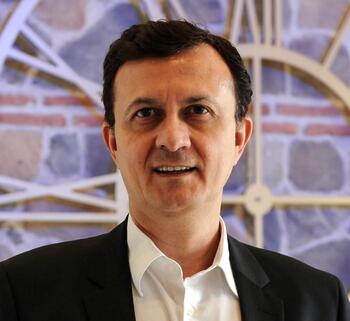
neil malhorta
Neil Malhotra is the Edith M. Cornell Professor of Political Economy in the Graduate School of Business at Stanford University. He also holds a courtesy appointment in the Department of Political Science. He serves as the Louise and Claude N. Rosenberg, Jr. Co-Director of the Center for Social Innovation at the Stanford GSB.

He has authored over 60 articles on numerous topics including American politics, political behavior, and survey methodology. His research has been published in the American Political Science Review, the American Journal of Political Science, the Journal of Politics, Science, and the Proceedings of the National Academy of Sciences, among other outlets. He currently serves as an Associate Editor of Public Opinion Quarterly and the Journal of Experimental Political Science.

He received his MA and PhD in political science from Stanford University, where he was the Melvin & Joan Lane Stanford Graduate Fellow. He received a BA in economics from Yale University.


Neil Malhotra Professor of Political Economy at the Stanford Graduate School of Business
Seminars
Authors
News Type
News
Date
Paragraphs

As Stanford’s fall quarter draws to a close, the first cohort of students who are participating in Freeman Spogli Institute’s (FSI) inaugural overseas program in Beijing embarked on their final field excursion. The 8 students and 4 Stanford faculty traveled first to Jinan city (济南) (capital of Shandong province), then to Zouping county (邹平), both located in China’s eastern region of Shandong (山东).

Image
pic1 1

Stanford China Studies in Beijing students and faculty being greeted by their hosts in Jinan, Shandong

Three Stanford Master’s in International Policy students and 5 undergraduate students are participating in this pilot program in Beijing at the Stanford Center at Peking University (SCPKU). The pilot program is being offered by FSl in cooperation with Peking University. Details regarding student activities, reflections and earlier travels can be found here.

This third and final trip was significant not only for the wide-ranging sites that the students saw, but also because Zouping County has a storied connection to the wider community of China scholars in the U.S. and to Stanford. Zouping county was the first rural site in China where foreign scholars were given official access to conduct field research in the 1980’s after Deng Xiaoping’s Opening and Reform in 1978. The late Professor Michel Oksenberg (1938-2001), senior fellow at Shorenstein APARC and FSl, who also served as a key member of the U.S. National Security Council under President Jimmy Carter, spearheaded this effort, which brought over eighty U.S. academics to the area between 1984 and 1991 (For more details re. that history, please see here).

The students’ field trip included visits with those at the top of the official pyramid to the village grassroots, including meetings with the Mayor and Vice Mayor of Jinan (pop: 6.8 million) and City Planning officials there; plus local city officials in Zouping County. Students and faculty viewed urban plans for the Jinan International Medical and Science Center and toured the corporate conglomerate, Shandong Weiqiao Pioneer Group (山东魏橋创业集团有限公司) that owns the largest textile factory in the world; and Xiwang Group, Ltd. (西王集团有限公司) whose main lines of business are corn oil production and structural steel. In some ways, the site visits reminded one of China’s economic rise as the manufacturing hub of the world; and its beckoning future as a science and technology giant.

Image
pic2 1

China Studies in Beijing students and faculty viewing plans for the Jinan International Medical and Science Center

Image
pic3 1

(From left to right): Students -- Drew Hasson (MIP second year student); Lucas Hornsby (sophomore); Isaac Kipust (junior); Jenn Hu (sophomore); and Cathy Dao (sophomore) – and Stanford faculty meeting with Mayor and Vice Mayor of Jinan city

Image
pic4 1

(From front, left to back, right): Profs. Jean Oi, Andrew Walder, Scott Rozelle, Tom Fingar stop by at the company store inside Xiwang Group

A highlight of the trip also included the village of Wangjing, Linchi Township, also in Zouping County. Surrounded by village children, mixing with residents and exchanging high-fives with “the kids [and] the grandmothers, ” Stanford students got a chance to enter ordinary homes and see what village life is like in one (albeit affluent and well-developed) township of Linchi.

Image
pic5 1

Professor Scott Rozelle, joined by Isaac Kipust, Lucas Hornsy and Prof. Tom Fingar, engage with village residents of Wangjing

Image
pic6 1

Drew Hasson exchanging high-fives with the residents of Wangjing village

Image
pic7 1

Students and faculty crowded into a village's home

Image

Isaac Kipust playing with the villager's son

Image
pic13

Three boys from Wangjing village with Isaac Kipust and Prof. Scott Rozelle

By the village square, Professor Scott Rozelle even took the opportunity to challenge two village boys to strive for not only a college degree, but a graduate degree; and not just an M.A. but a Ph.D. – and not just at any university, but at Stanford University! One day, perhaps – who knows? – Stanford may find itself conferring a doctoral degree to a student who calls Wangjing village his home.

Image
pic7 1

What’s an M.A.? Not higher than a Ph.D.! Prof. Scott Rozelle in conversation with two village boys in the town square at Wangjing

Image

And the laughing continues . . .

Image
pic11 1

Scott Rozelle in conversation with the boys as Profs. Jean Oi and Andrew Walder look on

Image
picture1

All the students, faculty and residents of Wangjing village, Zouping county, gather for the final photo

Students have gone on three field trips during the course of this overseas program – an excursion to the Great Wall at Jinshanling and to Chengde, a “mountain resort” of the Qing Dynasty court; China’s Northeast region, including to the cities of Dalian, Dandong and Jinzhou (see report here); and, now, Shandong province to China’s east. In addition to these field trips, students have also had unparalleled access to speakers from China’s National Development and Reform Commission, which operates directly under China’s State Council; prominent venture capitalistsand start-up entrepreneurs; and executives from large Chinese multinationals. Students have also enjoyed visits to China’s Foreign Ministry for discussions with experts on U.S.-China relations; as well as to the U.S. Embassy, engaging in discussions with its staff on U.S.-China trade tensions and geopolitical relations.  Students have not only accessed the halls of power in China, however, but have also visited peri-urban migrant communities and schools for children of migrant workers.

The China Studies in Beijing Program lasts the length of an academic quarterat Stanford – i.e., a mere eleven weeks – and yet it provided diverse opportunities for students to explore multiple facets of this complex and kaleidoscopic nation – from officialdom to ordinary villages; Beijing’s high-tech entrepreneurs to migrant children; international relations experts to corporate executives at China’s MNCs. Even while taking intensive courses taught by leading Stanford scholars on China’s economy, society, international relations and politics, students also enjoyed weekly brown-bag seminars led by guest speakers who spoke on the current state of U.S.-China relations; China-North Korea trade; U.S.-China military competition; China’s growing middle class; and the country’s severe urban-rural divide.

Pending final university approval, the application page for China Studies in Beijing’s Fall 2019 program will open soon. Please stay tuned for more information here or email Patrick Laboon, FSI’s Academic Program Manager, at plaboon@stanford.edu for updates. We anticipate the due date for candidate statement of interest and application to be set for the end of January.

Hero Image
image1
All News button
1
-

Labor market duality refers to the coexistence of temporary workers with low dismissal costs and permanent workers with high dismissal costs within the same firms. The prevalence of temporary employment is a common feature in several countries, such as Continental European countries. Further, since the 1980s, the Japanese labor market has been experiencing a substantial increase in temporary jobs. The quality of temporary jobs tends to be lower than that of permanent jobs (e.g., the former includes lesser job security, lower wages, and fewer training opportunities compared to the latter). For this reason, the causes and consequences of widespread temporary employment have both policy and academic implications. To date, most of the research on this topic has focused on the supply side of labor markets (demographic changes in workforce), macroeconomic impacts (business cycles), and labor-market institutions. However, since the majority of temporary workers tends to be involuntary, the demand-side analysis is important, as well. It has rarely been examined how market competition would affect firms’ demand for temporary and permanent labor, particularly within the context of economic globalization.

Our study attempts to fill this gap. By proposing a heterogeneous-firm trade model with a dual labor market, we examine the relations between the demand for temporary and permanent workers and economic globalization. Our model highlights intensified product market competition as a driving force behind the shift in demand from permanent to temporary workers. In addition, our model demonstrates that international outsourcing effectively reduces labor adjustment costs, which decreases the demand for permanent workers. Using industry-level data from the Japanese manufacturing sector, we empirically test the relations between the demand for temporary and permanent workers and economic globalization and find that they support most of our theoretical predictions.


Image
headshot sato
Hitoshi Sato joins the Walter H. Shorenstein Asia-Pacific Research Center (Shorenstein APARC) during the 2018–2019 academic year from the Institute of Developing Economies (IDE-JETRO), a national research institute in Japan, where he currently serves as a senior chief research fellow. Sato’s field of study is international trade, and his current research interests include the relationships between internationalization of firms and labor markets. His research efforts have been published in journals, books, and policy reports, including the Journal of Japanese and International Economies. Further, Sato has been appointed as a consulting fellow by the Research Institute of Economy, Trade and Industry since 2013. He received his PhD in economics from the University of Wisconsin–Madison in 2006.

Philippines Conference Room Encina Hall, 3rd Floor 616 Serra Mall, Stanford, CA 94305
616 Serra StreetEncina Hall E301Stanford, CA94305-6055
0
hitoshi_sato.jpg Ph.D.
Dr. Hitoshi Sato joins the Walter H. Shorenstein Asia-Pacific Research Center (APARC) for the 2018 year from the Institute of Developing Economies (IDE-JETRO) in Japan, where he serves as Senior Chief Research Fellow.  He will be working on the internationalization of firms, management practices, and development.  Dr. Sato received his Ph.D. from the University of Wisconsin, Madison. 
Visiting Scholar at APARC
Seminars
(650) 723-6530
0
Research Scholar, Japan Program
rsd18_095_0078a.jpg

Yuhei is a Research Scholar (post-doc) at the Japan Program of the Asia-Pacific Research Center (APARC) at Stanford University for the academic year of 2018-2019. His broad research interest centers around understanding how firms and people interact over a social and geographic space, and how such interactions shape the socio-economic space in turn. Currently, he is working on projects that elucidate how Japanese firms form firm-to-firm trade linkages and what it implies for Japanese economies. Yuhei obtained his Ph.D in Economics from MIT in 2018. From 2019, Yuhei will join the Department of Economics at Boston University as an assistant professor.

Paragraphs

The faculty of the Freeman Spogli Institute for International Studies enjoyed a productive period of policy-resonant scholarship spanning from winter quarter 2017 to fall quarter 2018.  This document inventories their academic publications, including books in print or under contract, Stanford courses delivered, invited talks across the globe, and activities that involve policy engagement comprising government testimony, advisement and public service, media commentary, opinion pieces, public policy training, and other efforts to translate scholarship into policy.

All Publications button
1
Publication Type
Annual Reports
Publication Date
-

The Effects of U.S. School Shootings on Children’s Antidepressant Use

More than 220,000 American students have experienced a school shooting since the 1998 Columbine High massacre. School shootings are vastly more common in the U.S. than in any other developed country, and are becoming more frequent and deadly in recent years. While these events receive widespread media coverage and incite public debates, there is little empirical research quantifying their population-level mental health impacts. We combined data on 44 school shootings between January 2008 and April 2013 with data on antidepressant prescriptions filled at retail pharmacies between January 2006 and March 2015. We compared the number of antidepressants prescribed to children under age 20 by providers located in close proximity of a school that experienced a shooting (shooting-exposed area) to those prescribed to children by providers located slightly further away (reference group), both in the two years before and the two years after a shooting. The average number of monthly antidepressant prescriptions written to children was significantly higher in the shooting-exposed areas relative to the reference groups in the two years after a fatal shooting versus the two years before. The effect persisted when extending the post-shooting observation window to three years and was similar when using an alternative reference group of providers located in close proximity to observationally similar schools without a shooting. We found no significant effects on children’s antidepressant prescriptions following non-fatal shootings or on adult antidepressant use. Our results suggest that local exposure to fatal school shootings increases antidepressant use among children under 20 years old, a previously unmeasured cost of these events.


Maya Rossin-Slater
Assistant Professor of Health Research and Policy, Stanford University
Faculty Fellow, SIEPER
Faculty Research Fellow, NBER
Research Affiliate, IZA


Maya Rossin-Slater is an Assistant Professor of Health Research and Policy at Stanford University School of Medicine. She is also a Faculty Fellow at the Stanford Institute for Economic Policy Research (SIEPR), a Faculty Research Fellow at the National Bureau of Economic Research (NBER) and a Research Affiliate at the Institute of Labor Economics (IZA). She received her Ph.D. in Economics from Columbia University in 2013, and was an Assistant Professor of Economics at the University of California, Santa Barbara from 2013 to 2017. Rossin-Slater’s research includes work in health, public, and labor economics. She focuses on issues in maternal and child well-being, family structure and behavior, and policies targeting disadvantaged populations in the United States and other developed countries.

CHP/PCOR Conference Room
123 Encina Commons
(Building located behind Encina Hall)

Seminars
News Type
Q&As
Date
Paragraphs

CDDRL director Francis Fukuyama believes America's increased political polarization can be traced back to a universal desire for recognition. His latest book, "Identity," digs into the factors that gave rise to President Trump, Brexit and even violent extremist groups. Fukuyama joins Forum to discuss identity politics, the road back to a united American identity and how the world has changed since the publication of his best-selling "The End of History." Listen here.

Hero Image
44317409204 0a68a490cc k
All News button
1
Authors
News Type
News
Date
Paragraphs

Under the title “Political Contestation and New Social Forces in the Middle East and North Africa,” the Program on Arab Reform and Democracy convened its 2018 annual conference on April 27 and 28 at Stanford University. Bringing together a diverse group of scholars from across several disciplines, the conference examined how dynamics of governance and modes of political participation have evolved in recent years in light of the resurgence of authoritarian trends throughout the region.

Image
adel iskandar
Delivering the opening remarks of the conference, Freeman Spogli Institute (FSI) and Hoover Institution Senior Fellow Larry Diamond reflected on the state of struggle for political change in the Middle East and North Africa (MENA) region. In a panel titled “Youth, Culture, and Expressions of Resistance,” FSI Scholar Ayca Alemdaroglu discussed strategies the Turkish state has pursued to preempt and contain dissent among youth. Adel Iskandar, Assistant Professor of Communications at Simon Fraser University, explained the various ways through which Egyptian youth employ social media to express political dissent. Yasemin Ipek, Assistant Professor of Global Affairs at George Mason University, unpacked the phenomenon of “entrepreneurial activism” among Lebanese youth and discussed its role in cross-sectarian mobilization.

The conference’s second panel, tilted “Situating Gender in the Law and the Economy,” featured Texas Christian University Historian Hanan Hammad, who assessed the achievements of the movement to fight gender-based violence in Egypt. Focusing on Gulf Cooperation Council states, Alessandra Gonzales, a Visiting Postdoctoral Fellow at the Stanford Institute for Economic Policy Research, analyzed the differences in female executive hiring practices across local and foreign firms. Stanford University Political Scientist and FSI Senior Fellow Lisa Blaydes presented findings from her research on women’s attitudes toward Female Genital Mutilation (FGM) in Egypt.

Image
conference speakers
Speaking on a panel titled “Social Movements and Visions for Change,” Free University of Berlin Scholar Dina El-Sharnouby discussed the 2011 revolutionary movement in Egypt and the visions for social change it espouses in the contemporary moment. Oklahoma City University Political Scientist Mohamed Daadaoui analyzed the Moroccan regime’s strategies of control following the Arab Uprisings and their impact on various opposition actors. Nora Doaiji, a PhD Student in History at Harvard University, shared findings from her research examining the challenges confronting the women’s movement in Saudi Arabia.

The fourth panel of the conference, “The Economy, the State, and New Social Actors,” featured George Washington University Associate Professor of Geography Mona Atia, who presented on territorial restructuring and the politics governing poverty in Morocco. Amr Adly, an Assistant Professor of Political Science at the American University in Cairo, analyzed the relationship between the state and big business in Egypt after the 2013 military coup. Rice University Professor of Economics Mahmoud El-Gamal shared findings from his research on the economic determinants of democratization and de-democratization trends in Egypt during the past decade.

Image
image 1 3
The final panel focused on the international and regional dimensions of the struggle for political change in the Arab world, and featured Hicham Alaoui, a Research Fellow at Harvard University’s Weatherhead Center for International Affairs, Georgetown University Political Scientist Daniel Brumberg, and Nancy Okail, the Executive Director of the Tahrir Institute for Middle East Policy.

The conference included a special session featuring former fellows of the American Middle Eastern Network at Stanford (AMENDS), an organization dedicated to promoting understanding around the Middle East, and supporting young leaders working to ignite concrete social and economic development in the region. AMENDS affiliates from five different MENA countries shared with the Stanford community their experiences in working toward social change in their respective countries.

Hero Image
group photo from conference
ARD 2018 Annual Conference participants.
Front row (from left): Hanan Hammad, Hamza Arsbi, Ayca Alemdaroglu, Mahdi Lafram, Lior Lapid.
Second to front row (from left): Dina El-Sharnouby, Daniel Brumberg, Radidja Nemar, Mona Atia.
Third to front row (from left): Hesham Sallam, Joel Beinin, Nora Doaiji, Hicham Alaoui, Mohamed Daadaoui, Salma Takky, Larry Diamond, Amr Adly, Sultan Al Amer, Heba Al-Hayek.
Back row (from left): Amr Gharbeia, Mahmoud El-Gamal, Amr Hamzawy
All News button
1
Subscribe to Society