FSI researchers work to understand continuity and change in societies as they confront their problems and opportunities. This includes the implications of migration and human trafficking. What happens to a society when young girls exit the sex trade? How do groups moving between locations impact societies, economies, self-identity and citizenship? What are the ethnic challenges faced by an increasingly diverse European Union? From a policy perspective, scholars also work to investigate the consequences of security-related measures for society and its values.
The Europe Center reflects much of FSI’s agenda of investigating societies, serving as a forum for experts to research the cultures, religions and people of Europe. The Center sponsors several seminars and lectures, as well as visiting scholars.
Societal research also addresses issues of demography and aging, such as the social and economic challenges of providing health care for an aging population. How do older adults make decisions, and what societal tools need to be in place to ensure the resulting decisions are well-informed? FSI regularly brings in international scholars to look at these issues. They discuss how adults care for their older parents in rural China as well as the economic aspects of aging populations in China and India.
“Win support from the people,” Yuhua Wang, Assistant Professor of Government at Harvard University, repeated the words from one of Xi Jinping’s speeches that was given to justify China’s massive anti-corruption campaign. The exact scope and motivations for President Xi Jinping’s anti-corruption campaign is, as yet, unknowable, Wang stated; but clearly, a major public aim of CCP Chairman Xi Jinping was to build regime support by cracking down on bad actors in the government.
Prof. Yuhua Wang gave a talk titled “Why Xi Jinping’s Anti-Corruption Campaign has Undermined Chinese Citizens’ Regime Support?” at the Stanford China Program on November 12th, 2018, based on a national-level survey analysis that he had conducted with his co-author, Prof. Bruce Dickson at George Washington University. Rather than focusing on Xi’s motivations for undertaking his crackdown, however, Wang and Dickson tried to measure the impact of Xi’s anti-corruption campaign on public perception of the central government and the Chinese Communist Party (CCP). Did the campaign, in other words, shore up public support for China’s central government and Party, as Xi hoped it would – or did it, in fact, undermine regime support?
Professor Wang first offered some background on how this anti-corruption campaign got started around 2012-2013, shortly after Xi Jinping became Chairman of the CCP. A staggering 261 vice-ministerial officials and 350,000 officials had been investigated to date; and, even those at the highest levels of China’s leadership – former Politburo and Politburo Standing Committee members, for instance –were not immune from scrutiny. And, equally unprecedented, media coverage of these corruption cases – from Bo Xilai to Zhou Yongkang and Xu Caihou – were extensive, exposing their lavish lifestyles and illicit dalliances on social and traditional media. Wang speculated that such lurid publicity most likely shocked the public, potentially turning citizens against even the central government, which consistently enjoys significantly higher levels of public trust than local governments in China. He decided, therefore, to explore with his co-author what the effects of such exposés might be on public perception of the central regime.
Replicating the same questionnaire and sampling design, Wang and his co-author took a national random sample in two waves – one before the anti-corruption campaign in 2010 and a second one during the campaign in 2014. They interviewed approximately 4,000 people across 25 provinces in China in order to measure potential shifts in people’s attitudes towards the regime over those four years. The findings were, indeed, illuminating:
First, Wang stated, increasing frequency of corruption investigations in a locality was correlated with a greater drop in popular regime support (defined as trust in central government or support for the CCP) in that locality. Higher volume of corruption investigations in a locality was also negatively correlated with people’s perception that government officials were generally honest and clean. The corrosive effects of the campaign, furthermore, proved strongest on those who had initially believed in the integrity of government officials; but for those who were already cynical about official corruption, the campaign had a smaller effect. Lastly, higher the survey respondent’s use of social media like WeChat, stronger the negative effects on his/her support for the regime. The authors also took into account how the chilling effects of the campaign may be negatively impacting local economies and how that slowing economy may actually be the primary cause behind decreasing public regime support. To account for this potentially confounding effect, Wang looked for evidence as to whether the campaign had contributed to a slowdown in China’s economy by 2014. Perhaps because 2014 was still early on in the campaign, he stated that they found no evidence of slower GDP growth rate, growth rate per capita GDP, etc., in the regions where they had undertaken their surveys.
Overall, Wang’s research calls into question whether Xi Jinping’s anti-corruption campaign is, in fact, advancing one of his main goals– i.e., to increase people’s faith in the central regime – or whether it is actually proving counterproductive to his aim. In fact, Wang’s research seems to indicate that the more Chinese citizens are exposed to evidence of government corruption, the more the central regime appears to suffer a loss in credibility. Wang was careful to point out, however, that they were barred, due to political sensitivity, from asking any questions regarding respondents’ attitudes towards Xi Jinping himself. Thus, it is still an open question whether popular support for Xi Jinping himself is increasing even though public trust in the regime might be decreasing.
The recording and transcript are available below.
Hero Image
Yuhua Wang, Assistant Professor of Government at Harvard University, speaks at the Asia-Pacific Research Center's China Program on November 12th, 2018.
Yufeng Geng is a global affiliate visiting scholar at the Walter H. Shorenstein Asia-Pacific Research Center (Shorenstein APARC) for 2019-20. Geng works as the Vice President of Latin America, PetroChina. Prior to this position, he has over 20 years of experience working internationally for PetroChina Overseas in Africa, Central Asia and Latin America, mainly focusing on exploration and development of oilfields, administrative management and human resources. He earned his Master of Petroleum Safety Technology and Management at China Petroleum University, and his Master of Business Administration at Washington University in St. Louis.
Images of children on the battlefield or posing for a ‘last will and testament’ poster before a suicide operation suggest the extent to which ISIS has weaponized children. The use of children in terrorist propaganda has become a regular feature of their strategic messaging and has accelerated over time. While tasking children with a variety of support functions – scouts, drummers, or couriers is not new, the ways in which terrorist organizations have deployed children has evolved. The exploitation of children represents a relatively new development, both tactically and strategically. Attacks in Afghanistan, Iraq, Pakistan, and Syria show that the median age of suicide bombers is decreasing. This presentation will provide evidence that terrorist groups have increased their use of children on the front lines despite assertions to the contrary and that important variation exists across groups based on location, country of origin, and the gender of the children with a particular emphasis on ISIS in Syria and Iraq.
Speaker's Biography:
Image
Mia Bloom is Professor of Communication at Georgia State University. She conducts ethnographic field research in Europe, the Middle East and South Asia and speaks eight languages. She has authored books and articles on terrorism and violent extremism including Dying to Kill: The Allure of Suicide Terror (2005), Living Together After Ethnic Killing (2007) and Bombshell: Women and Terror (2011). Bloom is a former term member of the Council on Foreign Relations and has held appointments at Princeton, Cornell, Harvard and McGill Universities. Bloom’s newest book is Small Arms: Children and Terror (2019). Bloom has a PhD in political science from Columbia University, a Masters in Arab Studies from Georgetown University and a Bachelor’s degree from McGill in Russian, Islamic and Middle Eastern Studies.
Mia Bloom
Professor of Communication
Georgia State University
Abstract: Russia is a major energy exporter and has used those exports to advance its geopolitical goals. Based on her book "The New Geopolitics of Natural Gas” (Harvard UP, 2017), Dr. Agnia Grigas will discuss the recent transformation in global energy markets and the resulting shift in the geopolitics of energy, specifically relations between key producing and competing states such as Russia and the United States, and key consuming regions such as Europe and developing Asia. Focusing on natural gas, Dr. Grigas will address Russia’s energy challenge to European security and steps the United States can and should take to mitigate this challenge.
Dr. Agnia Grigas is a strategic advisor on energy and geopolitical economy for US government institutions and multinational corporations. She is the author of three acclaimed books: "The New Geopolitics of Natural Gas," "Beyond Crimea: The New Russian Empire," and "The Politics of Energy and Memory between the Baltic States and Russia." She serves as nonresident Senior Fellow at the Atlantic Council, Associate at Argonne National Laboratory and advisory board member for the McKinnon Center for Global Affairs at Occidental College, the Vilnius Institute for Policy Analysis and LITGAS. She holds a Master’s and Doctorate in International Relations from the University of Oxford and a BA in Economics and Political Science from Columbia University. Follow via: @AgniaGrigas & grigas.net
Following a sustained period of program growth, an expanded leadership team and remodeled facility will greet new and returning students in the fall.
When current and incoming students in Stanford University’s Ford Dorsey Master’s in International Policy (MIP) program arrive to campus this fall, they will be the first to experience the new face of the program.
Renovations on a modern new academic space, outdoor courtyard and gardens will be complete, and Professor Francis Fukuyama, one of the most well-known and respected social scientists in the world, will be the program’s new director.
“I am grateful for this opportunity to lead the Ford Dorsey MIP program,” said Fukuyama, who is the Mosbacher Director at the Center for Democracy, Development and the Rule of Law and Olivier Nomellini Senior Fellow at the Freeman Spogli Institute for International Studies (FSI). He noted that, “This is a critical time to prepare our students to be policy leaders in government, civic society, and the private sector. Our curriculum aims to be among the best in international policy education, and continues to get stronger with new faculty, courses, and terrific students.”
The Ford Dorsey Master's in International Policy is a two year, full-time, professional graduate degree program administered jointly by the Freeman Spogli Institute for International Studies and the School of Humanities and Sciences. The just graduated Class of 2019 included nineteen students, 15 women and four men, from 10 different countries.
Under the leadership of Michael McFaul as director and Kathryn Stoner as deputy director over the last two years, the MIP program has changed and grown significantly. The core curriculum was completely revamped, a new, very popular specialization track on cyber policy was added, and a greater number of FSI faculty have begun to teach in the program. The number of applications has risen 67% over the past 2 years. Both McFaul and Stoner will continue to teach in the MIP program.
“Since redesigning MIP two years ago, we have committed to optimizing and improving this unique, innovative program at FSI,” said Professor McFaul. “Convincing Francis Fukuyama to assume leadership of MIP is the natural next phase in the program’s growth and development.”
Stoner served as Director of the program for 8 years before becoming Deputy Director of the Freeman Spogli Institute for International Studies. Under her leadership, the program increased faculty involvement from FSI in teaching in the program, developed a new curriculum in conjunction with FSI faculty, added an exchange program between the program and the Diplomatic Academy of Vienna, increased student funding opportunities through research with FSI faculty, and grew the program staff to better support student career services, alumni outreach, program recruiting, student academic advising, and admissions.
“Our students are well positioned to assume leadership roles over the course of their careers,” said Professor Stoner. “We are meeting the demands of the shifting policy landscape with innovative new courses and graduates who dare to think differently. In this sense the program is quintessentially Stanford.”
Alongside Professor Fukuyama, Dr. Chonira Aturupane, a senior research scholar at the Center on Democracy, Development and the Rule of Law at FSI, and long-time lecturer in international economics in the MIP program, has agreed to serve as the Associate Director for Academic and Student Affairs in the MIP Program.
“Mike McFaul and I leave the leadership and administrative team of this program in good hands. Francis Fukuyama is a dedicated policy scholar, and teacher and I am thrilled that he is taking the helm,” said Stoner. “We know Chonira Aturupane will be as outstanding a contributor in this new administrative role as she has been as an instructor,” she added.
Professor Fukuyama has long been passionate about the teaching of public and international policy at the graduate level. He came to Stanford in 2010 from the Johns Hopkins School of Advanced International Studies (SAIS), where he led, expanded, and redesigned the International Development coursework for the SAIS master’s program.
Fukuyama has also been deeply involved in the redesign of the MIP curriculum at Stanford, and has spearheaded a national effort for innovation in public policy teaching. He will continue to teach in the program, including the new practicum experience with Professor Jeremy Weinstein of Stanford’s Department of Political Science, and Senior Fellow at the Center for International Security and Cooperation (CISAC) at FSI next year.
“To prosper in today’s global society, institutions must continually adapt at both the leadership and policy level,” said Fukuyama. “It’s something I’ve spoken about for years and now here I am living this change together with our students. I can’t wait for us to get started.”
Media Contact: Ari Chasnoff, Assistant Director for Communications, chasnoff@stanford.edu, 650-725-2371
Hero Image
Professor Francis Fukuyama (center) and Dr. Chonira Aturupane (right) at the Ford Dorsey Master's in International Policy graduation ceremony on June 16, 2019. Photo: Meghan Moura
Abstracts Healthy Aging in Asia book. Comparative Diabetics project, China and India Karen Eggleston, Stanford University How are health systems in Asia promoting evidence-based policies for healthy aging? What strategies have been tried to prevent non-communicable chronic diseases (NCDs), screen for early detection, raise quality of care, improve medication adherence, reduce unnecessary hospitalizations and increase “value for money” in health spending? The chapters of this book contribute to the literature on how diverse economies of Asia are preparing for older population age structures and transforming health systems to support patients who will live with chronic disease for decades. Fifteen concise chapters cover multiple aspects of policy initiatives for healthy aging and economic research on diabetes and hypertension control in health systems as diverse as cities such as Singapore and Hong Kong to large economies such as Japan, India, and China. Topics include precision health and personalized medicine in Japan; China’s evolving family doctor system and its national demonstration areas for chronic disease control; cancer disparities and public- private roles in Taiwan; and policies for healthy aging in Korea and India. Several chapters draw on research led by the Stanford Asia Health Policy Program on the net value of chronic disease management programs throughout Asia, starting with analysis of detailed longitudinal, patient-level data on diabetes management as a lens for understanding the net value of medical spending for patients with complicated chronic diseases across diverse health systems.
Research on Avoidable Admission of Diabetes Based on the Qualitative and Quantitative Transformation Model Qin Jiang, China National Health Development Research Center
How does the Rural-Oriented Tuition-Waived Medical Education Programme Work?Evidence from Shaanxi, China Jinlin Liu, Xi’an Jiatong University Background: Attracting and recruiting health workers to work in rural areas is still a great challenge in China. The rural-oriented tuition-waived medical education (RTME) programme has been initiated and implemented in China since 2010, which aims to enroll the medical students mainly from rural areas to work in township hospitals for 6 years after they graduate. Taking Shaanxi as an example, this study aims to examine the effect of the RTME programme on rural-oriented tuition-waived medical students’ (RTMSs) attitudes towards working in rural areas. Methods: Two cross-sectional surveys were conducted in 2015 and 2019. The first questionnaire survey in 2015 was conducted among RTMSs from the first group of students enrolled in the RTME programme in Shaanxi. The second survey was key informant interviews which include government personnel, township hospital directors, and two RTMSs working in township hospitals. Quantitative and qualitative analysis methods were used. Results: All the RTMSs of the first group have broken the initial contracts they signed when they were enrolled in 2010, which is basically consistent with the results of the first questionnaire survey in 2015. Of the 230 valid responses in the 2015 survey, 92.6% expressed their intentions of breaking the contract for working in rural township hospitals for 6 years after their graduation. Meanwhile, after the contract expired, only 1.3% intended to remain in the rural areas, 66.5% had no intention of remaining, and 32.2% were unsure. The factors related to a positive attitude among the RTMSs towards working in rural areas (no intention of breaking the contract) included being female, having a mother educated at the level of primary school or below, having a good understanding of the policy, having a good cognition of the value of rural medical work, and being satisfied with the policy. The factors related to a positive attitude of the RTMSs towards remaining in rural areas included being female, having a rural origin, having no regular family monthly income, having a father whose occupation was farmer, having a mother educated at the level of postsecondary or above, having the RTMSs be the final arbiter of the policy choice, having a good understanding of the policy, having a good cognition of the value of rural medical work, and being satisfied with the educational scheme. Conclusions: Related policy makers and health workforce managers may benefit from the findings of this study. Appropriate strategies should be implemented to stimulate the RTMSs’ intrinsic motivation and improve their willingness to work in rural areas and to better achieve the objectives of RTME policy. Meanwhile, measures to increase the retention of RTMSs should also be advanced.
Changes in Sleep Duration Associated with Retirement Transitions: the Role of Nap Rize Jing and Hai Fang, Peking University In this study, we analyzed the impact of retirement on sleep duration for old people and this is a very interesting study for the aging population in China.
Study on the Influence Factors of the Disability Evolution and Status Duration of the Rural Elderly in China Weihong Zeng, Xi’an Jiatong University With the development of aging and urbanization in China, social security problem for elderly people in rural areas is becoming more and more prominent. The rural elderly disabled population increase along with the deepening of the degree of disability. It is necessary to research on the characteristics of the disability trajectory and the duration of the specific level of disability status for rural elderly, in order to establish the effective long term care policy system. Using a 6-wave longitudinal survey data from 2001-2015 “Survey on the Welfare of Elderly in Anhui Province, China”, this paper analyzed the disability trajectory and the duration of the different levels of disability status for rural elderly, meanwhile, explored influence factors for the trajectory and duration time. Finally, the policy suggestions were provided based on the study findings.
Utilization of Mixed Method to Evaluate the Impact of National NCD Demonstration Site in China Juan Zhang, School of Public Health, Peking Union Medical College (PUMC) & China Academy of Medical Science Background By the end of 2014, 265 districts/counties out of 2853 districts/counties across China has been nominated as National Demonstration Site or Shifanqu. We aimed to evaluate the implementation and impact of National NCD Demonstration Site. Methods We utilized both sociological and epidemiological methods to collect both qualitative and quantitative data in November and December of 2016 for process evaluation and outcome evaluation. In the meantime, case study was conducted. Semi-structured interview and focus group was organized to collect the process of intervention activities, involvement of non-health sectors, and leadership of local government. A cross-sectional survey was conducted among 4,000 adults aged 18 and above residing in 10 Shifanqu out of 265 across China. Demographic information, participation and attitudes toward intervention activities, awareness and lifestyle-related NCD, early detection of Cancer, management of blood pressure and glucose were collected. Results The 265 Shifanqu were well implemented to meet the requirement of accreditation, in particular, health education and health promotion, China Health Lifestyle for All initiative, surveillance and safeguard measures. A government-led and inter-section coordination and communication mechanism has been established, with more than 16 non-health departments actively involved in the implementation. About 28.7% of residents living in the National Demonstration Area for comprehensive prevention and control of non-communicable disease were aware of the key messages related to chronic disease, 72.1% consumed vegetables every day, 53.6% consumed fruits every day, and 86.9% walked at least 10 minutes per day. Over 70% of patients with hypertension or diabetes reported that they were managed by the Community Health Centers, and above 50% of them were managed by the Community Health Centers as the national policy required. Conclusion The implementation of National Demonstration Site has become a platform for the control and prevention of non-communicable diseases locally, and can be an important carrier of chronic disease prevention and control in China.
Initiatives on Hypertension Control in Shandong Province Wang Yan, Shandong Provincial Health Department, P.R.China As a province with a population of 100 million in North China, Shandong province has a relatively high prevalence of hypertension and its complications. The prevalence rate of hypertension among people aged between 18 and 69 is 23%. There are 16.5 million patients with diagnosed hypertension. There are 560,000 new cases of STEMI and stroke every year. Over the past decade, in order to control hypertension, Shandong province has implemented a series of intervention measures, including promoting salt reduction and blood pressure self-tests, providing free or low-price essential drugs such as anti-hypertensives, and implementing programs for early screening of cardiovascular and cerebrovascular diseases, among other initiatives. Most of these efforts appear to have achieved their intended effects, but there is still room for improvement in hypertension prevention and control. Building on the basis of this previous work, Shandong province will launch new targeted policies and measures aiming to promote blood pressure control among the population through lifestyle management and standardized drug treatment.
3. Inständigkeit,Existenz = GA 49: 54; GA 9: 374,内立性,existenziell,existenziall,Ex-sistenz
4. Ereignis, eignen,Eignung,eigen,Ereignung,Er-eignung, sich ereignen
Professors from the Chinese side:
1. Prof. Xing Jian , SHANG , 尚新建
Director of the Institute of Foreign Philosophy, Peking University.
2. Prof. Qingjie WANG, 王庆
Chinese University of Hong Kong.
3. Prof. Zhouxing SUN, 孙周兴
Director, Center of Phenomenology, Tongjie University, Shanghai.
4. Prof. Huangyusheng Huang,黄裕生
Qinghua {Tsinghua] University
5. Prof. Zengding Wu 吴增定,
Peking University
5. Prof. Qinghua Zhu, 朱清华,
Peking Normal University
6. Dr. Guang YANG,杨光
Assistant professor, Department of Philosophy, Tongjie University, Shanghai
7. Dr. He Nian,
Department of Philosophy, Sichuan University
8. DENG Ding, ABD
Qinghua [Tsinghua] University, translator of Making Sense of Heidegger: A Paradigm Shift
9. Prof. Liyan Du杜丽燕
Institute of Philosophy at Peking Academy for Social Science and Humanity
10. Xiping JIN, 靳希平
Peking University
Stanford Center at Peking University The Lee Jung Sen Building Langrun Yuan Peking University No.5 Yiheyuan Road Haidian District Beijing, P.R.China 100871
The world is “graying” at an unprecedented rate. According to the UN’s World Population Prospects 2019, the number of persons over the age of 65 is growing the fastest and expected to more than double by 2050, then triple in another 50 years’ time.
Some Asian countries in particular, plagued by population aging, declining fertility, and gender imbalance, are facing a grim outlook for a demographic crisis. In Japan, one in five people is now 70 or older, birthrate has dropped to a historic level, and the population declined by more than a quarter of a million last year. Meanwhile, South Korea is aging more quickly than any other developed country: with seniors on the verge of making up 14% of the population, the country is on the cusp of becoming an “aged society.” The potential impact of population aging on the labor market and the fiscal pressures on the public systems of healthcare, pensions, and social protection schemes for older adults are some of the many problems that these and other countries must tackle.
Against this background, Shorenstein APARC recently held the third annual gathering of the Stanford Asia-Pacific Innovation project, a Center-led initiative that produces academic and policy-relevant research to promote innovation and entrepreneurship in East Asia. Held in Chuncheon, South Korea and organized jointly with Hallym University’s Institute for Communication Arts and Technology, this year’s conference focused on the intersection of aging, technological development, and innovation in the region.
(Gi-Wook Shin)
APARC Director Gi-Wook Shin opened the two-day session, introducing the conference’s themes. “What policies can promote innovation and entrepreneurship in aging populations?” Shin asked. “What opportunities do new technologies offer for addressing challenges posed by East Asia’s demographic shifts, and what are the threats involved in the adoption of these new technologies?”
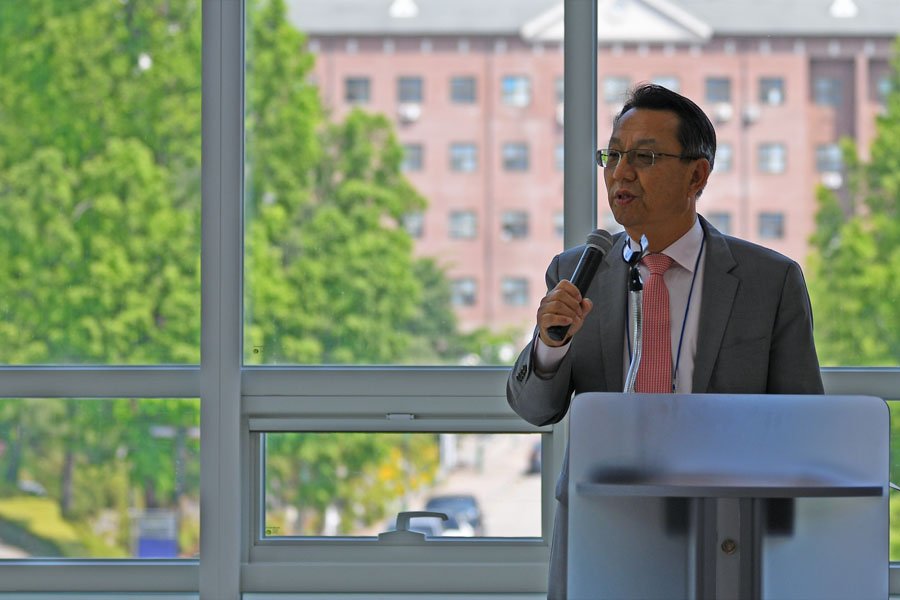
Joon-Shik Park, vice president of the Office of Vision and Cooperation at Hallym University, the conference host, noted that “East Asian countries are the most important testbeds on issues related to aging and innovation,” and that sharing meaningful research and implications from the region “will provide invaluable insights for all the societies around us.”
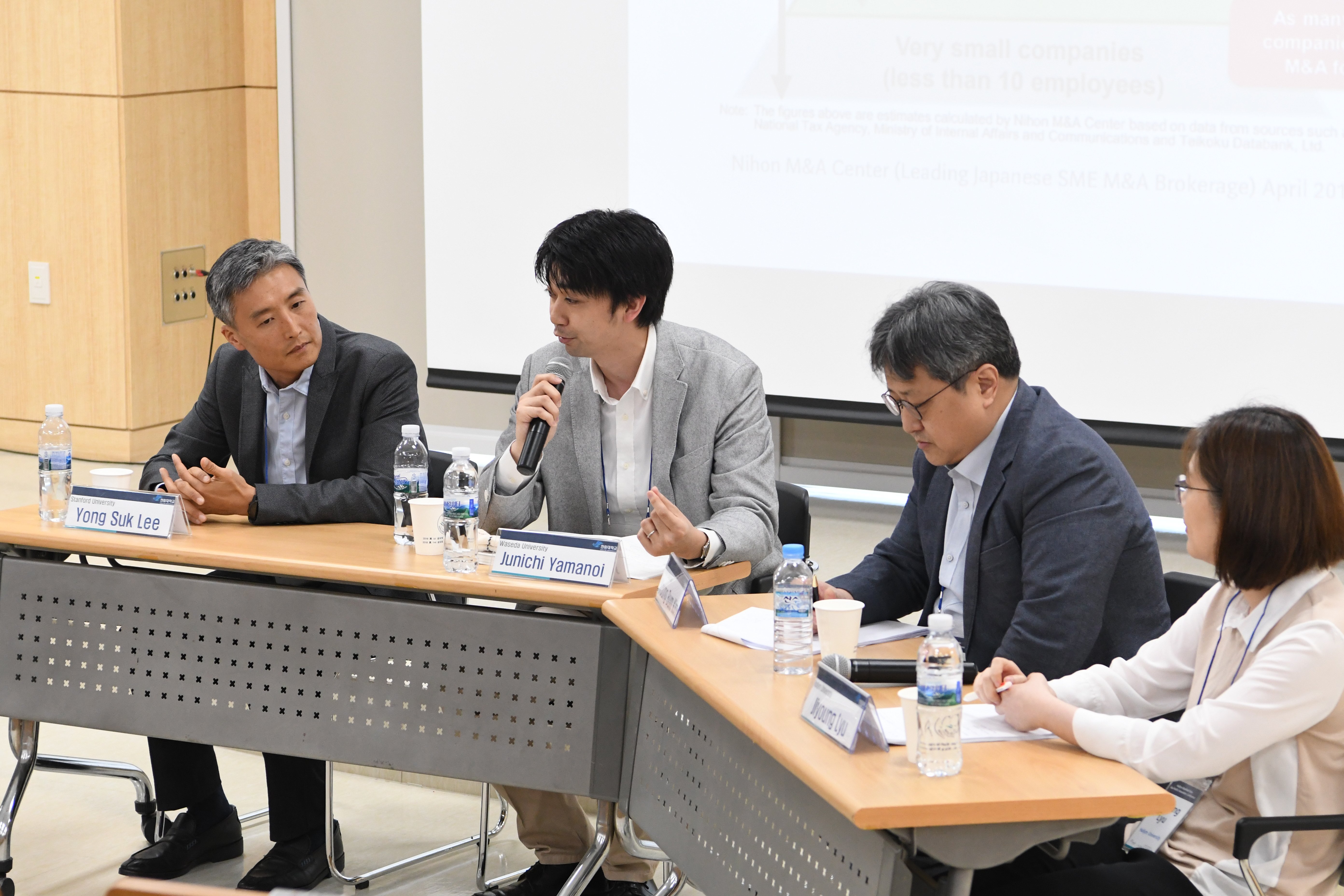
(From left to right, Yong Suk Lee , Junichi Yamanoi , Young-Bum Kim, and Jiyoung Liu)
Family Business Succession
Demographic forces and population aging at the macro level are altering family structures and assumptions at the micro level. For example, Junichi Yamanoi of Waseda University presented a study that examined how expectations around managerial succession at family firms had a significant impact on a firm’s long-term investments.
The study surveyed over 15,000 small and medium enterprises (SMEs) in the Tokyo metropolitan area. The participants were initially asked about their firm’s attributes, CEO demographics, and succession expectations. More than a year later (a time lag that eliminated reverse causality), a sampling of respondents was then asked about their current long-term investments (e.g., R&D, new product development, and internationalization activities).
Yamanoi and his coauthors found that, when a family business’ CEO was confident that a successor would follow, their firm was more likely to engage in long-term investment. Additionally, a CEO’s expectations that the successor would be someone other than their child resulted in an even greater likelihood of long-term investment.
As part of its policy propositions, the study recommends that government agencies and SME officers eager to increase investments by SMEs introduce external candidates to such firms. Moreover, family CEOs should be cautioned against investment decisions that are too short-term in orientation, as, due to inherent aversion to losses of socioemotional wealth for the family, they may unconsciously avoid long-term investments.
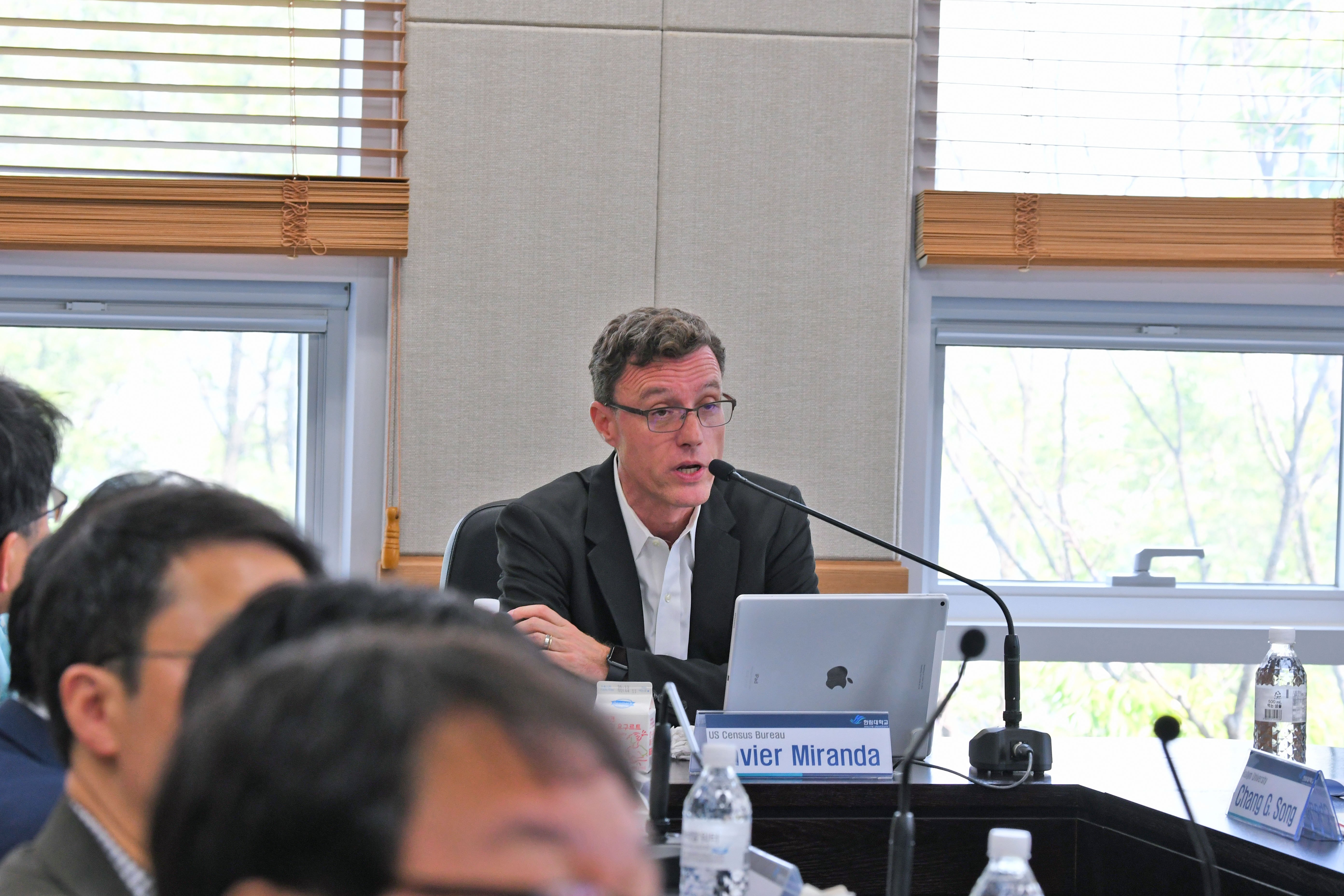
(Javier Miranda)
Rethinking Age and Entrepreneurship
At a luncheon keynote address, Javier Miranda, principal economist at the U.S. Census Bureau, shared insights into the correlations between age and high-growth entrepreneurship, considering when in life people start firms and when they start the most successful firms.
Miranda acknowledged that youth is often perceived as being crucial to entrepreneurial success, referring to Mark Zuckerberg’s dictum, “Young people are just smarter.” Venture capitalist (VC) activity seems to support this notion, said Miranda, citing a sample of 35 VC-backed “unicorns” that resulted in a mean founder age of 31. He explained that VCs' high regard of young entrepreneurs may be attributed to a belief in young people's greater deductive reasoning, transformative thinking, and higher energy, optimism, and confidence.
But does the statistical evidence support such a view? It would seem not. Miranda’s data showed that the mean age for founders of any type of firm is 41.9. Furthermore, the mean age for founders of the most successful firms (those ready for Initial Public Offering market) was 45, and a founder at age 50 was approximately twice as likely to experience successful exit or high growth compared to a founder 20 years their junior.
In fact, dependent on the starting of a firm, the probability of a founder’s success peaked in the age range of 45-59. Pointing directly to entrepreneurs like Jobs and Bezos, Miranda conceded that even extremely talented people, who may be talented enough to succeed when young, peaked in middle age.
The results of Miranda’s study seem at odds with VC attraction to younger entrepreneurs. Experience, Miranda concluded, appeared to overwhelm any potential age advantage, but more research was needed to unpack the underlying predictors of entrepreneurial success over one’s life cycle.
Role of Technology in an Aging Populace
Day two of the conference focused on the promising role technology may play as populations age. APARC Research Scholar Kenji Kushida detailed both the current and impending problems Japan faces as its population both ages and shrinks in size, and the solutions possible through technological advancement like robotics, AI, and wearable devices.
For example, Japan’s demographic shift has had a double knock-on effect on agriculture, with the percentage of farm workers age 65 or older steadily rising over the last five years and the total cultivated agricultural land decreasing each passing year. Kushida described how ICT-enabled bulldozers allow farm owners to more precisely flatten the ground in rice paddies, resulting in both greater yields and cost savings as much as 40%.
Healthcare is another significant area of concern in Japan, as healthcare costs for people over 65 are four times that of younger people and medical costs as a proportion of GDP have been increasing sharply, especially in rural areas. Shortage of physicians and diagnostic technicians is another challenge. Kushida gave an example of a technology healthcare resource that enables clinics and hospitals to upload patient medical images which are then diagnosed by medical doctors affiliated with the tool's startup developer. This low-cost solution allows smaller, rural hospitals to tap into a larger network of physicians and specialists online.
While Japan’s technological trajectory has been driven primarily by the private sector, Kushida pointed out the important role played by government actors. Specifically, within the “Abenomics” reforms of Prime Minister Shinzo Abe, several key performance indicators include support for digitizing medical records, adoption of robotics in nursing care, and extending “healthy” life expectancy.
Edited volumes collecting the papers from the annual Stanford Asia-Pacific Innovation conferences are forthcoming. These will serve as valuable references for scholars and policymakers. The first conference was held at Stanford in 2017, and examined the industrial organization of businesses and innovation clusters and how such environments affect entrepreneurship. The second conference, held in September of 2018 in Beijing, analyzed the impact of public education and financial policies pursued by East Asian countries to promote entrepreneurship.
2019 Shorenstein Journalism Award Recipient Maria Ressa to Headline Award Panel Discussion
Maria Ressa, winner of the 2019 Shorenstein Award, is an internationally-esteemed journalist and CEO and executive editor of Rappler, a Philippine independent news platform known for its critical investigative reporting on the Duterte administration’s policies and actions. President Duterte has made no secret of his dislike for Rappler, publicly accusing the platform for carrying “fake news.” Ressa has been arrested twice this year, accused of corporate tax evasion and of violating security laws, and slapped with charges of cyber libel for a report that was published before the libel law came into effect. The international community sees the allegations as politically motivated attempts by the government to silence Ressa and Rappler.
In her keynote address at this 2019 Shorenstein Journalism Award panel discussion, Ressa will talk about her crusade to combat fake news, the devastating effect disinformation has had on democracy and societal cohesion in the Philippines, and the battle for truth in the digital age.
Chaired by Shorenstein APARC Southeast Asia Program Director Donald K. Emmerson, the discussion will include remarks by Larry Diamond, senior fellow at the Hoover Institution and at the Freeman Spogli Institute for International Studies at Stanford University, and Raju Narisetti, Director, Knight-Bagehot Fellowship in Economics and Business Journalism, Professor of Professional Practice, Columbia Journalism School.
The event will conclude with a short Q&A session. Follow us on Twitter and use the hashtag #SJA19 to join the conversation.
Panelists:
Image
Maria Ressa is the CEO and executive editor of Rappler, one of the leading online news organizations in the Philippines. Ressa has been a journalist in Asia for more than 30 years and has been honored around the world for her courageous and bold work in fighting disinformation, “fake news” and attempts to silence the free press. In 2018, she was named Time magazine's "Person of the Year" and won the prestigious Golden Pen of Freedom Award from the World Association of Newspapers and News Publishers, the Knight International Journalism Award of the International Center for Journalists, the Gwen Ifill Press Freedom Award of the Committee to Protect Journalists, the Journalist of Courage and Impact Award of East-West Center, and the IX International Press Freedom Award of University of Málaga and UNESCO, among others.
She was CNN’s bureau chief in Manila then Jakarta, and became CNN’s lead investigative reporter focusing on terrorism in Southeast Asia. In 2005, she managed ABS-CBN News and Current affairs, the largest multi-platform news operation in the Philippines. Her work aimed to redefine journalism by combining traditional broadcast, new media and mobile phone technology for social change.
Ressa is the author of two books — From Bin Laden to Facebook (2012), which traces the spread of terrorism from the training camps of Afghanistan to Southeast Asia and the Philippines, and Seeds of Terror: An Eyewitness Account of Al-Qaeda’s Newest Center of Operations in Southeast Asia (2003).
Larry Diamond is a senior fellow at the Hoover Institution and at the Freeman Spogli Institute for International Studies (FSI) at Stanford University, professor, by courtesy, of political science and sociology, and principal investigator at the Global Digital Policy Incubator within FSI’s Cyber Policy Center. He also codirects the Program on Arab Reform and Democracy at FSI’s Center on Democracy, Development and the Rule of Law.
Diamond is the founding coeditor of the Journal of Democracy and serves as senior consultant at the International Forum for Democratic Studies of the National Endowment for Democracy. His research focuses on democratic trends and conditions around the world and on policies and reforms to defend and advance democracy. His most recent book, Ill Winds: Saving Democracy from Russian Rage, Chinese Ambition, and American Complacency, analyzes the challenges confronting liberal democracy in the US and around the world at this potential “hinge in history,” and offers an agenda for strengthening and defending democracy at home and abroad. His other books include In Search of Democracy (2016), The Spirit of Democracy (2008), and Developing Democracy: Toward Consolidation (1999). He has also edited or coedited more than forty books on democratic development around the world.
Raju Narisetti is Director of the Knight-Bagehot Fellowship in Economics and Business Journalism and Professor of Professional Practice at Columbia Journalism School.
Raju Narisetti most recently served as chief executive of Gizmodo Media Group, which publishes well-known digital journalism sites such as Gizmodo, Jezebel, Deadspin, Lifehacker and The Root. As the chief executive, he oversaw a significant expansion in the audience and journalistic ambitions of the group, to a monthly readership of about 116 million.
Prior to Gizmodo, Narisetti was News Corp.’s senior vice president of strategy, helping the media giant diversify and establish itself as the world’s largest digital real-estate listings company, in addition to its news and information portfolio that includes The Wall Street Journal, The Times of London and Harper-Collins. He was actively involved in the company’s mergers and acquisition strategy, spearheading new revenue opportunities, particularly in Asia.
As a business journalist and editor, Narisetti spent 14 years at The Wall Street Journal, after first starting as a summer intern there in 1991. Among the roles he held at WSJ were Editor, The Wall Street Journal Europe; Deputy Managing Editor in charge of Europe, Middle East and Africa for the global WSJ; and Managing Editor, Digital.
Narisetti also served as the managing editor for digital and new products at The Washington Post, and was primarily responsible for integrating the Post’s then separate print and online newsroom and businesses. His responsibilities at The Post also included managing web, mobile, engagement, social media, interactive, design, editing desk, video and photojournalists teams.
He is also the Founder, in 2007, of Mint, now India’s second-largest business newspaper and website, which is today known for its pioneering journalistic code of conduct and ethics in India. Narisetti began his business journalism career at The Economic Times in New Delhi, and his U.S. journalism career at The Dayton Daily News.
Narisetti is a Board Trustee of the Wikimedia Foundation, which operates Wikipedia, one of the Top 10 websites in the world, and is on the National Advisory Council of the Democracy Fund, a bipartisan foundation resource to strengthen the democratic process in the United States. He holds an M.A. from Indiana University and a B.A. (Economics) from Osmania University and an MBA from IRMA in India.
Donald K. Emmerson is senior fellow emeritus at Stanford University’s Freeman Spogli Institute for International Studies and director of the Southeast Asia Program at the Walter H. Shorenstein Asia-Pacific Research Center. An expert on Southeast Asian affairs, his research interests include issues such as sovereignty disputes in the South China Sea, China-Southeast Asia relations, U.S. Asia policy, and the future of the Association of Southeast Asian Nations (ASEAN). At Stanford, Emmerson is also affiliated with the Center for Democracy, Development and the Rule of Law and with Abbasi Program in Islamic Studies. He has taught courses on Southeast Asia in the International Relations and International Policy Studies Programs, in the Department of Political Science, and for the Bing Overseas Studies Program.
He has authored and edited numerous articles and books, and is also active as an analyst of current policy issues involving Southeast Asia. In his forthcoming edited volume, The Deer and the Dragon, leading experts explore key issues and aspects of Southeast Asia’s interactions with China, including regional security, maritime expansion, trade dependence, infrastructure diplomacy, and related foreign-policy options and actions. Emmerson has participated in many policy-related working groups focused on topics such as U.S. policy toward Southeast Asia, regionalism in East Asia, democratization in Asia, Indonesian political economy, and the future of Myanmar. In 2010 the National Bureau of Asian Research and the Woodrow Wilson International Center for Scholars awarded him a two-year research associateship given to “top scholars from across the United States” who “have successfully bridged the gap between the academy and policy.” He holds a PhD in political science from Yale and a BA in international affairs from Princeton.
About the Shorenstein Journalism Award:
The Shorenstein Journalism Award, which carries a cash prize of US $10,000, recognizes outstanding journalists who have spent their careers helping audiences around the world understand the complexities of the Asia-Pacific region, defined broadly to include Northeast, Southeast, South, and Central Asia and Australasia. Award recipients are veteran journalists with a distinguished body of work. News organizations are also eligible for the award.
The award is sponsored and presented by the Walter H. Shorenstein Asia-Pacific Research Center (Shorenstein APARC) at Stanford University. It honors the legacy of the Center’s benefactor, Mr. Walter H. Shorenstein, and his twin passions for promoting excellence in journalism and understanding of Asia. It also symbolizes the Center’s commitment to journalism that persistently and courageously seeks accuracy, deep reporting, and nuanced coverage in an age when attacks are regularly launched on the independent news media, on fact-based truth, and on those who tell it.
An annual tradition, the Shorenstein Journalism Award alternates between recipients whose work has mostly been conveyed through American news media and recipients whose work has mostly been conveyed through news media in one or more parts of the Asia-Pacific region. Included among the latter candidates are journalists who are from the region and work there, and who, in addition to their recognized excellence, may have helped defend and encourage free media in one or more countries in the region.
The award day is held at Stanford in the fall quarter. In addition to an acceptance speech at the award ceremony, the winner is expected to deliver a keynote address featured as part of a Shorenstein APARC-hosted public panel discussion on a topic relevant to his/her work. Learn more at https://aparc.fsi.stanford.edu/events/shorenstein-journalism-award.
Koret-Taube Conference Center at the John A. and Cynthia Fry Gunn SIEPR Building 366 Galvez St. Stanford, CA 94305
Maria Ressa
<br>CEO and Executive Editor, <i>Rappler</i><br><br>
Larry Diamond
<br>Senior Fellow, Hoover Institution and Freeman Spogli Institute for International Studies, Stanford<br><br>
Raju Narisetti
<br>Director, Knight-Bagehot Fellowship in Economics and Business Journalism, Professor of Professional Practice, Columbia Journalism School<br><br>
Donald K. Emmerson (Panel Chair)
<br>Shorenstein APARC Southeast Asia Program Director, Stanford<br><br>
On the spacious new lawn outside of Encina Hall, members of the Ford Dorsey Master’s in International Policy (MIP) Class of 2019 officially became Stanford graduates. Established at the Freeman Spogli Institute in 1982, the MIP program trains future leaders in cyber policy and security, global health, governance and development, international security and energy and the environment.
The 15 women and four men in this year’s cohort come from 10 different countries. Some will stay in the Bay Area, while others will move on to places including Paraguay, Mexico and Singapore to work in fields such as consulting, technology and government. Students and faculty elected Manuel Ramos Maqueda — a member of the graduating class — to speak at the graduation ceremony. A transcript of his speech is below:
Student speaker Manuel Ramos Maqueda addresses his classmates at the MIP graduation ceremony June 16, 2019. Photo: Freeman Spogli Institute
Manuel Ramos Maqueda: Graduates, parents and families from all over the world, esteemed faculty and administration: good afternoon, annyeonghaseyo, kon'nichiwa, privet, buenas tardes, merhaba, nǐ hǎo.
These would have been the only words my parents would have understood had they come to our graduation. My father always dreamt that his son could learn what he didn’t have the opportunity to learn, which is why he encouraged me to learn English. So, before anything else, I take this moment to thank them — our parents and families — for providing us with the tools and opportunities that would allow us — that would allow me— to spend the two most inspiring years of my life with this incredible group of people.
First Day in Encina Hall
Do you remember our first day in that building, Encina Hall? As I struggled with my English, I was quite intimidated to meet the deputy director of our program, Professor Kathryn Stoner, as well as the former intermediator between Obama and Putin as U.S. Ambassador to Russia, Ambassador McFaul. Professor McFaul said two things then that I still remember. One is that by just spending the next two years learning from each other, even if we did not take a single class, we would leave with a vast new breadth of knowledge. Then, he said that our program was going to become, if it wasn’t already, the best policy program not in the U.S., but in the world!
I was like, “Wow, those are two big statements.” In this program we have learned to believe in evidence-based policy making. Two years have passed, and at this point we have the evidence to analyze whether these statements were true. It is my goal to evaluate them in this speech. First, have I really learned that much from my peers? And second, is this truly becoming the best policy program in the world?
The Classmates
Let’s start with my classmates.
To me, the beginning of our program was the bootcamp. But not the one in September. Instead, the one in the Fall quarter — more specifically, Chonira’s class. That class was the preparation for two intense and highly rewarding years at Stanford.
For the first assignment, Juan and I stayed up with Kerem almost the entire night working on it. We had been in the library for hours, skipped dinner, no sunlight, ready to give up on this one killer assignment, then Juan looks to Kerem and says, “You know this is actually a weekly assignment, right?” Kerem almost had a heart attack.
You would think that after that amount of work, Kerem would never take another one of Chonira’s classes. Well, not only did he take all of her other classes, but he even ended up asking for a Directed Reading with Chonira this year.
This commitment to challenging ourselves, and loving the process of learning, is a characteristic that I am proud to say I learned from my classmates. And not just from Kerem, but also from Rose, and the hours she would put in on the data science track for something she believed in; Drew, Nikki and Sneha, who pretty much gave their lives to “Design for Extreme Affordability;” and through the many of us who floated for hours in the frigid Russian River in an exercise of survival training. I have learned from all of you that no matter how much effort and how many hours something might involve, if you believe in it, you should fight for it, and you will make it happen (as we made it to the camp site).
After our intense fall quarter of the first year, the winter cold brought our community closer together. First, on our trip to Tahoe, where we learned playing Pictionary that chickens have four legs. Then, on our trip to Korea, where, in one of those magic moments of life, we ran into Elizabeth Warren at the DMZ on the same day that Kim Jong Un visited China for the first time. We had the privilege of listening to the powerful stories of North Korean defectors; learned so much from our government allies, Soo Yeon and Amb Stephens; and even participated in a cultural immersion with dancing contests in a drag bar, with soju, of course.
However, what I truly remember from these trips is how much our community bonded. We created a system of support where, no matter the circumstances, we would all be there for each other. For example, MC made sure that each of us would feel included, becoming a second mother to many of us. In each of these trips, coming to the hotel at the end of the day started to feel like actually coming home. Our time together has shown that no matter where or when we see each other in the future, I know our friendships will remain as if no time ever passed.
Apart from our commitment to challenge ourselves and the system of support we generated, I really love that everyone in our program is fully free to be what they want and who they want to be. An example has been the “fireside chats” organized by Mackenzie. With full openness and no judgments, this was a place where everything one said would be safe. We learned about people’s fears and toughest times – cases of anxiety and depression, family struggles – but also about our cherished dreams and aspirations.
When there have been escalations in conflict between our countries, such as the recent case of India and Pakistan, our classmates from these countries decide to get together to prove how dialogue and respect can deescalate tensions. I have honestly felt that this program is based on real cooperation rather than forceful competition. I believe these are the policymakers we need for a future of peace and cooperation.
To conclude this point, I’ll briefly say to your families, whether they are here or not: as a classmate, I believe you should be proud of your sons and daughters. Not for the title they are receiving today, but for the wonderful people they are. They have been the main source of my learning in the past two years, and I say to all of you, thank you.
Professor McFaul, you were right – when I consider the aforementioned variables in my regression, the results are statistically significant at the 99% confidence level. This program would be worth it alone just for how much I have learned from them.
The Program
Let’s now evaluate the second big statement: is our policy program that incredible? The core of a program are generally its faculty and its values.
In terms of faculty, I believe there is a unique aspect of FSI — it strives to bridge the gap between policy and academia. As professors Francis Fukuyama and Jeremy Weinstein have taught us, we not only know how to design evidence-based policy solutions, but also how to actually make things happen in the real world. I could also mention the other wonderful professors at FSI with whom we had faculty dinners organized by our queen, Nicole, but then this speech would never end.
A second, unique aspect of our program comes from our access to the broader Stanford network, which has bridged the gap between the technical and the policy realms. Our world requires policymakers who know how to make use of data and algorithms for good, to understand the science behind climate change, to consider the health implications of humanitarian crises, or to understand the risks of twin-deficits in the macroeconomic situation of a country. By combining classes in the engineering, business, law and design schools, we have become policymakers who understand the deeper, technical issues of our societies. We are now prepared to use science and technology for the progress of humanity.
A third crucial aspect of our program is the people who keep it running. Ambassador McFaul and Professor Stoner have helped us find the right direction for the program. Thanks very much, Ambassador McFaul, for the excitement every time we would get a story “off the record.” And Professor Stoner, for leading us throughout our practicum projects and our time here. We might have given you some headaches, but probably not as many as we have given Jonathan, Kristin and Meghan. An example of this is how throughout the past week, we have all been bombarding Jonathan asking whether we would graduate. As usual, Jonathan’s response was, calm down, it will be fine. You have all kept the ship floating in the right direction, with a positive attitude and a warm smile, and I would like to thank you for it.
Student Values
Finally, I think what really makes a program absolutely unique is its values. I don’t think any other program had someone like Mackenzie, who interviewed all of the members of her cohort to fully understand their motivations and beliefs. In brief, we indicated that we empathize with humanity, we are open to the new and we remain mission-oriented.
We empathize with humanity because we try to understand and address the needs of those who we may have never met in circumstances we may have never faced.
As I like to put it, we would like to represent the voices of those who cannot be heard. Within each of our nations, but also across borders. We have seen this in our program as many classmates went to the border with Mexico to support people fleeing from conflict, or how others fight to save our planet from the threat of climate change.
We are open to the new because we seek out new experiences and approach new ideas with an open mind.
This program has been a great training for this. How much we’ve learned from each other’s cultures: we celebrated the Chinese New Year, and even learned from Jessica how, in China, parents would post their children’s resumes in squares to find them a future spouse. We have celebrated Ramadan, and we, the internationals, have even experienced how to have an American tailgate, and tried to learn the rules of an American football game – still not there yet.
We are, and will remain, mission-oriented, because we feel a sense of duty to execute on our unique personal missions. That means taking a long view and not letting the minor challenges take us down. Even though sometimes we might not have a clear sense of our next steps, and we even might feel lost, we will consider the bigger picture and what inspires us, and remain committed to that vision.
Those values are the unifying theme of our cohort and will remain the essentials of our toolbox as we leave Stanford.
Overall, I think it is safe to say that our program bridges the gap between policy and research, between the technical skills and the domain knowledge, between D.C. and Silicon Valley, and perhaps even between China, Russia and the U.S. I may not know other programs that well. However, with our values, faculty and staff, and of course the killer classmates we have, I feel safe to say that this is becoming the best policy program not only in the U.S., but in the world.
The Transformation
In the world of public speaking it is well known that there is no pleasure you can give an audience that compares to the pleasure they get when the speech is over. However, I have one last thought to share, so you can look forward to experiencing that pleasure in about three minutes from now.
I think the only aspect missing from my analysis is that we cannot think of ourselves and the program in a static way. We live in a dynamic world. This program has transformed us, and we will keep transforming the world as we move on.
I came to this program aware of how globalization exposes us to the vast inequalities that separate regions of the world. However, until now I perhaps didn’t fully understand the complexities and intricacies of the big challenges we aim to address. For example, after doing my research I now better understand what causes malaria and how to prevent it. Through my classmates’ research, I have been exposed to the big power competition in the era of AI, to ways of promoting financial inclusion in Tanzania, and expanding zero-emission policies in the U.S. that are vital for our planet. Perhaps more importantly, I have learned the tricks to be part of the citizenship and residency-by-investment program, and will be able to move to an idyllic island when I decide to retire [joking].
This program has really transformed me. I have spent way too many hours in front of RStudio, lost too much sleep, and even gained some weight. After meeting Nicole, I thought that I would also start waking up at 5 a.m. and running 10 miles every morning. But hey, my theory of the change didn’t go that far. But really, this program has given us the tool to make a real change in our futures. We are now fully aware of the crucial challenges of our planet, we have the evidence required to know how to deal with them and we will use the tools we learned to address them.
With these tools, we have the potential to change the world. MC, Julie and Nicole are already doing so from Kenya and DC. Some of us, such as Vivien, Mackenzie, Annie and Nancy loved the Bay too much to let it go, and they will be leveraging the power of tech from California. Nikki and Isabelle are soon moving to Mexico and Paraguay to contribute to the communities there. Drew decided to follow his dreams in Singapore. Many of you will contribute to a peaceful and prosperous world from your foreign ministries. And we might even have among us a future Hollywood producer, and perhaps the next president of Argentina.
Overall, I am extremely grateful to my classmates, the program and the transformation we have experienced throughout these past two years. In my case, this is all thanks to previous generations who fought to provide me with the opportunities they didn’t have. I am confident that, equipped with the tools learned and the values developed, each and all of us will work to provide future generations, all over the world, with a better chance to follow their dreams than the one the current generation has. As we have learned here at Stanford, the challenges we face are increasingly complex, increasingly global, increasingly daunting. But I have seen the potential of each of you — of all of us — and I know that we will not stop until we make it. I truly believe in you — in us — to realize our potential. I am excited to see what comes next.
Thank you very much, and happy graduation!
Hero Image
Ford Dorsey Master’s in International Policy students celebrate their graduation on the front steps of Encina Hall June 16, 2019. Photo: Meghan Moura

 FSI researchers work to understand continuity and change in societies as they confront their problems and opportunities. This includes the implications of




 Student speaker Manuel Ramos Maqueda addresses his classmates at the MIP graduation ceremony June 16, 2019. Photo: Freeman Spogli Institute
