Society

FSI researchers work to understand continuity and change in societies as they confront their problems and opportunities. This includes the implications of migration and human trafficking. What happens to a society when young girls exit the sex trade? How do groups moving between locations impact societies, economies, self-identity and citizenship? What are the ethnic challenges faced by an increasingly diverse European Union? From a policy perspective, scholars also work to investigate the consequences of security-related measures for society and its values.

The Europe Center reflects much of FSI’s agenda of investigating societies, serving as a forum for experts to research the cultures, religions and people of Europe. The Center sponsors several seminars and lectures, as well as visiting scholars.

Societal research also addresses issues of demography and aging, such as the social and economic challenges of providing health care for an aging population. How do older adults make decisions, and what societal tools need to be in place to ensure the resulting decisions are well-informed? FSI regularly brings in international scholars to look at these issues. They discuss how adults care for their older parents in rural China as well as the economic aspects of aging populations in China and India.

-

Livestream: This event will not be live-streamed or recorded.


Abstract: Despite a lull after the fall of the Soviet Union, grassroots activism in Russia is on the rise. The protests for free elections that swept across Russia in the summer of 2019 may have captured international headlines, but many other Russian grassroots groups have been actively organizing over the last decade. What types of civic movements exist in today’s Russia? What are the risks that civic activists face? How do they interact with the state or state-protected interest groups? Finally, what role could grassroots groups play in democratizing Russia? Russian activist Evgeniya Chirikova will shed light on these questions through her personal experience as an environmental activist and as a coordinator of Activatica.org, an online news platform covering grassroots activism across Russia.


Speaker's Biography:

Image
2012europe 111
Evgeniya Chirikova is a Russian environmental activist, primarily known for opposing the building of a motorway through the Khimki forest near Moscow. She also played a prominent role in the 2011-2012 Russian protests following disputed parliamentary elections in Russia. In March 2011, she received the Woman of Courage Award, handed over by US Vice President Joe Biden. In 2012, she was a winner of the Goldman Environmental Prize. In November 2012, Foren Policy named Chirikova one of its 2012 Top 100 Global Thinkers. In 2015 Chirikova organized the portal activatica.org, and she is currently organizing media support for grassroots groups.

Evgeniya Chirikova Russian Environmental Activist
Seminars
-

Image
David Beasley
Please join us for a conversation with United Nations World Food Programme Executive Director David Beasley, who will discuss "Challenges of 21st Century Humanitarian Response." The conversation will be moderated by his predecessor at the agency, Ertharin Cousin, a visiting fellow at the Center on Food Security and the Environment.

R.S.V.P.

As Executive Director of the World Foods Programme (WFP), Mr. Beasley serves at the level of Under-Secretary-General of the United Nations and is a member of the organization's Senior Management Group under the leadership of Secretary-General António Guterres. At WFP, he is putting to use four decades of leadership and communications skills to mobilize more financial support and public awareness for the global fight against hunger. Under his leadership, WFP kept four countries from slipping into famine in 2017 and is moving beyond emergency food assistance, to advance longer term development that brings peace and stability to troubled regions. Before coming to WFP in April 2017, Beasley spent a decade working with high-profile leaders and on-the-ground programme managers in more than 100 countries, directing projects designed to foster peace, reconciliation and economic progress.

David Beasley was elected at the age of 21 to the South Carolina House of Representatives (1979-1992) and as Governor of South Carolina (1995-1999), one of the youngest in the state’s history.  He received a Profile in Courage Award in 2003 from the John F. Kennedy Library Foundation and is a 1999 Fellow of the Institute of Politics at Harvard University’s Kennedy School of Government. Born in 1957, he attended Clemson University and holds a B.A. from the University of South Carolina, as well as a J.D. from the University of South Carolina School of Law.

The Conversation with David Beasley is co-sponsored by Stanford’s Freeman Spogli Institute for International Studies; the Center on Food Security and the Environment and the Annenberg Foundation Trust at Sunnylands.

 The lecture will be held at the David and Joan Traitel Building, 435 Lasuen Mall, Stanford University. For more information about the event, contact Sonal Singh at sonals@stanford.edu.

About the Wesson Lecture

The Wesson Lectureship was established at Stanford by the Freeman Spogli Institute for International Studies in 1988. It provides support for a public address at the university by a prominent scholar or practicing professional in the field of international relations. The series is made possible by a gift from the late Robert G. Wesson, a scholar of international affairs, prolific author, and senior research fellow at the Hoover Institution.

Lectures
-

Abstract: We have learned a great deal about Iraq since the fateful decision to invade the country in 2003. Given academic research on Iraqi society and politics over the past 16 years and hard won lessons from U.S. intervention in Iraq, what what are the lessons learned for contemporary U.S. policymakers? And, crucially, what role should Iraq play in current U.S. foreign policy and its regional strategy toward the Middle East?


Seminar Recording: https://youtu.be/4OBQOshr-gs


Speakers:

Colin H. Kahl Co-director of the Center for International Security and Cooperation, the inaugural Steven C. Házy Senior Fellow at the Freeman Spogli Institute for International Studies, and a Professor, by courtesy, in the Department of Political Science at Stanford University.

Brett McGurk Frank E. and Arthur W. Payne Distinguished Lecturer at the Freeman Spogli Institute and Center for Security and Cooperation at Stanford University.

With moderator: Lisa Blaydes
Professor of Political Science at Stanford University and a Senior Fellow at the Freeman Spogli Institute for International Studies


Speaker's Biography: 

Image
colin kahl
Colin H. Kahl is co-director of the Center for International Security and Cooperation, the inaugural Steven C. Házy Senior Fellow at the Freeman Spogli Institute for International Studies, and a Professor, by courtesy, in the Department of Political Science at Stanford University. He is also a Strategic Consultant to the Penn Biden Center for Diplomacy and Global Engagement.

From October 2014 to January 2017, he was Deputy Assistant to the President and National Security Advisor to the Vice President. In that position, he served as a senior advisor to President Obama and Vice President Biden on all matters related to U.S. foreign policy and national security affairs, and represented the Office of the Vice President as a standing member of the National Security Council Deputies’ Committee. From February 2009 to December 2011, Dr. Kahl was the Deputy Assistant Secretary of Defense for the Middle East at the Pentagon. In this capacity, he served as the senior policy advisor to the Secretary of Defense for Egypt, Iran, Iraq, Israel and the Palestinian territories, Saudi Arabia, Syria, Yemen, and six other countries in the Levant and Persian Gulf region. In June 2011, he was awarded the Secretary of Defense Medal for Outstanding Public Service by Secretary Robert Gates. 

From 2007 to 2017 (when not serving in the U.S. government), Dr. Kahl was an assistant and associate professor in the Security Studies Program at Georgetown University's Edmund A. Walsh School of Foreign Service. From 2007 to 2009 and 2012 to 2014, he was also a Senior Fellow at the Center for a New American Security (CNAS), a nonpartisan Washington, DC-based think tank. From 2000 to 2007, he was an assistant professor of political science at the University of Minnesota. In 2005-2006, Dr. Kahl took leave from the University of Minnesota to serve as a Council on Foreign Relations International Affairs Fellow in the Office of the Secretary of Defense, where he worked on issues related to counterinsurgency, counterterrorism, and responses to failed states. In 1997-1998, he was a National Security Fellow at the John M. Olin Institute for Strategic Studies at Harvard University.

Current research projects include a book analyzing American grand strategy in the Middle East in the post-9/11 era. A second research project focuses on the implications of emerging technologies on strategic stability.

He has published numerous articles on international security and U.S. foreign and defense policy in Foreign Affairs, Foreign Policy, International Security, the Los Angeles Times, Middle East Policy, the National Interest, the New Republic, the New York Times, Politico, the Washington Post, and the Washington Quarterly, as well as several reports for CNAS.

His previous research analyzed the causes and consequences of violent civil and ethnic conflict in developing countries, focusing particular attention on the demographic and natural resource dimensions of these conflicts. His book on the subject, States, Scarcity, and Civil Strife in the Developing World, was published by Princeton University Press in 2006, and related articles and chapters have appeared in International Security, the Journal of International Affairs, and various edited volumes.

Dr. Kahl received his B.A. in political science from the University of Michigan (1993) and his Ph.D. in political science from Columbia University (2000).


Image
mcgurk brett holden   official dos photo copy
Brett McGurk is the Frank E. and Arthur W. Payne Distinguished Lecturer at the Freeman Spogli Institute and Center for Security and Cooperation at Stanford University.

McGurk’s research interests center on national security strategy, diplomacy, and decision-making in wartime.  He is particularly interested in the lessons learned over the presidencies of George W. Bush, Barack Obama, and Donald Trump regarding the importance of process in informing presidential decisions and the alignment of ends and means in national security doctrine and strategy.  At Stanford, he will be working on a book project incorporating these themes and teaching a graduate level seminar on presidential decision-making beginning in the fall of 2019.  He is also a frequent commentator on national security events in leading publications and as an NBC News Senior Foreign Affairs Analyst. 

Before coming to Stanford, McGurk served as Special Presidential Envoy for the Global Coalition to Defeat ISIS at the U.S. Department of State, helping to build and then lead the coalition of seventy-five countries and four international organizations in the global campaign against the ISIS terrorist network.  McGurk was also responsible for coordinating all aspects of U.S. policy in the campaign against ISIS in Iraq, Syria, and globally.

McGurk previously served in senior positions in the George W. Bush and Barack Obama administrations, including as Special Assistant to President Bush and Senior Director for Iraq and Afghanistan, and then as Deputy Assistant Secretary of State for Iraq and Iran and Special Presidential Envoy for the U.S. campaign against the Islamic State under Obama.

McGurk has led some of the most sensitive diplomatic missions in the Middle East over the last decade. His most recent assignment established one of the largest coalitions in history to prosecute the counter-ISIS campaign. He was a frequent visitor to the battlefields in both Iraq and Syria to help integrate military and civilian components of the war plan. He also led talks with Russia over the Syria conflict under both the Trump and Obama administrations, initiated back-channel diplomacy to reopen ties between Iraq and Saudi Arabia, and facilitated the formation of the last two Iraqi governments following contested elections in 2014 and 2018.

In 2015 and 2016, McGurk led fourteen months of secret negotiations with Iran to secure the release of Washington Post reporter Jason Rezain, U.S. Marine Amir Hekmati, and Pastor Saad Abadini, as well as three other American citizens.

During his time at the State Department, McGurk received multiple awards, including the Distinguished Honor Award and the Distinguished Service Award, the highest department awards for exceptional service in Washington and overseas assignments.

McGurk is also a nonresident senior fellow in the Middle East Program at the Carnegie Endowment for International Peace.

McGurk received his JD from Columbia University and his BA from the University of Connecticut Honors Program.  He served as a law clerk to Chief Justice William H. Rehnquist on the U.S. Supreme Court, Judge Denis Jacobs on the U.S. Court of Appeals for the 2d Circuit, and Judge Gerard E. Lynch on the U.S. District Court for the Southern District of New York.


Colin Kahl Stanford University
Brett McGurk Stanford University
Seminars
-

DAY 1: Friday October 11


8:30 – 9:00am         Breakfast


9:00 – 9:15am         Introductory Remarks


9:15 – 11:15am       Panel 1: The Boundaries of Authoritarianism post-Arab Uprisings

Amr Hamzawy, Stanford University

“The Discourse of Authoritarianism in Egypt”

Sean Yom, Temple University

“Mobilization without Movement: The Curse of the Arab Spring in Jordan”

Samia Errazzouki, University of California, Davis

“Political and Economic Stagnation in Morocco: Twenty Years into King Mohamed VI’s Reign”

Chair: Lisa Blaydes, Stanford University


11:15-11:30am        Coffee Break


11:30-1:30pm          Panel 2: Popular Uprisings and Uncertain Transitions

Thomas Serres, University of California, Santa Cruz

“Beyond the ‘Isaba: A Political Economy of the Algerian Hirak”

Lindsay Benstead, Portland State University

“Religious Ideology or Clientelism? Explaining Voter Preferences in Tunisia’s Transitional Elections”

Khalid Medani, McGill University

"The Prospects and Challenges of Democratic Consolidation in Sudan: Understanding the Roots, Dynamics and Potential of an “Impossible” Revolution""

Chair: Hicham Alaoui, Harvard University


1:30-2:30pm             Lunch


2:30-4:30pm             Panel 3: Politics, Succession and Sectarianism in the GCC States

Toby Matthiesen, Oxford University

“Saudi Arabia and the Arab Counter-Revolution”

Michael Herb, Georgia State University

“Monarchical Institutions and the Decay of Family Rule in the Gulf”

Farah Al-Nakib, California Polytechnic State University

“Kuwait's New Urbanism: Palace Projects and the Erosion of the Public”                                   

Chair: Hesham Sallam, Stanford University


DAY 2: Saturday October 12


8:30 – 9:00am          Breakfast


9:00 – 11:00am       Panel 4: Social Strife and Proxy Conflict in the Middle East

Lina Khatib, Chatham House

“Syria’s Conflict: The Intersections of the International and the Domestic”

Stacey Philbrick Yadav, Hobart and William Smith Colleges,

“Can Allies in War Become Partners in Peace? 
Foreign Agendas, Foreign Investment, and Peacebuilding in Yemen”

David Patel, Brandeis University

“Institutions and Competition in Post-Occupation Iraq”

Chair: Amr Hamzawy, Stanford University


11:00-11:15am        Coffee Break


11:15-1:15pm          Panel 5: International Forces in the Arab Political Arena

Lisa Blaydes, Stanford University

“Will China's 'Belt and Road' Initiative Steady or Destabilize Arab Authoritarians?”  

Abbas Milani, Stanford University,

“Iran and its Role in the Prospects of Democracy in the Arab World”

Colin Kahl, FSI, Stanford University

“US Policy Toward a Changing Middle East”

Ayca Alemdaroglu, FSI, Stanford University

“The Rise and Fall of ‘neo-Ottomanism’”

Chair: Larry Diamond, Stanford University


SPEAKER BIOS


Image
hicham alaoui

Hicham Alaoui is an established voice calling for political reform in the Arab world. He is currently a research fellow based at the Weatherhead Center for International Affairs at Harvard University, and is pursuing a D.Phil. at the University of Oxford.  Previously at Stanford, he was a Consulting Professor at the Center for Democracy, Development, and Rule of Law, and advisory board member at the Freeman Spogli Institute. He has published on democratic reforms in the Middle East for journals such as Politique Internationale, Le Debat, Pouvoirs, Le Monde Diplomatique, and Journal of Democracy. He has contributed to The New York Times, Le Monde, La Nouvelle Observateur, El Pais, and Al-Quds. He also served on the MENA Advisory Committee for Human Rights Watch. He holds degrees from Princeton and Stanford. [Back to top]


Image
ayca

Ayça Alemdaroğlu (Ph. D. Cambridge, 2011) (Ph. D. Cambridge, 2011) is the associate director of the Keyman Modern Turkish Studies Program and research assistant professor of sociology at Northwestern University. Her research has engaged with a broad range of theoretical and ethnographic issues, including youth culture and politics, gender and sexuality, experiences of modernity, nationalism, eugenics and higher education. Between 2011-2015, Alemdaroğlu taught in the Anthropology Department and Introductory Studies at Stanford University. Her most publications include "Spatial Segregation and Class Subjectivity in Turkey” published in Social and Cultural Geography; and “Dialectics of Reform and Repression: Unpacking Turkey’s Authoritarian Turn” (with Sinan Erensu) in ROMES. [Back to top]


Image
lindsay b 2

Lindsay J. Benstead  is Associate Professor of Political Science in the Mark O. Hatfield School of Government and Director of the Middle East Studies Center (MESC) at Portland State University. Previously, she served as Fellow in the Middle East Program and the Women’s Global Leadership Initiative at the Woodrow Wilson International Center for Scholars in Washington, DC (2018-2019) and Kuwait Visiting Professor at SciencesPo in Paris (fall 2016). She is an Affiliated Scholar in the Program on Governance and Local Development (GLD) at the University of Gothenburg and Yale University. Benstead has conducted surveys in Morocco, Algeria, Tunisia, Libya, and Jordan and contributes to the Transitional Governance Project. Her research on women and politics, public opinion, and survey methodology has appeared in Perspectives on Politics, International Journal of Public Opinion Research, Governance, and Foreign Affairs. She holds a Ph.D. in Public Policy and Political Science from the University of Michigan in Ann Arbor and served as a doctoral fellow at Yale University and a post-doctoral fellow at Princeton University. [Back to top]


Image
lisa blaydes

Lisa Blaydes is a Professor of Political Science at Stanford University and a Senior Fellow at the Freeman Spogli Institute for International Studies. She is the author of Elections and Distributive Politics in Mubarak’s Egypt (Cambridge University Press, 2011). Her articles have appeared in the American Political Science ReviewInternational Studies QuarterlyInternational OrganizationJournal of Theoretical PoliticsMiddle East Journal, and World Politics. She holds degrees in Political Science (PhD) from the University of California, Los Angeles and International Relations (BA, MA) from Johns Hopkins University. [Back to top]


Image
Larry Diamond

Larry Diamond is a senior fellow at the Hoover Institution and at the Freeman Spogli Institute for International Studies. For more than six years, he directed FSI’s Center on Democracy, Development, and the Rule of Law, where he now leads its Program on Arab Reform and Democracy and its Global Digital Policy Incubator. He is the founding co-editor of the Journal of Democracy and also serves as Senior Consultant at the International Forum for Democratic Studies of the National Endowment for Democracy. His research focuses on democratic trends and conditions around in the world, and on policies and reforms to defend and advance democracy. His 2016 book, In Search of Democracy, explores the challenges confronting democracy and democracy promotion, gathering together three decades of his writing and research, particularly on Africa and Asia. He is author of Ill Winds: Saving Democracy from Russian Rage, Chinese Ambition, and American Complacency, published in 2019 by Penguin Press. He is now writing a textbook on democratic development. [Back to top]


Image
samia e

Samia Errazzouki is a PhD student focusing on early modern Northwest African history. Prior to UC Davis, she worked as a journalist based in Morocco reporting for the Associated Press, and later, with Reuters. Samia also worked as a research associate in Morocco with the University of Cambridge, researching the dynamics of surveillance and citizen media in light of the "Arab Spring." She is currently a co-editor with Jadaliyya. Her work and commentary has appeared in various platforms including The Washington PostBBCForeign PolicyThe GuardianAl Jazeera, the Carnegie Endowment's Sada Journal, the Journal of North African Studies, and the Middle East Institute, among others. Samia holds an MA in Arab Studies from Georgetown University and a BA in Global Affairs from George Mason University. [Back to top]


Image
amr hamzawy cropped

Amr Hamzawy is a Senior Research Scholar at CDDRL. He studied political science and developmental studies in Cairo, The Hague, and Berlin. He was previously an associate professor of political science at Cairo University and a professor of public policy at the American University in Cairo. Between 2016 and 2017, he served as a senior fellow in the Middle East program and the Democracy and Rule of Law program at the Carnegie Endowment for International Peace, Washington, DC. His research and teaching interests as well as his academic publications focus on democratization processes in Egypt, tensions between freedom and repression in the Egyptian public space, political movements and civil society in Egypt, contemporary debates in Arab political thought, and human rights and governance in the Arab world. He is currently writing a new book on contemporary Egyptian politics, titled Egypt’s New Authoritarianism. Hamzawy is a former member of the People’s Assembly after being elected in the first Parliamentary elections in Egypt after the January 25, 2011 revolution. He is also a former member of the Egyptian National Council for Human Rights. Hamzawy contributes a weekly op-ed to the Egyptian independent newspaper al-Shorouk and a weekly op-ed to the London based newspaper al-Quds al-Arabi[Back to top]


Image
michael herb square 620x620

Michael Herb is professor and chair of political science at Georgia State University. His work focuses on Gulf politics, monarchism and the resource curse. He is the author of The Wages of Oil: Parliaments and Economic Development in Kuwait and the UAE (Cornell University Press, 2014) and All in the Family: Absolutism, Revolution, and Democracy in the Middle Eastern Monarchies (SUNY ‎‎1999), in addition to numerous articles. He maintains the Kuwait Politics Database, a comprehensive and authoritative source of information on Kuwaiti elections.  He has twice won Fulbright awards to study in Kuwait. [Back to top]


Image
colin kahl

Colin H. Kahl is co-director of the Center for International Security and Cooperation, the inaugural Steven C. Házy Senior Fellow at the Freeman Spogli Institute for International Studies, and a Professor, by courtesy, in the Department of Political Science at Stanford University. He is also a Strategic Consultant to the Penn Biden Center for Diplomacy and Global Engagement. From October 2014 to January 2017, he was Deputy Assistant to the President and National Security Advisor to the Vice President. In that position, he served as a senior advisor to President Obama and Vice President Biden on all matters related to U.S. foreign policy and national security affairs, and represented the Office of the Vice President as a standing member of the National Security Council Deputies’ Committee. From February 2009 to December 2011, Dr. Kahl was the Deputy Assistant Secretary of Defense for the Middle East at the Pentagon. In this capacity, he served as the senior policy advisor to the Secretary of Defense for Egypt, Iran, Iraq, Israel and the Palestinian territories, Saudi Arabia, Syria, Yemen, and six other countries in the Levant and Persian Gulf region. In June 2011, he was awarded the Secretary of Defense Medal for Outstanding Public Service by Secretary Robert Gates. From 2007 to 2017 (when not serving in the U.S. government), Dr. Kahl was an assistant and associate professor in the Security Studies Program at Georgetown University's Edmund A. Walsh School of Foreign Service. From 2007 to 2009 and 2012 to 2014, he was also a Senior Fellow at the Center for a New American Security (CNAS), a nonpartisan Washington, DC-based think tank. From 2000 to 2007, he was an assistant professor of political science at the University of Minnesota. In 2005-2006, Dr. Kahl took leave from the University of Minnesota to serve as a Council on Foreign Relations International Affairs Fellow in the Office of the Secretary of Defense, where he worked on issues related to counterinsurgency, counterterrorism, and responses to failed states. In 1997-1998, he was a National Security Fellow at the John M. Olin Institute for Strategic Studies at Harvard University. Current research projects include a book analyzing American grand strategy in the Middle East in the post-9/11 era. A second research project focuses on the implications of emerging technologies on strategic stability. He has published numerous articles on international security and U.S. foreign and defense policy in Foreign Affairs, Foreign Policy, International Security, the Los Angeles Times, Middle East Policy, the National Interest, the New Republic, the New York Times, Politico, the Washington Post, and the Washington Quarterly, as well as several reports for CNAS. His previous research analyzed the causes and consequences of violent civil and ethnic conflict in developing countries, focusing particular attention on the demographic and natural resource dimensions of these conflicts. His book on the subject, States, Scarcity, and Civil Strife in the Developing World, was published by Princeton University Press in 2006, and related articles and chapters have appeared in International Security, the Journal of International Affairs, and various edited volumes. Dr. Kahl received his B.A. in political science from the University of Michigan (1993) and his Ph.D. in political science from Columbia University (2000). [Back to top]


Image
lina khatib

Lina Khatib is Head of the Middle East and North Africa Program at Chatham House. She was formerly director of the Carnegie Middle East Center in Beirut and co-founding Head of the Program on Arab Reform and Democracy at Stanford University’s Center on Democracy, Development, and the Rule of Law. Her research focuses on the international relations of the Middle East, Islamist groups and security, political transitions and foreign policy, with special attention to the Syrian conflict. She is a research associate at SOAS, was a senior research associate at the Arab Reform Initiative and lectured at Royal Holloway, University of London. She has published seven books and also written widely on public diplomacy, political communication and political participation in the Middle East. She is a frequent commentator on politics and security in the Middle East and North Africa at events around the world and in the media. [Back to top]


Image
toby m press photo tm

Toby Matthiesen is a Senior Research Fellow in the International Relations of the Middle East at the Middle East Centre, St. Antony’s College, University of Oxford. He was previously a Research Fellow at Pembroke College, Cambridge, and at the London School of Economics and Political Science and gained his doctorate from the School of Oriental and African Studies (SOAS). He is the author of Sectarian Gulf: Bahrain, Saudi Arabia, and the Arab Spring That Wasn't (Stanford University Press, 2013), and The Other Saudis: Shiism, Dissent and Sectarianism (Cambridge University Press, 2015). His current research focuses on Sunni-Shii relations and the legacies of the Cold War in the Middle East. [Back to top]


Image
Medani 2 sc

Khalid Medani is currently associate professor of political science and Islamic studies at McGill University, and has also taught at Oberlin College and Stanford University. Dr. Medani received an A.B. in development studies from Brown University (1987), an MA in development studies from the Center for Contemporary Arab Studies at Georgetown University (1994), and a PhD in political science from the University of California, Berkeley (2003). His research focuses on the political economy of Islamic and ethnic politics in Egypt, Sudan and Somalia. He has published widely on the roots of civil conflict and the funding of the Islamic movement in Sudan, the question of informal finance and terrorism in Somalia, the obstacles to state building in Iraq, and the role of informal networks in the rise of Islamic militancy. Dr. Medani has worked as a researcher at the Brookings Institution and at Stanford University’s Center for International Security and Cooperation (CISAC). He also served as a Homeland Security Fellow at Stanford University from 2006-2007, and has worked with a variety of international organizations including the United Nations Development Program (UNDP), and the UN Office of the Coordinator of Humanitarian Affairs. Dr. Medani has also served as a senior consultant for a variety of governments on issues such as the roots of Islamic militancy, the Darfur crisis, youth politics in Sudan, and electoral reforms in Morocco including the governments of the United States, the Netherlands, the United Kingdom, and Norway. He is a previous recipient of a Carnegie Scholar on Islam award from the Carnegie Corporation of New York. [Back to top]


Image
milani

Abbas Milani is the Hamid & Christina Moghadam Director of Iranian Studies and Adjunct Professor at the Center on Democracy, Development and Rule of Law at the Freeman Spogli Institute at Stanford University. He has been one of the founding co-directors of the Iran Democracy Project and a research fellow at the Hoover Institution. His expertise is U.S.-Iran relations as well as Iranian cultural, political, and security issues. Until 1986, he taught at Tehran University’s Faculty of Law and Political Science, where he was also a member of the Board of Directors of the university’s Center for International Relations. After moving to the United States, he was for fourteen years the Chair of the Political Science Department at the Notre Dame de Namur University. For eight years, he was a visiting Research Fellow in University of California, Berkeley’s Middle East Center. [Back to top]


Image
al nakib headshot

Farah Al-Nakib is Assistant Professor of History at California Polytechnic State University in San Luis Obispo.  She received her PhD (2011) and MA (2006) in History from the School of Oriental and African Studies in London. Her book Kuwait Transformed: A History of Oil and Urban Life (Stanford University Press, 2016) analyzes the relationship between the urban landscape, the patterns and practices of everyday life, and social behaviors and relations in Kuwait, and traces the historical transformation of these three interrelated realms in the shift from the pre-oil to oil eras. Her current research focuses on collective memory and forgetting in Kuwait, and on the Iraqi invasion and occupation of Kuwait in 1990-91.  Her articles have been published in numerous peer reviewed journals and various edited volumes. Until 2018 Al-Nakib was Associate Professor of History and Director of the Center for Gulf Studies at the American University of Kuwait. [Back to top]


Image
dspatel medium

David Siddhartha Patel is the Associate Director for Research at the Crown Center for Middle East Studies at Brandeis University. His research focuses on religious authority, social order, and identity in the contemporary Arab world. He conducted independent field research in Iraq on the role of mosques and clerical networks in generating order after state collapse, and his book, Order Out of Chaos: Islam, Information, and Social Order in Iraq, is being prepared for publication by Cornell University Press. Patel has also recently written about the Jordanian Muslim Brotherhood; ISIS in Iraq; and dead states in the Middle East. He teaches courses on Middle Eastern politics, research design, and GIS and spatial aspects of politics. Before joining the Crown Center, Patel was an assistant professor of government at Cornell University. Patel received his B.A. from Duke University in Economics and Political Science and his Ph.D. from Stanford University in Political Science, where he also was a fellow at CDDRL and CISAC. He studied Arabic in Lebanon, Yemen, Morocco, and Jordan. [Back to top]


Image
hesham sallam headshot

Hesham Sallam is a Research Associate at CDDRL and serves as the Associate-Director of the Program on Arab Reform and Democracy. He is also a co-editor of Jadaliyya ezine and a former program specialist at the U.S. Institute of Peace. His research focuses on Islamist movements and the politics of economic reform in the Arab World. Sallam’s research has previously received the support of the Social Science Research Council and the U.S. Institute of Peace. Past institutional affiliations include Middle East Institute, Asharq Al-Awsat, and the World Security Institute. He is editor of Egypt's Parliamentary Elections 2011-2012: A Critical Guide to a Changing Political Arena (Tadween Publishing, 2013). Sallam received a Ph.D. in Government (2015) and an M.A. in Arab Studies (2006) from Georgetown University, and a B.A. in Political Science from the University of Pittsburgh (2003). [Back to top]


Image
thomas

Thomas Serres is a lecturer in the Politics Department at UC Santa Cruz and a specialist of North African and Mediterranean politics and his scholarship focuses on questions of crisis, economic restructuring and authoritarian upgrading. His first book was published in French by Karthala in 2019. It studies the politics of catastrophization in post-civil war Algeria and is entitled Algeria and the Suspended Disaster: Managing the Crisis and Blaming the People under Bouteflika. He has also recently co-edited the volume North Africa and the Making of Europe: Governance, Institutions, Culture, which was published by Bloomsbury Academic Press in 2018. [Back to top]


Image
stacey philbrick yadav

Stacey Philbrick Yadav is Associate Professor and chair of the Department of Political Science at Hobart and William Smith Colleges. She has written extensively about Islamist-Leftist and intra-Islamist dynamics in Yemen, including Islamists and the State: Legitimacy and Institutions in Yemen and Lebanon, and was a contributor to the “Rethinking Political Islam” project at the Brookings Institution. Focusing increasingly on Yemen’s evolving war dynamics, she co-edited Politics, Governance, and Reconstruction in Yemen’s War for the Project on Middle East Political Science and the spring 2019 issue of Middle East Report devoted to the conflict. Philbrick Yadav serves on the executive committee of the American Institute for Yemeni Studies, and is currently a non-resident fellow at the Crown Center for Middle East Studies at Brandeis University. [Back to top]


Image
sean yom headshot closeup

Sean Yom is Associate Professor of Political Science at Temple University and Senior Fellow in the Middle East Program at the Foreign Policy Research Institute. His research explores authoritarian politics, institutional stability, and historical identity in these countries, as well as their implications for US foreign policy. His publications include From Resilience to Revolution: How Foreign Interventions Destabilize the Middle East (Columbia University Press, 2016); the Routledge textbooks Societies of the Middle East and North Africa (2019) and Government and Politics of the Middle East and North Africa (2019); and numerous articles in academic journals and popular media. He is currently writing a new book, under contract, on the history and politics of Jordan. [Back to top]

Conferences
-

Abstract:

Scholars and policymakers maintain that economic growth requires strong legal institutions that can ensure competitive markets. Developing countries are therefore encouraged to create efficient judiciaries that protect property rights, enforce contracts, settle disputes, and provide antitrust and bankruptcy regulation. Although this market-enhancing model for development is widely accepted, several of the fastest growing economies have not pursued such legal reforms, instead allowing certain actors to dominate their legal institutions and markets. To understand why theory and reality diverge, we examine legal changes in India, a country that experienced slow growth in its early decades yet is currently one of the fastest growing economies in the world. We find that India’s growth miracle is at least partly attributable to weak legal institutions and uncompetitive markets. As the Indian economy matures, however, we suspect market-enhancing legal reforms will be required to sustain growth. More generally, market-enhancing legal reforms need to be designed and pursued carefully, taking into account the structure and size of the economy.


Speaker(s) Bio:

Image
dinsha mistree 3 400x400
Dr. Dinsha Mistree is a lecturer and research fellow at Stanford Law School.  His research focuses on understanding why the effectiveness of government agencies varies within the same political systems. He is currently working on a book project examining variations across India's higher education sector, with the underlying objective of understanding why government agencies in the developing world adopt or do not adopt meritocratic practices. Dinsha's work has appeared or is forthcoming at Comparative Politics, Springer Press, and Cambridge University Press. Dinsha earned his PhD in Politics from Princeton University in August 2015. He also holds Bachelor's and Master's Degrees from MIT.


Image
erikjensen
Erik Jensen holds joint appointments at Stanford Law School and Stanford’s Center on Democracy, Development and the Rule of Law. He is Professor of the Practice, Director of the Rule of Law Program at Stanford Law School, an Affiliated Core Faculty at Stanford’s Center on Democracy, Development and the Rule of Law, and Senior Advisor for Governance and Law at The Asia Foundation. Jensen began his international career as a Fulbright Scholar. He has taught and practiced in the field of law and development for 30 years and has carried out fieldwork in 35 developing countries.  He lived in Asia for 14 years. He has led or advised research teams on governance and the rule of law at the World Bank, the Asian Development Bank and the African Development Bank.  Among his numerous publications, Jensen co-edited with Thomas Heller Beyond Common Knowledge:  Empirical Approaches to the Rule of Law (Stanford University Press:  2003). At Stanford he teaches courses related to state building, development and the rule of law.  Jensen’s scholarship and fieldwork focuses on bridging theory and practice, and examines connections between law, economy, politics and society.   Much of his teaching focuses on experiential learning. In recent years he has committed considerable effort to building out law degree-granting programs at the American University of Afghanistan (AUAF), where he also sits on the Board of Trustees, and at the American University of Iraq in Sulaimani (AUIS). He is the faculty director of student-driven projects in Afghanistan, Iraq, Rwanda, Cambodia, and he has directed projects in Bhutan and Timor Leste. With Paul Brest he is co-leading a research project launched in 2015 and funded by the Global Development and Poverty Fund at FSI on the “rule of non-law.”  The project examines the use of various work-arounds to the formal legal system by economic actors in developing countries. Eight law faculty members as well as scholars at the Freeman Spogli Institute are participating in the Rule of Non-Law Project.


Lecturer and research fellow at Stanford Law School.

CDDRL
Stanford University
Encina Hall, C144
616 Jane Stanford Way
Stanford, CA 94305-6055

(650) 725-4287 (650) 725-0253
0
Lecturer in Law, Stanford Law School
jensen-1.jpg JD

Erik Jensen holds joint appointments at Stanford Law School and Stanford’s Center on Democracy, Development and the Rule of Law. He is Lecturer in Law, Director of the Rule of Law Program at Stanford Law School, an Affiliated Core Faculty at Stanford’s Center on Democracy, Development and the Rule of Law, and Senior Advisor for Governance and Law at The Asia Foundation. Jensen began his international career as a Fulbright Scholar. He has taught and practiced in the field of law and development for 35 years and has carried out fieldwork in approximately 40 developing countries. He lived in Asia for 14 years. He has led or advised research teams on governance and the rule of law at the World Bank, the Asian Development Bank and the African Development Bank. Among his numerous publications, Jensen co-edited with Thomas Heller Beyond Common Knowledge: Empirical Approaches to the Rule of Law (Stanford University Press: 2003).

At Stanford, he teaches courses related to state building, development, global poverty and the rule of law. Jensen’s scholarship and fieldwork focuses on bridging theory and practice, and examines connections between law, economy, politics and society. Much of his teaching focuses on experiential learning. In recent years, he has committed considerable effort as faculty director to three student driven projects: the Afghanistan Legal Education Project (ALEP) which started and has developed a law degree-granting programs at the American University of Afghanistan (AUAF), an institution where he also sits on the Board of Trustees; the Iraq Legal Education Initiative at the American University of Iraq in Sulaimani (AUIS); and the Rwanda Law and Development Project at the University of Rwanda. He has also directed projects in Bhutan, Cambodia and Timor Leste. With Paul Brest, he is co-leading the Rule of Non-Law Project, a research project launched in 2015 and funded by the Global Development and Poverty Fund at the Stanford King Center on Global Development. The project examines the use of various work-arounds to the formal legal system by economic actors in developing countries. Eight law faculty members as well as scholars at the Freeman Spogli Institute are participating in the Rule of Non-Law Project.

Director of the Rule of Law Program, Stanford Law School
CDDRL Affiliated Faculty
CV
Date Label
Professor of the Practice of Law at Stanford Law School
Seminars
-

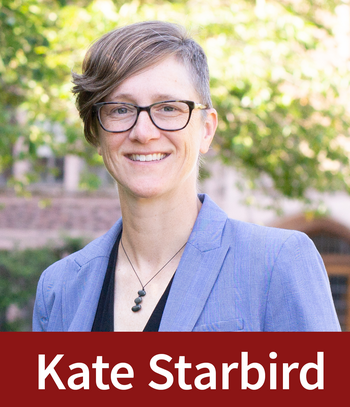
Abstract: Russia’s challenge to the West includes information operations (e.g., disinformation, political propaganda, and other forms of online manipulation) aimed at destabilizing the common ground that democratic societies in Europe and the United States need in order to govern themselves.  Kate Starbird will describe two case studies of online information operations connected to Russia’s media/intelligence apparatus:  interference in the 2016 U.S. election and the campaign against the “White Helmets” in Syria.  She argues that defending against Russian online information operations will require a more nuanced understanding of the problem, in particular, moving beyond focusing on “bots” and “trolls” to looking at the collaborative nature of disinformation campaigns that target, infiltrate, shape, and leverage online communities—communities which may not recognize their role in these campaigns. 


Seminar Recording: https://youtu.be/lF4M11FkEKY


Speaker's Biography:

Image
thumbnail new headshot tom reese small
Kate Starbird is an Associate Professor at the Department of Human Centered Design & Engineering (HCDE) at the University of Washington (UW). Starbird’s research is situated within human-computer interaction (HCI) and the emerging field of crisis informatics—the study of the how information-communication technologies (ICTs) are used during crisis events. One aspect of her research focuses on how online rumors spread during natural disasters and man-made crisis events. More recently, she has begun to focus on disinformation and other forms of strategic information operations online. Starbird earned her PhD from the University of Colorado at Boulder in Technology, Media and Society and holds a BS in Computer Science from Stanford University.

Kate Starbird University of Washington
Seminars
-

Speaker Bio:

Image
Larry Diamond
Larry Diamond is a senior fellow at the Hoover Institution and at the Freeman Spogli Institute for International Studies. For more than six years, he directed FSI’s Center on Democracy, Development, and the Rule of Law, where he now leads its Program on Arab Reform and Democracy and its Global Digital Policy Incubator. He is the founding co-editor of the Journal of Democracy and also serves as Senior Consultant at the International Forum for Democratic Studies of the National Endowment for Democracy. His research focuses on democratic trends and conditions around in the world, and on policies and reforms to defend and advance democracy.  His 2016 book, In Search of Democracy, explores the challenges confronting democracy and democracy promotion, gathering together three decades of his writing and research, particularly on Africa and Asia.  He has just completed a new book on the global crisis of democracy, which will be published in 2019, and is now writing a textbook on democratic development.

CDDRL
Stanford University
Encina Hall, C147
616 Jane Stanford Way
Stanford, CA 94305-6055

(650) 724-6448 (650) 723-1928
0
Mosbacher Senior Fellow in Global Democracy at the Freeman Spogli Institute for International Studies
William L. Clayton Senior Fellow at the Hoover Institution
Professor, by courtesy, of Political Science and Sociology
diamond_encina_hall.png MA, PhD

Larry Diamond is the William L. Clayton Senior Fellow at the Hoover Institution, the Mosbacher Senior Fellow in Global Democracy at the Freeman Spogli Institute for International Studies (FSI), and a Bass University Fellow in Undergraduate Education at Stanford University. He is also professor by courtesy of Political Science and Sociology at Stanford, where he lectures and teaches courses on democracy (including an online course on EdX). At the Hoover Institution, he co-leads the Project on Taiwan in the Indo-Pacific Region and participates in the Project on the U.S., China, and the World. At FSI, he is among the core faculty of the Center on Democracy, Development and the Rule of Law, which he directed for six and a half years. He leads FSI’s Israel Studies Program and is a member of the Program on Arab Reform and Development. He also co-leads the Global Digital Policy Incubator, based at FSI’s Cyber Policy Center. He served for 32 years as founding co-editor of the Journal of Democracy.

Diamond’s research focuses on global trends affecting freedom and democracy and on U.S. and international policies to defend and advance democracy. His book, Ill Winds: Saving Democracy from Russian Rage, Chinese Ambition, and American Complacency, analyzes the challenges confronting liberal democracy in the United States and around the world at this potential “hinge in history,” and offers an agenda for strengthening and defending democracy at home and abroad.  A paperback edition with a new preface was released by Penguin in April 2020. His other books include: In Search of Democracy (2016), The Spirit of Democracy (2008), Developing Democracy: Toward Consolidation (1999), Promoting Democracy in the 1990s (1995), and Class, Ethnicity, and Democracy in Nigeria (1989). He has edited or coedited more than fifty books, including China’s Influence and American Interests (2019, with Orville Schell), Silicon Triangle: The United States, China, Taiwan the Global Semiconductor Security (2023, with James O. Ellis Jr. and Orville Schell), and The Troubling State of India’s Democracy (2024, with Sumit Ganguly and Dinsha Mistree).

During 2002–03, Diamond served as a consultant to the US Agency for International Development (USAID) and was a contributing author of its report, Foreign Aid in the National Interest. He has advised and lectured to universities and think tanks around the world, and to the World Bank, the United Nations, the State Department, and other organizations dealing with governance and development. During the first three months of 2004, Diamond served as a senior adviser on governance to the Coalition Provisional Authority in Baghdad. His 2005 book, Squandered Victory: The American Occupation and the Bungled Effort to Bring Democracy to Iraq, was one of the first books to critically analyze America's postwar engagement in Iraq.

Among Diamond’s other edited books are Democracy in Decline?; Democratization and Authoritarianism in the Arab WorldWill China Democratize?; and Liberation Technology: Social Media and the Struggle for Democracy, all edited with Marc F. Plattner; and Politics and Culture in Contemporary Iran, with Abbas Milani. With Juan J. Linz and Seymour Martin Lipset, he edited the series, Democracy in Developing Countries, which helped to shape a new generation of comparative study of democratic development.

Download full-resolution headshot; photo credit: Rod Searcey.

Former Director of the Center on Democracy, Development and the Rule of Law
Faculty Chair, Jan Koum Israel Studies Program
Date Label
Larry Diamond is a senior fellow at the Hoover Institution and at the Freeman Spogli Institute for International Studies.
Seminars
-

Co-author Renée DiResta

Abstract:

When protests against Syrian President Bashar Assad began in 2011, Russia made good on its decades-long alliance with Syria, providing Assad with diplomatic and military support. The Kremlin also doubled down on its propaganda efforts, pushing their anti-Western, anti-rebel, and pro-Assad narratives across Twitter, Facebook, Medium, Quora, and Reddit. In this paper we undertake a comprehensive assessment of the reach of these narratives. With “news” articles in broken English on dubious websites, and low engagement rates on propaganda social media accounts, the reach of these narratives may seem limited. In this paper, we leverage datasets from a variety of social media platforms and Russian-attributed media outlets to more fully assess how far these narratives traveled. We use often-ignored measures of reach and engagement: secondary domains where propaganda is re-posted, and incoming links and engagement data from public and private social media accounts. With case studies of particular narratives and individual sock puppet identities, we describe how traditional narrative laundering, biased media properties and created personas are complemented by social media-enabled peer-to-peer persuasion methods.


Speaker Bio:

Image
shelby grossman headshot
Shelby Grossman is a research scholar at the Stanford Internet Observatory. She was previously an assistant professor of political science at the University of Memphis. Dr. Grossman's primary research interests are in comparative politics and sub-Saharan Africa. Her research has been published in Comparative Political Studies, PS: Political Science and Politics, World Development, and World Politics. 

Dr. Grossman was a Postdoctoral Fellow at Stanford University’s Center on Democracy, Development, and the Rule of Law from 2016-17. She earned her PhD in Government from Harvard University in 2016.
Encina Hall, C433 616 Jane Stanford Way Stanford, CA 94305-6055
0
shelby_grossman.jpg PhD

Shelby Grossman was a research scholar at the Cyber Policy Center. Her research focuses on online safety. Shelby's research has been published in Comparative Political Studies, PNAS Nexus, Political Communication, The Journal of Politics, World Development, and World Politics. Her book, "The Politics of Order in Informal Markets," was published by Cambridge University Press. She is co-editor of the Journal of Online Trust and Safety, and teaches classes at Stanford on open source investigation and online trust and safety issues. 

Shelby was an assistant professor of political science at the University of Memphis from 2017-2019, and a postdoctoral fellow at Stanford University’s Center on Democracy, Development, and the Rule of Law from 2016-17. She earned her Ph.D. in Government from Harvard University in 2016.

Research Scholar
CDDRL Postdoctoral Fellow, 2016-17
Date Label
Research scholar at the Stanford Internet Observatory
Seminars
News Type
News
Date
Paragraphs

The Stanford Center at Peking University announced its newest pre-doctoral fellows and graduate seminar from July 2019 application round.


Image
wechatimg67

SCPKU Announces Newest Fellows and Graduate Seminar
 

Pre-Doctoral Fellows:

  • Sangyop Lee – Religious Studies, September, 2019
  • Tongtong Zhang – Political Science, Oct. 1 – Dec. 30, 2019
  • Nathan Hauthaler - Philosophy, Jan. 15 – June 15, 2020


Graduate Seminars:

Title: " Physical Activity and Health in China: Chronic Disease Consequences and Activity-Promoting Strategies in Adolescents and Young Adults "

  • Dates: June 29 - July 17, 2020
  • Instructor:  Randall Stafford, Professor of Medicine, School of Medicine
  • Eligibility: Enrolled Stanford University students in good academic standing
  • Stanford student application deadline: April 30, 2020
Hero Image
wechatimg66
All News button
1
Subscribe to Society