Society

FSI researchers work to understand continuity and change in societies as they confront their problems and opportunities. This includes the implications of migration and human trafficking. What happens to a society when young girls exit the sex trade? How do groups moving between locations impact societies, economies, self-identity and citizenship? What are the ethnic challenges faced by an increasingly diverse European Union? From a policy perspective, scholars also work to investigate the consequences of security-related measures for society and its values.

The Europe Center reflects much of FSI’s agenda of investigating societies, serving as a forum for experts to research the cultures, religions and people of Europe. The Center sponsors several seminars and lectures, as well as visiting scholars.

Societal research also addresses issues of demography and aging, such as the social and economic challenges of providing health care for an aging population. How do older adults make decisions, and what societal tools need to be in place to ensure the resulting decisions are well-informed? FSI regularly brings in international scholars to look at these issues. They discuss how adults care for their older parents in rural China as well as the economic aspects of aging populations in China and India.

Shorenstein APARCStanford UniversityEncina Hall E301Stanford, CA 94305-6055
0
Visiting Scholar at APARC, 2019-2020
Ph.D.

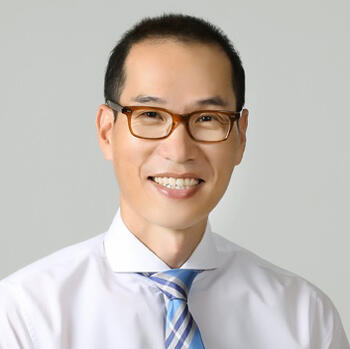
Jialiang Huang joined the Walter H. Shorenstein Asia-Pacific Research Center (APARC) from November 2019 to May 2020 as visiting scholar from Renmin University, where he serves as Associate Professor in the Department of Sociology.  At APARC, he conducted research on grassroots social governance in China.

-

On January 11, 2020 Taiwan held its presidential and legislative elections. Many observers expected the People’s Republic of China (PRC) to run an online disinformation campaign during the lead-up to the election in support of their preferred candidate, Han Kuo-yu, who was challenging incumbent Tsai Ing-wen. Such concerns were increased by demonstrated PRC online disinformation targeting the Hong Kong protests, and claims by an alleged PRC spy saying he led disinformation efforts targeting Taiwan during the 2018 elections. 

In this talk, we delve into case studies that highlight the role social media plays in disinformation at large in the Taiwanese information environment. We examine that while the fears of disinformation were generally not realized, we did find evidence of coordinated inauthentic behavior on Facebook, in particular on fan Pages and Groups for the two candidates. Our findings hold implications for researchers trying to distinguish authentic hyper-partisan domestic activism from coordinated disinformation. 

Image
Carly Miller

Carly Miller is a social science researcher at the Stanford Internet Observatory. In addition to covering the Taiwanese election, she assists the team in other digital forensic research and thinking about how researchers external to social media platforms think about disinformation campaign and concepts such as attribution. Before coming to Stanford, Carly was a Team Lead at the Human Rights Investigations Lab at Berkeley Law School where she worked to unearth patterns of various bad actors’ media campaigns. Carly received her BA with honors in political science from the University of California, Berkeley in May 2019.


Image
Vanessa Molter


Vanessa Molter is a Research Assistant at SIO and a Master in International Policy candidate at Stanford University, where she focuses on International Security in East Asia. At SIO, she monitors and writes on the Taiwanese social media environment. Previously, she has studied Taiwanese security affairs at the Institute for National Defense and Security Research in Taipei, Taiwan, a government-affiliated defense think-tank. Vanessa is fluent in Mandarin and holds a B.S. in International Business and East Asian studies from Tubingen University, Germany.


0
Distinguished Visiting Austrian Chair Professor at The Europe Center, 2019-2020
Professor of Mathematics, Graz University of Technology
Screen Shot 2023-02-13 at 7.03.46 PM.png

Jussi Behrndt studied Mathematics and Physics at the Technical University of Berlin and obtained his Masters degree in 2002 and his Doctoral degree in 2005. From 2005-2008 he held the position of Research Associate at the Technical University of Berlin and a Postdoc position at the University of Groningen, Netherlands. Behrndt completed his Habilitation in Mathematics in 2008 and held appointments as visiting professor at the Technical University of Vienna and the Technical University of Berlin, before becoming a full professor in Mathematics at Graz University of Technology in 2011.

Behrndt's research focuses on functional analysis, operator theory, and mathematical physics, with an emphasis on spectral theory and perturbation methods for differential operators. Among his current research interests are Schrödinger and Dirac operators with singular potentials, related approximation problems, Dirichlet-to-Neumann maps and Titchmarsh-Weyl m-functions, and various abstract extension theory problems for symmetric operators and relations.

Jussi Behrndt has published more than 100 articles in mathematical journals and conference proceedings volumes, and organized several international math conferences and workshops in the area of operator theory. His most recent monograph "Boundary Value Problems, Weyl Functions, and Differential Operators" was published at the beginning of 2020 in the Springer book series Monographs in Mathematics.

Professor Behrndt is currently teaching for the Department of Mathematics the course MATH 258: Topics in Geometric Analysis (Winter Quarter).

-

Abstract: A Supply and Demand Framework for YouTube Politics (with Joseph Phillips)

Youtube is the most used social network in the United States. However, for a combination of sociological and technical reasons, there exist little quantitative social science research on the political content on Youtube, in spite of widespread concern about the growth of extremist YouTube content. An emerging journalistic consensus theorizes the central role played by the video "recommendation engine," but we believe that this is premature. Instead, we propose the "Supply and Demand" framework for analyzing politics on YouTube. We discuss a number of novel technological affordances of YouTube as a platform and as a collection of videos, and how each might drive supply of or demand for extreme content. We then provide large-scale longitudinal descriptive information about the supply of and demand for alternative political content on YouTube. We demonstrate that viewership of far-right videos peaked in 2017.

Image
Kevin Munger
Kevin Munger is Assistant Professor of Political Science and Social Data Analytics, Penn State University. Ph.D., New York University, 2018. His research looks at social media and other contemporary internet technology has changed political communication. He has published research on the subject using a variety of methodologies, including textual analysis, field experiments, longitudinal surveys and qualitative theory. His research has appeared in leading journals like the American Journal of Political Science, Political Behavior, Political Communication, and Political Science Research & Methods. His present interests include cohort conflict in American politics and developing new methods for social science in a rapidly changing world.

Encina Hall
616 Jane Stanford Way
Stanford, CA  94305

0
Visiting Postdoctoral Scholar at The Europe Center, 2019-2020
franz_creditddutkowski.jpg

Yvonne Franz studied geography at the University in Cologne and the University of Vienna where she also received her doctorate in urban geography in 2013. As a university assistant (prae-doc) at University of Vienna she coordinated the Erasmus Mundus Masters in Urban Studies 4CITIES and conducted extensive fieldwork on gentrification and urban rejuvenation policies in New York City, Vienna and Berlin. After the completion of her doctorate, the successful approval of research proposals within the Joint Programming Initiative Urban Europe allowed her to join the Institute of Urban and Regional Research (ISR) at the Austrian Academy of Sciences as a post-doc researcher. Currently, she is affiliated to the University of Vienna, Department of Geography and Regional Research as a postdoc university assistant. Her research projects include the INTERREG Central Europe (funded by the European Regional Development Fund) on “Integrating Refugees in Society and the Labour Market Through Social Innovation - SIforREF” as well as research projects on arrival spaces and housing transition in Vienna. She teaches courses within the fields of urban geography and urban studies both at the University of Vienna and other universities. In addition, she is the local coordinator of the Erasmus Mundus Joint Master in Urban Studies (4CITIES). Her research interests lie in the fields of urban geography with a special focus on neighbourhood development, urban revitalisation and gentrification as well as urban planning and governance. Comparative analyses with Berlin, Bologna and Ljubljana are part of her ongoing research collaborations.

During her visit as Visiting Postdoctoral Scholar at The Europe Center, Yvonne will continue analysis and writing on spaces of encounter and social innovation in neighbourhood development.

-

Panel discussion with Stanford international affairs experts on escalating U.S.-Iran tensions.


Register: Click here to RSVP


Livestream: Please click here to join the livestream.


About this Event: U.S.-Iran tensions are at a new high following the U.S. drone strike that killed Iranian Major General Qassem Soleimani. Both sides continue to exchange threats of violence, and the implications for Iran’s nuclear ambitions, the fight against ISIS, and the U.S. presence in Iraq are expected to be profound. Join us for a panel discussion with Lisa Blaydes, Colin Kahl, Brett McGurk and Abbas Milani, moderated by Michael McFaul, on how recent developments may reshape the geopolitical landscape in one of the most volatile regions of the world.


This event is co-sponsored with Hamid and Christina Moghadam Program in Iranian Studies, Freeman Spogli Institute for International Studies, and the Middle East Initiative at the Center for International Security and Cooperation.


Speaker's Biographies:

Lisa Blaydes is a Professor of Political Science at Stanford University and a Senior Fellow at the Freeman Spogli Institute for International Studies. She is the author of Elections and Distributive Politics in Mubarak’s Egypt (Cambridge University Press, 2011). Her articles have appeared in the American Political Science ReviewInternational Studies QuarterlyInternational OrganizationJournal of Theoretical PoliticsMiddle East Journal, and World Politics. She holds degrees in Political Science (PhD) from the University of California, Los Angeles and International Relations (BA, MA) from Johns Hopkins University.


Colin Kahl is co-director of the Center for International Security and Cooperation, the inaugural Steven C. Házy Senior Fellow at the Freeman Spogli Institute for International Studies, and a Professor, by courtesy, in the Department of Political Science at Stanford University. He is also a Strategic Consultant to the Penn Biden Center for Diplomacy and Global Engagement.

From October 2014 to January 2017, he was Deputy Assistant to the President and National Security Advisor to the Vice President. In that position, he served as a senior advisor to President Obama and Vice President Biden on all matters related to U.S. foreign policy and national security affairs, and represented the Office of the Vice President as a standing member of the National Security Council Deputies’ Committee. From February 2009 to December 2011, Dr. Kahl was the Deputy Assistant Secretary of Defense for the Middle East at the Pentagon. In this capacity, he served as the senior policy advisor to the Secretary of Defense for Egypt, Iran, Iraq, Israel and the Palestinian territories, Saudi Arabia, Syria, Yemen, and six other countries in the Levant and Persian Gulf region. In June 2011, he was awarded the Secretary of Defense Medal for Outstanding Public Service by Secretary Robert Gates. 

From 2007 to 2017 (when not serving in the U.S. government), Dr. Kahl was an assistant and associate professor in the Security Studies Program at Georgetown University's Edmund A. Walsh School of Foreign Service. From 2007 to 2009 and 2012 to 2014, he was also a Senior Fellow at the Center for a New American Security (CNAS), a nonpartisan Washington, DC-based think tank. From 2000 to 2007, he was an assistant professor of political science at the University of Minnesota. In 2005-2006, Dr. Kahl took leave from the University of Minnesota to serve as a Council on Foreign Relations International Affairs Fellow in the Office of the Secretary of Defense, where he worked on issues related to counterinsurgency, counterterrorism, and responses to failed states. In 1997-1998, he was a National Security Fellow at the John M. Olin Institute for Strategic Studies at Harvard University.

Current research projects include a book analyzing American grand strategy in the Middle East in the post-9/11 era. A second research project focuses on the implications of emerging technologies on strategic stability.

He has published numerous articles on international security and U.S. foreign and defense policy in Foreign Affairs, Foreign Policy, International Security, the Los Angeles Times, Middle East Policy, the National Interest, the New Republic, the New York Times, Politico, the Washington Post, and the Washington Quarterly, as well as several reports for CNAS.

His previous research analyzed the causes and consequences of violent civil and ethnic conflict in developing countries, focusing particular attention on the demographic and natural resource dimensions of these conflicts. His book on the subject, States, Scarcity, and Civil Strife in the Developing World, was published by Princeton University Press in 2006, and related articles and chapters have appeared in International Security, the Journal of International Affairs, and various edited volumes.

Dr. Kahl received his B.A. in political science from the University of Michigan (1993) and his Ph.D. in political science from Columbia University (2000).


Brett McGurk is the Frank E. and Arthur W. Payne Distinguished Lecturer at the Freeman Spogli Institute and Center for Security and Cooperation at Stanford University.

McGurk’s research interests center on national security strategy, diplomacy, and decision-making in wartime.  He is particularly interested in the lessons learned over the presidencies of George W. Bush, Barack Obama, and Donald Trump regarding the importance of process in informing presidential decisions and the alignment of ends and means in national security doctrine and strategy.  At Stanford, he will be working on a book project incorporating these themes and teaching a graduate level seminar on presidential decision-making beginning in the fall of 2019.  He is also a frequent commentator on national security events in leading publications and as an NBC News Senior Foreign Affairs Analyst. 

Before coming to Stanford, McGurk served as Special Presidential Envoy for the Global Coalition to Defeat ISIS at the U.S. Department of State, helping to build and then lead the coalition of seventy-five countries and four international organizations in the global campaign against the ISIS terrorist network.  McGurk was also responsible for coordinating all aspects of U.S. policy in the campaign against ISIS in Iraq, Syria, and globally.

McGurk previously served in senior positions in the George W. Bush and Barack Obama administrations, including as Special Assistant to President Bush and Senior Director for Iraq and Afghanistan, and then as Deputy Assistant Secretary of State for Iraq and Iran and Special Presidential Envoy for the U.S. campaign against the Islamic State under Obama.

McGurk has led some of the most sensitive diplomatic missions in the Middle East over the last decade. His most recent assignment established one of the largest coalitions in history to prosecute the counter-ISIS campaign. He was a frequent visitor to the battlefields in both Iraq and Syria to help integrate military and civilian components of the war plan. He also led talks with Russia over the Syria conflict under both the Trump and Obama administrations, initiated back-channel diplomacy to reopen ties between Iraq and Saudi Arabia, and facilitated the formation of the last two Iraqi governments following contested elections in 2014 and 2018.

In 2015 and 2016, McGurk led fourteen months of secret negotiations with Iran to secure the release of Washington Post reporter Jason Rezain, U.S. Marine Amir Hekmati, and Pastor Saad Abadini, as well as three other American citizens.

During his time at the State Department, McGurk received multiple awards, including the Distinguished Honor Award and the Distinguished Service Award, the highest department awards for exceptional service in Washington and overseas assignments.

McGurk is also a nonresident senior fellow in the Middle East Program at the Carnegie Endowment for International Peace.

McGurk received his JD from Columbia University and his BA from the University of Connecticut Honors Program.  He served as a law clerk to Chief Justice William H. Rehnquist on the U.S. Supreme Court, Judge Denis Jacobs on the U.S. Court of Appeals for the 2d Circuit, and Judge Gerard E. Lynch on the U.S. District Court for the Southern District of New York.


Abbas Milani is the Hamid & Christina Moghadam Director of Iranian Studies at Stanford University and a Professor (by courtesy) in the Stanford Global Studies Division. He is also one of the founding co-directors of the Iran Democracy Project and a research fellow at the Hoover Institution. His expertise include U.S.-Iran relations as well as Iranian cultural, political, and security issues. Until 1986, he taught at Tehran University’s Faculty of Law and Political Science, where he was also a member of the Board of Directors of the university’s Center for International Relations. After moving to the United States, he was for fourteen years the Chair of the Political Science Department at the Notre Dame de Namur University. For eight years, he was a visiting Research Fellow in University of California, Berkeley’s Middle East Center.

Professor Milani came to Stanford ten years ago, when he became the founding director of the Iranian Studies Program. He also worked with two colleagues to launch the Iran Democracy Project at the Hoover Institution. He has published more than twenty books and two hundred articles and book reviews in scholarly magazines, journals, and newspapers. His latest book is a collection he co-edited with Larry Diamond, Politics & Culture in Contemporary Iran: Challenging the Status Quo  (Lynne Rienner Publishers, 2015).


Michael McFaul is the Ken Olivier and Angela Nomellini Professor of International Studies in Political Science, Director and Senior Fellow at the Freeman Spogli Institute for International Studies, and the Peter and Helen Bing Senior Fellow at the Hoover Institution, all at Stanford University. He was also the Distinguished Mingde Faculty Fellow at the Stanford Center at Peking University from June to August of 2015. He joined the Stanford faculty in 1995. He is also an analyst for NBC News and a contributing columnist to The Washington Post. McFaul served for five years in the Obama administration, first as Special Assistant to the President and Senior Director for Russian and Eurasian Affairs at the National Security Council at the White House (2009-2012), and then as U.S. Ambassador to the Russian Federation (2012-2014).

He has authored several books, most recently the New York Times bestseller,  “From Cold War to Hot Peace: An American Ambassador in Putin’s Russia.”  Earlier books include Advancing Democracy Abroad: Why We Should, How We Can; Transitions To Democracy: A Comparative Perspective  (eds. with Kathryn Stoner); Power and Purpose: American Policy toward Russia after the Cold War (with James Goldgeier); and Russia’s Unfinished Revolution: Political Change from Gorbachev to Putin. His current research interests include American foreign policy, great power relations between China, Russia, and the United States, and the relationship between democracy and development. 

Prof. McFaul was born and raised in Montana. He received his B.A. in International Relations and Slavic Languages and his M.A. in Soviet and East European Studies from Stanford University in 1986. As a Rhodes Scholar, he completed his D. Phil. in International Relations at Oxford University in 1991.

Encina Hall West, Room 408
Stanford, CA 94305-6044

(650) 723-0649
0
Senior Fellow at the Freeman Spogli Institute for International Studies
Professor of Political Science
lisa_blaydes_108_vert_final.jpg

Lisa Blaydes is a Professor of Political Science at Stanford University. She is the author of State of Repression: Iraq under Saddam Hussein (Princeton University Press, 2018) and Elections and Distributive Politics in Mubarak’s Egypt (Cambridge University Press, 2011). Professor Blaydes received the 2009 Gabriel Almond Award for best dissertation in the field of comparative politics from the American Political Science Association for this project.  Her articles have appeared in the American Political Science Review, International Studies Quarterly, International Organization, Journal of Theoretical Politics, Middle East Journal, and World Politics. During the 2008-2009 and 2009-2010 academic years, Professor Blaydes was an Academy Scholar at the Harvard Academy for International and Area Studies. She holds degrees in Political Science (PhD) from the University of California, Los Angeles, and International Relations (BA, MA) from Johns Hopkins University.


Affiliated faculty at the Center on Democracy, Development and the Rule of Law
Affiliated faculty at the Center for International Security and Cooperation
Date Label

Encina Hall 
616 Jane Stanford Way
Stanford, CA 94305-6055

0
Director, Freeman Spogli Institute for International Studies
Steven C. Házy Senior Fellow, Freeman Spogli Institute for International Studies
Professor, by courtesy, of Political Science
colin_kahl_2025_sq.jpg

Colin Kahl is director of the Freeman Spogli Institute for International Studies and the Steven C. Házy Senior Fellow. He is also the faculty director of CISAC’s Program on Geopolitics, Technology, and Governance, and a professor of political science (by courtesy).

From April 2021-July 2023, Dr. Kahl served as the under secretary of defense for policy at the U.S. Department of Defense. In that role, he was the principal adviser to the secretary of defense for all matters related to national security and defense policy and represented the department as a standing member of the National Security Council Deputies’ Committee. He oversaw the writing of the 2022 National Defense Strategy, which focused the Pentagon’s efforts on the “pacing challenge” posed by the PRC, and he led the department’s response to Russia’s invasion of Ukraine and numerous other international crises. He also led several other major defense diplomacy initiatives, including an unprecedented strengthening of the NATO alliance; the negotiation of the AUKUS agreement with Australia and the United Kingdom; historic defense force posture enhancements in Australia, Japan, and the Philippines; and deepening defense and strategic ties with India. In June 2023, Secretary of Defense Lloyd Austin III awarded Dr. Kahl the Department of Defense Distinguished Public Service Medal, the highest civilian award presented by the secretary of defense.

During the Obama Administration, Dr. Kahl served as deputy assistant to President Obama and national security advisor to Vice President Biden from October 2014 to January 2017. He also served as deputy assistant secretary of defense for the Middle East from February 2009 to December 2011, for which he received the Outstanding Public Service Medal in July 2011.

Dr. Kahl is the co-author (along with Thomas Wright) of Aftershocks: Pandemic Politics and the End of the Old International Order (New York: St. Martin’s Press, 2021) and the author of States, Scarcity, and Civil Strife in the Developing World (Princeton, NJ: Princeton University Press, 2006). He has also published numerous article on U.S. national security and defense policy in Foreign Affairs, Foreign Policy, International Security, the Los Angeles Times, Middle East Policy, the National Interest, the New Republic, the New York Times, Politico, the Washington Post, and the Washington Quarterly, as well as several reports for the Center for a New American Security (CNAS), a non-partisan think tank in Washington, DC.

Dr. Kahl previously taught at Georgetown University and the University of Minnesota, and he has held fellowship positions at Harvard University, the Council on Foreign Relations, CNAS, and the Penn Biden Center for Diplomacy and International Engagement.

He received his B.A. in political science from the University of Michigan (1993) and his Ph.D. in political science from Columbia University (2000).

Date Label
Abbas Milani

Encina Hall
616 Jane Stanford Way
Stanford, CA 94305-6055

0
Senior Fellow, Freeman Spogli Institute for International Studies
Ken Olivier and Angela Nomellini Professor of International Studies, Department of Political Science
Peter and Helen Bing Senior Fellow, Hoover Institution
mcfaul_headshot_2025.jpg PhD

Michael McFaul is the Ken Olivier and Angela Nomellini Professor of International Studies in Political Science, Senior Fellow at the Freeman Spogli Institute for International Studies, and the Peter and Helen Bing Senior Fellow at the Hoover Institution, all at Stanford University. He joined the Stanford faculty in 1995 and served as FSI Director from 2015 to 2025. He is also an international affairs analyst for MSNOW.

McFaul served for five years in the Obama administration, first as Special Assistant to the President and Senior Director for Russian and Eurasian Affairs at the National Security Council at the White House (2009-2012), and then as U.S. Ambassador to the Russian Federation (2012-2014).

McFaul has authored ten books and edited several others, including, most recently, Autocrats vs. Democrats: China, Russia, America, and the New Global Disorder, as well as From Cold War to Hot Peace: An American Ambassador in Putin’s Russia, (a New York Times bestseller) Advancing Democracy Abroad: Why We Should, How We Can; and Russia’s Unfinished Revolution: Political Change from Gorbachev to Putin.

He is a recipient of numerous awards, including an honorary PhD from Montana State University; the Order for Merits to Lithuania from President Gitanas Nausea of Lithuania; Order of Merit of Third Degree from President Volodymyr Zelenskyy of Ukraine, and the Dean’s Award for Distinguished Teaching at Stanford University. In 2015, he was the Distinguished Mingde Faculty Fellow at the Stanford Center at Peking University.

McFaul was born and raised in Montana. He received his B.A. in International Relations and Slavic Languages and his M.A. in Soviet and East European Studies from Stanford University in 1986. As a Rhodes Scholar, he completed his D. Phil. in International Relations at Oxford University in 1991. 

CV
Date Label
Seminars
Authors
Beth Duff-Brown
News Type
Blogs
Date
Paragraphs

Measles came back with a vengeance in 2019, with cases quadrupling globally and 1,276 cases reported in the United States since the beginning of the year — the largest increase in 27 years.

Most of those cases worldwide were among people who weren't vaccinated against the preventable infection. Anti-vaccinations movements have gained ground in the industrialized nations while gaps of immunization coverage or lack of access to health care facilities plague Africa and developing nations around the globe.

But there's some good news in California. 

new study by researchers at Stanford and the University of California, San Francisco shows the vaccination rate for measles is approaching 95% in nearly all counties of the Golden State. That auspicious number promotes herd immunity, protecting vulnerable unvaccinated people, such as newborns.

The co-authors of the study, which appears in PLOS Medicine, believe this hike in the state's vaccination rate is due to a contentious 2016 law that did away with the personal belief and religious exemptions following the 2014-2015 measles outbreak that began in Disneyland.

The new vaccine policy is associated with a 3% increase in statewide MMR (measles, mumps and rubella) vaccine coverage since the law was adopted, the researchers found, and a 2% decrease in non-medical religious and philosophical exemptions.

That jump may put the state above the critical 95% vaccinated point, which is needed for effective herd immunity against measles. "That would be very meaningful," said Stanford Health Policy's Eran Bendavid, MD, an associate professor of medicine and a co-author of the study.

The policy debates surrounding vaccine hesitancy in the United States have focused on vaccine exemptions, which provide an option for parents to waive current vaccination requirements for entry into school or daycare centers. Currently, 18 states allow nonmedical exemptions based on philosophical, personal or other beliefs.

"The factors driving vaccine hesitancy are complex and include misconceptions and misinformation about vaccine safety, low perceived risk of infectious disease, and lack of trust in health care providers," the authors write. 

The California experiment, however, could serve as an example to state legislatures and public health departments, as well as the federal government, the researchers say. 

"While we did see a small increase in medical exemptions, the much larger increase in MMR coverage suggests that the policy worked as expected," said Sindiso Nyathi, a graduate student in epidemiology, and one of the paper's first authors. "This is good news for states considering similar policies."

Sindiso said evaluating the efficacy of vaccine policies can be difficult due to lack of controls to use as comparisons, which limits the conclusions that can be drawn. To address that gap, their work used a hypothetical control group and estimated how many Californian children would have received the MMR vaccine if the law had not gone into effect. They then compared that to how many kids were vaccinated following the law's enactment in 2016.

The researchers also broke the data down by county. 

"Our county-level analysis found that greater increases in coverage were observed in counties with low coverage levels before the policy," Nyathi said. "This is good news, as it suggests that the policy was more effective in areas that had lower coverage. Similar policies may be an effective tool to bring vaccine coverage levels above herd immunity thresholds." 

While the researchers found the law work as intended, there was a small, 0.4% increase in the number of medical exemptions. 

Under the current California law, parents can request vaccination waivers for children whose medical condition might be impacted by the vaccine.

In September, Gov. Gavin Newsom signed into law another vaccination bill that will go into effect on Jan. 1. It will give the California Department of Public Health the power to revoke medical exemptions if it determines they are not medically sound. The department will also have the power to review exemptions from doctors who write more than five in one year.

Hero Image
severine 43 Heather Hazzan, SELF Magazine
All News button
1
-

Abstract: The problem of online disinformation is only getting worse. Social media may well play a role in the US 2020 presidential election and other major political events. But that doesn’t even begin to describe what future propaganda will look like. As Samuel Woolley shows, we will soon be navigating new technologies such as human-like automated voice systems, machine learning, ‘deep-fake’ AI-edited videos and images, interactive memes, virtual reality and augmented reality. In stories both deeply researched and compellingly written, Woolley describes this future, and explains how the technology can be manipulated, who might control it and its impact on political strategy. Finally, Woolley proposes strategic responses to this threat with the ultimate goal of empowering activists and pushing technology builders to design for democracy.

Image
Samuel Woolley
Samuel Woolley is a researcher with a focus on emerging media technologies, propaganda and politics. His work looks at how automation, algorithms and AI are leveraged for both democracy and control. His forthcoming book, The Reality Game: How the Next Wave of Technology Will Break the Truth, will be released in January of 2020 by PublicAffairs/Hachette. It explores the future of digital disinformation and provides a pragmatic roadmap for how society can respond.

Woolley is an assistant professor in the School of Journalism at the Moody College of Communication at the University of Texas-Austin. He is the Program Director of disinformation research at the Center for Media Engagement (CME) at UT. He holds a PhD from the University of Washington-Seattle. His academic work has appeared in the Journal of Information Technology and Politics, the International Journal of Communication, the Routledge Handbook of Media, Conflict and Security, A Networked Self: Platforms, Stories, Connections and The Political Economy of Robots.  He is one of the founders of the Computational Propaganda Research Project, now based at the Oxford Internet Institute, University of Oxford. Woolley is also the founder of the Digital Intelligence Lab at the Institute for the Future (IFTF)–a 50-year-old think-tank based in Palo Alto, CA.

Lectures
Authors
Noa Ronkin
News Type
News
Date
Paragraphs

Southeast Asia, home to over 640 million people across 10 countries, is one of the world’s most dynamic and fastest growing regions. APARC just concluded the year 2019 with a Center delegation visit to two Southeast Asian capital cities, Hanoi and Bangkok, where we spent an engaging week with stakeholders in the academic, policy, business, and Stanford alumni communities.

Led by APARC Director Gi-Wook Shin, the delegation included APARC Deputy Director and Asia Health Policy Program Director Karen Eggleston, Southeast Asia Program Director Donald Emmerson, and APARC Associate Director for Communications and External Relations Noa Ronkin. Visiting Scholar Andrew Kim joined the delegation in Bangkok.

With a focus on health policy, our first day in Hanoi included a visit to Thai Nguyen University, a meeting with government representatives at the Vietnam Ministry of Health, and a seminar on healthy aging and innovation jointly with Hanoi Medical University.

Image
Collage of four images showing participants at a roundtable held at Hanoi Medical University with APARC delegation members

Karen Eggleston and participants at the roundtable held at Hanoi Medical University, December 9, 2019.

Throughout the day, Eggleston presented some of her collaborative research that is part of two projects involving international research teams: one that assesses public-private roles and institutional innovation for healthy aging and another that examines the economics of caring for patients with chronic diseases across diverse health systems in Asia and other parts of the world. We appreciated learning from our counterparts about the health care system and health care delivery in Vietnam.

Shifting focus to international relations and regional security, day 2 in Hanoi opened with a roundtable, “The Rise of the Indo-Pacific and Vietnam-U.S. Relations,” held jointly with the East Sea Institute (ESI) of the Diplomatic Academy of Vietnam (DAV). Following a welcome by ESI Director General Nguyen Hung Son, the program continued with remarks by Shin, Emmerson, ESI Deputy Director General To Anh Tuan, and Assistant Director General Do Thanh Hai.

Image
Participants at a roundtable held at the Diplomatic Academy of Vietnam with APARC delegation members

Roundtable at the Diplomatic Academy of Vietnam, December 10, 2019.

The long-ranging conversation with DAV members included issues such as the future of the international order in Asia; the U.S. withdrawal from multilateralism; the concern about a lack of U.S. engagement in Southeast Asia, sparked by President Trump’s absence from the November 2019 summit of the Association of Southeast Asian Nations (ASEAN) at a time when China is bolstering its influence in the region and when ASEAN hopes to set a code of conduct with China regarding disputed waters in the South China Sea; the priorities for Vietnam as it assumes the role of ASEAN chair in 2020; and the challenges for the Vietnam-U.S. bilateral relationship amid the changing strategic environment in Southeast Asia.

In the afternoon we were joined by members of the American Chamber of Commerce in Hanoi at an AmCham-hosted Lunch ‘n’ Learn session on Vietnam's challenges and opportunities amid the U.S.-China rivalry. The event featured Emmerson in conversation with AmCham Hanoi Executive Director Adam Sitkoff.

Image
Two men in conversation seated on stage and a man speaking at a podium

(Left) Donald Emmerson in conversation with Adam Sitkoff; (right) Gi-Wook Shin welcomes AmCham Hanoi members; December 10, 2019. 

Moving to Bangkok, delegation members Shin, Eggleston, Emmerson, and Kim spoke on a panel for executives of the Charoen Pokphand Group (C.P. Group), one of Thailand’s largest private conglomerates, addressing some of the core issues that lie ahead for Southeast Asia in 2020 and beyond in the areas of geopolitics, innovation, and health.

Image
Participants at a panel discussion with APARC delegation hosted by the C.P. Group, Thailand

Top, from left to right: Gi-Wook Shin, Karen Eggleston, Andrew Kim; bottom: C.P. Group executive listening to the panel, December 12, 2019.

We also enjoyed a tour at True Digital Park, Thailand’s first startup and tech entrepreneur’s campus. Developed by the C.P. Group, True Digital Park aspires to be an open startup ecosystem that powers Thailand to become a global hub for digital innovation.

The following day, Shin and Emmerson participated in a public forum hosted by Chulalongkorn University’s Institute of Security and International Studies (ISIS Thailand), "Where Northeast Asia Meets Southeast Asia: The Great Powers, Global Disorder and Asia’s Future.” They were joined by ISIS Thailand Director Thitinan Pongsudhirak and Chulalongkorn University Faculty of Political Science Associate Dean for International Affairs and Graduate Studies Kasira Cheeppensook. The panel was moderated by Ms. Gwen Robinson, ISIS Thailand senior fellow and editor-at-large of the Nikkei Asian Review.

Image
Panelists and participants at a public forum held at Chulalongkorn University

ISIS Thailand forum participants and panelists, from left: Pngsukdhirak, Shin, Robinson, Emmerson, Cheeppensook; December 13, 2019.

As part of that discussion, Emmerson speculated that – driven by deepening Chinese economic and migrational involvement in Southeast Asia’s northern tier – Cambodia and Laos, less conceivably Myanmar, and still less conceivably Thailand could become incorporated de facto into an economically integrated “greater China” that could eventually reduce ASEAN to a more-or-less maritime membership in the region’s southern tier. Emmerson’s speculation was made in the context of his critique of ASEAN’s emphasis on its own “centrality” to the neglect of its lack of the proactivity that would serve as evidence of centrality and of a desire not to be rendered peripheral by the growing centrality-cum-proactivity of China. The event was covered by the Bangkok Post (although that report’s headline and quote of Emmerson are inaccurate, as neither the panel nor Emmerson predicted the “break-up of ASEAN.”)

Our delegation visit in Bangkok concluded with a buffet dinner reception and panel discussion jointly with the Stanford Club of Thailand.

Image
alumni event

Stanford and IvyPlus alumni listening to the panel, December 13, 2019.

Moderated by Mr. Suthichai Yoon, a veteran journalist and founder of digital media outlet Kafedam Group, the conversation focused on the changing geopolitics of Southeast Asia, innovation and health in the region, and the opportunities and challenges facing Thailand-U.S. relations. It was a pleasure to meet many new and old friends from the Stanford and IvyPlus alumni communities.

APARC would like to thank our partners and hosts in Hanoi and Bangkok for their hospitality, collaboration, and the stimulating discussions throughout our visit. We look forward to keeping in touch!

Hero Image
APARC delegation speaking to Stanford and IvyPlus alumni, Bangkok
All News button
1
Authors
News Type
News
Date
Paragraphs

The toll from gun violence at schools has only escalated in the 20 years since the jolting, horrific massacre at Columbine High.

By December 2019, at least 245 primary and secondary schools in the United States had experienced a shooting, killing 146 people and injuring 310, according to The Washington Post.

At least 245 primary and secondary schools in the United States have experienced a shooting — killing 146 people and injuring 310 — since the country's first mass school shooting at Columbine High School in April 1999.

Now, new Stanford-led research sounds an alarm to what was once a silent reckoning: the mental health impact to tens of thousands of surviving students who were attending schools where gunshots rang out.

A study has found that local exposure to fatal school shootings increased antidepressant use among youths.

Specifically, the average rate of antidepressant use among youths under age 20 rose by 21 percent in the local communities where fatal school shootings occurred, according to the study. And the rate increase – based on comparisons two years before the incident and two years after – persisted even in the third year out.

“There are articles that suggest school shootings are the new norm – they’re happening so frequently that we’re getting desensitized to them – and that maybe for the people who survive, they just go back to normal life because this is just life in America. But what our study shows is that does not appear to be the case,” said Maya Rossin-Slater, a core faculty member at Stanford Health Policy and faculty fellow at the Stanford Institute for Economic Policy Research (SIEPR). “There are real consequences on an important marker of mental health.”

The study is detailed in a working paper published Monday by the National Bureau of Economic Research. It was co-authored by Rossin-Slater, an assistant professor of health policy in the Stanford School of Medicine; Molly Schnell, a former postdoctoral fellow at SIEPR now an assistant professor at Northwestern University; Hannes Schwandt, an assistant professor at Northwestern and former visiting fellow at SIEPR; Sam Trejo, a Stanford doctoral candidate in economics and education; and Lindsey Uniat, a former predoctoral research fellow at SIEPR now a PhD student at Yale University.

Their collaborative research – accelerated by their simultaneous stints at SIEPR – is the largest study to date on the effects of school shootings on youth mental health.

The study comes as the issue of gun safety continues to stoke political wrangling and public debate. And the researchers say their findings suggest policymakers should take a wide lens to their decision-making process.

“When we think about the cost of school shootings, they’re often quantified in terms of the cost to the individuals who die or are injured, and their families,” Rossin-Slater noted. “Those costs are unfathomable and undeniable. But the reality is that there are many more students exposed to school shootings who survive. And the broad implication is to think about the cost not just to the direct victims but to those who are indirectly affected.”

A Driver for Antidepressant Use

More than 240,000 students have been exposed to school shootings in America since the mass shooting in Columbine in April 1999, according to The Washington Post  data used in the study. And the number of school shootings per year has been trending up since 2015.

Yet despite this “uniquely American phenomenon” – since 2009, over 50 times more school shootings have occurred in the U.S. than in Canada, Japan, Germany, Italy, France and the United Kingdom combined – little is known about the effects of such gun violence on the mental health of the nation’s youth, the study stated.

“We know that poor mental health in childhood can have negative consequences throughout life,” Schwandt said. “At the same time, children are known to show significant levels of resilience, so it really wasn’t clear what we would find as we started this project.”

The researchers examined 44 shootings at schools across the country between January 2008 and April 2013. They used a database that covered the near universe of prescriptions filled at U.S. retail pharmacies along with information on the address of the medical provider who prescribed each drug. They compared the antidepressant prescription rates of providers practicing in areas within a 5-mile radius of a school shooting to those practicing in areas 10-to-15 miles away, looking at two years prior and two to three years after the incident.

Of those 44 school shootings, 15 of them involved at least one death. The 44 shootings occurred in 10 states: Alabama, California, Connecticut, Florida, Nebraska, North Carolina, Ohio, South Carolina, Tennessee and Texas.

Researchers found a marked increase in the rate of antidepressant prescriptions for youths nearby, but only for the shootings that were fatal. They did not see a significant effect on prescriptions for youths exposed to non-fatal school shootings.

“The immediate impact on antidepressant use that we find, and its remarkable persistence over two, and even three years, certainly constitutes a stronger effect pattern than what we would have expected,” Schwandt said.

Meanwhile, adult antidepressant use did not appear to be significantly impacted by local exposure to school shootings.

Layers of Costs, More Unknowns

The researchers also analyzed whether the concentration of child mental health providers in areas affected by fatal school shootings made a difference in the antidepressant rates, and they drilled a further comparison between the prevalence of those who can prescribe drugs, such as psychiatrists and other medical doctors, and those who cannot prescribe drugs, such as psychologists and licensed social workers.

Increases in antidepressant rates were the same across areas with both high and low concentrations of prescribing doctors, the researchers found. But in areas with higher concentrations of non-prescribing mental health providers, the increases in antidepressant use were significantly smaller – indicating perhaps a greater reliance on non-pharmacological treatments or therapy for shooting-related trauma.

The researchers also found no evidence that the rise in antidepressant usage stemmed from mental health conditions that were previously undiagnosed prior to the shootings.

In totality, the researchers say the results in the study clearly pointed to an adverse impact from a fatal shooting on the mental health of youths in the local community. Furthermore, the results capture only a portion of the mental health consequences: Non-drug related treatments could have been undertaken as well.

“Increased incidence of poor mental health is at least part of the story,” Schnell said.

Though their analysis included only 44 schools and 15 fatal school shootings, Rossin-Slater noted how the trend of school shootings is growing. She believes the mental health impact found on the local communities they studied “can be generalizable to other communities’ experiences.”

That’s all the more reason why policymakers should consider the overall negative effects of school shootings, and how further research will be needed to gauge other societal consequences, the researchers said.

“Think of it as layers of costs,” Rossin-Slater said. And when it comes to evaluating gun violence at schools, “we think our numbers say, ‘Hey, these are costly things, and it’s costlier than we previously thought.’”

Hero Image
schoolshooting shutterstock Shutterstock
All News button
1
Subscribe to Society