Society

FSI researchers work to understand continuity and change in societies as they confront their problems and opportunities. This includes the implications of migration and human trafficking. What happens to a society when young girls exit the sex trade? How do groups moving between locations impact societies, economies, self-identity and citizenship? What are the ethnic challenges faced by an increasingly diverse European Union? From a policy perspective, scholars also work to investigate the consequences of security-related measures for society and its values.

The Europe Center reflects much of FSI’s agenda of investigating societies, serving as a forum for experts to research the cultures, religions and people of Europe. The Center sponsors several seminars and lectures, as well as visiting scholars.

Societal research also addresses issues of demography and aging, such as the social and economic challenges of providing health care for an aging population. How do older adults make decisions, and what societal tools need to be in place to ensure the resulting decisions are well-informed? FSI regularly brings in international scholars to look at these issues. They discuss how adults care for their older parents in rural China as well as the economic aspects of aging populations in China and India.

Authors
Rylan Sekiguchi
News Type
News
Date
Paragraphs

The Stanford Program on International and Cross-cultural Education (SPICE) serves as a bridge between FSI’s research centers and elementary and secondary schools throughout the United States. Over the past year, SPICE curriculum writer Rylan Sekiguchi and Joon Seok Hong (MA, East Asian Studies, 2007) have been developing a curriculum unit for secondary schools called “U.S.–South Korean Relations” in consultation with Professor Gi-Wook Shin, director of the Korean Studies Program (KSP). The KSP was formally established in 2001 at the Shorenstein Asia-Pacific Research Center with the appointment of Professor Shin as the founding director. “U.S.–South Korean Relations” is the result of SPICE’s first formal collaboration with the KSP.

For more than half a century, the United States and South Korea have been close and strong allies, a relationship nurtured under war and the pursuit of common interests. Despite this long and established alliance, U.S.–South Korean relations and Korean history are not adequately taught in American secondary schools. “U.S.–South Korean Relations” seeks to fill the gap by exposing students to the four core pillars of the alliance: democracy, economic prosperity, security, and sociocultural interaction. Each pillar supports the U.S.–South Korean relationship in a different and important way.

Lesson One examines South Korea’s maturing democracy, providing students an overview of South Korean democratization and engaging them on the concept of democracy. Students also study how the U.S.–South Korean relationship affected South Korea’s democratization and vice versa. Ultimately, students consider how common political and social values serve to strengthen relations between two countries and societies.

Lesson Two introduces students to the economic aspect of the U.S.–South Korean relationship and encourages them to recognize how economic interdependence between the two countries has served to draw them closer together. Students examine modern-day trade,such as the recently concluded U.S.–South Korean Free Trade Agreement (KORUS FTA), and also learn about the historical role the United States played in helping South Korea industrialize after the Korean War.

Lesson Three outlines the security concerns that South Korea and the United States have shared since the Korean War and the signing of the Mutual Defense Treaty in 1953 to the recent nuclear weapons issue with North Korea. Students study the history of the U.S.–South Korean security alliance and evaluate why both Seoul and Washington have considered the alliance so important and beneficial.

Lesson Four complements the broad country-tocountry perspective of the first three lessons and encourages students to consider how the U.S.–South Korean relationship has influenced the individual lives of Koreans and Americans. Students contemplate how the cultural interactions between the two countries have influenced both societies and changed the lives of their people.

The U.S.–South Korean relationship is one of the most successful bilateral relationships in the world. SPICE hopes that the curriculum unit, “U.S.–South Korean Relations,” not only offers U.S. secondary students a broad overview of this relationship but also inspires students to enroll in college courses on Korea through programs such as the KSP.

Hero Image
1571 small 9
All News button
1
Authors
Roland Hsu
News Type
News
Date
Paragraphs

During 2007–2008 the forum on contemporary Europe launched the second phase of its comprehensive, multi-year analysis of Europe and the EU’s global relations in the context of an expanding European Union. What began last year with analysis of political membership this year added a focus on implications of expanded membership in key areas, including social integration of immigrant communities. Forum researchers and invited scholars addressed questions central to understanding the process of European integration and areas of concern it raises. During the fall of 2007, in seminars, keynote speeches, and international conferences, Forum researchers addressed such questions as:

  • What explains the electoral results of populist parties, with their nationalist and anti-immigrant platforms, gaining where they had previously remained marginal (Switzerland) and declining where they had regularly held influence (France)?
  • How should OSCE member states and election monitors respond to the denial of visas for monitoring Russia’s parliamentary elections?
  • What is inflaming renewed outbursts of violence in multiple urban centers? Do the riots reveal urban youth segregated by race? Compelled by fundamentalism? Or disaffected with the promised EU economic mobility?
  • Do instances of violence against ethnicminorities reveal a return to a pre-modern xenophobia or an old behavior used to express a new rejection of EU integration?
  • Will laws protecting historical memory, such as the Spanish act to rebury victims of Fascist forces and German and Austrian laws criminalizing holocaust denial, resolve or inflame neo-fascist parties?
  • What stance can the EU take in regard to Turkey’s article 301 criminalizing historical comments as denigrating the heritage of the Turkish state?
  • Does EU membership mollify or magnify cultural tensions behind separatist movements in cases such as Flanders, Catalonia, Corsica, Basque homelands, and, potentially, Kurdish regions of Turkey?

Highlights of the following fall 2007 events illustrate forum research on these vital questions.

INTERNATIONAL CONVERENCE ON ETHNICITY IN TODAY'S EUROPE

The forum joined with the Stanford Humanities Center to organize an international conference on “Ethnicity in Today’s Europe.” Amir Eshel, director of the forum, opened the conference with remarks on the growth of immigrant communities, and their increasingly widespread origins, as well as implications for security and integration. The Stanford faculty organizing committee identified and attracted the top scholars on the subject from both sides of the Atlantic, including professors Saskia Sassen (sociology, Columbia), Alec Hargreaves (French, Florida State), Leslie Adelson (German studies, Cornell), Kader Konuk (Germanic languages and literatures, Michigan), Rogers Brubaker, (sociology, UCLA), Carole Fink (history, Ohio State), Salvador Cardus Ros (sociology, Universitat Autònoma de Barcelona), and Bassam Tibi (international relations, University of Gottingen). Panels were moderated by Stanford faculty: Helen Stacy (law school), J.P. Daughton (history), Joshua Cohen (political science, philosophy, FSI), Pavle Levi (art), and Josef Joffe (FSI).

Panelists and a large, engaged public audience convened for a screening of the award-winning film Fortress Europe and a discussion with the film-maker Zelimir Zilnik. The conference-related Presidential Lecture by Partha Chatterjee (political science, Centre for Studies in Social Sciences, Calcutta; anthropology, Columbia), brought a capacity audience to open the conference with a study of the historical foundations of inter-ethnic relations in post-colonial Europe. The forum’s assistant director, Roland Hsu, has invited participants to contribute to a volume he will edit and introduce on Ethnicity in Today’s Europe to be published in 2008.

FSI INTERNATIONAL CONFERNCE: FCE PANEL ON EUROPE - A CHANGING CONTINENT?

The forum invited three leading figures on EU policy to speak on the FCE panel at the FSI international conference. Engaging the theme of power and prosperity, Wolfgang Münchau, writer for the Financial Times; Monica Macovei, former justice minister, Romania; and Mark Leonard, executive director of the European Council on Foreign Relations and Open Society [Soros] Foundation, spoke on the challenge of interpreting recent EU electoral, juridical, economic, and social reforms. This panel examined economic growth in the newest member states in the East, the challenge of political and social integration in the West, and countervailing pressures for consolidating post-communist governments and transparency reforms. The European Union’s expansion to 27 member nations promises a vast Euro-zone and a stronger trans-Atlantic partner. Questions from the audience engaged the panel on what level of confidence should be placed in this promise. The dilemma over Kosovo, pending Serbian EU accession, the expansion eastward to include societies bordering former Soviet republics, the question of Turkey’s membership, as well as tightening labor markets and welfare budgets in Western Europe, led the panel and audience to anticipate with cautious optimism the potency of EU integration and foreign policy initiatives.

AN EVENING WITH ORHAN PAMUK

Forum-affiliated faculty brought such questions to a special lunch with Nobel Laureate Orhan Pamuk; and then joined an overflow audience event at Memorial Auditorium titled An Evening with Orhan Pamuk. The forum co-sponsored the visit by Pamuk, along with Mediterranean Studies, the Office of the Provost, and the FSI S.T. Lee lecture series.

Research and public programs on these subjects will continue at the forum in the following selected events:

INTERNATIONAL CONFERENCE ON THE TRAFFICKING OF WOMEN POST-COMMUNIST EUROPE

Designed by forum acting director Katherine Jolluck, this international conference will examine the trafficking of women for sexual slavery, a trade that has rapidly expanded since the collapse of communism in Eastern Europe and the USSR. The conference will bring together scholars, policy experts, and NGO analysts to discuss the issue from economic, legal, and human rights perspectives. Special attention will be devoted to strategies to combat the problem and address the needs of victimized females. Madeline Rees, head of Women’s Rights and Gender Unit, U.N. Office of the High Commissioner for Human Rights, former U.N. high commissioner for human rights in Bosnia, has been invited to give the keynote speech.

JAN ELIASSON: THE FUTURE OF DARFUR

The forum has invited Jan Eliasson, former Swedish foreign minister and current U.N. special envoy to Darfur, to speak on his work on behalf of the international community and the EU-African Union mission to bring peace and humanitarian relief to Darfur and its neighboring states.

KOSOVO: PROSPECTS FOLLOWING THE DECEMBER 2007 U.N. STUTS TALKS

The forum has invited multiple affiliated centers including the Center for Russian, Eastern European, and Eurasian Studies, the Department of History, and the Stanford Law School to co-sponsor a panel discussion following the December 2007 U.N.-EU deadline for status talks. Elez Biberaj, director of the Eurasia division at VOA, and Obrad Kesic, formerly at IREX and also former advisor to Yugoslav President Panic, will speak on prospects for the status of Kosovo and the efficacy of potential EU membership to mediate Kosovo-Serbian relations.

Hero Image
1569 small 7
All News button
1
Authors
News Type
News
Date
Paragraphs

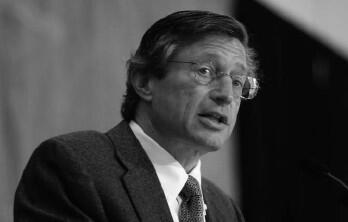
On November 15, 2007, FSI held its third annual international conference, Power and Prosperity: New Dynamics, New Dilemmas, examining seismic shifts in power, wealth, security, and risk in the global system. Acting FSI Director Michael A. McFaul, former Secretary of State Warren Christopher, and former Secretary of Defense William J. Perry offered stagesetting remarks before a capacity crowd of business and civic leaders, diplomats, policymakers, faculty, and students. Interactive panel sessions encouraged exploration of contemporary issues with Stanford faculty and outside experts.

Image
1568 small guyspeech
“For more than two centuries , a debate has raged in our country over whether the Congress or the president has the power to start, conduct, and terminate a war,” stated former Secretary of State Warren Christopher. The issue has been made urgent by what is called the “War on Terror,” regarded by many as almost unlimited in duration and geographic scope. “One frontier issue is whether the commander-in-chief authority gives the president the power to override the Constitution,” he said, specifically “whether or not the president can authorize torture that may offend the Constitution, wiretap American citizens, and suspend habeas corpus.”

Christopher and former Secretary of State Jim Baker are heading a new National War Powers Commission to study and resolve these issues. Planning to do something of a prospective nature, they will focus their recommendations on the 2009 Congress, seeking to bring to bear the collective judgment of both the president and a Congress traditionally reluctant to exercise the power it has under the Constitution.

“I spent most of my adult life under the dark cloud of a nuclear holocaust, a war that threatened no less than the annihilation of humanity,” said former Secretary of Defense William Perry. Now the Cold War is over, but its end did not bring about the end of history. “History is being written every day in the streets of Bagdad, in the deserts of Darfur, in the nuclear test range of North Korea, and in the nuclear laboratories of Iran.”

Image
1568 small otherguyspeech
Perry identified four potential security threats: the danger of a nuclear terrorist attack, drifting into a new Cold War, drifting into an environmental disaster, and the danger that radical fundamentalists will gain ascendancy in the Islamic world. “There is a fundamental conflict between our need to keep nuclear bombs out of the hands of terrorists and our need to reduce carbon emissions,” he stated, for the global movement to increase nuclear power could increase terrorists’ ability to get fissile materials. “The solution must lie,” he advised, “in establishing international protocols for how nuclear plants are operated and nuclear fuel supplies are controlled.”

A complementary route is to work to reduce and then eliminate nuclear weapons. Getting to the political will to take those steps was a major objective of a January 4, 2007, Wall Street Journal op-ed, “A World Free of Nuclear Weapons,” published by Perry, George Shultz, Henry Kissinger, and Sam Nunn, and conferences at Stanford. “This conference can teach us what to do,” Perry said, “what is needed is the political will to do it.”

Gi-Wook Shin, director of FSI’s Walter H. Shorenstein Asia-Pacific Research Center, chaired Plenary I, “Asia’s Triple Rise: How China, India, and Japan Will Shape our Future.” “While our policymakers are preoccupied with the Middle East, Asia is going to have much more impact on our future,” Shin said. Asia is experiencing a unique moment in Asian and world history. Can three great nations rise simultaneously, creating a regional architecture for stability and security? What role can the United States play?

“There are two defining characteristics of today’s world,” said J. Stapleton Roy, former U.S. ambassador to China, “America’s role as the sole superpower and China’s precipitous rise to power and influence.” Roy traced China’s resource demands, military development, and global economic impact and evaluated China’s influence on U.S. foreign policy. “While we see a more powerful and prosperous China as a security threat,” he stated, “the case could be made for a more optimistic scenario in which growth creates a sizable middle class, greater global dependence, and a more open society as the fifth generation of Chinese leaders takes over, the first to mature in a period of openness to the world and the power of modern democracies.”

“The only democracy in the world with which the United States had endemically bad relations during the Cold War was India. Happily that has changed,” said Robert Blackwill, former U.S. ambassador to India. He addressed our many areas of common interest: the fight against global terrorism, energy security, a healthy global economy, and shared democratic values. Analyzing the pending civil nuclear cooperation deal, he placed India’s need for 15–20 new nuclear reactors in the context of domestic growth. Some 450 million people make less than $1.50 per day; India will not tolerate outside direction to slow growth. “The United States and India are natural allies,” he concluded.

“The India entering its seventh decade as an independent country is one that is open to the contention of ideas and interests within it and outside … wedded to the democratic pluralism that is its greatest strength and determined to fulfill the creative energies of its people. Such an India truly enjoys soft power in today’s world.” former under secretary-general of the united nations shashi tharoor“Japan has resumed a solid growth track,” said Michael H. Armacost, Shorenstein Distinguished Fellow and former U.S. ambassador to Japan. The country seeks respect and wants a permanent seat on the U.N. Security Council, which it deserves. Japan’s economy is four times the size of China’s; Japan’s military budget is just 1 percent of GDP, yet it is the third largest in the world and the most sophisticated in Asia. Japan has the resources of a great power—huge financial reserves, modern science and technology, and enormous aid and investment flows. As Japan assumes a more robust international role, we should expect the Japanese to “hedge their bets,” he said, balancing strong U.S. ties with other nations and competing with China in pan-Asian community building efforts. Japan-U.S. relations should not be forgotten, he advised, as we focus on China and India.

Shashi Tharoor, diplomat, historian, and former U.N. under secretary-general, mused about “India’s Future as a Great Power.” Asking what makes a country a world leader, he acknowledged that India has the world’s second largest population, fourth largest military, status as a nuclear power, and the fifth largest economy. Yet a nation that cannot feed, educate, or employ its people cannot be termed a “great power,” Tharoor noted. He suggested that India’s greatest asset is its “soft power”— its liberal democracy, social and cultural diversity, and enormously popular culture. All hold important lessons. “The India entering its seventh decade as an independent country,” he said, “is open to the contentions of ideas and interests within it and outside … wedded to the democratic pluralism that is its greatest strength and determined to liberate and fulfill the creative energies of its people. Such an India truly enjoys soft power in today’s world.”

Lynn Eden, associate director for research at CISAC, chaired Plenary II, “Critical Connections: Faces of Security in the 21st Century,” examining security risks posed by Iraq, nuclear weapons, and food security and the environment—issues, she noted, “that are also central themes of the Stanford International Initiative: improving governance, pursuing security, and advancing human well-being.”

“There are now multiple indications that conditions on the ground in Iraq have improved quite substantially,” said Hoover Institution denior fellow and CDDRL faculty member Larry Diamond. Violence is down and there is a return to something approaching normalcy, as a result of the 30,000 “surge” in U.S. troops and a more effective counterinsurgency strategy adopted by General David Petraeus. The new military-sized force and strategy come at a propitious moment, when the Sunni Arab heartland has turned against Al Qaeda. As Al Qaeda has been weakened, fear, fatal bombings, and Iraqi and U.S. fatalities have declined significantly. The problem is that strategic military gains have not been matched with requisite political progress: enacting an oil revenue sharing bill, reversing de-Baathification, and scheduling provincial elections. “The harsh fact is that military progress on the ground is not sustainable,” warned Diamond, “without political progress toward reconciliation in Bagdad and the provinces.”

“As Americans, we have not thought systematically about what it means when we use the phrase ‘Islamic fundamentalism.’ We tend to treat it holistically. If we are going to understand this threat, we have to disaggregate that big thing called ‘the Muslim world’—we have to know the difference between Islamic fundamentalist, Islamist, and liberal Muslims.” acting fsi director and political science professor michael a. mcfaulAssessing nuclear proliferation, CISAC Co-Director Scott D. Sagan said, “In 1963, John F. Kennedy famously relayed his nuclear nightmare that by the 1970s there might be 15–20 nuclear weapons states. Was Kennedy’s fear inaccurate or only premature?” Today there are nine nuclear states, but the Non-Proliferation Treaty (NPT) is cracked and challenges abound. The A.Q. Khan network in Pakistan exported nuclear technology to Libya, North Korea, and Iran. North Korea withdrew from the NPT and conducted a 2006 test, before agreeing to dismantle its nuclear program. Iran has rejected international demands to suspend uranium enrichment. The United States has not lived up to its NPT commitment to work toward eventual elimination of nuclear weapons. For Sagan, keys to nonproliferation include a successful U.N. 2010 NPT Review Conference, peaceful resolution of the North Korean and Iranian crises, developing control of the international fuel cycle, and American ratification of the Comprehensive Test Ban Treaty.

Turning to human security, Rosamond L. Naylor, the Julie Wrigley Senior Fellow at FSI and the Woods Institute for the Environment, reported that 1 billion people face acute risks every day from hunger, infectious disease, resource depletion, climate change, and civil conflict. Incredibly, 15 percent of the world’s population lives on less than $1 per day and 50 percent live on less than $2 a day. Three billion people are vulnerable to disruptions in food prices because of competing biofuels and climate change. While terrorism kills 3,000 people each year and battle deaths claim 20,000, more than 6–8 million people die every year from hunger and malnutrition. “What can be done?” asked Naylor. We urgently need to conserve our genetic crop resources and invest in rural development, agriculture, and education.

Gilles Kepel, professor and chair, Middle East and Mediterranean Studies, at Sciences Po, delivered the dinner keynote, “Islamic Fundamentalism: On the Rise or the Decline?” “As Americans we have not thought systematically about what it means when we use the phrase ‘Islamic fundamentalism,’” said Acting FSI Director Michael McFaul. “If we are going to understand this threat, we have to disaggregate that big thing called ‘the Muslim world’—we have to know the difference between Islamic fundamentalist, Islamist, and liberal Muslims.” Gilles Kepel, a leading author and scholar of the Middle East, who has “invested tremendously in the study of Islam,” was invited to fill that void. “When it comes to understanding Islamic fundamentalism, Paris is the 21st century,” said McFaul. “I see it as a real challenge to all of us to learn from our French colleagues, and tonight I promise you, you will learn from one of our French colleagues.”

In a December 2001 manifesto, Knights Under the Prophet’s Banner, Ayman al-Zawahiri, Osama bin Laden’s mentor and Al Qaeda ideologue, admitted Islamic jihadists had failed to mobilize the masses to overthrow their corrupt rulers, “the nearby enemy,” and establish Islamic states, Kepel began. By inflicting a massive blow on 9/11 on “the far enemy,” the United States, they would demonstrate that America was weak, Islamic militants were strong, and the masses could revolt against their leaders without fear. The Muslim world and then the whole world would become ruled by Shariah under Islamist aegis. Kepel then asked, “Have they succeeded in what they set out to do?”

“After 9/11, we had a clash of two grand narratives: ‘jihad and martyrdom’ where the apostate regimes of the West and the Middle East were about to fall and ‘the War on Terror’ in which the roots of terrorism would be eradicated and autocratic regimes would tumble, bringing about democracy and a transformation of the Middle East.” professor gilles kepel, institute of political studies, parisKepel’s answer was no. Since 9/11, he said, “There have been two grand narratives: the narrative of jihad and martyrdom preached by Zawahiri and bin Laden, arguing that the rotten regimes of the West and the Middle East would fall, as jihadists waged copy-cat bombings in Africa, Europe, and the Middle East, suicide operations, and so forth” and “the narrative of the American-led War on Terror,” hammering that the roots of terrorism would be eradicated and autocratic regimes would tumble, bringing about democracy and the transformation of the Middle East.

The 2003 invasion of Iraq opened a new area for radical Islamic mobilization. But the two clashing narratives gave ground to something unexpected: the rise of Iranian influence in the region and “a golden opportunity not for Sunni Islamic fundamentalists but for the radical Shia in Iran,” who after the 2005 election of President Ahmadinejad found they could engage in nuclear blackmail with the world and threaten the United States with the activation of Shiite militias in Iraq, where American forces would be at a disadvantage fighting two enemies at the same time.

While Zawahiri continues to paint the “triumphal march of Sunni fundamentalism,” Kepel stated, “the discrepancy between his world view and reality is growing bigger and bigger.” To date, the bigger winner from 9/11 is not Al Qaeda but the Islamic Republic of Iran. Iran and Hezbollah have become the heroes and champions of the Muslim world. This fragmentation in the Muslim world, pitting Shia against Sunni, has weakened the Sunni radical movements’ ability to mobilize. How the confrontation plays out, he concluded, will determine the future of the Middle East.

POWER AND PROSPERITY: NEW DYNAMICS, NEW DILEMAS

INTERACTIVE PANEL DISCUSSIONS ON CRITICAL ISSUES
In an FSI conference highlight, participants engaged in spirited debate on leading issues with Stanford faculty and outside experts. Audio recordings of the plenary and panel discussions are available below.

IS DEMOCRACY GOOD FOR HEALTH?
Alan M. Garber, Grant Miller, Douglas K. Owens, and Paul H. Wise

NUCLEAR POWER WITHOUT NUCLEAR PROLIFERATION?
Scott D. Sagan, David G. Victor, Robert Rosner, and Siegfried S. Hecker

A CHANGING CONTINENT? OPPERTUNITIES AND CHALLENGES FOR EUROPEAN UNION EXPANSION
Katherine Jolluck, Mark Leonard, Monica Macovei, and Wolfgang Münchau

GROWING PAINS - GROWTH AND TENISIONS IN CHINA
Andrew G. Walder, Jean C. Oi, Scott Rozelle, and Xueguang Zhou

AUTOCRATIC HEGEMONS AND THE NATIONAL INTEREST: DEALING WITH CHINA, IRAN, AND RUSSIA
Kathryn Stoner, Larry Diamond, Michael A. McFaul, and Abbas Milani

FOOD SECURITY, CLIMATE CHANGE, AND CIVIL CONFLICTf
Rosamond L. Naylor, David Lobell, and Edward A. Miguel

FACES OF ENGERY SECURITY
David G. Victor, Bryan J. Hannegan, and Chris Mottershead

OVERCOMING BARRIERS TO CONFLICT RESOLUTION: THE MIDDLE EAST
Allen S. Weiner, Byron Bland, Bruce Jones, and Lee D. Ross

Hero Image
1568 small 1
All News button
1
Authors
Daniel C. Sneider
News Type
News
Date
Paragraphs

The 70th anniversary of the 1937 Japanese attack on the Chinese capital of Nanjing, and the mass atrocities that followed, were marked in relatively low-key fashion in China. At a time when the Chinese government is anxious to improve its ties with Japan, it sent only junior officials to the commemoration ceremony unveiling a refurbished museum that attempts to document an event that has become emblematic, for the Chinese at least, of the war with Japan.

Despite the decision to downplay the anniversary, a wave of films, many of them backed by the Chinese government, had already been set in motion, begun at a time when Sino-Japanese tensions were high. Almost a dozen new movies on the “Nanjing Massacre,” including some supported by U.S. and European money, are in production. In Japan, a documentary supported by a group of conservative lawmakers and academics that claims there is no evidence of a Japanese massacre is also slated for release.

This is the latest indication of how Asia’s wartime past bedevils its present. From relations between governments to the interactions of ordinary citizens, disputes over past wrongs continue to occupy newspapers, cinema screens, and school textbooks. All nations in the region, rather than taking responsibility, have some sense of victimization and often blame others. Anti-Japanese sentiments seem undiminished in China and Korea, even among the younger generation with no experience of war or colonialism. The Japanese suffer from “apology fatigue,” questioning why they must continue to repent for events that took place six or seven decades ago.

The failure to address historical injustice and to reconcile differing views of the past has strained Sino-Japanese relations and friction between Japan and South Korea about Japan’s colonial past remains intense. Even South Korea and China are sparring over the history of the ancient kingdom of Koguryo . Taiwan as well is immersed in a re-examination of the historical past. The history question touches upon the most sensitive issues of national identity and now fuels the fires of nationalism in Northeast Asia.

There is widespread recognition of the need for reconciliation and the final resolution of historical injustices. But the existence of divided, even conflicting, historical memories is a fundamental obstacle to such reconciliation. All of the nations involved are bound by distinct, often contradictory perceptions of history and separated by different accounts of past events. These perceptions are deeply imbedded in public consciousness, transmitted by education, popular culture, and the mass media.

At the Shorenstein Asia-Pacific Research Center, we have embarked on the “Divided Memories and Reconciliation” project that seeks to tackle the history issue from a comparative perspective. Rather than trying to forge a common historical account or to reach a consensus among scholars on specific events, we believe that a more fruitful approach lies in understanding how historical memory is formed in each country. Recognizing how each country engages in the selective creation of its own, divided memory can lead to mutual understanding. Ironically, the very realization that there is no absolute historical truth on which everyone can agree creates a path to reconciliation.

These divided memories are a foundation of national identity—and the formation of national myths that have a powerful role to this day. Whether it is Japanese atrocities in China or the decision to drop atomic weapons on Japan, no nation is immune from the charge that they have formed a less than complete view of the past. All share a reluctance to fully confront the complexity of that past and tend to blame others.

The United States is no less guilty of forming its own divided memory of these historical events—witness the response to the controversy surrounding the Enola Gay exhibit at the Smithsonian Institution. And the United States had a key role to play in shaping the failure to confront these historical issues in a timely fashion, through its handling of the postwar justice issues for example and the troubling legacy of the problems left unresolved by the 1951 San Francisco Treaty.

Our research project compares the formation of these divided memories in China, Japan, South Korea, Taiwan, and the United States. The project has begun with a comparative examination of high school history textbooks in those five places, focusing on the period from the beginning of the Sino-Japanese war in 1931 until the formal conclusion of the Pacific war with the San Francisco Peace Treaty. This will be followed by a second comparative study of popular cinema dealing with historical subjects from roughly the same period. In parallel with these two comparative studies, Shorenstein APARC plans to design and carry out a comprehensive survey of the views of elite opinion-makers in all five countries on these historical issues. The project has garnered important support from donors in Asia and the United States, among them Korea’s Northeast Asia History Foundation, the Taiwan Foundation for Democracy, and the U.S.-Japan Foundation.

The translations of the most widely circulated high school history textbooks— both national and world history textbooks—have been completed. In February 2008, Shorenstein APARC will convene an international conference of historians and other scholars to conduct a comparative analysis of the textbooks and to discuss, from personal experience, the process of textbook writing and revision. Stanford historians Peter Duus and Mark Peattie, the authors of numerous volumes on this historical period, will lead the comparative analysis. Textbook authors from all five countries will also offer their views.

Textbooks have been a subject of particular controversy in Asia since the 1950s, though focused almost entirely on the content of Japanese textbooks and complaints from China, Korea, and elsewhere that they offer a distorted account of wartime events. One approach to solving this problem has been to form joint committees to study history and to create jointly written textbooks. These efforts are ongoing but they have proved so far to be a very difficult path to reconciliation. A Japan-South Korea joint committee to create a shared history was launched in 2001 but has made little real headway. A similar Sino-Japanese joint committee of 20 prominent historians was formed in October 2006 but it also quickly bogged down in disagreements over what to include in a joint history.

These official efforts only reinforce the value of the “Divided Memories and Reconciliation” project. As an effort by scholars, without official involvement, and as the first attempt to treat this issue comparatively, with the inclusion of the United States, it breaks new ground. The February conference will produce not only a book but also will be reproduced in workshops in all the participating Asian countries, held in collaboration with scholarly institutions. Together with our partners, Shorenstein APARC hopes to generate a public dialogue, not only with scholars but also with the general public through media and other venues. The project is also intended to provide policymakers in Northeast Asia and the United States with data and analysis that will aid their own efforts at easing tensions over the history issue.

Hero Image
1566 small 5
All News button
1
Authors
News Type
News
Date
Paragraphs

Suicide bomb ers are not all alike . Palestinians prepare elaborate martyr videos before their killings and become celebrities afterward, while Iraqi Sunnis kill their fellow citizens in obscurity. In Afghanistan, the suicide bombers have their own distinction: They are known for their ineptness, often blowing themselves up without killing anyone else.

“They’re not efficient,” said Martha Crenshaw, a senior fellow at the Center for International Security and Cooperation (CISAC) at the Freeman Spogli Institute for International Studies. She arrived at Stanford this summer, after several decades of studying terrorism as a professor of government at Wesleyan University in Middletown, Conn.

Afghan suicide bombers tend to be poorer, younger and less educated than suicide bombers elsewhere, Crenshaw said during a recent CISAC seminar. She cited a United Nations report that accused the Taliban of strapping explosives to boys, despite a commitment not to recruit those too young to have facial hair. Promises of motorcycles and cell phones have been used as inducements.

One boy whose mission failed was interviewed by U.N. workers. “He somehow thought he would survive the attack and get to spend the money they had promised him, not quite understanding that he would not be there,” Crenshaw said in an interview following her talk.

In Afghanistan, as elsewhere, the person wearing the explosives belt or driving the car bomb is the least valuable person in the terror group, Crenshaw said. The key people are the bomb maker and the organizer: “They never send the bomb maker with the bomb.” In Israel, security officials target the bomb makers for assassination.

“It’s the organization that decides who’s going to be attacked and when and where and why,” Crenshaw said. “Then they recruit somebody to carry it out. So the person carrying the bomb really is just a foot soldier.”

Afghanistan’s most famous suicide attack happened in 2001, just two days before the 9/11 assault on the United States. Al-Qaida operatives masquerading as journalists preemptively blew up tribal warlord Ahmad Shah Massoud in anticipation that he might aid U.S. troops if they eventually invaded Afghanistan in search of Osama bin Laden.

Today, al-Qaida, the Taliban and Hizb-i-Islami (the group led by Gulbuddin Hekmatyar) aim their suicide attacks at U.S. and Afghan government forces, but the victims are overwhelmingly civilian bystanders, often large numbers of children. Many of the bombers, Crenshaw said, are recruited from religious schools across the border in Pakistan.

The predominant motivation for terrorists to employ suicide attacks is strategic, not religious, according to Crenshaw. One suicide bomber kills many people, a perfect example of what the U.S. military calls asymmetric warfare. According to the United Nations, since the 1980s suicide bombers have been involved in only 4 percent of the world’s terror attacks, but have caused 29 percent of the deaths.

Crenshaw gave her CISAC talk the day of the bloody suicide-bomber attack on Pakistani opposition leader Benazir Bhutto. With some 140 deaths and 500 injuries, it was the deadliest of more than 50 suicide attacks in Pakistan in recent years. Bhutto survived without injury, but if she had died, the volatile country could have come unglued, according to Crenshaw. “It shows you how one major suicide bombing could make a big difference,” she said.

Her interest in terrorism began in graduate school in the late 1960s. Her first book, Revolutionary Terrorism (Hoover Institution Press, 1978), was on guerilla warfare against the French during the Algerian war for independence from 1954 to 1962. It still sells on Amazon, for $100.

How does one research suicide bombers, since most of them, by definition, are dead? “We don’t have very many studies that are based on extensive interviews,” Crenshaw said. The one well-known body of work based on interviews involves failed Palestinian suicide bombers held in Israeli prisons. But the prisoners have told their stories so often that it is difficult to separate truth from imagination, according to Crenshaw.

Scholars of terrorism in general can turn to trial transcripts, databases of newspaper stories or the “Harmony Project” documents captured from al-Qaida and posted online by the U.S. Military Academy at West Point.

But less has been written specifically about suicide bombers. “In Iraq, it’s very difficult to know who they were, even. They’re dead and they’re blown to bits, too,” Crenshaw said. “You might not have a hand with fingerprints, for example. Surprisingly enough, often they do seem to find heads. But still, how do you identify someone in Iraq, where you don’t have a record of who the population is to begin with? There are no identity cards, no nothing. Really, we’re just guessing.”

The predominant motivation for terrorists to employ suicide attacks is strategic, not religious, according to Martha Crenshaw.

Crenshaw’s most recent paper, “Explaining Suicide Terrorism: A Review Essay” (Security Studies, Vol. 16, No. 1, January 2007), relied on the bookstore: She bought and read 13 books about suicide bombers, then produced a review of them all as a guide to other researchers.

CRENSHAW'S RESEARCH AGENDA
Why is the United States the target of terrorism? Crenshaw is answering this question, as a lead investigator with the National Consortium for the Study of Terrorism and Responses to Terrorism at the University of Maryland, a Department of Homeland Security Center of Excellence. Her research focuses on groups that have targeted the United States or its interests since the mid-1960s, placing incidents in context by comparing them with instances in which groups displayed similar anti-American ideas but did not resort to terrorism.
"Contrary to popular belief, only about 10 percent of active terrorist groups have targeted the United States," she says. "You have to get into the local politics to see what's going on" with anti-U.S. terrorism abroad. Such attacks can be aimed at the local regime, she explained.
Crenshaw is also editing a book tentatively titled The Consequences of Counterterrorist Policies in Democracies, to be published by the Russell Sage Foundation which supported the research.
And "The Debate over ‘New' versus ‘Old' Terrorism," a paper Crenshaw presented at the 2007 American Political Science Association meeting, is set to appear in an edited volume. Crenshaw questions common claims that terrorism in recent years has taken on a completely new character, more religious and lethal.
"Terrorism has changed over time, but there is no fundamental difference between ‘old' and ‘new' terrorism," she said. Researchers and policymakers should "ask why some groups cause large numbers of civilian casualties and others do not," she said, "rather than assuming that religious beliefs are the explanation for lethality."

All News button
1

This conference on Austria and Central Europe Since 1989: Legacies and Future Prospects is the third in the series of biannual international conferences to study the political and cultural landscape of Austria and Central Europe since 1945. Our previous conferences focused on Central Europe during the period of the post-war up to 1989. This year’s conference gathers leading scholars and public figures to discuss the exciting developments of our contemporary era and to offer comments on future prospects for the region.

The conference panels will offer multi-disciplinary views of Central Europe today. Addressing topics from the area stretching from the Baltic to the Balkans, speakers will focus on Austria as well as Hungary, the Czech Republic, Poland, and the counties of former Yugoslavia. Presentations will explore political, economic, social, and cultural facets of the region’s larger dynamic. Among the milestone changes during this period which will be highlighted will be Austria’s (and other Central European countries’) ascendance to the European Union, the disintegration and reconfiguration of Balkan nations, the collapse of the Soviet Bloc, and the great mobility of goods and labor through the region and new forms of social and cultural interaction.

The two-day conference will be held at Stanford University on March 5 and 6, 2009. The conference panels will be conducted in workshop format. Papers will be pre-circulated to facilitate round table discussion among participants. Faculty, students, and the interested public are encouraged to attend.

Bechtel Conference Center

Conferences
-

Members of New Beginnings, a nonpartisan study group of former senior U.S. officials, academics and other experts on Korea, will discuss the results of President Lee's visit and the prospects of U.S.-ROK relations at the World Affairs Council, San Francisco on June 3.

This event is co-sponsored by the Asia Society of Nrothern California and World Affairs Council.

For event details, please visit World Affairs Council of Northern California.

World Affairs Council
312 Sutter Street, Suite 20
San Francisco, CA

Michael H. Armacost Panelist
Evans Revere President of the Korea Society Panelist
Shorenstein APARC
Encina Hall E301
616 Jane Stanford Way
Stanford, CA 94305-6055
(650) 724-8480 (650) 723-6530
0
Senior Fellow at the Freeman Spogli Institute for International Studies
Professor of Sociology
William J. Perry Professor of Contemporary Korea
Professor, by Courtesy, of East Asian Languages & Cultures
Gi-Wook Shin_0.jpg PhD

Gi-Wook Shin is the William J. Perry Professor of Contemporary Korea in the Department of Sociology, senior fellow at the Freeman Spogli Institute for International Studies, and the founding director of the Korea Program at the Walter H. Shorenstein Asia-Pacific Research Center (APARC) since 2001, all at Stanford University. In May 2024, Shin also launched the Taiwan Program at APARC. He served as director of APARC for two decades (2005-2025). As a historical-comparative and political sociologist, his research has concentrated on social movements, nationalism, development, democracy, migration, and international relations.

In Summer 2023, Shin launched the Stanford Next Asia Policy Lab (SNAPL), which is a new research initiative committed to addressing emergent social, cultural, economic, and political challenges in Asia. Across four research themes– “Talent Flows and Development,” “Nationalism and Racism,” “U.S.-Asia Relations,” and “Democratic Crisis and Reform”–the lab brings scholars and students to produce interdisciplinary, problem-oriented, policy-relevant, and comparative studies and publications. Shin’s latest book, The Four Talent Giants, a comparative study of talent strategies of Japan, Australia, China, and India to be published by Stanford University Press in the summer of 2025, is an outcome of SNAPL.

Shin is also the author/editor of twenty-seven books and numerous articles. His books include The Four Talent Giants: National Strategies for Human Resource Development Across Japan, Australia, China, and India (2025)Korean Democracy in Crisis: The Threat of Illiberalism, Populism, and Polarization (2022); The North Korean Conundrum: Balancing Human Rights and Nuclear Security (2021); Superficial Korea (2017); Divergent Memories: Opinion Leaders and the Asia-Pacific War (2016); Global Talent: Skilled Labor as Social Capital in Korea (2015); Criminality, Collaboration, and Reconciliation: Europe and Asia Confronts the Memory of World War II (2014); New Challenges for Maturing Democracies in Korea and Taiwan (2014); History Textbooks and the Wars in Asia: Divided Memories (2011); South Korean Social Movements: From Democracy to Civil Society (2011); One Alliance, Two Lenses: U.S.-Korea Relations in a New Era (2010); Cross Currents: Regionalism and Nationalism in Northeast Asia (2007);  and Ethnic Nationalism in Korea: Genealogy, Politics, and Legacy (2006). Due to the wide popularity of his publications, many have been translated and distributed to Korean audiences. His articles have appeared in academic and policy journals, including American Journal of SociologyWorld DevelopmentComparative Studies in Society and HistoryPolitical Science QuarterlyJournal of Asian StudiesComparative EducationInternational SociologyNations and NationalismPacific AffairsAsian SurveyJournal of Democracy, and Foreign Affairs.

Shin is not only the recipient of numerous grants and fellowships, but also continues to actively raise funds for Korean/Asian studies at Stanford. He gives frequent lectures and seminars on topics ranging from Korean nationalism and politics to Korea's foreign relations, historical reconciliation in Northeast Asia, and talent strategies. He serves on councils and advisory boards in the United States and South Korea and promotes policy dialogue between the two allies. He regularly writes op-eds and gives interviews to the media in both Korean and English.

Before joining Stanford in 2001, Shin taught at the University of Iowa (1991-94) and the University of California, Los Angeles (1994-2001). After receiving his BA from Yonsei University in Korea, he was awarded his MA and PhD from the University of Washington in 1991.

Selected Multimedia

Director of the Korea Program and the Taiwan Program, Shorenstein Asia-Pacific Research Center
Director of Stanford Next Asia Policy Lab, APARC
Date Label
Gi-Wook Shin Panelist

Stanford University
Encina Hall, Room E301
Stanford, CA 94305-6055

0
Lecturer in International Policy at the Ford Dorsey Master’s in International Policy
2011_Dan_Sneider_2_Web.jpg MA

Daniel C. Sneider is a lecturer in international policy at Stanford's Ford Dorsey Master’s in International Policy and a lecturer in East Asian Studies at Stanford. His own research is focused on current U.S. foreign and national security policy in Asia and on the foreign policy of Japan and Korea.  Since 2017, he has been based partly in Tokyo as a Visiting Researcher at the Canon Institute for Global Studies, where he is working on a diplomatic history of the creation and management of the U.S. security alliances with Japan and South Korea during the Cold War. Sneider contributes regularly to the leading Japanese publication Toyo Keizai as well as to the Nelson Report on Asia policy issues.

Sneider is the former Associate Director for Research at the Walter H. Shorenstein Asia-Pacific Research Center at Stanford. At Shorenstein APARC, Sneider directed the center’s Divided Memories and Reconciliation project, a comparative study of the formation of wartime historical memory in East Asia. He is the co-author of a book on wartime memory and elite opinion, Divergent Memories, from Stanford University Press. He is the co-editor, with Dr. Gi-Wook Shin, of Divided Memories: History Textbooks and the Wars in Asia, from Routledge and of Confronting Memories of World War II: European and Asian Legacies, from University of Washington Press.

Sneider was named a National Asia Research Fellow by the Woodrow Wilson International Center for Scholars and the National Bureau of Asian Research in 2010. He is the co-editor of Cross Currents: Regionalism and Nationalism in Northeast Asia, Shorenstein APARC, distributed by Brookings Institution Press, 2007; of First Drafts of Korea: The U.S. Media and Perceptions of the Last Cold War Frontier, 2009; as well as of Does South Asia Exist?: Prospects for Regional Integration, 2010. Sneider’s path-breaking study “The New Asianism: Japanese Foreign Policy under the Democratic Party of Japan” appeared in the July 2011 issue of Asia Policy. He has also contributed to other volumes, including “Strategic Abandonment: Alliance Relations in Northeast Asia in the Post-Iraq Era” in Towards Sustainable Economic and Security Relations in East Asia: U.S. and ROK Policy Options, Korea Economic Institute, 2008; “The History and Meaning of Denuclearization,” in William H. Overholt, editor, North Korea: Peace? Nuclear War?, Harvard Kennedy School of Government, 2019; and “Evolution or new Doctrine? Japanese security policy in the era of collective self-defense,” in James D.J. Brown and Jeff Kingston, eds, Japan’s Foreign Relations in Asia, Routledge, December 2017.

Sneider’s writings have appeared in many publications, including the Washington Post, the New York Times, Slate, Foreign Policy, the New Republic, National Review, the Far Eastern Economic Review, the Oriental Economist, Newsweek, Time, the International Herald Tribune, the Financial Times, and Yale Global. He is frequently cited in such publications.

Prior to coming to Stanford, Sneider was a long-time foreign correspondent. His twice-weekly column for the San Jose Mercury News looking at international issues and national security from a West Coast perspective was syndicated nationally on the Knight Ridder Tribune wire service. Previously, Sneider served as national/foreign editor of the Mercury News. From 1990 to 1994, he was the Moscow bureau chief of the Christian Science Monitor, covering the end of Soviet Communism and the collapse of the Soviet Union. From 1985 to 1990, he was Tokyo correspondent for the Monitor, covering Japan and Korea. Prior to that he was a correspondent in India, covering South and Southeast Asia. He also wrote widely on defense issues, including as a contributor and correspondent for Defense News, the national defense weekly.

Sneider has a BA in East Asian history from Columbia University and an MPA from the John F. Kennedy School of Government at Harvard University.

Daniel C. Sneider Panelist

No longer in residence.

0
Associate Director of the Korea Program
david_straub_cropped.jpg

David Straub was named associate director of the Korea Program at the Walter H. Shorenstein Asia-Pacific Research Center (Shorenstein APARC) on July 1, 2008. Prior to that he was a 2007–08 Pantech Fellow at the Center. Straub is the author of the book, Anti-Americanism in Democratizing South Korea, published in 2015.

An educator and commentator on current Northeast Asian affairs, Straub retired in 2006 from his role as a U.S. Department of State senior foreign service officer after a 30-year career focused on Northeast Asian affairs. He worked over 12 years on Korean affairs, first arriving in Seoul in 1979.

Straub served as head of the political section at the U.S. embassy in Seoul from 1999 to 2002 during popular protests against the United States, and he played a key working-level role in the Six-Party Talks on North Korea's nuclear program as the State Department's Korea country desk director from 2002 to 2004. He also served eight years at the U.S. embassy in Japan. His final assignment was as the State Department's Japan country desk director from 2004 to 2006, when he was co-leader of the U.S. delegation to talks with Japan on the realignment of the U.S.-Japan alliance and of U.S. military bases in Japan.

After leaving the Department of State, Straub taught U.S.-Korean relations at the Johns Hopkins University's School of Advanced International Studies in the fall of 2006 and at the Graduate School of International Studies of Seoul National University in spring 2007. He has published a number of papers on U.S.-Korean relations. His foreign languages are Korean, Japanese, and German.

David Straub Panelist
Bruce Pickering (Moderator) Executive Director of the Asia Society Norhthern California Moderator
Conferences

Shorenstein APARC, in collaboration with India's Observer Research Foundation, will hold a conference on regionalism and regional integration in South Asia at Stanford University. This is the third in a series of academic conferences on regionalism organized by Shorenstein APARC, following earlier conferences on regionalism in Northeast and Southeast Asia. The conferences have yielded important edited volumes, published in association with The Brookings Institution press. The conference papers from this conference as well will be issued as an edited volume in that same series.

Globally, the trend towards regional integration and the rise of regional institutions as actors in the international system has been on the rise. The paradigm for transnational regionalism is the European Union but we have also seen a growing role for regional organizations in Latin America, in Central Asia and even in North America. In Asia, there is increasing interest in the creation of an East Asian Community, driven in large part by the rise of intra-Asian trade and investment, propelled by China. Regionalism has been on the agenda in South Asia since the establishment of the South Asian Association for Regional Cooperation (SAARC) in 1985. Yet the progress toward regional cooperation and integration in South Asia has been very slow. However the dynamic growth of the Indian economy may be giving a new impetus to regionalism, driven by forces of business and the market.

This conference will examine the prospects for regionalism in South Asia, looking at the factors that drive greater regional integration and the obstacles to regionalism. It will place South Asia in the comparative framework, examining how South Asia compares to other experiences globally, including in Asia and Europe. The conference will explore the different perspectives on regionalism from within South Asia. It will focus on the role of India, as the largest power in the region and look at how much India drives or blocks greater regionalism. And finally, the participants will examine the interests of other powers in South Asian regionalism.

Funding for this conference was provided by the Shorenstein Asia-Pacific Research Center, The Observer Research Foundation, Jet Airways, Mr. Kanwal Rekhi, insure1234.com, and G1G.com.

Bechtel Conference Center

Conferences
Subscribe to Society