Society

FSI researchers work to understand continuity and change in societies as they confront their problems and opportunities. This includes the implications of migration and human trafficking. What happens to a society when young girls exit the sex trade? How do groups moving between locations impact societies, economies, self-identity and citizenship? What are the ethnic challenges faced by an increasingly diverse European Union? From a policy perspective, scholars also work to investigate the consequences of security-related measures for society and its values.

The Europe Center reflects much of FSI’s agenda of investigating societies, serving as a forum for experts to research the cultures, religions and people of Europe. The Center sponsors several seminars and lectures, as well as visiting scholars.

Societal research also addresses issues of demography and aging, such as the social and economic challenges of providing health care for an aging population. How do older adults make decisions, and what societal tools need to be in place to ensure the resulting decisions are well-informed? FSI regularly brings in international scholars to look at these issues. They discuss how adults care for their older parents in rural China as well as the economic aspects of aging populations in China and India.

117 Encina Commons, Room 182
Stanford, CA 94305

(+47) 22845013
0
geir.jpg MD

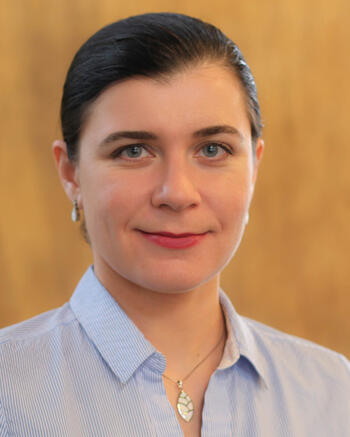
Geir H. Holom, MD, is a Visiting Scholar at Stanford School of Medicine (CHP/PCOR) from the University of Oslo. His research focuses on the expansion of private for-profit hospitals in the Nordic countries and its effect on prices, quality of care and selection of patients. He received a BSc in Economics and Business Administration from the Norwegian School of Economics and an MD from the University of Bergen. While in medical school, he conducted research on patients diagnosed with head and neck cancer who underwent head and neck reconstruction using microsurgery. Since receiving his MD, he has worked as a physician in both primary care and specialized health services. Prior to entering the field of medicine, he worked in the business and finance sector.

Adjunct Affiliate at the Center for Health Policy and the Department of Medicine
CV
Paragraphs

The history of human civilization has been about managing information, from hunting and gathering through contemporary times. In modern societies, information flows are central to how individuals and societies interact with governments, economies, and other countries. Despite this centrality of information, information governance—how information flows are managed—has not been a central concern of scholarship. We argue that it should be, especially now that digitization has dramatically altered the amount of information generated, how it can be transmitted, and how it can be used.

This book examines various aspects of information governance in Japan, utilizing comparative and historical perspectives. The aim is threefold: 1) to explore Japan’s society, politics, and economy through a critical but hitherto underexamined vantage that we believe cuts to the core of what modern societies are built with—information; 2) articulate a set of components which can be used to analyze other countries from the vantage of information governance; and 3) provide frameworks of reference to analyze each component.

This book is the product of a multidisciplinary, multinational collaboration between scholars based in the US and Japan. Each are experts in their own fields (economics, political science, information science, law, library science), and were brought together in two workshops to develop, explore, and analyze the conception and various of facets of information governance. This book is frontier research by proposing and taking this conception of information governance as a framework of analysis.

The introduction sets up the analysis by providing background and a framework for understanding the conception of information governance. Part I focuses on the management of government-held information. Part II examines information central to economic activity. Part III explores information flows crucial to politics and social life.

All Publications button
1
Publication Type
Books
Publication Date
Authors
Kenji E. Kushida
Authors
News Type
News
Date
Paragraphs

Stanford’s Center on Democracy, Development and the Rule of Law congratulates its undergraduate honors class for completing their original research and undergraduate theses. They graduated from Stanford University on June 12 with honors in their respective disciplines.

Graduates include Vehbi “Deger” Turan, who was awarded the Firestone Medal for his thesis entitled “Augmenting Citizen Participation in Governance through Natural Language Processing.” Turan’s project employed existing literature on democratic participation, case studies and an original algorithm in order to devise a means by which government agencies can evaluate public comments received via the Internet on political issues.

The Firestone Medal for Excellence in Undergraduate Research recognizes Stanford's top ten percent of honors theses in social science, science and engineering among the graduating senior class.

Turan decided to explore this topic shortly after joining the Fisher Family CDDRL Honors Program.

According to the program’s Director Stephen Stedman, “After listening to a research seminar at our Center, Deger believed that he could develop an aggregation tool to help policy makers understand such immense data.”

Francis Fukuyama, the Mosbacher Director of CDDRL also noted, “Deger is perhaps the best example to date of why interschool honors programs are valuable. He is a computer science major who came to us expressing an interest in using his background in artificial intelligence to help solve critical public policy problems.” Fukuyama together with Associate Professor of Political Science Justin Grimmer advised Turan on his honor’s thesis.

Turan will be starting a new position at Atomic Labs’ Zenreach start-up after graduation.

The CDDRL Award for Outstanding Thesis was given to Rehan Adamjee whose thesis explored the different factors at play in choosing between healthcare providers in a rural area of Pakistan.

Adamjee and Turan are just two members of a the 2016 cohort of 11 honors students, many of whom traveled to foreign countries to collect original data, conduct interviews and research their thesis topics. Their topics range from timely case studies on the use of social media as a tool of empowerment to a glimpse at the effects of regional politics on healthcare reform in Post-Soviet Russia.

The 2016 class joins 76 graduates from CDDRL’s honors program since its launch in 2007.

The Fisher Family CDDRL Honors Program trains Stanford students from diverse majors to write theses with global policy implications on a subject related to democracy, development and the rule of law. Students attend a class on research methods the spring quarter of their junior year. During their senior year, in tandem with the CDDRL research community and their faculty advisor, students conduct both local and international research in order to write their theses. Students travel to Washington, DC for the annual honors college to meet policymakers and members of the development community to enrich their thesis topics.

A list of our graduating students along with links to all their theses can be found below.


NAMEMAJORTHESIS

Rehan Adamjee

Economics; Public Policy

Advisor: Jayanta Bhattacharya

Anna Blue

International Relations

Advisor: Alberto Diaz Cayeros

Sarah Johnson

Economics

Advisor: Lisa Blaydes

Shang-Ch’uan Li

Materials, Science and Engineering

Advice and Consent: Increase in Malaysian Judges Appointed from the Practicing Bar after the Passage of the Judicial Appointments Commission Act 2009

Advisors: Erik Jensen, Justin Grimmer

Hannah Meropol

Political Science

Advisor: Lisa Blaydes

Jelani Munroe

Economics; Public Policy

Advisor: Pete Klenow

Hannah Potter

International Relations

Advisor: Stephen Stedman

Tebello Qhotsokoane

Public Policy

Advisor: Marcel Fafchamps

Hadley Reid

Human Biology

Advisor: Grant Miller

Paul Shields

International Relations; Slavic Language & Literature

Advisor: Kathryn Stoner

Deger Turan

Computer Science

Advisors: Francis Fukuyama, Justin Grimmer


Meet our Class of 2017 

Hero Image
headline
The graduating class of 2015-2016 CDDRL senior honors students take a group photo with CDDRL Mosbacher Director Francis Fukuyama and the Fisher Family CDDRL Honors Program Director Stephen Stedman. From left to right: Didi Kuo (CDDRL honors program mentor); Jelani Munroe; Stephen Stedman; Tebello Qhotsokoane; Paul Shields; Shang-Ch’uan Li; Hannah Potter; Hadley Reid; Vehbi Deger Turan; Sarah Johnson; Hannah Meropol; Rehan Adamjee; Anna Blue
Alice Kada
All News button
1
News Type
Commentary
Date
Paragraphs

Fifty years have passed since the beginning of China’s Cultural Revolution, a mass political movement led by Mao Zedong that lasted a decade and provoked widespread violence and social upheaval. Stanford sociologist Andrew Walder, a noted expert on contemporary Chinese society, offered his commentary and analysis to various media outlets, cited below.

In the years just following Mao’s death in 1976, the Communist Party showed an “incredible openness” toward addressing the horrors caused by the Cultural Revolution, he told The Guardian. The Communist Party denounced the Cultural Revolution and some within the Party led efforts to document the chaos and bloodshed under Mao’s tenure, Walder recounted on CNN International.

In the 1980s, however, young Chinese activists began to shift their attention from the legacy of the Cultural Revolution to the lack of government reform in China. The Tiananmen Square protests of 1989, despite being short-lived, disquieted the regime more than the Cultural Revolution did, he told The Guardian.

The Chinese government today, compared to the 1970s and early 80s, is much less inclined to discuss Mao’s historical record. Yet, when compared to other socialist regimes that experienced rebellion such as the Soviet Union, China has been much more open to confronting its dark historical past, Walder said in an interview with The Globe and Mail.

Walder is the author of China Under Mao: A Revolution Derailed and Fractured Rebellion: The Beijing Red Guard Movement (Harvard University Press, 2015 and 2009, respectively). He leads a research project focused on political movements in authoritarian regimes and recently published a journal article on transitions from state socialism and its economic impact.

Hero Image
mao soldier
A Chinese soldier stands near the portrait of Mao Zedong outside the gate of heavenly peace, Tiananmen Square, Beijing.
Flickr/Suivez-Nous.Asia
All News button
1
News Type
News
Date
Paragraphs

The Economist cites research from REAP on how poor nutrition impacts educational performance in rural China. To read the original article, click here.

NO CAR may honk nor lorry rumble near secondary schools on the two days next week when students are taking their university entrance exams, known as gaokao. Teenagers have been cramming for years for these tests, which they believe (with justification) will determine their entire future. Yet it is at an earlier stage of education that an individual’s life chances in China are usually mapped out, often in ways that are deeply unfair.

China’s universities offer more opportunity for social mobility than those in many other countries, says James Lee of Hong Kong University of Science and Technology. But the social backgrounds of those admitted have been changing. Until 1993, more than 40% of students were the children of farmers or factory workers. Now universities are crammed with people from wealthy, urban backgrounds. That is partly because a far bigger share of young people are middle-class. But it is also because rural Chinese face bigger hurdles getting into them than they used to.

The problem lies with inequality of access to senior high schools, which take students for the final three years of their secondary education. Students from rural backgrounds who go to such schools perform as well in the university entrance exams as those from urban areas. But most never get there. Less than 10% of young people in the countryside go to senior high schools compared with 70% of their urban counterparts. The result is that a third of urban youngsters complete tertiary education, compared with only 8% of young rural adults.

Expense is a huge deterrent for many. Governments cover the costs of schooling for the nine years of compulsory education up to the age of around 15. But at senior high schools, families must pay tuition and other expenses; these outlays are among the highest in the world (measured by purchasing-power parity). Many students drop out of junior high school—which is free—because rising wages in low-skilled industrial work make the prospect of staying at school even less attractive. Millions enter the workforce every year who are barely literate or numerate. Poor nutrition is also a handicap. Stanford University’s Rural Education Action Programme has found that a high incidence of anaemia and intestinal worms in rural areas affects educational performance.

In China meritocratic exams have been revered since imperial times, when any man could sit them to enter the civil service. For centuries they enabled the poor but talented to rise to high office. The gaokao is similarly intended to be a great leveller. But society has become increasingly divided between those with degrees and those who never even went to senior high. That will mean growing numbers for whom social advancement will remain a distant dream.

Hero Image
economist   the class ceiling
All News button
1
News Type
News
Date
Paragraphs

On May 27, 2016, President Obama will become the first sitting president to visit Hiroshima. In light of this historic visit, SPICE hosted a webinar on May 23, 2016, which featured the talk, “Beneath the Mushroom Cloud,” by Clifton Truman Daniel, grandson of President Harry S. Truman and author of Growing Up with My Grandfather: Memories of Harry S Truman. Following a question and answer period with Mr. Daniel, SPICE staff shared classroom resources (Sadako’s Paper Cranes and Lessons of Peace and Divided Memories) that introduced diverse perspectives on the atomic bombing of Hiroshima.


RELATED CLASSROOM RESOURCES

Hiroshima: Perspectives of the Atomic Bombing
Divided Memories: Comparing History Textbooks
Examining Long-term Radiation Effects
Nuclear Tipping Point (video)
Sadako's Paper Cranes and Lessons of Peace
Reflections from an Atomic Bomb Survivor (video)


This webinar is being offered in collaboration with the National Consortium for Teaching about Asia, which is funded by the Freeman Foundation. The NCTA is a multi-year initiative to encourage and facilitate teaching and learning about East Asia in elementary and secondary schools nationwide.

Hero Image
cliff truman
Clifton Truman Daniel
All News button
1
-

About the Topic: Government services have often been found to act as important sites of political socialization.  Through interactions with institutions and functionaries of the state, individuals learn important lessons about their worth as citizens and the functioning of democracy.  What then happens when governments no longer provide basic services and are replaced by the private sector?  In the context of a large private school voucher experiment, I leverage the randomized distribution of private school vouchers to understand the impact of private schools on citizen's engagement with the state.  Based on an original household survey of 1,200 households conducted five years after a voucher lottery, I find that voucher winning households hold stronger market-oriented beliefs than voucher losing households.  Voucher winning households are willing to pay more for private services and express a preference for private service provision.  However, voucher winning households show no difference in political participation.  Evidence suggest that this is driven by a belief in private providers as permanent economic actors.  These results suggest economic preferences are malleable and exposure to different economic actors, in the form of private schools, have the potential to change them.


About the Speaker: Emmerich Davies is a Ph.D. candidate in Political Science at the University of Pennsylvania and will be joining the faculty at the Harvard Graduate School of Education in July 2016.  His dissertation examines the growth of private elementary education in India. His work has been supported by the American Institute of Indian Studies Junior Fellowship, and the National Academy of Education and Spencer Foundation. In addition, Emmerich has a project with Tulia Falleti on local community political participation after the left turn in Bolivia and is beginning work on variation in education quality across India.

Goldman Conference Room

Encina Hall East, 4th floor

616 Serra St.

Stanford, CA 94305

Emmerich Davies Ph.D. Candidate in Political Science The University of Pennsylvania
Seminars
Subscribe to Society