FSI researchers work to understand continuity and change in societies as they confront their problems and opportunities. This includes the implications of migration and human trafficking. What happens to a society when young girls exit the sex trade? How do groups moving between locations impact societies, economies, self-identity and citizenship? What are the ethnic challenges faced by an increasingly diverse European Union? From a policy perspective, scholars also work to investigate the consequences of security-related measures for society and its values.
The Europe Center reflects much of FSI’s agenda of investigating societies, serving as a forum for experts to research the cultures, religions and people of Europe. The Center sponsors several seminars and lectures, as well as visiting scholars.
Societal research also addresses issues of demography and aging, such as the social and economic challenges of providing health care for an aging population. How do older adults make decisions, and what societal tools need to be in place to ensure the resulting decisions are well-informed? FSI regularly brings in international scholars to look at these issues. They discuss how adults care for their older parents in rural China as well as the economic aspects of aging populations in China and India.
Property rights are important for economic exchange, but in much of the world they are not publicly provided. Private market organizations can fill this gap by providing an institutional structure to enforce agreements, but with this power comes the ability to extort from the group’s members. Under what circumstances will private organizations provide a stable environment for economic activity? Using survey data collected from 1,878 randomly sampled traders across 269 markets, 68 market leaders, and 55 government revenue collectors in Lagos, I find that strong markets maintain institutions to support trade not in the absence of government, but rather as a response to active interference. I argue that organizations develop pro-trade institutions when threatened by politicians they perceive as predatory, and when the organization can respond with threats of its own. Under this balance of power, the organization will not extort because it needs trader support to keep threats credible.
Speaker Bio:
Image
Shelby Grossman is a Postdoctoral Fellow at Stanford University’s Center on Democracy, Development, and the Rule of Law. Her primary research interests are in comparative politics and political economy. Her book manuscript explores the politics of property rights in informal markets in Nigeria. Other research projects include a study on the political economy of diversified business groups, a project on casual inter-group interactions in the informal economy, and a paper on the politics of non-compliance with polio vaccination in northern Nigeria. Shelby received her Ph.D. from the Department of Government at Harvard University in 2016.
Encina Hall, C433
616 Jane Stanford Way
Stanford, CA 94305-6055
0
shelbybg@stanford.edu
shelby_grossman.jpg
PhD
Shelby Grossman was a research scholar at the Cyber Policy Center. Her research focuses on online safety. Shelby's research has been published in Comparative Political Studies, PNAS Nexus, Political Communication, The Journal of Politics, World Development, and World Politics. Her book, "The Politics of Order in Informal Markets," was published by Cambridge University Press. She is co-editor of the Journal of Online Trust and Safety, and teaches classes at Stanford on open source investigation and online trust and safety issues.
Shelby was an assistant professor of political science at the University of Memphis from 2017-2019, and a postdoctoral fellow at Stanford University’s Center on Democracy, Development, and the Rule of Law from 2016-17. She earned her Ph.D. in Government from Harvard University in 2016.
As 2017 approaches, the Shorenstein Asia-Pacific Research Center documents highlights from the 2015-16 academic year. The latest edition of the Center Overview, entitled "Challenges to Globalization," includes research, people, events and outreach features, and is now available for download online.
Hero Image
A container is loaded onto a ship docked at the terminal port in Singapore, June 2016. | ROSLAN RAHMAN/AFP/Getty Images
In this new article, Megan Palmer, a senior research scholar at the Center for International Security and Cooperation, talks about the different ways that the FBI is collaborating with the biotech community in order to be prepared to respond to an emerging biological threat. One of them is by reaching out to student bioengineers at programs like the International Genetically Engineered Machine (iGEM) Competition. The purpose of that event is to demonstrate how synthetic biology can be used to address pressing global issues.
As the article states, whether it’s an accidental outbreak or a biological attack, the FBI seeks to create a culture of trust and transparency with the biotech community. Palmer discussed this topic recently at the Biofabricateconference for synthetic biology and design in New York City.
As Palmer noted, biological attacks are a historical reality. In 1984, cult members poisoned patrons of 10 salad bars in Oregon with salmonella, sickening more than 750 people. And in 2001 shortly after the 9/11 attacks, anthrax spores that were mailed to newsrooms and government offices killed five people. While other incidents may have simply failed, it seems prudent to prepare for future attacks that could be even more deadlier.
Enter the FBI's foreay into the biotech community. Collaboartion between the public and private sectors is increasing in this area. As Palmer said, examples exist of iGEM students acting as "white hat biohackers" to help biotech companies detect weaknesses in their systems that all in collaboration with the FBI, Palmer says.
“There’s the overall sense that the government has acknowledged that it is not necessarily the center of influence in technological development,” Palmer told the publication. “We’re going to start seeing many more examples of partnerships between the government and the private sector where you wouldn't have necessarily expected them before. People should be willing to give them a chance.”
To Palmer, the key to the collaboration is open communication. She reports progress with the FBI and biotech community on this front. Palmer herself asks the FBI questions about its involvement and interest in biotech dangers. So far, they have “been willing to have more of those conversations,” she said. The true test will come when the relationship is finally tested by what Palmer describes as a “triggering event,” either a situation where there is reason to believe a biotech has occurred or one in which the FBI is prying a bit too much into the lives of biologists. Palmer said that if the relationship doesn’t withstand this type of challenge, the trust between the FBI and the community would weaken, and communication would break down.
Close up image of human hand holding test tube. CISAC's Megan Palmer explains in a new article how the FBI is collaborating with the biotech community in order to be prepared to respond to an emerging biological threat. | SergeyNivens/Getty Images
Stanford professor Gi-Wook Shin and Rennie J. Moon compare the political protests in South Korea of today to that of 1987 in an editorial for the Diplomat. The recent demonstrations are an illustration of “a distinctive Korean political culture that prioritizes elements of virtue, shame and saving face,” they wrote.
Shin, who is the Korea Program director at the Shorenstein Asia-Pacific Research Center, and Moon were both in Seoul on Nov. 12 and were observers of the crowd of one million people who gathered to protest South Korean President Park Geun-hye’s administration. He also spoke to the Economist earlier about the likelihood of the president’s resignation or impeachment.
Read the Diplomat editorial here and the Economist article here.
Shin and Moon have since co-authored a paper on the topic in volume 57 of Asian Survey, titled "South Korea in 2016: Political Leadership in Crisis," which can be viewed here.
The U.S.-Asia Security Initiative at Stanford’s Shorenstein Asia-Pacific Research Center, in collaboration with the Japan Center for International Exchange, has published a report highlighting the findings from its Inaugural U.S.-Japan Security Workshop, a Track 1.5 dialogue in Tokyo that convened government and military officials from the United States and Japan, as well as scholars and regional experts, in May 2016.
American and Japanese Perspectives on the Security Trends in Asia
The Impact of the New Security Policy on U.S.-Japan Security Cooperation Efforts
Defense Cooperation and Weapons Development & Acquisition
Conclusions—Facing the Policy and Operational Challenges Head-On
Rising tensions in Asia underscore a need for expanded security cooperation. The report is offered as a tool to American and Japanese policy researchers and practitioners who seek to study and address the evolving security environment and what the future holds for the alliance.
The Japan Maritime Self-Defense Force destroyer JS Takanami (front) sails alongside the guided-missile destroyer USS McCampbell during a March 2014 tactical training event between the two ships. | Flickr/U.S. Pacific Fleet - Chris Cavagnaro
Amy Zegart, co-director of CISAC, wrote the following op-ed for the San Francisco Chronicle:
Donald Trump’s stunning win has made many wonder: Just how dangerous could a Trump foreign policy be? There are plenty of reasons to be afraid, very afraid.
Trump knows almost nothing about national security but says his own top adviser would be himself. He has said he might use nuclear weapons against the Islamic State and would abandon the North Atlantic Treaty Organization and our Asia-Pacific allies unless they paid more — as though alliances are a two-bit mafia protection racket rather than an enduring source of American power projection across the globe. He doesn’t know what the U.S. nuclear triad is (it’s the cornerstone of our deterrence against total nuclear war), and he doesn’t care that he doesn’t know.
He dismisses U.S. intelligence reports attributing election hacking to the Russian government as “public relations.” And his Twitter trigger fingers have alarmed many about putting a man with so little obvious self-control anywhere near the U.S. nuclear codes. Three reasons, however, suggest that a Trump foreign policy might not be the doomsday scenario that many fear.
The first is the heavy burden of office. All presidents feel it. Campaigning is one thing, governing is another. Candidate Jimmy Carter railed against the Central Intelligence Agency during the 1976 presidential campaign and vowed to declaw it. President Carter did the opposite, embracing covert operations and declaring in his 1981 State of the Union message that, “Our national interests are critically dependent on a strong and effective intelligence capability.” Nothing is more sobering than seeing, up close, every day, what dangers confront the United States and threaten our vital interests. The campaign trail is exhilarating. The Oval Office is exhausting. Leading the most powerful country on Earth is an awesome responsibility that every president feels. That’s why they seem to age in dog years.
The second check on recklessness is Congress. To be sure, presidents have far more unilateral powers when it comes to foreign policy than domestic policy. But Congress still matters. Congress controls the purse and oversees the executive branch — often times, not so well. But in moments of crisis, Congress does weigh in because voters back home demand it. Congressional pressure — and the prospect that Congress would cut off funding — finally pushed President Richard Nixon to end the Vietnam War. National Security Agency surveillance was dramatically reformed when Congress passed the USA Freedom Act in 2015. CIA assassination plots against foreign leaders ended when Congress’ Church committee investigation uncovered them and said, “enough.” To be sure, Republicans will again control the House and Senate come January. But the one thing that instantly unites all Republicans and Democrats is protecting their own power against an overreaching executive.
The third check is bureaucracy. American intelligence and military officials are professionals. They are trained to do their jobs regardless of who’s in power. While there are always exceptions (I’m thinking of you, FBI Director James Comey), the men and women who work at the tip of the spear of our national security establishment put country first. At the CIA, speaking truth to power is a cherished value. In the Pentagon, refusing to follow an unlawful order is deeply inculcated. These are not slogans on hats. These are the creeds by which our national security professionals live, and die. Spend any time at Strategic Command headquarters in Omaha, Neb., where there’s a red clock on the wall counting the time in seconds to nuclear impact on the operations center, and you’ll know just how real these values are.
Implementing policy is harder than most people think. It takes time, it takes approvals, it takes organizational gears to grind, it takes coordination across agencies, it takes bureaucratic infighting and political maneuvering, and it often takes a bevy of lawyers. Every president complains that the process is far too cumbersome. Presidents issue plenty of orders that are not carried out quickly, or ever. Agendas are always long. Time is always short. Events often intervene. And concerned bureaucracies can wait it out while the president’s four-year term ticks away.
In the summer of 1952, when Dwight Eisenhower was running for president, Harry Truman famously captured just how hard it is to make change. Imagining how Eisenhower would handle the presidency, Truman remarked, “He’ll sit here and he’ll say, ‘Do this! Do that! And nothing will happen. Poor Ike — it won’t be a bit like the Army. He’ll find it very frustrating.”
Let’s hope so.
Hero Image
The CIA symbol is shown on the floor of the CIA Headquarters. The CIA is one of the government agencies that president-elect Donald Trump would find to be a check on any reckless national security decisions or actions, according to Stanford political scientist Amy Zegart. | Mark Wilson/Getty Images
Due to an overwhelming response, we have reached venue capacity and are no longer accepting RSVPs.
On November 8, the American electorate chose Donald Trump as their next President. Mr. Trump comes to office with a declared intent to drastically change U.S. trade policy and to reassess U.S. alliances, including in Asia. Faced with the realities of governing, however, how will the new administration shape its policies toward Asia? How will it tackle both economic and security challenges in the region, and globally?
A panel of Stanford experts, just returned from South Korea and Japan and discussions there with Asian policy makers, will discuss these questions.
The panelists:
Gi-Wook Shin, Senior Fellow, Freeman Spogli Institute for International Studies; Professor of Sociology; Director, Shorenstein Asia-Pacific Research Center; Director, Korea Program, Shorenstein Asia-Pacific Research Center
Michael Armacost, Shorenstein APARC Distinguished Fellow; Former U.S. Ambassador to Japan
Takeo Hoshi, Henri H. and Tomoye Takahashi Senior Fellow in Japanese Studies, Freeman Spogli Institute for International Studies; Director, Japan Program, Shorenstein Asia-Pacific Research Center
Kathleen Stephens, William J. Perry Distinguished Fellow; Former U.S. Ambassador to Korea
Faculty from Anthropology, English and Political Science join Stanford students and staff for perspectives on the U.S. election and its implications for Mexico and Latin America, and for the prospects of immigrants living in the U.S.
(TBD) undergraduate (Centro Chicano and Latino Outreach and CORE Coordinator)
Lenica Morales-Valenzuela is a Masters in Latin American Studies student here at the Center of Latin American Studies. Her past research has focused on human rights advocacy for genocide survivors of the Guatemalan Civil War and studying root causes for Central American migration to the United States. Currently, her research is shifting towards issues of constitutionality of indigenous rights in Guatemala and how indigenous populations have been interacting (or not) with the Guatemalan state.
#LatinxsReact
Speakers:
Image
Professor Garcia’s work engages historical and institutional processes through which violence and suffering is produced and lived. A central theme is the disproportionate burden of addiction, depression and incarceration among poor families and communities. Her research is oriented toward understanding how attachments, affect, and practices of intimacy are important registers of politics and economy.
Professor Garcia is currently engaged in research in Mexico City that examines emerging social and discursive worlds related to the dynamics of extreme urban poverty, mental illness and drug addiction in Mexico City, particularly within its peripheral zones.
Image
Dr. Paula M. L. Moya is Professor of English and, by courtesy, of Iberian and Latin American Cultures and the Director of the Research Institute of Comparative Studies in Race and Ethnicity at Stanford University.
She was also a founding organizer and coordinating team member of The Future of Minority Studies research project (FMS), an inter-institutional, interdisciplinary, and multigenerational research project facilitating focused and productive discussions about the democratizing role of minority identity and participation in a multicultural society.
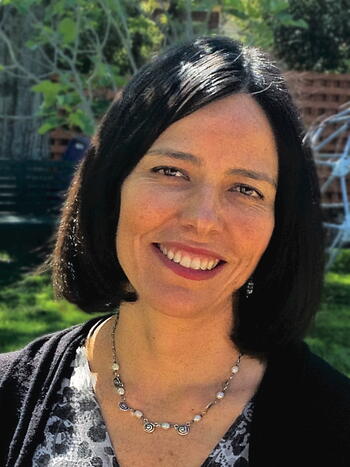
Beatriz Magaloni
Beatriz Magaloni is an Associate Professor in the Department of Political Science and a Senior Fellow at the Freeman Spogli Institute for International Studies (FSI) at Stanford University. She is also an affiliated faculty member of the Woods Institute of the Environment (2011-2013), a Faculty Fellow at the Stanford Center for International Development, and became an affiliated faculty member at CISAC in 2014.
Moderator(s):
Image
Francisco Preciado, J.D., Executive Director SEIU Local 2007 at Stanford. Francisco has experience working in local and state politics. He has advised California State Assembly Members and State Senators, managed a non-profit, worked as a union organizer, and completed several legal externships. He is a graduate of UC Berkeley School of Law, where he was recognized for his work assisting low-income workers. Francisco has a Masters Degree in Mexican American Studies from San Jose State University, and a dual Bachelors Degree in Political Science and Chicano(a) Studies from Stanford University.
Image
Alberto Diaz-Cayeros Director of the Center for Latin American Studies. Alberto joined the FSI faculty in 2013 after serving for five years as the director of the Center for US-Mexico studies at the University of California, San Diego. He earned his Ph.D at Duke University in 1997. He was an assistant professor of political science at Stanford from 2001-2008, before which he served as an assistant professor of political science at the University of California, Los Angeles. Diaz-Cayeros has also served as a researcher at Centro de Investigacion Para el Desarrollo, A.C. from 1997-1999. His work has primarily focused on federalism, poverty and economic reform in Latin America, and Mexico in particular. He has published widely in Spanish and English.
Dept. of Political Science
Encina Hall, Room 436
Stanford University,
Stanford, CA
(650) 724-5949
0
magaloni@stanford.edu
Senior Fellow at the Freeman Spogli Institute for International Studies
Graham H. Stuart Professor of International Relations
Professor of Political Science
beatriz_magaloni_2024.jpg
MA, PhD
Beatriz Magaloni Magaloni is the Graham Stuart Professor of International Relations at the Department of Political Science. Magaloni is also a Senior Fellow at the Freeman Spogli Institute, where she holds affiliations with the Center on Democracy, Development and the Rule of Law (CDDRL) and the Center for International Security and Cooperation (CISAC). She is also a Stanford’s King Center for Global Development faculty affiliate. Magaloni has taught at Stanford University for over two decades.
She leads the Poverty, Violence, and Governance Lab (Povgov). Founded by Magaloni in 2010, Povgov is one of Stanford University’s leading impact-driven knowledge production laboratories in the social sciences. Under her leadership, Povgov has innovated and advanced a host of cutting-edge research agendas to reduce violence and poverty and promote peace, security, and human rights.
Magaloni’s work has contributed to the study of authoritarian politics, poverty alleviation, indigenous governance, and, more recently, violence, crime, security institutions, and human rights. Her first book, Voting for Autocracy: Hegemonic Party Survival and its Demise in Mexico (Cambridge University Press, 2006) is widely recognized as a seminal study in the field of comparative politics. It received the 2007 Leon Epstein Award for the Best Book published in the previous two years in the area of political parties and organizations, as well as the Best Book Award from the American Political Science Association’s Comparative Democratization Section. Her second book The Politics of Poverty Relief: Strategies of Vote Buying and Social Policies in Mexico (with Alberto Diaz-Cayeros and Federico Estevez) (Cambridge University Press, 2016) explores how politics shapes poverty alleviation.
Magaloni’s work was published in leading journals, including the American Political Science Review,American Journal of Political Science, Criminology & Public Policy, World Development, Comparative Political Studies, Annual Review of Political Science, Cambridge Journal of Evidence-Based Policing, Latin American Research Review, and others.
Magaloni received wide international acclaim for identifying innovative solutions for salient societal problems through impact-driven research. In 2023, she was named winner of the world-renowned Stockholm Prize in Criminology, considered an equivalent of the Nobel Prize in the field of criminology. The award recognized her extensive research on crime, policing, and human rights in Mexico and Brazil. Magaloni’s research production in this area was also recognized by the American Political Science Association, which named her recipient of the 2021 Heinz I. Eulau Award for the best article published in the American Political Science Review, the leading journal in the discipline.
She received her Ph.D. in political science from Duke University and holds a law degree from the Instituto Tecnológico Autónomo de México.
Encina Hall, C149
616 Jane Stanford Way
Stanford, CA 94305
(650) 725-0500
0
albertod@stanford.edu
Senior Fellow, Freeman Spogli Institute for International Studies
Professor, by courtesy, of Political Science
alberto_diaz-cayeros_2024.jpg
MA, PhD
Alberto Díaz-Cayeros is a Senior Fellow at Stanford University's Freeman Spogli Institute for International Studies (FSI), and co-director of the Democracy Action Lab (DAL), based at FSI's Center on Democracy, Development and Rule of Law (CDDRL). His research interests include federalism, poverty relief, indigenous governance, political economy of health, violence, and citizen security in Mexico and Latin America.
He is currently working on a project on cartography and the developmental legacies of colonial rule and governance in indigenous communities in Mexico.
Tokyo Foundation - Shorenstein APARC Joint Symposium
RSVP required: send name & affiliation with the subject line “TF-APARC Symposium” to info@tkfd.or.jp
On November 8, Americans will go to the polls to choose their new president. How will the new administration tackle pressing issues confronting the United States and the world? For clues on the kind of policies the White House is likely to pursue starting next January to power the US economy and address foreign and security priorities, the Tokyo Foundation will host a symposium inviting top US and Japanese experts on November 17--less than 10 days following the election.
Organized jointly with the Shorenstein Asia-Pacific Research Center at Stanford University, the symposium will feature such experts on the Stanford faculty as Edward Lazear, former chairman of the President’s Council of Economic Advisers, and former US Ambassador to Japan Michael Armacost. Japanese panelists will include former World Bank economist and now Waseda University professor Shujiro Urata and Tokyo Foundation director of policy research Bonji Ohara.
To be conducted in English and Japanese (with simultaneous interpretation), the event will examine the direction of US policy, its impact on Japan, and the future of Japan-US relations.
Program
9:30 Opening Remarks
Gi-Wook Shin (Director, Shorenstein APARC, Stanford University) Takeo Hoshi (Chair of the Board, Tokyo Foundation; Director, Japan Program, Shorenstein APARC, Stanford University)
9:40 Keynote Address
Edward Lazear (Professor, Graduate School of Business, and Senior Fellow, Hoover Institution, Stanford University; former Chairman of the President’s Council of Economic Advisers)
10:00 Panel Discussion: “Economic and Trade Policies under the New Administration”
Panelists Shujiro Urata (Professor, Graduate School of Asia-Pacific Studies, Waseda University) Edward Lazear Kathleen Stephens (Distinguished Fellow, Shorenstein APARC, Stanford University; former US Ambassador to South Korea) Kenji Kushida (Research Associate, Japan Program, Shorenstein APARC, Stanford University)
Moderator Takeo Hoshi
10:45 Q&A
11:00 Panel Discussion: “Foreign and Security Policies under the New Administration”
Panelists
Michael Armacost (Distinguished Fellow, Shorenstein APARC, Stanford University; former US Ambassador to Japan) Karl Eikenberry (Distinguished Fellow, Shorenstein APARC, Stanford University; former US Ambassador to Afghanistan) Bonji Ohara (Director of Policy Research, Tokyo Foundation)

 FSI researchers work to understand continuity and change in societies as they confront their problems and opportunities. This includes the implications of


 Beatriz Magaloni