FSI researchers work to understand continuity and change in societies as they confront their problems and opportunities. This includes the implications of migration and human trafficking. What happens to a society when young girls exit the sex trade? How do groups moving between locations impact societies, economies, self-identity and citizenship? What are the ethnic challenges faced by an increasingly diverse European Union? From a policy perspective, scholars also work to investigate the consequences of security-related measures for society and its values.
The Europe Center reflects much of FSI’s agenda of investigating societies, serving as a forum for experts to research the cultures, religions and people of Europe. The Center sponsors several seminars and lectures, as well as visiting scholars.
Societal research also addresses issues of demography and aging, such as the social and economic challenges of providing health care for an aging population. How do older adults make decisions, and what societal tools need to be in place to ensure the resulting decisions are well-informed? FSI regularly brings in international scholars to look at these issues. They discuss how adults care for their older parents in rural China as well as the economic aspects of aging populations in China and India.
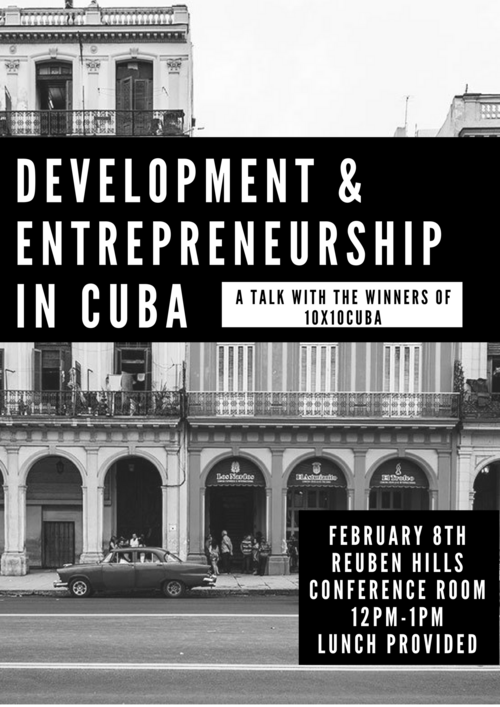
Join Professor Larry Diamond and the winners of the 10x10K Cuba competition for a talk on the emerging entrepreneurial scene in Cuba. The 10x10K Cuba is an international competition seeking to help talented programmers and entrepreneurs in Cuba. This event will feature Janse Lazo Valdes and Victor Manuel Moratón, the entrepreneurs leading the startups MiKMa and NinjaCuba.
Speaker(s) Bio:
Janse Lazo Valdes is a Computer Science engineer from the Havana University of Technologies José Antonio Echeverría. Valdes and his team Sírvete participated in Havana’s first Startup Weekend, coming in 2nd place. At Stanford, he is hoping to learn more about business opportunities, marketing, human resources, and leadership to promote entrepreneurship and development in Cuba. Valdes is representing the startup MiKMa.
MiKMa is a startup that will guarantee the advertising of houses for rent in national currency in Cuba and hopes to revolutionize the way in which the user makes the reservations of these properties.
Victor Manuel Moratón is a Computer Science engineer from the Havana University of Technologies José Antonio Echevarría. He specializes in software development and is the product developer of Ninjas Cuba. At Stanford, he wants to represent the emerging entrepreneurial Cuban community and meet leaders in the sector of entrepreneurship and development. Moratón is representing the startup NinjaCuba.
NinjaCuba is a website oriented to the search of talents of computer science in Cuba thought for the thousands of computer engineers, cybernetics, designers, companies and groups of development. NinjaCuba hopes to connect people in the technology space with employment opportunities.
Image
Janse Lazo Valdes
Computer Science Engineer, Havana University of Technologies José Antonio Echeverría
Victor Manuel Moratón
Computer Science Engineer, Havana University of Technologies José Antonio Echevarría.
Commentators have vigorously debated whether international criminal justice mechanisms favor conflict or peace. Others have debated whether decapitation (i.e., assassination of leaders) strengthens or weakens militias, insurgencies, and terrorist groups. This study examines how arrests of, and threats to arrest, militia leaders pursuant to international criminal warrants have affected demobilization of Rwandan militias in the eastern Democratic Republic of the Congo.
Speaker Bio:
Image
Richard Steinberg writes and teaches in the areas of international law and international relations. He currently teaches International Trade Law, International Business Transactions, and Theories of International Law, and directs Law School clinics that work with the Office of the Prosecutor of the International Criminal Court and conduct research in conflict and post-conflict zones. He is also Director of the Sanela Diana Jenkins Human Rights Project, and Editor-in-Chief of the award-winning www.ICCforum.com (link is external). In addition to his UCLA appointment, Professor Steinberg is currently Visiting Professor of Stanford Global Studies at the WSD Handa Center for Human Rights and International Justice, and the Center on Democracy, Development, and the Rule of Law at Stanford.
Co-sponsor: HANDA Center for Human Rights & International Justice
Richard Steinberg
Visiting Professor at Stanford Global Studies and on faculty at UCLA School of Law
About the Topic: Professor Park will discuss how promotion incentives influence the effort of public employees by providing evidence from China's system of promotions for teachers. He tests a tournament model of promotion using retrospective panel data on primary and middle school teachers. Consistent with theory, high wage increases for promotion are associated with better performance. Teachers increase effort in years leading up to promotion eligibility and reduce effort if they are repeatedly passed over for promotion. Evaluation scores are positively associated with teacher time use and with student test scores, diminishing concerns that evaluations are manipulated.
About the Speaker: Albert Park is Chair Professor of Social Science and Professor of Economics at Hong Kong University of Science and Technology. He is a development and labor economist who is an expert on China’s economic development. In recent years he has published articles in leading economics journals on firm performance, poverty and inequality, migration and employment, health and education, and the economics of aging in China. He has co-directed numerous survey research projects in China including the Gansu Survey of Children and Families, a longitudinal study of rural youth. He previously held faculty appointments at the University of Michigan and Oxford University.
Chair Professor of Social Science and Professor of Economics
"I don't think anyone, including many in the media themselves, would say that they are somehow completely political neutral, but a much deeper assertion was made where even factual statements and fact-checking done by organizations like the New York Times or CNN were called into question, and they were called into question by people purporting to put forward facts that really had no actual empirical basis other than the fact that someone had said it on the Internet," says CDDRL Mosbacher Director Francis Fukuyama.
In Revolution and Rebellion in the Early Modern World, I showed that turning points in global population trends have been driving waves of political stability or crisis for at least the last 500 years. We are currently seeing a new turning point, as rich countries enter a period of workforce decline and emerging markets divide into those with falling fertility vs. stable and still-high fertility. Drawing on experience from previous centuries in Europe and Asia, we can forecast political trends; these include a new wave of revolutions in Africa and the Middle East and a surge in populist and protectionist politics in Europe and the U.S., but also eventual peaceful transitions to democracy in Russia and China.
Speaker Bio:
Image
Jack A. Goldstone (PhD Harvard) is the Virginia E. and John T. Hazel, Jr. Professor of Public Policy at George Mason University. Previously, Dr. Goldstone was on the faculty of Northwestern University and the University of California, and has been a visiting scholar at Cambridge University and the California Institute of Technology. He is the author of Revolution and Rebellion in the Early Modern World, awarded the 1993 Distinguished Scholarly Research Award of the American Sociological Association; Why Europe? The Rise of the West in World History; and co-editor of Political Demography: How Population Changes are Reshaping International Security and National Politics. He has been a Fellow at the Center for Advanced Study at Stanford University, and won Fellowships from the Guggenheim Foundation, the MacArthur Foundation and the American Council of Learned Societies. He has also won the Arnoldo Momigliano Award of the Historical Society, the Myron Weiner award of the International Studies Association, and been Holbrooke lecturer at the American Academy in Berlin. His current research focuses on conditions for building democracy and stability in developing nations, the impact of population change on the global economy and international security, and the cultural origins of modern economic growth.
616 Serra StreetEncina Hall E301Stanford, CA94305-6055
(650) 723-8429
(650) 723-6530
0
dgtimber@stanford.edu
david_timberman.jpg
David Timberman is a political analyst and development practitioner with 30 years of experience analyzing and addressing political and governance challenges, principally in Southeast and South Asia. Recently he was a Visiting Professor of Political Science at De La Salle University in Manila, where he taught courses on Southeast Asian politics and policy reform in the Philippines. As a Technical Director at MSI he has conducted or managed multiple assessments, studies and evaluations intended to inform US government development strategies and programs. As a senior democracy and governance (DG) advisor in USAID’s Asia Near East Bureau he advised USAID Missions on the development of their DG and conflict strategies and programs. As a senior DG advisor to USAID Indonesia he was deeply involved in the design and implementation of elections, civil society, parliamentary strengthening and anti-corruption programs. Through his positions with the National Democratic Institute and the Asia Foundation he worked closely with political parties and NGOs across Asia. He has lived and worked in the Philippines, Indonesia and Singapore, including experiencing first-hand the democratic transitions in the Philippines (1986-1988) and Indonesia (1998-2001). He has written extensively on political and governance issues in the Philippines and has edited or co-edited multi-author volumes on the Philippines, Cambodia and economic policy reform in Southeast Asia. He holds a MA in International Affairs from Columbia University and a BA in political science (with honors) and history from Tufts University.
p.p1 {margin: 0.0px 0.0px 0.0px 0.0px; font: 12.0px 'Times New Roman'; min-height: 15.0px}
p.p2 {margin: 0.0px 0.0px 0.0px 0.0px; font: 11.0px 'Times New Roman'}
span.s1 {font: 12.0px 'Times New Roman'}
Visiting Scholar
2016-2017 Lee Kong Chian NUS-Stanford Fellow on Contemporary Southeast Asia
Improving the U.S.-China relationship is a focus at the Center for International Security and Cooperation.
CISAC continued this tradition in co-sponsoring the 8th Sino-U.S. Security Relations and Cooperation Conference in Beijing from Dec. 14-15, 2016. The conference was hosted and co-sponsored by the Foreign Ministry's China Institute of International Studies (CIIS).
Ambassador Su Ge, president of CIIS, attended the conference and delivered an opening remark. FSI’s Thomas Fingar and Teng Jianqun from CIIS chaired the conference.
Fingar said, “Although held at a time of uncertainty about the future of U.S.-China relations, the conference included constructive exchanges on strategic stability, obstacles to cooperation in space, and other sensitive topics.”
He added, “The exchanges were frank and constructive because they built on the foundation of understanding and trust developed through years-long exchanges between CISAC and CIIS. In the next phase, small teams of American and Chinese experts will develop joint blueprints to enhance understanding of issues critical for nuclear stability and space cooperation.”
CISAC co-founder John W. Lewis has been active for many years encouraging and supporting better ties between the U.S. and China. He is an expert on Chinese politics, U.S.-China relations, China's nuclear weapons program, U.S. policy toward Korea and health security issues in northeast Asia.
During this most recent Beijing conference, scholars and security experts from both the U.S. and China held in-depth discussions on topics including cybersecurity, outer space cooperation, maritime dispute management, missile defense, grey zone cooperation, and China-U.S. nuclear issues.
The American attendees included scholars from CISAC (Fingar, Brad Roberts, and Joseph Torigian); Brad Roberts, director, Center for Global Security Research, Lawrence Livermore National Laboratory; Major General Roger W. Burg, former commander, 20th Air Force; Vice Admiral Michael Connor (retired), U.S. Navy; Lieutenant General Susan J. Helms (retired), U.S. Air Force general and former NASA astronaut; Lieutenant General James M. Kowalski (retired), U.S. Air Force general; Steven M. Benner,chief, Strategy and Campaign Division, U.S. Strategic Command, among others.
The Chinese experts came from a variety of institutions – CIIS, China Academy of Engineering Physics, the People’s Liberation Army (PLA) Rocket Force, Rocket Force College, China Defense Science and Technology Information Center, PLA Navy Academy of Military Science, PLA South Command, Chinese Academy of Social Science, Renmin University of China, National Defense University, Tsinghua University, etc.
Long a laggard on human rights, the Association of Southeast Asian Nations (ASEAN) is being pressed from within to reconsider its indifference. In 2009 an ASEAN Human Rights Commission (AICHR) was created and tasked with promoting (not protecting) human rights in Southeast Asia. In 2012 its members agreed to issue a first-ever ASEAN Human Rights Declaration. Most observers dismissed these moves as symbolic—an effort mainly to assuage foreign critics and gain international legitimacy. Prof. Jetschke differs. She will argue that the AICHR’s formation was prompted in part by the swelling flows of refugees across borders inside Southeast Asia, especially from Myanmar, and the problems thereby created for the region’s states and societies. She will also explore the extent to which these factors have eroded one of ASEAN’s strongest regional norms—the taboo on interfering in members’ domestic affairs. That erosion could strengthen ASEAN as something more than the sum of its sovereign members.
Image
Anja Jetschke is Professor of International Relations at the University of Göttingen’s political science department since 2012. Her Comparative Regional Organizations Project has developed the world’s largest database on regional organizations. Previously she headed a research program on international governance at the German Institute of Global and Area Studies (Hamburg) and was an assistant professor at the University of Freiburg. She also held research fellowships at Ohio State University and the University of Berlin. Her publications include many articles and chapters on comparative regionalism, ASEAN, and the AICHR, and a prize-winning book, Human Rights and State Security: Indonesia and the Philippines (2011). Her doctorate is from the European University (Florence).
Anja Jetschke
Professor of International Relations, University of Göttingen
Siegfried Hecker wrote the following op-ed for the Jan. 12 edition of The New York Times:
Since my first visit to North Korea’s Yongbyon nuclear complex in 2004, I have witnessed the country’s nuclear weapons program grow from a handful of primitive bombs to a formidable nuclear arsenal that represents one of America’s greatest security threats. After decades of broken policies toward Pyongyang, talking to the North Koreans is the best option for the Trump administration at this late date to limit the growing threat.
North Korea broke out to build the bomb because President George W. Bush was determined to kill President Bill Clinton’s 1994 “Agreed Framework,” a bilateral agreement with the North to freeze and eventually dismantle the North’s nuclear program. Hard-liners in the Bush administration viewed it as appeasement. Mr. Bush labeled the North, along with Iran and Iraq, part of an “axis of evil” in January 2002.
At the first bilateral meeting with Kim Jong-il’s regime in Pyongyang in October 2002, Bush administration officials accused North Korea of violating the Clinton pact by clandestinely pursuing the uranium path to the bomb. Washington had already detected this effort in the late 1990s, but it was deemed an insufficient threat not worthy of jeopardizing the gains made by the plutonium freeze.
For the Bush administration, the clandestine uranium effort was all it needed to walk away from the Agreed Framework. Yet Mr. Bush’s team proved unprepared for the consequences and stood by as North Korea resumed its plutonium program and built the bomb.
During six visits between 2004 and 2009, I watched the North continue to try to engage Washington, while the Bush administration preferred the six-party talks led by China, believing that the North would have greater difficulty cheating in the context of multilateral diplomacy. In a 2004 visit, I was even allowed to hold a piece of plutonium — in a sealed glass jar — to convince me and Washington that North Korea had the bomb.
In September 2005, China orchestrated a six-party joint statement calling for a nuclear-weapon-free Korean Peninsula. When the Bush administration concurrently slapped financial sanctions on Pyongyang, the North Koreans walked out of the six-party talks and responded with their first nuclear test in October 2006.
I was in Pyongyang three weeks later and found that although the test was only partly successful, it marked a turning point in the North’s nuclear program. North Korea became a nuclear weapon state and insisted that all future negotiations proceed from that reality. Mr. Bush left office with the North most likely possessing up to five plutonium-fueled nuclear weapons and an expanding uranium program.
North Korea greeted the Obama administration with a long-range rocket launch, followed by a second nuclear test in May 2009 — this one, successful. Unlike the Bush administration, which faced the prospect of the North’s violating the Nuclear Nonproliferation Treaty, the Obama administration faced the North’s steady march to an expanding arsenal.
Mr. Obama was also unwilling to engage directly with Pyongyang, insisting instead that the North denuclearize before starting talks. It appears the Obama administration also viewed the regimes of Kim Jong-il and his son and successor, Kim Jong-un, as repugnant and hoped for their collapse, while also staying in step with two conservative South Korean administrations. Mr. Obama’s preferred path has been to tighten United Nations and United States sanctions and to pressure Beijing to rein in Pyongyang. Neither strategy has stopped the Kim regime from expanding its nuclear program.
Pyongyang upped the ante on its nuclear program with a remarkable revelation during my seventh and last visit in November 2010: the existence of a modern uranium centrifuge facility in Yongbyon. That facility served notice that the North was now capable of pursuing the second path to the bomb. No outsiders are known to have been in Yongbyon since my 2010 visit.
Satellite imagery of the Yongbyon complex combined with official North Korean propaganda photos and three additional successful nuclear tests point to a robust and rapidly expanding nuclear arsenal. My best estimate, admittedly highly uncertain, is that North Korea has sufficient plutonium and highly enriched uranium to build 20 to 25 nuclear weapons.
The North also launched some two dozen missiles in 2016, including partly successful road-mobile and submarine-based missiles that could potentially carry nuclear warheads.
President-elect Donald J. Trump faces a much graver threat from the North than his two predecessors. Pyongyang can most likely already reach all of South Korea, Japan and possibly even some United States targets in the Pacific.
The crisis is here. The nuclear clock keeps ticking. Every six to seven weeks North Korea may be able to add another nuclear weapon to its arsenal. All in the hands of Kim Jong-un, a young leader about whom we know little, and a military about which we know less. Both are potentially prone to overconfidence and miscalculations.
These sensitive nuclear issues require focused discussions in a small, closed setting. This cannot be achieved at a multilateral negotiating table, such as the six-party talks.
Mr. Trump should send a presidential envoy to North Korea. Talking is not a reward or a concession to Pyongyang and should not be construed as signaling acceptance of a nuclear-armed North Korea. Talking is a necessary step to re-establishing critical links of communication to avoid a nuclear catastrophe.
Mr. Trump has little to lose by talking. He can risk the domestic political downside of appearing to appease the North. He would most likely get China’s support, which is crucial because Beijing prefers talking to more sanctions. He would also probably get support for bilateral talks from Seoul, Tokyo and Moscow.
By talking, and especially by listening, the Trump administration may learn more about the North’s security concerns. It would allow Washington to signal the strength of its resolve to protect its allies and express its concerns about human rights abuses, as well as to demonstrate its openness to pragmatic, balanced progress.
Talking will help inform a better negotiating strategy that may eventually convince the young leader that his country and his regime are better off without nuclear weapons.
Hero Image
Pedestrians walk before the portraits of former North Korean leaders Kim Il-Sung, left, and Kim Jong-Il, right, in Pyongyang in 2016. Siegfried Hecker says that bilateral talks between the U.S. and North Korea may eventually convince that country's leadership that their regime is better off without nuclear weapons. | Ed Jones/AFP/Getty Images
The colloquia, co-sponsored by Stanford’s Center for South Asia, will include lectures from scholars, policymakers and other thought leaders on India’s democratic system and society, and provide a forum to discuss how the country can overcome obstacles to long-term prosperity.
Kathleen Stephens, the William J. Perry Fellow at Shorenstein APARC and former U.S. ambassador to the Republic of Korea, has organized and will moderate the colloquia. She served as the chargé d'affaires at the U.S. Embassy in New Delhi in 2014.
Stephens said, “Now is the right time and Stanford is the right place for a renewed focus on India, its daunting challenges and its extraordinary potential. This series will consider the strategic bet U.S. policymakers have made on India's rise, and India's own aspirations to play a bigger global role, particularly in Asia.
“In this series and beyond, we want to knit together the expertise and resources at Stanford and in Silicon Valley with policy leaders from India and elsewhere to expand our understanding of India in all its contemporary complexity and importance.”
From 1999 to 2013, Shorenstein APARC had a prolific initiative that supported scholarly work related to South Asia. The center envisions the colloquia will be some of many activities about the region going forward.
A listing of the seminars and related multimedia can be accessed here; more information will be added as it becomes available.
Hero Image
A rickshaw is driven across Ellis Bridge in Ahmedabad, Gujarat, India. | siraanamwong/Getty Images

 FSI researchers work to understand continuity and change in societies as they confront their problems and opportunities. This includes the implications of