Society

FSI researchers work to understand continuity and change in societies as they confront their problems and opportunities. This includes the implications of migration and human trafficking. What happens to a society when young girls exit the sex trade? How do groups moving between locations impact societies, economies, self-identity and citizenship? What are the ethnic challenges faced by an increasingly diverse European Union? From a policy perspective, scholars also work to investigate the consequences of security-related measures for society and its values.

The Europe Center reflects much of FSI’s agenda of investigating societies, serving as a forum for experts to research the cultures, religions and people of Europe. The Center sponsors several seminars and lectures, as well as visiting scholars.

Societal research also addresses issues of demography and aging, such as the social and economic challenges of providing health care for an aging population. How do older adults make decisions, and what societal tools need to be in place to ensure the resulting decisions are well-informed? FSI regularly brings in international scholars to look at these issues. They discuss how adults care for their older parents in rural China as well as the economic aspects of aging populations in China and India.

News Type
News
Date
Paragraphs

The Shorenstein Asia-Pacific Research Center (APARC) at Stanford is now accepting applications for the Shorenstein Postdoctoral Fellowship in Contemporary Asia, an opportunity made available to two junior scholars for research and writing on Asia.

Fellows conduct research on contemporary political, economic or social change in the Asia-Pacific region, and contribute to Shorenstein APARC’s publications, conferences and related activities. To read about this year’s fellows, please click here.

The fellowship is a 10-mo. appointment during the 2018-19 academic year, and carries a salary rate of $52,000 plus $2,000 for research expenses.

For further information and to apply, please click here. The application deadline is Dec. 20, 2017.

Hero Image
sb background encina
All News button
1

Encina Commons,
615 Crothers Way Room 184,
Stanford, CA 94305-6006

0
Associate Professor, Health Policy
Senior Fellow, Stanford Institute for Economic Policy Research
Associate Professor, Economics (by courtesy)
PhD Program Director
rossin-slater_ar21_12_f-cr_compressed.jpg PhD

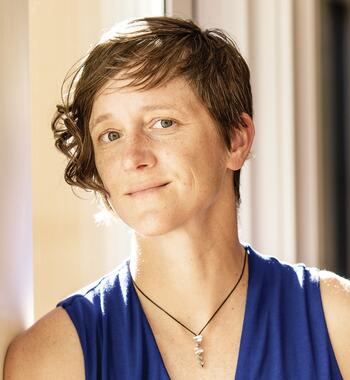
Maya Rossin-Slater is an Associate Professor of Health Policy at Stanford University School of Medicine. She is also a Senior Fellow at the Stanford Institute for Economic and Policy Research (SIEPR), a Research Associate at the National Bureau of Economic Research (NBER) and a Research Fellow at the Institute of Labor Economics (IZA). She received her PhD in Economics from Columbia University in 2013, and was an Assistant Professor of Economics at the University of California, Santa Barbara from 2013 to 2017, prior to coming to Stanford. Rossin-Slater’s research includes work in health, public, and labor economics. She focuses on issues in maternal and child well-being, family structure and behavior, and policies targeting disadvantaged populations in the United States and other developed countries.

CV
Date Label
News Type
News
Date
Paragraphs

Image
kyou hyun kim img 3207
Kyou Hyun Kim will join the Korea Program at Stanford’s Walter H. Shorenstein Asia-Pacific Research Center (Shorenstein APARC) as the program’s 2017-18 Koret Fellow.

A career diplomat by training, Kim most recently served as senior secretary to the president for foreign affairs and national security in South Korea from October 2015 to May 2017 during which he played a key role in enacting the North Korea human rights law. He led the South Korean negotiation team for inter-Korean dialogue that led to the reunion of separated families in 2014.

"Kyou Hyun Kim brings wealth of knowledge in the Korean affairs to Shorenstein APARC. He has decades of experience in diplomacy and national security, and it is very timely that he joins the Korea Program as this year’s Koret Fellow,” said Gi-Wook Shin, director of Shorenstein APARC.

Kim’s extensive diplomatic career includes serving as first vice foreign minister (2013-14), deputy foreign minister for political affairs (2012-13), ambassador for performance evaluation, and special advisor to the minister of foreign affairs (2010-12). He also served at the South Korean embassy in the United States as minister for political affairs. His 37 years of public service was mostly dealing with South Korea’s foreign and security policies and North Korean affairs.

During his fellowship, Kim will review South Korea’s past administrations’ policies toward North Korea and aim to focus on a path leading to unification of two Koreas for permanent peace and stability in and around the Korean Peninsula.  He will also attempt to map out ways to narrow the physical, economic, societal and identity gaps between South and North Korea in order to help the South Korean public to tolerate and accept North Koreans as equal citizens in a unified Korea. His two main research questions will be (1) how to build the internal capability for socioeconomic transformation in North Korea, and (2) how to build domestic support for reunification in South Korea.

Kim received a Doctor of Dental Surgery from the School of Dentistry at Seoul National University, and a Master of Public Administration from Harvard University.

Supported by the Koret Foundation, the fellowship brings leading professionals to Stanford to conduct research on contemporary Korean affairs with the broad aim of strengthening ties between the United States and Korea.

Hero Image
kyou hyun kim img 3207
All News button
1
616 Serra StreetEncina Hall E301Stanford, CA94305-6055
0
kim_kyou_hyun

Kyou-hyun Kim joined the Korea Program at Shorenstein Asia-Pacific Research Center as the program's 2017-18 Koret Fellow.

A career diplomat by training, Kyou-hyun Kim most recently served as senior secretary to the president for foreign affairs and national security in South Korea from October 2015 to May 2017. During his fellowship, Kim will review South Korea’s past administrations’ policies toward North Korea and aim to focus on a path leading to unification of two Koreas for permanent peace and stability in and around the Korean Peninsula.  He will also attempt to map out ways to narrow the physical, economic, societal and identity gaps between South and North Korea in order to help the South Korean public to tolerate and accept North Koreans as equal citizens in a unified Korea. His two main research questions will be (1) how to build the internal capability for socioeconomic transformation in North Korea, and (2) how to build domestic support for reunification in South Korea.

Kim received a Doctor of Dental Surgery from the School of Dentistry at Seoul National University, and a Master of Public Administration from Harvard University.

Visiting Adjunct Professor
2017-2018 Koret Fellow
-

Through 20 weeks of persistent and peaceful demonstrations, South Koreans called for their former president's impeachment which resulted in a special presidential election in May. Moon Jae-in, a candidate from a progressive party, was elected and took over the Blue House immediately.

kim jin pyo headshot Kim Jin Pyo
Kim Jin-pyo who served as Chairman of the State Affairs Planning Advisory Committee under President Moon during the transition period will discuss the new administration's socio-economic policies on major topics including job creation, income growth, and a fair economy.

Kim, a National Assembly Member for a fourth term, served as Vice Prime Minister and Minister of Education and Human Resources Development (2005-06); Vice Prime Minister and Minister of Finance and Economy (2003-04); vice chairman of the transition committee under President Roh Moo-hyun; and Senior Secretary of Policy and Planning to President Kim Dae-jung in 2002.

Kim received a BA in law from Seoul National University and an MA in public administration from University of Wisconsin.

This event is open to the public and reservations are not required.

Philippines Conference Room
Encina Hall, 3rd Floor
616 Serra Street
Stanford, CA 94305
Directions

Kim Jin-pyo <i>former Chairman of the State Affairs Planning Advisory Committee; National Assembly Member</i>, South Korea
Seminars
-

Hurricane Harvey and Irma have brought home to everyone the impact of climate change on our economy, our society, and our daily lives. Curtailing climate change is an urgent issue, one that requires international cooperation. In this session experts from Japan and the United States discuss some of the lessons that have been learned from Asia’s experiences. In the case of Japan, following the period of high growth (1960s-1980) which made Japan an economic power house, the government took strong steps to clean up polluted air and water. The Fukushima nuclear power plant disaster in 2011 forced Japan to take even more aggressive action to reduce energy consumption and lessen its impact on the global environment. In contrast, the United States, the world’s largest economy, is one of the world’s largest polluters and recently made headlines when it withdrew from the Paris Agreement negotiated at the 2015 United Nations Climate Change Conference (COP2). California, and other state and municipal governments, are now taking the lead in US efforts to deal with climate change. Speakers will address questions on strategies for limiting carbon emissions and possibilities for future international cooperation on climate change.

Shorenstein APARC is pleased to host the Abe Fellows Global Forum (Abe Global) inaugural season’s flagship event. A new initiative of the Abe Fellowship Program, Abe Global brings the research and expertise of Abe Fellows on issues of global concern to broader audiences. The event is co-organized with the Social Science Research Council, in collaboration with the Center for Global Partnership of the Japan Foundation, which funds the Abe Fellowship Program


Abe Fellows Global Forum
Confronting Climate Change:
What Can the U.S. and Japan Contribute to Creating Sustainable Societies?


Conference Program

13:30-14:00     Registration

14:00-14:20     Welcome remarks

       Takeo Hoshi, Director, Japan Program, Shorenstein APARC, Stanford University

       Junichi Chano, Executive Director, CGP

       Opening Remarks

       George P. Shultz, Thomas W. and Susan B. Ford Distinguished Fellow, Hoover Institution,

        Stanford University

14:20-14:45     Keynote Speech

                             Michael Armacost, Shorenstein APARC Fellow, APARC, Stanford University

14:45-15:00     Break

15:00-17:00     Panel Discussion “What Can the US and Japan Contribute to Creating Sustainable Societies?”

                  Moderator:      Takeo Hoshi

       Presenters:      Toshi H. Arimura,  Waseda Univeristy

                              Janelle Knox-Hayes, Massachusetts Institute of Technology

                               Phillip Lipscy, Stanford University

                               Dana Buntrock, University of California, Berkeley

                               Michael Armacost, Stanford University

16:55                 Closing Remarks

                               Linda Grove, Consulting Director, SSRC 

17:00-18:00     Cocktail Reception

Conferences
News Type
News
Date
Paragraphs

Reuters/The New York Times write about REAP's research on early childhood development. Read the original article here.

According to data from China’s 2010 census, 76 percent of China’s labor force had not attended high school. Even more concerning, according to the same data only 8 percent of working age individuals in rural China (where the majority of the population resides) had ever attended high school. These low levels of educational achievement suggest that China is facing a human capital deficit that could leave workers ill-equipped to compete in China’s developing economy. This situation has been recognized by individuals in government, such as Cai Jianhua, a government official at China’s National Health and Family Planning Commission, who said, "The reality is we need smart people if we're going to be competitive in the 21st century."

"This is the biggest problem that China faces that no one knows about. This is an invisible problem," said Scott Rozelle, co-director of the Rural Education Action Program (REAP) at Stanford University, "China has the lowest levels of human capital (out of all the middle income countries in the world today). China is lower than South Africa, lower than Turkey. We think that's related to when they were babies, they didn't develop well.”

One cause of these low levels of human capital is parental absence during early childhood. In rural China, it is common for parents to live and work in cities full time while their child remains in their home village with a surrogate caregiver (typically the child’s grandmother). Because grandparents generally have less energy, lower levels of education, and are less receptive to adopting new parenting techniques, there is reason to believe that parental migration could negatively affect the cognitive development of young children.

To begin to combat these barriers to human capital development before they emerge, China's National Health and Family Planning Commission is working with Rozelle and his colleagues to establish early childhood development centers in rural China. Researchers with REAP believe that 300,000 centers are needed across China, and that implementing a program of this size requires government leadership. In the 50 pilot centers, children aged six months to three years old are provided with materials and experiences that encourage their cognitive, physical, and social-emotional development. In these centers, children can experience books, play with toys, and interact with other children. Additionally, the centers provide caregivers with knowledge on how to interact with their child in a enriching manner.

Hero Image
REAP Parenting Center
All News button
1
-

Abstract:

In the year 1200, many of the largest cities in Western Europe were inhabited by just tens of thousands of individuals while Middle Eastern and Central Asia cities had upwards to 100,000 residents each. By 1800, however, this pattern had reversed. This paper explores the importance of historical trade in explaining patterns of urban growth and decline in the run-up to the Industrial Revolution. To address the issue of the endogenous development of trade routes, the paper’s empirical analysis is focused on trade networks which connected historical cities located near natural harbors, maritime choke points and desert oases. These findings speak to why Middle Eastern and Central Asian cities – long beneficiaries of locational centrality between Europe and Asia – declined as Europeans found alternative routes to the East and opened new trade opportunities in the New World.


Speaker Bio:

Image
lisa blades
Lisa Blaydes is an Associate Professor of Political Science. She is the author of Elections and Distributive Politics in Mubarak’s Egypt (Cambridge University Press, 2011). Her articles have appeared in the American Political Science Review, the Annual Review of Political Science, International Organization, International Studies Quarterly, Journal of Theoretical Politics, Middle East Journal, and World Politics.

William J. Perry Conference Room, Encina Hall, 2nd Floor, 616 Serra St, Stanford, CA 94305

Encina Hall West, Room 408
Stanford, CA 94305-6044

(650) 723-0649
0
Senior Fellow at the Freeman Spogli Institute for International Studies
Professor of Political Science
lisa_blaydes_108_vert_final.jpg

Lisa Blaydes is a Professor of Political Science at Stanford University. She is the author of State of Repression: Iraq under Saddam Hussein (Princeton University Press, 2018) and Elections and Distributive Politics in Mubarak’s Egypt (Cambridge University Press, 2011). Professor Blaydes received the 2009 Gabriel Almond Award for best dissertation in the field of comparative politics from the American Political Science Association for this project.  Her articles have appeared in the American Political Science Review, International Studies Quarterly, International Organization, Journal of Theoretical Politics, Middle East Journal, and World Politics. During the 2008-2009 and 2009-2010 academic years, Professor Blaydes was an Academy Scholar at the Harvard Academy for International and Area Studies. She holds degrees in Political Science (PhD) from the University of California, Los Angeles, and International Relations (BA, MA) from Johns Hopkins University.


Affiliated faculty at the Center on Democracy, Development and the Rule of Law
Affiliated faculty at the Center for International Security and Cooperation
Date Label
Associate Professor of Political Science
Seminars
Authors
News Type
News
Date
Paragraphs

A new biosecurity initiative at the Freeman Spogli Institute for International Studies (FSI) aims to identify and mitigate biological risks, both natural and man-made, and safeguard the future of the life sciences and associated technologies.

The initiative will be led by David A. Relman, a senior fellow at the Center for International Security and Cooperation and FSI. Relman, the Thomas C. and Joan M. Merigan Professor in the Departments of Medicine, and Microbiology & Immunology, has served as the science co-director at CISAC for the past four years. He will leave this position on Aug. 31 to lead the new initiative.

Michael McFaul, director and senior fellow at FSI, said, “With exceptional leadership skills, valuable experience and abundant energy, David Relman is ideally positioned to work with scholars from across campus who offer critical expertise in biosecurity. This is an exciting, challenging and important new initiative for FSI that is designed to protect public health from the many new risks now accelerating.”

Relman said the biosecurity initiative will seek to advance the beneficial applications of the life sciences while reducing the risks of misuse by promoting research, education and policy outreach in biological security. His CISAC leadership gives him the know-how to lead such a wide-ranging effort across diverse disciplines and communities.

Relman said, “The opportunity to serve as co-director at CISAC has been a wonderful experience, one that has afforded me the chance to get to know outstanding faculty and staff, their scholarship, and critical policy-relevant work, all of which I had not fully appreciated sitting across campus. This experience has made clear the unusual qualities of Stanford University, and the great people that work here. I am now greatly looking forward to this new opportunity at FSI.”

Biosecurity collaborations

During Relman’s term as CISAC’s science co-director from 2013-2017, he led an expansion of the transdisciplinary work in science and security to include biology, biological and other areas of engineering, medicine, and earth and environmental sciences.

The foundations for work in biological science, technology and security were established at CISAC, especially in the hiring of Megan Palmer, a senior research scholar at CISAC and FSI. Both Relman and Palmer worked together on engagements and discussions with a growing network of more than 20 faculty involved in biosecurity across Stanford.

Palmer said, “Stanford has an opportunity and imperative to advance security strategies for biological science and technology in a global age. Our faculty bring together expertise in areas including technology, policy, and ethics, and are deeply engaged in shaping future of biotechnology policy and practices.”

New insights, new risks

In his new post, Relman said he intends to build on this foundation by creating an initiative that consolidates and focuses activity in biosecurity, develops research and educational programs, attracts new resources, and looks outward at opportunities for policy impact and changing practices across the globe.

Relman said that “new capabilities and insights are reshaping important aspects of the life sciences and associated technologies, and are accompanied by a host of new risks.” If misused, whether by malice or accident, “they pose the potential for large-scale harm,” he noted.

Relman added that the initiative will bring together interest and expertise across the centers and programs of FSI in partnership with Schools and Departments across the university.

At FSI, CISAC will co-sponsor the biological security initiative, which will leverage Stanford expertise in the life sciences, engineering, law and policy.  Key partners will include Tim Stearns (biology), Drew Endy (bioengineering), Mildred Cho (bioethics), and Hank Greely (law), according to Relman. The biosecurity group will also partner with another new program at FSI in global health and conflict, which is led by Paul Wise, Frank Fukuyama, Steve Stedman, Steve Krasner, and others, he added.

Stanford’s School of Medicine and Department of Medicine will also co-sponsor the initiative, thanks to leadership from Lloyd Minor, Michele Barry and Robert Harrington. Relman looks forward to establishing similar relationships with other schools and departments, he said.

 “These partnerships are critical. I’m excited to work with a growing community both within and beyond Stanford towards the goal of a peaceful and prosperous world in the century of biology,” he said.

MEDIA CONTACTS:

David Relman, Center for International Security and Cooperation: relman@stanford.edu

Megan Palmer, Center for International Security and Cooperation:  mjpalmer@stanford.edu

Clifton B. Parker, Center for International Security and Cooperation: (650) 725-6488, cbparker@stanford.edu


Hero Image
13977381286 015f52bc0e z
The Stanford Biosecurity Initiative will be led by David A. Relman, senior fellow at CISAC and FSI.
Courtesy of CISAC
All News button
1
-

Copies of the book will be available for purchase at the event. 


Abstract:

Over the past decades, there has been a revolution in terms of who controls knowledge and information. This rapid change has imperiled the way we think. Without pausing to consider the cost, the world has rushed to embrace the products and services of four titanic corporations. Franklin Foer, a correspondent at the Atlantic and former editor of the New Republic, has written a polemic against the monopolistic practices of Google, Facebook, Amazon, and Apple. He argues they have ushered in a new, dangerous age of conformism. A threat to the very foundations of the republic. In the words of Steve Coll—the Pulitzer Prize-winner—his book is “an argument in the spirit of those brave democracy protesters who stand alone before tanks."


Speaker Bio:

Image
franklin foer

Franklin Foer is a national correspondent for The Atlantic and fellow at the New America Foundation. For seven years, he served as editor of The New Republic. Foer has written for Slate and New York magazine. His previous book How Soccer Explains the World has been translated into 27 languages and was the winner of a National Jewish Book Award.

Franklin Foer Correspondent, Atlantic
Seminars
Subscribe to Society