Society

FSI researchers work to understand continuity and change in societies as they confront their problems and opportunities. This includes the implications of migration and human trafficking. What happens to a society when young girls exit the sex trade? How do groups moving between locations impact societies, economies, self-identity and citizenship? What are the ethnic challenges faced by an increasingly diverse European Union? From a policy perspective, scholars also work to investigate the consequences of security-related measures for society and its values.

The Europe Center reflects much of FSI’s agenda of investigating societies, serving as a forum for experts to research the cultures, religions and people of Europe. The Center sponsors several seminars and lectures, as well as visiting scholars.

Societal research also addresses issues of demography and aging, such as the social and economic challenges of providing health care for an aging population. How do older adults make decisions, and what societal tools need to be in place to ensure the resulting decisions are well-informed? FSI regularly brings in international scholars to look at these issues. They discuss how adults care for their older parents in rural China as well as the economic aspects of aging populations in China and India.

(650) 725-4576
0
pena_octavion_10_28_21.jpg

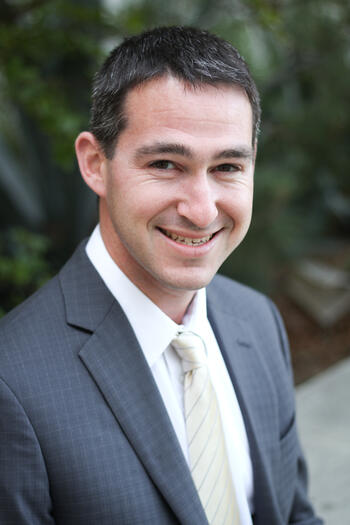
Octavio Peña joined FSI as the facilities manager in December 2017. He brings extensive Stanford facilities experience to FSI. Since joining Stanford in 1992, Octavio has served in a variety of capacities across campus, including as operations center manager, maintenance planner and plant services dispatcher for Land, Buildings, and Real Estate (LBRE), telecom attendant leader for University IT Services, and student manager at Residential & Dining Enterprises (R&DE).

Facilities Manager
-

Abstract:

What are the e ffects of mass media campaigns on the norms and behaviors of police officers as pertains to human tra fficking? Namely, can mass media campaigns be employed to induce shifts in knowledge, attitudes, beliefs and practices (KABP) of law enforcement officers, that might reduce the incidence of modern forms of slavery and assist victims of human traffi cking? Mass media, especially `entertainment education, (e.g. comic books, radio soap operas, and street theater) is frequently used as a tool for social change to convey messages around issues such as public health, gender rights, conflict resolution, or development strategies through stories that are both realistic and entertaining. Yet how can we know the e ffects of such campaigns? Speci fically, do diff erences in message formats and content a ffect the impact of campaigns against human tra fficking? The research presented here shows that mass media entertainment campaigns can e ffectively convey messages around human traffi cking, influencing attitudes, norms and behaviors of law enforcement officers around the issue. It also demonstrates how messages whose content emphasizes victim empowerment appear to be more e ffective than negative, fear-inducing appeals.


Speaker Bio:


Image
boittin margaret
Margaret Boittin is an Assistant Professor of Law at Osgoode Hall Law School (York University, Canada). Her first book, entitled The Whore, the Hostess and the Honey: Policing, Health, Business and the Regulation of Prostitution in China, is under contract with Cambridge University Press.

Margaret Boittin Assistant Professor of Law at Osgoode Hall Law School (York University, Canada)
Seminars
Authors
Gary Mukai
News Type
News
Date
Paragraphs

The U.S.-Japan Council’s TOMODACHI Emerging Leaders Program (ELP) identifies, cultivates, and empowers a new generation of Japanese American leaders. A new cohort of Emerging Leaders is selected annually to attend USJC’s Annual Conference, participate in leadership education, and join program alumni in bridging the future of the U.S.–Japan relationship.


SPICE’s Rylan Sekiguchi, Manager of Curriculum and Instructional Design, recently returned from Washington, DC, where he participated in the U.S.-Japan Council’s annual conference as a member of the 2017 TOMODACHI Emerging Leaders Program (ELP). USJC was conceptualized by the late Senator Daniel K. Inouye of Hawaii and Irene Hirano Inouye, President of USJC.

Sekiguchi was born and raised in Honolulu, and from as far back as he can remember, Senator Inouye was a role model and iconic figure in Hawaii, serving as the state’s U.S. Senator from 1963 to 2012 and as President pro tempore of the Senate from 2010 until his death in 2012. Sekiguchi graduated from Roosevelt High School and chose Stanford University over Harvard and Yale—to avoid the snowy winters—for his undergraduate studies. He joined SPICE in 2005 shortly after graduation.

“I feel honored to participate in USJC and the ELP specifically,” reflects Sekiguchi. “The ELP is such an incredible program, and knowing that USJC was conceptualized by my home state’s late Senator Inouye makes the experience even more meaningful to me. The 2017 ELP cohort has five members who are originally from Hawaii, and I hope that we and the others in my cohort will help realize Senator Inouye’s vision of empowering a new generation of leaders in the U.S.–Japan relationship.”

Sekiguchi is one of 12 delegates of the eighth ELP cohort. “Acceptance into the ELP is highly competitive,” notes Kaz Maniwa, Senior Vice President of  USJC, who has directed the ELP since its inception. Maniwa closed his law practice in San Francisco after 36 years to dedicate himself to the Council and the empowerment of youth specifically through the ELP. “It’s exciting to be able to work with the next generation of leaders of our community and in U.S.–Japan relations. The ELP delegates are smart, compassionate, ambitious in a good way, forward-thinking and supportive of each other. They come from across the United States and Japan and have developed into a broad network of future leaders.”

Rylan Sekiguchi at the 2017 U.S.-Japan Council conference Rylan Sekiguchi at the 2017 U.S.-Japan Council conference in Washington, DC

Besides receiving leadership training and networking with program alumni, the 2017 ELP delegates attended the U.S.-Japan Council’s annual conference and met with leaders in the business, nonprofit, and government sectors. This year’s conference theme was “Unity in Diversity: Shaping the Future Together,” and its panelists and keynote speakers spanned a wide range of backgrounds, expertise, and politics, and included two current members of the U.S. Cabinet. Delegates considered changes that have arisen under the new White House administration and how Japan and the United States can continue to work together toward mutually beneficial goals.

Sekiguchi and his fellow ELP delegates have already seeded ideas to help strengthen U.S.–Japan relations. Some of the ideas lie in the area of education. For example, Sekiguchi shared his current SPICE work with the Mineta Legacy Project, which focuses on the life of former Secretary Norman Y. Mineta, Vice Chair of USJC’s Board of Councilors. Secretary Mineta served as President Bill Clinton’s Secretary of Commerce and President George W. Bush’s Secretary of Transportation. The Mineta Legacy Project will include a documentary being developed by USJC Council Leaders Dianne Fukami and Debra Nakatomi and an educational curriculum that is being developed by Sekiguchi.

The U.S.-Japan Council’s 2018 conference will take place in Tokyo in November, and plans are already underway for the eighth ELP cohort’s first reunion.


Find more information on the TOMODACHI Emerging Leaders Program online
http://www.usjapancouncil.org/tomodachi_emerging_leaders_program

Find more information on the U.S.-Japan Council online
http://www.usjapancouncil.org

Follow SPICE on Facebook and Twitter

Hero Image
Rylan Sekiguchi at the 2017 U.S.-Japan Council conference
Rylan Sekiguchi at the 2017 U.S.-Japan Council conference in Washington, DC | U.S.-Japan Council
All News button
1
-

Abstract:

At their best, decentralizing reforms make government more accountable to citizens and empower local governments to invest in their own development. Yet, successful decentralization requires that local governments raise at least some revenue to finance new service delivery responsibilities, and the capacity of local governments to generate tax revenue varies. This variation is evident in the Philippines, where capacity to tax varies greatly across cities despite uniform tax powers. I argue that business associations contribute to this variation by endorsing tax increases to enable cities to spend on infrastructure, but only if they can sustain distributional consensus and forestall local officials from diverting revenues away from business-friendly projects. I present a controlled comparison of two cities, Iloilo and Batangas, to show that business associations resolve distributional conflict by dispersing benefits across members, and monitor public spending by participating in legislative hearings and jointly managing public projects.


Speaker Bio:

Image
tans
I am a postdoctoral fellow at the Center on Democracy, Development, and the Rule of Law at Stanford University. My research explores the developmental implications of public-private linkages in decentralizing, developing countries, especially in Southeast Asia. I received a PhD in political science at Emory University and an MA in Southeast Asian studies from National University of Singapore.

Postdoctoral fellow at the Center on Democracy, Development, and the Rule of Law
Seminars
-

Abstract:

Societies with deep-seated ethnic or religious divisions pose a challenge for governance: how can a single set of political institutions govern a fragmented population peacefully and effectively? As the institution responsible for implementing and enforcing laws, the police are an especially critical piece of the governance puzzle. I explore the role of sectarian inclusion in the police forces in Iraq and Israel, two countries with legacies of violent conflict along identity lines. I argue that integrating minority groups into the rank-and-file of the police addresses common motives for anti-state violence by shaping citizens' expectations about how they will be treated by the state. I present survey, experimental, and observational evidence showing that citizens interpret police integration as a credible signal that the government does not intend to harm them, which in turn reduces citizens’ willingness to turn to violence.


Speaker Bio:

Image
matthew nanes
Matthew Nanes is a Postdoctoral Fellow at Stanford's Center on Democracy, Development, and the Rule of Law. His research explores the way that political institutions shape the citizen-state relationship, particularly in societies plagued by violent conflict and low state legitimacy. Most of his work is in the Middle East, where he has conducted field work in a number of countries including Jordan, Israel, Egypt, and Oman. He is also involved in ongoing research on policing in the Philippines. Matthew received a Ph.D. in Political Science from the University of California San Diego and holds a B.A. from Rice University.

Postdoctoral Fellow at Stanford's Center on Democracy, Development, and the Rule of Law
Seminars
News Type
News
Date
Paragraphs

Sponsored by the United States–Japan Foundation, the Elgin Heinz Teacher Award recognizes exceptional teachers who further mutual understanding between Americans and Japanese. The award is presented annually to pre-college teachers in two categories, humanities and Japanese language. It is named in honor of Elgin Heinz for his commitment to educating students about Asia as well as for the inspiration he has provided to the field of pre-college education.

SPICE’s Reischauer Scholars Program Manager and Instructor Naomi Funahashi has won the 2017 Elgin Heinz Teacher Award for her teaching excellence with the Reischauer Scholars Program (RSP), an online course named in honor of former Ambassador to Japan Edwin O. Reischauer that introduces Japan and U.S.–Japan relations to high school students in the United States. Funahashi formally accepted the award at Stanford University on November 20, 2017.

In his opening comments, David Janes, Director of Foundation Grants and Assistant to the President, United States–Japan Foundation, who hosted the ceremony, praised Funahashi, explaining why she is so deserving of the distinction: “Like Ambassador Reischauer, Naomi knows how global education at the high school level can transform kids for life, making them better leaders for the future.”

Comments from the Honorable Jun Yamada, Consul General of Japan, were shared by Maiko Tamagawa, Advisor for Educational Affairs, Consulate General of Japan in San Francisco. Consul General Yamada noted, “Ms. Funahashi is indeed an extraordinary educator. Her dedication and commitment to inspiring and empowering young Americans to become experts on Japan is an invaluable contribution to the promotion of mutual understanding between our two countries.” Consul General Yamada, who serves on the advisory committee of the RSP, also graciously hosted a dinner at his residence in honor of Funahashi in July 2017, shortly after the announcement of the award.

SPICE Director Gary Mukai, who nominated Funahashi for the award, commented that “Naomi is extremely dedicated to her students, and I hear regular praise from her students, including those who have matriculated to Stanford. Elgin would have rave reviews of her interdisciplinary approach to teaching… Because of Naomi, the original RSP goal of creating a new generation of leaders in the U.S.–Japan relationship has become a reality.”

David Janes presents the 2017 Elgin Heinz Teacher Award to Naomi Funahashi David Janes (United States–Japan Foundation) presents the 2017 Elgin Heinz Teacher Award to Naomi Funahashi (SPICE)

Former RSP student and recent Stanford graduate Aryo Sorayya spoke next and thanked Funahashi for extending herself to students far beyond the RSP’s course requirements themselves. Sorayya spoke not only about Funahashi’s careful attention to students’ work but also her sincere interest in their college plans and careers.

Also in attendance were former Ambassador to Japan Michael Armacost; many Stanford scholars—including Takeo Hoshi, Kenji Kushida, and Phillip Lipscy—who contribute lectures, lead online “virtual classrooms,” and/or serve as principal investigators of the RSP; former recipients the Elgin Heinz Teacher Award Norman Masuda and Saya Okimoto McKenna; and members of Funahashi’s family, including her mother Jan Funahashi, husband Rich Lee, and three-year-old son Akira, hopefully a future RSP student in 2030.

Funahashi was born in Tokyo and grew up moving between the United States and Japan. Naomi has resided in the San Francisco Bay Area since 2000, joining SPICE in 2005. She is a graduate of Brown University (BA), San Francisco State University (teaching credential), and the University of Illinois, Urbana-Champaign (M.Ed.). She has served as Manager and Instructor of the RSP since joining SPICE.

Find more information on the Elgin Heinz Teacher Awards online
http://us-jf.org/programs/elgin-heinz-teacher-awards/

To stay informed of SPICE-related news, follow SPICE on Facebook and Twitter.

Hero Image
David Janes presents the 2017 Elgin Heinz Teacher Award to Naomi Funahashi
David Janes (United States–Japan Foundation) presents the 2017 Elgin Heinz Teacher Award to Naomi Funahashi (SPICE) | Rylan Sekiguchi
All News button
1
Authors
Rylan Sekiguchi
News Type
News
Date
Paragraphs

SPICE Director Gary Mukai has been named a recipient of the 2017 Autumn Conferment of Japanese Decorations. On November 3, the government of Japan announced that Dr. Mukai will be awarded the Order of the Rising Sun, Gold and Silver Rays for his contributions to the promotion of friendship and mutual understanding between Japan and the United States.

The Order of the Rising Sun is a decoration in the Japanese honors system that dates back to 1875. It was established as the first national decoration awarded by the Japanese government, and it recognizes individuals who have made significant contributions to Japan or its culture. It is one of the highest decorations conferred by the government.

“I am very humbled by this honor,” reflects Mukai. “I still find it hard to believe. But as someone who has always cared deeply about the U.S.–Japan relationship, this decoration truly means a lot to me. I’m just thankful I’ve had so many opportunities to be involved.”

[[{"fid":"228578","view_mode":"crop_870xauto","fields":{"format":"crop_870xauto","field_file_image_description[und][0][value]":"","field_file_image_alt_text[und][0][value]":false,"field_file_image_title_text[und][0][value]":false,"field_credit[und][0][value]":"Marc Franklin","field_caption[und][0][value]":"","thumbnails":"crop_870xauto","alt":"","title":""},"type":"media","field_deltas":{"2":{"format":"crop_870xauto","field_file_image_description[und][0][value]":"","field_file_image_alt_text[und][0][value]":false,"field_file_image_title_text[und][0][value]":false,"field_credit[und][0][value]":"Marc Franklin","field_caption[und][0][value]":"","thumbnails":"crop_870xauto","alt":"","title":""}},"link_text":null,"attributes":{"style":"width: 150px; height: 200px; float: right; margin: 5px 10px;","class":"media-element file-crop-870xauto","data-delta":"2"}}]]

After receiving his Bachelor of Arts degree and teaching credential from UC Berkeley, Dr. Mukai moved to Japan to teach in 1977 and has since worked to promote cross-cultural education between the United States and Japan. Besides working as a teacher in both countries, he has served as a longtime interviewer for the Japan Exchange and Teaching (JET) Program and has been a selection committee member of the United States-Japan Foundation’s Elgin Heinz Teacher Award since its inception. At SPICE, he has developed numerous curriculum guides on Japan for K–12 classrooms as well as overseen the creation of both the Reischauer Scholars Program and Stanford e-Japan—a pair of nation-wide online courses that teach American and Japanese high school students about each others’ countries.

A date for Mukai’s formal conferment ceremony has not been announced.

To read the Consulate’s announcement of the recipients of the Order of the Rising Sun, visit http://www.sf.us.emb-japan.go.jp/itpr_en/17_1103.html.

To stay informed of SPICE-related news, follow SPICE on Facebook and Twitter.


Hero Image
miyajima 11 18 15 edit
Gary in Hiroshima, his ancestral hometown.
All News button
1
Authors
News Type
News
Date
Paragraphs

The same logic that kept a nuclear war from breaking out between the United States and former Soviet Union is the best strategy to now pursue with North Korea, several scholars said Tuesday at Stanford.

The panel, convened at Stanford’s Center for International Security and Cooperation (CISAC), included political scientist Scott D. Sagan of CISAC; political scientist Mira Rapp-Hooper of Yale University; and political scientist Vipin Narang of MIT. The moderator was James D. Fearon, a political scientist at the Freeman Spogli Institute for International Studies. The event was titled “Can the U.S. Deter a Nuclear North Korea” and held in the William J. Perry Conference Room in Encina Hall.

Nuclear decision-making

The discussion revolved around whether North Korea will have the ability to strike the U.S. with nuclear warheads, and can the U.S. depend on a deterrence strategy like it did during the Cold War?

Deterrence theory holds that nuclear weapons are intended to deter other states from attacking with their nuclear weapons, through the promise of retaliation and possibly mutually assured destruction 

Sagan, who recently wrote an essay in Foreign Affairs magazine on the North Korea nuclear crisis, said he has come to decide deterrence is the best approach to the issue.

“I am not one who gladly listens to the siren song of nuclear deterrence,” he said, noting that while he is a self-described dove on disarmament issues, he is more hawkish on allowing countries to obtain nuclear weapons, which deterrence implies. “I accept deterrence reluctantly.”

In North Korea, he said, no military alternatives exist to solve the problem. For example, even if a decapitation strike were successful – and several U.S. attempts have failed in the past with regard to Saddam Hussein and Muammar Gaddafi – there’s no way to know if North Korean leader Kim Jong-un has already given his generals the green light to unleash nuclear or powerful conventional attacks in the case of his demise.

For Sagan, deterrence is a more complicated issue today than during the Cold War when the U.S. and U.S.S.R. were rational actors with thousands of nuclear weapons. He is especially concerned with the rhetoric and the preventive war suggestions emanating from the Trump Administration.

Senior U.S. military leaders, Sagan said, have a duty not to follow “impaired-decision making” that might come from the president. He invoked the prospect of using the Cabinet and the 25th Amendment to halt such an order and remove the president from office. Currently, he belives the nuclear decision process is problematic, as the president alone can directly order the Strategic Air Command to launch nuclear weapons.

Sagan advises that a revised nuclear chain of command should include both the U.S. Secretary of Defense and the U.S. Attorney General. A U.S. Senate hearing, led by Sen. Bob Corker, is actually studying the nuclear authorization process due to concerns with Trump's rhetoric and escalation of the North Korean issue.

“We need more checks on how we decide to use nuclear weapons,” said Sagan, who studies nuclear strategy, ethics and war, public opinion about the use of force, and nuclear non-proliferation and arms control.

He noted that U.S. National Security Advisor H.R McMaster recently criticized his predecessor, Susan Rice, for saying the U.S. could "tolerate" nuclear weapons in North Korea the same way we tolerated nuclear weapons in the Soviet Union​.

He quoted McMaster: “'A regime that poses a continuous threat to the its neighbors in the region and now may pose a threat, direct threat, to the United States with weapons of mass destruction? A regime that imprisons and murders anyone who seems to oppose that regime, including members of his own family, using sarin nerve gas in a public airport?'”

But Sagan said we have long tolerated such authoritarian regimes that have nuclear weapons. 

Stumbling accidentally into war with North Korea also seems like a rising risk. On Sept. 27, several U.S. service members and their families received a fraudulent “noncombatant evacuation operation” order via text and social media, he said. The fake notices were quickly reported up the chain of command and the U.S. issued a statement denouncing their validity – the perpetrators have not been found. But Sagan says it illustrates how easy it is to create a situation where North Korea felt a U.S. invasion and attack is imminent – and as a result, could choose to unleash a nuclear first strike.

‘Western fantasy’

Narang, who was once a CISAC visiting assistant professor, studies nuclear proliferation and strategy, South Asian security, and general security studies.

“Deterrence is your friend,” he said in explaining why it can work with North Korea. If the U.S. believes North Korea seeks to preserve its regime – a status quo intention – then deterrence theory works much like it did with the former Soviet Union.

On the other hand, if the U.S. believes North Korea has darker motives, such as reunifying the Korean peninsula through an invasion, then that perspective could lead to a U.S. first strike. Also, the existing U.S. demand of rolling back North Korea’s nuclear program – “denuclearization” – is a “Western fantasy.” They will not give up nuclear weapons, he said.

He said the U.S. does not like to be deterred from making a first strike – as in preventive war – but that is what it must accept if it decides to follow the deterrence course. North Korea, once it possesses an ICBM capable of hitting the U.S. mainland, would pose such a deterrence in the balance of power between the two countries.

“The good news is that deterrence can work, coupled with coercive diplomacy,” Narang said. “We know how to play this game.”

He believes Jong-un is a rational actor, though a cruel dictator. “There’s nothing to suggest he’s crazy.” Ultimately, he said, an effective deterrence policy depends on clarity, consistency, coherence and communications.

U.S. nuclear shield, alliances

An expert on security in the Asia-Pacific region and alliance politics, Rapp-Hooper talked about the U.S. relationships, especially with Japan and South Korea, and the “nuclear shield” over these countries that those agreements offer. As a result, neither country has developed nuclear weapons.

This dynamic, however, could change if a North Korean missile could reach the U.S., said Rapp-Hooper, who earned a bachelor’s degree in history at Stanford.

“North Korea is eroding U.S. security guarantees over time,” she said, adding that once those missiles are capable of hitting a U.S. city, would the U.S. government still protect Seoul from attack and let an American city be hit?

The Korean situation, Rapp-Hooper said, is much different than Europe in the Cold War, when such an American nuclear shield existed against a Soviet invasion. Many different U.S. agreements exist now than during that time; no U.S. nuclear weapons are forwardly deployed in northeast Asia, like in Europe then; and the unilateral threats coming from the Trump Administration are unprecedented in nuclear diplomacy.

On the latter point, she called it the “Trump multiplier” effect. “That’s the most exacerbating thing of all,” she said, noting that elements of the White staff are pushing a “better-use-it-now” or preventive attack approach, whereas Secretary of Defense James Mattis and Secretary of State Rex Tillerson see North Korea as more concerned with preserving its regime.

Sagan also pointed out how President Trump’s speech at the United Nations in September led to a realization among the North Koreans that they had no choice but to continue to develop nuclear weapons.

That’s when the president said, “’Rocket Man is on a suicide mission for himself and for his regime,’” Sagan noted.

​He then recalled Kim Jong Un’s response to Trump’s speech, quoting the North Korean leader: “’His remarks which described the U.S. option through straightforward expression of his will have convinced me, rather than frightening or stopping me, that the path I chose is correct and that it is the one I have to follow to the last.’”​


Hero Image
gettyimages 847114660
The same logic – deterrence – that kept the United States and the former Soviet Union from nuclear war is the best option to deal with North Korea, scholars said Tuesday at Stanford. | Getty Images/Chung Sung-Jun
All News button
1
Subscribe to Society