Health Care
Paragraphs
COVID-19 temperature testing in China.

The COVID-19 crisis was a profound stress test for health, economic, and governance systems worldwide, and its lessons remain urgent. The pandemic revealed that unpreparedness carries cascading consequences, including the collapse of health services, the reversal of development gains, and the destabilization of economies. The magnitude of global losses, measured in trillions of dollars and millions of lives, demonstrated that preparedness is not a discretionary expense but a foundation of macroeconomic stability. Countries that invested early in surveillance, resilient systems, and inclusive access managed to contain shocks and recover faster, proving that health security and economic security are inseparable.

For the Asia-Pacific, the path forward lies in transforming vulnerability into long-term resilience. Building pandemic readiness requires embedding preparedness within fiscal and development planning, not as an emergency measure but as a permanent policy function. The region’s diverse economies can draw on collective strengths in manufacturing capacity, technological innovation, and strong regional cooperation to institutionalize the four pillars— globally networked surveillance and research, a resilient national system, an equitable supply of medical countermeasures and tools, and global governance and financing—thereby maximizing pandemic prevention, preparedness, and response. Achieving this will depend on sustained political will and predictable financing, supported by the catalytic role of multilateral development banks and international financial institutions that can align public investment with global standards and private capital.

The coming decade presents a narrow but decisive window to consolidate these gains. Climate change, urbanization, and ecological disruption are intensifying the probability of new zoonotic spillovers. Meeting this challenge demands a shift from episodic response to continuous readiness, from isolated health interventions to integrated systems that link health, the environment, and the economy. Strengthening regional solidarity, transparency, and mutual accountability will be vital in ensuring that no country is left exposed when the next threat emerges.

A pandemic-ready Asia-Pacific is not an aspiration but an imperative. The lessons of COVID-19 call for institutionalized preparedness that transcends political cycles and emergency budgets. By treating health resilience as a global public good, the region can turn its experience of crisis into a model of sustained, inclusive security for the world.

All Publications button
1
Publication Type
Working Papers
Publication Date
Subtitle

Building a Pandemic-Ready Asia-Pacific

Authors
Noa Ronkin
News Type
News
Date
Paragraphs

Stanford medical student researcher Richard Liang likes recalling how one summer project became a turning point in his academic career. What began as a study on disparities in South Korean patients’ access to diabetes care sparked a passion for collaboration in medical and public health research across East Asia and beyond.

Liang’s work with Stanford health economist Karen Eggleston, the director of the Asia Health Policy Program (AHPP) at the Shorenstein Asia-Pacific Research Center (APARC) and his co-advisor for the Medical Scholars Research Program at the School of Medicine, helped deepen his global outlook. To bridge medicine, health policy, and his interest in East Asia, he embarked on one of the most ambitious paths at Stanford.

Selected into the rigorous and intensive Medical Scientist Training Program, he has been working toward his MD degree, with a scholarly concentration in health services and policy research in global health, while pursuing a doctorate in epidemiology and clinical research. This past June, he obtained his PhD from the Department of Epidemiology and Population Health. He is also completing a master’s degree in East Asian studies at Stanford’s Center for East Asian Studies, focusing on health and society in East Asia as well as the role of technology and academic partnerships in expanding access to care across the region.

“I aspire to become a leading physician-scientist who bridges that gap across borders and brings together researchers, practitioners, and policymakers to promote health and well-being in East Asia and around the world,” he says.


Sign up for APARC newsletters to receive our experts' updates >

Regional collaborations in medical and public health research have been scarce, and rarer still between the biomedical and social sciences.

Addressing Inequalities in Health Care


Liang’s summer medical school project examined the prevalence of receiving annual eye screenings among South Korean adult patients with type 2 diabetes and how access to that care differed across demographic and socioeconomic groups over time. The goal was to investigate why screening rates for diabetic retinopathy, a complication of type 2 diabetes, remain low in South Korea, despite the country having universal health insurance coverage and guidelines that recommend annual eye screenings to prevent this leading cause of blindness.

He worked on this project with co-advisors Eggleston and Young Kyung Do, a professor in Seoul National University’s Department of Health Policy and Management and AHPP’s inaugural postdoctoral fellow. They found that lower-income patients with diabetes experienced barriers to quality diabetes care and had lower access to annual diabetes-related eye screenings.

For Liang, these results underscored a deeper lesson: even strong health systems with universal health insurance coverage have structural socioeconomic inequities that leave vulnerable groups behind. The findings helped solidify his conviction that improving health care requires more than clinical training alone. 

The project culminated in Liang’s presentation of the findings at the 2021 AcademyHealth Annual Research Meeting and spurred a new sense of purpose. ”It grew into a life-changing journey at Stanford,” Liang says.

That journey has led him to collaborate with researchers from around the world, particularly in Japan, Korea, and China, utilizing large-scale data to advance population health and applying population health methods to research topics ranging from maternal and child health to mental health, aging, and inflammatory skin diseases.

Image
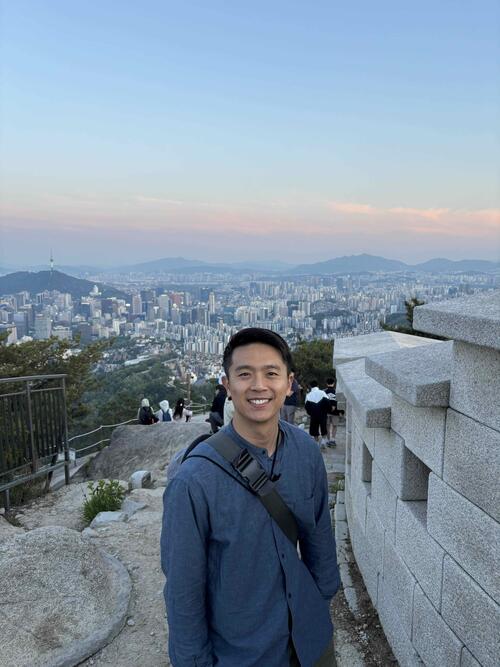
Richard Liang outdoors in South Korea.

Liang in South Korea. Photo courtesy of Richard Liang.

From Research to Health Policy Impact


Over the years, Liang evolved from a mentee of Eggleston into a collaborator on projects in Korea and elsewhere. As COVID-19 disrupted health services worldwide, he joined Eggleston and a team of researchers in studying the impact of the pandemic on chronic disease care in India, China, Hong Kong, Korea, and Vietnam. Their findings showed that marginalized and rural communities in those countries were hit especially hard, with negative consequences for population health that reached far beyond those directly infected with the virus.

He and Eggleston also co-authored a study on preferences for telemedicine services among patients with diabetes and hypertension in South Korea during the early COVID-19 pandemic. The research drew the attention of the Prime Minister’s Office in Korea, which used it to guide national policy on telemedicine, a field still lacking a formal legal framework in the country.

For Liang, it was proof of the available opportunities to make tangible improvements in population health by combining rigorous research with policy engagement and drawing on insights across medicine, public health, and the social sciences.

“As a medical student researcher with experiences across different East Asian countries, I witnessed firsthand many pressing challenges in health and society, from rapidly aging populations to rising rates of chronic diseases,” he says. “To tackle these issues holistically, there is a growing need to bring together diverse perspectives, but regional collaborations in medical and public health research have been scarce, and rarer still between the biomedical and social sciences.”

The various classes and seminars I’ve attended through APARC, and subsequently as an East Asian Studies master’s student, have helped me think more critically about how the science and practice of medicine impact policy and society, and vice versa.
Image
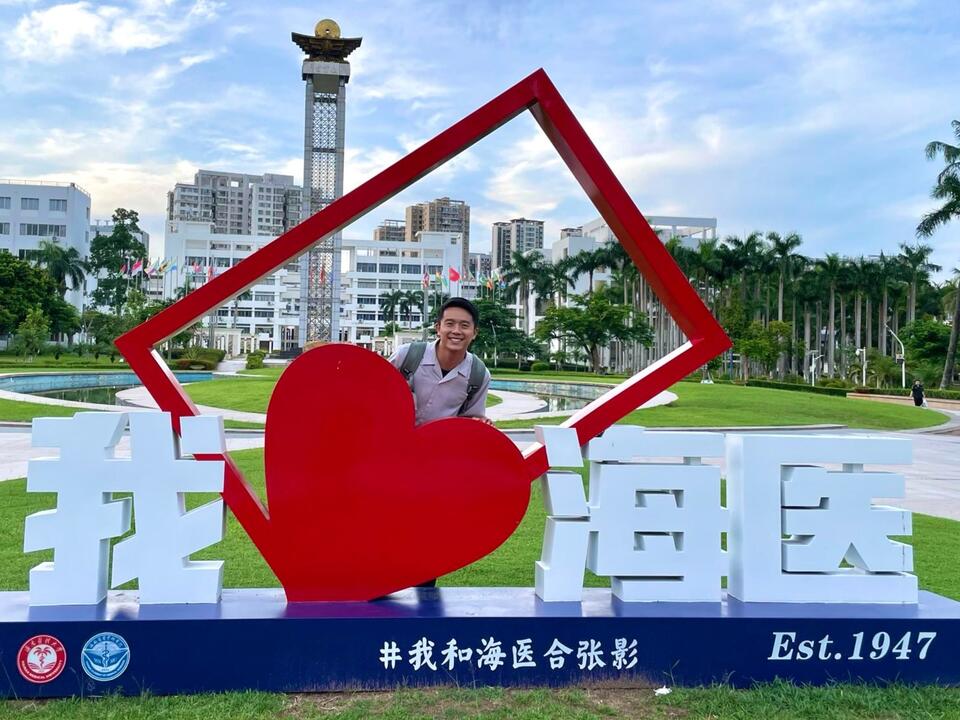
Richard Liang on a field visit in China.

Liang in China on a field visit during a 2025 summer seminar co-taught by Professors Eggleston and Williams. Photo courtesy of Richard Liang.

A Second Academic Home


Eggleston describes Liang as a model of interdisciplinary scholarship. In addition to medical school and doctoral research, he has carved out space to pursue his passion for East Asian studies. He has taken classes with APARC and affiliated faculty on topics ranging from health and politics in modern China to historical and cultural perspectives on North Korea, science and literature in East Asia, and tech policy, innovation, and startup ecosystems in Silicon Valley and Japan.

“The various classes and seminars I’ve attended through APARC, and subsequently as an East Asian Studies master’s student, have helped me think more critically about how the science and practice of medicine impact policy and society, and vice versa,” Liang says. Thanks to these experiences, he also found “a second academic home away from the medical school — a community that shares the recognition of the need to strengthen dialogue and cooperation across the Pacific and that actively encourages the interdisciplinary environment necessary to make my aspirations a reality.”

Most recently, he participated in a summer seminar on AI-enabled global public health and population health management, co-taught by Eggleston and Michelle Williams, a professor of epidemiology and population health at Stanford’s School of Medicine. Offered via the Stanford Center at Peking University, this three-week seminar focused on advancing global health through cross-cultural collaboration and the application of cutting-edge technology in population health and health policy decision-making. 

“During this program, I not only got to share my experiences from conducting population health research across East Asia, but also learn from and alongside fellow students across different disciplines, spanning from international relations to computer science,” Liang notes. He especially enjoyed meeting local Chinese graduate students and providing feedback and near-peer mentorship as an upper-year graduate student.

The seminar also led to exploring additional opportunities for research collaborations to study the implications of long-term annual health screenings across China. Liang, Eggleston, and Williams plan to expand this collaborative work.

The cross-cultural experiences and fruitful academic exchanges I’ve learned through as a Stanford graduate student not only inform my research in different countries but also help prepare me to become a better care provider for my future patients.

Preparing to Become a Better Care Provider


Liang’s work across borders and disciplines not only advances research but also deepens the perspective of cultural humility he brings to his future role as a physician.

“The cross-cultural experiences and fruitful academic exchanges I’ve learned through as a Stanford graduate student not only inform my research in different countries, but also help prepare me to become a better care provider for my future patients,” he says.

For his achievements, Liang has earned multiple honors, including a Young Investigator Collegiality Award from the International and Japanese Societies for Investigative Dermatology, the Critical Language Scholarship in Korean from the U.S. Department of State, and the Stanford Center for Asian Health Research and Education Seed Grant.

He is looking forward to finishing medical school, attending a residency program, and continuing an interdisciplinary career that advances human health and well-being.

Reflecting on the fleeting nature of student life, his advice to fellow students is to remember that “Your time as a Stanford student can really fly by, so make sure to explore the opportunities that speak to you and offerings across the university, by organizations like APARC and the Freeman Spogli Institute for International Studies. The Bechtel International Center’s Office of Global Scholarships and the Hume Center for Writing and Speaking are also wonderful resources to get started.”

It is advice he has embodied himself, building a career at the intersection of medicine, public health, and East Asian studies, one project at a time.

Read More

Colonade at Stanford Main Quad with text: call for applications for APARC's 2026-28 fellowships.
News

Applications Open for 2026-2028 Fellowships at Stanford's Asia-Pacific Research Center

The center offers multiple fellowships in Asian studies to begin in fall quarter 2026. These include a postdoctoral fellowship on political, economic, or social change in the Asia-Pacific region, postdoctoral fellowships focused on Asia health policy and contemporary Japan, postdoctoral fellowships and visiting fellow positions with the Stanford Next Asia Policy Lab, and a visiting fellow position on contemporary Taiwan.
Applications Open for 2026-2028 Fellowships at Stanford's Asia-Pacific Research Center
Close-up on coloured medication capsules and a stethoscope on the background of Korean won bills.
News

Spending More, Gaining Less: Lowest-Income Koreans Derive the Least Value from Health Care Investment, New Research Reveals

Despite rising health care spending, adults in South Korea’s lowest-income quintile experience the smallest relative improvement in life expectancy and well-being, according to a new study. The co-authors, including Stanford health economist Karen Eggleston, call for the country’s health policy to prioritize both equity and value, and highlight lessons for other health systems.
Spending More, Gaining Less: Lowest-Income Koreans Derive the Least Value from Health Care Investment, New Research Reveals
Stanford Next Asia Policy Lab team members and invited discussants during a roundtable discussion in a conference room.
News

Stanford Next Asia Policy Lab Probes Political Messaging and Public Attitudes in U.S.-China Rivalry

At a recent conference, lab members presented data-driven, policy-relevant insights into rival-making in U.S.-China relations.
Stanford Next Asia Policy Lab Probes Political Messaging and Public Attitudes in U.S.-China Rivalry
Hero Image
Richard Liang standing next to a poster presenting his research at a conference.
Liang collaborated with Dr. Karen Eggleston on research into the prevalence and treatment rates of atopic dermatitis (eczema) in South Korea. He presented this research at the 2025 Seoul International Congress of the Korean Academy of Asthma, Allergy and Clinical Immunology.
Photo courtesy of Richard Liang
All News button
1
Subtitle

Spanning medicine, public health, and East Asian studies, Richard Liang’s rare academic path at Stanford has fueled collaborations that bridge research and policy across borders and disciplines.

Date Label
Authors
Noa Ronkin
News Type
News
Date
Paragraphs

The Walter H. Shorenstein Asia-Pacific Research Center (APARC) is pleased to invite applications for a suite of fellowships in contemporary Asia studies to begin in fall quarter 2026.

The Center offers postdoctoral fellowships that promote multidisciplinary research on Asia health policy, contemporary Japan, and contemporary Asia broadly defined, as well as postdoctoral fellowships and visiting scholar positions with the Stanford Next Asia Policy Lab and a visiting fellow position on contemporary Taiwan. Learn more about each opportunity and its specific application requirements:

2026-27 Asia Health Policy Program Postdoctoral Fellowship


Hosted by the Asia Health Policy Program at APARC, the fellowship is awarded to one recent PhD recipient undertaking original research on contemporary health or healthcare policy of high relevance to countries in the Asia-Pacific region, especially developing countries. Appointments are for one year beginning in fall quarter 2026. The application deadline is December 1, 2025.

2026-27 Japan Program Postdoctoral Fellowship


Hosted by the Japan Program at APARC, the fellowship supports research on contemporary Japan in a broad range of disciplines, including political science, economics, sociology, law, policy studies, and international relations. Appointments are for one year beginning in fall quarter 2026. The application deadline is December 1, 2025.  

2026-27 Shorenstein Postdoctoral Fellowship on Contemporary Asia


APARC offers two postdoctoral fellowship positions to junior scholars for research and writing on contemporary Asia. The primary research areas focus on political, economic, or social change in the Asia-Pacific region (including Northeast, Southeast, and South Asia), or international relations and international political economy in the region. Appointments are for one year beginning in fall quarter 2026. The application deadline is December 1, 2025. 
 

2026-27 Taiwan Program Visiting Fellowship


Hosted by the Taiwan Program at APARC, the fellowship is awarded to one mid-career to senior-level expert with extensive experience studying contemporary Taiwan. The fellowship research focus is on issues related to how Taiwan can meet the challenges and opportunities of economic, social, technological, environmental, and institutional adaptation in the coming decades, using a variety of disciplines, including the social sciences, public policy, and business. The application deadline is March 1, 2026.  
 

Read More

Stanford Next Asia Policy Lab team members and invited discussants during a roundtable discussion in a conference room.
News

Stanford Next Asia Policy Lab Probes Political Messaging and Public Attitudes in U.S.-China Rivalry

At a recent conference, lab members presented data-driven, policy-relevant insights into rival-making in U.S.-China relations.
Stanford Next Asia Policy Lab Probes Political Messaging and Public Attitudes in U.S.-China Rivalry
2025 Incoming Fellows
News

APARC Names 2025 Incoming Fellows

The Center’s new cohort of seven scholars pursues research spanning diverse topics across contemporary Asian studies.
APARC Names 2025 Incoming Fellows
Participants at the NATSA 2025 conference post to the camera at the entrance to Encina Hall, Stanford University.
News

Taiwan Studies Students and Scholars Gather at Stanford to Advance New Directions for the Field

The North American Taiwan Studies Association’s 2025 conference invited participants to embrace the “otherwise,” elevating overlooked aspects of Taiwan and reimagining the field of Taiwan studies to challenge dominant narratives and disciplinary methodologies.
Taiwan Studies Students and Scholars Gather at Stanford to Advance New Directions for the Field
Hero Image
Colonade at Stanford Main Quad with text: call for applications for APARC's 2026-28 fellowships.
All News button
1
Subtitle

The center offers multiple fellowships in Asian studies to begin in fall quarter 2026. These include a postdoctoral fellowship on political, economic, or social change in the Asia-Pacific region, postdoctoral fellowships focused on Asia health policy and contemporary Japan, postdoctoral fellowships and visiting fellow positions with the Stanford Next Asia Policy Lab, and a visiting fellow position on contemporary Taiwan.

Date Label
Authors
Noa Ronkin
News Type
News
Date
Paragraphs

As countries confront rising health care spending, policymakers everywhere face a key question: Who benefits from these spending increases?

Consider South Korea, a nation that has sharply increased its per capita health care spending over the past decade, delivering reasonable value in improving health outcomes as measured by rising life expectancy and a reduced overall disease burden. Yet, not all South Koreans reap equal rewards from the country’s health investments, according to a new study. Rather, adults in the lowest-income quintile receive the least health gains for every dollar spent on their care.

Published in the journal Health Affairs Scholar, the study reveals stark income-based disparities in the value of health care — defined as health gains relative to spending — among South Korean adults. The research systematically quantifies how efficiently health spending translates into longer, healthier lives across income groups in South Korea, providing insights into the distribution of health gains relative to health care spending.

“While earlier research often examined disparities in access, utilization, or outcomes separately, our analysis provides a more integrated assessment by jointly examining health care costs and health gains,” explains the research team, including Stanford health economist Karen Eggleston, the director of the Asia Health Policy Program (AHPP) at APARC. Eggleston’s co-authors are Sungchul Park, an associate professor in Korea University’s Department of Health Policy and Management and an incoming visiting scholar with AHPP; Young Kyung Do, a professor in Seoul National University’s Department of Health Policy and Management and AHPP’s inaugural postdoctoral fellow; and David Cutler, the Otto Eckstein Professor of Applied Economics at Harvard University. 

Their findings are sobering: between 2010 and 2018, South Korean adults in the lowest income quintile derived the least value from increased health spending compared to those in the middle- and higher income quintiles, suggesting a system that underserves the poorest population.


Sign up for APARC newsletters to receive updates on our scholars’ research >

These findings highlight structural inequities in the South Korean health system and emphasize the need for targeted policies to promote equitable health care value.
Eggleston et al.

Poorer Health, Smaller Gains


Between 2010 and 2019, per capita health care spending in Korea increased from $1,211 to $1,903, growing nearly 6 percent annually. During that decade, life expectancy climbed from 80.5 to 83.7 years, while disability-adjusted life years – expressed as the number of years lost due to ill-health – declined significantly. These measures seemingly suggest health spending has yielded solid returns in terms of improved health outcomes.

Yet stark income inequality persists in Korea. The country has both the highest old-age poverty rate and the largest share of out-of-pocket medical expenses among OECD countries. Does rising health spending benefit all segments of society equally?

To answer this question, the researchers analyzed trends in health spending and outcomes across income quintiles (excluding the bottom 10 percent of the household income distribution) from 2010 to 2018.

They measured health care spending as total medical expenditures, including costs for inpatient and outpatient services, emergency services, and prescription medications. All spending measures were adjusted for inflation and are reported in 2021 US dollars. To asses health outcomes, they used three indicators: (1) health-related quality of life, which relies on standard questionnaires to measure individuals’ perceived physical and mental health over time; (2) life expectancy, calculated using life table methods based on enrollment data from the national health insurance system; and (3) quality-adjusted life expectancy (QALE) at age 25, a measure that reflects both longevity and the quality of life during those years – an essential consideration when evaluating the effectiveness and equity of health care systems. To quantify the value of health care across income groups, the researchers applied statistical methods.

They found that adults in the lowest-income quintile experienced the smallest relative improvement in QALE over time: an increase of 0.7 years, compared with 1.4 years in the second and third quintiles, 1.3 years in the fourth, and 1.2 years in the highest quintile. Translated into a value estimate, adults in the lowest income quintile incurred $78,209 per QALE; in contrast, adults in the second through highest income quintiles achieved greater value estimates of $47,831, $46,905, $31,757, and $53,889, respectively. Thus, the most efficient gains in both longevity and quality of life were in the middle-income groups.

“We found that per capita spending was similar across income groups, but the lowest-income quintile experienced much smaller gains in QALE,” Eggleston and her collaborators write. 

Reflecting the principle of diminishing returns, “these findings highlight structural inequities in the South Korean health system and emphasize the need for targeted policies to promote equitable health care value.” 

Adults in the lowest-income quintile derived the least value, largely due to poorer baseline health and limited access to care.
Eggleston et al.

Why Spending Does Not Equal Value


While the study did not identify causal pathways, secondary data suggest two plausible explanations for the results: poorer baseline health and greater unmet needs.

The data indicate that adults in the lowest-income quintile had significantly higher rates of chronic disease, disability, behavioral risk factors such as smoking and obesity rates, and mental health issues. These factors make it more difficult to achieve health gains.

Moreover, adults in the lowest-income quintile were less likely to receive preventive services, with markedly lower rates of medical checkups and cancer screenings. “Despite greater health needs, these adults faced persistent barriers to accessing care, particularly financial constraints,” the researchers say.

Notably, the highest value of health spending was not observed among adults in the highest-income group. One explanation is that this group may consume more low-value or marginally beneficial health services.

Policy Implications: Efficiency with Equity


Eggleston and her co-authors emphasize “the need for health policy in South Korea to prioritize both equity and value.” They highlight the following targeted strategies to improve efficiency and fairness:

  • Invest in high-value services that link spending to meaningful health outcomes:
    • Improve access to high-value preventive and primary care services by expanding financial protections, particularly for lower-income groups.
    • Improve overall system efficiency by reducing the overuse of low-value health care services.
  • Pair health care reform with broader social policies: Coordinate efforts to address upstream factors tied to health disparities, such as income inequality.
  • Aim for improvements across the entire population: Implement evidence-based clinical appropriateness guidelines to ensure health care spending yields meaningful and equitable results.

While focused on South Korea, the study’s findings illuminate how income inequality interacts with health system designs and carry lessons for other countries.

“In countries with greater income inequality and fragmented health systems, such as the United States, disparities in health care value may be even more pronounced,” the co-authors write.

As South Korea and other countries continue to invest heavily in health care, the study highlights the urgency of improving the distribution and impact of that increased spending. Without focused reforms, it risks entrenching existing inequities rather than alleviating them.

Read More

Close-up on an elderly womna's hands holding colorful puzzle pieces.
News

Confronting the Challenge of Dementia Care: Lessons from South Korea

A comprehensive review of rapidly aging South Korea’s efforts to mitigate the social and economic costs of Alzheimer’s disease and related dementias, co-authored by Stanford health economist Karen Eggleston, provides insights for nations facing policy pressures of the demographic transition.
Confronting the Challenge of Dementia Care: Lessons from South Korea
An older Korean man fills out a job application at a elderly persons' job fair in Seoul.
News

In Rapidly Aging South Korea, the Economy Is Slow in Creating “Age-Friendly” Jobs

Despite the nation’s rapidly aging demographics, South Korea's economy has not adapted as well as the United States, a new study finds. The researchers, including Stanford health economist and director of the Asia Health Policy Program at APARC Karen Eggleston, show that age-friendly jobs attract a broad range of workers and that structural barriers in the labor market influence which groups can access these roles.
In Rapidly Aging South Korea, the Economy Is Slow in Creating “Age-Friendly” Jobs
Chinese agriculture working couple standing side by side on the top of a rice terraces at Ping An Village looking to the camera.
News

China’s Unified Health Insurance System Improved Mental Well-Being Among Rural Residents, Study Finds

New research by a team including Stanford health economist Karen Eggleston provides evidence about the positive impact of China’s urban-rural health insurance integration on mental well-being among rural seniors, offering insights for policymakers worldwide.
China’s Unified Health Insurance System Improved Mental Well-Being Among Rural Residents, Study Finds
Hero Image
Close-up on coloured medication capsules and a stethoscope on the background of Korean won bills.
All News button
1
Subtitle

Despite rising health care spending, adults in South Korea’s lowest-income quintile experience the smallest relative improvement in life expectancy and well-being, according to a new study. The co-authors, including Stanford health economist Karen Eggleston, call for the country’s health policy to prioritize both equity and value, and highlight lessons for other health systems.

Date Label
Paragraphs

Abstract


Image
Logo of the journal Health Affairs Scholar

Introduction

Health care spending in South Korea is associated with improvements in health. However, it remains unclear whether the value of this spending is equally distributed across income groups.


Methods

We analyzed lifetime health care spending and quality-adjusted life expectancy (QALE) by income quintile among South Korean adults from 2010 to 2018. We then calculated the ratio of changes in health care spending to changes in QALE to estimate the value of health care spending across income groups. Additionally, we investigated mechanisms underlying income-related differences in the value of health care.


Results

Assuming 80% of QALE gains are attributable to health care, adults in the lowest income quintile received the least value, incurring $78,209 per QALE gained. However, middle- and higher-income quintiles achieved greater value ($47,831, $46,905, $31,757, and $53,889 from the second to highest quintile), although the highest value did not occur in the highest-income quintile. The higher spending per QALE gained in the lowest income quintile reflects smaller improvements in QALE, likely driven by poorer baseline health and greater unmet needs.


Conclusion

These findings highlight structural inequities in the South Korea health system and emphasize the need for targeted policies to promote equitable health care value.

All Publications button
1
Publication Type
Journal Articles
Publication Date
Journal Publisher
Health Affairs Scholar
Authors
Karen Eggleston
Number
Issue 8
Authors
Michael Breger
News Type
News
Date
Paragraphs

Despite technological breakthroughs, healthcare inequality remains a pressing public health challenge across developed and developing nations. Low levels of income or education mobility can exacerbate socioeconomic disparities, leaving children from disadvantaged families with fewer opportunities to improve their social and economic prospects. Moreover,  children in families with low-income backgrounds are also more likely to experience poor health outcomes, perpetuating a cycle of disadvantage.

Huixia Wang, a visiting scholar at Shorenstein APARC, sees this phenomenon as an opportunity to better understand the dynamics of intergenerational health and how to interrupt patterns of persistent health inequalities across generations. Her research aims to identify potential interventions to improve health outcomes in developing regions.

An associate professor at Hunan University, Wang has spent the 2024 fall quarter at APARC. She recently presented her research on the intricate dynamics of intergenerational health metrics, particularly in China and Indonesia. Watch her talk, “Intergenerational Persistence of Self-Reported Health Status and Biomarkers in Indonesia,” on our YouTube channel.

Barriers to Intergenerational Health

While much has been written about the transmission of income and education across generations, “much less is known about how health is passed down between generations," Wang notes, highlighting a gap in the existing research. Emphasizing that health is a crucial factor in determining overall well-being, as it affects everything from mental health to economic productivity and social mobility, she asserts that good health is linked to better educational outcomes, higher earning potential, and improved labor market performance. Poor health, on the other hand, is associated with lower educational attainment, reduced employment prospects, and higher rates of chronic illness.

Wang’s research approach centers on recognizing the multiple challenges in implementing maternal health-oriented policies. Having identified limited access to healthcare services as a significant barrier, she considers how, in many low-income and rural areas, “access to quality healthcare is constrained by poor infrastructure, lack of transportation, and shortages of healthcare professionals, making it difficult for pregnant women to receive essential care.”

Another obstacle is the prohibitive cost of healthcare. In countries where maternal health services are not subsidized or free, the financial burden of out-of-pocket expenses for transportation, medications, and other related costs can prevent women from accessing necessary care. Furthermore, Wang shows that low levels of maternal health education can contribute to poor health-seeking behaviors. “Many women may not recognize the warning signs of complications, may not fully understand the importance of prenatal care, or may be unaware of their rights to healthcare services,” she says.

Measuring Health Outcomes Across Generations

Wang acknowledges the difficulties in studying intergenerational health mobility, as it cannot be neatly defined and measured by observable metrics such as income or education. Health is much more subjective and varies from person to person. To gauge health outcomes, researchers must therefore rely on diverse and sometimes imprecise indicators, such as the presence of chronic diseases.

Moreover, to examine intergenerational mobility, researchers need data that includes health information for both parents and children. Such datasets are not always readily available, and those that do exist often lack the necessary granularity and long-term tracking to provide meaningful insights.

To overcome these challenges, Wang draws on a variety of panel data that tracks individuals over time, as well as survey data and self-reported status. For Wang, longitudinal studies are crucial for understanding how health disparities manifest and evolve over time. 

Using data from the Indonesia Family Life Survey, she combines subjective measures like self-reported health and objective measures such as pulse, BMI, hypertension, and anemia to capture a more complete picture of health mobility. This approach expands beyond previous studies, which typically relied on fewer health indicators and focused on developed countries. Her study includes a broad range of health variables and provides a unique look at the role of gender and socioeconomic factors in shaping health outcomes across generations.

Wang uses two primary methods for measuring intergenerational health mobility: one following the Intergenerational Health Association, which regresses children's health outcomes on those of their parents, and rank-rank regressions, which examine the persistence of health outcomes by analyzing percentile ranks. These techniques, adapted from income mobility research, allow her to assess health persistence and mobility across generations.

Future Directions and Policy Impact

Wang’s time at APARC has been instrumental in shaping and refining her research. "The opportunity to engage with experts from various fields [...] opened my eyes to new ways of thinking about my research," she shared. "The collaborative environment at APARC also made me realize how much I can learn from perspectives outside my immediate area of focus.”

Wang credits Stanford’s vibrant academic environment, with its rich array of seminars and talks, to broadening her understanding of Southeast Asian health systems, a subject she was less familiar with. She expressed gratitude to APARC faculty for their “invaluable guidance for both my research and my life at Stanford.” In particular,  APARC’s Asia Health Policy Program Director Karen Eggleston “dedicated a significant amount of time to advising my work, introducing me to key researchers in my field, and sharing the valuable resources that I might benefit from on campus,” Wang said.

Looking ahead, she is excited to continue exploring the role of health in intergenerational mobility, particularly in the Southeast Asian context, and plans to expand her research into the health effects of pollution, an area she has already begun to investigate. Wang also hopes to contribute to policymaking that addresses health inequality. By providing a deeper understanding of how health disparities are perpetuated across generations, she aims to inform policies that could improve health outcomes and reduce inequality in developing countries.

Wang’s research on intergenerational health mobility offers a fresh and much-needed perspective on the crucial yet understudied role of health in social mobility. She hopes her research helps policymakers and scholars address health inequalities that perpetuate socioeconomic disadvantage across generations.

Read More

Stanford Quad and geometric hill shapes with APARC logo and text "Call for Nominations: 2025 Shoreenstein Journalism Award."
News

2025 Shorenstein Journalism Award Open to Nomination Entries

Sponsored by Stanford University’s Shorenstein Asia-Pacific Research Center, the annual Shoresntein Award promotes excellence in journalism on the Asia-Pacific region and carries a cash prize of US $10,000. The 2025 award will honor an Asian news media outlet or a journalist whose work has primarily appeared in Asian news media. Nomination entries are due by February 15, 2025.
2025 Shorenstein Journalism Award Open to Nomination Entries
group of people standing on steps of Encina Hall at the 2024 Trans-Pacific Sustainability Dialogue
News

Driving Climate-Resilient Infrastructure and Inclusive Industrialization: Highlights from the Third Annual Trans-Pacific Sustainability Dialogue

Held at Stanford and hosted by the Shorenstein Asia-Pacific Research Center, the third annual Dialogue convened global leaders, academics, industry experts, and emerging experts to share best practices for advancing Sustainable Development Goal 9 in support of economic growth and human well-being.
Driving Climate-Resilient Infrastructure and Inclusive Industrialization: Highlights from the Third Annual Trans-Pacific Sustainability Dialogue
Hero Image
Huixia Wang
All News button
1
Subtitle

Economist Huixia Wang, a visiting scholar at APARC, discusses her research into healthcare economics and the reverberating effects of poor healthcare access on health outcomes across generations.

Date Label
1
Asia Health Policy Postdoctoral Fellow, 2024-2025
Mai Nguyen.JPG Ph.D.

Mai Nguyen joined the Walter H. Shorenstein Asia-Pacific Research Center (APARC) as Asia Health Policy Postdoctoral Fellow for the 2024-2025 academic year. She holds a PhD in health services and health policy from Queensland University of Technology (QUT), Australia, and a Master of Science from Heller School for Social Policy and Management, Brandeis University.

Her doctoral research focused on how the expanding private healthcare sector can be managed more effectively to better supplement public health services to achieve universal health coverage in Vietnam. The study analyzed large and complex national health datasets from two consecutive Household Living Standard Surveys, clinical hospital data at national levels and in-depth interviews with key stakeholders of Vietnam's health system to investigate consumers' choice for private and public health care services in Vietnam. Her research findings have implications for policy change in terms of harnessing and regulating private health services in Vietnam and other Asia-Pacific countries, especially low and middle-income countries.

Dr. Nguyen has worked as a senior health specialist at Vietnam Ministry of Health. Her research interest stems from her professional experience in health policy and program management, including health policy and management, health services, private healthcare and health equity. Her works have been published in many Q1-international journals such as BMC Public Health, BMC Health Services Research, Human Resources for Health and International Journal of Health Policy and Management.

At APARC, Dr. Nguyen extended her research on the roles of private healthcare to supplement the public health sector to address the growing burden of chronic diseases and conditions in Vietnam.

Date Label
0
Visiting Student Researcher, 2024-2025
xinxin_lu_2024_headshot.jpg

Xinxin Lu joined the Walter H. Shorenstein Asia-Pacific Research Center (APARC) as visiting student researcher in the fall of 2025 until winter 2026. She is currently a doctoral student in Sociology at Tsinghua University. Her dissertation focuses on "The Dying and the Chinese Family: The Economic, Moral, and Cultural Logic of End-of-Life Care in China."

Date Label
-
Advancing Healthcare event by AHPP

Co-sponsored by Peking University's Institute for Global Health and Development and the Asia Health Policy Program

(Friday, September 13, 2024, 9:00am to 10:30am - Beijing time)

In this seminar, distinguished speakers will share their insights on the intersection of cutting-edge technology and healthcare policy. The event will feature short presentations followed by an in-depth discussion, exploring what it takes to bring innovative healthcare solutions from concept to implementation.

Representing different facets of the healthcare ecosystem, the presenters will address key topics such as the application and economic impact of surgical robotics, the delicate balance between pharmaceutical regulation and innovation, technology for population health and chronic disease control, and the development of digital solutions for aging populations.

This seminar offers a unique opportunity for attendees to gain valuable insights into the latest trends in healthcare technology and policy, and to engage in meaningful dialogue about shaping a healthier, more efficient future for all.

Xiaoyanlei 091224

Dr. Lei Xiaoyan is the MOE Cheung-Kong Scholar Professor of Economics, and PKU Boya Distinguished Professor. She is currently the chair of the Academic Committee of the National School of Development, the director of the PKU Center for Healthy Aging and Development Studies, and deputy director of the MOE-PKU Center for Human Capital and National Policy Research, co-editor of the Journal of Economics of Aging, and a research fellow of IZA. Her research spans the areas of labor economics, health economics, and economics of aging. Her research has been published in Review of Economics and Statistics, American Economic Journal: Applied Economics, among others. Since 2020, she has consecutively been included on Elsevier’s List of Highly-cited Scholars in China. She received a Ph.D. in Economics from the University of California, Los Angeles in 2007.

Min Yu 091224

Professor Min Yu graduated from the Department of Clinical Medicine at Zhejiang Medical University with a Bachelor of Medicine degree in 1988 and a Master's degree in Public Health from Beijing Medical University in 1998.

Professor Yu focuses on the prevention and control of chronic diseases and injuries. He has served as the chief editor or co-editor of five monographs and has published over 20 peer-reviewed papers. He has led one project under the National Key R&D Program’s “Precision Medicine Initiative” and three provincial or ministry-level projects. Professor Yu has received the third prize of the Science and Technology Award from the Chinese Preventive Medicine Association, the third prize of the Provincial Science and Technology Advancement Award, and the second prize of Provincial Medical and Health Science and Technology.

Beinilyu 091224

Dr. Beini Lyu's research interests are pharmacoepidemiology, clinical epidemiology of chronic diseases, real-world studies, and health technology assessment. Dr. Lyu’s work has been published in top medical journals such as the Lancet Regional Health-Americas, Diabetes Care, and the American Journal of Kidney Diseases. She served as PI of a research grant from the American Society of Diagnostic and Interventional Nephrology (ASDIN). She has received the Donn D 'Alessio Outstanding Student Award from the Department of Population Health at the University of Wisconsin, the American Heart Association Student Research Fellowship in Cardiovascular Disease, and the Chinese Government Award for Outstanding Self-Financed Student Abroad. Dr. Lyu received her M.D. from Peking University and her Ph.D. in epidemiology from the University of Wisconsin-Madison.

Jianan Yang 091224

Dr. Jianan Yang's primary research fields are health economics and development economics, with specific interests in health policy reform, health behavior and healthcare demand, and pharmaceutical innovation. Her research papers have been published in leading international journals in development economics, such as the Journal of Development Economics. She has also served as an anonymous reviewer for renowned academic journals including the Journal of Public Economics, the Journal of Development Economics, and the Journal of Health Economics, among others. She earned her bachelor’s degrees in Economics and Mathematics from Renmin University of China in 2016, and her Ph.D. in Economics from the University of California, San Diego in 2022. Before joining Peking University, she was a postdoctoral fellow in the Asian Health Policy Program at Stanford University.

Yuhang Pan 091224

Dr. Yuhang Pan's research fields include environmental economics, health economics, and development economics, with a focus on using a causal inference approach to study the impact of environmental pollution, public policy, and climate change on health and social welfare. His works have been published in economics and scientific journals, such as Science, Nature Sustainability, and the Journal of Environmental Economics and Management. Dr. Pan obtained his undergraduate degree from Beijing Normal University in 2015 and his doctoral degree from the Hong Kong University of Science and Technology in 2021. Prior to joining Peking University, he worked as a postdoctoral researcher at the Faculty of Business and Economics at the University of Hong Kong.

Yuhang Pan, Assistant Professor of Economics, Peking University Institute for Global Health and Development

Online via Zoom Webinar

Xiaoyan Lei, Professor of Economics, Peking University National School of Development and Institute for Global Health and Development
Min Yu, Deputy Director, Zhejiang Provincial Center for Disease Control and Prevention, and Standing Committee Member of Injury Epidemiology Branch of the Chinese Preventive Medical Association
Beini Lyu, Assistant Professor, Peking University Institute for Global Health and Development
Jianan Yang, Assistant Professor, Peking University Institute for Global Health and Development
Seminars
Date Label
Authors
Noa Ronkin
News Type
News
Date
Paragraphs

The Walter H. Shorenstein Asia-Pacific Research Center (APARC) is pleased to invite applications for a host of fellowships in contemporary Asia studies to begin in Autumn quarter 2025.

The Center offers postdoctoral fellowships that promote multidisciplinary research on Asia-focused health policy, contemporary Japan, and contemporary Asia broadly defined, postdoctoral fellowships and visiting scholar positions with the Stanford Next Asia Policy Lab, and a fellowship for experts on Southeast Asia. Learn more about each opportunity and its eligibility and specific application requirements:

Asia Health Policy Program Postdoctoral Fellowship

Hosted by the Asia Health Policy Program at APARC, the fellowship is awarded to one recent PhD undertaking original research on contemporary health or healthcare policy of high relevance to countries in the Asia-Pacific region, especially developing countries. Appointments are for one year beginning in Autumn quarter 2025. The application deadline is December 1, 2024.

Japan Program Postdoctoral Fellowship

Hosted by the Japan Program at APARC, the fellowship supports research on contemporary Japan in a broad range of disciplines including political science, economics, sociology, law, policy studies, and international relations. Appointments are for one year beginning in Autumn quarter 2025. The application deadline is December 1, 2024.  

Shorenstein Postdoctoral Fellowship on Contemporary Asia

APARC offers two postdoctoral fellowship positions to junior scholars for research and writing on contemporary Asia. The primary research areas focus on political, economic, or social change in the Asia-Pacific region (including Northeast, Southeast, and South Asia), or international relations and international political economy in the region. Appointments are for one year beginning in Autumn quarter 2025. The application deadline is December 1, 2024. 
 

Read More

(Clockwise from top left) Michael McFaul, Oriana Skylar Mastro, Gi-Wook Shin, Kiyoteru Tsutsui
News

Stanford Experts Assess the Future of the Liberal International Order in the Indo-Pacific Amid the Rise of Autocracy, Sharp Power

At the Nikkei Forum, Freeman Spogli Institute scholars Oriana Skylar Mastro, Michael McFaul, Gi-Wook Shin, and Kiyoteru Tsutsui considered the impacts of the war in Ukraine, strategies of deterrence in Taiwan, and the growing tension between liberal democracy and authoritarian populism.
Stanford Experts Assess the Future of the Liberal International Order in the Indo-Pacific Amid the Rise of Autocracy, Sharp Power
Hero Image
Stanford building with palm trees and architectural details on the foreground and text "Call for Applications: Fall 2025 Fellowships" and APARC logo.
All News button
1
Subtitle

The Center offers multiple fellowships for Asia researchers to begin in Autumn quarter 2025. These include postdoctoral fellowships on Asia-focused health policy, contemporary Japan, and the Asia-Pacific region, postdoctoral fellowships and visiting scholar positions with the Stanford Next Asia Policy Lab, a visiting scholar position on contemporary Taiwan, and fellowships for experts on Southeast Asia.

Date Label
Subscribe to Health Care