Human Rights
-

Abstract:

The levels of violence in Mexico have dramatically increased in the last few years due to structural changes in the drug trafficking business. The increase in the number of drug trafficking organizations (DTOs) fighting over the control of territory and trafficking routes has resulted in a substantial increase in the rates of homicides and other crimes. This study evaluates the economic costs of drug-related violence. We propose electricity consumption as an indicator of the level of municipal economic activity and use two different empirical strategies to test this. To estimate the marginal effect of violence in the rate of homicides (per 100,000 inhabitants) we use an instrumental variable regression created by Mejía, Castillo and Restrepo (2012). For the average municipality, the marginal negative effect of the increase in homicides rates is substantive for earned income and the proportion of business owners, but not for energy consumption. Although negative and statistically significant, the effects are mild for labor participation. We also employ the methodology of synthetic controls to evaluate the effect that inter-narco wars have on local economies. The analysis indicates that the drug wars in those municipalities that saw dramatic increases in violence between 2006 and 2010 significantly reduced their energy consumption in the years after the change occurred, which is interpreted as a significant reduction in GDP per capita for these municipalities.

Speaker Bio:

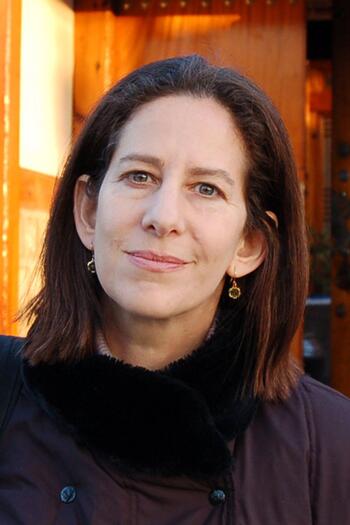
Gabriela Calderon holds a Ph.D. in Economics from Stanford University. Her research interests include policies that affect gender differences in developing countries, policy evaluation, violence in Latin America and the effect of institutions and governance on the provision of public goods and health/education outcomes. She did her master's degree in economic theory and bachelor's degree in economics at the Instituto Tecnológico Autónomo de México. Currently, in the Program on Poverty and Governance, her research analyzes the way institutions and democracy affect the provision of public goods, and the impact they have on health outcomes like infant mortality trends. She is also studying the effects of government interventions that combat drug-trafficking organizations over violence in Mexico.

Her research has focused on the topics of development, public finance, and the evaluation of public policy programs in Mexico. For example, during the summers of 2009/2010, she conducted a field experiment in Zacatecas, Mexico with Giacomo de Giorgi, an assistant professor from Stanford University, and Jesse Cuhna, a former Stanford student. The main task was to evaluate the impact of financial literacy classes on underprivileged women entrepreneurs in the region. To successfully complete an evaluation in an untreated region, they proposed collaborating with the Mexican NGO CREA on a joint project. They contacted local interviewers, trained them, and identified all women entrepreneurs in the 17 communities, in which we conducted the experiment. Preliminary results suggest that the female entrepreneurs who were randomly assigned to treatment earned higher profits, had larger revenues, and served a greater number of clients. They also found that they were more likely to implement formal accounting techniques.

She has also studied programs that are not randomly assigned as an experiment. For example, she has analyzed the effects of a national policy in Mexico of child care services, called Estancias Infantiles para apoyar a Madres Trabajadoras (EI), using administrative, census and household data. Her empirical research strategy identifies the effects of the program on both the men and women who were eligible for the program. She used time, location and eligibility variation, and considered a major threat to identification of the actual effects: for example, a manufacturer who moves into a municipality at approximately the same time as the EI program and who happens to disproportionately demand the skills of women who were eligible to the program happened to have. To ensure that such scenarios do not affect her results, she chose not triple difference strategy, in which all ineligible people are treated as “controls” for the EI-eligible families. Instead, she employs Synthetic Control Methods, using the same methodology as Abadie and Gardeazabal (2003) and Abadie, Diamond and Hainmueller (2010) to ensure that her control group has the same mix of skills and preferences as the EI-eligible group. She adapted the Synthetic Control Method to analyze repeated cross-sectional household data, which are data that are typically available in developing countries

Encina Ground Floor Conference Room

Encina Hall
616 Serra Street
Stanford, CA 94305-6055

(650) 724-2996
0
CDDRL Postdoctoral Fellow 2012-13
Calderon_HS.jpg PhD

Gabriela Calderon holds a Ph.D. in Economics from Stanford University. Her research interests include policies that affect gender differences in developing countries, policy evaluation, violence in Latin America and the effect of institutions and governance on the provision of public goods and health/education outcomes. She did her master's degree in economic theory and bachelor's degree in economics at the Instituto Tecnológico Autónomo de México. Currently, in the Program on Poverty and Governance, her research analyzes the way institutions and democracy affect the provision of public goods, and the impact they have on health outcomes like infant mortality trends. She is also studying the effects of government interventions that combat  drug-trafficking organizations over violence in Mexico. 

Her research has focused on the topics of development, public finance, and the evaluation of public policy programs in Mexico. For example, during the summers of 2009/2010, she conducted a field experiment in Zacatecas, Mexico with Giacomo de Giorgi, an assistant professor from Stanford University, and Jesse Cuhna, a former Stanford student. The main task was to evaluate the impact of financial literacy classes on underprivileged women entrepreneurs in the region. To successfully complete an evaluation in an untreated region, they proposed collaborating with the Mexican NGO CREA on a joint project. They contacted local interviewers, trained them, and identified all women entrepreneurs in the 17 communities, in which we conducted the experiment.  Preliminary results suggest that the female entrepreneurs who were randomly assigned to treatment earned higher profits, had larger revenues, and served a greater number of clients. They also found that they were more likely to implement formal accounting techniques.

She has also studied  programs that are not randomly assigned as an experiment. For example, she has analyzed the effects of a national policy in Mexico of child care services, called Estancias Infantiles para apoyar a Madres Trabajadoras (EI), using administrative, census and household data.  Her empirical research strategy identifies the effects of the program on both the men and women who were eligible for the program. She used time, location and eligibility variation, and considered a major threat to identification of the actual effects: for example, a manufacturer who moves into a municipality at approximately the same time as the EI program and who happens to disproportionately demand the skills of women who were eligible to the program happened to have. To ensure that such scenarios do not affect her results, she chose not triple difference strategy, in which all ineligible people are treated as “controls” for the EI-eligible families. Instead, she employs Synthetic Control Methods, using the same methodology as Abadie and Gardeazabal (2003) and Abadie, Diamond and Hainmueller (2010) to ensure that her control group has the same mix of skills and preferences as the EI-eligible group. She adapted the Synthetic Control Method to analyze repeated cross-sectional household data, which are data that are typically available in developing countries

Gabriela Calderón CDDRL Postdoctoral Fellow 2012-13 Speaker
Seminars
-

Processes of democratic transition in today’s Arab world carry with them both challenges and opportunities for minorities. While emerging social and political spaces may offer minorities better opportunities for political participation and social inclusion, minority rights are not always given enough importance in current processes of democratic transition, as is the case in Egypt. Furthermore, in places undergoing conflict, like Syria, threats facing minorities as a result of escalating sectarianism undermine prospects of democratic transition and reconciliation. The aim of this workshop is to help further understand how the political participation and social inclusion of minorities during Arab democratic transitions can be strengthened, with invited speakers covering cautionary tales offered by the Lebanese and Iraqi experiences, and the current challenges faced in Egypt and Syria.


Workshop program:
 

1:00pm-1:15pm: Introduction

1:15pm-2:45pm: Panel 1, Lessons from Lebanon and Iraq, featuring Firas Maksad (Lebanon Renaissance Foundation), Marina Ottaway (Woodrow Wilson Center), and Omar Shakir (Stanford University). Chair: Lina Khatib (Stanford University)

2:45pm-3:00pm Break

3:00pm-4:30pm: Panel 2, Focus on Egypt and Syria, featuring Joel Beinin (Stanford University), Laure Guirguis (University of Montreal), and Laila Alodaat (Syria Justice and Accountability Center). Chair: Jawad Nabulsi (Nebny Foundation, Egypt)

4:30pm-5:00pm General Discussion


The workshop is co-sponsored by the Stanford Initiative for Religious and Ethnic Understanding and Coexistence, supported by the President's Fund, the Center for the Comparative Study of Race and Ethnicity, the Religious Studies Department, and the Taube Center for Jewish Studies.

Oksenberg Conference Room

Lina Khatib Host
Joel Beinin Professor of History Speaker Stanford University
Laila Alodaat Human Rights Lawyer Speaker Syria Justice and Accountability Centre
Laure Guirguis Postdoctoral Fellow Speaker University of Montreal
Marina Ottaway Senior Scholar Speaker Woodrow Wilson Center
Omar Shakir Speaker Stanford University
Firas Maksad Speaker Lebanon Renaissance Foundation
Jawad Nabulsi Founder Speaker Nebny Foundation
Workshops
Paragraphs

Abstract

After the collapse of the Soviet bloc, its twenty-seven successor states were charged with devising policies with respect to their ethnic minorities. This shock enables an analysis of the conditions that render states more likely to repress, exclude, assimilate or accommodate their minorities. One would anticipate that groups that are most ‘threatening’ to the state's territorial integrity are more likely to experience repression. However the data do not validate this expectation. Instead, the analysis suggests that minority groups’ demographics and states’ coercive capacities better account for variation in ethnic minority policies. While less robust, the findings further indicate the potential importance of lobby states and Soviet multinational legacies in determining minority rights. The results have implications for ethnic politics, human rights, nationalism, democratization and political violence.

All Publications button
1
Publication Type
Journal Articles
Publication Date
Journal Publisher
British Journal of Political Science
Authors
-

Very Young Girls is an exposé of the commercial sexual exploitation of girls in New York City as they are sold on the streets by pimps and treated as adult criminals by police. The filme follows barely adolescent girls in real time documenting their struggles and  triumphs as they seek to exit the commercial sex industry.

The screening of Very Young Girls will be followed by a casual discussion with Dr. Helen Stacy, Senior Fellow at FSI, on Domestic Sex Trafficking

Law School Lounge

Helen Stacy Diretor Speaker Program on Human Rights
Conferences
-

In Singapore the People’s Action Party has held power continuously since 1959, having won 13 more or less constrained legislative elections in a row over more than half a century. In Malaysia the Alliance Party and its heir, the National Front, have done nearly as well, racking up a dozen such victories over the same 54-year stretch. These records of unbroken incumbency were built by combining rapid economic growth with varying degrees and types of political manipulation, cooptation, and control. 

In both countries, as living standards improved, most people were content to live their lives quietly and to leave politics to the ruling elite. In the last decade, however, quiescence has given way to questioning, apathy to activism, due to policy missteps by the ruling parties, the rise of credible opposition candidates, increasing economic inequality, and the internet-driven expansion of venues for dissent. 

As the ground appears to shift beneath them, how are the rulers responding? Will their top-down politics survive? How (un)persuasive have official warnings against chaotically liberal democracy become? Are ethno-religious and even national identities at stake? Are comforting but slanted historical narratives being rethought? And how principled or opportunistic are the agents of would-be bottom-up change? 

Sudhir Thomas Vadaketh is the author most recently of Floating on a Malayan Breeze:  Travels in Malaysia and Singapore (2012) and The End of Identity? (2012). Before joining The Economist Group in Singapore in 2006 he was a policy analyst on foreign investment for the government of Dubai. He has written for many publications, including The Economist, ViewsWire, and The Straits Times, and been widely interviewed by the BBC and other media. He earned a master’s degree in public policy from the Kennedy School (Harvard, 2005) after receiving bachelor degrees in Southeast Asian studies and business administration (UC-Berkeley, 2002). His service in the Singapore Armed Forces in the late 1990s took him to Thailand, Taiwan, and Australia.

Daniel and Nancy Okimoto Conference Room

Sudhir Thomas Vadaketh Senior Editor Speaker Economist Intelligence Unit, Singapore
Seminars
-

Since the resignation of Indonesia’s authoritarian president Suharto in 1998, the country has made great strides in consolidating a democratic government. But it is by no means a model of tolerance. The rights of religious minorities are routinely trampled. Regulations against blasphemy and proselytizing are routinely used to prosecute minorities including atheists, Ahmadiyah, Bahais, Christians, and Shias. As of 2012 Indonesia had over 280 religiously motivated regulations restricting minority rights. 

Hard-line groups such as the Islam Defenders Front use narrow interpretations of local and national legislation as a key tool to suppress minorities. In 2006 two ministers in President Susilo Bambang Yudhoyono's cabinet jointly decreed stricter legal requirements for building a house of worship. The decree is enforced only on religious minorities, often when Islamists pressure local officials to refuse to authorize the construction of Christian churches or to harass those worshiping in “illegal” churches. More than 430 such churches have been closed since. Violent attacks on religious minorities have become more frequent—from 216 cases in 2010, to 244 in 2011, to 264 in 2012. What explains this record of intimidation? Can it be stopped, and if so, how?

Andreas Harsono is widely published. He co-wrote In Religion's Name: Abuses against Religious Minorities in Indonesia (Human Rights Watch, 2013). His commentaries appeared in 2012 in outlets ranging from The New York Times to The Myanmar Times. Other writings include My “Religion” Is Journalism (2010), a collection of his Indonesian-language essays. In 2003 he helped establish the Pantau Foundation, which trains Indonesian journalists and defends media freedom. In 1999 he was awarded a Nieman Fellowship on Journalism at Harvard. He co-founded the Southeast Asian Press Alliance (Bangkok,1998), the Institute for the Study of the Free Flow of Information (Jakarta, 1995), and the Alliance of Independent Journalists (Jakarta, 1994). Earlier in his career he edited Pantau, a monthly Indonesian magazine on journalism and the media. Still earlier he worked as a reporter for The Nation (Bangkok) and The Star (Kuala Lumpur). He describes himself as a “journalist-cum-activist”—an identity richly illustrated by his career.

Related Resources

Indonesia: Religious Minorities Targets of Rising Violence (HRW, press release)

Indonesia: Rising Violence Against Religious Minorities (HRW, slideshow)

In Religion’s Name: Abuses Against Religious Minorities in Indonesia (HRW, report)

Daniel and Nancy Okimoto Conference Room

Andreas Harsono Indonesia Researcher Speaker Human Rights Watch
Seminars
-

Anupma Kulkarni is currently a Fellow of the Stanford Center for International Conflict and Negotiation (SCICN) and Co-director of the West Africa Transitional Justice (WATJ) Project, a cross-national study on the impact of truth commissions and international criminal tribunals from the perspective of victims of human rights violations in Ghana, Liberia, Nigeria and Sierra Leone.  Dr. Kulkarni received her PhD in Political Science from Stanford University and was Assistant Professor at Arizona State University from 2007-2009.  She has been a MacArthur International Peace and Cooperation Fellow at CISAC and a Visiting Scholar at the Center for Democracy, Development and Rule of Law.  Her research specializes in transitional justice, the ways in which post-war and post-authoritarian societies address matters of memory and accountability for human rights violations as part of the larger project of effecting democratic change and political and social reconciliation.  Her book manuscript, Demons and Demos: Truth, Accountability and Democracy in Post-Apartheid South Africa, is based on her award-winning fieldwork in South Africa.  She is also co-authoring, with David Backer, The Arc of Transitional Justice: Violent Conflict, Its Victims & Pursuing Redress in Ghana, Liberia, Nigeria and Sierra Leone, a book based on primary research conducted under the auspices of the WATJ Project, made possible through generous support from the National Science Foundation.

CISAC Conference Room

Anupma Kulkarni Fellow Speaker Stanford Center for International Conflict and Negotiation (SCICN)
Shiri Krebs Predoctoral Fellow Commentator CISAC
Seminars
Subscribe to Human Rights