Human Rights
-

******* LOCATION CHANGE******* New Location - Philippines Conference Room , 3rd Floor, Encina Hall


ABSTRACT

After China’s new leadership took office in 2012, rule of law, as a powerful tool to re-shape state governance, was back to the stage as a focus of the ruling Party of China. There are a number of reform steps taken, and the political implication behind the veil is significant. This presentation will analyze the major reform steps to strengthen the rule of law and the debates in recent two years, especially judicial reform and anti-corruption. In addition, it will interpret the reform blueprint on rule of law issued by both the 3rd and 4th plenary sessions of the 18th CPC Congresses.

SPEAKER BIO

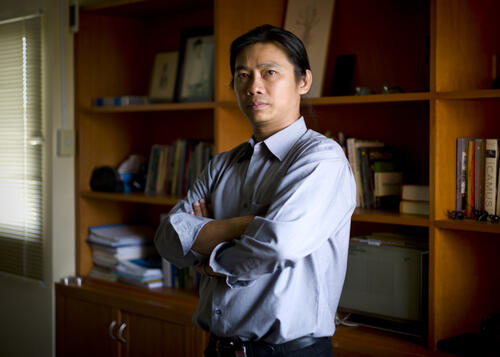
Qing Gu is the Team Leader of the Poverty, Equity and Governance Team of the United Nations Development Programme in China. She manages the governance, poverty reduction and equity portfolio of UNDP’s development assistance to China. She ensures that the portfolio brings transformational change at the request of China in democratic governance, civil society development, rule of law, public administration reform as well as poverty reduction and equity. She bridges the government, think tanks, civil society and the private sector in absorbing the best international expertise, knowledge and policy advice, to fulfill UNDP’s mission to make the Chinese people live better lives in a strengthened governance system, and enjoy democratic, equitable and sustainable development. Qing was previously a division director responsible for international cooperation at the Ministry of Justice of China. She was a Chevening scholar and received her Master Degree with overall distinction at the Faculty of Law of Oxford University in 2006. She assisted the research on organized crime at the Center for Criminology of Oxford University in 2007 and 2008. Qing was a Draper Hills Fellow at the Center for Democracy, Development and the Rule of Law in 2013.

Philippines Conference Room

3rd Floor , Encina Hall Central


Gu Qing Team Leader in Poverty, Equity and Governance, United Nations Development Programme
-

Stanford’s Program on Human Rights in the Center on Democracy, Development and the Rule of Law is collaborating with U.S. Fund for UNICEF and the Stanford Center for Innovation in Global Health to present the Children’s Human Rights Seminar Series for 2014-2015.

This monthly series will bring together UNICEF representatives, academic experts, and global civil society leaders to discuss some of the most pressing issues facing children today. Each event will highlight one of UNICEF's main programmatic areas, in the following order: emergency response, HIV/AIDS, disabilities, child protection, nutrition, water and sanitation, health and immunizations, and education.

CISAC Central, 2nd Floor, Encina Hall

Erica Kochi UNICEF Innovation
Eric Talbert Director Emergency USA
Brad Adams Director Human Rights Watch Asia
Eric Weiss Emergency Medicine Moderator Stanford Medical Center
Seminars
-


Caryl M Stern is currently the President & CEO of the U.S. Fund for UNICEF, following 27 years of non-profit and education work including serving as the Chief Operating Officer and Senior Associate National Director of the Anti-Defamation League; the founding Director of ADL’s A WORLD OF DIFFERENCE Institute; and the Dean of Students at Polytechnic University. Caryl has served on numerous non-profit Boards including the United National International School, Mercy College, and the Martin Luther King Memorial Foundation. Currently, she serves on the Boards of the WE ARE FAMILY Foundation, the Center for Disaster Relief, the SEEDS Academy, and the Advisory Board to the WNBA. Caryl holds a B.A. degree in Studio Art from the State University of New York at Oneonta; and an M.S. in College Student Personnel Administration from Western Illinois University. She completed her doctoral coursework in this same field at Loyola University in Chicago and has received a Doctor of Humane Letters degree from both Mercy College and Cedar Crest College. Caryl’s latest book is , I BELIEVE IN ZERO: Learning from the World’s Children (St. Martin’s Press, 2013)

Oksenberg Conference Room

3rd floor Encina Hall
616 Serra Street
Stanford. California 94305

Caryl Stern President and CEO US Fund for UNICEF
Seminars
-

Abstract

Taiwan’s indigenous social movement, active since the 1980s, has successfully lobbied to get indigenous rights included in the Republic of China Constitution, to create a cabinet level Council of Indigenous Peoples, and to pass the 2005 Basic Law on Indigenous Peoples. Taiwan’s indigenous social activists have also become regular participants in United Nations indigenous events. Especially during the Chen Shui-bian presidency, foreign observers often suspected that the state instrumentalized “indigeneity” to claim a distinct identity from China. Events since 2008, however, demonstrate that the indigenous rights movement has maintained its own momentum and that the indigenous peoples have interests that cannot be reduced to issues of national identity or party politics. In fact, the indigenous people overwhelmingly support the KMT, and indigenous movements are involved in both “pro-unification” and “pro-independence” political networks.  Most indigenous social movement leaders, as well as ordinary indigenous people, hope that their movement can make progress in indigenous rights in ways that transcend the “blue” and “green” division between Han Taiwanese. This talk will explore the diversity of the indigenous movements, their mobilization strategies, and values since Ma Ying-jeou was elected President of the ROC in 2008.


Speaker Bio

Scott Simon holds a Ph.D. in Anthropology from McGill University, and began his career working in the anthropology of development. Two separate research projects led to his books Tanners of Taiwan: Life Strategies and National Cultures (2005), as well as Sweet and Sour: Life-Worlds of Taipei Women Entrepreneurs (2003). He has worked extensively on ethnographic research with Truku and Sediq groups in both Hualien and Nantou counties of Taiwan since 2004. His third book - entitled Sadyaq Balae! L’autochtonie formosane dans tous ses états – was published in French by the Laval University Press. This book is an exploration of state-indigenous relations, including the social movements that often contest state projects on indigenous territory. He has in recent years, in annual trips to Taiwan, been working more closely with Truku-speaking trappers and hunters, who have been teaching him about ethno-biology and human-animal relations in addition to sharing their discontent about Taiwan’s legal regime that criminalizes most hunting activities. 


Scott Simon Professor School of Sociological and Anthropological Studies, Research Chair in Taiwan Studies, University of Ottawa
Seminars
Paragraphs

The crime of rape has been prevalent in all contexts, whether committed during armed conflict or in peacetime, and has largely been characterised by a culture of impunity. International law, through its branches of international human rights law, international humanitarian law and international criminal law, has increasingly condemned such violence and is progressively obliging states to prevent rape, whether committed by a state agent or a private actor. Whereas the prohibition of rape has been consistently recognised in these areas of law, the definition of the offence has been a later concern to international law. Attempts to define the crime have, however, been made by the ad hoc tribunals (International Criminal Tribunal for Rwanda and the International Criminal Tribunal for the former Yugoslavia), regional human rights courts and UN treaty bodies. Increasing duties are thus placed on states, not only to prevent rape through the enactment of criminal laws, but to adopt specific elements of the crime in domestic legislation. This study systematises and analyses such emerging obligations in international law. This leads to overarching questions on the fragmentation and harmonisation of norms between various regimes in international law.

All Publications button
1
Publication Type
Books
Authors
Maria Sjöholm
Number
9789004202634

Encina Hall
616 Serra Street
Stanford, CA  94305-6165

0
Anna Lindh Visiting Scholar at The Europe Center, 2014-2015
maria_sjoholm.jpg

Maria Sjöholm currently holds the position as a post-doc researcher at the Faculty of Law of Stockholm University, Sweden. She is in the process of writing a monograph reviewing the integration of women’s human rights law into regional human rights treaties, analysing the methodological and theoretical frameworks with which such rights have been incorporated into these treaties. Her previous research includes the book “Defining Rape: Emerging Obligations for States under International Law?” (Brill) and an article on the approach by the European Court of Human Rights to human trafficking. She is a member of the Committee on Feminism and International Law of the International Law Association and has taught courses on international human rights law and international criminal law at various universities in Sweden.

0
erin_baggot_carter_2025.jpg

Erin Baggott Carter (赵雅芬) is an Associate Professor at the Department of Political Science and International Relations at the University of Southern California and a Hoover Fellow at Stanford University's Hoover Institution. She is also a non-resident scholar at the UCSD 21st Century China Center. She has previously held fellowships at Stanford's Center on Democracy, Development and the Rule of Law and the Center for International Security and Cooperation. She received a Ph.D. in Political Science from Harvard University.

Dr. Carter's research focuses on Chinese politics and propaganda. Her first book, Propaganda in Autocracies (Cambridge University Press), explores how political institutions determine propaganda strategies with an original dataset of eight million articles in six languages drawn from state-run newspapers in nearly 70 countries. She is currently working on a book on how domestic politics influence US-China relations. Her other work has appeared in the British Journal of Political ScienceJournal of Conflict ResolutionSecurity Studies, and International Interactions. Her work has been featured by a number of media platforms, including the New York Times and the Little Red Podcast.

Her research has been supported by the Chiang Ching-kuo Foundation, the Smith Richardson Foundation, the Center for International Studies at the University of Southern California, the Weatherhead Center for International Affairs at Harvard University, the Fairbank Center for Chinese Studies at Harvard University, and the Institute for Quantitative Social Science at Harvard University.

Dr. Carter regularly tweets about Chinese politics and propaganda at @baggottcarter. She can be reached via email at baggott [at] usc.edu or ebaggott [at] stanford.edu.

Hoover Fellow
CDDRL Affiliated Scholar
CDDRL Visiting Scholar, 2020-2021
CISAC Affiliate
Date Label

Stanford Law School
Neukom Building
Room N255

(650) 736-8090 (voice)
0
Distinguished Austrian Chair Professor (2013-2014)
Visiting Professor, Stanford Law School
Professor of Law, University of Vienna, Austria
manfred_nowak.jpg

Manfred Nowak graduated from the Vienna Law School (Dr. iur. 1973) and from Columbia University New York (LL.M. 1975). He has been professor at the Institute of Constitutional and Administrative Law at the University of Vienna since 1986. He was member of the Austrian Delegation to the U.N. Commission on Human Rights (1986 and 1993) as well as director of the Netherlands Institute of Human Rights (SIM) at the University of Utrecht (1987-1989). In 1989, he founded the Austrian Ludwig Boltzmann Institute of Human Rights in Vienna and coordinated NGO-parallel events during the 1993 UN Conference for Human Rights in Vienna while he also was Professor of Law at the Austrian Federal Academy of Public Administration in Vienna until 2002.

As U.N. expert on missing persons in the former Yugoslavia he started a process aiming at the identification of missing persons through exhumation of mortal remains between 1994 and 1997.

From 1996-2003, Manfred Nowak was a judge at the Human Rights Chamber in Bosnia. Since 2000, he is head of an independent human rights commission at the Austrian Interior Ministry. From 2002 to 2003 he was visiting professor at the Raoul Wallenberg of Human Rights and Humanitarian Law at the University of Lund. He has been a UN expert on legal questions on enforced disappearances since 2002 and was appointed UN Special Rapporteur on Torture and other Cruel, Inhuman or Degrading Treatment in 2004 with a mandate until 2010.

In addition, Manfred Nowak is also Chairperson of the European Masters Degree in Human Rights and Democratisation (since 2000). Manfred Nowak has published more than 400 books and articles on international, constitutional, administrative, and human rights law, including the standard commentary on the International Covenant on Civil and Political Rights. He was awarded the UNESCO Prize for the Teaching of Human Rights in 1994 and the Bruno Kreisky Prize for Human Rights in 2007.


CV
Paragraphs

Keynote address by Rt. Hon. Aminu Waziri Tambuwal CFR, Speaker, House of Representatives, National Assembly of Nigeria on the occasion of the Omidyar Network African Democracy and Leadership Forum organized by the Stanford University Center on Democracy, Development, and the Rule of Law (CDDRL) on the 26th of June, 2014, at the Sheraton Hotel, Abuja.

This address was delivered as part of the conference on 'The Future of Human Rights and Good Governance in Africa' held from June 26 - 28, 2014, in Abuja, Nigeria, which convened many members of the Omidyar Network's Africa Leadership Forum.

All Publications button
1
Publication Date
Subscribe to Human Rights