After nearly five years since the start of the uprising, Syria finds itself divided and embattled, with no end in sight. More significantly, more than half of the Syrian population is displaced and the death toll surpassed 300,000 by all counts. The Syrian tragedy persists and, more than any other case of mass uprising in the region, continues to be shrouded in political power-plays and contradictions at the local, regional, and international levels. Defined increasingly by an absence of a clear favorable outcome, considering existing parties to the conflict, the logic of the lesser evil reigns supreme. This lecture is an attempt to understand the roots and dynamics of the tragic Syrian uprising, with particular attention to its background and to the recent Russian intervention.
Speaker Bio
Image
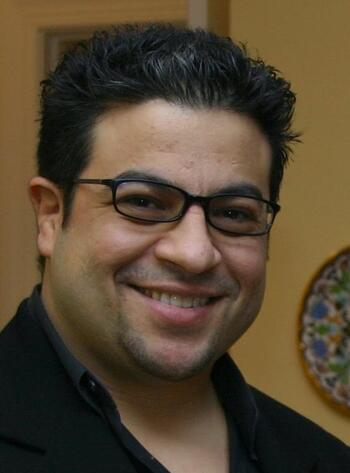
Bassam Haddad is Director of the Middle East Studies Program and Associate Professor in the Department of Public and International Affairs at George Mason University, and is Visiting Professor at Georgetown University. He is the author of Business Networks in Syria: The Political Economy of Authoritarian Resilience (Stanford University Press, 2011). Haddad is currently editing a volume on Teaching the Middle East After the Arab Uprisings, a book manuscript on pedagogical and theoretical approaches. His most recent books include two co-edited volumes: Dawn of the Arab Uprisings: End of an Old Order? (Pluto Press, 2012) and Mediating the Arab Uprisings (Tadween Publishing, 2013). Haddad serves as Founding Editor of the Arab Studies Journal a peer-reviewed research publication and is co-producer/director of the award-winning documentary film, About Baghdad, and director of the critically acclaimed film series, Arabs and Terrorism, based on extensive field research/interviews. More recently, he directed a film on Arab/Muslim immigrants in Europe, titled The "Other" Threat. Haddad is Co-Founder/Editor of Jadaliyya Ezine and serves on the Editorial Committee of Middle East Report. He is the Executive Director of the Arab Studies Institute, an umbrella for five organizations dealing with knowledge production on the Middle East and Founding Editor of Tadween Publishing.
[[{"fid":"221861","view_mode":"crop_870xauto","fields":{"format":"crop_870xauto","field_file_image_description[und][0][value]":"Bassam Haddad January 21","field_file_image_alt_text[und][0][value]":"","field_file_image_title_text[und][0][value]":"","field_credit[und][0][value]":"","field_caption[und][0][value]":"","field_related_image_aspect[und][0][value]":"","thumbnails":"crop_870xauto"},"type":"media","attributes":{"width":"870","class":"media-element file-crop-870xauto"}}]]
CISAC Central Conference Room Encina Hall, 2nd Floor 616 Serra St Stanford, CA 94305
Bassam Haddad
Associate Professor
George Mason University
The sectarian-based segregation that has shaped urbanism in Baghdad is a direct outcome of the 2003 U.S.-led invasion and occupation of Iraq. The "post"-occupied city is characterized by the normalization of concrete “security” blast-walls that choke urban circulation and sever communities. The notorious blast walls -- or "Bremer Walls" -- perpetuate and intensify conditions of urban segregation. As the summer's surge of anti-government protests in Baghdad demonstrate, the short-sighted nature of this militarized solution to sectarian-based violence has proven to be a superficial and unsustainable fix to the deep dilemma of sectarian segregation codified in Iraq’s political system. This presentation will examine the context for recent public dissent on the streets of Baghdad through the story of the capital city's fragmentation between 2006 and 2007.
Speaker Bio
Image
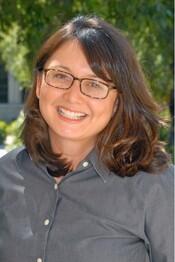
Mona Damluji is Associate Dean and Director of The Markaz: Resource Center at Stanford University. She is a liberal arts educator, cultural activist and scholar with expertise in the Arab Middle East and broader Muslim World. Mona received her PhD from the University of California, Berkeley and was the Mellon Postdoctoral Fellow in Asian & Islamic Visual Culture at Wheaton College in Massachusetts. Mona regularly curates and organizes exhibits and programs featuring the work of artists and activists linked to Muslim and Arab communities and countries. Major recent projects have included "Open Shutters Iraq" at UC Berkeley and "Arab Comics: 90 Years of Popular Visual Culture" at Brown University. Mona has worked as the educational outreach director for the Arab Film Festival, organizing an annual festival screening for students and teachers in San Francisco, Oakland and Berkeley. Her exhibition and book reviews appear in Jadaliyya, AMCA and the International Journal of Islamic Architecture. Mona's publications also appear in the Journal of Urban History, Comparative Studies of South Asia, Africa and the Middle East, and Subterranean Estates: the Life Worlds of Oil and Gas.
With the nearing of the fifth anniversary of the January 25 Revolution, this panel examines the nature of politics under the rule of the current military sponsored regime in Egypt. What implications will the recent legislative elections have for political stability and the cohesion of the ruling coalition? How is the regime responding to the various economic challenges it currently confronts? In what ways has the persistence of state repression affected and shaped the space for political contestation and resistance?
Panelists
Joel Beinin Donald J. McLachlan Professor of History,
Stanford University
Lisa Blaydes Associate Professor of Political Science,
Stanford University
Amr Hamzawy ARD Visiting Scholar,
CDDRL, Stanford University
Nancy Okail Executive Director,
The Tahrir Institute for Middle East Policy
(via Skype)
Hesham Sallam Associate Director, ARD
CDDRL, Stanford University
Moderator:
Larry Diamond Senior Fellow, FSI;
Senior Fellow Hoover Institute,
Stanford University
Image
Joel Beinin is the Donald J. McLachlan Professor of History and Professor of Middle East History. He received his A.B. from Princeton University in 1970, his M.A. from Harvard University in 1974, and his A.M.L.S. and Ph.D. from the University of Michigan in 1978 and 1982. He also studied at the American University of Cairo and and the Hebrew University of Jerusalem. He lived in Egypt in 1969, 1980-81, 1985, 1986, 1994, 2004-05, and 2006-08 and in Israel in 1965-66, 1970-73, 1987, 1988, 1993, and 1993. He has taught Middle East history at Stanford University since 1983. From 2006 to 2008 he served as Director of Middle East Studies and Professor of History at the American University in Cairo. His research and writing focuses on workers, peasants, and minorities in the modern Middle East and on Israel, Palestine, and the Arab-Israeli conflict. Beinin has written or edited nine books, most recently Social Movements, Mobilization, and Contestation in the Middle East and North Africa; co-edited with Frédéric Vairel (Stanford University Press, 2011) and The Struggle for Worker Rights in Egypt (Solidarity Center, 2010). His articles have been published in leading scholarly journals as well as The Nation, Middle East Report, The Los Angeles Times, The San Francisco Chronicle, Le Monde Diplomatique, and others. He has appeared on Al-Jazeera TV, BBC radio, National Public Radio, and many other TV and radio programs throughout North America, and in France, Egypt, Singapore, and Australia, and has given frequent interviews to the global media. In 2002 he served as President of the Middle East Studies Association of North America.
Image
Lisa Blaydes is an Associate Professor of Political Science at Stanford University. She is the author of Elections and Distributive Politics in Mubarak’s Egypt (Cambridge University Press, 2011). Professor Blaydes received the 2009 Gabriel Almond Award for best dissertation in the field of comparative politics from the American Political Science Association for this project. Her articles have appeared in the American Political Science Review, International Studies Quarterly, International Organization, Journal of Theoretical Politics, Middle East Journal, and World Politics. During the 2008-2009 and 2009-2010 academic years, Professor Blaydes was an Academy Scholar at the Harvard Academy for International and Area Studies. She holds degrees in Political Science (PhD) from the University of California, Los Angeles and International Relations (BA, MA) from Johns Hopkins University.
Image
Larry Diamond is a senior fellow at the Hoover Institution and at the Freeman Spogli Institute for International Studies. He also serves as the Peter E. Haas Faculty Director of the Haas Center for Public Service at Stanford. For more than six years, he directed FSI’s Center on Democracy, Development, and the Rule of Law, and he continues to lead its programs on Liberation Technology, Arab Reform and Democracy, and Democracy in Taiwan. He is the founding co-editor of the Journal of Democracy and also serves as Senior Consultant at the International Forum for Democratic Studies of the National Endowment for Democracy. His sixth and most recent book, In Search of Democracy (Routledge, 2016), explores the challenges confronting democracy and democracy promotion, gathering together three decades of his work on democratic development, particularly in Africa and Asia. He has also edited or co-edited more than 40 books on democratic development around the world.
Image
Amr Hamzawy is a visiting scholar at the Program on Arab Reform and Democracy. He studied political science and developmental studies in Cairo, The Hague, and Berlin. After finishing his doctoral studies and after five years of teaching in Cairo and Berlin, Hamzawy joined the Carnegie Endowment for International Peace (Washington, DC) between 2005 and 2009 as a senior associate for Middle East Politics. Between 2009 and 2010, he served as the research director of the Middle East Center of the Carnegie Endowment in Beirut, Lebanon. In 2011, he joined the Department of Public Policy and Administration at the American University in Cairo, where he continues to serve today. Hamzawy also serves as an associate professor of political science at the Department of Political Science, Cairo University. His research and teaching interests as well as his academic publications focus on democratization processes in Egypt, tensions between freedom and repression in the Egyptian public space, political movements and civil society in Egypt, contemporary debates in Arab political thought, and human rights and governance in the Arab world. Dr. Hamzawy is a former member of the People’s Assembly after being elected in the first Parliamentary elections in Egypt after the 25th of Jan 2011 revolution. He is also a former member of the Egyptian National Council for Human Rights. Hamzawy contributes a daily column and a weekly op-ed to the Egyptian independent newspaper Shorouk.
Image
Nancy Okail is the Executive Director of TIMEP. She brings more than 15 years of experience promoting democracy and development in the Middle East and North Africa region to this role. Prior to joining TIMEP, Dr. Okail was the director of Freedom House’s Egypt program. She has also worked with the Egyptian government as a senior evaluation officer of foreign aid and has managed programs for Egyptian pro-democracy organizations that challenged the Mubarak regime. She was also one of the defendants convicted and sentenced to prison in the widely publicized case of 43 non-governmental organization workers charged with using foreign funds to foment unrest in Egypt. She holds a Ph.D. from the University of Sussex in the U.K. where her dissertation examined the power relations of foreign aid.
Image
Hesham Sallam is a Research Associate at CDDRL and serves as the Associate-Director of the Program on Arab Reform and Democracy. He is also a co-editor of Jadaliyya ezine and a former program specialist at the U.S. Institute of Peace. His research focuses on Islamist movements and the politics of economic reform in the Arab World. Sallam’s research has previously received the support of the Social Science Research Council and the U.S. Institute of Peace. Past institutional affiliations include Middle East Institute, Asharq Al-Awsat, and the World Security Institute. He is editor of Egypt's Parliamentary Elections 2011-2012: A Critical Guide to a Changing Political Arena (Tadween Publishing, 2013). Sallam received a Ph.D. in Government (2015) and an M.A. in Arab Studies (2006) from Georgetown University, and a B.A. in Political Science from the University of Pittsburgh (2003).
On November 17, CDDRL’s Program on Arab Reform and Democracy (ARD) hosted Lina Khatib, a senior research associate with the Arab Reform Initiative, for a special talk on the Syrian crisis. Khatib was a co-founder of the ARD Program and managed its research agenda for four years before leaving CDDRL to lead the Carnegie Middle East Center in Beirut.
After conducting extensive fieldwork on the Syrian-Turkish border, Khatib provided a detailed analysis of ISIS’ origins and how they are benefitting from the unresolved crisis in Syria. Khatib also weighed in on the refugee crisis, as well as the regional rivalries that are using Syria as a proxy to exert themselves militarily. Khatib argued that a military solution to solving the ISIS problem is not the right approach, and encouraged the international community to begin engaging different members of the Syrian opposition, and rethinking their approach to international diplomatic negotiations.
On November 10, CDDRL and the WSD Handa Center for Human Rights and International Justice welcomed Human Rights Watch's Director of Emergencies Peter Bouckaert and Sareta Ashraph, senior analyst on the UN Commission of Inquiry on the Syrian Arab Republic, for a discussion on the ongoing human rights and refugee crises in Syria. The talk was moderated by Stanford Law School's Beth Van Schaack, Leah Kaplan Visiting Professor in Human Rights.
Photo Album
Hero Image
Human Rights Watch's Peter Bouckaert (left) and Sareta Ashraph (right), senior analyst at the UN Commission of Inquiry for the Syria, with Stanford Law School's Beth Van Schaack.
Human rights groups have only two assets: people and information. Learn about Benetech’s decade of putting information technology tools into the hands of human rights activists, with the goal of making these two assets more effective in advancing the global cause of human rights.
Speaker bio
Jim Fruchterman is the founder and CEO of Benetech, a Silicon Valley nonprofit technology company that develops software applications to address unmet needs of users in the social sector. He is the recipient of numerous awards recognizing his work as a pioneering social entrepreneur, including the MacArthur Fellowship, Caltech’s Distinguished Alumni Award, the Skoll Award for Social Entrepreneurship, and the Migel Medal—the highest honor in the blindness field—from the American Foundation for the Blind. Since its founding in 1989, Benetech has touched the lives of hundreds of thousands of people. Its tools and services have transformed the ways in which people with disabilities access printed information, at-risk human rights defenders safely document abuse, and environmental practitioners succeed in their efforts to protect species and ecosystems. Through his work with Benetech and as a trailblazer in the field of social entrepreneurship, Jim continues to advance his vision of a world in which the benefits of technology reach all of humanity, not just the wealthiest and most able five percent.
As the protracted and chaotic conflict in Syria continues into its fifth year, Syrians of all backgrounds are being subjected to gross human rights violations. A growing number of parties to the conflict, including the Government and the Islamic State, display disregard for international legal conventions and employ tactics such as sexual violence, murder, and torture that have resulted in mass civilian casualties, large-scale displacement, and the destruction of Syria’s cultural heritage.
Peter Bouckaert
Peter Bouckaert is Human Rights Watch’s emergencies director, coordinating the organization’s response to major wars and other human rights crises. A Belgian-born Stanford Law School graduate, Bouckaert has conducted fact-finding missions around the world, including currently documenting Syrian refugees in Europe.
Sareta Ashraph
Sareta Ashraph specializes in international criminal, humanitarian, and human rights law and has served since 2012 as the Senior Analyst on the UN Commission of Inquiry on the Syrian Arab Republic, investigating and reporting on violations of international law in the context of ongoing events in Syria.