Human Rights

Encina Hall, C141
616 Jane Stanford Way
Stanford, CA 94305-6055

650.497.1271
0
KC_Headshot 10.24.jpg

Kristin Chandler joined CDDRL in April 2018 and serves as the Senior Associate Director for Operations and Finance.  Before coming to Stanford, Kristin worked at the Ronald McDonald House Stanford as the Operations Manager leading the day-to-day operations and building a culture of service excellence with empathy.   Kristin holds a bachelor's degree in Social Work from The University of New Hampshire. An advocate for social justice, Kristin spent 15 years working for grassroots non-profit organizations where she specialized in operations and program management.  CDDRL’s mission resonates with her background and passion for global issues.

Senior Associate Director for Operations and Finance, CDDRL
Date Label
-

The Republic of China on Taiwan spent nearly four decades as a single-party state under dictatorial rule (1949-1987) before transitioning to liberal democracy. This talk is based on an ethnographic study of street-level police practices during the first rotation in executive power following the democratic transition (i.e. the first term of the Chen Shui-bian administration, 2000-2004). Summarizing the argument of a forthcoming book, Dr. Jeffrey T. Martin focuses on an apparent paradox, in which the strength of Taiwan's democracy is correlated to the weakness of its police powers. Martin explains this paradox through a theory of "jurisdictional pluralism" which, in Taiwan, is  organized by a cultural distinction between sentiment, reason, and law as distinct foundations for political authority. An overt police interest in sentiment (qing) was institutionalized during the martial law era, when police served as an instrument for the cultivation of properly nationalistic political sentiments. Martin's fieldwork demonstrates how the politics of sentiment which took shape under autocratic rule continued to operate in everyday policing in the early phase of the democratic transformation, even as a more democratic mode of public reason and the ultimate power of legal right were becoming more significant.


Image
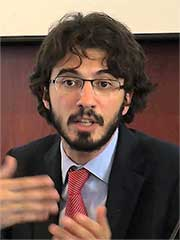
jmart
Jeffrey T. Martin is an assistant professor in the Departments of Anthropology and East Asian Languages and Cultures at the University of Illinois at Urbana Champaign. He specializes in the anthropological study of modern policing, and has conducted research in China, Taiwan, Hong Kong, and the USA. His research interests focus on historical continuity and change in police culture, especially as this culture reflects specific changes in the legal, bureaucratic, or technical dimensions of police operations. Prior to joining the University of Illinois, Dr. Martin taught in the Sociology Department at the University of Hong Kong, and in the Graduate Institute of Taiwan Studies at Chang Jung Christian University.


Jeffrey T. Martin <i>Assistant Professor, Anthropology and East Asian Languages and Cultures, University of Illinois at Urbana Champaign</i>
Seminars

Nemstov film posterNemtsov is a documentary film about the late leader of the Russian opposition, directed by his friend and colleague Vladimir Kara-Murza. The film chronicles a remarkable political life. It is a story told by those who knew Boris Nemtsov at different times: when he was a young scientist and took his first steps in politics; when he held high government offices and was considered Boris Yeltsin’s heir apparent; when he led Russia’s democratic opposition to Vladimir Putin. The film contains rare archival footage, including from the Nemtsov family. Nemtsov is a portrait. It is not about death. It is about the life of a man who could have been president of Russia.

The film is in Russian, with English subtitles. The screening will be followed by a discussion with Vladimir Kara-Murza.

Image
Vladimir Kara-Murza


Vladimir Kara-Murza is vice chairman of the Open Russia movement and chairman of the Boris Nemtsov Foundation for Freedom. He was a longtime colleague of Russian opposition leader Boris Nemtsov. Kara-Murza is a former deputy leader of the People’s Freedom Party and was a candidate for the Russian State Duma. He has testified on Russian affairs before parliaments in Europe and North America and played a key role in the passage of the Magnitsky Act, a US law that imposed targeted sanctions on Russian human rights violators. Twice, in 2015 and 2017, he was poisoned with an unknown substance and left in a coma; the attempts on his life were widely viewed as politically motivated. Kara-Murza writes regular commentary for the Washington Post, the Wall Street Journal, World Affairs, and other periodicals, and has previously worked as a journalist for Russian broadcast and print media, including Ekho Moskvy and Kommersant. He directed two documentary films, They Chose Freedom (on the dissident movement in the USSR) and Nemtsov (on the life of Boris Nemtsov). He is the author of Reform or Revolution (Moscow 2011) and a contributor to Russia’s Choices: The Duma Elections and After (London 2003), Russian Liberalism: Ideas and People (Moscow 2007), Why Europe Needs a Magnitsky Law (London 2013), and Boris Nemtsov and Russian Politics: Power and Resistance (Stuttgart 2018). Kara-Murza is a recipient of the Magnitsky Human Rights Award, the Sakharov Prize for Journalism as an Act of Conscience, and the Geneva Summit Courage Award. He holds an M.A. (Cantab.) in History from Cambridge. He is married, with three children.

This event is cosponsored by the Center for Russian, Eastern European, and Eurasian Studies and the European Security Initiative.

Cubberley Auditorium (Education Building)

485 Lasuen Mall

 
Vladimir Kara-Murza Filmmaker
Film Screenings
0
top_pick_rsd25_070_0254a.jpg

Daphne Keller is the Director of Platform Regulation at the Stanford Program in Law, Science, & Technology. Her academic, policy, and popular press writing focuses on platform regulation and Internet users'; rights in the U.S., EU, and around the world. Her recent work has focused on platform transparency, data collection for artificial intelligence, interoperability models, and “must-carry” obligations. She has testified before legislatures, courts, and regulatory bodies around the world on topics ranging from the practical realities of content moderation to copyright and data protection. She was previously Associate General Counsel for Google, where she had responsibility for the company’s web search products. She is a graduate of Yale Law School, Brown University, and Head Start.

SHORT PIECES


ACADEMIC PUBLICATIONS


POLICY PUBLICATIONS


FILINGS

  • U.S. Supreme Court amicus brief on behalf of Francis Fukuyama, NetChoice v. Moody (2024)
  • U.S. Supreme Court amicus brief with ACLU, Gonzalez v. Google (2023)
  • Comment to European Commission on data access under EU Digital Services Act
  • U.S. Senate testimony on platform transparency


PUBLICATIONS LIST

Director of Platform Regulation, Stanford Program in Law, Science & Technology (LST)
Social Science Research Scholar
Date Label
-

Please join Freedom House and Stanford's Global Digital Policy Incubator (GDPI) for the West Coast launch of the latest edition of Freedom on the Net, Freedom House's annual study of Internet freedom around the world. 


Manipulating Social Media to Undermine Democracy


Speakers and Panelists

Michael Abramowitz

President, Freedom House


Larry Diamond

Senior fellow, FSI and the Hoover Institution


Sanja Kelly

Director, Freedom on the Net, Freedom House


Xiao Qiang

Founder and editor-in-chief, China Digital Times (CDT)


Paola Ricaurte Quijano

Tecnológico de Monterrey, Mexico


Dariya Orlova

Mohyla School of Journalism, Kiev, Ukraine 


Justine Isola

Product Policy Manager, Facebook


Moderator

Eileen Donahoe

Executive director, Global Digital Policy Incubator


Can't join in person? This event will be Livestreamed here: https://www.facebook.com/StanfordCDDRL/


Tweet with us at #NetFreedom2017


Bechtel Conference Center (Encina Hall)

616 Serra St.

Stanford, CA 94305-6055


p.p1 {margin: 0.0px 0.0px 0.0px 0.0px; font: 12.0px 'Times New Roman'; min-height: 15.0px} p.p2 {margin: 0.0px 0.0px 0.0px 0.0px; font: 16.0px 'Times New Roman'} span.s1 {font: 12.0px 'Times New Roman'}


p.p1 {margin: 0.0px 0.0px 0.0px 0.0px; font: 12.0px 'Times New Roman'; min-height: 15.0px} p.p2 {margin: 0.0px 0.0px 0.0px 0.0px; font: 16.0px 'Times New Roman'} span.s1 {font: 12.0px 'Times New Roman'}
Panel Discussions
-

ABSTRACT

Despite security surveillance, forced dismissals of labor activists, and referrals of labor activists and protesters to military trials, labor activism remains at the forefront of societal resistance to authoritarian policies and practices in today’s Egypt. Unionized workers in public and private industrial facilities, as well as civil servants inside the state bureaucracy, continue to demonstrate and organize strikes to articulate their economic and social demands and to defend workers’ rights to freedoms of expression and association. Protests by labor activists have even impacted key sectors, such as public transportation and healthcare. While the Ministry of Manpower and Immigration has settled some formal complaints and requests filed by workers and civil servants, most cases have been referred to labor courts. The ministry has also resorted to providing temporary financial assistance and other short-term benefits to appease some workers and civil servants and to address the upsurge in labor protests. This talk will examine the various administrative, security, legislative, and judicial tools that the regime of Abdel-Fattah Al-Sisi has employed to undermine labor activism. Joel Beinin will serve as a discussant.


SPEAKER BIO

Image
Amr Hamzawy is a Senior Research Scholar at CDDRL. He studied political science and developmental studies in Cairo, The Hague, and Berlin. He was previously an associate professor of political science at Cairo University and a professor of public policy at the American University in Cairo. Between 2016 and 2017, he served as a senior fellow in the Middle East program and the Democracy and Rule of Law program at the Carnegie Endowment for International Peace, Washington, DC. 

His research and teaching interests as well as his academic publications focus on democratization processes in Egypt, tensions between freedom and repression in the Egyptian public space, political movements and civil society in Egypt, contemporary debates in Arab political thought, and human rights and governance in the Arab world. He is currently writing a new book on contemporary Egyptian politics, titled Egypt’s New Authoritarianism.

Hamzawy is a former member of the Egyptian parliament, and was elected to office in the country’s first legislative elections following the January 25, 2011 revolution. He is also a former member of the Egyptian National Council for Human Rights. Hamzawy contributes a weekly op-ed to the Egyptian independent newspaper al-Shorouk and a weekly op-ed to the London based newspaper al-Quds al-Arabi.


DISCUSSANT BIO

Image
Joel Beinin is the Donald J. McLachlan Professor of History and Professor of Middle East History at Stanford University.  He received his Ph.D. from the University of Michigan in 1982 before coming to Stanford in 1983.  From 2006 to 2008 he served as Director of Middle East Studies and Professor of History at the American University in Cairo.  In 2002 he served as president of the Middle East Studies Association of North America.

Beinin’s research and writing focus on the social and cultural history and political economy of modern Egypt, Palestine, and Israel and on US policy in the Middle East.  He has written or edited eleven books, most recently Workers and Thieves: Labor Movements and Popular Uprisings in Tunisia and Egypt (Stanford University Press, 2015); Social Movements, Mobilization, and Contestation in the Middle East and North Africa, 2nd edition (Stanford University Press, 2013) co-edited with Frédéric Vairel; and The Struggle for Worker Rights in Egypt (Solidarity Center, 2010).

 Reuben Hills Conference Room
 2nd Floor East Wing E207
 Encina Hall
 616 Serra Street
 Stanford, California 94305

0
amr.jpg

Amr Hamzawy is the director of the Carnegie Middle East Program. He studied political science and developmental studies in Cairo, The Hague, and Berlin. He was previously an associate professor of political science at Cairo University and a professor of public policy at the American University in Cairo.

His research and teaching interests as well as his academic publications focus on democratization processes in Egypt, tensions between freedom and repression in the Egyptian public space, political movements and civil society in Egypt, contemporary debates in Arab political thought, and human rights and governance in the Arab world. His new book On The Habits of Neoauthoritarianism – Politics in Egypt Between 2013 and 2019 appeared in Arabic in September 2019.

Hamzawy is a former member of the People’s Assembly after being elected in the first Parliamentary elections in Egypt after the January 25, 2011 revolution. He is also a former member of the Egyptian National Council for Human Rights. Hamzawy contributes a weekly op-ed to the Arab daily al-Quds al-Arabi.


Former Senior Research Scholar, CDDRL
Senior Research Scholar, CDDRL
Seminars
0
Visiting Scholar, Ukrainian Emerging Leaders Program 2017-18
oleksandra_hs.jpg

Oleksandra Matviichuk is a human rights defender who works on issues in Ukraine and the OSCE region. At present she heads the human rights organization Center for Civil Liberties, and also coordinates the work of the initiative group Euromaidan SOS. The activities of the Center for Civil Liberties are aimed at protecting human rights and establishing democracy in Ukraine and the OSCE region. The organization is developing legislative changes, exercises public oversight over law enforcement agencies and judiciary, conducts educational activities for young people and implements international solidarity programs. 

The Euromaidan SOS initiative group was created in response to the brutal dispersal of a peaceful student rally in Kyiv on November 30, 2013. During three months of mass protests that were called the Revolution of Dignity, several thousand volunteers provided round-the-clock legal and other aid to persecuted people throughout the country. Since the end of the protests and beginning of Russian aggression in Ukraine, the initiative has been monitoring political persecution in occupied Crimea, documenting war crimes and crimes against humanity during the hybrid war in the Donbas and conducting the “LetMyPeopleGo” international campaign to release political prisoners detained by the Russian authorities. 

Oleksandra Matviichuk has experience in creating horizontal structures for massive involvement of people in human rights activities against attacks on rights and freedoms, as well as a multi-year practice of documenting violations during armed conflict. She is the author of a number of alternative reports to various UN bodies, the Council of Europe, the European Union, the OSCE and the International Criminal Court. In 2016 she received the Democracy Defender Award for "Exclusive Contribution to Promoting Democracy and Human Rights" from missions to the OSCE.

616 Serra StreetEncina Hall E301Stanford, CA94305-6055
(650) 724-5594 (650) 723-6530
0
antje_missbach Ph.D.
Antje Missbach joins the Walter H. Shorenstein Asia-Pacific Center (Shorenstein APARC) during fall 2017 from Monash University, Melbourne, where she serves as a senior research fellow at the School of Social Sciences. Her research interests focus on socio-legal dimensions of irregular migration in Southeast Asia; trafficking in persons, human smuggling and related transnational crimes in the Asia-Pacific region; global asylum policies and refugee protection as well as diaspora politics and long-distance nationalism. During her time at Shorenstein APARC, she will work on a number of issues regarding formal and informal refugee protection in Indonesia and the wider region. Antje is the author of Troubled transit: asylum seekers stuck in Indonesia, (2015) and Politics and conflict in Indonesia: the role of the Acehnese diaspora (2011) and the co-editor of Linking people: Connections and encounters between Australians and Indonesians (2015 with Jemma Purdey). She regularly writes opinion pieces for The ConversationInside Indonesia, and Jungle World. She holds a Ph.D. from The Australian National University, Canberra and a Magister from Humboldt-University in Berlin, Germany.
Visiting Scholar
2017-2018 Lee Kong Chian NUS-Stanford Fellow on Contemporary Southeast Asia
News Type
News
Date
Paragraphs

Rural areas of China have made remarkable progress in reducing adult mortality within the past 15 years yet broadened health insurance was not a casual factor in that decline, according to a new study by an international research team that includes Asia Health Policy Program Director Karen Eggleston.

The New Cooperative Medical Scheme (NCMS), a government-subsidized insurance program that began in 2002-03, expanded to cover all of rural China within a decade. Examining NCMS and cause-specific mortality data for a sample of 72 counties between 2004 and 2012, the researchers found that there were no significant effects of health insurance expansion on increased life expectancy.

The study, published in the September issue of Health Affairs, showed results consistent with previous studies that also did not find a correlation between insurance and survival, although much research confirms NCMS increased access to healthcare, including preventive services, and shielded families from high health expenditures.

Commenting on the study, Eggleston said population health policies remain central to China’s efforts to increase life expectancy and to bridge the gap between rural and urban areas.

Eggleston also noted that multiple factors beyond the availability of health care determine how long people live, and anticipates the research team will continue to explore the impacts of NCMS by extending the study to look at infants and youth.

Read the study (may require subscription) and view a related article on the Stanford Scope blog.

Hero Image
luoding china
Farmers dry star anise seeds in a country yard in Tanbin Township, China, Nov. 26, 2005.
Getty Images
All News button
1
News Type
News
Date
Paragraphs

Stanford’s Center on Democracy, Development and the Rule of Law (CDDRL) is proud to announce the selected practitioners for the 2017-18 Ukrainian Emerging Leaders Program

Image

“This inaugural program is CDDRL’s first year-long academic program aimed at mid-career professionals,” said Mosbacher Director of CDDRL Director Francis Fukuyama. “We see this as a wonderful opportunity to train Ukrainian leaders and equip them with the networks and resources to advance democratic change in a country where it is urgently needed.”

In its inaugural year, the program received an overwhelming response with 340 applications for just three positions. Starting this September, an outstanding group of Ukrainian leaders who are working to achieve and strengthen democratic reforms, civil society, transparency and economic development in their various sectors will have the opportunity to study at Stanford and to launch a project to support democratization in Ukraine. The following emerging leaders were selected for their contributions to Ukraine’s political development, their leadership potential and strong project proposals:

Oleksandra Matviichuk is a human rights defender who works on advancing democracy in Ukraine and the OSCE region. At present, she heads the human rights organization Center for Civil Liberties and also coordinates the work of the initiative group Euromaidan SOS, which aided persecuted protesters during the Revolution of Dignity in 2013-14. In 2016, she received the Democracy Defender Award for "Exclusive Contribution to Promoting Democracy and Human Rights" from missions to the OSCE.

Dmytro Romanovych works at the Reform Delivery Office for the Cabinet of Ministers of Ukraine. Romanovych is an advisor to the Minister of Economy, and is responsible for deregulation and improving the business climate in Ukraine. In addition, he is an economic expert in the largest NGO coalition in Ukraine, the Reanimation Package of Reforms, which is the most influential non-governmental reform advocate in the country.

Olexandr Starodubtsev is a Ukrainian reformer who is deeply involved in the creation of a new electronic public procurement system Prozorro. Starodubtsev is the head of the Public Procurement Regulation Department in The Ministry of Economic Development and Trade of Ukraine, and is an official policymaker in the spheres of public procurement and economic development in Ukraine.

This program would not have been possible without the support of a set of generous partners and donors. We would like to thank WNISEF, Sviatoslav Vakarchuk, Tomas Fiala and Astem.Foundation for their generous support of the Ukrainian Emerging Leaders Program. We would also like to acknowledge Oleksandr and Kateryna Akymenko for their work to design and launch this program, and our Draper Hills Summer Fellows alumni Olga Aivazovska, Vasyl Marmazov, Kateryna Ryabiko, and Svitlana Zalishchuk for their assistance in the review process.

A public event to celebrate the launch of the Ukrainian Emerging Leaders Program will take place on October 3, 2017 at Stanford University. More information is forthcoming.

To read more in Ukrainian, please click here. For updates, please sign up for our newsletter here.


Image
matviichukcopy

OLEKSANDRA MATVIICHUK


Center for Civil Liberties

Oleksandra Matviichuk is a human rights defender who works on issues in Ukraine and the OSCE region. At present she heads the human rights organization Center for Civil Liberties, and also coordinates the work of the initiative group Euromaidan SOS. The activities of the Center for Civil Liberties are aimed at protecting human rights and establishing democracy in Ukraine and the OSCE region. The organization is developing legislative changes, exercises public oversight over law enforcement agencies and judiciary, conducts educational activities for young people and implements international solidarity programs. 

The Euromaidan SOS initiative group was created in response to the brutal dispersal of a peaceful student rally in Kyiv on November 30, 2013. During three months of mass protests that were called the Revolution of Dignity, several thousand volunteers provided round-the-clock legal and other aid to persecuted people throughout the country. Since the end of the protests and beginning of Russian aggression in Ukraine, the initiative has been monitoring political persecution in occupied Crimea, documenting war crimes and crimes against humanity during the hybrid war in the Donbas and conducting the “LetMyPeopleGo” international campaign to release political prisoners detained by the Russian authorities. 

Oleksandra Matviichuk has experience in creating horizontal structures for massive involvement of people in human rights activities against attacks on rights and freedoms, as well as a multi-year practice of documenting violations during armed conflict. She is the author of a number of alternative reports to various UN bodies, the Council of Europe, the European Union, the OSCE and the International Criminal Court. In 2016 she received the Democracy Defender Award for "Exclusive Contribution to Promoting Democracy and Human Rights" from missions to the OSCE.


Image
dr foto copy

DMYTRO ROMANOVYCH

Reform Delivery Office for the Cabinet of Ministers of Ukraine


Dmytro Romanovych works at the Reform Delivery Office for the Cabinet of Ministers of Ukraine. With a team of project managers, they work directly with the prime minister by facilitating reforms, monitoring progress and coordinating across ministries. The Reform Delivery Office focuses on issues of public administration reform, business climate improvement, industrial policy and innovations, healthcare reform and privatization. Romanovych is also an advisor to the Minister of Economy, and is responsible for deregulation and improving the business climate in Ukraine. In addition, he is an economic expert in the largest NGO coalition in Ukraine, the Reanimation Package of Reforms, which is the most influential non-governmental reform advocate in the country.

Romanovych's key responsibility is to ensure the Cabinet of Ministers and Verkhovna Rada (Ukraine’s Parliament) both adopt Ukraine's deregulation agenda. This includes developing the concept of the deregulation documents, involvement and coordination of the stakeholders, passing documents through approval process, public promotion, etc. Due largely in part to its deregulation reform, the Ministry of Economic Development and Trade was recognized as a leader in the reform process in comparison with other ministries Over the last year, Romanovych has organized several high-level meetings that have resulted in the adoption of 30 deregulation documents, the abolishment of 500 regulations and the passing of draft laws on state control system reform by the Verkhovna Rada. Prior to this he was among the creators of the Better Regulation Delivery Office institution, which is now is the key think-tank and task force for business climate improvement and restructuring of the government policy-making process. Romanovych graduated from Kharkiv State Economic University with a Master’s Degree in Economic Cybernetics.


Image
olexandr starodubtsev copy


OLEXANDR STARODUBTSEV

Prozorro


Olexandr Starodubtsev is a Ukrainian reformer who is deeply involved in the creation of a new electronic public procurement system Prozorro, which is one of the most famous reforms in the country. Currently Starodubtsev is the Head of the Public Procurement Regulation Department in The Ministry of Economic Development and Trade of Ukraine, and is an official policy maker in the spheres of public procurement and economic development in Ukraine.

The Prozorro system is famous for its different approaches to bottom-up reform based on the close collaboration between government, business and civil society. In 2016, the Prozorro system won several distinguished international awards, such as the Open Government Partnership Award, the Public Procurement Award, and was also recognized by the European Bank of Reconstruction and Development and Open Contracting Partnership. Moreover, Prozorro and its principles became an inspirational example for other Ukrainian reforms.

Starodubtsev was born in Kharkiv, Ukraine in 1979. He graduated from Kharkiv National University in 2002. Previously he worked on the stock market where he made his career as a back-office specialist up to a managing partner of a Ukrainian branch of a multinational financial institution. He received an MBA degree from the Kyiv-Mohyla Business School and became Alumnus of the Year in its first competition in 2015. He is married and has a son and a daughter.


Hero Image
uelpcollage
All News button
1
Subscribe to Human Rights