Climate change
Authors
News Type
Q&As
Date
Paragraphs

Unless you’ve been living under a rock, you’re probably familiar with the Sixth Assessment Report released by the International Panel for Climate Change (IPCC) in August 2021. According to the IPCC itself, the report addresses “the most up-to-date physical understanding of the climate system and climate change, bringing together the latest advances in climate science, and combining multiple lines of evidence from paleoclimate, observations, process understanding, and global and regional climate simulations.”

Read the rest at Strelka Magazine

Hero Image
Paul N. Edwards Photo Credit: Rod Searcey
All News button
1
Subtitle

A Lead Author of the IPCC Sixth Assessment Report, Paul N. Edwards, talks about knowledge infrastructures and geoengineering, as well as policy and visual aspects of the landmark report on climate change.

Authors
Melissa Morgan
Nora Sulots
News Type
Q&As
Date
Paragraphs

A quick look on the internet and social media seems to confirm that America’s political divide is alive and well when it comes to talking about climate change and policies to address the urgent climate crisis.

Researchers Larry Diamond, James Fishkin and Alice Siu recently put that assumption to the test. Using the framework of the America in One Room initiative, 962 participants were brought together to deliberate amongst themselves in a thoughtful, civil, and substantive fashion on 72 questions about climate change and climate policy. The participants were selected to accurately represent the American electorate, reflecting regional, cultural and political diversity. The exercise was overseen by the Center for Deliberative Democracy at Stanford University, while NORC at the University of Chicago selected the samples and conducted the surveys.

The results are stunning. On 66 of the 72 issue propositions in the survey, the participants shifted significantly over the course of the deliberation toward wanting to do more to combat climate change. These shifts were generally in the same direction across party and demographic divides.

As policymakers meet at the 2021 United Nations Climate Change Conference, Fishkin, the director of the Center for Deliberative Democracy (CDD); Diamond, FSI senior fellow at the Center on Democracy, Development and the Rule of Law (CDDRL); and Siu, the associate director at CDD, reflected on their findings and what the results indicate about the path forward in addressing the global climate crisis.


What prompted you to apply the deliberative polling method of the America in One Room initiative to the issue of climate change and energy?

James Fishkin: Climate change and energy pose issues that are of great importance for our future, but are very complex. In many cases the public is not well-informed about the details, and are often subjected to partisan polarization. All of these factors make these issues suitable for Deliberative Polling.

Larry Diamond: Put simply, climate change is the most existentially important issue confronting the human species. But it is hard to see how the world will summon the political will and coordination to make the transition to Net Zero greenhouse gas emissions with the speed needed unless the U.S. takes a leading role, and in the U.S., our policymaking on climate and energy is stuck in the same polarizing deadlock that almost everything else is mired in. So, my passion is to see whether and how we can identify policies that will enable the United States to help lead the world expeditiously in a transition away from fossil fuels.

Alice Siu: The CDD has been conducting deliberations on climate and environment issues for many years, but this is the first national U.S. project. And, especially during COP26, the voices from the Deliberative Polling event need to be further amplified.

When people engage in deliberations with diverse others, they understand in a firsthand way that being in a democracy means listening to each other.
Alice Siu
Associate Director at CDD

Were you surprised by the results you saw?

Fishkin: I was gratified to see so many significant changes of opinion, mostly in the direction of people arriving at shared solutions once they discussed the issues and became more informed.

Diamond: I was surprised at the extent of movement among Republicans in two directions: toward greater recognition that climate change is an urgent and transcendent problem, and toward support for policies to accelerate the transition to renewable energy sources. I was also intrigued to find so much support, and then increased support, for a new generation of nuclear power plants. I don’t think we can get off our addiction to fossil fuels rapidly enough without nuclear power in the mix, and I was surprised that so many Democrats and in the end Republicans, too, understood that.

Siu: Indeed, there were some quite dramatic shifts in opinions. On top of the changes in survey results, the small group discussions themselves were extremely rich, with many people learning from those very different from themselves. Many participants came out of the event understanding that listening to each other is necessary to make any changes happen.

What is the path forward? How can this information be used at a policymaking level to create actionable change?

Fishkin: As in other Deliberative Polls around the world, these results need to be shared in detail with policy makers and with the media. They provide a route to responsible advocacy. They represent the considered judgments of the public once they really discuss and get their questions answered. In a democracy that helps contribute to the “will of the people.”

Diamond: Yes, I agree with Jim. It is vital that the results get publicized and considered in the policy debate. This is the only indication we have of what the American public as a whole would favor doing to combat climate change and transform our energy mix if everyone had access to objective and balanced information and the chance to weigh it together with one another.

Siu: In a webinar last week, Senators Lindsey Graham and Jeanne Shaheen spoke about the importance of this Deliberative Polling event and shared some ideas for paths forward to have actionable change. With everyone’s help, we can further amplify the results from this event and make it known that Americans believe that change can happen.

Climate change is the most existentially important issue confronting the human species. But it is hard to see how the world will summon the political will and coordination to make these transitions unless the U.S. takes a leading role.
Larry Diamond
FSI Senior Fellow at CDDRL

The COP26 climate change summit is currently underway in Glasgow, Scotland. Are policymakers and the public reaching a tipping point where we might see more substantive support for actions on climate change at the international level?

Diamond: Unfortunately, I don’t see signs of the necessary resolve to act with the urgency that is imperative.  We are moving in the right direction, toward publics around the world understanding that climate change is a threat to the well-being of all societies, and to the survival of some countries, and toward understanding that we must transition away from fossil fuels to renewable sources of energy, while also ending other practices that contribute to the problem, such as deforestation.  But we aren’t moving nearly fast enough. I am not a climate scientist, but I feel like we are at least ten years behind where we need to be, and a decade of difference in meeting goals could well be the difference between effective adaptation and calamity.  The one truly hopeful sign is that a growing number of conservatives in the U.S. are beginning to publicly acknowledge the magnitude of the danger and the urgent need for an energy transition. I hope they can mobilize their Congressional colleagues around an ambitious policy agenda, because we are running out of time to avert a global catastrophe, and the U.S. won’t get to where we need to be without a bipartisan approach.

Can the model of deliberative polling exercises be scaled to enable similar conversations with broader audiences?

Fishkin: These deliberations were conducted with the Stanford Online Deliberation Platform—a joint effort of the Crowdsourced Democracy Team here at Stanford (led by Professor Ashish Goel in Management Science and Engineering) and the Center for Deliberative Democracy (CDD). In theory, any number of these small groups can be convened, and we hope to use it for deliberative scaling to much larger numbers just as we have used it for Deliberative Polling with scientific samples. So, the answer is yes, and that is a direction we want to move in.

Diamond: I agree with Jim.  There are very exciting frontiers ahead for this. I also think there is room to implement deliberation in person in the schools and between schools in different neighborhoods. The lesson we are finding over and over is that there is great value for democracy, societal health, and policy effectiveness when people of diverse backgrounds engage one another in thoughtful, moderated, mutually respectful conversations. And we have growing evidence that the automated moderator—developed through this amazing partnership of engineers and social scientists at Stanford—can effectively moderate a small group discussion, even on very polarized issues.

Siu: Yes, absolutely. Our platform is designed with this in mind. We want to scale deliberation to the masses, so that anyone who wants to can experience deliberation for themselves. When people engage in deliberations with diverse others, they understand in a firsthand way that being in a democracy means listening to each other.

Read More

A woman farming seaweed in Indonesia.
News

Stanford researchers help lead international initiative to highlight aquatic foods’ untapped potential

Stanford researchers help lead international initiative to highlight aquatic foods’ untapped potential
Forest fires burn
News

Ban Ki-moon Urges Global Cooperation to Address Twin Crises of Climate Change, COVID-19

“We need an all hands on deck approach underpinned by partnership and cooperation to succeed...we must unite all global citizens and nations...indeed we are truly all in this together.”
Ban Ki-moon Urges Global Cooperation to Address Twin Crises of Climate Change, COVID-19
woods
News

Stanford researchers come together to discuss the environment and security

Stanford researchers come together to discuss the environment and security
Hero Image
Climate change activists march down a street carrying banners and signs. Unsplash
All News button
1
Subtitle

New data from the Center for Deliberative Democracy suggests that when given the opportunity to discuss climate change in a substantive way, the majority of Americans are open to taking proactive measures to address the global climate crisis.

Authors
Melissa Morgan
News Type
News
Date
Paragraphs

William Burns has been many things in his long career: U.S. ambassador to Jordan and later Russia, deputy secretary of state, career ambassador, and president of the Carnegie Endowment for International Peace, among others. But with his confirmation on March 19, 2021 he added a wholly unique title to his already remarkable list of accomplishments: the first diplomat to ever serve as director of the Central Intelligence Agency.

Burns’ career path was not always clear. As a young college graduate in 1981, he received an offer from the Foriegn Service, but hesitated to take it. His father, a Major General in the U.S. Army, wrote him a note with the advice, “Nothing can make you prouder than to serve your country with honor.”

At his recent visit to the Freeman Spogli Institute for International Studies, Burns offered the students in attendance similar council about pursuing careers in public service. A recording of his remarks is below.

“I’m a believer in the virtues of public service and what it means to our country,” Burns told the audience.

He recognized that this moment in American policy at home and around the world is one of transition and uncertainty and that the current climate of distrust between the American public and government has had a tremendous impact on domestic politics. Abroad, the rise of China cuts across all sectors of U.S. geopolitics, while even larger, non-state challenges such as climate change, global health insecurity, and the rapid advancement of technology pose even greater existential challenges.

Still, Burns has faith in the unique relationship that the United States has to its public service institutions.

“It’s my obligation as a leader, and your opportunity [as potential future public servants] to demonstrate that we can produce institutions in this country that are professional, apolitical, and devoted to the national interest and doing things in accordance with American values,” he emphasized.

It’s my obligation as a leader, and your opportunity to demonstrate that we can produce institutions in this country that are professional, apolitical, and devoted to the national interest and doing things in accordance with American values.
William J. Burns
Director of the C.I.A.

In his jurisdiction over the C.I.A, Burns has already set benchmarks to ensure the agency remains competitive and serves its purpose of providing policymakers with high-quality, timely intelligence which supports their decision-making process. He is committed to streamlining the hiring process at the C.I.A. and making it more attractive to top talent, as well as diversifying the workforce and drawing on expertise from across all types of professional backgrounds and abilities. “We’re not going to be an effective intelligence organization if everyone at the C.I.A. looks like me,” he quipped.

Keeping the bigger picture in mind, Director Burns reiterated one of the underlying principles that has guided his approach to public service. “Both [diplomacy and intelligence] require a sense of humility. There are perspectives in the world that are not identical to ours. You don’t have to accept or indulge those perspectives, but understanding them is the starting point of effective intelligence work and effective diplomacy.”

Read More

William Burns
News

Ambassador William Burns Reflects On a Career in Diplomacy

Ambassador William Burns Reflects On a Career in Diplomacy
encina
News

Call for Applications: Visiting Fellow in Israel Studies at the Freeman Spogli Institute for International Studies, Stanford University

The visiting fellow will teach at least one course during the quarter of the visit on some aspect of Israel’s politics, society, economy, modern history, technological development and/or regional or international relations.
Call for Applications: Visiting Fellow in Israel Studies at the Freeman Spogli Institute for International Studies, Stanford University
Byter, Bombs, and Spies  - new book by Amy Zegart and Herb Lin
News

Scholars examine cyber warfare in new book

Scholars examine cyber warfare in new book
Hero Image
C.I.A. Director William Burns speaks to students at the Freeman Spogli Institute for International Studies at Stanford University. Rod Searcy
All News button
1
Subtitle

Director Burns shared how he is applying the lessons he learned as a diplomat to make the intelligence community an effective organization for the challenges facing policymakers today.

-

This is a virtual event. Please click here to register and generate a link to the talk. 
The link will be unique to you; please save it and do not share with others.

November 9, 4-5 p.m. California time/ November 10, 9-10 a.m. Japan time
(Note:  Daylight Saving Time in California ends November 7)

In April 2021, then Prime Minister Suga announced to the world that Japan will strive to achieve carbon neutrality by 2050, seemingly setting the country on a path toward accelerated energy transition primarily by renewables. Under Prime Minister Kishida, Japan’s commitment may be on a more shaky ground, as demands for steady energy supply by old industries gained more traction and calls for restarting nuclear power plants are becoming louder. In this new political environment, in which Japan’s energy policy seems to be in flux, what is the future of renewables, nuclear energy, and fossil fuels, and what is the best energy mix for Japan considering its unique geopolitical position?

Panelists 

Image
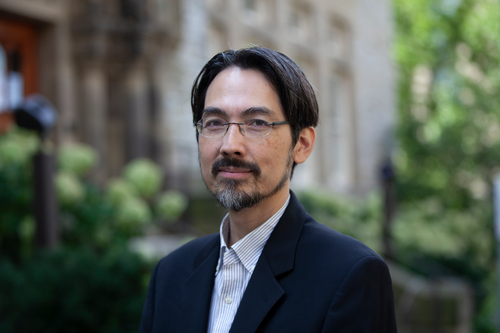
Photo of Phillip Lipscy
Phillip Lipscy is an associate professor of political science at the University of Toronto, the Chair in Japanese Politics and Global Affairs and the Director of the Centre for the Study of Global Japan at the Munk School of Global Affairs & Public Policy.  His research addresses substantive topics such as international cooperation, international organizations, the politics of energy and climate change, international relations of East Asia, and the politics of financial crises.  He has also published extensively on Japanese politics and foreign policy.  Lipscy's book from Cambridge University Press, Renegotiating the World Order: Institutional Change in International Relations, examines how countries seek greater international influence by reforming or creating international organizations.  Before arriving to the University of Toronto, Lipscy was assistant professor of political science and Thomas Rohlen Center Fellow at the Freeman Spogli Institute at Stanford University.  Lipscy obtained his Ph.D. in political science at Harvard University and received his M.A. in international policy studies and B.A. in economics and political science at Stanford University. 


Image
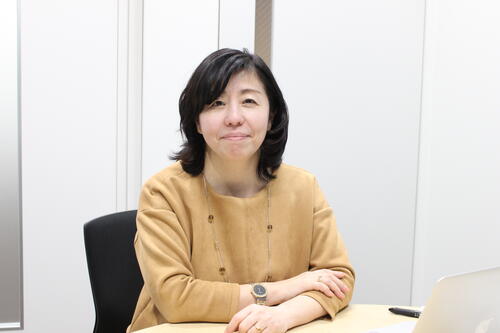
Photo of Mika Ohbayashi
Mika Ohbayashi is the Director at Renewable Energy Institute since its foundation in August 2011.  Before joining the Institute, she worked in Abu Dhabi for the International Renewable Energy Agency (IRENA) as Policy and Project Regional Manager for Asia Oceania. She is one of two founders of the Institute for Sustainable Energy Policies (ISEP) and served as Deputy Director for 8 years following its establishment in 2000. She also worked as Advisor for Climate Change Projects and Policies for UKFCO at the British Embassy to Japan. She started her career in the energy field by joining Citizens' Nuclear Information Center in 1992.  She was awarded the Global Leadership Award in Advancing Solar Energy Policy by the International Sola Energy Society (ISES) in 2017. 


Moderator

Image
Photo of Kiyo Tsutsui
Kiyoteru Tsutsui is the Henri H. and Tomoye Takahashi Professor, Professor of Sociology, Senior Fellow at the Freeman Spogli Institute for International Studies, and Deputy Director of the Walter H. Shorenstein Asia-Pacific Research Center, where he is also Director of the Japan Program. He is the author of Rights Make Might: Global Human Rights and Minority Social Movements in Japan (Oxford University Press, 2018), co-editor of Corporate Responsibility in a Globalizing World (Oxford University Press, 2016) and co-editor of The Courteous Power: Japan and Southeast Asia in the Indo-Pacific Era (University of Michigan Press, forthcoming 2021). 


Logo of Perfect Storm Fall webinar series


This event is part of the 2021 Fall webinar series, Perfect Storm: Climate Change in Asia, sponsored by the Walter H. Shorenstein Asia-Pacific Research Center.

Via Zoom Webinar
Register:  https://bit.ly/2YayEzo


Phillip Lipscy <br>Associate Professor of Political Science at the University of Toronto<br><br>
Mika Ohbayashi <br>Director of Renewable Energy Institute<br><br>
Kiyoteru Tsutsui <br>Director of the Japan Program and Professor of Sociology, Stanford University
Panel Discussions
-

This is a virtual event. Please click here to register and generate a link to the talk. 
The link will be unique to you; please save it and do not share with others.


In September 2020, President Xi Jinping declared that China would achieve carbon neutrality by 2060.  This climate pledge is widely considered the most ambitious of all made to date, especially since the world’s largest carbon-emitting nation is still at a developing stage and has not yet achieved its emissions peak.  With the 26th UN Climate Change Conference of the Parties (COP26) on the horizon, the world is eager to learn about any potential new pledges from the Chinese leadership.  This talk will provide an overview of climate governance under President Xi Jinping and draw on the presenter’s work on local implementation of air pollution policies in China to discuss potential lessons for its ongoing efforts to curb carbon emissions.


Image
Portrait of Shiran Victoria Shen
Shiran Victoria Shen’s research primarily examines the organizational causes of and responses to environmental crises, with particular understanding of how local politics shape air pollution and climate management in China.  Professor Shen graduated Phi Beta Kappa and with high honors from Swarthmore College and holds an M.S. in civil and environmental engineering and a Ph.D. in political science, both from Stanford University.


Image
Perfect Storm: Climate Change in Asia series promo image

This event is part of the 2021 Fall webinar series, Perfect Storm: Climate Change in Asia, sponsored by the Walter H. Shorenstein Asia-Pacific Research Center.


Via Zoom Webinar. Register at: https://bit.ly/2XtnSDE

Shiran Victoria Shen Assistant Professor of Environmental Politics at the University of Virginia and W. Glenn Campbell and Rita Ricardo-Campbell National Fellow at the Hoover Institution
Seminars
-

To watch the recording of the event, click here.

October 5, 4:00pm-5:15pm California time/ October 6, 8:00am-9:15am Korea time

This event is made possible by generous support from the Korea Foundation and other friends of the Korea Program.

This event is part of Shorenstein APARC's fall 2021 webinar series Perfect Storm: Climate Change in Asia.

In this webinar, a panel of climate change experts will discuss the challenges facing Korea and the country's mitigation efforts and policy responses.

Presenters:

Image
Portrait of Young Sook Yoo

Young Sook Yoo, former Minister of Environment in Korea
Dr. Yoo is currently board chair of Climate Change Center in Korea; an honorary research scientist at Korea Institute of Advanced Science and Technology; President of Korean Biofuel Forum; a member of the Korean Academy of Environment Science and National Academy of Engineering of Korea. She holds a PhD in biochemistry and biophysics from Oregon State University, and trained as a postdoctoral fellow at Stanford's School of Medicine.

Image
Portrait of Suh-Yong Chung

Suh-Yong Chung, Professor of International Studies at Korea University
Professor Chung is also director of Center for Global Climate and Marine Governance at Korea University; director of Center for Sustainable Development Law and Policy; a member of policy Advisory Board of Korea Forest Service; and the director of Center for UN Studies of UNA-Korea. He holds degrees in law and international relations from Seoul National University, London School of Economics and Stanford Law School.

Discussant:

Image
Portrait of So-Min Cheong

So-Min Cheong, Associate Professor of Geography & Atmospheric Science, University of Kansas
Professor Cheong's current research focuses on climate change adaptation and disaster management including oil spills, floods, extreme heats, and wildfires. She is a lead author of multiple IPCC (Intergovernmental Panel on Climate Change) reports including the Sixth Assessment Report. She received her PhD in geography, MAs in marine affairs and international studies from University of Washington.
 

Via Zoom. Register at https://bit.ly/3lt42Rh

Panel Discussions
-

Fall 2021 Webinar Series Kickoff with Mr. Ban Ki-moon and Prof. Nicole Ardoin

September 28, 5-6 p.m. California time/ September 29, 9-10 a.m. Korea time

This event is held virtually via Zoom. Registration required.


The Asia-Pacific region is the world’s most vulnerable region to climate change risks. With its densely populated low-lying territories and high dependence on natural resources and agriculture sectors, Asia is increasingly susceptible to the impacts of rising sea levels and weather extremes. The impacts of climate change encompass multiple socioeconomic systems across the region, from livability and workability to food systems, physical assets, infrastructure services, and natural capital.

The Shorenstein Asia-Pacific Research Center’s Fall 2021 webinar series, “Perfect Storm: Climate Change in Asia,” explores climate change impacts and risks in the region, adaptation and mitigation strategies, and policy responses.

Join us for the series kickoff event, featuring a keynote address by former UN Secretary-General and former South Korean Foreign Minister Ban Ki-moon, who is known for putting sustainable development and climate change at the top of the UN agenda, and a discussion with Stanford social ecologist Nicole Ardoin, a leading expert in environment, sustainability, and climate change education. Mr. Ban’s keynote will focus on COVID-19 and climate change.


Panelists 

Portrait of Mr. Ban Ki-moonMr. Ban Ki-moon, Chairman of Ban Ki-moon Foundation for a Better Future, 8th Secretary-General of the UN

Ban Ki-moon is a South Korean diplomat who was the 8th Secretary-General of the United Nations and a career diplomat in South Korea’s Ministry of Foreign Affairs and in the UN.

Mr. Ban’s current leadership roles include the Chairman of South Korea’s Presidential National Council on Climate and Air Quality; Chairman of Boao Forum for Asia; Co-Chair of the Ban Ki-moon Centre for Global Citizens, Vienna; Chairman of the International Olympic Committee’s Ethics Committee; Distinguished Chair Professor and Honorary Chairman at the Institute of Global Engagement and Empowerment at Yonsei University in Seoul, Korea; and President of the Assembly and Chair of the Council of Global Green Growth Institute.

Mr. Ban served two consecutive terms as the Secretary General of the UN (2007-2016). Throughout his tenure at the UN, he strove to be a bridge builder, to give voice to the world’s poorest and the most vulnerable people, and to make the organization more transparent and effective. He successfully pressed for action to combat climate change — an effort that culminated in the adoption and rapid entry into the landmark Paris Agreement in 2016. Mr. Ban worked closely with member states of the UN to shape the 2030 Agenda for Sustainable Development and to establish UN Women, which has been advancing the organization’s work for gender equality and women’s empowerment. He also launched major efforts to strengthen UN peace operations, to protect human rights, to improve humanitarian response, and to prevent violent extremism and to revitalize the disarmament agenda.

At the time of his appointment at the UN, Mr. Ban was the Minister of Foreign Affairs and Trade of the Republic of Korea. His 37 years with the Ministry included postings in New Delhi, Washington D.C., and Vienna, and responsibilities for a variety of portfolios, including Foreign Policy Adviser to the President, Chief National Security Adviser to the President, Vice Minister, Deputy Minister for Policy Planning and Director-General for American Affairs. Mr. Ban has also been actively involved in issues relating to inter-Korean relations by serving as Chairman of the Preparatory Commission for the Comprehensive Nuclear Test Ban Treaty Organization.

Mr. Ban earned a master’s degree in public administration from the John F. Kennedy School of Government at Harvard University in 1985 and a bachelor’s degree in international relations from Seoul National University in 1970.
 

Image
Portrait of Nicole Ardoin
Nicole Ardoin, Emmett Family Faculty Scholar, is the Sykes Family Director of the Emmett Interdisciplinary Program in Environment and Resources (E-IPER) in the School of Earth, Energy, and Environmental Sciences at Stanford University. She is a senior fellow with the Stanford Woods Institute for the Environment and an associate professor in the Graduate School of Education.

Founder of the Stanford Social Ecology Lab, Professor Ardoin is an interdisciplinary social scientist who researches individual and collective environmental behavior as influenced by environmental learning and motivated by place-based connections. Professor Ardoin and members of her lab pursue their scholarship with a theoretical grounding and orientation focused on applications for practice. They often work in collaboration with community partners, including public, private, and social sector organizations at a range of scales, to co-design and implement studies that build on a theoretical frame while concurrently addressing questions of interest to the partners. This work occurs primarily in informal settings, such as parks and protected areas, nature-based tourism locales, community gathering spaces, and other everyday-life settings.

Interested in actionable knowledge and notions of co-production, Professor Ardoin and her group collaborate with sustainability, environmental conservation, and philanthropic organizations to study the design, implementation, and effectiveness of a range of social-ecological practices. Through reflective learning, curiosity, and humility, the Social Ecology Lab strives to bring theoretically based insights to sustainability opportunities and challenges.

Professor Ardoin is an associate editor of the journal Environmental Education Research, a trustee of the George B. Storer Foundation, chair of NatureBridge's Education Advisory Council, an advisor to the Student Conservation Association and Teton Science Schools, among other areas of service to the field.


Moderator

Image
Photo of Gi-Wook Shin
Gi-Wook Shin, Director of APARC and the Korea Program

Gi-Wook Shin is the director of the Walter H. Shorenstein Asia-Pacific Research Center; the William J. Perry Professor of Contemporary Korea; the founding director of the Korea Program; a senior fellow of the Freeman Spogli Institute for International Studies; and a professor of sociology, all at Stanford University. As a historical-comparative and political sociologist, his research has concentrated on social movements, nationalism, development, and international relations.

Via Zoom Webinar
Register:  https://bit.ly/3ndgszc


Mr. Ban Ki-moon <br>Chairman of Ban Ki-moon Foundation for a Better Future; 8th Secretary-General of the UN<br><br>
Nicole Ardoin <br>Emmett Family Faculty Scholar and Sykes Family Director of E-IPER, School of Earth, Energy & Environmental Sciences; Associate Professor, Graduate School of Education; Senior Fellow, Woods Institute for the Environment; Stanford University<br><br>
Gi-Wook Shin <br>Director of APARC and the Korea Program
Panel Discussions
Authors
News Type
News
Date
Paragraphs

Most of America’s 107,000 gas stations can fill several cars every five or 10 minutes at multiple pumps. Not so for electric vehicle chargers – at least not yet. Today the U.S. has around 43,000 public EV charging stations, with about 106,000 outlets. Each outlet can charge only one vehicle at a time, and even fast-charging outlets take an hour to provide 180-240 miles’ worth of charge; most take much longer.

Read the rest at The Conversation

Hero Image
Map of the U.S. with dots representing electric vehicle charging station
Charging stations as of August 2021. Darker areas are clusters of many charging stations, primarily in large cities.
Department of Energy
All News button
1
Subtitle

A map of electric vehicle chargers shows one reason why. Most of America’s 107,000 gas stations can fill several cars every five or 10 minutes at multiple pumps. Not so for electric vehicle chargers – at least not yet.

Authors
News Type
News
Date
Hero Image
Orange smokey skies over San Francisco
All News button
1
Subtitle

Smoke from wildfires may have contributed to thousands of additional premature births in California between 2007 and 2012. The findings underscore the value of reducing the risk of big, extreme wildfires and suggest pregnant people should avoid very smoky air.

All Publications button
1
Publication Type
Journal Articles
Publication Date
Subtitle
Quantification of the sector-specific financial impacts of historical global warming represents a critical gap in climate change impacts assessment. The multiple decades of county-level data available from the U.S. crop insurance program – which collectively represent aggregate damages to the agricultural sector largely borne by U.S. taxpayers – present a unique opportunity to close this gap. Using econometric analysis in combination with observed and simulated changes in county-level temperature, we show that global warming has already contributed substantially to rising crop insurance losses in the U.S. For example, we estimate that county-level temperature trends have contributed $US2017 23.9 billion – or 17% – of the national-level crop insurance losses over the 1991-2017 period. Further, we estimate that observed warming contributed approximately one third of total losses in the most costly single year (2012). In addition, analyses of a large suite of global climate model simulations yield very high confidence that anthropogenic climate forcing has increased U.S. crop insurance losses. These sector-specific estimates provide important quantitative information about the financial costs of the global warming that has already occurred (including the costs of individual extreme events), as well as the economic value of mitigation and/or adaptation options.
Journal Publisher
Environmental Research Letters
Authors
Subscribe to Climate change