Climate change
-

About the Speaker: Kaitlin Shilling has spent most of her career working in the non-governmental sector in post-crisis development. At Stanford, she now researches post-crisis reconstruction with a focus on incorporating natural resource management into program design. Before beginning her PhD at Stanford, Shilling spent over a year and a half working for DAI, a development consulting company, on two USAID-funded projects in Jalalabad, Afghanistan. She began as the Director of Finance and Operations for the Afghanistan Immediate Needs Project, and then moved to the Alternative Livelihoods Project to run the Gender and Micro-Enterprise Department. Her work on both of these projects involved collaborating with other NGOs, donors, and UN agencies working in the region. Before moving to Afghanistan, Shilling worked in the home office of DAI for almost two years in the Crisis Mitigation and Recovery Group. As part of the Crisis Mitigation and Recovery Group, she worked on projects in Indonesia, East Timor, and Liberia.

Before moving to Afghanistan, Ms. Shilling worked in the home office of DAI for almost two years in the Crisis Mitigation and Recovery Group at DAI. Ms. Shilling's work included projects in Indonesia, East Timor, and Liberia, in addition to writing proposals to win new business. While at Stanford, Kaitlin will pursue research relating to post-crisis reconstruction with a focus on incorporating natural resource management into program design

Reuben W. Hills Conference Room

Energy and Environment Building - 4205
473 Via Ortega
Stanford University
Stanford, CA 94305

0
Graduate student

Kaitlin Shilling has spent most of her career working in the non-governmental sector, and specifically in post-crisis development, which she is now studying in more depth at Stanford University. Just prior to returning to the ivory tower, Ms. Shilling spent over a year and a half working for DAI, a development consulting company, on two USAID-funded projects in Jalalabad, Afghanistan. She began as the Director of Finance and Operations for the Afghanistan Immediate Needs Project, and then moved to the Alternative Livelihoods Project to run the Gender and Micro-Enterprise Department. Her work on both of these projects involved collaborating with other NGOs, donors, and UN agencies working in the region.

Before moving to Afghanistan, Ms. Shilling worked in the home office of DAI for almost two years in the Crisis Mitigation and Recovery Group at DAI. Ms. Shilling's work included projects in Indonesia, East Timor, and Liberia, in addition to writing proposals to win new business. While at Stanford, Kaitlin will pursue research relating to post-crisis reconstruction with a focus on incorporating natural resource management into program design.

Kaitlin Shilling PhD Student, School of Earth Sciences, Stanford University Keynote Speaker
Katherine D. Marvel (DISCUSSANT) Perry Fellow, CISAC Commentator
Seminars
Authors
News Type
News
Date
Paragraphs

February 10th marked the launch of the Program on Food Security and the Environment's Global Food Policy and Food Security Symposium Series. Setting the stage for the two-year series were Jeff Raikes, CEO of the Bill & Melinda Gates Foundation, and Greg Page, CEO and Chairman of Cargill Inc. As CEOs from the largest foundation and the largest agricultural firm in the world they provided important perspectives on global food security in these particularly volatile times. Full video and clips of the event are now available - Improving Food Security in the 21st Century: What are the Roles for Firms and Foundations.

Jeff Raikes: A Perspective from the Bill & Melinda Gates Foundation

Catalytic philanthropy

The Gates Foundation, through its Agricultural Development Initiative, has been a leader in addressing global food security issues. The Foundation allocates 25% of its resources to global development and to addressing the needs of the 1 billion people who live in extreme poverty ($1/day). 70-75% of those people live in rural areas and are dependent on subsistence agriculture for their livelihoods.

The Gates Foundation is driven by the principle: how can it invest its resources in ways that can leverage performance and address market failures? Its approach embodies a novel concept driven by both private sector motives and public responsibilities. Raikes describes this as catalytic philanthropy.

"The Foundation identifies where its investments can create an innovation, a new intervention that can really raise the quality of lives for people," said Raikes. "If successful, it can be scaled up and sustained by the private sector if we can show that there is a profit opportunity or the public sector if we can show that this is a better way to improve the overall quality of society through investment in public dollars."

Image

Photo credit: Michael Prince

In the realm of agriculture, allocating resources across the agricultural value chain has proven to be the most effective approach. As an example of this strategy, Raikes talked about a farmer-owned, Gates-supported dairy chilling plant in Kenya. The cooling facility provided the storage necessary to provide a predictable price at which to sell farmers' milk. This price knowledge and market access gave farmers the confidence to invest in better technology and better dairy cattle. The plant also provided artificial insemination services and extension services to teach farmers how to get greater amounts of milk from the cattle.

"I love the concept. I also love the numbers," said Raikes. "In just two or three years there were now 3,000 farmers in a 25 kilometer radius that were able to access this dairy chilling plant and able to sell their milk."

In addition to improving incomes, Raikes remarked that very consistently what he hears is when farmers are able to improve their incomes the first thing they do with the money is invest in the education of their children.

Upcoming challenges to food security

During the next 40 years or so, global food production must double to accommodate a growing and richer population. Climate change and water scarcity contribute to this challenge. The places that will suffer the most severe weather are also the places where the poorest farmers live. 95% of sub-Saharan agriculture is rain fed with very little irrigation.

"If we are going to be able to feed the world we are going to have to figure out how to achieve more crop per drop," cautioned Raikes. "This includes trying to breed crop varieties that will better withstand water shortages. Early results show that you can get as much as a 20% increase in yield or more under stressed conditions when you have varieties that are bred for that need."

These challenges are compounded by the current economic crisis that is putting pressure on budgets in both donor and developing countries. In 2009, the G20 committed 22 billion dollars to agricultural development in recognition of the importance of agricultural development to food security. However, of the 22 billion promised, 224 million dollars went to five countries in the first round of grants in June. By November, when 21 additional countries submitted their proposals, just 97 million dollars were available to be dispersed and 17 countries were turned away empty handed.

High- and low-tech solutions

In an effort to alleviate some of this deficit, the Gates Foundation has committed 300 million dollars in six grants that span the value chain. These include investments in science and technology, farm management practices, farmer productivity, and market access as well as the data and policy environment to support the Foundation's work. The grants are intended to support about 5 ½ million farm families in sub-Saharan Africa and South Asia.

"We believe innovative solutions can come from both high-tech and low-tech," said Raikes. "On the high-tech end, submergent genes are allowing rice crops to survive periods of flooding up to 15 days. In areas of rice farming prone to flooding, this can save entire crops traditionally wiped out by such weather disasters."

Image
Photo credit IRRI/Ariel Javellana

The sub1gene seeds are now being used by 400,000 farmers and are on track to be used by 20 million rice farmers by 2017. On the low-tech end, the Gates Foundation is providing $2 triple layer bags to farmers to reduce crop loss from pests; an affordable solution that has increased average income per farmer by $150/year.

"We primarily support conventional breeding, but we also support biotechnology breeding. In some cases we think that breeders in Africa and South Asia will want to take advantage of the modern tools we use here in our country to provide better choices for their farmers," explained Raikes.

Reasons for optimism

After years of diminished support, US Agricultural Development assistance to sub-Saharan Africa has gone from about 650 million in 2005 to about 1.5 billion in 2009. In developing countries, the Comprehensive Agricultural Development Program (CADP) in Africa has challenged countries to dedicate 10% of their national budgets to agriculture with the goal of improving annual agricultural growth by 6%. 20 countries have signed on to the CADP compacts, and 10 countries are exceeding the 6% growth target. Finally, since 1990, 1.3 billion people worldwide have lifted themselves out of poverty primarily through improvements in agricultural productivity.

Raikes pointed to Ghana as a success story. Since 1990, casaba production, an important staple food for poor smallholder farmers, has increased fivefold. Tomato production increased six fold. The cocoa sector has been revived and hunger has been cut by 75%.

"The key to success in Ghana was a combination of getting the right developing country policy with the right macroeconomic reform, the right institutional reform, smart public investment, and an overall good policy environment," said Raikes.

Supporting good policy is an important part of the Foundation's food security strategy, and was a strong motivation behind its funding of FSE's Global Food Policy and Food Security Symposium series.

"We see this symposium series as an opportunity to gather policy leaders who will bring new ideas of what will be effective policy approaches and effective economic environments in the countries we care a lot about, in particular sub-Saharan Africa and South Asia," said Raikes.

Raikes concluded his remarks by reminding everyone that the key to improving food security globally is making sure women, who make up at least 70% of the farm labor population, are included in the equation.

Greg Page: Balancing the race to caloric sufficiency with rural sociology

As the largest global agricultural firm, Cargill has an influential role to play in the world of food and agriculture. Cargill is a major supplier of food and crops and a provider of farmer services, inputs, and market access.

Image
Photo credit: Olaf Hammelburg

Together with the Gates Foundation, Cargill has reached out and trained 200,000 cocoa farmers in the Ivory Coast, Ghana, and Cameroon. One tribe and one small village at a time the company has helped improve food safety, quality maintenance, and storage; benefiting the farmers, Cargill, and customers further down the supply chain. Cargill has also assisted, through financing and product purchasing, 265,000 farmers in Benin, Burkina Faso, the Ivory Coast, Malawi, Uganda, Zambia, and Zimbabwe.

Can the world feed itself?

A billion people lack sufficient caloric intake on a daily basis. In sub-Saharan Africa, 38% of all children are chronically malnourished, largely the result of inadequate agricultural productivity. While nine of the ten countries that have the highest prevalence of malnourishment are in sub-Saharan Africa, the two countries with the largest absolute number of malnourished people are India and China.

"This points to the difficulty of this problem," said Page. "India exports corn and soybean protein and China has 2.5 trillion dollars of hard currency reserves. These issues aren't necessarily of ability to feed people, but a willingness and commitment to do so."

Can the world feed itself? Yes, said Page.

When you break down the number of calories needed per malnourished person per day and convert that to tons of whole grains required to extinguish that hunger you get 30 million tons; 1/6 the amount of grain we converted to fuel globally last year. In the U.S. alone, 40% of our corn goes to ethanol.

"It isn't an issue of caloric famine-it is an issue of economic famine," stated Page. "In other words, this is not a food supply problem, but rather the lack of purchasing power to pay for a diet. An adequate price must be assured to reward the farmer for his efforts and to provide enough money that she can do it again the following year."

Rural sociology premium

What we face is the need to keep smallholders on the farm-despite the fact that they may not be the low-cost producer of foodstuffs-in order to avoid a rural population migration that would be unsustainable. As a result, the challenge the world faces is who is going to pay that rural sociology premium? If it costs more to raise crops on small farms is that burden going to be borne by the urban poor or is there going to be an alternative funding mechanism that allows smallholders to succeed?

Image
Photo credit: Cargill

What is the survival price for a smallholder farmer? Page explained that if you wanted a family of four on a farm in sub-Saharan Africa to receive an income commensurate with the average per capita income of the urban population, you would come up with a price near $400 a ton.

"To put this in context, the highest price for maize that has ever been reached here in the United States is about $275 a ton," said Page. "This rural sociology premium to sustain smallholders is not an insignificant amount of money. How do we achieve fairness between the revenue received by the rural smallholder and the price borne by the urban consumer?"

State of disequilibrium - complacency to crisis

Today we are experiencing incredible price volatility where commodity prices are in a continuous state of disequilibrium. Very small changes in production have outsized impacts on price. This is in contrast to the last two and a half decades when the world operated with fairly robust stocks due to crop subsidies in the United States and Western Europe.

"This period of subsidization was when the western world probably did more harm to sub-Saharan Africa and South Asia than any other period in history," said Page. "We refused to allow price to signal to western farmers to produce less. As a result, the world price of grains fell far below the ability of any smallholder to compete. We then shipped those surpluses to developing countries, which then failed to invest in their agriculture for decades."

Today we are lurching from complacency to crisis. The ability of information and market speculation to be transmitted rapidly is affecting purchasing decisions of thousands to millions of consumers. Rising fuel prices, export restrictions, increasing demand for crops for biofuels, and unpredictable weather have all contributed to higher prices. Some of the drivers of price, however, are good things, such as the increase in per capita income and the capacity of more people to have a more dense and nutritious diet.

"Interestingly, the upside of the ethanol and biofuels program is that it brought prices back to a sufficiency that reinvigorated investment in agriculture," noted Page. "On one level I think a very good argument could be made that the biofuels program brought the world further from famine than it ever had been because of the price."

Critical food security factors

Page concluded by summarizing the elements that Cargill believes are critically important to increase food security. The first is the ability to understand the tradeoffs between a fast path to caloric sufficiency and the needs of rural sociology. Second, that crops be grown in the right soil, with the right technology, and relying on free trade so we can harvest competitive advantage to its fullest.

Another critical factor is rural property rights. Smallholders must have the ability to own the land, have access to it, and transfer it to future generations if you want a farmer to reinvest in his farm, said Page.

"Smallholders in developing countries need some degree of revenue certainty and access to a reliable market if we expect them to do what their countries really need them to do, which is raise productivity," explained Page. "Today they are often forced to sell at harvest, often below the cost of production, and lack the storage capabilities and capital to provide crops sufficiently and continuously."

Open, trust-based markets also play a key role in ensuring food security. Governments need to support trade. When Russia, Ukraine, and Argentina turned to embargos as a way to protect domestic food prices open markets were jeopardized and price volatility increased. Finally, there are very important roles for the world's governments in the creation of infrastructure that is vital to provide access to markets.

"I believe fully and completely in the world's capacity to harvest photosynthesis to feed every single person and to do it at prices that can be borne by all," concluded Page.

Hero Image
rtr3ylwf
All News button
1
Authors
News Type
News
Date
Paragraphs
"Food's Footprint: Agriculture and Climate Change" presentation by Jennifer Burney, a President's Postdoctoral Fellow at the Scripps Institution of Oceanography, University of California, San Diego, and an affiliate of the Stanford University Program on Food Security and the Environment. Burney studies how two of the largest problems facing society — hunger and climate change — are intertwined.

All News button
1
-

Food security links health, development, national security and the environment in unique and important ways. This Food Security Salon focused on presenting research solutions to global issues of food security, hunger, and environmental degradation from agricultural practices. Stanford faculty discussed their work on how global food supplies and human health are affected by climate change, agricultural intensification and world markets.

The Jerry Yang and Akiko Yamazaki
Environment and Energy Building
Stanford University
473 Via Ortega, Office 363
Stanford, CA 94305

(650) 723-5697 (650) 725-1992
0
Senior Fellow, Stanford Woods Institute and Freeman Spogli Institute for International Studies
William Wrigley Professor of Earth System Science
Senior Fellow and Founding Director, Center on Food Security and the Environment
Roz_low_res_9_11_cropped.jpg PhD

Rosamond Naylor is the William Wrigley Professor in Earth System Science, a Senior Fellow at Stanford Woods Institute and the Freeman Spogli Institute for International Studies, the founding Director at the Center on Food Security and the Environment, and Professor of Economics (by courtesy) at Stanford University. She received her B.A. in Economics and Environmental Studies from the University of Colorado, her M.Sc. in Economics from the London School of Economics, and her Ph.D. in applied economics from Stanford University. Her research focuses on policies and practices to improve global food security and protect the environment on land and at sea. She works with her students in many locations around the world. She has been involved in many field-level research projects around the world and has published widely on issues related to intensive crop production, aquaculture and livestock systems, biofuels, climate change, food price volatility, and food policy analysis. In addition to her many peer-reviewed papers, Naylor has published two books on her work: The Evolving Sphere of Food Security (Naylor, ed., 2014), and The Tropical Oil Crops Revolution: Food, Farmers, Fuels, and Forests (Byerlee, Falcon, and Naylor, 2017).

She is a Fellow of the Ecological Society of America, a Pew Marine Fellow, a Leopold Leadership Fellow, a Fellow of the Beijer Institute for Ecological Economics, a member of Sigma Xi, and the co-Chair of the Blue Food Assessment. Naylor serves as the President of the Board of Directors for Aspen Global Change Institute, is a member of the Scientific Advisory Committee for Oceana and is a member of the Forest Advisory Panel for Cargill. At Stanford, Naylor teaches courses on the World Food Economy, Human-Environment Interactions, and Food and Security. 

CV
Rosamond L. Naylor Speaker

Energy and Environment Building
473 Via Ortega
Stanford CA 94305

(650) 721-6207
0
Professor, Earth System Science
Senior Fellow at the Freeman Spogli Institute for International Studies
Senior Fellow at the Stanford Woods Institute for the Environment
Senior Fellow at the Stanford Institute for Economic Policy Research (SIEPR)
Affiliate, Precourt Institute of Energy
shg_ff1a1284.jpg PhD

David Lobell is the Benjamin M. Page Professor at Stanford University in the Department of Earth System Science and the Gloria and Richard Kushel Director of the Center on Food Security and the Environment. He is also the William Wrigley Senior Fellow at the Stanford Woods Institute for the Environment, and a senior fellow at the Freeman Spogli Institute for International Studies (FSI) and the Stanford Institute for Economic Policy and Research (SIEPR).

Lobell's research focuses on agriculture and food security, specifically on generating and using unique datasets to study rural areas throughout the world. His early research focused on climate change risks and adaptations in cropping systems, and he served on the Intergovernmental Panel on Climate Change (IPCC) Fifth Assessment Report as lead author for the food chapter and core writing team member for the Summary for Policymakers. More recent work has developed new techniques to measure progress on sustainable development goals and study the impacts of climate-smart practices in agriculture. His work has been recognized with various awards, including the Macelwane Medal from the American Geophysical Union (2010), a Macarthur Fellowship (2013), the National Academy of Sciences Prize in Food and Agriculture Sciences (2022) and election to the National Academy of Sciences (2023).

Prior to his Stanford appointment, Lobell was a Lawrence Post-doctoral Fellow at Lawrence Livermore National Laboratory. He holds a PhD in Geological and Environmental Sciences from Stanford University and a Sc.B. in Applied Mathematics from Brown University.

CV
Date Label
David Lobell Speaker
Walter P. Falcon Speaker
Conferences

Image
This two-day international forum at Stanford University brought together experts from academia, government, and industry to analyze leading cases of current institutional models for innovation in smart and green industries. Cases included multi-company collaborations, public-private partnerships, and government-funded consortia. To enable more focus and comparative analysis, sectors selected for focus included the built environment and intelligent transportation.

FORUM Speakers & DISCUSSANTS (listed in alphabetical order)

  • Rohit T. Aggarwala, Special Advisor to the Chair, C40 Cities Climate Leadership Group
  • Alan Beebe, Managing Director, China Greentech Initiative
  • Sven Beiker, Executive Director, Center for Automotive Research at Stanford (CARS)
  • Ann Bordetsky, North America Market Development, Better Place
  • Dennis Bracy, cEO, US-China Clean Energy Forum
  • Curtis R. Carlson, President and CEO, SRI International
  • Jaching Chou, Senior Transportation Analyst, Institute of Transportation
  • Stephen J. Eglash, Executive Director, Energy and Environment Affiliates Program, Stanford University
  • Henry Etzkowitz, President of Triple Helix Association; Senior Researcher, Human Sciences and Technology Advanced Research Institute (H-STAR), Stanford University; Visiting Professor at University of Edinburgh Business School
  • Gordon Feller, Director of Urban Innovation, Cisco Systems
  • TJ Glauthier, President, TJG Energy Associates, LLC
  • Russell Hancock, President & Chief Executive Officer, Joint Venture: Silicon Valley Network
  • Ted Howes, Business for Social Responsibility
  • Asim Hussain, Director of Product Marketing, Bloom Energy
  • Paul Chao-Chia Huang, Deputy General Director, Service Systems Technology Center, Industrial Technology Research Institute, Taiwan
  • Kristina M. Johnson, Former Under Secretary of Energy, U.S. Department of Energy
  • Jeffrey Heller, President, Heller Manus Architects
  • Allan King, Senior Manager, Institute for Information Industry, Taiwan
  • Michael Marlaire, Director, NASA Research Park
  • David Nieh, General Manager, Shui On Land Limited
  • Jon Sandelin, Senior Associate Emeritus, Office of Technology and Licensing, Stanford University
  • Gerald Sanders, CEO & Chairman, SkyTran
  • Tim Schweikert, President & CEO, China Region for GE Technology Infrastructure, GE
  • Jonathan Thorpe, Senior Vice President, Gale International
  • Kung Wang, Professor, China University of Technology
  • Sean Wang, President, ITRI International Inc.
  • Jonathan Woetzel, Director, McKinsey & Co; Co-Chair, Urban China Initiative

Questions for presentations and discussion included:

  • What roles are public-private partnerships and other forms of collaboration playing to advance innovations in smart green industries, such as in the built environment or intelligent transportation?
  • What innovations - not only in technologies and products but also in processes, models and platforms - are leading the way?
  • What results are emerging from living labs, leading cities, or other outstanding examples of public-private partnerships around the world?
  • How do results stack up against economic, energy and social metrics, e.g. economic productivity, quality of life, energy impact, financial payback, user response, etc.?
  • What are implications for business strategies?
  • What government policies are effectively nurturing advancement in these areas?

Outcomes will include policy recommendations as well as highlights to be included in a book published by SPRIE at Stanford.

Workshops
Authors
David Lobell
News Type
News
Date
Paragraphs
A team led by FSE fellow David Lobell has found a valuable, untapped resource in historical data from crop yield trials conducted across sub-Saharan Africa. Combined with weather records, they show that yield losses would occur across 65 percent of maize-growing areas from a temperature rise of a single degree Celsius, even with sufficient water. Data from yield tests in other regions of the world could help predict changes in crop yields from climate change.

A hidden trove of historical crop yield data from Africa shows that corn - long believed to tolerate hot temperatures - is a likely victim of global warming.

Stanford agricultural scientist David Lobell and researchers at the International Maize and Wheat Improvement Center (CIMMYT) report in the inaugural issue of Nature Climate Change next week that a clear negative effect of warming on maize - or corn - production was evident in experimental crop trial data conducted in Africa by the organization and its partners from 1999 to 2007.

Led by Lobell, the researchers combined data from 20,000 trials in sub-Saharan Africa with weather data recorded at stations scattered across the region. They found that a temperature rise of a single degree Celsius would cause yield losses for 65 percent of the present maize-growing region in Africa - provided the crops received the optimal amount of rainfall. Under drought conditions, the entire maize-growing region would suffer yield losses, with more than 75 percent of areas predicted to decline by at least 20 percent for 1 degree Celsius of warming.

"The pronounced effect of heat on maize was surprising because we assumed maize to be among the more heat-tolerant crops," said Marianne Banziger, co-author of the study and deputy director general for research at CIMMYT."

"Essentially, the longer a maize crop is exposed to temperatures above 30 C, or 86 F, the more the yield declines," she said. "The effect is even larger if drought and heat come together, which is expected to happen more frequently with climate change in Africa, Asia or Central America, and will pose an added challenge to meeting the increasing demand for staple crops on our planet."

Similar sources of information elsewhere in the developing world could improve crop forecasting for other vast regions where data has been lacking, according to Lobell, who is lead author of the paper describing the study.

"Projections of climate change impacts on food production have been hampered by not knowing exactly how crops fair when it gets hot," Lobell said. "This study helps to clear that issue up, at least for one important crop."

While the crop trials have been run for many years throughout Africa, to identify promising varieties for release to farmers, nobody had previously examined the weather at the trial sites and studied the effect of weather on the yields, said Lobell, who is an assistant professor of environmental earth system science and fellow at Stanford's Program on Food Security and the Environment.

"These trials were organized for completely different purposes than studying the effect of climate change on the crops," he said. "They had a much shorter term goal, which was to get the overall best-performing strains into the hands of farmers growing maize under a broad range of conditions."

The data recorded at the yield testing sites did not include weather information. Instead, the researchers used data gathered from weather stations all over sub-Saharan Africa. Although the stations were operated by different organizations, all data collection was organized by the World Meteorological Organization, so the methods used were consistent.

Lobell then took the available weather data and interpolated between recording stations to infer what the weather would have been like at the test sites. By merging the weather and crop data, the researchers could examine climate impacts.

"It was like sending two friends on a blind date - we weren't sure how it would go, but they really hit it off," Lobell said.

Previously, most research on climate change impacts on agriculture has had to rely on crop data from studies in the temperate regions of North America and Europe, which has been a problem.

"When you take a model that has been developed with data from one kind of environment, such as a temperate climate, and apply it to the rest of the world, there are lots of things that can go wrong" Lobell said, noting that much of the developing world lies in tropical or subtropical climates.

But he said many of the larger countries in the developing world, such as India, China and Brazil, which encompass a wide range of climates, are running yield testing programs that could be a source of comparable data. Private agribusiness companies are also increasingly doing crop testing in the tropics.

"We're hoping that with this clear demonstration of the value of this kind of data for assessing climate impacts on crops that others will either share or take a closer look themselves at their data for various crops," Lobell said.

"I think we may just be scratching the surface of what can be achieved by combining existing knowledge and data from the climate and agriculture communities. Hopefully this will help catalyze some more effort in this area."

Lobell is a Center Fellow at the Program on Food Security and the Environment, a joint program of Stanford's Woods Institute for the Environment and Freeman Spogli Institute for International Studies.

The work was funded by the Rockefeller Foundation

All News button
1
Paragraphs

New approaches are needed to accelerate understanding of climate impacts on crop yields, particularly in tropical regions. Past studies have relied mainly on crop-simulation models, or statistical analyses based on reported harvest data, each with considerable uncertainties and limited applicability to tropical systems. However, a wealth of historical crop-trial data exists in the tropics that has been previously untapped for climate research. Using a data set of more than 20,000 historical maize trials in Africa, combined with daily weather data, we show a nonlinear relationship between warming and yields. Each degree day spent above 30 °C reduced the final yield by 1% under optimal rain-fed conditions, and by 1.7% under drought conditions. These results are consistent with studies of temperate maize germplasm in other regions, and indicate the key role of moisture in maize's ability to cope with heat. Roughly 65% of present maize-growing areas in Africa would experience yield losses for 1 °C of warming under optimal rain-fed management, with 100% of areas harmed by warming under drought conditions. The results indicate that data generated by international networks of crop experimenters represent a potential boon to research aimed at quantifying climate impacts and prioritizing adaptation responses, especially in regions such as Africa that are typically thought to be data-poor.

All Publications button
1
Publication Type
Journal Articles
Publication Date
Journal Publisher
Nature Climate Change
Authors
David Lobell
Authors
News Type
News
Date
Paragraphs

In an effort to foster a more open, transparent and accessible scientific dialogue, we've started a new effort aimed at inspiring pioneering use of technology, new media and computational thinking in the communication of science to diverse audiences. Initially, we'll focus on communicating the science on climate change.

We're kicking off this effort by naming 21 Google Science Communications Fellows. These fellows were elected from a pool of applicants of early to mid-career Ph.D. scientists nominated by leaders in climate change research and science-based institutions across the U.S. It was hard to choose just 21 fellows from such an impressive pool of scientists; ultimately, we chose scientists who had the strongest potential to become excellent communicators. That meant previous training in science communication; research in topics related to understanding or managing climate change; and experience experimenting with innovative approaches or technology tools for science communication.

This year's fellows are an impressive bunch:

  • Brendan Bohannan, Associate Professor of Environmental Studies and Biology, University of Oregon
  • Edward Brook, Professor, Department of Geosciences, Oregon State University
  • Julia Cole, Professor, Department of Geosciences, University of Arizona
  • Eugene Cordero, Associate Professor, Meteorology and Climate Science, San Jose University
  • Frank Davis, Professor, Landscape Ecology & Conservation Planning, University of California-Santa Barbara
  • Andrew Dessler, Professor, Atmospheric Sciences, Texas A&M University
  • Noah Diffenbaugh, Assistant Professor, Environmental Earth System Science, Stanford University
  • Simon Donner, Assistant Professor, University of British Columbia
  • Nicole Heller, Research Scientist, Climate Central
  • Brian Helmuth, Professor, Biological Sciences, University South Carolina
  • Paul Higgins, Associate Director, Policy Program, American Meteorological Society
  • Jonathan Koomey, Consulting Professor, Civil and Environmental Engineering, Stanford University
  • David Lea, Professor, Earth Science, University of California-Santa Barbara
  • Kelly Levin, Senior Research Associate, World Resources Institute
  • David Lobell, Assistant Professor, Environmental Earth System Science, Stanford University
  • Edwin Maurer, Associate Professor, Civil Engineering, Santa Clara University
  • Susanne Moser, Research Associate, Institute of Marine Sciences, University of California-Santa Cruz
  • Matthew Nisbet, Associate Professor, School of Communication, American University
  • Rebecca Shaw, Director of Conservation, The Nature Conservancy, CA Chapter
  • Whendee Silver, Professor, Ecosystem Ecology and Biogeochemistry, University of California-Berkeley
  • Alan Townsend, Professor, Ecology and Evolutionary Biology, University of Colorado

At our Mountain View, Calif. headquarters in June, the fellows will participate in a workshop, which will integrate hands-on training and facilitated brainstorming on topics of technology and science communication. Following the workshop, fellows will be given the opportunity to apply for grants to put their ideas into practice. Those with the most impactful projects will be given the opportunity to join a Lindblad Expeditions & National Geographic trip to the Arctic, the Galapagos or Antarctica as a science communicator.

Congratulations to all of the fellows! And we'll keep you posted on more ideas and tools emerging for science communication.

All News button
1
News Type
News
Date
Paragraphs

A group of leading American and Japanese venture capitalists, entrepreneurs, academic experts, government officials, and leaders in business and related fields joined the "U.S. - Japan Dialogue to Promote Innovation, Entrepreneurship and Job Creation" symposium, organized by the Stanford Project on Japanese Entrepreneurship (STAJE), the largest U.S.-Japan event held at Stanford in many years, on February 23, 2011.

Representatives from both governments opened the event by underscoring the economic and strategic reasons for closer U.S.-Japan cooperation in promoting innovation and entrepreneurship. U.S. Ambassador to Japan John V. Roos emphasized how an economically vibrant Japan is critical to the security of the United States, and how it creates opportunities for U.S. trade, investment, and job creation. Moreover, innovation and collaboration are vital to addressing critical global issues, such as climate change. Under Secretary of State Robert D. Hormats noted how innovation and entrepreneurship, often involving young firms bringing new technology to market, are fundamental to ensuring sustainable growth and inclusive prosperity, both at home and across the globe. For Japan, Teruhiko Mashiko, a Ranking Member of the Diet's Committee on Economy and Industry and a former Senior Vice Minister of Economy, Trade, and Industry, highlighted the potential for greater employment, development of green technology, and the circulation of human and other resources through innovation and entrepreneurship.

Several speakers pointed to ways government and the private sector can foster the creation of entrepreneurial ventures with a global outlook. Professor William F. Miller, co-director of the Stanford Program on Regions of Innovation and Entrepreneurship (SPRIE), focused attention on the need to support the full entrepreneurial habitat—including an active angel investor and venture community, entrepreneurial education, passionate entrepreneurs, and business services (legal, consulting, financial) that understand the needs of start-up companies. Additionally, several speakers suggested that mid-career hiring by large Japanese firms and greater willingness on their part to grow by acquisition would increase labor mobility and expand opportunities for entrepreneurial ventures. They expressed concern that, at present, a public offering of shares is practically the only option for startup firms to exit the venture stage in Japan. Others highlighted how greater English-language proficiency and changes in immigration law could expand the linkages between Japan and the global community of entrepreneurs and venture capitalists.

Larry W. Sonsini, Chairman of Wilson Sonsini Goodrich & Rosati, reflected on the waves of innovation that Silicon Valley has generated, both in terms of new technologies coming to market as well as the maturing of technology already out. Defining Silicon Valley as a culture rather than a place, he outlined the ingredients in the recipe for its success: an entrepreneurial culture, with such features as mobility of talent, diversity, and acceptance of failure as a type of learning; ready access to capital; sources of technology and technologists, particularly from universities and large forward-looking corporations; government support; developed laws and accounting systems; availability of exit options for ventures; and an infrastructure of lawyers, accountants, bankers, and consultants. He also offered his thoughts on key trends that will influence the position and direction of emerging technology companies, including: globalization, regulatory changes, development of capital markets, education, and the rule of law.

In the closing remarks of the day-long symposium, Robert Eberhart, a SPRIE researcher and the leader of the SPRIE-STAJE project, summarized the three potential roles for governments to play in promoting innovation and entrepreneurship: to establish rules to ensure fair dealing and access to the market; to rewrite (i.e., reform) the rules of a market thereby ensuring firms will address it in new ways; and to stimulate demand for advanced technology by purchasing it for its own reasons, thereby creating new opportunities for entrepreneurial technology ventures.

Hero Image
DSC 3946
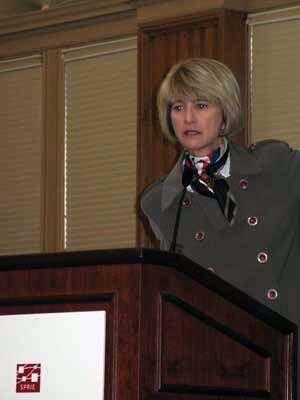
William F. Miller, SPRIE faculty co-director
All News button
1
Subscribe to Climate change