
Climate change
-

Effective water management is one key element of agricultural innovation and growth. This talk: outlines evolving and changing good global practices with respect to water management and agriculture; examines developments in both water and agriculture in Africa; and suggests avenues which might be explored in improving water management and increasing agricultural productivity in Africa.


Image

 is the Gordon McKay Professor of the Practice of Environmental Engineering and Environmental Health at Harvard University where he directs the Harvard Water Security Initiative. He teaches undergraduate and graduate courses on water management and development. In 2010 he was nominated for the Joseph R. Levenson Prize for exceptional teaching of Harvard undergraduates.

Briscoe's career has focused on the issues of water, other natural resources and economic development. He has worked as an engineer in the government water agencies of South Africa and Mozambique; as an epidemiologist at the Cholera Research Center in Bangladesh; and as a professor of water resources at the University of North Carolina. In his 20-year career at the World Bank, he held high-level technical positions, including Country Director for Brazil (the World Bank’s biggest borrower). Mr. Briscoe's role in shaping the governance and strategy of the World Bank is the subject of a chapter in the definitive recent history of the Bank, Sebastian Mallaby's The World's Banker (Penguin, 2006).
Image

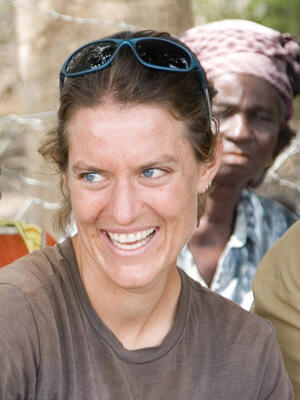
 is an Assistant Professor of Science, Technology, Engineering, and Policy in the School of International Relations and Pacific Studies at the University of California, San Diego. She is also an affiliate of Stanford University's Center on Food Security and the Environment (FSE), where she was previously a postdoctoral researcher. Jennifer is a physicist by training whose research focuses on simultaneously achieving global food security and mitigating climate change. She designs, implements, and evaluates technologies for poverty alleviation and agricultural adaptation, and she studies the links between energy poverty and food and nutrition security, the mechanisms by which energy services can help alleviate poverty, and the environmental impacts of food production and consumption. Much of Jennifer's current research focuses on the developing world.

Bechtel Conference Center

John Briscoe Gordon McKay Professor of the Practice of Environmental Engineering Speaker Harvard University
Jennifer Burney Assistant Professor of Science, Technology, Engineering, and Policy in the School of International Relations and Pacific Studies Commentator University of California, San Diego
Symposiums
News Type
Commentary
Date
Paragraphs

Commentary on Hans Binswanger-Mkhize's symposium on "India 1960-2010: Structural change, the rural non-farm sector and the prospects for agriculture". The symposium is part of a 2-year, 12-lecture series on Global Food Policy and Food Security.

Commentary on Hans Binswanger-Mkhize's symposium on "India 1960-2010: Structural change, the rural non-farm sector and the prospects for agriculture". The symposium is part of a 2-year, 12-lecture series on Global Food Policy and Food Security.

All News button
1

This project seeks to promote the collaboration between the Center for Latin American Studies and the Program on Human Rights in conducting an interdisciplinary faculty/graduate student research that seeks to better understand the human rights situation of indigenous peoples in Latin America.

Paragraphs

In Lewis Carroll's Through the Looking Glass, Alice finds herself running as fast as she can but not moving anywhere. The Red Queen explains to her 'Now, here, you see, it takes all the running you can do, to keep in the same place. If you want to get somewhere else, you must run at least twice as fast as that.'

Such is the situation in global agriculture. Global demand for agricultural products continues to rise as population grows and people get richer. As they get richer, people have fewer babies but eat more. And they use a lot more energy, which is increasingly derived from agricultural products. Crop technologies have to move incredibly fast just to keep up. Remarkably, over the past 50 years they have, with yields (production per hectare of land) for most crops more than doubling since 1960, and real prices of food falling for most of the period. In many ways we have come to take continued yield growth for granted. But, as Lin and Huybers show elsewhere in this issue, there is increasing evidence that this growth has stalled in many regions.

Click here to read the full perspective.

All Publications button
1
Publication Type
Journal Articles
Publication Date
Journal Publisher
Environmental Research Letters
Authors
David Lobell
-

Presentation given by FSE fellow David Lobell at the Banff International Research Station (BIRS) "Frontiers in the Detection and Attribution of Climate Change" workshop May 28, 2012. The workshop focuses on developing and improving the statistical methodology of detection and attribution of climate change (D&A). Participants seek ways in which human influence on Earth's climate, and the attendant impacts of climate change on human systems, can be more precisely quantified in light of the latest developments in applied statistics, climate modelling, and Earth observations. 

Video link to Lobell's talk: Impacts of climate change on agriculture and opportunities for detection and attribution.

Banff International Research Station

Energy and Environment Building
473 Via Ortega
Stanford CA 94305

(650) 721-6207
0
Professor, Earth System Science
Senior Fellow at the Freeman Spogli Institute for International Studies
Senior Fellow at the Stanford Woods Institute for the Environment
Senior Fellow at the Stanford Institute for Economic Policy Research (SIEPR)
Affiliate, Precourt Institute of Energy
shg_ff1a1284.jpg PhD

David Lobell is the Benjamin M. Page Professor at Stanford University in the Department of Earth System Science and the Gloria and Richard Kushel Director of the Center on Food Security and the Environment. He is also the William Wrigley Senior Fellow at the Stanford Woods Institute for the Environment, and a senior fellow at the Freeman Spogli Institute for International Studies (FSI) and the Stanford Institute for Economic Policy and Research (SIEPR).

Lobell's research focuses on agriculture and food security, specifically on generating and using unique datasets to study rural areas throughout the world. His early research focused on climate change risks and adaptations in cropping systems, and he served on the Intergovernmental Panel on Climate Change (IPCC) Fifth Assessment Report as lead author for the food chapter and core writing team member for the Summary for Policymakers. More recent work has developed new techniques to measure progress on sustainable development goals and study the impacts of climate-smart practices in agriculture. His work has been recognized with various awards, including the Macelwane Medal from the American Geophysical Union (2010), a Macarthur Fellowship (2013), the National Academy of Sciences Prize in Food and Agriculture Sciences (2022) and election to the National Academy of Sciences (2023).

Prior to his Stanford appointment, Lobell was a Lawrence Post-doctoral Fellow at Lawrence Livermore National Laboratory. He holds a PhD in Geological and Environmental Sciences from Stanford University and a Sc.B. in Applied Mathematics from Brown University.

CV
Date Label
David Lobell Speaker
Workshops
-

Dramatic improvements and cost reductions in renewable energy technologies have occurred over the past decade and even greater improvements are expected in the years to come. In addition, plentiful unconventional gas resources in North America and potentially broadly around the world provide prospects for a long-term lower carbon-emitting fossil fuel for electricity production and other uses. This optimistic outlook is in stark contrast to the energy situation in developing countries. Even today, several billion people lack access to electricity and clean cooking fuels. Additionally, industries in these developing countries--which are crucial for raising people from poverty, suffer from unreliable electricity and fuel supplies, which dramatically lowers productivity. This talk will first discuss the promising developments in advanced energy technologies and then explore the prospects, challenges and options for addressing energy access in the developing countries.


About the speaker: Sally M. Benson was appointed GCEP Director in January 2009 after holding the Executive Director post since March 2007. A Professor (Research) in the Department of Energy Resources Engineering (ERE) in the School of Earth Sciences, Benson has been a member of Stanford’s faculty since 2007. Her research group in ERE investigates fundamental characteristics of carbon dioxide storage in geologic formations as a means of climate change mitigation. She teaches courses on carbon dioxide capture and storage and greenhouse gas mitigation technologies.

Prior to joining GCEP, Benson worked at Lawrence Berkeley National Laboratory (LBNL), serving in a number of capacities, including Division Director for Earth Sciences, Associate Laboratory Director for Energy Sciences, and Deputy Director for Operations. Benson graduated from Barnard College at Columbia University in 1977 with a bachelor’s degree in geology. She completed her graduate education in 1988 at the University of California, Berkeley, after receiving master’s and doctoral degrees, both in materials science and mineral engineering.

CISAC Conference Room

Sally Benson Director, Global Climate and Energy Project, Professor (research) in Department of Energy Resources Engineering, Stanford University Speaker
Seminars
Paragraphs

This paper looks at past and likely future agricultural growth and rural poverty reduction in the context of the overall Indian economy. The growth of India’s economy has accelerated sharply since the late 1980s, but agriculture has not followed suit. Rural population and especially the labor force are continuing to rise rapidly. Meanwhile, rural-urban migration remains slow, primarily because the urban sector is not generating large numbers of jobs in labor-intensive manufacturing. Despite a sharply rising labor productivity differential between non-agriculture and agriculture, limited rural-urban migration, and slow agricultural growth, urban-rural consumption, income, and poverty differentials have not been rising. Urban-rural spillovers have become important drivers of the rapidly growing rural non-farm sector—the sector now generates the largest number of jobs in India. Rural non-farm self-employment has become especially dynamic with farm households rapidly diversifying into the sector to increase income.

The growth of the rural non-farm sector is a structural transformation of the Indian economy, but it is a stunted one. It generates few jobs at high wages with job security and benefits. It is the failure of the urban economy to create enough jobs, especially in labor-intensive manufacturing, that prevents a more favorable structural transformation of the classic kind. Nevertheless, non-farm sector growth has allowed for accelerated rural income growth, contributed to rural wage growth, and prevented the rural economy from falling dramatically behind the urban economy. The bottling up of labor in rural areas, however, means that farm sizes will continue to decline, agriculture will continue its trend to feminization, and part-time farming will become the dominant farm model. Continued rapid rural income growth depends on continued urban spillovers from accelerated economic growth, and a significant acceleration of agricultural growth based on more rapid productivity and irrigation growth. Such an acceleration is also needed to satisfy the increasing growth in food demand that follows rapid economic growth and fast growth of per capita incomes.  

All Publications button
1
Publication Type
Books
Publication Date
Journal Publisher
Center on Food Security and the Environment
Authors
Authors
News Type
News
Date
Paragraphs

The indigenous population in Latin America ranks among the highest in underdevelopment in the world, experiencing high levels of illiteracy, unemployment, poverty, disease, discrimination, violence and expropriation of their lands. In an effort to examine the common trends, actors, and challenges affecting this vulnerable community, the Program on Human Rights (PHR) at the Center on Democracy, Development and the Rule of Law (CDDRL) together with the Center for Latin American Studies is hosting a one-day conference on Tuesday, May 8 2012 at Stanford University to shed light on the important human rights issues indigenous populations face.

Alejandro Toledo, the former president of Peru and its first president of indigenous descent will deliver the opening address. Toledo was a visiting scholar at CDDRL from 2007-2009. The conference will bring together a diverse group of scholars to present research papers on a range of topics relating to indigenous communities in Latin America and the Caribbean, including: violence and security, education, the effect of climate change, health challenges, cultural survival, national and international property rights and political movements.

According to Helen Stacy, the director of the Program on Human Rights, “The goal of the conference is to create an integrated network of professionals that includes Stanford University students, faculty and researchers, who will advance and support continuous research on human rights issues affecting indigenous people in Latin America.”

The lunchtime keynote address will be delivered by the former first lady of Peru, Eliane Karp-Toledo, an anthropologist and economist who specializes in Andean indigenous cultures. Conference speakers include: Alexia Romero, a second year JD candidate at Stanford University, who will address the issue of indigenous property rights; Oliver Kaplan, a postdoctoral research associate at Princeton University, who will explore civil war violence in Columbia; Paul Kim, assistant dean and chief technology officer for Stanford’s School of Education, who will speak about the impact of mobile phone technology for indigenous people in Latin America; and Claire Mantini-Briggs, visiting lecturer at UC Berkeley’s Department of Anthropology, who will discuss inequalities in epidemiology and human rights.

The Center on Latin American Studies and the Program on Human Rights view this conference as the beginning of an ongoing research initiative to examine the state of indigenous rights. 

The sessions begin at 9:00 am and will be held in the Bechtel Conference Center. They are free and open to the public. To view the complete program and RSVP to the conference, please click here.

Hero Image
6822 small May8 logo
An image of the Amazon River.
All News button
1
Subscribe to Climate change