
Political scientists emphasize need for pro-democracy coalitions at launch of Democracy Action Lab
News Type
News
Date
All News button
1
Subtitle
Political science scholars discussed strengthening pro-democracy coalitions in a Wednesday event marking the launch of CDDRL’s new Democracy Action Lab.
Policy Roundup: September 2025
All Publications button
1
Publication Type
Policy Briefs
Publication Date
Applications for the 2026 Fisher Family Summer Fellows Program are Now Open
News Type
News
Date
Paragraphs
The Fisher Family Summer Fellows on Democracy and Development Program at Stanford University's Center on Democracy, Development and the Rule of Law is now accepting applications for our summer 2026 program. The deadline to apply is 11:59 pm PST on Thursday, January 15, 2026.
The program brings together an annual cohort of approximately 30 mid-career practitioners from countries in political transition who are working to advance democratic practices and enact economic and legal reform to promote human development. Launched by CDDRL in 2005, the program was previously known as the Draper Hills Summer Fellows Program. The new name reflects an endowment gift from the Fisher family — Sakurako (Sako), ‘82, and William (Bill), MBA ‘84 — that secures the future of this important and impactful program.
From Afghanistan to Zimbabwe, our program participants are selected from among hundreds of applicants every year for the significant contributions they have already made to their societies and their potential to make an even greater impact with some help from Stanford. We aim to give them the opportunity to join a global network of over 500 alumni from 97 countries who have all faced similar sets of challenges in bringing change to their countries.
The Fisher Family Summer Fellows Program provides an intensive 3-week on-campus forum for civil society leaders to exchange experiences and receive academic and policy training to enrich their knowledge and advance their work. Delivered by a leading Stanford faculty team composed of Michael McFaul, Kathryn Stoner, Francis Fukuyama, Larry Diamond, Erik Jensen, and more, the program allows emerging and established global leaders to explore new institutional models and frameworks to enhance their ability to promote good governance, accountable politics, and find new ways to achieve economic development in their home countries.
Prospective fellows from Ukraine are also invited to apply for our Strengthening Ukrainian Democracy and Development (SU-DD) Program, which runs concurrently with the Fisher Family Summer Fellows Program. The SU-DD program provides a unique opportunity for mid-career practitioners working on well-defined projects aimed at strengthening Ukrainian democracy, enhancing human development, and promoting good governance. Applicants to the SU-DD program will use the Fisher Family Summer Fellows Program application portal to apply and indicate their interest there. You will then be directed to a series of supplemental questions specific to the SU-DD program, including requiring a detailed description of your proposed project.
Read More


Hero Image

All News button
1
Subtitle
The program will run from Sunday, July 19, to Friday, August 7, 2026. Applications are due by 11:59 pm PST on Thursday, January 15, 2026.
Global Challenges & Responses to Democratic Erosion
-

Two decades after the close of the Third Wave of democratization, scholars and practitioners alike continue to grapple with the question of why some democracies erode while others endure. To advance this critical inquiry, Stanford University’s Center on Democracy, Development and the Rule of Law (CDDRL) is launching the Democracy Action Lab (DAL), a new initiative devoted to rigorous, comparative, and conceptually grounded research on the conditions of democratic backsliding and resilience. DAL will provide an academic home for refining definitions, testing theories, and generating knowledge that informs both scholarly debates and practical responses to the challenges facing democracy worldwide.
The launch will feature a roundtable, “Global Challenges & Responses to Democratic Erosion” with leading voices in the field — Kathryn Stoner, Beatriz Magaloni, Anna Grzymala-Busse, and Didi Kuo — moderated by María Ignacia Curiel. Panelists will reflect on conceptual clarity and contestation around “backsliding,” its relationship to fragile statehood, populism, and authoritarian resilience, and the mechanisms through which institutions weaken or recover. Drawing on comparative cases across Latin America, Europe, and beyond, the discussion will also chart new directions for research: refining metrics, mapping mechanisms of erosion, and theorizing pathways of democratic renewal. The event marks DAL’s commitment to placing cutting-edge academic work at the center of global conversations about democracy’s future.
Following the panel, attendees are invited to a celebratory reception.
SPEAKERS:
- Anna Grzymala-Busse
- Didi Kuo
- Beatriz Magaloni
- Kathryn Stoner
MODERATOR: María Ignacia Curiel
About the Speakers

Anna Grzymala-Busse
Senior Fellow, Freeman Spogli Institute for International Studies, Michelle and Kevin Douglas Professor of International Studies, Professor of Political Science; Senior Fellow, Hoover Institution; Director of The Europe Center
Link to bio
Anna Grzymała-Busse is a professor in the Department of Political Science, the Michelle and Kevin Douglas Professor of International Studies, senior fellow at the Freeman Spogli Institute for International Studies and the director of The Europe Center. Her research interests include political parties, state development and transformation, informal political institutions, religion and politics, and post-communist politics. Anna's most recent book, Sacred Foundations: The Religious and Medieval Roots of the European State argues that the medieval church was a fundamental force in European state formation.

Didi Kuo is a Center Fellow at the Freeman Spogli Institute for International Studies (FSI) at Stanford University. She is a scholar of comparative politics with a focus on democratization, corruption and clientelism, political parties and institutions, and political reform. She is the author of The Great Retreat: How Political Parties Should Behave and Why They Don’t (Oxford University Press, forthcoming) and Clientelism, Capitalism, and Democracy: the rise of programmatic politics in the United States and Britain (Cambridge University Press, 2018).
She has been at Stanford since 2013 as the manager of the Program on American Democracy in Comparative Perspective and is co-director of the Fisher Family Honors Program at CDDRL. She was an Eric and Wendy Schmidt Fellow at New America and is a non-resident fellow with the Carnegie Endowment for International Peace. She received a PhD in political science from Harvard University, an MSc in Economic and Social History from Oxford University, where she studied as a Marshall Scholar, and a BA from Emory University.

Beatriz Magaloni
Graham H. Stuart Professor of International Relations, School of Humanities and Sciences; Senior Fellow, Freeman Spogli Institute for International Studies; Director, Poverty, Violence, and Governance Lab
Link to bio
Beatriz Magaloni is the Graham Stuart Professor of International Relations at the Department of Political Science. Magaloni is also a Senior Fellow at the Freeman Spogli Institute, where she holds affiliations with the Center on Democracy, Development and the Rule of Law (CDDRL) and the Center for International Security and Cooperation (CISAC). She is also a faculty affiliate at Stanford’s King Center for Global Development. Magaloni has taught at Stanford University for over two decades.
She leads the Poverty, Violence, and Governance Lab (PovGov). Founded by Magaloni in 2010, PovGov is one of Stanford University’s leading impact-driven knowledge production laboratories in the social sciences. Under her leadership, PovGov has innovated and advanced a host of cutting-edge research agendas aimed at reducing violence and poverty and promoting peace, security, and human rights.

Kathryn Stoner
Mosbacher Director, Center on Democracy, Development, and the Rule of Law; Senior Fellow; Freeman Spogli Institute for International Studies
Link to bio
Kathryn Stoner is the Mosbacher Director of the Center on Democracy, Development, and the Rule of Law (CDDRL), and a Senior Fellow at CDDRL and the Center on International Security and Cooperation at FSI. From 2017 to 2021, she served as FSI's Deputy Director. She is Professor of Political Science (by courtesy) at Stanford and she teaches in the Department of Political Science, and in the Program on International Relations, as well as in the Ford Dorsey Master's in International Policy Program. She is also a Senior Fellow (by courtesy) at the Hoover Institution.

Maria Ignacia Curiel
Research Scholar, CDDRL; Research Affiliate, Poverty, Violence, and Governance Lab
Link to bio
María Ignacia Curiel is a Research Scholar at the Center on Democracy, Development and the Rule of Law and Research Affiliate of the Poverty, Violence and Governance Lab at Stanford University. Curiel is an empirical political scientist using experimental, observational, and qualitative data to study questions of violence and democratic participation, peacebuilding, and representation.
Her research primarily explores political solutions to violent conflict and the electoral participation of parties with violent origins. This work includes an in-depth empirical study of Comunes, the Colombian political party formed by the former FARC guerrilla, as well as a broader analysis of rebel party behaviors across different contexts. More recently, her research has focused on democratic mobilization and the political representation of groups affected by violence in Colombia, Mexico, and Venezuela.
María Ignacia Curiel
Panel: William J. Perry Conference Room, Encina Hall 2nd Floor
Reception: Poverty, Violence, and Governance Lab, Encina Hall Garden Level S051
Virtual to Public. If prompted for a password, use: 123456
Only those with an active Stanford ID with access to the William J. Perry Conference Room in Encina Hall may attend in person. Registration is required.
Anna Grzymała-Busse
Encina Hall
616 Jane Stanford Way
Stanford, CA 94305
0
amgbusse@stanford.edu
Senior Fellow at the Freeman Spogli Institute for International Studies
Michelle and Kevin Douglas Professor of International Studies
Professor of Political Science
Senior Fellow, Hoover Institution
Anna Grzymała-Busse is a professor in the Department of Political Science, the Michelle and Kevin Douglas Professor of International Studies, senior fellow at the Freeman Spogli Institute for International Studies and the director of The Europe Center. Her research interests include political parties, state development and transformation, informal political institutions, religion and politics, and post-communist politics.
In her first book, Redeeming the Communist Past, she examined the paradox of the communist successor parties in East Central Europe: incompetent as authoritarian rulers of the communist party-state, several then succeeded as democratic competitors after the collapse of these communist regimes in 1989.
Rebuilding Leviathan, her second book project, investigated the role of political parties and party competition in the reconstruction of the post-communist state. Unless checked by a robust competition, democratic governing parties simultaneously rebuilt the state and ensured their own survival by building in enormous discretion into new state institutions.
Anna's third book, Nations Under God, examines why some churches have been able to wield enormous policy influence. Others have failed to do so, even in very religious countries. Where religious and national identities have historically fused, churches gained great moral authority, and subsequently covert and direct access to state institutions. It was this institutional access, rather than either partisan coalitions or electoral mobilization, that allowed some churches to become so powerful.
Anna's most recent book, Sacred Foundations: The Religious and Medieval Roots of the European State argues that the medieval church was a fundamental force in European state formation.
Other areas of interest include informal institutions, the impact of European Union membership on politics in newer member countries, and the role of temporality and causal mechanisms in social science explanations.
Global Populisms
A new project examining the global surge in populist movements and what it means for established democratic rules and institutions.
Read More
Director of The Europe Center
Hide publication sections
Off
Didi Kuo
Encina Hall, C150
616 Jane Stanford Way
Stanford, CA 94305
0
jdkuo@stanford.edu
Center Fellow, Freeman Spogli Institute for International Studies
Didi Kuo is a Center Fellow at the Freeman Spogli Institute for International Studies (FSI) at Stanford University. She is a scholar of comparative politics with a focus on democratization, corruption and clientelism, political parties and institutions, and political reform. She is the author of The Great Retreat: How Political Parties Should Behave and Why They Don’t (Oxford University Press) and Clientelism, Capitalism, and Democracy: the rise of programmatic politics in the United States and Britain (Cambridge University Press, 2018).
She has been at Stanford since 2013 as the manager of the Program on American Democracy in Comparative Perspective and is co-director of the Fisher Family Honors Program at CDDRL. She was an Eric and Wendy Schmidt Fellow at New America and is a non-resident fellow with the Carnegie Endowment for International Peace. She received a PhD in political science from Harvard University, an MSc in Economic and Social History from Oxford University, where she studied as a Marshall Scholar, and a BA from Emory University.
Hide publication sections
Off
Beatriz Magaloni
Dept. of Political Science
Encina Hall, Room 436
Stanford University,
Stanford, CA
0
magaloni@stanford.edu
Senior Fellow at the Freeman Spogli Institute for International Studies
Graham H. Stuart Professor of International Relations
Professor of Political Science
Beatriz Magaloni Magaloni is the Graham Stuart Professor of International Relations at the Department of Political Science. Magaloni is also a Senior Fellow at the Freeman Spogli Institute, where she holds affiliations with the Center on Democracy, Development and the Rule of Law (CDDRL) and the Center for International Security and Cooperation (CISAC). She is also a Stanford’s King Center for Global Development faculty affiliate. Magaloni has taught at Stanford University for over two decades.
She leads the Poverty, Violence, and Governance Lab (Povgov). Founded by Magaloni in 2010, Povgov is one of Stanford University’s leading impact-driven knowledge production laboratories in the social sciences. Under her leadership, Povgov has innovated and advanced a host of cutting-edge research agendas to reduce violence and poverty and promote peace, security, and human rights.
Magaloni’s work has contributed to the study of authoritarian politics, poverty alleviation, indigenous governance, and, more recently, violence, crime, security institutions, and human rights. Her first book, Voting for Autocracy: Hegemonic Party Survival and its Demise in Mexico (Cambridge University Press, 2006) is widely recognized as a seminal study in the field of comparative politics. It received the 2007 Leon Epstein Award for the Best Book published in the previous two years in the area of political parties and organizations, as well as the Best Book Award from the American Political Science Association’s Comparative Democratization Section. Her second book The Politics of Poverty Relief: Strategies of Vote Buying and Social Policies in Mexico (with Alberto Diaz-Cayeros and Federico Estevez) (Cambridge University Press, 2016) explores how politics shapes poverty alleviation.
Magaloni’s work was published in leading journals, including the American Political Science Review, American Journal of Political Science, Criminology & Public Policy, World Development, Comparative Political Studies, Annual Review of Political Science, Cambridge Journal of Evidence-Based Policing, Latin American Research Review, and others.
Magaloni received wide international acclaim for identifying innovative solutions for salient societal problems through impact-driven research. In 2023, she was named winner of the world-renowned Stockholm Prize in Criminology, considered an equivalent of the Nobel Prize in the field of criminology. The award recognized her extensive research on crime, policing, and human rights in Mexico and Brazil. Magaloni’s research production in this area was also recognized by the American Political Science Association, which named her recipient of the 2021 Heinz I. Eulau Award for the best article published in the American Political Science Review, the leading journal in the discipline.
She received her Ph.D. in political science from Duke University and holds a law degree from the Instituto Tecnológico Autónomo de México.
Director, Poverty, Violence, and Governance Lab
Co-director, Democracy Action Lab
CV
Document
Magaloni_cv (12).pdf
(97.5 KB)
Hide publication sections
Off
Kathryn Stoner
FSI
Stanford University
Encina Hall C140
Stanford, CA 94305-6055
0
kstoner@stanford.edu
Satre Family Senior Fellow, Freeman Spogli Institute for International Studies
Kathryn Stoner is the Mosbacher Director of the Center on Democracy, Development and the Rule of Law (CDDRL) and the Satre Family Senior Fellow at the Freeman Spogli Institute for International Studies (FSI). From 2017 to 2021, she served as FSI's Deputy Director. She is Professor of Political Science (by courtesy) at Stanford and teaches in the Department of Political Science, the Program on International Relations, and the Ford Dorsey Master's in International Policy Program. She is also a Senior Fellow (by courtesy) at the Hoover Institution.
Prior to coming to Stanford in 2004, she was on the faculty at Princeton University for nine years, jointly appointed to the Department of Politics and the Princeton School for International and Public Affairs (formerly the Woodrow Wilson School). At Princeton, she received the Ralph O. Glendinning Preceptorship, awarded to outstanding junior faculty. She also served as a Visiting Associate Professor of Political Science at Columbia University and an Assistant Professor of Political Science at McGill University. She has held fellowships at Harvard University as well as the Woodrow Wilson Center in Washington, D.C.
In addition to many articles and book chapters on contemporary Russia, she is the author or co-editor of six books: Transitions to Democracy: A Comparative Perspective, written and edited with Michael A. McFaul (Johns Hopkins 2013); Autocracy and Democracy in the Post-Communist World, co-edited with Valerie Bunce and Michael A. McFaul (Cambridge, 2010); Resisting the State: Reform and Retrenchment in Post-Soviet Russia (Cambridge, 2006); After the Collapse of Communism: Comparative Lessons of Transitions (Cambridge, 2004), coedited with Michael McFaul; and Local Heroes: The Political Economy of Russian Regional Governance (Princeton, 1997); and Russia Resurrected: Its Power and Purpose in a New Global Order (Oxford University Press, 2021).
She received a BA (1988) and MA (1989) in Political Science from the University of Toronto, and a PhD in Government from Harvard University (1995). In 2016, she was awarded an honorary doctorate from Ilia State University in Tbilisi, the Republic of Georgia.
Download full-resolution headshot; photo credit: Rod Searcey.
Mosbacher Director, Center on Democracy, Development and the Rule of Law
Professor of Political Science (by courtesy), Stanford University
Senior Fellow (by courtesy), Hoover Institution
CV
Document
ks_cv_spring_2026.pdf
(225.13 KB)
Hide publication sections
Off
Panel Discussions
Confronting Repression: Strategies for Supporting Political Prisoners
News Type
News
Date
Paragraphs
In the wake of Venezuela’s 2024 presidential election — marred by widespread fraud to ensure Nicolás Maduro’s re-election over opposition candidates Edmundo González and María Corina Machado — the regime has escalated its repression of political dissent. In the aftermath of the election, the regime arrested over 2,400 people. More than 807 political prisoners remain unjustly detained, including 95 women, 4 minors, and over 83 foreign nationals. These individuals, many held as leverage in international negotiations, are subjected to degrading conditions and denied due process.
Amongst them is Jesús Armas, a 2022 Fisher Family Summer Fellow at the Center on Democracy, Development and the Rule of Law (CDDRL) and a recently admitted student to Stanford’s Ford Dorsey Master’s in International Policy program (MIP). As a key campaign organizer for González and Machado, Jesús promoted civic participation and democratic unity in Caracas. He has now been held incommunicado, in conditions of physical and legal abuse, for over eight months. His arrest is emblematic of the Maduro regime’s broader strategy to silence opposition and dismantle civil society.
On August 4, 2025 Fisher Family Summer Fellows Lilian Tintori and Waleed Shawky joined Gulika Reddy, Director of the International Human Rights and Conflict Resolution Clinic at Stanford Law School (SLS), for a panel on how local and global communities can support political prisoners and their families. As Beatriz Magaloni, Graham H. Stuart Professor of International Relations, stated in her opening remarks: “This event should act as a call to action for deeper reflection and justice.”

Strategies for Release
Lilian Tintori, an internationally recognized human rights advocate and the wife of former political prisoner Leopoldo López (the 2022 Robert G. Wesson Lecturer in International Relations Theory and Practice at the Freeman Spogli Institute for International Studies), spoke candidly about her seven-year struggle to secure her husband’s release. “It is not easy,” she stated, “You become the voice of the political prisoner. You can’t talk, you have to scream in every crevice, every place, every moment you get.”
Tintori argues that the most important aspect for release is a community of resilience, which is to provide mental health and emotional support to political prisoners’ families, as they cannot act as the voice if they feel broken themselves. At the heart of this strength, she argued, is love. In her efforts, she now distributes the Pathway to Freedom handbook, produced through her organization, the World Liberty Congress, to help families navigate the grueling road to release.
“Torture only occurs because the Maduro regime knows we are the majority,” Tintori clarified. Since the beginning of 2025, five political prisoners in Venezuela have died in custody. Tintori emphasized the importance of protecting the life of the person being detained — the human being behind the titles of activist, mayor, or opposition leader, beyond a simple number. To raise awareness about political prisoners alike, Tintori often employs the strategy of always mentioning “other political prisoners” after their loved ones’ names. This keeps the broader community of victims in public consciousness.
With international and local channels to plead for help closing, such as the EU or historically, the U.S., all three panelists stressed that silence is not an option for all communities — including academic spheres — and the broader public. Tintori testified that after public pressure, the regimes do pay attention and often send proof of life to suppress further outrage, hence helping to protect prisoners until their release.
You become the voice of the political prisoner. You can’t talk, you have to scream in every crevice, every place, every moment you get.
Lilian Tintori
Ways to Support A Political Prisoner
Having been a political prisoner himself after co-founding the April 6th Youth Movement in Egypt, Waleed Shawky recounted what he believed carried him through his time behind bars — the cause he fought for. Upholding the values and vision that led to their arrest, he argued, can provide hope and dignity in the most inhumane conditions. “Being a victim is a choice as a prisoner, because you can choose to be a survivor,” Shawky asserted, “It is important to remind them of the bigger picture.”
Echoing Tintori’s previous statements, Shawky praised the courage of the families, particularly women, who visit and support prisoners, often at great personal risk. He also warned against idolizing or victimizing political prisoners. “They’re human,” he emphasized. “Don’t cry in front of them. Be strong; they need your strength.”
[Political prisoners are] human. Don’t cry in front of them. Be strong; they need your strength.
Waleed Shawky
Authoritarian Crackdowns and Resistance
Gulika Reddy highlighted the challenges advocates operating in authoritarian contexts face and how they navigate these challenges. She broke it down into three different categories: movements, organizations, and individuals.
Movements are often delegitimized and co-opted. Reddy stressed the importance of engaging in grounded movement building, offering counter-narratives to sustain public trust, and fostering solidarity and collective action.
At the organizational level, regimes may block formal registration, restrict funding, and launch physical or digital attacks — including office raids and data seizures. To survive these assaults, organizations can diversify financial models, invest in digital security, and cultivate collective care to mitigate burnout and trauma. Additionally, there is a need to adopt diverse theories of change in contexts where traditional human rights tactics prove ineffective.
For individuals, threats include intimidation and retaliation, which can also extend to their loved ones. Reddy recommended conducting risk assessments and creating mitigation and response plans, including access to free legal aid and safe housing.
What we learned from our speakers is clear: authoritarianism thrives on silence, but freedom depends on our voices. For political prisoners around the world, solidarity, resilience, and an unwavering defense of human dignity are not just ideals; they are lifelines that can bring them home.
Read More


Hero Image

All News button
1
Subtitle
A panel discussion featuring 2025 Fisher Family Summer Fellows Lilian Tintori and Waleed Shawky, along with Gulika Reddy, Director of the International Human Rights and Conflict Resolution Clinic at Stanford Law School, explored the human cost of political imprisonment, the barriers advocates face, and the strategies available to combat them.
Oren Samet
Encina Hall, E106
616 Jane Stanford Way
Stanford, CA 94305-6055
0
osamet@stanford.edu
Einstein-Moos Postdoctoral Fellow, 2025-26
Oren Samet is the Einstein Moos Postdoctoral Fellow at Stanford’s Center on Democracy, Development and the Rule of Law (2025-26) and will be an Assistant Professor of Political Science at Rice University beginning in 2026.
His research centers on the international dimensions of authoritarian politics and democratization, with a particular emphasis on opposition politics and a regional focus on Southeast Asia. His book project examines the success and strategies of opposition parties, focusing on the international activities of these actors in authoritarian contexts. Other work focuses on opposition competition in authoritarian elections, processes of autocratization, and contemporary challenges of international democracy promotion and governance aid. His academic work has been published in the American Journal of Political Science, Comparative Political Studies, and Political Communication, and his other writing has been published in outlets including Foreign Policy, Slate, and World Politics Review.
Before entering academia, Oren was based in Bangkok, Thailand, where he served as the Research and Advocacy Director of ASEAN Parliamentarians for Human Rights, working with politicians and civil society leaders across Southeast Asia. He previously worked as a Junior Fellow in the Democracy and Rule of Law Program at the Carnegie Endowment for International Peace. He holds a Ph.D. in Political Science from the University of California, Berkeley, and a B.A. from Princeton University’s School of Public and International Affairs.
Hide publication sections
Off
Camila Fermín Mata
0
img_0664_2_-_camila_mercedes_fermin.jpeg
Camila Fermín Mata is an undergraduate student pursuing a bachelor's degree in International Relations at Stanford University. Her major specializations include Social Development and Human Well-Being as well as International Security. She plans to pursue a Juris Doctor in the future and focus her work on the protection of human rights, democratic systems, and education equity. Outside of academics, Camila enjoys playing tennis, reading domestic fiction and autofiction, experimenting in the kitchen, and creating Pinterest boards.
Research Assistant, Democracy Action Lab, 2025-26
Research Assistant, Poverty, Violence, and Governance Lab, Summer 2025
Hide publication sections
Off
Announcing the 20th Anniversary Cohort of the Fisher Family Summer Fellows on Democracy and Development Program
News Type
News
Date
Paragraphs
This year marks the 20th anniversary of the Fisher Family Summer Fellows on Democracy and Development Program, hosted by the Center on Democracy, Development and the Rule of Law (CDDRL) at Stanford University. Since its launch in 2005, the program has brought together an annual cohort of approximately 30 mid-career practitioners from countries in political transition who are working to advance democratic practices and enact economic and legal reform to promote human development.
Originally known as the Draper Hills Summer Fellows Program, it was renamed in 2023 in recognition of a transformative gift from the Fisher family — Sakurako (Sako), ‘82, and William (Bill), MBA ‘84 — which endowed the program and secured its future. Over the past two decades, the program has built a robust, global alumni network of more than 500 leaders who are effecting change in some of the world’s most challenging political environments.
CDDRL looks forward to celebrating this milestone by convening another powerful network of leaders committed to building democratic institutions and promoting accountable governance in their communities.
The Fisher Family Summer Fellows Class of 2025 is a diverse cohort of 27 experienced practitioners from 18 countries who are working to advance democratic practices and economic and legal reform in contexts where freedom, human development, and good governance are fragile or at risk.
Included in this year’s class are four Ukrainian fellows who are jointly participating in CDDRL’s Strengthening Ukrainian Democracy and Development Program (SU-DD). These fellows began meeting regularly online with CDDRL faculty in early June to define the scope of their individual projects, each focused on developing actionable strategies to support Ukraine’s recovery from Russia’s invasion. By integrating the SU-DD scholars into the broader Summer Fellows Program, CDDRL fosters connections and cross-country learning that can lead to shared insights and scalable solutions. Participation in the program also expands the professional network our Ukrainian fellows can draw upon as they advance their work back home.
The 2025 Fellows will arrive on campus on July 21 to begin the three-week training program. Delivered by an interdisciplinary team of Stanford faculty, the curriculum provides participants with the tools to explore innovative institutional models and frameworks that enhance their capacity to strengthen democratic accountability and promote sustainable development in their home countries. As the program enters its twentieth year, it continues to serve as a catalyst for leadership, equipping emerging and established changemakers with the knowledge, networks, and inspiration to drive meaningful reform.
Meet the Fellows
Albania | Colombia | Democratic Republic of Congo | Egypt | Ethiopia | Ghana | India | Kazakhstan | Kenya | Kyrgyzstan | Mongolia | Pakistan | Russia | Senegal | Tibet | Turkey | Ukraine | Venezuela
ALBANIA
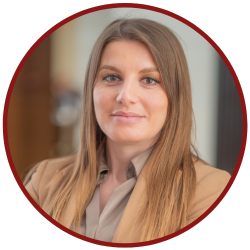
Lisjana Hila is an expert in financial sector development and economic growth, with a strong track record leading EU- and OECD-backed initiatives to improve SME access to finance across Libya, Montenegro, Uganda, and Palestine. She specializes in strengthening financial ecosystems, supporting regulatory reforms, and fostering private sector competitiveness in emerging markets. Lisjana holds an International MBA from Paris School of Business and a Master’s in Finance and Insurance from the University of Turin. She is fluent in Albanian, Italian, English, and French, with basic knowledge of Arabic.
COLOMBIA
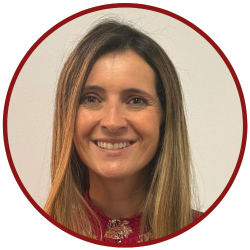
Paloma Valencia has served as a Colombian senator since 2014. One of the strongest voices opposing President Petro’s leftist government, she is frequently cited as one of Colombia’s top senators. She currently sits on the First Commission, serves as co-president of the Senate’s Peace Commission, and is vice-president of the Human Rights Commission. Valencia has authored legislation that reduces bureaucracy for small businesses, supports artisanal liquor production, and redirects mining royalties toward environmental protection. A strong advocate for state austerity, she also champions the rights of single mothers, coffee growers, and farmers. Her reform efforts span public administration, the justice system, and political institutions. She holds degrees in law, philosophy, and economics from Universidad de Los Andes and earned a Master’s in Creative Writing from NYU.
DEMOCRATIC REPUBLIC OF CONGO
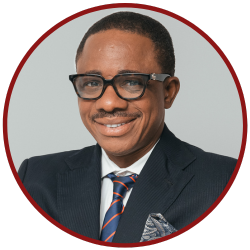
Jean Pierre Okenda is a distinguished lawyer, activist, and senior analyst in extractive industries governance. He holds a master’s degree in law and currently serves as Executive Director of Sentinel Natural Resources. A strong advocate for participatory governance and human rights in the extractive sector, Okenda has made a lasting impact through legal and policy reforms. In 2018, he played a key role in the commission responsible for reforming the Democratic Republic of Congo’s mining laws, helping to introduce provisions for equitable wealth sharing with affected communities. In recognition of his leadership in combating corruption, he was named one of the 100 most influential Africans in 2022.
EGYPT
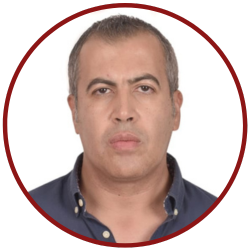
Tamer Elnahas is a political strategist and writer. With leadership roles in multiple parties, including the Egyptian Social Democratic Party and Masr El-Gedida (New Egypt), he has shaped grassroots mobilization efforts and electoral strategies. As a fierce advocate for democracy, he challenges authoritarian narratives through his widely read political analysis. Alongside his activism, Elnahas is an assistant professor and an expert in reproductive health.
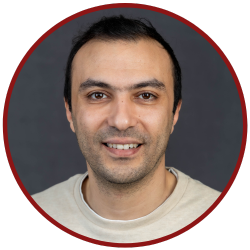
Waleed Shawky is a political activist and researcher with over a decade of experience in democratic movements. He co-founded the April 6 Youth Movement, which played a key role in the 2011 Egyptian revolution, contributing to its strategic planning and digital communications. He holds a Master of Public Administration from Harvard Kennedy School and writes for MadaMasr, AlManasa, and the Journal of Democracy.
ETHIOPIA
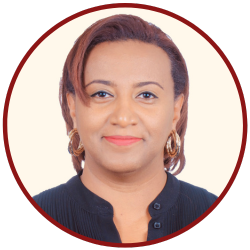
Tigist Hailu Asfawossen is a peace, security, and strategic communications expert with 20+ years of experience in peace work in Africa. She currently leads strategic communications at the Intergovernmental Authority on Development (IGAD), focusing on high-stakes diplomatic processes and translating conflict analysis into actionable insights. She led communications for IGAD’s South Sudan mediation process and numerous preventive diplomacy missions. A member of the African Union’s FEMWISE-Africa network and an international election observer, she is also a certified trainer in Conflict Prevention, Management, and Resolution (CPMR). She holds an MA in International Politics from the University of Bradford.
GHANA

Bright Sowu has over 10 years’ experience in anti-corruption and good governance. He currently serves as a Principal Staff Officer at Ghana’s Office of the Special Prosecutor, focusing on research and programs. Bright has previously worked with the Ghana Anti-Corruption Coalition, the European Union, the Japanese Embassy, and the University of Ghana. He has also worked as an anti-corruption consultant with Project Expedite Justice - Sudan, the UNCAC Coalition in Vienna, and ERGO, a New York consultancy firm. Bright is a course facilitator on “Democracy and Good Governance” for the Daakye Youth Fellowship. He holds an MPhil in Development Studies from the University of Cambridge, U.K.
INDIA
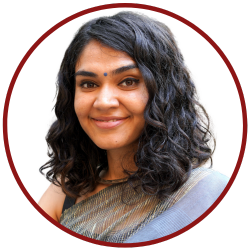
Hemakshi Meghani is the co-founder of the Indian School of Democracy (ISD), an organization dedicated to nurturing principled political leaders. She led ISD from its inception in 2018 until 2024. A World Bank Graduate Scholar, she earned her Master’s in Public Policy from the Harvard Kennedy School. Hemakshi began her career as a Teach For India fellow and later worked on education policy with Indus Action and the Boston Consulting Group. She has facilitated global leadership forums and is an Echoing Green Fellow, Acumen Foundry member, and a Dalai Lama Fellow. She is currently reimagining her work to advance inclusive democracy and increase women’s representation in politics.

Kastaurika Saikia is a development consultant from India, with over a decade of experience driving public sector initiatives across diverse domains — urban governance, public health, livelihoods, youth skilling, and gender equity. She holds a Master’s degree in Policy and Governance studies, and specialises in public policy analysis and implementation. Based in Assam, she has engaged with government departments to strengthen service delivery and social programs. She currently leads a regional skilling and self-learning initiative for youth in Northeast India, in partnership with the Skill India Mission. Kastaurika is committed to reducing structural inequalities and advancing human development.
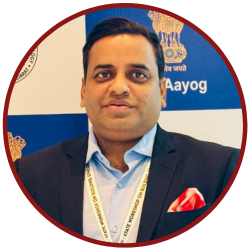
Mukesh Kumar is an IAS officer and currently serves as Secretary of State Planning and Development for the Government of Jharkhand. He holds degrees from Patna University, Jawaharlal Nehru University, Delhi University, and IMT Ghaziabad. He played a crucial role in ensuring peaceful elections in Maoist-affected regions, demonstrating strong skills in negotiation, persuasion, and stakeholder collaboration. His “Paint My City” campaign—praised by the Prime Minister of India in Mann Ki Baat—exemplifies his dedication to community engagement and cultural preservation. Mukesh has also mobilized 25,000 tribal women into sustainable enterprises, contributing significantly to their economic empowerment. His efforts have earned him several honors, including the Skoch Award and the Bharat Gaurav Award.
KAZAKHSTAN
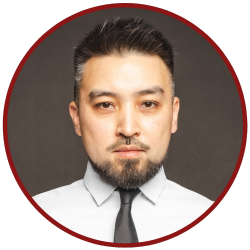
Dimash Alzhanov is a prominent political analyst and consultant. He holds an MSc in Comparative Politics (Democracy) from the London School of Economics and Political Science and possesses broad expertise in elections and democratization. Since 2014, he has served as a Political and Campaign Finance Analyst with the OSCE/ODIHR on numerous elections, including those in Moldova, Montenegro, Bulgaria, Ukraine, Georgia, Italy, and Malta. Since 2019, he has initiated and managed various projects aimed at promoting political reforms and increasing political participation in Kazakhstan. He recently published a chapter in a book about party politics in authoritarian Kazakhstan.
KENYA

Caren Wakoli is the Founder and Executive Director of the Emerging Leaders Foundation (ELF-Africa), a nonprofit organization dedicated to supporting and accompanying young women and men in achieving meaningful, dignified, and impactful participation in governance, the economy, and public affairs at all levels of society. She is a consummate storyteller and believes in the power of stories to advance authentic leadership for sustainable development. With over 22 years of experience in governance, democracy, and youth development, Caren has established herself as a visionary leader in Africa and beyond. She is also a champion for well-being because she believes that well-being facilitates well-doing.

Winnie Masai is a dedicated human rights activist from Kenya with over 15 years of experience in media, human rights, and governance. As Executive Director of InformAction, she spearheads initiatives using film, community dialogue, and civic action to promote meaningful change. A founding board member of the Civic Freedoms Forum, she is committed to protecting civic space. Winnie empowers grassroots organizations through the Haki Ni Yetu Coalition and is on the board of the Midriff Hurinet. With a Master of Philosophy and a BSc. in Information Sciences from Moi University, she is passionate about fostering innovation and collaboration to inspire collective action within diverse communities.
KYRGYZSTAN
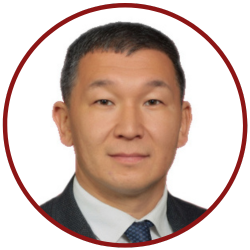
Ernis Isamatov has a strong background in democracy, development, human rights, and the rule of law, with extensive experience in addressing governance challenges. He leads the Trial Monitoring Project, which focuses on high-level corruption and organized crime, advancing transparency and accountability. Isamatov has successfully managed initiatives across the Western Balkans and Central Asia, including roles with OSCE field missions in Skopje and Dushanbe. As a results-driven professional with excellent analytical, reporting, and communication skills, he combines global perspectives with deep local knowledge, advocating for democratic reforms.
MONGOLIA
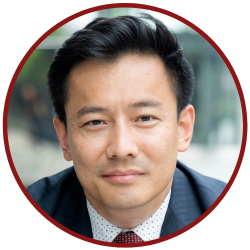
Nagi Otgonshar currently serves as a Member of Parliament in Mongolia. He was elected from the Mongolian People’s Party, the country’s ruling social democratic party, where he previously served as International Secretary. Before entering Parliament, he served as Vice Minister of Mining and prior to that, Senior Advisor to the Chief Cabinet Secretary, Government of Mongolia. He also worked as an investment banker at Bank of America Merrill Lynch in New York and Sydney, covering the natural resources sector in the Asia-Pacific region. Nagi holds an MBA from Harvard Business School, a BA in Economics from Macalester College, and is a Young Global Leader selected by the World Economic Forum.
PAKISTAN
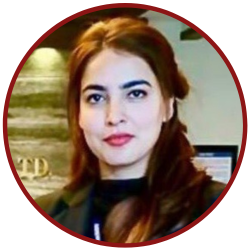
Dr. Sara Sarwar is a Deputy Collector of Customs and a qualified medical doctor (MBBS) who transitioned into Pakistan’s civil service to drive institutional reform and advance trade policy. With a career spanning key leadership roles in customs, she has led transformative initiatives focused on regulatory transparency, digitalization, and revenue integrity. Her work emphasizes process optimization, anti-corruption measures, and sustainable trade facilitation, earning her recognition from both the World Customs Organization and the Federal Board of Revenue. She brings a results-driven, policy-focused approach to public sector leadership and economic governance.
RUSSIA
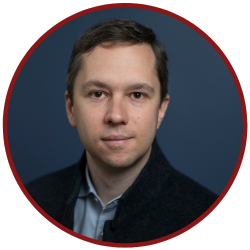
Grigory Vaypan is a Russian human rights lawyer and scholar. He is a Senior Lawyer at Memorial, Russia's oldest human rights group and co-recipient of the 2022 Nobel Peace Prize. At Memorial, Grigory carries out litigation, legal research, and legal advocacy on human rights, the rule of law, and transitional justice in Russia. He has over a decade of experience in strategic litigation before the Constitutional Court of Russia and the European Court of Human Rights. Grigory holds his first law degree from Moscow State University, an LL.M. from Harvard Law School, and a Ph.D. in International Law from Saint Petersburg State University.
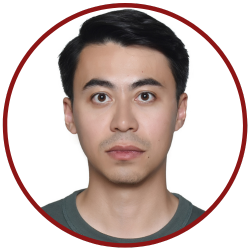
Mark Ten is the CEO of TV Rain (Dozhd), Russia’s largest independent television channel, now based in Amsterdam. He led the company’s relocation and relaunch after its closure by Russian authorities in 2022. Previously, he led, scaled, and sold Sports.ru, Russia’s leading sports media platform. He was named to Forbes Russia’s 30 Under 30. At Dozhd, he oversees editorial, business, and product strategy, focusing on digital transformation and international growth. He holds a degree in sociology and works on projects supporting independent media and innovation.
SENEGAL
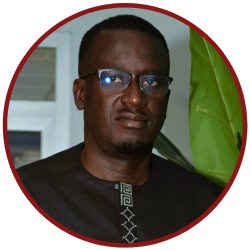
Malick Mbengue Fall is a Program Manager for the Democratic Futures in Africa Program at the Open Society Foundations, based in Dakar, Senegal. He joined OSF over a decade ago and has previously served in key roles at Open Society Africa and OSIWA, supporting initiatives that promote electoral integrity, economic justice, and human rights across the continent. Malick is a development professional with fourteen years of experience in the philanthropy sector, particularly in Africa. He holds a master’s in political science from Gaston Berger University.
TIBET
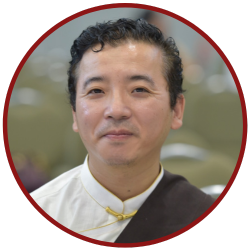
Tenzin Jigdal is a Member of the Tibetan Parliament-in-Exile, serving on both the Standing and Political Affairs Committees. With over a decade of experience in nonprofit management, he specializes in advocating for Tibet and global human rights. He has successfully led international campaigns, built strategic partnerships, and engaged with diverse stakeholders, including Tibetan civil society organizations and the Central Tibetan Administration (CTA). Driven by a passion for social change, Tenzin is dedicated to advancing the Tibetan movement through innovative outreach, capacity-building, and policy advocacy.
TURKEY
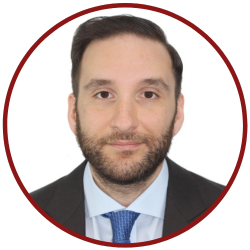
Bilal Bilici is a Member of the Turkish Parliament representing Adana. He began his political career with the IYI Party, where he served as the U.S. representative. As of August 2024, he continues his political work with the main opposition party in Turkey, the Republican People’s Party (CHP). A Boston University Economics graduate, he also holds a Master’s in Global Affairs from Bahcesehir University. He has worked at Accenture and Ernst & Young, and served as Vice President of the Turkish-Central American/Caribbean Business Council at DEIK, also sitting on its Turkish-Uzbek Council. He was elected to Parliament in 2023.
UKRAINE*

Polina Aldoshyna is a Ukrainian lawyer and civic leader with over nine years of experience in law, public administration, and nonprofit management. She currently leads the BGV Charity Fund, where she oversees social projects that support vulnerable communities. In addition, she serves as a Deputy of the Zhytomyr Regional Council, focusing on local governance and social policy. Throughout her career, Polina has managed over 60 humanitarian projects, including the establishment of psychosocial support centers and aid programs for displaced individuals and veterans.

Oleksii Movchan is a Member of the Ukrainian Parliament and Deputy Chairman of the Verkhovna Rada Committee on Economic Development, representing the “Servant of the People” faction. He chairs the subcommittee on public procurements and state property management, and is active in inter-parliamentary groups with the USA, UK, Japan, and others. Before parliament, he led projects at Prozorro.Sale. Oleksii holds degrees from Kyiv-Mohyla Academy, Ukrainian Catholic University, and Kyiv School of Economics. He has advanced key reforms in procurements, state-owned companies, and privatization to support Ukraine’s European Union integration.
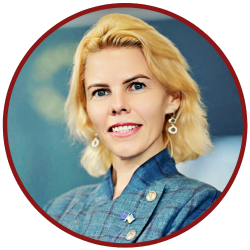
Maria Golub is a recognized expert on Ukraine’s European and Euro-Atlantic integration, with deep expertise in EU-Ukraine bilateral relations. Based in Brussels, she currently serves as a Senior Political and Policy Advisor to Ukrainian leadership, where she advocates for a just and lasting peace in Ukraine and supports the country’s advancement along the EU integration path through a decisive reform agenda. She is also actively involved in shaping Ukraine’s reconstruction strategy and is a strong proponent of the “build back better” principle, championing an ambitious revival plan for the country.
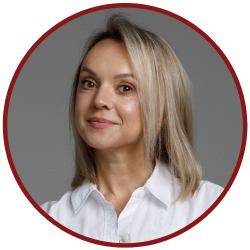
Alyona Nevmerzhytska is CEO of hromadske.ua, Ukraine’s leading independent online media platform. She began her career in 2012 at the Kyiv Post and has since focused on business development and organizational strategy. At hromadske, she has enhanced audience engagement and strengthened data-driven decision-making. Committed to building sustainable models for independent media, she ensures ethical newsroom operations and promotes democratic values. She is a graduate of the Stockholm School of Economics, an Atlantic Council Millennium Fellow, and a 2024 McCain Institute Global Leader.
*These fellows are jointly participating in CDDRL’s Strengthening Ukrainian Democracy and Development Program.
VENEZUELA
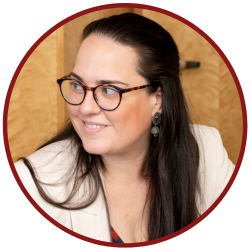
Isabella Picón Ball is a Venezuelan social activist, researcher, and consultant. She holds an undergraduate degree in Political Science from Northwestern University, an MSc in Political Communications from the London School of Economics (LSE), and is a Chevening Scholar. She actively participated in the 2017 and 2019 civil resistance campaigns against the dictatorship of Nicolas Maduro, co-founding @LaboCiudadano and helping it become an organization and activist collective that promotes nonviolent action. She is now part of Labo's board of advisors. In 2024, she and other political and social activists led the initiative Toma El Control, a campaign and platform aimed at promoting civic organizing and youth participation in the 2024 Presidential Elections.
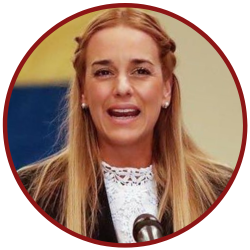
Lilian Tintori is a certified coach, human rights advocate, and founder of “Free Them,” the Political Prisoner Program of the World Liberty Congress. A Venezuelan living in exile in Spain, she supports families of political prisoners and leads international advocacy for their release. She holds degrees from Universidad Católica Andrés Bello and completed leadership training at IE Madrid. The “Free Them” program is grounded in Pathway to Freedom, a handbook she helped develop with interdisciplinary experts to equip families with tools to secure the release of their loved ones. She also coaches leaders through IESE Business School and the Human Rights Foundation, providing emotional support and enhancing mental health.
Hero Image

All News button
1
Subtitle
In July 2025, the Center on Democracy, Development and the Rule of Law will welcome a diverse cohort of 27 experienced practitioners from 18 countries who are working to advance democratic practices and economic and legal reform in contexts where freedom, human development, and good governance are fragile or at risk.
Delivering for Democracy: Why Results Matter
Paragraphs
The global wave of democratic backsliding has questioned the ascendancy of democracy in the 21st century. A purported decline in political trust and satisfaction with democracy, alongside the rise of high-performing autocracies, has sparked conjectures that popular support for the democratic project is eroding in favor of new, more authoritarian alternatives. Part of this discussion concerns the extent to which service delivery and outcomes matter for the legitimacy and stability of democracy. We argue that delivery for citizens is crucial to rebuilding the social contract and hence support for democracy alongside thwarting backsliding. We reflect on infrastructure as a public good for exposition.
All Publications button
1
Publication Type
Journal Articles
Publication Date
Journal Publisher
Journal of Democracy
Number
Number 2