Diplomacy

n/a

0
CDDRL Hewlett Fellow 2008-09

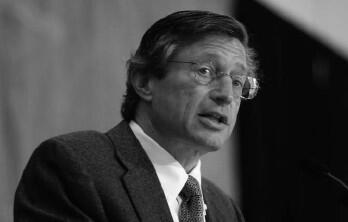
Shadi Hamid was a Hewlett Fellow in 2008-09 at CDDRL. At the same time he also served as director of research at the Project on Middle East Democracy (POMED). Prior to that, he was a research fellow at the American Center for Oriental Research in Amman, where he conducted research on the evolving relationship between the Muslim Brotherhood and the Jordanian regime. His articles on Middle East politics and U.S. democracy promotion policy have appeared in The Washington Post, The Christian Science Monitor, The Jerusalem Post, The New Republic, The American Prospect, Democracy: A Journal of Ideas, and other publications. A Marshall Scholar, Hamid also completed his doctoral degree in politics at Oxford University, writing his dissertation on Islamist political behavior in Egypt, Jordan, and Morocco.

Previously, Hamid served as a program specialist on public diplomacy at the State Department and a Legislative Fellow at the Office of Senator Dianne Feinstein. During 2004-5, he was a Fulbright Fellow in Jordan, researching Islamist participation in the democratic process. He writes for the National Security Network's foreign affairs blog Democracy Arsenal and is a security fellow at the Truman National Security Project. He has been a consultant to various organizations on reform-related issues in the Arab world, and has appeared on The NewsHour with Jim Lehrer, NPR, Voice of America, and the BBC. Hamid received his B.S. and M.A. from Georgetown University's School of Foreign Service.

News Type
News
Date
Paragraphs

Private sector leaders, senior Department of Homeland Security (DHS) officials, and academic experts convened at Stanford’s Center for International Security and Cooperation (CISAC) for a forum on a revolutionary development in disaster response: the rise and pervasiveness of social network communications, and the way these networks will reshape the flow of information when disasters strike. 

The July 28, 2008 forum, “Applications of Pervasive End-User Information Technologies in Emergencies,” generated a broad range of recommended changes in DHS policy. Most important, participants concluded that the paradigm of government control over information flow – as embodied in the National Incident Response System – needs to be entirely rethought. Facebook, Twitter, and other social network communications will enable citizens to link up when disasters strike in a way that has never before been possible.  DHS can take a number of concrete steps to facilitate those communications and make them more useful for disaster response.  These include new mechanisms for DHS to support data authentication; targeted liability coverage for private sector firms in the social network realm; and a revamped exercise system to familiarize government, non-governmental organization and private sector disaster responders with the capabilities of social network communications.

The forum provided the first-ever opportunity for DHS and the private sector leaders in social network communications to examine these issues.  Participants agreed that the findings of the forum should be used to launch a new research program.  That design of that program is now underway.  Topics will include a comprehensive review of scholarly research on the impact of social network technologies on human behavior in emergencies; an analysis of the way these technologies can be applied to homeland security field; and additional measure that DHS should adopt to facilitate the use of these networks.

The forum was co-sponsored by CISAC and the Homeland Security Institute.

All News button
1
Authors
Stephen J. Stedman
News Type
Commentary
Date
Paragraphs
FSI senior fellow Stephen Stedman reviews John Bolton's book, Surrender Is not an Option, in the July/August issue of the Boston Review. "The memoir reads like an international relations primer done in the style of a modern morality tale," he writes. "Imagine Kenneth Waltz's classic Man, the State, and War as written by Ayn Rand."

One of the more remarkable underreported stories of 2008 was a speech in which the State department’s legal adviser John Bellinger admitted that there “are also realities about the International Criminal Court that the United States must accept.” He also stated that the Bush administration would work with the Court to maximize its chances of success in Darfur. Bellinger did not say that the United States might actually join the Court, but acknowledged that it enjoyed widespread international support and legitimacy, and that the United States could fruitfully cooperate with it on areas of mutual benefit.

Neither mea culpa nor volte-face, the speech nonetheless indicates the distance the administration has traveled in seven years. While Bellinger’s oratory went largely unnoticed by foreign policy wonks and the attentive public alike, it did not escape the scrutiny of John Bolton, who dismissed it as Clinton-era “pabulum” and reflective of “the yearning the Rice State Department has for acceptance” by academics and foreign intellectuals. He added ominously, “the fight resumes after Jan. 20.”

Bolton has been a powerful influence on Republican foreign policy for the last twenty years. Before his appointment as ambassador to the United Nations in 2005—which was achieved without Senate confirmation—Bolton dominated arms-control policy in the first Bush term. He killed the Anti-Ballistic Missile (ABM) Treaty, negotiations with North Korea, and the Biological Weapons Convention verification protocol. During the Clinton years, he campaigned tirelessly from his Heritage Foundation perch for missile defense and against global governance, which he seems to equate with global government. In 1998, when then-Secretary-General of the United Nations Kofi Annan released a report critical of both the United Nations secretariat and member states for the failure to prevent genocide in Srebrenica, Bolton chastized Annan for having the temerity to criticize governments for what they did or did not do in the former Yugoslavia. He added menacingly: “I think if he continues down this road, ultimately it means war, at least with the Republican Party.”

Bolton came of age politically during Barry Goldwater’s presidential campaign. The future policy heavyweight was a high schooler in Baltimore at the time. He honed his conservatism at Yale College and Yale Law School, ducked Vietnam through a National Guard posting (“looking back, I am not terribly proud of this calculation”), and got his first taste of Washington as an intern to Spiro Agnew. During the Bush Sr. presidency, Bolton was Assistant Secretary for International Organization Affairs in James Baker’s State Department, and was one of the first people who Baker called when he needed a posse of chad-disputing lawyers in Florida in November 2000. Bolton’s name keeps showing up in various articles about the fight inside the Republican Party for the soul of John McCain’s foreign policy.

All of this makes it imperative to read his memoirs, which clarify the stakes in the forthcoming election. Although it is hard to imagine Bolton in a McCain administration—his memoirs offend so many within his party, across the aisle, and overseas, that Bolton could not win Senate confirmation for capitol dog-catcher—Bolton will be plotting, pressing, and pushing to force McCain’s foreign policy back to the unilateralism of George Bush’s first term, when the war on terror meant never having to say you’re sorry. And there are important national security posts that do not require Senate approval.

The memoir reads like an international relations primer done in the style of a modern morality tale—imagine Kenneth Waltz's classic Man, the State, and War as written by Ayn Rand.

To Bolton, the United Nations is a “target rich environment,” and I had a front row seat to watch his gunslinging. In 2005 I served as Special Adviser to UN Secretary-General Kofi Annan. I was responsible for developing member-state support for his efforts to overhaul the United Nations. In that capacity, I was in Brussels in March 2005 when President Bush nominated Bolton as Ambassador to the United Nations. One high-ranking EU official recoiled in horror, and, to share his agita, repeated two of Bolton’s more famous lines: that “UN headquarters could lose ten floors and no one would know the difference,” and that “there was no United Nations.” How in the world, the official asked, could such a man be Ambassador to the United Nations?

Amidst nodding heads and shared pained looks, I offered that if I could pick the ten floors, I would agree with Bolton. Moreover, I said, any sentient being who spends time in Turtle Bay—the Manhattan site of the United Nations—will at some point in frustration say to themselves that there is no United Nations. Bolton’s sin was to say it publicly. Finally, I suggested that John Bolton was irrelevant: “If the President of the United States and the Secretary of State want a strong, effective United Nations, then Bolton will have to deliver. If they don’t, you could have John Kerry as the U.S. ambassador, and nothing will happen.”

Oh well; win some, lose some. Which is what Condoleeza Rice is rumored to have told a friend who asked how John Bolton could have possibly been nominated for the position under her watch.

Or more accurately, I was half right, half wrong. Reading this book, one can almost feel sorry for how unsuited Bolton was for his new job. For four years he had been the point man for breaking American commitments abroad, insulting allies and enemies alike, ditching the ABM Treaty, and unsigning the Rome Statute, which established the International Criminal Court (“my happiest moment at State”). In the heady days of the first Bush administration, when it believed the United States was so powerful it could get anything that it wanted without friends, partners, or institutions, Bolton was the “say no” guy, a job he performed with great brio. How could he know that in 2005 his big boss, the President, and his nominal boss, the Secretary of State, would actually decide that international cooperation was necessary, and that maybe we should start worrying about America’s free fall in world opinion? A pit bull in the first term, Bolton would be a yap dog in the second, grating on the Secretary of State, the President, and most American allies.

Almost sorry, for whatever else you say about John Bolton, he is not of the “we can disagree without being disagreeable” school of American politics. This is one of the nastiest, pettiest memoirs in the annals of American diplomatic history. Among the many targets of insults and catty remarks are former and present U.K. ambassadors to the United Nations Emyr Jones Parry, Adam Thomson (“I could never look at or listen to Thomson without immediately thinking of Harry [Potter] and all his little friends”), and John Sawers; recent U.K. foreign ministers; just about every UN civil servant mentioned; indeed, just about every U.S. civil servant mentioned, along with countless journalists and politicians.

The memoir reads like an international relations primer done in the style of a modern morality tale—imagine Kenneth Waltz’s classic Man, the State, and War as written by Ayn Rand. Bolton, usually singlehandedly, takes on what he calls the High Minded, the Normers (those who create international norms of behavior or try to “[whip] the United States into line with leftist views of the way the world should look”), the EAPeasers (career State Department officials who advocate negotiations with North Korea), the Risen Bureaucracy, the Crusaders of Compromise, the Arms Control True Believers, and the EUroids.

The book has the formulaic allegories typical of the genre—the young, innocent female (Kristen Silverberg, Assistant Secretary for International Organization Affairs) driven to tears after being berated by the cold-hearted career bureaucrat (Nicholas Burns); the noble knight (Bolton himself) fighting against the political higher ups who care only about “positioning themselves” (Rice) or their legacy (Colin Powell). And of course Bolton’s plaintive cries that the 2005-06 changes in administration policy occurred against the will of the President. One sees the peasants now: ‘If only the King knew what was happening, this would never go on.’

Now add a heaping dose of xenophobia. Foreigners, appeasing foreigners, foreigners claiming to know us better than we know ourselves: all loom large in Bolton’s memoirs. He insults the former Swedish foreign minister and President of the General Assembly Jan Eliasson as not only having “an ethereal Hammarskjöldian vision problem, but also a Gunnar Myrdal problem, yet another foreigner who ‘understood’ us better than we did ourselves.” (This is the Myrdal who shared the 1974 Nobel Prize in Economics with Friedrich Hayek, and whose classic book on race, An American Dilemma: The Negro Problem and Modern Democracy, was cited in Brown v. Board of Education.) At one point in his belittlement of a Bush political appointee, a special assistant to Condoleeza Rice, no less, Bolton adds that she was “a naturalized citizen originally from Pakistan,” in case we wondered why she could not possibly understand America’s real foreign policy interests. In Bolton’s worldview Zbigniew Brzezinski is probably a naturalized American citizen originally from Poland; Henry Kissinger, a naturalized American citizen originally from Germany.

In the Bolton universe, you want Iran and North Korea to be referred to the Security Council, so that when it fails to unite behind a resolute strategy, the United States is then free to take the tough action it needs to take. And in the case of North Korea, Bolton is clear about what that would be: “unilateralist, interventionist, and preemptive.” Is it any wonder that when it came to Iran and North Korea, our allies and adversaries were loathe to refer them anywhere near Bolton?

Richard Hofstadter’s 1964 article “The Paranoid Style in American Politics” was prompted by the supporters of the Goldwater campaign. Bolton strides right off the pages of Hofstadter’s essay:

He is always manning the barricades of civilization . . . he does not see social conflict as something to be mediated and compromised, in the manner of the working politician. Since what is at stake is always a conflict between absolute good and absolute evil, what is necessary is not compromise but the will to fight things out to a finish. Since the enemy is thought of as being totally evil and totally unappeasable, he must be totally eliminated—if not from the world, at least from the theatre of operations to which the paranoid directs his attention. This demand for total triumph leads to the formulation of hopelessly unrealistic goals, and since these goals are not even remotely attainable, failure constantly heightens the paranoid’s sense of frustration. Even partial success leaves him with the same feeling of powerlessness with which he began, and this in turn only strengthens his awareness of the vast and terrifying quality of the enemy he opposes.

According to Bolton, we do not need diplomats who negotiate, seek common ground, and strive for cooperative solutions. We need litigators who will go to the wall defending American interests, who will understand that when others say no, they mean no, and that therefore compromise is illusion. But in a world where the United States needs international cooperation for its own peace and prosperity, what comes next? Bolton’s answers are laughable—we stick with our “closest friends in the United Nations”—Israel, Palau and the Marshall Islands. Or we forge a new alliance with Japan, South Korea, Australia, Canada, and New Zealand to overcome the parasitic and paralytic EU. The road to global primacy runs through . . . Wellington?

There are, of course, some glaring contradictions in the memoirs. Bolton is known as a sovereignty hawk and he spells out the content of that doctrine as “greater independence and fewer unnecessary restraints.” The job of civil servants, politically appointed or career, is “to implement the president’s policies.” So it comes as a double shock when we find Bolton handing a draft Security Council resolution to the Israeli ambassador, in case the ambassador wants to ask his Prime Minister to appeal directly to Bush or Rice to change President Bush’s policy on Lebanon.

Another example concerns Bolton’s recurring beratement of UN officials for forgetting that they work for the member states. He then describes how one Under-Secretary-General, American appointee Christopher Burnham, surreptitiously showed him budget documents that put the United States at an advantage in budget negotiations. It is hard to see how you can have it both ways. Either UN officials serve all member states equally or the organization is up for grabs to the most powerful state.

But it is the big betrayal that is at the heart of the book. Facing a quagmire in Iraq, a faltering coalition in Afghanistan, a nuclear armed North Korea, the possibility of a nuclear Iran, and a war against terror that was creating more, not fewer, terrorists, Condoleeza Rice convinced President Bush that maybe they should stop digging a bigger hole for American foreign policy. And that meant actually trying diplomacy in North Korea, Iran, and the Middle East.

The losers were John Bolton and his acolytes; the winners were the professionals like Nicholas Burns and Christopher Hill. Faced with defeat and repudiation of the failed policies he advocated, Bolton’s response is familiar and tiresome: the professionals had secretly hijacked the president’s policy; the Secretary of State cares more about appeasing foreigners than protecting American interests.

The moment of reckoning for Bolton and for the President that nominated him is not described in the book, but it took place two months after Bolton left the administration. When the United States and North Korea reached a deal in February 2007 that holds the promise of denuclearizing the country, Bolton tried to scuttle it. Asked by reporters whether he was loyal to the President, Bolton answered, “I’m loyal to the original policy.”

What did Bolton achieve at the United Nations? Very little, which was fine by him and fine by the cast of nonaligned Ambassadors who oppose a more effective international organization. I asked one of them in December 2006 if he was happy that Bolton was leaving. He said, “No, we’ve learned how to deal with Mr. Bolton.” When I sought clarification, he said, “Look, Bolton comes in and asks for the sun, the moon, and the stars, and we say ‘no.’ He then says, ‘I told you so’ and leaves. Everybody is happy.”

Which returns us to the question of why anyone would want to wade through these 500 self-serving pages. The best answer: to remind yourself of the stakes of this upcoming election and why the United States needs more old-fashioned diplomacy and less paranoia and arrogance. A McCain presidency might not eschew diplomacy, but in the political free-for-all that is the Republican party, Bolton and his minions are always there, ready to denigrate any agreement or compromise, to sabotage and subvert real diplomacy.

Asked by reporters whether he was loyal to the President, Bolton answered, "I'm loyal to the original policy."

To understand the stakes, consider the little known and even less appreciated record of American negotiations with North Korea since 1994. Between what was called the “Agreed Framework” that brought North Korea back into the Nonproliferation Treaty (NPT) in 1994 and the end of 2000, the United States and North Korea reached twenty agreements on a wide array of issues. Certain of these agreements foundered in implementation, but an objective assessment shows that some of the noncompliance stemmed from constraints placed by American domestic politics.

The Bolton strategy killed the Agreed Framework, hoping through threats, sanctions, and use of force to end the North Korean regime. Unfortunately for Bolton—fortunately for the rest of us—our ally South Korea and our necessary partner China did not want to deal with the consequences: either a war or a collapsed, deadly state on their borders. In the end, they did not have to because North Korea left the NPT, developed a nuclear bomb, and tested it, bankrupting the Bolton policy and producing the sharp change of strategy that has born fruit in recent North Korean steps to end its nuclear program.

Writing about the successes of American negotiators in bringing North Korea and the United States back together in February 2007, former State Department negotiator Robert Carlin and Stanford Professor Emeritus John Lewis have described why Bolton and his crowd loathe diplomacy is loathed by Bolton and his crowd, and why it is so necessary:

Diplomats strive to put down words all of them can swallow and hopefully their superiors in [the] capital can stomach. Written agreements are difficult to reach. The pain often comes not so much in dealing with the other side but in dealing with your own. Unless you are dictating terms to a defeated enemy, you are going to have to compromise on something, probably several somethings, that will make many people unhappy. That was done for the February 13th agreement, and there is no shame to it.

John Bolton did much damage to American interests in the first Bush administration, but he was implementing the president’s policy. President Bush deserves the blame for putting Bolton in a position to continue hardming American interests even when the overall direction of policy changed.

Given that many countries treated the United States as radioactive in 2005; given that trust and confidence in the United States were at all time lows; given that our record was one of a violator of international law and human rights; President Bush, had he truly wanted to start to move the United States out of the hole he had been so assiduously digging, would have had to send to the United Nations an ambassador with extraordinary listening skills, who could work across various international chasms, rebuild respect for American diplomacy, and, yes, advocate agreements that would make a lot of people unhappy. Someone, in fact, a lot like our present Ambassador, Zalmay Khalilzad, a naturalized citizen originally from Afghanistan. Instead he sent . . . Yosemite Sam.

So back to January 20. A new American president will take office with grinding wars in Iraq and Afghanistan, a nuclear-armed North Korea, an Iran headed that way, and crises in Sudan, Israel and Palestine, Lebanon, and Pakistan. Our foreign policy is anathema; our reputation in tatters. Throw in big issues like global warming, non-proliferation, catastrophic terrorism, and a potential pandemic of a deadly new influenza. It is hard to see how any of these crises or issues can be solved without sustained international cooperation and strong international institutions. Take global warming: protecting Americans from its ravages will depend on exercising sovereignty to strike deals with other countries whose domestic behavior threatens us and whose security our domestic behavior threatens. A narrow view of sovereignty as the ability to do as we damned well please will be—quite literally—the death of us all.

Image
surrender is not an option
Surrender Is not an Option: Defending America at the United Nations and Abroad
by John Bolton. Threshold Editions, $27.00 (hardcover)

 

All News button
1
Authors
Michael A. McFaul
News Type
Commentary
Date
Paragraphs
When George Shultz became Secretary of State in 1982, writes Michael McFaul in DemocracyArsenal.org, he began to challenge the Reagan administration's policy of disengagement, arguing that the United States needed to engage both the Soviet leaders but also Soviet society. Shultz's approach toward engaging the Soviets offers profound lessons for today's Iran debate: not just engagement, but also an expanded agenda that includes human rights and democracy.

In their column on National Review on June 24, 2008 called “10 Concerns about Barack Obama,” William Bennett and Seth Leibsohn, begin their list of attacks on Senator Obama by writing that “Barack Obama’s foreign policy is dangerous, naïve, and betrays a profound misreading of history.” In arguing against any engagement with Iran, William Bennett and Seth Leibsohn point out that “Ronald Reagan met with no Soviet leader during the entirely of his first term in office.”

This statement is factually correct. And there was most certainly a big debate within Reagan Administration about whether to talk with the leaders of the Evil Empire. However, Bennett and Leibsohn imply in their piece that this debate was only resolved after the Soviet Union met some preconditions to talks and changed internally, that is after, as they write, that Reagan “was assured Gorbachev was a different kind of leader – after Perestroika, not before.”

In fact, the debate about engaging the evil empire was resolved three years before Reagan met with Gorbachev. The debate and the resolution in favor of talking to the leaders of the evil empires is meticulously chronicled in George’s Shultz’s memoir, Turmoil and Triumph: Diplomacy , Power, and the Victory of the American Ideal (1993). Just the title of Chapter 25, "Realistic Reengagement with the Soviets," underscores how misleading the Bennett and Leibsohn rendition of history is.

When they first came to Washington, many foreign policy advisors within Reagan administration advocated the Bennett and Leibsohn position and did not want to have any contact with the Soviets, even though every American president since the recognition to the USSR in 1933 had met with their Soviet counterparts. When George Shultz became Secretary of State in 1982, he began to challenge this policy of disengagement, arguing that the United States needed to engage both the Soviet leaders but also Soviet society. As he writes in his memoirs about the start of the New Year in 1983, “I wanted to develop a strategy for a new start with the Soviet Union. I felt we had to try to turn the relationship around: away from confrontation and towards real problem solving.” (p. 159) Shultz is writing about his thinking two years before Gorbachev comes to power.

Shultz’s idea for a turn towards engagement met resistance in the Reagan administration. Again, from his memoirs: “I knew the president’s White House staff would oppose such engagement. There was lots of powerful opposition around town to any efforts to bridge the chasm separating Moscow and Washington.” After listing the opponents to direct negotiations, which included Secretary of Defense Caspar Weinberger and CIA head Bill Casey, Shultz affirmed that “I was determined not to hang back from engaging the Soviets because of fears that the ‘Soviet wins negotiations’.” (p. 159). Sound familiar? Instead the word, Iranians, for Soviets and you capture the essence of the debate today.

Shultz, as we all know, won this debate, convincing Reagan about the need to start talking directly to the Soviets (again well before Gorbachev came on to the scene). A subtitle of Chapter 12 of Shultz’s memoir is A President Ready to Engage. (p. 163). In early February 1983, Shultz even floats the idea of meeting directly with Soviet Ambassador Dobrynin for a private chat, to which Reagan responds, “Great”, and then adds “I don’t intend to engage in a detailed exchange with Dobrynin , but I do tell him that if Andropov is wiling to do business, so am I” (p. 164). (Remember Andropov died in 1983 and his successor, Chernenko, also did not serve long as the Soviet leader before dying in 1985. from 1983-1985, there was a real crisis of leadership inside the Soviet Union, a factor that contributed to the lack of direct talks at the highest levels). Speed forwarding again to today’s Iran debate, which presidential candidate sounds more like Reagan?

Shultz’s approach toward engaging the Soviets offers another profound lesson for today’s Iran debate. Shultz never let the negotiations focus just on arms control. That played o the Soviet’s strengths. Rather, he insisted on an expanded agenda that always included human rights and democracy. Again, from his memoirs, "We were determined not to allow the Soviets to focus our negotiations simply on matters of arms control. So we continuously adhered to a broad agenda: human rights, regional issues, arms control, and bilateral issues." (p.267). This same approach is needed for dealing with the Iranian regime today.

Finally, Shultz never saw negotiations or expanding contacts with Soviets and Americans as a concession to Moscow or a signal of legitimacy for the communist dictatorship. In the debate about opening consulates in both countries – a move that some hardliners at the time saw as a sign of weakness – Shultz firmly supported the idea as a change in the American national interest. As he quotes from a memorandum that he wrote in 1982, "I believe the next step on our part should be to propose the negotiation of a new U.S.-Soviet cultural agreement and the opening of U.S. and Soviet consulates in Kiev and New York...Both of these proposals will sound good to the Soviets, but are unambiguously in our interest when examined from a hard headed American viewpoint."(p. 275). Exactly the same could be said about Iran today.

Historical analogies can only go far. Many dimensions of U.S.-Iranians relations differ radically from Cold War relations between the U.S. and the Soviet Union. But when observers do roll them out, getting the facts right should be precondition to the substantive date about their relevance.

All News button
1
News Type
News
Date
Paragraphs
In a report released on June 10, a high-impact group of development experts including CDDRL Director Michael A. McFaul and FSI senior fellow Larry Diamond call on Congress and the president to modernize U.S. foreign assistance by including development as a key component.

WASHINGTON, June 10 /PRNewswire-USNewswire/ -- Leading global development experts today called on Congress and the President to elevate development as a key component of the U.S. foreign assistance system to meet the challenges of the 21st century.

The international and domestic challenges of the 21st century -- including transnational threats such as economic instability, terrorism, climate change, and disease -- cannot be met with a foreign assistance apparatus created to confront the challenges of the 20th century, said the experts in a report released today. The report, New Day, New Way: U.S. Foreign Assistance for the 21st Century, contains various proposals of this coalition of experts, the Modernizing Foreign Assistance Network (MFAN).

Foreign assistance and other investments in developing countries are vital tools for strengthening U.S. foreign policy, restoring American global leadership, and fighting global poverty, said MFAN co-chair Steve Radelet of the Center for Global Development. Foreign policy experts on both sides of the political aisle now recognize the importance of strong foreign assistance programs. But they also recognize that our foreign assistance programs are out of date and badly in need of modernization to meet the challenges of the 21st century.

The report lays out the importance of foreign assistance as a foreign policy tool which includes defense, diplomacy, and development. It makes the case that it is in the countrys national interest to elevate development assistance and makes specific recommendations such as better accountability, a national strategy for the coordination of the entire U.S. foreign assistance system, and making development a sustainable piece of Americas long-term investments overseas.

"By giving development a seat at the foreign policy table we can narrow the gap between the world's haves and have nots, tackle the challenges posed by climate change, the global food crisis, and the world's weak and failing states and, most importantly, strengthen the moral foundation from which we lead, said MFAN co-chair Gayle Smith of the Center for American Progress.

The report was released today during the launch of MFAN in Congress. Speakers included Rep. Howard L. Berman, chair, House Foreign Affairs Committee; Rep. Nita Lowey, chair, State and Foreign Operations Subcommittee; and Sen. Chuck Hagel, member, Senate Foreign Relations Committee.

Members of MFAN include: Steve Radelet (Center for Global Development), Gayle Smith (Center for American Progress), Brian Atwood (Hubert H. Humphrey Institute of Public Affairs, University of Minnesota), David Beckmann (Bread for the World), Lael Brainard (Brookings Institution), Larry Diamond (Hoover Institution, Stanford University), Sam Worthington (Interaction), Francis Fukuyama (The Paul H. Nitze School of Advanced International Studies, Johns Hopkins University), Carol Lancaster (Mortara Center for International Studies, Georgetown University), George Ingram (Academy for Educational Development), Larry Nowels, Charles MacCormack (Save the Children), Michael A. McFaul (Center on Democracy, Development and Rule of Law, Stanford University), Ray Offenheiser (Oxfam America), Stewart Patrick (Council on Foreign Relations), and William Reese (International Youth Foundation).

Hero Image
newday
All News button
1
News Type
News
Date
Paragraphs

As the world’s most dynamic and rapidly advancing region, the Asia-Pacific has commanded global attention. Business and policy leaders alike have been focused on the rise of China, tensions on the Korean peninsula, Japan’s economic recovery and political assertiveness, globalization and the outsourcing of jobs to South Asia, Indonesia’s multiple transitions, competing forces of nationalism vs. regionalism, and the future of U.S.-Asia relations.

What is the near-term outlook for change in the region? How might developments in the economic, political, or security sphere affect Asia’s expected trajectory? And how will a changing Asia impact the United States? These were among the complex and challenging issues addressed by a faculty panel from the Shorenstein Asia-Pacific Research Center (Shorenstein APARC) and the Eurasia Group at the Asia Society in New York on January 23, 2006.

Image
1607 small 4 1
Moderated by director of the Freeman Spogli Institute for International Studies Coit D. Blacker, the Olivier Nomellini Family University Fellow in Undergraduate Education, the panel included Michael H. Armacost, the Shorenstein Distinguished Fellow, former Under Secretary of State for Political Affairs, and former Ambassador to Japan and the Philippines; Donald K. Emmerson, the director of the Southeast Asia Forum at Shorenstein APARC and noted expert on Indonesia; Harry Harding, the director of research and analysis at the Eurasia Group in New York and University Professor of International Affairs at George Washington University; and Gi-Wook Shin, the director of Shorenstein APARC, founding director of the Korean Studies Program, and associate professor of sociology at Stanford.

Q. COIT BLACKER: WHAT IS THE MOST DIFFICULT, CHALLENGING ISSUE YOU SEE?

Image
1607 small 4 2

A. HARRY HARDING:

In China, we are seeing a darker side of the Chinese success story. Millions of people have been lifted out of poverty, China's role in international affairs is on the rise, and China is an increasingly responsible stakeholder in an open, liberal global economy. Yet, the world is now seeing the problems China's reform program has failed to resolve. China's new five-year plan seeks to address a number of these issues, providing a plan for sustainable economic development that is environmentally
responsible and addresses chronic pollution problems, for a harmonious society that
addresses inequalities and inadequacies in the provision of medical care, insurance
and pension systems, and for continuing technological innovation, as part of China's
quest to become an exporter of capital and technology.

Image
1607 small 4 3
A. GI-WOOK SHIN:

The world should be deeply concerned about developments on the Korean peninsula. Two pressing issues are U.S. relations with South Korea and the nuclear crisis with the North. It is not clear when or whether we will see a solution. Time may be against the United States on the issue. China and South Korea are not necessarily willing to follow the U.S. approach; without their cooperation, it is difficult to secure a successful solution. The younger generation emerging in South Korea does not see North Korea as a threat. Our own relations with South Korea are strained and we are viewed as preoccupied with Iraq and Iran, as North Korea continues to develop nuclear weapons.

Image
1607 small 4 4
A. DONALD EMMERSON:

In Southeast Asia, a key problem is uneven development, both in and between the political and economic spheres. Potentially volatile contrasts are seen throughout the region. Vietnam is growing at 8 percent per year, but will it become a democracy? It has not yet. Indonesia has shifted to democracy, but absent faster economic growth, that political gain could erode. Indonesia's media are among the freest in the region;
multiple peaceful elections have been held--a remarkable achievement--and nearly all Islamists shun terrorism. Older Indonesians remember, however, that the economy
performed well without democracy under President Suharto. Nowadays, corruption
scandals break out almost daily, nationalist and Islamist feelings are strong, and the
climate is not especially favorable to foreign investment. While Burma's economy
lags, its repressive polity embarrasses the Association of Southeast Asian Nations
(ASEAN). How long can the generals in Rangoon hold on? Disparities are also
international: dire poverty marks Laos and Cambodia, for example, while the
Malaysian and Thai economies have done well.

Image
1607 small 4 5
A. MICHAEL ARMACOST:

Japan is a "good news/bad news" story. The good news is that Japan has found a new security niche since the end of the Cold War. Previously, when a security problem loomed "over the horizon," they expected us to take care of it while, if prodded, they increased their financial support for U.S. troops stationed in Japan. During the first post-Cold War conflict in the Persian Gulf, Japan had neither the political consensus nor the legal framework to permit a sharing of the risks, as well as the costs, and this cost them politically. Since then, they have passed legislation that permits them to participate in U.N. peacekeeping activities, contribute noncombat, logistic, and other services to "coalition of the willing" operations, and even dispatch troops to join reconstruction activities in Iraq. Clearly, their more ambitious role is helping to make the U.S.-Japan alliance more balanced and more global.The bad news is a reemergence of stronger nationalist sentiment in Japan and more generally in Northeast Asia. In part this is attributable to the collapse of the Left in Japanese politics since the mid-1990s. This has left the Conservatives more dominant, and they are less apologetic about Japanese conduct in the 1930s and 1940s, more inclined to regard North Korea and China as potential threats, more assertive with respect to territorial issues, less sensitive to their neighbors’ reactions to Prime Ministerial visits to Yasukuni Shrine, and more eager to be regarded as a “normal” nation. Many Asians see the United States as pushing Japan to take on a more active security role and, in the context of rising Japanese nationalism, are less inclined to view the U.S.-Japan alliance as a source of reassurance.

Q. COIT BLACKER: WHAT ARE THE COMPETING AND CONFLICTING TENSIONS BETWEEN REGIONALISM AND NATIONALISM?

A. HARRY HARDING:

In China, there has been a resurgence of nationalism over the past 10 to 15 years. Since the end of the Maoist era and the beginning of the reform movement, the leadership has embraced nationalism as a source of legitimacy, but this is a double-edged sword. It places demands on the government to stand up for China’s face, rights, and prestige in international affairs, especially vis-à-vis Japan, the United States, and Taiwan, at times pushing Beijing in directions it does not wish to go.

A. DONALD EMMERSON:

In Indonesia, it is important to distinguish between inward and outward nationalism. Outward nationalism was manifest in Sukarno’s policy of confrontation with Malaysia. ASEAN is predicated on inward nationalism and outward cooperation. Nationalist feelings can be used inwardly to motivate reform and spur development. But there are potential drawbacks. Take the aftermath of the conflict in Aceh. The former rebels want their own political party. Hard-line nationalists in the Indonesian parliament, however, are loath to go along, and that could jeopardize stability in a province already exhausted by civil war and damaged by the 2004 tsunami.

A. GI-WOOK SHIN:

Korea is a nation of some 70 million people, large by European standards, but small in comparison to the giants of Asia, especially China, India, and Russia, making Korea very concerned about what other countries are doing and saying. Korea is currently undergoing an identity crisis. Until the 1980s, the United States was seen as a “savior” from Communism and avid supporter of modernization. Since then, many Koreans have come to challenge this view, arguing that the United States supported Korean dictatorship. Koreans are also rethinking their attitudes toward North Korea, seeing Koreans as belonging to one nation. This shift has contributed to negative attitudes toward both the United States and Japan

Q. COIT BLACKER: GENERATIONAL CHANGE IS ALSO A MAJOR ISSUE IN CHINA, THE DPRK, AND JAPAN. WHAT DOES IT BODE FOR POLITICAL CHANGE?

A. MICHAEL ARMACOST:

Japan has had a “one and a half party system” for more than half a century. Yet the Liberal Democratic Party has proven to be remarkably adaptive, cleverly co-opting many issues that might have been exploited by the opposition parties. It is clearly a democratic country, but its politics have not been as competitive as many other democracies. As for the United States, we have promoted lively democracies throughout the region. But we should not suppose that more democratic regimes will necessarily define their national interests in ways that are invariably compatible with ours. In both Taiwan and South Korea, to the contrary, democratic leaderships have emerged which pursue security policies that display less sensitivity to Washington’s concerns, and certainly exhibit little deference to U.S. leadership.

A. GI-WOOK SHIN:

In both North and South Korea, a marked evolution is under way. In the South, many new members of the parliament have little knowledge of the United States. Promoting mutual understanding is urgently needed on both sides. In the North, the big question is who will succeed Kim Jong Il—an issue with enormous implications for the United States.

A. DONALD EMMERSON:

Indonesians have a noisy, brawling democracy. What they don’t have is the rule of law. Judges can be bought, and laws are inconsistently applied. The Philippines enjoyed democracy for most of the 20th century, but poverty and underdevelopment remain rife, leading many Filipinos to ask just where democracy has taken their nation.

A. HARRY HARDING:

China has seen a significant increase in rural protests. There has been an increase in both the number of incidents and the level of violence. People are being killed, not just in rural areas, but also in major cities like Chengdu. We are seeing a new wave of political participation by professional groups, such as lawyers and journalists, galvanizing public support on such issues as environmental protection, failure to pay pensions, confiscation of land, and corruption. A new generation has been exposed to the Internet, the outside world, and greater choice, but it is not yet clear at what point they will demand greater choice in their own political life.


WHAT WOULD YOU ADVISE THE PRESIDENT ON U.S. POLICY TOWARDS ASIA?

In the lively question-and-answer session, panelists were asked, "Given the chance to talk to the U.S. President about change and improvement in U.S.-Asia policy, what would you say?"

MICHAEL ARMACOST: I am struck by a mismatch between our interests and our strategy in Asia. In some respects our Asia policy has become something of an adjunct of our policy toward the Middle East-where we confront perhaps more urgent, if not more consequential, concerns. Asia is still the most dynamic economic zone in the world; it is the region in which the most significant new powers are emerging; and it is where the interests of the Great Powers intersect most directly. Also, it is an area where profound change is taking place swiftly. We are adapting our policies in Asia to accommodate current preoccupations in the Muslim world, rather than with an eye to preserving our power and relevance in Asia.

HARRY HARDING: It is striking how much Asian nations still want us around- as an offshore balancer and a source of economic growth. Yet they want us to understand the priorities on their agenda as well as our own. We are seen as obsessed with terrorism and China. We should exhibit more support for Asian institution building, as we have with the European Union. We also need to get our own economic act together-promoting education, stimulating scientific research and technological innovation, and reducing our budget deficits-and quit resting on past laurels. Requiring Japan to accept U.S. beef exports and then sending them meat that did not meet the agreed-upon standards has been a setback for our relations, since the Japanese public regards the safety of its food supply as critically important.

DONALD EMMERSON: Most opinion-makers in Southeast Asia are tired of Washington's preoccupation with terrorism. To be effective in the region, we must deal-and appear to be dealing-with a wider array of economic, social, and political issues, and not just bilaterally. The United States is absent at the creation of East Asian regionalism. For various reasons, we were not invited to participate in the recent East Asia Summit. Meanwhile, China's "smile diplomacy" has yielded 27 different frameworks of cooperation between that country and ASEAN. We need to be more, and more broadly, engaged.

MICHAEL ARMACOST:
The establishment of today's European community began with the historic reconciliation between France and Germany. I doubt that a viable Asian community can be created without a comparable accommodation between China and Japan. Some observers believe that current tensions between Tokyo and Beijing are advantageous insofar as they facilitate closer defense cooperation between the United States and Japan. I do not share that view. A drift toward Sino-Japanese strategic rivalry would complicate our choices as well as theirs, and I hope we can find ways of attenuating current tensions.

All News button
1
Authors
News Type
News
Date
Paragraphs

Discussions began, tentatively at first, as the delegates slipped into the roles they had been assigned and for which they had prepared for several months. The tension mounted as they anticipated meeting with their heads of state, to whom they would propose their country’s goals for the upcoming U.N. Security Council meeting.

Thus began the Third Annual IDL Student Conference in International Security, sponsored by the Initiative on Distance Learning (IDL). IDL offers Stanford courses in international security to nine Russian universities via distance-learning technologies. Its annual conference brings together top students and instructors from each of the participating universities with students and faculty from Stanford. This was the first year that the conference centered on an international security simulation, led by political science professor Scott D. Sagan, director of CISAC, and Coit D. Blacker, director of FSI. Sagan has been conducting such security simulations for eight years at Stanford and other U.S. universities.

This year’s simulation scenario was the referral of Iran to the U.N. Security Council by the International Atomic Energy Agency (IAEA) for failure to fully disclose its nuclear activities. Council delegates convened in the Russian provincial capital of Yaroslavl, 150 miles northeast of Moscow, due to “security concerns”— as they were informed—about U.N. headquarters in New York.

Delegates’ opening statements reflected a wide range of views on Iran’s status with the IAEA. The U.S. delegation called for sanctions and showed little interest in negotiation. “We find the Iranian regime corrupt and repressive,” said Oleg Borisov, head U.S. delegate and a student at Petrozavodsk State University. He added, rather menacingly, “The United States is not intending to use military force unless Iran keeps up its nuclear capability and continues to support terrorism.”

At the other end of the spectrum, Venezuela, Pakistan, and Iraq indicated no willingness to consider sanctioning Iran. China urged delegates to “choose the only right option—diplomacy.”

By the end of the two-day session, delegates had overcome seemingly intractable differences during four intensive legal drafting sessions. The council’s resolution gave Iran three months to comply with IAEA demands and provided for Iran to obtain enriched uranium from Russia, with the production, transport, and waste disposal to occur on Russian soil under IAEA controls.

As a learning experience, the simulation is well matched to the IDL program’s goal of fostering critical analysis among a new generation of students in post- Soviet Russia. FSI director Coit Blacker wants to develop future generations of diplomats and policymakers whose worldview is shaped “by how they think, not what they’re told to think.”

After the session ended, students reflected on what they had learned. Putting themselves in others’ shoes seemed the most valuable aspect for many. Natasha Pereira-Klamath, one of the Stanford undergraduates who participated in the Yaroslavl simulation as a representative of the Russian Federation, said she was surprised at the “extent to which people reflected the views of their (assigned) countries.” This was echoed by other students, who expressed their surprise at how easy it was to begin thinking as a representative of another country, although their official position might be very different from their own.

“I’m glad to see the resolution passed today,” said Homkosol Bheraya, an exchange student from Thailand who attends Ural State University. “I hope that in the real world this can happen someday.” Perhaps she will be in a position to advance that goal. “My dream,” she said, “is to one day work for the IAEA.”

All News button
1
Authors
News Type
News
Date
Paragraphs

On November 16, 2006, FSI convened its annual international conference, A World at Risk, devoted to systemic and human risk confronting the global community. Remarks by Stanford Provost John Etchemendy, FSI Director Coit D. Blacker, former Secretary of State Warren Christopher, former Secretary of Defense William J. Perry, and former Secretary of State George Shultz set the stage for stimulating discussions. Interactive panel sessions encouraged in-depth exploration of major issues with Stanford faculty, outside experts, and policymakers.

Image
1592 small 1man
“When I was a child, the world was a simpler place,” stated Stanford Provost John Etchemendy. “What has changed is not the risk, but the number and complexity of problems that face the world today.” The complex challenges of the 21st century require that universities change, as well. The International Initiative, led by FSI, was launched “to identify key challenges of global importance and to contribute to their solutions by leveraging the university’s academic strength and international reach.”

Invoking Jane and Leland Stanford’s desire to educate students to become useful, contributing citizens, Etchemendy said, “We can best serve that mission today by producing graduates well-versed in the complex problems of a world at risk and willing to make the difficult choices that might lead to their solution.”

“It has been acutely apparent to us at FSI that we must actively engage a world at risk,” stated FSI director Coit D. “Chip” Blacker, “risk posed by the growing number of nuclear issues on the international agenda; the insurgency in Iraq; global poverty, hunger, and environmental degradation; the tensions of nationalism versus regionalism in Asia; infectious diseases; terrorism; and the geopolitical, financial, and ecological risks of the West’s current energy policies, especially its voracious appetite for oil.”

Introducing three Stanford luminaries, Blacker said, “One of the remarkable things about Stanford is the privilege of working with some of the outstanding intellects and statesmen of our time. Warren Christopher, William Perry, and George Shultz tower among them.”

“As Stanford University’s primary forum for the consideration of the major international issues of our time, we at FSI are dedicated to interdisciplinary research and teaching on some of the most pressing and complex problems facing the global community today.” – Coit D. “Chip” Blacker, Director, Freeman Spogli Institute“The Middle East has descended into hate, violence, and chaos,” said Warren Christopher, the nation’s 63rd secretary of state. “It really is a dangerous mess.” Discussing the Israeli incursion into Lebanon, the war in Iraq, and Iran’s regional and nuclear ambitions, he said the U.S. has aggravated these threats by “action and inaction.” Nonetheless, the U.S. remains the most influential foreign power in the region. “We must not give up on the Middle East,” he said. “We have to return to old-fashioned diplomacy with all its frustrations and delays.”

“We live in dangerous times,” stated William J. Perry, the nation’s 19th secretary of defense and an FSI senior fellow. “Last month about 1,000 of our service personnel in Iraq were killed, maimed, or wounded; the Taliban is resurging in Afghanistan; North Korea just tested a nuclear bomb; and Iran is not far behind. China’s power is rising and Russia’s democracy is falling.” As Elie Wiesel wrote, he said, “Peace is not God’s gift to its children. Peace is our gift to each other.” Comparing major security issues of 1994 to today, Perry assessed the nuclear arms race, North Korea, Iran, and Iraq. He noted that the Clinton administration had eliminated more than 10,000 nuclear weapons and urged that the work continue, because “the danger of terrorists getting a nuclear bomb is very real.”

Citing North Korea’s 2006 missile and nuclear tests, Perry said he was concerned that a robust North Korean nuclear program will stimulate a “dangerous arms race in the Pacific” and increase “the danger of a terrorist group getting a nuclear bomb.” “Iran is moving inexorably toward becoming a nuclear power,” Perry said. “We are facing new dangers,” he concluded, “and we must adjust our thinking accordingly.”

“The world has never been at a more promising moment than it is today,” said George Shultz, the nation’s 60th secretary of state. “All across the world, economic expansion is taking place. The U.S. is giving fantastic leadership to the global economy.” For Shultz, the imperative is to prevent the security challenges “from aborting all these fantastic opportunities.”

“The Middle East has descended into hate, violence, and chaos. The U.S. remains the most influential foreign power in the region. We have to return to old-fashioned diplomacy with all its frustrations and delays.” – Former Secretary of State Warren ChristopherU.S. leadership should inspire the world, Shultz said, advocating four initiatives. We should aspire to have a world with no nuclear weapons. We should take a different approach to global warning, based on the Montreal Protocols. “This is a gigantic problem we need to do something about and can do something about,” he said. We should build greater understanding of the world of Islam. We must combat rising protectionism. The postwar system reduced tariffs and quotas, promoting trade and growth. “The best defense is a good offense,” Shultz stated. “We need a lot of leadership in that arena.”

Plenary I, chaired by Chip Blacker, examined systemic risk. Elisabeth Paté-Cornell, Burton and Deedee McMurtry Professor and Chair of Management Science and Engineering, discussed how scientists measure risk, asking what can happen, what are the chances it will, and what are the consequences? “The good news is that the worst is not always the most certain,” she noted. Citing challenges of intelligence analysis, she said, “Certainty is rare; signals are imperfect; there is a tendency to focus on one possibility (groupthink) and underestimate others; and it is difficult to assess and communicate uncertainties.” “Success is not guessing in the face of uncertainties,” she said. “It is describing accurately what is known, what is unknown, and what has changed.”

Scott D. Sagan, professor of political science and director of CISAC, examined “Iran and the Collapse of the Global Non-proliferation Regime?” The crux of the issue, Sagan noted, is the emergence of two dangerous beliefs, “deterrence optimism” and “proliferation fatalism.” In Sagan’s view, too little attention has been given to why Iran seeks a nuclear weapon. Arguing that U.N. sanctions are unlikely to work and military options are problematic, Sagan said a negotiated settlement is still possible if the U.S. offers security guarantees to Iran, contingent on Tehran’s agreement to constraints on future nuclear development. As Sagan concluded, “Instead of accepting what appears inevitable, we should work to prevent the unacceptable.”

Siegfried S. Hecker, CISAC co-director, tackled the challenge of “Keeping Fissile Materials out of Terrorist Hands.” Although nuclear terrorism is an old problem, today there is easier access to nuclear materials, greater technological sophistication, and a greater proclivity toward violence. The greatest risk, he said, “is an improvised nuclear device built from stolen or diverted fissile materials.” “Given a few tens of kilograms of fissile material, essentially a grapefruit-sized chunk of plutonium,” he stated, “terrorists will be able to build and detonate an inefficient, but devastating Hiroshima- or Nagasaki-like bomb.” The most likely threat is a so-called “dirty bomb,” he said, which would be a “weapon of mass disruption, not destruction,” but still able to cause panic, contamination, and economic disruption, making risk analysis imperative to mitigate its consequences.

“We are facing new dangers and we must adjust our thinking accordingly. As President Lincoln said, ‘The occasion is piled high with difficulty, and we must rise with the occasion. As our case is new, so we must think anew, and act anew.’” – Former Secretary of Defense William J. PerryTurning to human risk, Michael Osterholm, director of the University of Minnesota’s Center for Infectious Disease Research and Policy, addressed “Pandemic Influenza: Harbinger of Things to Come?” “The risk is one that a pandemic is going to happen,” he told a riveted audience. Comparing the great influenza of 1918 with the pandemics of 1957 and 1968, he noted that pandemics have differed in season of onset, mortality rates, and number of cases. Avian influenza has a 65 percent mortality rate and could affect 30–60 percent of the world’s 6.5 billion people, producing 1.6 billion deaths worldwide and 1.9 million deaths in the U.S. Inevitably, mutation will reduce its lethality.

“It is not a matter of if, just when and where” the pandemic will strike, said Osterholm. Noting that vaccines will not be available in numbers needed, he argued for measures to safeguard families, communities, and essential infrastructure, such as police, firefighters, and health-care workers. Just-in-time inventory practices, he said, have increased vulnerability to disruptions in food supply, transportation, equipment, and communications, making it vital to plan in earnest, now.

Plenary II, chaired by FSI deputy director Michael A. McFaul, assessed risks to humans from “Natural, National, and International Disasters.” Stephen E. Flynn, Jeane J. Kirkpatrick Senior Fellow at the Council on Foreign Relations and a trade and transportation security expert, decried the “artificial firewalls between homeland and national security.” The Hart-Rudman Commission of 1998 warned of a catastrophic attack on U.S. soil, yet we did not rethink national security even after 9/11. We must approach security as a transnational issue, with no clear “domestic” and “international” lines, he urged. More than 65 percent of critical infrastructure is privately owned and has been given inadequate attention by federal authorities. Hurricane Katrina exposed the vulnerabilities. “We face more threats from acts of God than acts of man,” Flynn stated. We need to move from a concept of “security” to one of “resiliency,” he said, greatly improving our ability to withstand a man-made or natural disaster.

David G. Victor, FSI senior fellow and professor of law, addressed three faces of energy security: oil, natural gas, and climate change. Oil prices are volatile, future fields are in places difficult to do business, and the global supply infrastructure is vulnerable, posing the risk of a one- to six-month supply disruption. For Victor, who directs FSI’s Program on Energy and Sustainable Development, the big threat is less supply than a potential demand-side shock, driven by the U.S. and China. Europe relies on an unreliable Russia for 25–30 percent of its natural gas needs, making it imperative to switch to cheaper, more reliable LNG from North Africa and the Middle East. Oil and gas price volatility has driven further dependence on coal-fired plants, with dire consequences for carbon emissions. New coal plant lifetime emissions, Victor said, are equal to all historic coal emissions, making it critical to invest in advanced technology to protect the environment.

“The world has never been at a more promising moment than it is today. All across the world economic expansion is taking place. Poverty is being reduced dramatically as China and India expand, along with Brazil.” – Former Secretary of State George ShultzPeter Bergen, CNN terrorism analyst and producer of Osama bin Laden’s first television interview, offered the dinner keynote, “Successes and Failures of the War on Terrorism Since 9/11.” Assessing negatives, Bergen noted that al Qaeda continues to carry on attacks from its base in Pakistan; Afghanistan is beset by instability; more than 20 million Muslims in Europe remain dangerously un-integrated; bin Laden has not been apprehended and continues to inspire followers through terrorist attacks; Iraq is an unstable breeding ground for jihad; and anti-Americanism is on the rise. Enumerating positives, there has been no follow-on attack on the U.S.; the government has made the country safer; many Muslims have rejected jihad; plots have been foiled and suspects apprehended across the globe. Weighing whether fighting the terrorists abroad has made the U.S. safer here, Bergen was equivocal: The U.S. can identify and eliminate only so many people and cannot stay in Bagdad forever. A network of educated, dedicated terrorists remains, he warned, capable of bringing down commercial aircraft or deploying a radiological bomb.

All News button
1

This conference on Austria and Central Europe Since 1989: Legacies and Future Prospects is the third in the series of biannual international conferences to study the political and cultural landscape of Austria and Central Europe since 1945. Our previous conferences focused on Central Europe during the period of the post-war up to 1989. This year’s conference gathers leading scholars and public figures to discuss the exciting developments of our contemporary era and to offer comments on future prospects for the region.

The conference panels will offer multi-disciplinary views of Central Europe today. Addressing topics from the area stretching from the Baltic to the Balkans, speakers will focus on Austria as well as Hungary, the Czech Republic, Poland, and the counties of former Yugoslavia. Presentations will explore political, economic, social, and cultural facets of the region’s larger dynamic. Among the milestone changes during this period which will be highlighted will be Austria’s (and other Central European countries’) ascendance to the European Union, the disintegration and reconfiguration of Balkan nations, the collapse of the Soviet Bloc, and the great mobility of goods and labor through the region and new forms of social and cultural interaction.

The two-day conference will be held at Stanford University on March 5 and 6, 2009. The conference panels will be conducted in workshop format. Papers will be pre-circulated to facilitate round table discussion among participants. Faculty, students, and the interested public are encouraged to attend.

Bechtel Conference Center

Conferences
Subscribe to Diplomacy