Diplomacy
-

Open only to Stanford affiliates. RSVP here to confirm the event venue and availability.

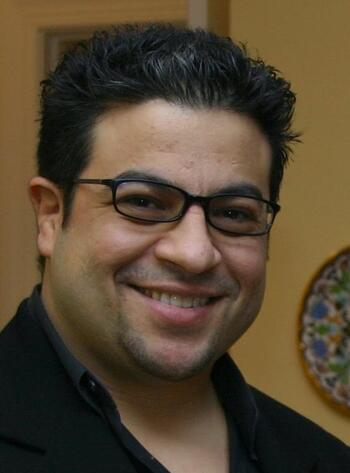
Gülru Gezer (Consul General of Turkey to Los Angeles) will discuss the contemporary Turkish foreign policy with special respect to the current regional crisis involving Syria, Russia, Turkey, and the European Union. 

Raife Gülru Gezer is Consul General of Turkey to Los Angeles. She graduated from the Department of Political Science and International Relations of the Boğaziçi University, and holds an M.A. in European Political and Administrative Studies from the College of Europe in Brugge, Belgium. After briefly  working as an editor at the Turkish channel NTV'S international news department, she joined Turkey's Ministry of Foreign Affairs and held various positions in the European Union Political Affairs Deputy Directorate.  In 2007 she was posted to the Turkish Embassy in Damascus where she worked for two years. She then served at the Turkish Permanent Representation to the EU from 2009-10, and as the Chief of Cabinet of the Under Secretaryof the Ministry of Foreign Affairs from 2010-2014. Gülru Gezer speaks fluent English and Russian.

This event is organized by the Mediterranean Studies Forum, and is co-sponsored by Stanford Global Studies, the Europe Center, the Department of International Relations, the International Policy Studies, and the Center for Russian, East European, and Eurasian Studies.


Raife Gulru Gezer Consul General speaker Turkish Consulate General in Los Angeles
Lectures
News Type
News
Date
Paragraphs
North Korea’s fourth test of a nuclear device on February 6 and its rocket launch four weeks later in defiance of UN Security Council resolutions have caused a new sense of crisis on the Korean Peninsula. As if the tests themselves weren’t sufficiently provocative, Pyongyang is now claiming to have a hydrogen bomb and is threatening, if challenged, to launch a nuclear attack on both the United States and its ally South Korea. Whatever the exact state of North Korea’s capabilities, the tests underlined two basic facts: Pyongyang’s apparent determination to continue its efforts until it can indeed one day credibly threaten the United States with nuclear attack, and the international community’s resolve never to accept North Korea as a nuclear weapons state.
 
The international community responded with unprecedentedly tough sanctions against Pyongyang. On March 2, the UN Security Council passed Resolution 2270. It targets the hard currency that Pyongyang desperately needs to realize its byeongjin strategy of simultaneously trying to grow its economy and continuing nuclear weapons development. In addition, a number of countries, including the United States and Japan, introduced their own new bilateral sanctions. Perhaps most dramatically, South Korea on February 10 effectively permanently closed its decade-long joint North-South industrial park in the city of Kaesong in North Korea. It was the last project putting significant amounts of South Korean cash into the hands of the North Korean leadership.
 
North Korea’s response to the international community has included issuing even more threats, testing a series of new missiles, and sentencing an American college student to fifteen years’ imprisonment, allegedly for trying to filch a propaganda poster.
 
To help make sense of the new North Korea crisis, please stay tuned to this page for Korea Program Associate Director David Straub’s analysis and commentary. Straub is a former senior American diplomat whose thirty-year career focused on Korean affairs. His experiences include participation in the Six Party Talks and accompanying former President Clinton to Pyongyang in 2009 for a meeting with then-leader Kim Jong Il.
 
Latest Commentaries
In an interview with Radio Free Asia, Straub discusses the background and implications of the recent defections to South Korea of workers in North Korea's restaurants in China.
 
In a recent public lecture at Stanford, Straub explains why the critics of the Obama administration are wrong, and forecasts how the next U.S. administration is likely to approach the North Korea problem.
 
Straub tells NK News, a subscription-based website for the North Korea expert community, that the United States government may eventually have to further discourage or even ban American tourism to North Korea to protect citizens from arbitrary incarceration and prevent Pyongyang from blackmailing Washington for their release. 
 
In an interview with the University of Virgina's student newspaper, Straub discusses North Korea's imprisonment of UV student Otto Warmbier for allegedly attempting to steal a poster inscribed with the slogan "Let's firmly arm ourselves with Kim Jong-il patriotism!” Straub explains how the alleged offense fits in with the cult of personality surrounding the Kim Il Sung family dynasty.
 
Overall Situation
In the aftermath of North Korea’s latest nuclear test, Straub joined Stanford colleagues in analyzing its import and discussing possible policy responses, in an interview published by the Stanford Report.
 
In an interview with South Korean newspaper Segye Ilbo (in Korean) immediately following North Korea’s latest nuclear test, Straub argued that South Korea had the stature and ability to lead the international community in imposing greater costs on North Korea. His recommendations included considering closing the Kaesong industrial park.

Straub told the Washington Post that calls by some South Koreans for their country to develop its own nuclear weapons to counter the North were mostly a media phenomenon. Responsible South Korean leaders know that pursuing nuclear weapons would be disastrous for their country.

Sanctions
Straub told Voice of America’s Korea Service (in Korean) that the new UN Security Council sanctions reflected years of preparation by the Obama administration and would significantly increase the psychological pressure on North Korea’s leaders to abandon their pursuit of nuclear weapons.
 
Kaesong Closure
In an interview featured on the front page of Chosun Ilbo (in Korean), South Korea’s biggest newspaper, Straub supported South Korean President Park’s controversial decision to close the Kaesong industrial park in North Korea.
 
Peace Treaty Proposals
Straub told Associated Press that North Korea’s proposal for a peace treaty with the United States was a non-starter in Washington as long as Pyongyang continued to pursue nuclear weapons.
 
North Korea’s Incarceration of American Citizens
In the wake of North Korea's sentencing of University of Virginia student Otto Frederick Warmbier to fifteen years' imprisonment of hard labor for allegedly trying to steal a propaganda poster, Straub talked with a reporter from the University of Virginia's student newspaper about the case. Straub draws on his experience of leading the office of Korean affairs at the U.S. Department of State to discuss the conditions faced by Americans incarcerated in North Korea as well as North Korean intentions.


Hero Image
a factory inside the kaesong industrial zone
A factory inside the Kaesong Industrial Zone. South Korea’s closure of the massive joint industrial park reflected its conclusion that much stronger international pressure is required to force Pyongyang to give up its nuclear weapons program.
John Everard
All News button
1
News Type
Commentary
Date
Paragraphs

Stanford experts from the Shorenstein Asia-Pacific Research Center (APARC) spoke with media in Asia and the United States about the dynamics on the Korean Peninsula following recent provocations by North Korea; a roundup of those citations is below.

The United Nations imposed a new set of sanctions against North Korea on March 2 in response to the country’s fourth nuclear test in January and subsequent rocket launch in February of this year. Shorenstein APARC Director Gi-Wook Shin offered his view in an interview with Dong-a Ilbo:

“The new sanctions are unprecedentedly strong and comprehensive, but the dominant view is pessimistic,” he said, emphasizing that the sanctions’ effectiveness stands largely on the shoulders of China, which is North Korea’s largest trading partner.

“Only if China doesn't fizzle out after a few months – but continuously enforces the sanctions – will we see any meaningful effect,” he said.

Shin also called upon South Korea to play a leadership role in dealing with North Korea because the United States has only limited interest in solving the nuclear problem, and China, will not change its approach and continue to move according to its own interests.

Shin relayed a similar message in an interview with Maeil Shinmun last December. South Korea must break from its own perception that it is the “balancer” between China and the United States. South Korea, often described as a “shrimp among whales,” should instead strive to play a larger role as a “dolphin,” he said.

Furthermore, Shin told Maeil that the U.S.-Korea relationship and the U.S.-China relationship are very different from each other, and should be viewed as they are. He pointed out that the U.S.-Korea relationship is an alliance where the two countries act accordingly as one body, whereas the China-Korea relationship is a strategic partnership insofar as the two countries cooperate on selective issues of mutual interest.

In a separate interview with the Associated Press, David Straub, associate director of the Korea Program, was asked about the possibility of peace talks with North Korea as an alternative to or parallel with the U.N. sanctions. Straub said “it would not make sense” and that “there is no support for such an approach in Washington” because of the strategic partnership between China and North Korea. He also told Voice of America that the new sanctions will significantly increase the political, diplomatic, and psychological pressures on North Korea's leaders to rethink their pursuit of nuclear weapons.

Hero Image
665980
The U.N. Security Council unanimously adopts resolution 2270, imposing additional sanctions on North Korea in response to that country’s continued pursuit of a nuclear weapons and ballistic missile program, March 2, 2016.
United Nations
All News button
1
News Type
News
Date
Paragraphs

China Daily has featured a longstanding Stanford research project described as instrumental towards the normalization of U.S. relations with China during the Carter administration.

Led by late professor Michel Oksenberg, a China expert who also served on the U.S. National Security Council, the project sought to examine the workings of the local government, economy and social structure of Zouping, a county in northern China. Between 1987 and 1991, the project brought more than eighty U.S. academics to that area.

According to the Daily, it was “one of the most important academic exchanges of the 1980s,” which offered a symbol of reform and “helped the world gain greater and deeper understanding of China’s growing role on the global stage.”

Jean Oi, director of the China Program at the Shorenstein Asia-Pacific Research Center, was part of the cohort that traveled with Oksenberg, and has since revisited the area with her students to continue research efforts.

The full article can be accessed below.


APARC Event: 2018 Oksenberg Conference on Zouping County Research

Publication: Zouping Revisited: Adaptive Governance in a Chinese County

Hero Image
mike in crowd low res
Michel Oksenberg (center) meets with young people in China.
Lois Oksenberg
All News button
1
Paragraphs

While power asymmetry typically defines security relationships between allies, there exist other forms of asymmetry that influence alliance politics. In order to illustrate how they can shape policy outcomes that cannot be explained solely through the lens of power capabilities, the authors examine the role of relative attention that each side pays to the alliance. It is their central argument that since the client state has a greater vested interest in the alliance and given that attention depends on interest/need, the client state can leverage attention to get its way. By analysing two specific cases, the 2002 South Korean schoolgirls tragedy and the 2008 beef protests—instances where the South Koreans succeeded in compelling U.S. concessions—the authors show that because the alliance was more central to the client state’s agendas, there existed an asymmetry of attention that offered leveraging opportunities for the weaker ally. In this study, the authors emphasise the role of media attention as a key variable, and seek to contribute to debates on weaker party leverage in asymmetrical alliances.

All Publications button
1
Publication Type
Journal Articles
Publication Date
Journal Publisher
Australian Journal of International Affairs
Authors
Gi-Wook Shin
Paragraphs

On January 13, 2016 for the first time in its history the European Union launched an investigation against one of its full member states, i.e. Poland. The dispute is about new Polish laws that allegedly disempower the national constitutional court and the public media thus breaching EU democracy standards. The newly elected Polish government in charge since November 2015 denies this and calls its “reforms” legitimate, even necessary to achieve a government better capable of acting in order to renew the economy and the political and social system. The dispute reaches far beyond Poland and questions the state and perspectives of integration of the Central Eastern European (CEE) nations into the EU. It is both effect and motor of the current pluri-­‐dimensional European crisis.

In essence, the EU-­‐Poland dispute is the outcome of the combination of the specific problems of governance in the Central Eastern European (CEE) nations with a superficial institutionalism of the EU that long neglected the area’s developmental issues. Poland’s democracy problems show that new attention of the EU to its CEE member states is needed which were for many years ignored because of other concerns such as the economic and financial crises since 2007 and the subsequent debt crisis since 2012, latest because of the threat of a “Brexit”, of Britain leaving the EU. In order to save the European integration project, it will be crucial for the credibility and acceptance of the EU to help the CEE nations to reform their socio-­‐economic systems. The case of Poland is the chance for a debate about how the EU and its CEE member states can cooperate better instead of arguing. This debate will be an important pillar of the ongoing overall discussion about the future of the European Union in the coming years.

All Publications button
1
Publication Type
Working Papers
Publication Date
Authors
-

The three key countries in Northeast Asia are in different economic stages: China is developing, Korea is already developed, and Japan is in a post-development stage. Japan’s early modernization, which encompassed economic, social, and political reforms, raised the country to a position of Asian leadership for a century, up to the 1980s. Korea copied the Japanese model beginning in the 1960s, and China began its own serious economic reforms in the early 1980s. By the 2000s, Korea had surpassed Japan in some economic sectors, and China’s economy, by dint of its scale, now threatens to overwhelm its neighbors’. At the same time, all three societies share deep roots in Chinese civilization and Confucian culture. Yet, as modernity and globalization increasingly affect all of Asia, that traditional culture is gradually being modified. In the process of these economic and cultural changes, three new and different strategic cultures and national personalities are emerging. Asia scholar and author Katy Oh will examine the changes among the countries of Northeast Asia and how they are affecting their relationships with one another.

Image
katyohport
Dr. Kongdan (Katy) Oh Hassig is a Senior Asian Scholar at the Institute for Defense Analyses (IDA).  She was formerly a Non-Resident Senior Fellow at the Bookings Institution and a member of the political science department of the RAND Corporation and has taught courses at a number of universities. She is a member of the Council on Foreign Relations, the board of directors of the United States Committee of the Council for Security Cooperation in the Asia-Pacific, and the co-founder and former co-director of The Korea Club of Washington, D.C. She is the co-author of North Korea through the Looking Glass (2000) and The Hidden People of North Korea (2009), and is currently working on a new book on China, Japan and Korea. She received a BA from Sogang University and an MA from Seoul National University in Korea, and an MA and a PhD in Asian Studies from the University of California, Berkeley.

This public event is made possible through the generous support of the Koret Foundation.
 

Kongdan Oh Hassig <i>Senior Asian Scholar</i>, Institute for Defense Analyses
Seminars
News Type
News
Date
Paragraphs

Event Recap: Human Rights and Refugees in Europe


Panel: Human Rights and Refugees in EuropePictured: Kenneth Scheve, Jenny Martinez, Emily Arnold-Fernàndez, and James Cavallaro.
Amidst the reimposition of border controls in some Schengen states, daily reports of new arrivals to Europe, and the marked rise in anti-immigrant rhetoric, the European refugee crisis poses significant challenges to Europe. In her January visit to Stanford, Founder and Executive Director of Asylum Access, Emily Arnold-Fernàndez discussed the crisis in the context of the global plight of refugees. She noted that with an estimated 20 million refugees worldwide, and an additional estimated 40 million internally displaced persons, we are witnessing the largest population displacement since World War II. Arnold-Fernàndez explained that the rights of refugees and state obligations to refugees are enshrined in international law. In addition to the protections against being returned to an unsafe country of origin ("non-refoulement"), she noted that the Refugee Convention provides refugees with many rights on par with "the most favorable treatment accorded to nationals of a foreign country" and, in some cases, on par with those granted to nationals of the receiving state. These rights include the right of association, access to courts, access to wage-earning and self employment, and the freedom of movement. She explained, however, that states frequently fail to provide many of these rights to refugees, something Arnold-Fernàndez attributes in part to insufficient enforcement. As a result, where refugees are routinely prohibited from participating in the first country of arrival, they are likely to move on to alternative destinations. This, in part, is driving the current influx of refugees to Europe. This reality, according to Arnold-Fernàndez, elucidates at least one method of both assisting refugees and alleviating the flows of refugees to Europe: promoting policy change to ensure that refugee rights are protected and upheld in countries of first arrival. This approach, she explained, is in marked contrast to the predominant approaches to refugee assistance, which include humanitarian aid and development solutions (such as on the job training). While the first is not a long-term solution, the second is only likely to be effective if refugees are first permitted to participate in society.

Following the talk, The Europe Center Director, Kenneth Scheve, led a discussion featuring commentary by Stanford Law professors James Cavallaro and Jenny Martinez. Cavallaro spoke of the need to think more broadly about human migration and the potential deleterious effects of state immigration controls on both human rights and security. Martinez noted the tension between the clarity of the non-refoulement principle and the ambiguity of safe third country principles, and questioned the ability of legal norms to compel states to change policy or reallocate resources. To watch this event in full, please visit our website.


Featured Faculty Research: Cécile Alduy

We would like to introduce you to some of The Europe Center's faculty affiliates. Our featured faculty member this month is Cécile Alduy, who is an Associate Professor of French literature and culture and the Director of the French and Italian Department at Stanford University.

Cécile AlduyCécile earned her Ph.D. in French Literature from the University of Reims in France in 2003 and joined the faculty at Stanford University that same year. Her research interests include the history and mythology of national and ethnic identities since the Renaissance, far right ideology and rhetoric, the relations between cultural, literary, and medical discourses on gender and the body in early modern Europe, poetry and poetics, narrative forms and their discontent, French cinema, and contemporary French literature. Cécile's most recent book, Marine Le Pen prise aux mots. Décryptage du nouveau discours frontiste [Marine Le Pen taken to her words. Decoding the new national front discourse], co-authored with Stephanie Wahnich, examines the rhetoric used by the National Front leader, Marine Le Pen, and compares it to that of her father and former National Front leader, Jean-Marie Le Pen. Casual observation of far right politics in France suggests that there has been a significant change in the National Front program following the 2011 leadership change to Marine Le Pen from Jean-Marie Le Pen and his 2015 ouster from the party. Marine Le Pen has taken great efforts to distance herself from her father, who infamously and repeatedly characterized gas chambers as "a detail in the history of World War II." The party has also enjoyed increasing electoral support in recent years. Against this backdrop, the book examines two fundamental questions: what is Marine Le Pen actually saying, and why does her speech resonate with French society today? To answer these questions, Alduy and Wahnich have analyzed over 500 speeches given by Marine and Jean-Marie Le Pen. This analysis reveals that there is significant continuity between the political agenda and ideological content of the Le Pens. In contrast with her father's blatantly radical speech, however, the younger Le Pen employs careful phraseology, replete with allusions, ambiguities, and double entendres, in order to "de-demonize" the party and make its platform appear more palatable to a modern French audience. In spite of programmatic continuity, this rhetorical rebranding appears to have facilitated greater electoral support for the National Front. Marine Le Pen prise aux mots has received significant media coverage, including a feature in Le Monde [article in French] and on NPR. In her ongoing research, supported in part by The Europe Center, Cécile is building upon the methodologies devised for Marine Le Pen prise aux mots and examining the development of political discourse of French political parties across the ideological spectrum in the period leading up to the 2017 presidential election. The initial results of this study will be published by Seuil in 2017 in a book preliminarily entitled Les Mots des présidentiables. Sémantique d'une triangulaire annoncée [The words of presidential candidates. Semantics of a three-candidate race]. We invite you to visit our website for additional information about this research.

Publication Details: Alduy, Cécile, and Stephanie Wahnich. 2015. Marine Le Pen prise aux mots. Décryptage de nouveau discours frontiste. Paris: Seuil.


Featured Graduate Student Research: Camilla Mazzucato

We would like to introduce you to some of the graduate students that we support and the projects on which they are working. Our featured graduate student this month is Camilla Mazzucato (Anthropology). Camilla is a Ph.D. student in the Department of Anthropology at Stanford University. Before beginning her Ph.D. studies at Stanford, Camilla earned a BA and an MA in Archaeology from the University of Bologna and an MSc in GIS and Spatial Analysis in Archaeology from the University College London.

Camilla MazzucatoCamilla is an anthropologist who is interested in using network analysis to examine the social arrangements "mega-sites" - large settlements that originated with small, settled hunter-gatherer communities - during the Pre-Pottery Neolithic B (PPNB) and Pottery Neolithic periods. In her current research, Camilla is evaluating these social arrangements with new evidence from Çatalhöyük, a dense agglomeration of mudbrick houses occupied for 1,400 years and located in modern-day Turkey. Approximately the size of a town, Çatalhöyük lacks many of the characteristics of a modern town, including specialized areas, communal buildings, and centralized functions. Moreover, the spatial arrangement differs significantly from other PPNB settlements. In summer 2015, Camilla conducted field research, partially funded by The Europe Center, at the site of Çatalhöyük. During her four weeks at the site, she explored ways of modeling the site's networks by collecting data focused on patterns of similarity of material culture features. This data will be used to examine the site's internal organization as well as the arrangements of social relationships therein. In addition, she spent time studying some of the recently-excavated buildings, using architectural features to study ties among entities.

Reminder: The Europe Center will be accepting applications for the Graduate Student Grand Competition March 28, 2016 - April 15, 2016. For more information please visit our website.


The Europe Center Programs: Minor in European Studies

As previously announced, The Europe Center and Stanford Global Studies are offering a minor in Global Studies with a concentration in European Studies. The minor is designed for undergraduate students who have an interdisciplinary interest in the history, culture, politics, societies, and institutions of Europe, past and present. The requirements of the minor include coursework, advanced proficiency in a modern European language, and a capstone experience such as a research paper with a focus on European Studies, completion of an overseas study program in Europe, or completion of an overseas internship in Europe.

This quarter, Christophe Crombez, Consulting Professor at The Europe Center, is offering the minor's core seminar class: Introduction to European Studies. In this survey course, students are introduced to important themes in the study of European politics, economics, and culture. The course begins with a discussion of European identity and culture, focusing on what makes Europe unique and how recent history has shaped this identity. In the second section, students analyze European politics by learning about Europe's predominant political institutions - parliamentary government and proportional representation electoral systems - and examining the effect of these institutions on public policy. The course then turns to the economy and understanding the challenges and opportunities that European economies face today. The fourth section focuses on the European Union, including its history, functioning, and policies. In the final section, the class discusses transatlantic relations.

We invite you to visit our website for more information about the Minor in European Studies.


Visiting Student Researcher: Lina Eriksson

Lina ErikssonThe Europe Center is pleased to introduce to you Lina Eriksson, a Fulbright Scholar who is visiting Stanford University from the Department of Government at Uppsala University and the Center for Natural Disaster Science (CNDS), Sweden. Lina holds an MA in Ethnic Conflicts and Conflict Resolutions, Asylum Immigration and Integration from University of Waterloo, Canada and an MSc in Political Sciences, Economics and International Development from Jönköping International Business School (JIBS), Sweden. She is broadly interested in the politics of natural disasters. In her dissertation, entitled Natural Disasters and National Politics, Lina examines the electoral effects of the 2004 Boxing Day Tsunami and the 2005 Storm Gudrun on Swedish parliamentary elections. Part of this research, forthcoming in Electoral Studies, finds that the Swedish Social Democratic Party's poor crisis response to Storm Gudrun resulted in a significant decrease in support for the Social Democratic Party in the affected regions, leading to the largest change in partisan support in Swedish history. We invite you to visit our website for additional information about this research.

Publication Details: Eriksson, Lina M. 2016. "Winds of Change: Voter Blame and Storm Gudrun in the 2006 Swedish Parliamentary Election." Electoral Studies 41(1): 129-142.


The Europe Center Sponsored Events

February 18-19, 2016 
8:00AM - 5:00PM 
Workshop: Heritage Bureaucracies: Theoretical and Practical Perspectives 
Stanford Archaeology Center 
This conference is co-sponsored by The Europe Center, Stanford Archaeology Center, Cantor Arts Center, Department of Anthropology, Center for Russian, East European & Eurasian Studies, Stanford Humanities Center, The Europe Center, France-Stanford Center for Interdisciplinary Studies, and The Mediterranean Studies Forum.
Please visit our website for more information.

March 28, 2016 
12:00PM - 1:30PM 
Adam Tooze, Columbia University 
NATO Expansion and the Swap Lines: the Unspoken Geopolitics of the Financial Crisis in Europe, 2007-2013
Reuben Hills Conference Room, Encina Hall East 
RSVP by 5:00PM March 24, 2016.

April 25, 2016 
11:30AM - 1:00PM 
Torben Iversen, Harvard University 
Workshop Title TBD 
Room 400 (Graham Stuart Lounge), Encina Hall West 
No RSVP required. 
This seminar is part of the Comparative Politics Workshop in the Department of Political Science and is co-sponsored by The Europe Center.

Save the Date: April 28-29, 2016 
9:00AM - 5:00PM 
Conference: Networks of European Enlightenment 
Levinthal Hall, Stanford Humanities Center 
This conference is co-sponsored by The Europe Center, the French Cultural Workshop, the Stanford Humanities Center, and the Division of Literatures, Cultures, and Languages.

May 9, 2016 
11:30AM - 1:00PM 
Monica Martinez-Bravo, Centro de Estudios Monetarios y Financieros (CEMFI), Madrid 
Workshop Title TBD 
Room 400 (Graham Stuart Lounge), Encina Hall West 
No RSVP required. 
This seminar is part of the Comparative Politics Workshop in the Department of Political Science and is co-sponsored by The Europe Center.

May 16, 2016 
11:30AM - 1:00PM 
Daniel Stegmueller, University of Mannheim 
Workshop Title TBD 
Room 400 (Graham Stuart Lounge), Encina Hall West 
No RSVP required. 
This seminar is part of the Comparative Politics Workshop in the Department of Political Science and is co-sponsored by The Europe Center.

European Security Initiative Events

March 3, 2016 
12:00PM - 1:30PM 
Vygaudas Ušackas, European Union Ambassador to Russia 
Russia and the West: Handling the Clash of World Views 
CISAC Central Conference Room, Encina Hall 
RSVP by 5:00PM March 1, 2016.

March 10, 2016 
12:00PM - 1:30PM 
Kathryn Stoner, Senior Fellow, Freeman Spogli Institute for International Studies, Stanford University 
Resurrected? The Domestic Determinants of Russia's Conduct Abroad 
Room E008 (Ground Floor Conference Room), Encina Hall East 
RSVP by 5:00PM March 9, 2016.


Hero Image
stanford events logo
All News button
1
-

Abstract

Under Secretary Sewall will deliver remarks on Countering Violent Extremism, the U.S. Government’s comprehensive approach for preventing the spread of ISIL and emergence of new terrorist threats. The Under Secretary will describe how the evolution of violent extremism since the 9/11 attacks necessitates a “whole of society” approach to prevent people from aligning with terrorist movements and ideologies in the first place. Drawing on recent travel to Indonesia, India, and Egypt, the Under Secretary will describe the vital role of actors outside government in this approach, including women, youth, religious leaders, businesses, and researchers. She will also elaborate on new steps the U.S. Government is taking to intensify its CVE efforts around the world. The Under Secretary will also take questions from the audience.

Speaker bio

Image
sarah sewall

Dr. Sarah Sewall is the Under Secretary for Civilian Security, Democracy, and Human Rights at the U.S. State Department, and is a longtime advocate for advancing civilian security and human rights around the world. Dr. Sewall was sworn in on February 20, 2014. She serves concurrently as the Special Coordinator for Tibetan Issues. Over the previous decade, Dr. Sewall taught at the Harvard Kennedy School of Government, where she served as Director of the Carr Center for Human Rights Policy and directed the Program on National Security and Human Rights.

Dr. Sewall has extensive experience partnering with the U.S. armed forces around civilian security. At the Kennedy School, she launched the MARO (Mass Atrocities Response Operations Project) to assist the U.S. military with contingency planning to protect civilians from large-scale violence. She was a member of the Defense Policy Board and served as the Minerva Chair at the Naval War College in 2012. She also led several research studies of U.S. military operations for the Department of Defense and served as the inaugural Deputy Assistant Secretary of Defense for Peacekeeping and Humanitarian Assistance in the Clinton Administration. Prior joining the executive branch, Dr. Sewall served for six years as the Senior Foreign Policy Advisor to U.S. Senate Majority Leader George J. Mitchell and earned a Ph.D at Oxford University, where she was a Rhodes Scholar.

This event is co-sponsored by Stanford in Government and CISAC


[[{"fid":"222126","view_mode":"crop_870xauto","fields":{"format":"crop_870xauto","field_file_image_description[und][0][value]":"Sewall Flyer","field_file_image_alt_text[und][0][value]":"","field_file_image_title_text[und][0][value]":"","field_credit[und][0][value]":"","field_caption[und][0][value]":"","field_related_image_aspect[und][0][value]":"","thumbnails":"crop_870xauto"},"type":"media","attributes":{"width":"870","class":"media-element file-crop-870xauto"}}]]

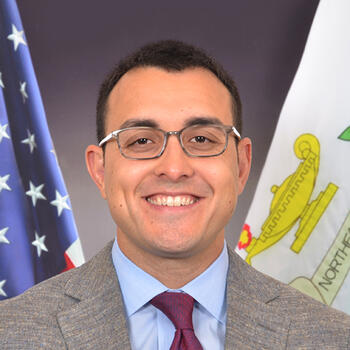
Dr. Sarah Sewall Under Secretary for Civilian Security, Democracy, and Human Rights U. S. State Department
Lectures
Subscribe to Diplomacy