Environment

FSI scholars approach their research on the environment from regulatory, economic and societal angles. The Center on Food Security and the Environment weighs the connection between climate change and agriculture; the impact of biofuel expansion on land and food supply; how to increase crop yields without expanding agricultural lands; and the trends in aquaculture. FSE’s research spans the globe – from the potential of smallholder irrigation to reduce hunger and improve development in sub-Saharan Africa to the devastation of drought on Iowa farms. David Lobell, a senior fellow at FSI and a recipient of a MacArthur “genius” grant, has looked at the impacts of increasing wheat and corn crops in Africa, South Asia, Mexico and the United States; and has studied the effects of extreme heat on the world’s staple crops.

Authors
News Type
News
Date
Paragraphs

Since the 1960s, India’s groundwater irrigation has increased dramatically, playing an important role in its economy and people’s lives — supporting livelihoods of over 26 crore farmers and agricultural labourers who grow over a third of India’s foodgrains. These benefits, however, have come at the cost of increased pressure on groundwater reserves. 

India is the world’s largest user of groundwater and, since the 1980s, its groundwater levels have been dropping. The severity of the problem is particularly acute in the northwest, where levels have plunged from 8m below ground to 16m, so that water needs to be pumped from even greater depths. Worse yet, much of this is non-renewable since recharge rates are less than extraction rates and replenishing this resource can take thousands of years. 

This won’t last 

Using up such “fossil” groundwater is unsustainable. Moreover, the future of monsoon rainfall remains uncertain; while some climate models predict an increase, others forecast a weakening monsoon, although changes in monsoon variability are already underway and will continue into the future. Historical records show the number of dry spells and the intensity of wet spells have risen over the past 50 years. As climate change alters the monsoon, the large stresses on India’s groundwater resources may increase.

Please go to The Hindu Buisness Line to read the entire article.

Hero Image
water iStockphoto/greenaperture
All News button
1
News Type
News
Date
Paragraphs

Fellows will arrive at Stanford in July to begin the three-week academic training program taught by Stanford faculty, policymakers and thought-leaders in the technology sector.


Image
collagewebsite2


Stanford's Center on Democracy, Development, and the Rule of Law is proud to announce the 2017 class of Draper Hills Summer Fellows, which is composed of 28 leaders – selected from among hundreds of applications – advancing democratic development in some of the most challenging corners of the world.

In Bahrain, Burma, Rwanda and Sudan our fellows are working on peace-building initiatives to create more tolerant and inclusive societies. Judges and lawyers are holding government and criminals accountable and reforming the rule of law in Argentina, Guatemala and the Philippines. Gender rights activists are creating new tools and programs to protect the safety and freedom of women and girls in India, Kuwait and Papua New Guinea.

In Egypt, Morocco, Pakistan, Serbia and Ukraine, our fellows are serving inside the government as members of Parliament and senior civil servants to advance reform and new policy agendas. Business leaders in Jordan and India launched initiatives to support more inclusive economic growth and social development.

CDDRL is excited to launch another powerful network of leaders determined to advance change in their communities. They will emerge with new tools, frameworks and connections to enhance their work and deepen their impact on democratic reform.

The 2017 class will mark the 13th cohort of the Draper Hills Summer Fellows Program and the fellows will join the Omidyar Network Leadership Forum, an alumni community of over 300 alumni in 75 countries worldwide.

Hero Image
collagewebsite2
All News button
1
-

Abstract: Over decades, assessment by the Intergovernmental Panel on Climate Change and many others has bolstered understanding of the climate problem: unequivocal warming, pervasive impacts, and serious risks from continued high emissions of heat-trapping gases. Societies are increasingly responding with early actions to decarbonize energy systems and prepare for impacts. In this emerging era of climate solutions, new assessment opportunities arise. They include learning from ongoing real-world experiences and helping close the gap between aspirations and the pace of progress. Against this backdrop, I will consider core challenges in assessment, in particular: (1) integrating diverse evidence; (2) applying rigorous expert judgment; and (3) deeply embedding interactions between experts and decision-makers. Examples span climate risks and portfolios of mitigation and adaptation responses. For climate and broader global change, the presentation will explore how transparent, high-traction assessment can support decisions about contested and uncertain futures. 

About the Speaker: Katharine Mach is a Senior Research Scientist at Stanford University, an Adjunct Assistant Professor at Carnegie Mellon University, and a Visiting Investigator at the Carnegie Institution for Science. She leads the Stanford Environment Assessment Facility (SEAF). From 2010 until 2015, Mach co-directed the scientific activities of Working Group II of the Intergovernmental Panel on Climate Change, which focuses on impacts, adaptation, and vulnerability. This work culminated in the IPCC’s Fifth Assessment Report and its Special Report on Managing the Risks of Extreme Events and Disasters to Advance Climate Change Adaptation. Mach received her PhD from Stanford University and AB from Harvard College.

What next for climate? Assessing the risks and the options
Download pdf
Katharine J. Mach Senior Research Scientist Stanford University
Seminars
-

Image

The same institutions that enabled China’s massive urbanization and spurred its economic growth now require further reform and innovation.

To address the issues facing the next phase of the nation’s transformation, the National New Urbanization Plan (2014–20) set ambitious targets for sustainable, human-centered, and environmentally friendly urbanization. This volume explores the key institutional and governance challenges China will face in reaching those goals. Its policy-focused contributions from leading social scientists in the United States and China explore aspects of urbanization ranging from migration and labor markets to agglomeration economies, land finance, affordable housing, and education policy. Subjects covered in the eleven chapters include:


    * Institutional problems leading to fiscal pressures on local governments and unequal provision of social    services to migrant families   

   * The history of land financing and threats to its sustainability

    * The difficulty of sorting out property rights in rural China

    * How administrative redistricting has allowed the urbanization of geographical administrative places to     outpace the urbanization of populations within those areas

    * How the hukou system may not be the sole, or even primary, mechanism restricting migrants from      public goods, such as their childrens’ education

    * Whether the nation’s food security is threatened by its ongoing urbanization

    * The current state of the provision of low-income housing, and future challenges

Professor Jean Oi is Director of the China Program, William Haas Professor of Chinese Politics, Stanford University; Lee Shau Kee Director of the Stanford Center, Peking University. Her work focuses on comparative politics, with special expertise on political economy and the process of reform in transitional systems.  Oi has written extensively on China's rural politics and political economy. Her State and Peasant in Contemporary China (University of California Press, 1989) examined the core of rural politics in the Mao period—the struggle over the distribution of the grain harvest—and the clientelistic politics that ensued. Her Rural China Takes Off (University of California Press, 1999) examined the property rights necessary for development and showed how "local state corporatism" facilitated rapid growth of rural industry.  Recent publications include Growing Pains: Tensions and Opportunity in China's Transformation (Brookings Institution Press, 2010), co-edited with Scott Rozelle and Xueguang Zhou; and “Development Strategies and Poverty Reduction in China,” in Yusuf Bangura, ed., The Developmental Road to Poverty Reduction, (2015); and “Rural Development,” in David S. Goodman, ed., Handbook of the Politics of China (Edward Elgar Publishing, 2015).

Professor Karen Eggleston is Director of the Asia Health Policy Program; Deputy Director, Shorenstein Asia-Pacific Research Center. She joined the Walter H. Shorenstein Asia-Pacific Research Center (APARC) in the summer of 2007. She is also a fellow at Stanford's Center for Health Policy/Primary Care and Outcomes Research (CHP/PCOR), and a Faculty Research Fellow of the National Bureau of Economic Research (NBER). Her research focuses on comparative healthcare systems and health reform in Asia, especially China; government and market roles in the health sector; payment incentives; healthcare productivity; and the economics of the demographic transition. Eggleston teaches through Stanford's East Asian studies program and is also affiliated with Stanford's public policy program.

Professor Klaus Desmet is Altshuler Centennial Interdisciplinary Professor at Southern Methodist University; Research Fellow at the Centre for Economic Policy Research. He holds an MSc in Business and Engineering from the Université Catholique de Louvain and a Ph.D. in Economics from Stanford University. He previously was professor at Universidad Carlos III de Madrid and has held visiting positions at a number of institutions, including the University of Illinois, Stanford University and the Bank of Spain. His research focuses on regional economics, international trade, economic growth and diversity.

Books will be available for sale. Cash or check only.


Department of Political Science
Stanford University
616 Serra Street
Stanford, CA 94305-26044

(650) 723-2843 (650) 725-9401
0
Senior Fellow at the Freeman Spogli Institute for International Studies
William Haas Professor in Chinese Politics
jean_oi_headshot.jpg PhD

Jean C. Oi is the William Haas Professor of Chinese Politics in the department of political science and a Senior Fellow of the Freeman Spogli Institute for International Studies at Stanford University. She is the founding director of the Stanford China Program at the Walter H. Shorenstein Asia-Pacific Research Center. Professor Oi is also the founding Lee Shau Kee Director of the Stanford Center at Peking University.

A PhD in political science from the University of Michigan, Oi first taught at Lehigh University and later in the Department of Government at Harvard University before joining the Stanford faculty in 1997.

Her work focuses on comparative politics, with special expertise on political economy and the process of reform in transitional systems. Oi has written extensively on China's rural politics and political economy. Her State and Peasant in Contemporary China (University of California Press, 1989) examined the core of rural politics in the Mao period—the struggle over the distribution of the grain harvest—and the clientelistic politics that ensued. Her Rural China Takes Off (University of California Press, 1999 and Choice Outstanding Academic Title, 1999) examines the property rights necessary for growth and coined the term “local state corporatism" to describe local-state-led growth that has been the cornerstone of China’s development model. 

She has edited a number of conference volumes on key issues in China’s reforms. The first was Growing Pains: Tensions and Opportunity in China's Transformation (Brookings Institution Press, 2010), co-edited with Scott Rozelle and Xueguang Zhou, which examined the earlier phases of reform. Most recently, she co-edited with Thomas Fingar, Fateful Decisions: Choices That Will Shape China’s Future (Stanford University Press, 2020). The volume examines the difficult choices and tradeoffs that China leaders face after forty years of reform, when the economy has slowed and the population is aging, and with increasing demand for and costs of education, healthcare, elder care, and other social benefits.

Oi also works on the politics of corporate restructuring, with a focus on the incentives and institutional constraints of state actors. She has published three edited volumes related to this topic: one on China, Going Private in China: The Politics of Corporate Restructuring and System Reform (Shorenstein APARC, 2011); one on Korea, co-edited with Byung-Kook Kim and Eun Mee Kim, Adapt, Fragment, Transform: Corporate Restructuring and System Reform in Korea (Shorenstein APARC, 2012); and a third on Japan, Syncretism: The Politics of Economic Restructuring and System Reform in Japan, co-edited with Kenji E. Kushida and Kay Shimizu (Brookings Institution, 2013). Other more recent articles include “Creating Corporate Groups to Strengthen China’s State-Owned Enterprises,” with Zhang Xiaowen, in Kjeld Erik Brodsgard, ed., Globalization and Public Sector Reform in China (Routledge, 2014) and "Unpacking the Patterns of Corporate Restructuring during China's SOE Reform," co-authored with Xiaojun Li, Economic and Political Studies, Vol. 6, No. 2, 2018.

Oi continues her research on rural finance and local governance in China. She has done collaborative work with scholars in China, including conducting fieldwork on the organization of rural communities, the provision of public goods, and the fiscal pressures of rapid urbanization. This research is brought together in a co-edited volume, Challenges in the Process of China’s Urbanization (Brookings Institution Shorenstein APARC Series, 2017), with Karen Eggleston and Wang Yiming. Included in this volume is her “Institutional Challenges in Providing Affordable Housing in the People’s Republic of China,” with Niny Khor. 

As a member of the research team who began studying in the late 1980s one county in China, Oi with Steven Goldstein provides a window on China’s dramatic change over the decades in Zouping Revisited: Adaptive Governance in a Chinese County (Stanford University Press, 2018). This volume assesses the later phases of reform and asks how this rural county has been able to manage governance with seemingly unchanged political institutions when the economy and society have transformed beyond recognition. The findings reveal a process of adaptive governance and institutional agility in the way that institutions actually operate, even as their outward appearances remain seemingly unchanged.

Selected Multimedia

Director of the China Program
Lee Shau Kee Director of the Stanford Center at Peking University
Faculty Affiliate at the Stanford Center on China's Economy and Institutions
Date Label
<i>Stanford University</i>

Shorenstein APARC
Stanford University
Encina Hall E301
Stanford, CA 94305-6055

(650) 723-9072 (650) 723-6530
0
Senior Fellow at the Freeman Spogli Institute for International Studies
Center Fellow at the Center for Health Policy and the Center for Primary Care and Outcomes Research
Faculty Research Fellow of the National Bureau of Economic Research
Faculty Affiliate at the Stanford Center on China's Economy and Institutions
karen-0320_cropprd.jpg PhD

Karen Eggleston is a Senior Fellow at the Freeman Spogli Institute for International Studies (FSI) at Stanford University and Director of the Stanford Asia Health Policy Program at the Shorenstein Asia-Pacific Research Center at FSI. She is also a Fellow with the Center for Innovation in Global Health at Stanford University School of Medicine, and a Faculty Research Fellow of the National Bureau of Economic Research (NBER). Her research focuses on government and market roles in the health sector and Asia health policy, especially in China, India, Japan, and Korea; healthcare productivity; and the economics of the demographic transition.

Eggleston earned her PhD in public policy from Harvard University and has MA degrees in economics and Asian studies from the University of Hawaii and a BA in Asian studies summa cum laude (valedictorian) from Dartmouth College. Eggleston studied in China for two years and was a Fulbright scholar in Korea. She served on the Strategic Technical Advisory Committee for the Asia Pacific Observatory on Health Systems and Policies and has been a consultant to the World Bank, the Asian Development Bank, and the WHO regarding health system reforms in the PRC.

Director of the Asia Health Policy Program, Shorenstein Asia-Pacific Research Center
Stanford Health Policy Associate
Faculty Fellow at the Stanford Center at Peking University, June and August of 2016
CV
Date Label
<i>Stanford University</i>
Klaus Desmet <i>Southern Methodist University</i>
Seminars
-

Abstract: In 2015 nations agreed to the Sustainable Development Goals, including ending poverty, protecting the planet, and ensuring prosperity for all. To accomplish them, we need to find synergies across the seventeen goals. Fortunately, some co-benefits are clear.  Cutting greenhouse gas emissions does much more than fight climate change.  It saves water and improves water quality. It saves lives, too, as witnessed by the ~20,000 or more people who die from coal pollution each year in the United States, with a million more people worldwide. The low-carbon economy will help stabilize national security, create net jobs, and more.

About the Speaker: Rob Jackson is Douglas Provostial Professor and Chair of the Earth System Science Department at Stanford University and a Senior Fellow in Stanford's Woods Institute for the Environment and Precourt Institute for Energy (jacksonlab.stanford.edu).  As an environmental scientist, he chairs the Global Carbon Project (globalcarbonproject.org), an international organization that tracks natural and anthropogenic greenhouse gas emissions.  His photographs have appeared in many media outlets, including the NY Times, Washington Post, and USA Today, and he has published several books of poetry. Jackson is a Fellow of the American Geophysical Union and the Ecological Society of America and was honored at the White House with a Presidential Early Career Award in Science and Engineering.

Rob Jackson Douglas Provostial Professor and Chair Earth System Science Department, Stanford University
Seminars
Paragraphs

CISAC's Siegfried Hecker, Larry Brandt and Jason Reinhardt worked with Chinese nuclear organizations on issues involving radiological and nuclear terrorism. The objective was to identify joint research initiatives to reduce the global dangers of such threats and to pursue initial technical collaborations in several high priority areas.

All Publications button
1
Publication Type
Working Papers
Publication Date
Journal Publisher
Center for International Security and Cooperation (CISAC)
Authors
Larry Brandt
Siegfried S. Hecker
Authors
News Type
News
Date
Paragraphs

When a state is “shamed” by outsiders for perceived injustices, it often proves counterproductive, resulting in worse behavior and civil rights violations, a Stanford researcher has found.

Rochelle Terman, a political scientist and postdoctoral fellow at Stanford’s Center for International Security and Cooperation (CISAC), recently spoke about how countries criticized by outsiders on issues like human rights typically respond -- and it's contrary to conventional wisdom. Terman has published findings, “The Relational Politics of Shame: Evidence from the Universal Periodic Review,” on this topic in the Review of International Organizations. She discussed her research in the interview below:

What does your research show about state "shaming"?

Shaming is a ubiquitous strategy to promote international human rights. A key contention in the literature on international norms is that transnational advocacy networks can pressure states into adopting international norms by shaming them – condemning violations and urging reform. The idea is that shaming undermines a state’s legitimacy, which then incentivizes elites into complying with international norms.

In contrast, my work shows that shaming can be counterproductive, encouraging leaders in the target state to persist or “double down” on violations. That is because shaming is seen as illegitimate foreign intervention that threatens a state’s sovereignty and independence.  When viewed in this light, leaders are rewarded for standing up to such pressure and defending the nation against perceived domination. Meanwhile, leaders who “give in” have their political legitimacy undermined at home. The result is that violations tend to persist or even exacerbate.

When and where does it work better to directly confront a country’s leadership about such injustices?

At least two factors moderate the effects of international shaming. The first is the degree to which the norm being promoted is shared between the “shamer” and the target. For instance, the West may shame Uganda or Nigeria for violating LGBT rights. But if Uganda and Nigeria do not accept the “LGBT rights” norm, and refuse to accept that homophobia constitutes bad behavior, then shaming will fail. In this case, it is more likely that shaming will be viewed as illegitimate meddling by foreign powers, and will be met with indignation and defiance.

Second, shaming is quintessentially a relational process. Insofar as it is successful, shaming persuades actors to voluntary change their behavior in order to maintain valued social relationships. In the absence of such relationship, shaming will fail. This is especially so when pressure emanates from a current or historical geopolitical adversary. In this later scenario, not only will shaming fail to work, it will likely provoke defensive hostility and defiance, having a counterproductive effect.

Combing these insights, we can say that shaming is most likely to work under two conditions: when the target is a strong ally, and the norm is shared.

What are some well-known cases where "shaming" backfired?

The main example I use in my forthcoming paper is on the infamous “anti-homosexuality bill” in Uganda. When Uganda introduced the legislation in 2009 (which in some versions applied capital punishment to offenders) it provoked harsh condemnation among its foreign allies, especially in the West. Western donor countries even suspended aid in attempt to push Yoweri Musaveni’s government to abandon the bill. According to conventional accounts, the onslaught of foreign shaming, coupled with the threat of aid cuts and other material sanctions, should have worked best in the Uganda case.

And yet what we saw was the opposite. The wave of international attention provoked an outraged and defiant reaction among the Ugandan population, turning the bill into a symbol of national sovereignty and self-determination in the face of abusive Western bullying. This reaction energized Ugandan elites to champion the bill in order to reap the political rewards at home. Indeed, the bill was the first to pass unanimously in the Ugandan legislature since the end of military rule in 1999. Museveni – who by all accounts preferred a more moderate solution to the crisis – was backed into a corner.

A Foreign Policy story quoted Ugandan journalist Andrew Mwenda as saying, “the mere fact that Obama threatened Museveni publicly is the very reason he chose to go ahead and sign the bill.” And Museveni did so in a particularly defiant fashion, “with the full witness of the international media to demonstrate Uganda’s independence in the face of Western pressure and provocation.”

Uganda anti-homosexuality law was finally quashed by its constitutional court, which ruled the act invalid because it was not passed with the required quorum. By dismissing the law on procedural grounds, Museveni – widely thought to have control over the court – was able to kill the legislation “without appearing to cave in to foreign pressure.” But by that time, defiance had already transformed Uganda’s normative order, entrenching homophobia into its national identity.

Does this 'doubling down' effect vary in domestic or international contexts?

Probably. States with a significant populist contingent, for instance, are especially hostile to international pressure, especially when it emanates from a historical adversary, like a former colonial power. Ironically, democracies may also be more susceptible to defiance, because elites are more beholden to their constituents, and thus are less able to “give in” to foreign pressure without undermining their own political power. 

The international context matters a great deal as well. States are more likely to resist certain norms if they have allies who feel the same way. For instance, we see significant polarization around LGBT rights at the international level, with most states in Africa and the Muslim world voting against resolutions that push LGBT rights forward. South Africa – originally a pioneer for LGBT rights – has changed its position following criticism from its regional neighbors. 

Does elite reaction drive this response to state "shaming?"

To be quite honest, this is a question I’m still exploring and I don’t have a very clear answer. My hunch at the moment is no. The “defiant” reaction occurs mainly at the level of public audiences, which then incentives elites to violate norms for political gain.  These audiences can be at either the domestic or international level. For instance, if domestic constituents are indignant by foreign shaming, elites are incentivized to “double down,” or at least remain silent, lest they undermine their own political legitimacy.

That said, elites can also strategize and manipulate these expected public reactions for their own political purposes. For instance, if Vladimir Putin knows that the Russian public will grow indignant following Western shaming, he might strategically promote a law that he knows will provoke such a reaction in order to benefit from the ensuing conflict. This is what likely occurred with Russia’s “anti-gay propaganda” law, which (unsurprisingly) provoked harsh condemnation from the West and probably bolstered Putin’s domestic popularity.

Any other important points to highlight?

One important point I’d like to highlight is the long-term effects of defiance. In an effort to resist international pressure, states take action that, in the long term, work to internalize oppositional norms in their national identity. In this way, shaming actually produces deviance, not the other way around.

Follow CISAC at @StanfordCISAC and  www.facebook.com/StanfordCISAC

MEDIA CONTACTS:

Rochelle Terman, Center for International Security and Cooperation: (650) 721-1378, rterman@stanford.edu,

Clifton B. Parker, Center for International Security and Cooperation: (650) 725-6488, cbparker@stanford.edu

 
Hero Image
gettyimages 158093568
Protestors march to the United Nations building during International Human Rights Day in 2012 in New York City. Activists then called for immediate action by the UN and world governments to pressure China to loosen its control over Tibet -- a form of "state shaming," as examined by CISAC fellow Rochelle Terman in her research.
Steve Platt/Getty Images
All News button
1

Varian Physics Bldg. Rm. 346
382 Via Pueblo Mall
Stanford University
Stanford, CA 94305-4060

650-736-7880
0
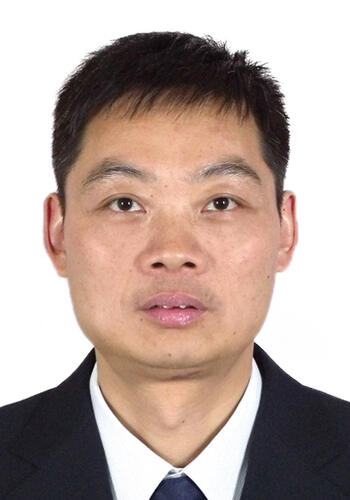
l40095zj2z3271_forweb.jpg Ph.D.
SCPKU Team Innovation Faculty Fellow - Summer 2017
SCPKU Graduate Seminar Instructor - Summer 2017
Authors
News Type
News
Date
Paragraphs

Rodney Ewing was elected to the National Academy of Engineering this week.

Ewing, a senior fellow at the Center for International Security and Cooperation, was recognized for his research on “the long-term behavior of complex ceramic materials to assess their suitability for engineered nuclear waste sequestration.” He is a professor of geological sciences at Stanford.

Membership in the academy is one of the highest academic distinctions in the field of engineering. It honors outstanding contributions to “engineering research, practice or education, including, where appropriate, significant contributions to engineering literature” and “the pioneering of new and developing fields of technology, making major advancements in traditional fields of engineering or developing/implementing innovative approaches to engineering education," according to the NAE.

The academy also honored two other Stanford professors: Andrea Goldsmith, professor of engineering, and Leonidas Guibas, professor of computer science. The three Stanford scholars among 84 new members joining NAE this year. In total, the academy has 2,281 members including 249 foreign members. The newly elected class will be formally inducted during a ceremony at the academy's annual meeting in Washington, D.C., on Oct. 8, 2017. 

Click here to read a Stanford News Service story on the selections of Ewing and his colleagues to the National Academy of Engineering.

Hero Image
22150905629 b919a2123f k Rod Searcey
All News button
1
Authors
Siegfried S. Hecker
News Type
News
Date
Paragraphs

On February 23, 1992, less than two months after the dissolution of the Soviet Union, I landed on the tarmac in Sarov, a city the government had removed from maps to keep secret its status as a nuclear weapons center. I was then director of the Los Alamos National Laboratory and­­ accompanied by two senior scientists from my own lab plus three colleagues from the Lawrence Livermore National Laboratory. The six of us were about to walk through the birthplace of the Soviet nuclear bomb, the technological and intellectual powerhouse behind the sophisticated arsenal that had been pointed at our country for the previous 40 years.

Shockingly, after an hour-long flight from Moscow, we stepped out of the Aeroflot turboprop into the open arms of our Russian hosts: Yuli Borisovich Khariton, the scientific leader of the Soviet nuclear program, and other senior lab staff who had waited in the chilly wind to welcome us. Just as remarkable was the fact that this wasn’t the first time we met our Russian counterparts. Two weeks earlier, directors of the Russian nuclear weapons labs, VNIIEF in Sarov and VNIITF in Snezhinsk, had for the first time in history set foot in our labs in Livermore and Los Alamos. This exchange of visits a quarter century ago marked a new turn in relations between the world’s two nuclear weapons superpowers.

The road to Sarov

Our first meeting on Russian soil would have been deemed improbable just a few months earlier. The encounter on the Sarov tarmac grew out of both persistence by determined individuals and larger historical forces. As the Soviet Union scrambled to adjust domestic and international policy in the face of mounting economic and social challenges in the late 1980s, Soviet leader Mikhail Gorbachev reached across the political divide to US President Ronald Reagan to take steps toward nuclear disarmament. One such step was the Joint Verification Experiment of 1988, in which the Soviet Union and the United States asked their nuclear weapons scientists to conduct parallel nuclear-explosion yield measurements at testing grounds in Nevada and Semipalatinsk, located in what is now Kazakhstan. The experiment helped overcome a stumbling block related to verification procedures needed to ratify the 1974 Threshold Test Ban Treaty (TTBT). The 1988 nuclear tests enabled the two sides to sign a new ratification protocol in Geneva in June 1990, and the TTBT entered into force in December 1990.

As history would have it, an unintended outcome of the TTBT ratification effort proved to be the most momentous. Viktor Mikhailov, head of the Soviet team that took part in the Joint Verification Experiment and later Russian minister of atomic energy, was right when he said that “the main result of the Joint Verification Experiment was not the development of procedures and extent of nuclear test monitoring of the joint development of technical verification means, but the chance for interpersonal communications with the American nuclear physicists.”

Indeed, it was working side by side at each other’s test sites that gave rise to deep-rooted affinity and built trust. Over the years, we had only caught glimpses of our Soviet nuclear scientist counterparts at a few international conferences where they disguised their institutional affiliations, saying they were part of the Soviet Academy of Sciences. It was through months of collaboration at our test sites that the contours of their true home institutions—the nuclear weapons labs VNIIEF and VNIITF—began to emerge. As we would discover eventually, these Soviet labs were remarkably similar to our own. We realized that in addition to nuclear weapons work, they were conducting outstanding fundamental science. We became consumed with curiosity to learn more about it first-hand. The Russians were curious about our work as well.

We were all interested in cooperation, but the Russians even more so because they sensed before we did just how dramatically the Soviet Union was changing. Lev D. Ryabev, who headed the atomic ministry at the time, told me years later that Russian nuclear weapons scientists were so eager to work with their American counterparts because “we arrived in the nuclear century all in one boat—movement by any one will affect everyone. We were doomed to work together.”

It was during a 1990 trip to Moscow by Los Alamos and Lawrence Livermore lab scientists for technical discussions supporting the Geneva test ban talks that Mikhailov extended an impromptu invitation to visit the USSR’s secret nuclear city Sarov (then called Arzamas-16) for the first time.

The American scientists returned with specific proposals from the VNIIEF director and his senior scientists for collaboration with the US labs, along with an invitation to Lawrence Livermore Director John Nuckolls and me to visit the secret Russian cities.

Convinced by my Los Alamos colleagues that this was a great opportunity to collaborate scientifically in important areas of research, I tried a number of avenues in Washington to get approval for exploring potential cooperation. I got little traction until the second half of 1991, after the Soviet Union had begun to disintegrate. As it did so, President George H.W. Bush became concerned that brain drain from the Soviet nuclear complex could lead to the spread of knowledge about how to build these weapons of mass destruction.

Driven by that concern, US Energy Secretary James D. Watkins approved my request for the laboratory directors’ exchange visits, and two months after Gorbachev’s formal dissolution of the Soviet Union on December 25, 1991, we entered the surreal world of the Soviet Los Alamos.

A tradition worth sustaining 

Our visits to Sarov and Snezhinsk shattered our Cold War preconceptions of the Soviet nuclear program. We were particularly impressed by the depth of scientific talent. Although they lacked modern computers and electronics, their computational achievements were remarkable, and their experimental facilities were innovative and functional. We found the scientists’ dedication to their mission deeply patriotic, and their attention to nuclear weapons safety reassuring. During our briefings and tours, Russian scientists described leading-edge research in the fundamental science that underpinned their nuclear weapons program. The visits convinced me that our US nuclear labs should collaborate with their Russian counterparts, not only to help solve immediate problems like proliferation and loose nukes, but also because in doing so we would benefit scientifically.

Our Russian colleagues were prepared with proposals for cooperation in a surprisingly broad range of areas. During a daylong session in Chief Weapon Designer Boris Litvinov’s office in Snezhinsk, watched by portraits of Lenin and Igor Kurchatov, one of the fathers of the Soviet Bomb, we hammered out a protocol for cooperation that we would take back to our governments. We came up with a long list problems we wanted to work on together. It included enhancing the security and safety of nuclear weapons during reduction and dismantlement; preventing the proliferation of nuclear weapons knowledge; promoting the conversion and diversification of nuclear facilities; preventing non-nuclear states and terrorists from obtaining nuclear weapons; developing joint mechanisms for emergency response; enhancing the safety of nuclear arsenals; preventing unauthorized use of remaining weapons; and promoting protection and cleanup of the environment at nuclear weapons facilities.

It turned out that we scientists were far ahead of what the US government was prepared to authorize at the time. We heard that when members of the National Security Council staff, which coordinated interagency government issues with Russia, received a copy of the protocol, they declared it did not exist and threw it in the waste paper basket. However, Nuckolls and I presented the protocol to Watkins and received approval to proceed, though only in fundamental science cooperation.

By May 1992, even though the US Energy and State Departments had only agreed to general principles, the former had provided us with the necessary financial support and the latter with the required permissions for travel to Russia. Just as importantly, we had defined what we wanted to do first in the collaboration we called lab-to-lab. We planned for joint experiments in high-energy-density physics and conferences on computer modeling and simulation.

In spite of the initial US government concerns, we would eventually end up cooperating in almost all the areas outlined in the initial protocol. A spirit of collaboration prevailed for nearly a quarter century, and was essential to successfully mitigating the dangers resulting from the dissolution of the Soviet Union. Unfortunately, that cooperation has all but come to an end during the past few years as relations between Moscow and Washington have soured. But the benefits of future cooperation are potentially enormous, as a new report from the Nuclear Threat Initiative makes clear. The US and Russian governments, as well as the two countries’ scientists, should seize any opportunities that arise to rekindle nuclear cooperation.

Hero Image
sarov9213
This picture shows the 1992 visit of U.S. nuclear weapon labs directors to the Russian nuclear weapons institutes in Sarov and Snezhinsk. On the left, in a white sweater is the Russian physicist Alexander Pavlovsky. Next to him is "Russia’s Oppenheimer" Yuly Khariton, almost 88 at that time. The second and third persons on the right are Sig Hecker, director of the Los Alamos National Laboratory, and John Nuckolls, director of the Lawrence Livermore National Laboratory.
Courtesy of Siegfried Hecker
All News button
1
Subscribe to Environment