Environment

FSI scholars approach their research on the environment from regulatory, economic and societal angles. The Center on Food Security and the Environment weighs the connection between climate change and agriculture; the impact of biofuel expansion on land and food supply; how to increase crop yields without expanding agricultural lands; and the trends in aquaculture. FSE’s research spans the globe – from the potential of smallholder irrigation to reduce hunger and improve development in sub-Saharan Africa to the devastation of drought on Iowa farms. David Lobell, a senior fellow at FSI and a recipient of a MacArthur “genius” grant, has looked at the impacts of increasing wheat and corn crops in Africa, South Asia, Mexico and the United States; and has studied the effects of extreme heat on the world’s staple crops.

-

To watch the recording of the event, click here.

October 5, 4:00pm-5:15pm California time/ October 6, 8:00am-9:15am Korea time

This event is made possible by generous support from the Korea Foundation and other friends of the Korea Program.

This event is part of Shorenstein APARC's fall 2021 webinar series Perfect Storm: Climate Change in Asia.

In this webinar, a panel of climate change experts will discuss the challenges facing Korea and the country's mitigation efforts and policy responses.

Presenters:

Image
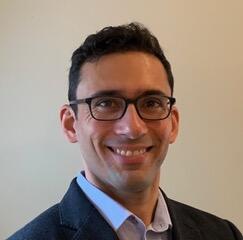
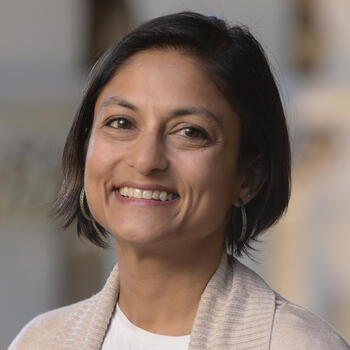
Portrait of Young Sook Yoo

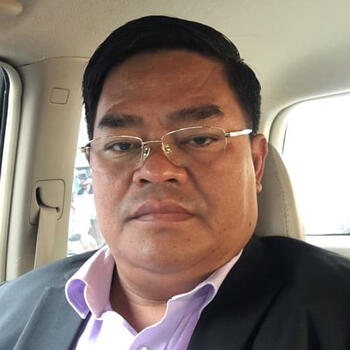
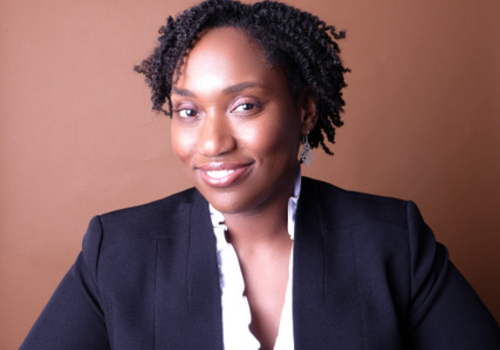
Young Sook Yoo, former Minister of Environment in Korea
Dr. Yoo is currently board chair of Climate Change Center in Korea; an honorary research scientist at Korea Institute of Advanced Science and Technology; President of Korean Biofuel Forum; a member of the Korean Academy of Environment Science and National Academy of Engineering of Korea. She holds a PhD in biochemistry and biophysics from Oregon State University, and trained as a postdoctoral fellow at Stanford's School of Medicine.

Image
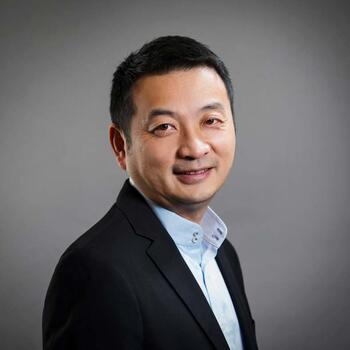
Portrait of Suh-Yong Chung

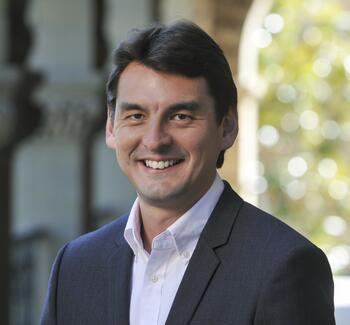
Suh-Yong Chung, Professor of International Studies at Korea University
Professor Chung is also director of Center for Global Climate and Marine Governance at Korea University; director of Center for Sustainable Development Law and Policy; a member of policy Advisory Board of Korea Forest Service; and the director of Center for UN Studies of UNA-Korea. He holds degrees in law and international relations from Seoul National University, London School of Economics and Stanford Law School.

Discussant:

Image
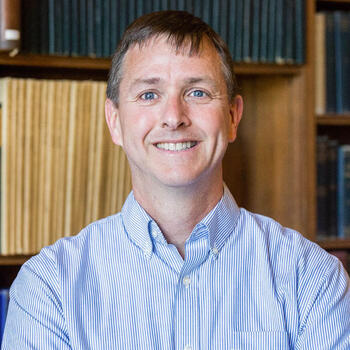
Portrait of So-Min Cheong

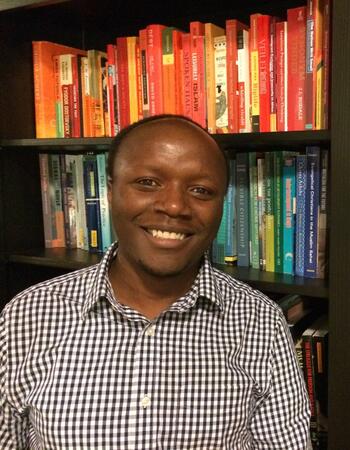
So-Min Cheong, Associate Professor of Geography & Atmospheric Science, University of Kansas
Professor Cheong's current research focuses on climate change adaptation and disaster management including oil spills, floods, extreme heats, and wildfires. She is a lead author of multiple IPCC (Intergovernmental Panel on Climate Change) reports including the Sixth Assessment Report. She received her PhD in geography, MAs in marine affairs and international studies from University of Washington.
 

Via Zoom. Register at https://bit.ly/3lt42Rh

Panel Discussions
-

Asia Health Policy Program (AHPP) 2021-22 Colloquium series "Aligning Incentives for Better Health and More Resilient Health Systems in Asia”

Friday, October 29, 2021, 8:30am - 9:30am (Beijing time)

This paper investigates the impact of China’s reform of the system for medical payments from traditional fee-for-service to prospective payment in the form of diagnosis-related group. The paper explores comprehensive aspects of the reform, taking advantage of a large-scale administrative data set from a pilot city in China. It finds that medical expenditure per admission dropped by 7.3 percent, with greater impact on patients who spent a larger amount. To better understand the changes, further decompositions find that the expenditure reduction is fully explained by reduction in the quantity of services instead of using cheaper ones, and by reduction in the use of drugs but not reduction in other types of services, including examination, treatment, and nursing care. In addition, no evidence is found on quality deterioration or behavioral responses, including upcoding and cream skimming. Hospitals maintained their revenue through attracting more patients to contend with cost containment induced by the payment reform.

Image
Julie Shi 4X4
Julie Shi is Associate Professor of Health Economics in the School of Economics and the School of Global Health Development at Peking University. Dr. Shi’s research focuses on the design and impact of health care payment systems, the economics of health insurance coverage, drug regulations, and the trend of medical expenditures. Shi’s work has contributed to the theory and practice of China’s payment system reform. Her research on health insurance includes the impact of insurance on medical utilization. She has conducted academic and policy research on government regulations on prescription drugs. She also works on the trend of expenditures for patients with catastrophic diseases.

Dr. Shi’s undergraduate degree is from Tsinghua university and her PhD is from Boston University, both in economics. Before joining Peking University, she was a post-doctoral fellow at Harvard Medical School. Her work has published on leading academic journals including Journal of Public Economics, Journal of Health Economics, and Health Economics. She received awards for paper of the year in 2014 from the National Institute of Health Care Management (NIHCM) in the United States. She has conducted multiple projects for central and local governments in China for policy recommendation.


Via Zoom Webinar
Register: https://bit.ly/2YXJwkl

Julie Shi Associate Professor of Health Economics in the School of Economics and the School of Global Health Development, Peking University
Seminars
-

Jakarta time: Friday, October 8, 2021 07:00 - 08:30 AM

Students often ask themselves: Do I want to be a specialist or a generalist? A hedgehog digging deeper or a fox ranging wider? The answer embedded in Gita Wirjawan’s life so far is unequivocal: Go broad. Think big. And be optimistic. For his weekly virtual podcast Endgame, Gita has interviewed many people, including Stanford’s Southeast Asia Program director Don Emmerson.  Don will turn the tables and interview Gita in this event. Gita will highlight life lessons from his international childhood and consider questions such as these: How well or poorly is Indonesia coping with corrupted governance, religious extremism, Covidian infection, and climate change? How should it respond to worsening US-China relations? To China’s efforts to control the South China Sea? To America’s exit from Afghanistan? To Myanmar’s brutal junta and ASEAN’s apparent impotence? Worldwide, looking forward, is eco-suicide avoidable? Will surveillance technology doom liberal democracy? If there is a global endgame to be played, how should concerned actors play it? Have present perils made Gita’s proactive optimism all the more necessary? Or all the more naïve? Attend the event and find out.

Image
photo_gita_wirjawan_4X4.jpg
Gita Wirjawan is the founding chairman of the Ancora Group of private-equity investors and wealth managers in Indonesia. He has held leadership positions in Citibank, JP Morgan, and other such firms. His philanthropy sustains the Ancora Foundation, which seeks to improve access to quality education in Indonesia across a range of endeavors—from funding the training of kindergarten teachers to endowing scholarships for students to attend universities around the world including Stanford. His passion for sports led Gita to chair Indonesia’s badminton association (2012-16). His public service career has included heading Indonesia’s trade ministry (2011-14) and investment coordinating board (2009-2011). A jazz pianist, he has performed in concerts and composed and played pieces in more than a dozen albums. His degrees include masters in business administration (Baylor) and public policy (Harvard). Indonesia’s School of Government and Public Policy sponsors his wide-ranging podcast “Endgame with Gita Wirjawan.”

Via Zoom Webinar
Register: https://bit.ly/3z7hM9b

Gita Wirjawan Indonesian businessman, philanthropist, educationist, musician, former minister of trade, badminton advocate, and popular talk-show host
Seminars

Shorenstein APARC
Stanford University
Encina Hall, Room E301
Stanford, CA 94305-6055

(650) 736-0656 (650) 723-6530
0
mike_breger.jpg

Michael (Mike) Breger joined APARC in 2021 and serves as the Center's communications manager. He collaborates with the Center's leadership to share the work and expertise of APARC faculty and researchers with a broad audience of academics, policymakers, and industry leaders across the globe. 

Michael started his career at Stanford working at Green Library, and later at the Center for Russian, East European and Eurasian Studies, serving as the event and communications coordinator. He has also worked in a variety of sales and marketing roles in Silicon Valley.

Michael holds a master's in liberal arts from Stanford University and a bachelor's in history and astronomy from the University of Virginia. A history buff and avid follower of international current events, Michael loves learning about different cultures, languages, and literatures. When he is not at work, Michael enjoys reading, painting, music, and the outdoors.

Communications Manager
Date Label
-

Image
Book cover of Accomplishment by Sir Michael Barber
There is no secret formula for success. But what if there were a pattern you could follow? A way of mapping the route and navigating the obstacles that arise?

Michael Barber has spent many years advising governments, businesses and major sporting teams around the world on how to achieve ambitious goals on time. In this book, he applies the wisdom he has gained from dealing with large, complex organizations and elite athletes to help anyone tackle their most challenging goals.

Drawing on the stories of historic visionaries and modern heroes – from Galileo to Rosa Parks, Gareth Southgate to Justin Trudeau – Accomplishment blends personal anecdote and proven strategy to trace a blueprint that can be applied to any area of life.

At the book’s core is the need to remember the ethical basis for what you have set out to do. Doing the right thing for the right reason is the reward that will see you through the criticism and setbacks. So whatever it is that you aspire to do – run a marathon, transform a school or run a public service for millions – this book will inspire you to get going and to bridge the gap between vision and reality.

Click here to purchase the book.


Image
Sir Michael Barber
About the Author: Sir Michael Barber is a global expert on the implementation of ambitious change in large, complicated systems. He has advised governments on every continent and worked with major private sector organizations, schools and universities in Britain and the US. In addition, Barber has advised Team Sky, the elite cycling team and, since 2016, he has been a member of the Football Association's Technical Advisory Board, which helps the FA prepare England's teams, both men and women, for major tournaments.


Online, via Zoom.

Sir Michael Barber Chairman and Founder, Delivery Associates
Seminars
Authors
News Type
Q&As
Date
Paragraphs

Mornings in Lansing, Michigan, this summer found Zac Stoor zooming to Brussels for afternoon staff meetings at the Institute for European Environmental Policy, where he interned through Stanford’s Global Studies Internship Program.


Under the summer program, Stoor worked full-time for the sustainability think tank, whose team of economists, scientists and attorneys produce and promote evidence-based research and policy insights to benefit Europe and the world.

Hero Image
Cityscapes around the world Getty Images
All News button
1
Subtitle

During the 2020-21 academic year, 49 Stanford students, including TEC's Zac Stoor, worked in virtual internships in 19 countries through the university’s Global Studies Internship Program.

News Type
News
Date
Hero Image
Solar panels in a field in China. GettyImages
All News button
1
Subtitle

SCCEI Affiliate Gretchen Daily is featured in The Washington Post discussing Natural Capital Project and her many research initiatives working to prioritize environmental conservation globally.

Authors
Callista Wells
News Type
News
Date
Paragraphs

In collaboration with Global:SF and the State of California Governor’s Office of Business and Economic Development, the China Program at Shorenstein APARC presented session five of the New Economy Conference, "Navigating Chinese Investment, Trade, and Technology," on May 19. The program featured distinguished speakers Ambassador Craig Allen, President of the US-China Business Council; David K. Cheng, Chair and Managing Partner of China & Asia Pacific Practice at Nixon Peabody LLPJames Green, Senior Research Fellow at the Initiative for U.S.-China Dialogue on Global Issues at Georgetown University; and Anja Manuel, Co-Founder and Principal of Rice, Hadley, Gates & Manuel LLC. The session was opened by Darlene Chiu Bryant, Executive Director of GlobalSF, and moderated by Professor Jean Oi, William Haas Professor of Chinese Politics and director of the APARC China Program.

U.S.-China economic relations have grown increasingly fraught and competitive. Even amidst intensifying tensions, however, our two major economies remain intertwined. While keeping alert to national security concerns, the economic strength of the United States will depend on brokering a productive competition with China, the world’s fastest growing economy. Precipitous decoupling of trade, investment, and human talent flows between the two nations will inflict unnecessary harm to U.S. economic interests--and those of California.  

Chinese trade and investments into California have grown exponentially over the last decade. But they have come under increasing pressure following geopolitical and economic tensions between the two nations, particularly in the science and technology sectors. Ambassador Craig Allen, David Cheng, James Green, and Anja Manuel explored the role of Chinese economic activity in California in the context of the greater US-Chinese relationship. Watch now: 

Read More

American and Chinese flags
News

U.S.-China Relations in the Biden Era

Dr. Thomas Wright examines the recent history of US-China relations and what that might mean for the new administration.
U.S.-China Relations in the Biden Era
Hero Image
Blue image with event title, time, and date
All News button
1
Subtitle

Ambassador Craig Allen, David Cheng, James Green, and Anja Manuel explore the role of Chinese economic activity in California in the context of the greater US-Chinese relationship.

-

The CDDRL Spring seminar series will be open to the Stanford community via Zoom

and will be recorded for the general public to watch later.


Image
Audrey Bloom
Audrey Bloom - Firestone Award Winner

Major: Human Biology
Advisor: Terry Moe

Thesis Title: How Doctors Influence the Price of Healthcare in the United States and Japan: The Critical Role of Interest Group Politics in America’s Healthcare Cost Crisis


Image
Hiroto Saito

 
Hiroto Saito - CDDRL Outstanding Thesis Winner 
 

Major: International Relations

Advisor: Dr. Gil-li Vardi, Dr. Stephen Stedman

Thesis Title: Colombia after the FARC: Has Peace Really Arrived?

Online, via Zoom:  REGISTER

Seminars
-

A regime that is responsive to social unrest is one that takes steps to address social grievances and demands, rather than solely suppressing them. The distinction cannot be applied to authoritarian regimes if they are never responsive and always repressive. But that categorical description does not fit the behavior of the self-described communist regimes in Vietnam and China. When facing public protests triggered by official land seizures, both party-states have sometimes behaved responsively.  But not in the same manner or to the same extent.

Dr. Truong will show how and explain why, despite their many similarities, compared with China, Vietnam has been more responsive, and its responsiveness has been more institutionalized. Drawing on 16 months of field research in the two countries, she will make two arguments rooted in the differing histories of the two countries: In Vietnam, a more responsive party-state was forged in a crucible of accommodation and constraint that distinctively affected the political trajectories of the party and the state.  In China, the party-state’s path to power was riddled with confrontations and the dominance of elite over societal interests. 

Democracies and democratic values are being widely challenged in Asia today. It is accordingly vital that academics and policymakers develop a more nuanced and contextual understanding of authoritarian regimes and their institutional histories and dynamics, including their different ways of dealing with societal pressures. Dr. Truong’s talk and the discussion to follow should serve that goal.

Image
Truong photo 4X4
Nhu Truong’s doctoral dissertation, which was nominated for four awards, compares balances of repression and responsiveness under authoritarian rule in historical context in Southeast and Northeast Asia. As a Stanford fellow, she is revising the study for publication. Other writings by her have appeared in the Journal of East Asian Studies and Problems on Communism and in edited books such as Stateness and Democracy in East Asia and State of Land in the Mekong Region. In 2020, as a fellow of the Southeast Asia Research Group, she presented her research at scholarly conferences in political science and Asian studies. Her policy-related activities have included evaluating decentralization in Cambodia for the Asia Foundation, and researching US arms sales to Taiwan for the EastWest Institute. She has a PhD in political science (McGill University), an MPA in public administration (New York University), and an MA in Asian studies (University of Texas at Austin). She will be a Postdoctoral Associate in the Council for Southeast Asian Studies and the Council for East Asian Studies at Yale University in 2021 and an Assistant Professor at Denison University in 2022. 

Image
Haggard photo 4X4
Stephan Haggard is the Krause Distinguished Professor at the School of Global Policy and Strategy at the University of California San Diego. His publications on international political economy include The Political Economy of the Asian Financial Crisis (2000); Developmental States (2018); and Pathways from the Periphery: The Newly Industrializing Countries in the International System (1990). His work with Robert Kaufman on transitions to and from democratic rule includes Backsliding: Democratic Regress in the Contemporary World (Cambridge 2021); Dictators and Democrats: Masses, Elites and Regime Change (2016); Democracy, Development and Welfare States: Latin America, East Asia, Eastern Europe (2008); and The Political Economy of Democratic Transitions (1995). His work on North Korea with Marcus Noland includes Hard Target: Sanctions, Inducements and the Case of North Korea (2017); Witness to Transformation: Refugee Insights into North Korea (2011); Famine in North Korea (2007); and a blog, Witness to Transformation (2017-19). He currently writes for the The Peninsula, a blog about Korea. His PhD and MA in political science are from the University of California, Berkeley.

Image
Vu photo 4X4
Tuong Vu has been on the faculty of the University of Oregon since 2008 and has held visiting appointments at Princeton University and the National University of Singapore. He is a former co-editor in chief of the Journal of Vietnamese Studies and the founding director of the US-Vietnam Research Center at the University of Oregon. His research has focused on the comparative politics of state formation, revolutions, nationalism, and communism in Northeast and Southeast Asia, and more recently, on Vietnam’s modern history and politics. He is the author and co-editor of six books and numerous journal articles and book chapters. Among his recent and forthcoming books are The Republican Era in Vietnam’s Modern History, vol. 1: From the Idea to the First Republic (1920-1963) (Hawaii, forthcoming), co-edited with Nu-Anh Tran; The Republic of Vietnam, 1955-1975: Vietnamese Perspectives on Nation-Building (Cornell, 2020), coedited with Sean Fear; and Vietnam’s Communist Revolution: The Power and Limits of Ideology (Cambridge, 2017). He has a PhD in political science from the University of California, Berkeley, and an MPA (Master in Public Affairs) from Princeton University. 

Via Zoom Webinar
Register: https://bit.ly/3y9E8Yd

Shorenstein APARC Encina Hall E301 Stanford University
0
Shorenstein Postdoctoral Fellow in Contemporary Asia, 2020-2021
nhu_truong_resize.png Ph.D.

Nhu Truong joined the Walter H. Shorenstein Asia-Pacific Research Center (APARC) as Shorenstein Postdoctoral Fellow for the 2020-2021 academic year. Her research focuses on authoritarian politics and the nature of communist and post-communist regimes, particularly pertaining to regime repressive-responsiveness, dynamics of social resistance, repertoires of social contention, and political legitimation. As a Shorenstein Fellow, Nhu Truong worked to develop her dissertation into a book manuscript. More specifically, she worked on buttressing the theory by contrasting Cambodia with China and Vietnam, as well as exploring the variable outcomes and knock-on effects of authoritarian responsiveness as groundwork for her next comparative project.

Nhu Truong’s dissertation explains how and why the two most similar communist, authoritarian regimes of China and Vietnam differ in their responsiveness to mounting unrest caused by government land seizures. Authoritarian regimes manage social unrest not merely by relying on raw coercive power, but also by demonstrating responsiveness to social demands. Yet, not all authoritarian regimes are equally responsive to social pressures. Despite their many similarities, Vietnam has exhibited greater institutionalized responsiveness, whereas China has been relatively more reactive. Theory and empirical findings based on 16 months of fieldwork and in-depth comparative historical analysis of China and Vietnam illuminate the divergent institutional pathways and the nature of responsiveness to social pressures under communist and authoritarian rule.

Nhu Truong obtained her Ph.D. in comparative politics in the Department of Political Science at McGill University, with an area focus on China, Vietnam, and Southeast Asia. She received an MPA in International Policy and Management from New York University, Wagner Graduate School of Public Service, an MA in Asian Studies from the University of Texas at Austin, and a BA in International Studies from Kenyon College. Prior to embarking on her doctoral study, she had work experience in international development in Vietnam, Cambodia, and policy research on China.

Shorenstein Postdoctoral Fellow, Stanford University
Stephan Haggard Professor, School of Global Policy and Strategy, University of California San Diego
Tuong Vu Professor and Department Head, Department of Political Science, University of Oregon
0
Senior Fellow Emeritus at the Freeman Spogli Institute for International Studies
Affiliated Faculty, CDDRL
Affiliated Scholar, Abbasi Program in Islamic Studies
aparc_dke.jpg PhD

At Stanford, in addition to his work for the Southeast Asia Program and his affiliations with CDDRL and the Abbasi Program in Islamic Studies, Donald Emmerson has taught courses on Southeast Asia in East Asian Studies, International Policy Studies, and Political Science. He is active as an analyst of current policy issues involving Asia. In 2010 the National Bureau of Asian Research and the Woodrow Wilson International Center for Scholars awarded him a two-year Research Associateship given to “top scholars from across the United States” who “have successfully bridged the gap between the academy and policy.”

Emmerson’s research interests include Southeast Asia-China-US relations, the South China Sea, and the future of ASEAN. His publications, authored or edited, span more than a dozen books and monographs and some 200 articles, chapters, and shorter pieces.  Recent writings include The Deer and the Dragon: Southeast Asia and China in the 21st Century (ed., 2020); “‘No Sole Control’ in the South China Sea,” in Asia Policy  (2019); ASEAN @ 50, Southeast Asia @ Risk: What Should Be Done? (ed., 2018); “Singapore and Goliath?,” in Journal of Democracy (2018); “Mapping ASEAN’s Futures,” in Contemporary Southeast Asia (2017); and “ASEAN Between China and America: Is It Time to Try Horsing the Cow?,” in Trans-Regional and –National Studies of Southeast Asia (2017).

Earlier work includes “Sunnylands or Rancho Mirage? ASEAN and the South China Sea,” in YaleGlobal (2016); “The Spectrum of Comparisons: A Discussion,” in Pacific Affairs (2014); “Facts, Minds, and Formats: Scholarship and Political Change in Indonesia” in Indonesian Studies: The State of the Field (2013); “Is Indonesia Rising? It Depends” in Indonesia Rising (2012); “Southeast Asia: Minding the Gap between Democracy and Governance,” in Journal of Democracy (April 2012); “The Problem and Promise of Focality in World Affairs,” in Strategic Review (August 2011); An American Place at an Asian Table? Regionalism and Its Reasons (2011); Asian Regionalism and US Policy: The Case for Creative Adaptation (2010); “The Useful Diversity of ‘Islamism’” and “Islamism: Pros, Cons, and Contexts” in Islamism: Conflicting Perspectives on Political Islam (2009); “Crisis and Consensus: America and ASEAN in a New Global Context” in Refreshing U.S.-Thai Relations (2009); and Hard Choices: Security, Democracy, and Regionalism in Southeast Asia (edited, 2008).

Prior to moving to Stanford in 1999, Emmerson was a professor of political science at the University of Wisconsin-Madison, where he won a campus-wide teaching award. That same year he helped monitor voting in Indonesia and East Timor for the National Democratic Institute and the Carter Center. In the course of his career, he has taken part in numerous policy-related working groups focused on topics related to Southeast Asia; has testified before House and Senate committees on Asian affairs; and been a regular at gatherings such as the Asia Pacific Roundtable (Kuala Lumpur), the Bali Democracy Forum (Nusa Dua), and the Shangri-La Dialogue (Singapore). Places where he has held various visiting fellowships, including the Institute for Advanced Study and the Woodrow Wilson International Center for Scholars. 


Emmerson has a Ph.D. in political science from Yale and a BA in international affairs from Princeton. He is fluent in Indonesian, was fluent in French, and has lectured and written in both languages. He has lesser competence in Dutch, Javanese, and Russian. A former slam poet in English, he enjoys the spoken word and reads occasionally under a nom de plume with the Not Yet Dead Poets Society in Redwood City, CA. He and his wife Carolyn met in high school in Lebanon. They have two children. He was born in Tokyo, the son of U.S. Foreign Service Officer John K. Emmerson, who wrote the Japanese Thread among other books.

Selected Multimedia

Date Label
Director, Southeast Asia Program, Stanford University
Seminars
Subscribe to Environment