Health and Medicine

FSI’s researchers assess health and medicine through the lenses of economics, nutrition and politics. They’re studying and influencing public health policies of local and national governments and the roles that corporations and nongovernmental organizations play in providing health care around the world. Scholars look at how governance affects citizens’ health, how children’s health care access affects the aging process and how to improve children’s health in Guatemala and rural China. They want to know what it will take for people to cook more safely and breathe more easily in developing countries.

FSI professors investigate how lifestyles affect health. What good does gardening do for older Americans? What are the benefits of eating organic food or growing genetically modified rice in China? They study cost-effectiveness by examining programs like those aimed at preventing the spread of tuberculosis in Russian prisons. Policies that impact obesity and undernutrition are examined; as are the public health implications of limiting salt in processed foods and the role of smoking among men who work in Chinese factories. FSI health research looks at sweeping domestic policies like the Affordable Care Act and the role of foreign aid in affecting the price of HIV drugs in Africa.

Authors
News Type
News
Date
Paragraphs

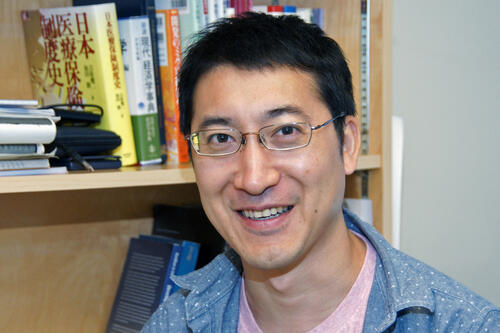
Jeff Decker knows what war can do to a person. He lived it for four deployments, as an Army special operations squad leader in Iraq and Afghanistan who twice earned the Army Commendation Medal for valorous conduct in combat.

Decker, who now serves as a research assistant in Stanford’s Center for International Security and Cooperation under Joe Felter, is the founder of March on Veteran, an organization that supports veterans suffering from mental health issues, such as post-traumatic stress disorder, or PTSD. March on Veteran is a free, online program available to any former member of the military.

Decker joined CISAC in September, about a year after he launched March on Veteran. Felter, a special forces veteran, is a senior research scholar who studies counterinsurgencies, terrorism and political violence for CISAC.

Decker, after his military service, struggled with the transition to civilian life due to the anger, anxiety, chronic pain, and sleeplessness that PTSD caused. On top of this, he did not have access to a Veteran Affairs treatment facility. That’s when the native of Buffalo, N.Y. turned to self-educating himself on mental health treatments available to veterans.

“When I studied for my doctorate in Australia, I cobbled together a mental health program to help myself. Now I’m sharing that and making those resources available to other veterans with the same needs,” said Decker, who earned his doctorate in international relations from Bond University, where he wrote his dissertation “Enhancing the Effectiveness of Private Military Contractors.”

So far, about 83 veterans have begun March on Veteran’s pilot program, which is a web-based and self-directed study. Decker handles almost all of the human contact. He is currently expanding the program to incorporate the veteran-to-veteran peer element with the help of other veteran volunteers.
Image
jeff decker

March on Veteran is, as Decker calls it, “support for veterans by veterans.” It is a recovery program personalized to one’s particular needs and is provided by people who have lived experience. It is not affiliated with any government organization like the VA or Department of Defense to maintain the veteran’s confidentiality. Veterans can access the program or sign-up to meet other veterans online.

“This program focuses on trying to help veterans reach their personal goals instead of focusing on ‘fixing’ them,” Decker said. “We are all about improving veteran quality of life, and a big part of that is connecting with other veterans.”

With Felter, Decker will be mostly working on his Hacking for Defense class project, which uses startup methodology to innovate and find solutions for critical challenges facing America’s defense and intelligence agencies.

Before arriving on campus, Decker conducted national security and international affairs research as a RAND Corporation summer associate for two summers in Washington, D.C.

Hero Image
gettyimages 124644169
U.S. Army soldiers salute during the national anthem during the an anniversary ceremony of the 9/11 terrorist attacks on Sept. 11, 2011 at Bagram Air Field, Afghanistan. CISAC research associate Jeff Decker, a former Army veteran, has launched a support group for veterans suffering from mental health issues, such as post-traumatic stress disorder, or PTSD. | John Moore/Getty Images
All News button
1
News Type
News
Date
Paragraphs
This Global Food Security Strategy presents an integrated whole-of-government strategy and agency-specific implementation plans as required by the Global Food Security Act of 2016 (GFSA).

"Right now, the world is closer than ever before to ending global hunger, undernutrition, and extreme poverty, but significant challenges and opportunities remain, including urbanization, gender inequality, instability and conflict, the effects of a changing climate, and environmental degradation. Despite our collective progress in global food security and nutrition over recent years, a projected 702 million people still live in extreme poverty, nearly 800 million people around the world are chronically undernourished, and 159 million children under five are stunted. Food security is not just an economic and humanitarian issue; it is also a matter of security, as growing concentrations of poverty and hunger leave countries and communities vulnerable to increased instability, conflict, and violence." From the USAID Oct. 3 release.  

You can read more and download the pdf of the Global Food Security Strategy at the USAID website. 

Hero Image
food strategy 0
All News button
1
News Type
News
Date
Paragraphs

Watch Live: Health Policy through 2020: The ACA, Payment Reform and Global Challenges.

The event begins at 1 p.m. PST and will end at approximately 5:45 p.m. PST. For details about the speakers and agenda, please see this page.

The stream will be turned on about 30 minutes before the event begins. Be sure Adobe Flash is turned on and updated.


Hero Image
healthpolicy2020
All News button
1
Authors
News Type
News
Date
Paragraphs

A long line of research has shown that women live longer than men, yet according to Karen Eggleston, director of the Asia Health Policy Program, and four other Stanford health researchers, mortality rate differences between men and women are much more variable than previously thought, following predictable patterns. Life expectancy differs depending on time, location and socioeconomic circumstance, not on biological factors alone, according to their newly published findings.

The researchers found that women have greater resilience when faced with socioeconomic adversity in a developing country—living nearly 10 years longer than men on average—but this pattern changes as the country evolves. Developed countries typically have smaller gaps in mortality rates between men and women than developing countries do.

Japan and South Korea are outliers, however, with higher mortality rate differences between men and women than is average for developed countries. In addition to the prevalence of male smoking, one possible explanation they draw is the lack of career-related opportunities for women in Japan and South Korea, two countries that have low gender wage equity among Organisation of Economic Co-operation and Development members.

Eggleston, who is part of the core faculty at the Shorenstein Asia-Pacific Research Center, et al. suggested the idea that reducing gender inequality may help narrow the mortality gap: men increase years lived when fewer barriers for women exist, but concluded that their findings supporting this conclusion merit further inquiry.

Their findings were published in the August edition of SSM – Population Health and highlighted in an earlier column on Voxeu.

Hero Image
woman walking tokyo
A woman walking in Tokyo, Japan. | Getty Images/Kiyoshi Ota
All News button
1
-

Abstract: Current technologies and practices have created large stores of medical data, including electronic medical records, genomic data, and mobile-health measurements.  There is great promise for discovery and implementation of more efficient and effective health care, but there are also tensions between the sharing of data and the ability to make assurances about security and privacy to patients and study participants.  I will discuss these challenges in the setting of genomic research and medical record data mining.  In many cases, social mechanisms are likely to be the more reliable safeguards than technical mechanisms for privacy, security, and obfuscation.

About the Speaker: Russ Biagio Altman is a professor of bioengineering, genetics, medicine, and biomedical data science (and of computer science, by courtesy) and past chairman of the Bioengineering Department at Stanford University. His primary research interests are in the application of computing and informatics technologies to problems relevant to medicine. He is particularly interested in methods for understanding drug action at molecular, cellular, organism and population levels.  His lab studies how human genetic variation impacts drug response (e.g. http://www.pharmgkb.org/). Other work focuses on the analysis of biological molecules to understand the actions, interactions and adverse events of drugs (http://feature.stanford.edu/).  He helps lead an FDA-supported Center of Excellence in Regulatory Science & Innovation (https://pharm.ucsf.edu/cersi). Dr. Altman holds an A.B. from Harvard College, and M.D. from Stanford Medical School, and a Ph.D. in Medical Information Sciences from Stanford. He received the U.S. Presidential Early Career Award for Scientists and Engineers and a National Science Foundation CAREER Award. He is a fellow of the American College of Physicians (ACP), the American College of Medical Informatics (ACMI), the American Institute of Medical and Biological Engineering (AIMBE), and the American Association for the Advancement of Science (AAAS). He is a member of the National Academy of Medicine (formerly the Institute of Medicine, IOM) of the National Academies.  He is a past-President, founding board member, and a Fellow of the International Society for Computational Biology (ISCB), and a past-President of the American Society for Clinical Pharmacology & Therapeutics (ASCPT).  He has chaired the Science Board advising the FDA Commissioner, currently serves on the NIH Director’s Advisory Committee, and is Co-Chair of the IOM Drug Forum.  He is an organizer of the annual Pacific Symposium on Biocomputing (http://psb.stanford.edu/), and a founder of Personalis, Inc.  Dr. Altman is board certified in Internal Medicine and in Clinical Informatics. He received the Stanford Medical School graduate teaching award in 2000, and mentorship award in 2014.

Encina Hall, 2nd floor

Russ Altman Professor of Bioengineering, of Genetics, of Medicine Stanford University
Seminars
-

Exploiting the variation in the amount of subsidy for child health care by municipality, age and time in Japan, this paper examines the effect of patient cost-sharing on child health care utilization. Using longitudinal claims data and triple difference-in-difference framework, we find that reduced cost-sharing significantly increases utilization of outpatient care among children. We further investigate whether these increase in outpatient visits solely reflects moral hazard or increases in beneficial care.

Image
hitoshi shigeoka
Hitoshi
Shigeoka
received a B.A. (2001) and an MA (2003) in chemical engineering from University of Tokyo, and master of international affairs (2006) and PhD in economics (2012) from Columbia University. Hitoshi’s research interests include health, labor, public economics, and experimental economics. His current research involves estimating the demand elasticity of health care utilization, examining the degree of supplier-induced demand by physicians and hospitals, examining the effects of competition and peer-to-peer teaching on learning, and investigating how the long-term incentives of mothers affect the timing of births.
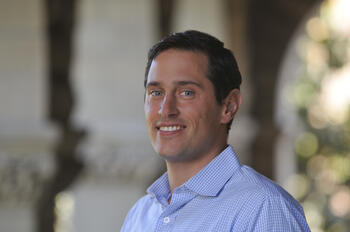
Hitoshi Shigeoka Simon Fraser University
Seminars
News Type
News
Date
Paragraphs

The Shorenstein Asia-Pacific Research Center (APARC) at Stanford is now accepting applications for the Shorenstein Postdoctoral Fellowship in Contemporary Asia, an opportunity made available to two junior scholars for research and writing on Asia.

Fellows conduct research on contemporary political, economic or social change in the Asia-Pacific region, and contribute to Shorenstein APARC’s publications, conferences and related activities. To read about this year’s fellows, please click here.

The fellowship is a 10-mo. appointment during the 2017-18 academic year, and carries a salary rate of $52,000 plus $2,000 for research expenses.

For further information and to apply, please click here. The application deadline is Dec. 16, 2016.

Hero Image
27193530153 58630c4828 o
All News button
1
Authors
News Type
News
Date
Paragraphs

Biosecurity leaders gathered at Stanford this week to offer new ideas and perspectives on a wide range of issues critical to societal health.

The conference, “Emerging Leaders in Biosecurity,” began Sept. 13 with a trip to Lawrence Livermore National Laboratory in the East Bay. The second day featured a series of panel discussions on the Stanford campus. The fellows, chosen by the UPMC Center for Health Security, hailed from a wide array of backgrounds, including biological science, medicine, policy, the military, law, public health and the private sector.

Biosecurity and its relationship to global health is a key issue for Stanford’s Center for International Security and Cooperation (CISAC), which hosted and helped organize the conference along with the sponsoring UPMC Center. The conference was sponsored by the Defense Threat Reduction Agency and the emerging leaders program run by the UPMC. 

With rapid advances in technology and science, biosecurity is increasingly focused on how harmful biological agents could become national security threats and risks.

‘A changing world’

David Relman, co-director of CISAC, addressed the fellows on Wednesday with remarks on the origins of CISAC’s involvement in biosecurity. Relman, a professor in the departments of medicine, and microbiology and immunology, later served as a panelist in a discussion on biosecurity and national and international policy.

Megan Palmer, a fellow and CISAC senior research scholar on biosecurity, panel moderator and organizer of the conference, described the program as one that “brings together some of the most talented and committed rising leaders from multiple organizations and disciplines critical to national and international biosecurity.”

She noted, “Stanford's biosecurity programs are focused on developing strategies for biosecurity in a changing world. Today we face complex biosecurity challenging ranging from emerging infectious diseases, intentional misuse of biotechnology, and potential accidents and unintentional consequences of our increasing ability to manipulate living systems.”

At the same time, biotechnology continues to be an important and growing part of the global economy, Palmer said. “Our scholarship and engagement work seeks to developing new ways to think about and act in this changing environment.”

Research focus

Through the “emerging leaders” program, fellows deepen their expertise in biosecurity, build leadership skills, and forge networks of lasting professional relationships, she added.

The two-day conference included talks on threat awareness, biodetection, a “viral storm” exercise, bioengineering research, computational biology and national security, biosecurity and national and international policy, the evolving biotechnology field, among other topics.

Stanford participants and speakers included CISAC’s William Perry, the former secretary of defense; Drew Endy, a Stanford associate professor of bioengineering; Tim Stearns, chair of the biology department; Milana Trounce, clinical associate professor of emergency medicine; and Manu Prakash, assistant professor of bioengineering.

CISAC activity in biosecurity includes research on:

  • Risks in misusing the emerging life sciences;
  • Social and political factors behind drug-resistant antibiotics, leading to an tight pipeline for new drugs;
  • Examining the ethical responsibilities of scientists in this field and the needs for regulation;
  • Anticipating and pre-empting the misuse of biotechnology by people with the intent to do harm.

Matthew Watson, a senior analyst for the UPMC Center, said, “It is difficult to imagine a more fitting venue for the fall Emerging Leaders in Biosecurity workshop than Stanford. Few institutions can bring together this array of world class talent, including leaders from national security, the life sciences, and the private sector.”

Back in February, the UPMC Center for Health Security chose its 2016 fellows and launched the program with a Washington, D.C. workshop in March.


Hero Image
mosquitos are seen in containers at a lab
Biosecurity experts gathered at Stanford on Sept. 13-14 as part of the conference, “Emerging Leaders in Biosecurity." | Nelson Almeida, AFP (Getty Images)
All News button
1
Subscribe to Health and Medicine