FSI’s researchers assess health and medicine through the lenses of economics, nutrition and politics. They’re studying and influencing public health policies of local and national governments and the roles that corporations and nongovernmental organizations play in providing health care around the world. Scholars look at how governance affects citizens’ health, how children’s health care access affects the aging process and how to improve children’s health in Guatemala and rural China. They want to know what it will take for people to cook more safely and breathe more easily in developing countries.
FSI professors investigate how lifestyles affect health. What good does gardening do for older Americans? What are the benefits of eating organic food or growing genetically modified rice in China? They study cost-effectiveness by examining programs like those aimed at preventing the spread of tuberculosis in Russian prisons. Policies that impact obesity and undernutrition are examined; as are the public health implications of limiting salt in processed foods and the role of smoking among men who work in Chinese factories. FSI health research looks at sweeping domestic policies like the Affordable Care Act and the role of foreign aid in affecting the price of HIV drugs in Africa.
Improving the U.S.-China relationship is a focus at the Center for International Security and Cooperation.
CISAC continued this tradition in co-sponsoring the 8th Sino-U.S. Security Relations and Cooperation Conference in Beijing from Dec. 14-15, 2016. The conference was hosted and co-sponsored by the Foreign Ministry's China Institute of International Studies (CIIS).
Ambassador Su Ge, president of CIIS, attended the conference and delivered an opening remark. FSI’s Thomas Fingar and Teng Jianqun from CIIS chaired the conference.
Fingar said, “Although held at a time of uncertainty about the future of U.S.-China relations, the conference included constructive exchanges on strategic stability, obstacles to cooperation in space, and other sensitive topics.”
He added, “The exchanges were frank and constructive because they built on the foundation of understanding and trust developed through years-long exchanges between CISAC and CIIS. In the next phase, small teams of American and Chinese experts will develop joint blueprints to enhance understanding of issues critical for nuclear stability and space cooperation.”
CISAC co-founder John W. Lewis has been active for many years encouraging and supporting better ties between the U.S. and China. He is an expert on Chinese politics, U.S.-China relations, China's nuclear weapons program, U.S. policy toward Korea and health security issues in northeast Asia.
During this most recent Beijing conference, scholars and security experts from both the U.S. and China held in-depth discussions on topics including cybersecurity, outer space cooperation, maritime dispute management, missile defense, grey zone cooperation, and China-U.S. nuclear issues.
The American attendees included scholars from CISAC (Fingar, Brad Roberts, and Joseph Torigian); Brad Roberts, director, Center for Global Security Research, Lawrence Livermore National Laboratory; Major General Roger W. Burg, former commander, 20th Air Force; Vice Admiral Michael Connor (retired), U.S. Navy; Lieutenant General Susan J. Helms (retired), U.S. Air Force general and former NASA astronaut; Lieutenant General James M. Kowalski (retired), U.S. Air Force general; Steven M. Benner,chief, Strategy and Campaign Division, U.S. Strategic Command, among others.
The Chinese experts came from a variety of institutions – CIIS, China Academy of Engineering Physics, the People’s Liberation Army (PLA) Rocket Force, Rocket Force College, China Defense Science and Technology Information Center, PLA Navy Academy of Military Science, PLA South Command, Chinese Academy of Social Science, Renmin University of China, National Defense University, Tsinghua University, etc.
The colloquia, co-sponsored by Stanford’s Center for South Asia, will include lectures from scholars, policymakers and other thought leaders on India’s democratic system and society, and provide a forum to discuss how the country can overcome obstacles to long-term prosperity.
Kathleen Stephens, the William J. Perry Fellow at Shorenstein APARC and former U.S. ambassador to the Republic of Korea, has organized and will moderate the colloquia. She served as the chargé d'affaires at the U.S. Embassy in New Delhi in 2014.
Stephens said, “Now is the right time and Stanford is the right place for a renewed focus on India, its daunting challenges and its extraordinary potential. This series will consider the strategic bet U.S. policymakers have made on India's rise, and India's own aspirations to play a bigger global role, particularly in Asia.
“In this series and beyond, we want to knit together the expertise and resources at Stanford and in Silicon Valley with policy leaders from India and elsewhere to expand our understanding of India in all its contemporary complexity and importance.”
From 1999 to 2013, Shorenstein APARC had a prolific initiative that supported scholarly work related to South Asia. The center envisions the colloquia will be some of many activities about the region going forward.
A listing of the seminars and related multimedia can be accessed here; more information will be added as it becomes available.
Hero Image
A rickshaw is driven across Ellis Bridge in Ahmedabad, Gujarat, India. | siraanamwong/Getty Images
"Most civilian casualties in war are not the result of direct exposure to bombs and bullets; they are due to the destruction of the essentials of daily living, including food, water, shelter, and health care."
So begins the abstract for an essay in the Winter 2017 edition of Daedalus by Stanford Health Policy’s Paul Wise, the Richard E. Behrman Professor of Child Health and Society and professor of pediatrics at the Stanford School of Medicine.
Wise argues in his essay, “The Epidemiologic Challenge to the Conduct of Just War: Confronting Indirect Civilian Casualties of War," that the death of any child is always a tragedy. But the death of a child from preventable causes is particularly unjust.
“This is, of course, as true in peacetime as it is in war,” he writes. “My argument is that the dramatic growth in our ability to prevent death and disability from the indirect effects of war generates not only humanitarian impulses, but also just war demands for the provision of this capability to populations affected by war.”
The American Academy of Arts & Sciences devoted its Fall 2016 and Winter 2017 issues of its journal, Daedalus, to the theory of Just War. It held its 204th annual meeting at Stanford University in November, with Wise reviewing the main points of his essay. Other speakers included Stanford President Marc Tessier-Lavigne and FSI's Scott Sagan and Joe Felter.
Just War is a theory dating back to the early Christian theologians, who called on warring parties to justify their use of force and to protect noncombatants and innocent civilians.
The statisticians of war and genocide typically look at the total number of deaths due to combat or murder: 5 to 6 million Jews were exterminated in the Holocaust; the Second Congo War from 1998-2003 is estimated to have claimed more than 3 million civilian lives in direct combat.
More recently, the nonprofit organization, I Am Syria, estimates that 450,000 civilians, 50,000 of whom were children, have been killed in the Syrian civil war that erupted up March 2011. But how many will have died in the eventual aftermath due to lack of medical care, food and shelter?
It is estimated that 2 million Congolese, for example, died from starvation and lack of food and medical care in the years following its civil war.
The numbers that make it to the history books often do not reflect the indirect deaths that come on the sidelines and aftermath of war, particularly among children 5 years old and younger. During the periods of intense conflict in the Democratic Republic of Congo and Darfur, direct trauma-related mortality accounted for less than 20 percent of all excess deaths among children. The leading causes of the excess deaths on top of direct conflict were fever and malaria, measles, diarrhea and acute respiratory infections. In Syria, many of those children who have survived likely will have medical and mental repercussions that will be debilitating or deadly.
Wise notes that a report published by the Geneva Declaration Secretariat suggests that for every violent death resulting from combat and conflict between 2004 and 2007, four more died from war-associated elevations in malnutrition and disease. Global health scholars reported that about one-third of all deaths in Iraq were due to indirect causes.
This is why health-care workers are “the ultimate inheritors of failed social order,” said Wise, who is also a senior fellow at the Freeman Spogli Institute for International Studies. “Sooner or later, a breakdown in the bonds that define collective peace, indeed that ensure social justice, will find tragic expression in the clinic, on the ward, or in the morgue.”
That is the extremely bad news. But there is also some good.
Technological advances to prevent conflict and protect civilians have expanded dramatically, such as social media platforms that allow victims of war to communicate instantly and globally, and the crowdsourcing and early-warning SMS systems that take advantage of the more than 2 billion cellphone users around the world.
The United Nations is looking at GPS tracking systems to protect peacekeeping convoys on search-and-rescue missions, according to another article in the Fall 2016 issue of Daedalus. In another example, the International Bar Association created the eyeWitness to Atrocities app for smartphone cameras designed to record and authenticate atrocities.
All this new technology is allowing for advances in epidemiologic and demographic measurement out in the field, Wise said.
“In the context of just war, technical innovation means more than the creation of more powerful and precise munitions,” Wise writes. “It also means an enhanced capacity to measure and reduce the human impact of war.
“Innovation in these two technical domains — measurement and mitigation — has been sufficient to rethink the application of Just War theory to the indirect effects of war.”
Image
Wise runs the Stanford Children in Crisis Initiative, which seeks to save the lives in children who are suffering from conflict and poor governance. Stanford students and local health-care promoters in rural Guatemala have been working with him for decades to try and end death by malnutrition and other causes among young children there.
The initiative last summer launched an app for tablets, which is making it easier to find malnourished children and decrease the training time for new health promoters. The goal is to eventually distribute the application globally.
The international aid community’s growing ability to measure the indirect impact of war, coupled with the ability to prevent or mitigate the indirect human toll of war, is remarkable, Wise said.
“Advances in epidemiology and the technological means of collecting health data have generated a range of new opportunities to assess the immediate and protracted effects of war,” Wise said. “This field is still young and these new technical strategies are creating an unprecedented capacity to assess the impact of war in even remote communities.”
Hero Image
A Syrian boy sits with belongings he collected from the rubble of his house in Aleppo's Al-Arkoub neighbourhood on Dec. 17, 2016, after pro-government forces retook the area from Syrian rebel fighters. | YOUSSEF KARWASHAN/AFP/Getty Images
South Korea, the most rapidly aging society in the world, introduced a public long-term care insurance (LTCI) program with universal coverage in 2008. This presentation will begin with the socioeconomic and political context of the introduction of the LTCI and explain the finance and provision of LTCI in Korea, compared to the LTCIs of Germany and Japan. It will provide recent evidence on the performance of the LTCI along with its prospects and lessons for other countries.
Image
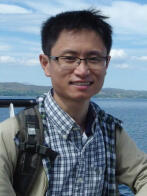
Hongsoo Kim is an associate professor at the Graduate School of Public Health at Seoul National University (SNU), South Korea, and a 2016-2017 Fulbright Visiting Scholar & Takemi Fellow in International Health at Harvard School of Public Health, United States. Her research areas include aging and health policy, long-term care systems, and health system performance assessment. She is currently involved the Comparative Diabetes Net Value Project led by Dr. Karen Eggleston at Stanford University. She was formerly the scientific committee chair of the Korean Academy of Long-term Care, the Korean Gerontological Society, and the Korean Society of Health Policy and Administration. She received her PhD from New York University, where she worked as assistant professor before she joined SNU.
Hongsoo Kim
Fulbright Scholar & Takemi Fellow at Harvard School of Public Health, U.S.; Associate Professor at Seoul National University Graduate School of Public Health, South Korea
This seminar will discuss the marriage distortion and the associated welfare loss caused by the One-Child Policy (OCP) in China. Using the variation in the ethnicity-specific assigned birth quotas and different fertility penalties across provinces over time, we first show that the OCP induced a significantly higher unmarried rate and more interethnic marriages. Using sufficient statistics approach, we then derive a formula for the social welfare loss caused by the OCPinduced lower fertility and marriage distortion, and it only depends on the estimated reducedform elasticities. Our estimates suggest that the associated welfare loss is around 3.7 percent of annual household income, with marriage distortion contributing 30 percent of this. These findings highlight the unintended behavioral responses to public policies and corresponding social consequences.
Image
Yi Zhou is a PhD candidate in Demography at University of California – Berkeley. His research interests include Economic Demography, Formal Demography and Health Economics. He received a M.A. in Economics and a B.B.A. in Accounting from Peking University."
Abstract: Globally, infectious diseases are emerging at an increasing rate. Vector-borne diseases in particular present one of the biggest threats to public health globally. Many of these diseases are zoonotic, meaning they cycle in animal populations but can spillover to infect humans. As a result, risk to humans of acquiring a zoonotic or vector-borne disease largely depends on the distribution and abundance of the reservoir hosts—the species of animals that pathogens naturally infect—as well as of the vector species. The ecology of many reservoir hosts and vectors is rapidly changing due to global change, which will fundamentally alter human disease risk in as yet unforeseen ways. In this talk, I will present and discuss three lines of research aimed at identifying drivers of disease emergence and risk at multiple spatial scales including 1) the ecological and environmental drivers of Lyme disease in California, 2) the roles of human behavior and land use in driving human Lyme disease in the northeastern US, and 3) effects of deforestation, land use policy and socio-ecological feedbacks in driving malaria in the Brazilian Amazon.
About the Speaker: Andrew MacDonald is a disease ecologist and a National Science Foundation Postdoctoral Fellow in Biology at Stanford University. He received his PhD from the Department of Ecology, Evolution and Marine Biology at the University of California, Santa Barbara in September 2016. His dissertation focused on the effect of land use and environmental change on tick-borne disease risk in California and the northeastern US. His current work focuses on coupled natural-human system feedbacks and land use change as drivers of mosquito-borne disease, with a focus on malaria in the Amazon basin.
The health gap between rich and poor children in developing countires is staggeringly high, but Assistant Professor of Medicine Eran Bendavid found that it is shrinking. In his pilot project, "Empirical Evidence on Wealth Inequality and Health in Developing Countries," Bendavid discovered that since the mid-2000s, life expectancies for children under five are starting to converge. How can we continue to close the gap? Watch to find out.
Start the year off by planning for summer 2017! Each summer FSI offers exciting and intensive internship opportunities to Stanford students. Our fully-funded program options include:
Global Policy Internships: provides placement, mentorship and a stipend to students engaging in off-campus internships at international policy and international affairs organizations.
Summer Field Research Internships: provides a unique opportunity for groups of 2-8 students to work directly on applied field research projects with Stanford faculty around the world.
To attend our info session to learn more about each program, RSVP here by Jan. 17th!
Applications are due by February 7th, 2017.
Food will be provided.
Reuben Hills Room Encina Hall, 2nd Floor 616 Serra St Stanford, CA 94305
As 2017 approaches, the Shorenstein Asia-Pacific Research Center documents highlights from the 2015-16 academic year. The latest edition of the Center Overview, entitled "Challenges to Globalization," includes research, people, events and outreach features, and is now available for download online.
Hero Image
A container is loaded onto a ship docked at the terminal port in Singapore, June 2016. | ROSLAN RAHMAN/AFP/Getty Images
In this new article, Megan Palmer, a senior research scholar at the Center for International Security and Cooperation, talks about the different ways that the FBI is collaborating with the biotech community in order to be prepared to respond to an emerging biological threat. One of them is by reaching out to student bioengineers at programs like the International Genetically Engineered Machine (iGEM) Competition. The purpose of that event is to demonstrate how synthetic biology can be used to address pressing global issues.
As the article states, whether it’s an accidental outbreak or a biological attack, the FBI seeks to create a culture of trust and transparency with the biotech community. Palmer discussed this topic recently at the Biofabricateconference for synthetic biology and design in New York City.
As Palmer noted, biological attacks are a historical reality. In 1984, cult members poisoned patrons of 10 salad bars in Oregon with salmonella, sickening more than 750 people. And in 2001 shortly after the 9/11 attacks, anthrax spores that were mailed to newsrooms and government offices killed five people. While other incidents may have simply failed, it seems prudent to prepare for future attacks that could be even more deadlier.
Enter the FBI's foreay into the biotech community. Collaboartion between the public and private sectors is increasing in this area. As Palmer said, examples exist of iGEM students acting as "white hat biohackers" to help biotech companies detect weaknesses in their systems that all in collaboration with the FBI, Palmer says.
“There’s the overall sense that the government has acknowledged that it is not necessarily the center of influence in technological development,” Palmer told the publication. “We’re going to start seeing many more examples of partnerships between the government and the private sector where you wouldn't have necessarily expected them before. People should be willing to give them a chance.”
To Palmer, the key to the collaboration is open communication. She reports progress with the FBI and biotech community on this front. Palmer herself asks the FBI questions about its involvement and interest in biotech dangers. So far, they have “been willing to have more of those conversations,” she said. The true test will come when the relationship is finally tested by what Palmer describes as a “triggering event,” either a situation where there is reason to believe a biotech has occurred or one in which the FBI is prying a bit too much into the lives of biologists. Palmer said that if the relationship doesn’t withstand this type of challenge, the trust between the FBI and the community would weaken, and communication would break down.
Close up image of human hand holding test tube. CISAC's Megan Palmer explains in a new article how the FBI is collaborating with the biotech community in order to be prepared to respond to an emerging biological threat. | SergeyNivens/Getty Images