Health and Medicine

FSI’s researchers assess health and medicine through the lenses of economics, nutrition and politics. They’re studying and influencing public health policies of local and national governments and the roles that corporations and nongovernmental organizations play in providing health care around the world. Scholars look at how governance affects citizens’ health, how children’s health care access affects the aging process and how to improve children’s health in Guatemala and rural China. They want to know what it will take for people to cook more safely and breathe more easily in developing countries.

FSI professors investigate how lifestyles affect health. What good does gardening do for older Americans? What are the benefits of eating organic food or growing genetically modified rice in China? They study cost-effectiveness by examining programs like those aimed at preventing the spread of tuberculosis in Russian prisons. Policies that impact obesity and undernutrition are examined; as are the public health implications of limiting salt in processed foods and the role of smoking among men who work in Chinese factories. FSI health research looks at sweeping domestic policies like the Affordable Care Act and the role of foreign aid in affecting the price of HIV drugs in Africa.

-

"The Effects of Expert Recommendations on Health Insurance Choices:  Evidence from a Randomized, Controlled Trial"

Please note: All research in progress seminars are off-the-record unless otherwise noted. Any information about methodology and/or results are embargoed until publication.

Medicare beneficiaries consistently report difficulty choosing a Medicare Part D plan, rarely change their plans and are often not enrolled in the plan providing the most generous coverage for their medications. In this project, we test whether providing personalized information on the financial implications of enrolling in different plans, both with and without expert recommendations, improves decision outcomes for Medicare Part D enrollees relative to directing them to the Medicare.gov website. We describe and report the results of a randomized, controlled trial of the effects of using a patient-centered Medicare Part D decision tool during 2017 open enrollment (October 15 through December 7, 2016) among patients who are members of a large multispecialty group practice.


Kate Bundorf

Encina Commons,
615 Crothers Way Room 182,
Stanford, California 94305-6006

(650) 498-7528
0
Associate Professor, Health Policy
MS in Health Policy Program Director
maria_4_-_copy.jpg PhD

Maria Polyakova, PhD, is Associate Professor of Health Policy at Stanford School of Medicine and Associate Professor (by courtesy) in the Department of Economics at Stanford University, where she is also a Senior Fellow at the Stanford Institute for Economic Policy Research (SIEPR). She is a Research Associate at the National Bureau of Economic Research (NBER) and serves as an Editor of the Journal of Health Economics. Her research spans many areas of health economics, including health insurance, healthcare labor markets, and individual decision-making in health and healthcare. A unifying thread is evaluating whether markets and government policy effectively serve individuals and families or introduce distortions. Her ongoing work focuses on how families navigate prolonged health shocks. Maria received her BA in Economics & Mathematics and German Studies (with a concentration in History) from Yale University in 2008 and her PhD in Economics from MIT in 2014.

Date Label
Maria Polyakova
Ming Tai-Seale
Cheryl Stults
Seminars
-

"Billing Irregularities by Health Care Providers: Evidence from Anesthesia"
 

Please note: All research in progress seminars are off-the-record unless otherwise noted. Any information about methodology and/or results are embargoed until publication.


In the United States, physicians exercise tremendous discretion in choosing billing details that determine payment for their services.  While understanding the degree to which physicians inappropriately use this discretion has implications for setting payment policies, separating inappropriate discretion from actual differences in patient complexity is empirically challenging.  In anesthesia, providers are compensated by self-reported length of time (“anesthesia time”) spent on a case. Therefore, anomalous patterns in a practitioner’s reported times—e.g., an excess number of cases with an anesthesia time ending in five (e.g., 65 minutes)—can objectively identify inappropriate billing when those reported times are also longer than expected. Using a national database of over 6.5 million anesthesia cases from 5,755 anesthesia providers, we found that anomalous patterns are common—nearly one-quarter of providers report an unusually large number of cases with anesthesia times ending in 5 or zero.  Providers who were particularly anomalous—those in the top 5th percentile in terms of anesthesia times ending in 5 or zero—also tended to report anesthesia times that were 22 minutes longer than expected, which would net an additional $34 to $98 per case, depending on payer.  While inappropriate practices seem confined to a minority of anesthesia providers, our results provide some impetus for ongoing policy efforts aimed at reducing the amount of discretion given to physicians.

Eric Sun
Seminars
News Type
News
Date
Paragraphs

A panel of experts has released a draft recommendation that men aged 55 to 69 with no sign of prostate cancer should still talk to their physicians about whether they should be screened for the second leading cause of cancer deaths in American men.

The U.S. Preventive Services Task Force issued a contentious recommendation in 2012 leaning against screening among men of average risk because of the substantial potential harms associated with screening and treatment.

Prostate cancer screenings are done using a blood test that measures the amount of a prostate-specific antigen, a type of protein, in a man’s blood. When a man has elevated PSA, it may be caused by prostate cancer, but it could also be caused by other conditions such as inflammation of the prostate.

One of the challenges of prostate cancer is that a substantial proportion of prostate cancer grows so slowly that it would not harm the patient.  The task force found that detecting prostate cancer early might not reduce the chance of dying from the disease and that treatment often caused impotence and urinary incontinence.

But now the task force members, using new data from a European trial and evidence about current treatment practices, believe there is more evidence to suggest the benefits of the screening might outweigh the harms for certain men — and that the choice should be one made with their physicians.

“The benefits and harms of prostate cancer screening are closely balanced and our new draft guideline suggests that men discuss screening with their physicians,” said Stanford Health Policy’s Douglas K. Owens, who was a member of the task force during the development of the guideline.

“We now have a long-term follow-up from clinical trials that show modest benefits and more men are being treated with active surveillance which may mitigate some of the harms of overtreatment,” said Owens.

Some 181,000 men in the United States are diagnosed with prostate cancer each year. Of those, an estimated 26,000 men die from the disease.

Image

The task force changed its draft recommendation for screening from a D to a C for men aged 55 to 69, but continues to recommend against men 70 and older being screened. The draft recommendation is open for public comment through May 8 on its new prostate cancer screening website.

“Prostate cancer is one of the most common cancers to affect men, and the decision about screening using PSA-based testing is complex,” said Task Force Member Alex H. Krist, MD, MPH. “In the end, men who are considering screening deserve to be aware of what the science says, so they can make the best choice for themselves, together with their doctor.”

The Task Force is an independent, volunteer panel of national experts in prevention and evidence-based medicine that works to improve the health of all Americans by making evidence-based recommendations about clinical preventive serves such as screenings, counseling services, and preventive medications.

Task Force Chair Kirsten Bibbins-Domingo, PhD, MD, said members reviewed evidence on the benefits and harms of screening for men at higher risk for prostate cancer, such as African-American men and those with a family history.

“Clinicians should speak with their African-American patients about their increased risk of developing and dying from prostate cancer, as well as the potential benefits and harms of screening,” said Bibbins-Domingo.

She noted that there remains a “striking absence” of evidence to guide high-risk men as they make their decisions about screening: “Additional research on prostate cancer in African-American men should be a national priority.”

Many national medical associations are aligned with the task force’s new recommendations, including the American Urological Association, the American Cancer Society and the American College of Physicians.

Some critics continue to have concerns about screening.

“In my mind, the greatest misconception about the test is that we say it ‘saves lives,’ when that is uncertain,” writes Vinay Prasad, an oncologist, in the popular medical blog, STAT News. “PSA testing reduces the risk of dying of prostate cancer, but there is no evidence it reduces the risk of dying,”


Hero Image
psa test Getty Images
All News button
1
-

The format of this presentation is each of the four speakers will have approximately 15 minutes to present their research.  This will be followed by a short period of 5-10 minutes for any questions or comments from the audience. 


In this session of the Corporate Affiliates Research Presentations, the following will be presented:


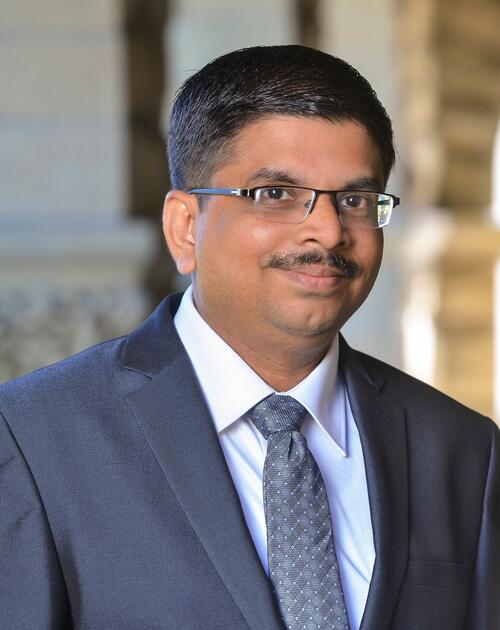
Hareendra Bhaskaran, Reliance Life Sciences, "Big Data Analytics in Pharmaceutical Marketing"

Image
Big Data has changed the way we manage, analyze and leverage data in any industry. One of the most promising areas where Big Data can be applied to make a change is healthcare. In his research, Bhaskaran investigates the possibility of using big data in marketing of pharmaceutical companies. After analyzing how healthcare analytics have the potential to reduce cost of treatment, predict outbreaks of epidemics, avoid preventable diseases and improve quality of life in general, he explains how adoption of Big Data and analytic capabilities can meet the need of firms in the pharmaceutical and life sciences industries.


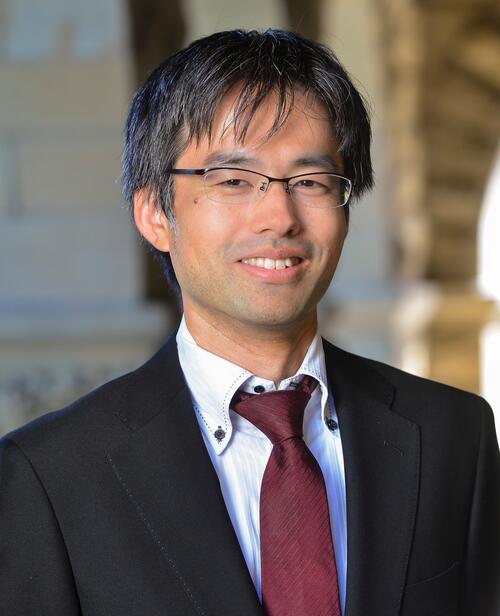
Takayuki Hayakawa, Japan Patent Office, "Patent System and Genetic Testing"

Image
Genetic testing technology has been developed in recent years along with the progress of biotechnology. The number of DNA patents has been increasing, and it is said that more than 20% of human genes have already been patented. Many academic researchers are opposed to DNA patents and concerned that some companies monopolize the human genes. Under such circumstances, the Supreme Court of the United States judged that the DNA patent is invalid because of patent ineligibility (Mayo Collaborative Services v. Prometheus Laboratories, Inc.). This case gave the impact to the patent practitioners and the biotechnology industry. In his research, Hayakawa investigated this case, the situation of the DNA patent prior to this case, and the influence this case has had on the patent.


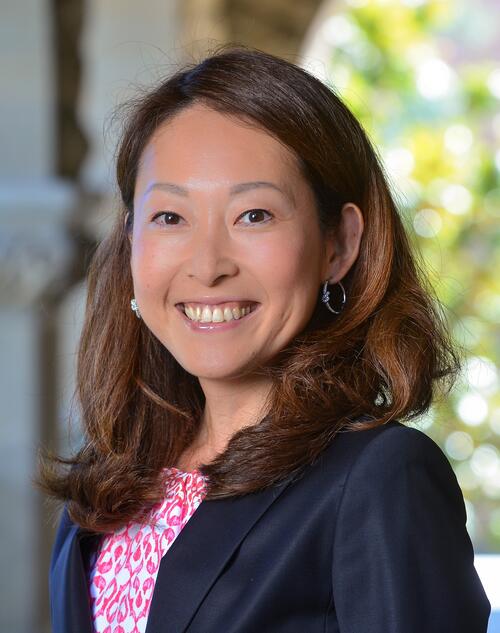
Aki Takahashi, Nissoken, "How Design Thinking is Connected to Culture and How Design Thinking Can Become More Widespread in Japan"

Image
Global businesses are rapidly changing and establishing a new dynamic in developing new innovations.  As a result, Silicon Valley companies have been successful using the design thinking process from Stanford University.  Japanese universities and companies have started to focus on this design thinking method in an effort to understand how to utilize it to create successful innovations and results.  However, there are cultural differences between Japan and Silicon Valley where design thinking needs to be further evaluated.

Takahashi’s research focuses on culture and location in adjusting to becoming more innovative.  How can design thinking be effective in Japan? How do we overcome the cultural gap in design thinking? How do we change culture in business?  In her research, Takahashi addresses these questions and makes suggestions on how design thinking can be more widespread and influential for the success of future businesses in Japan.


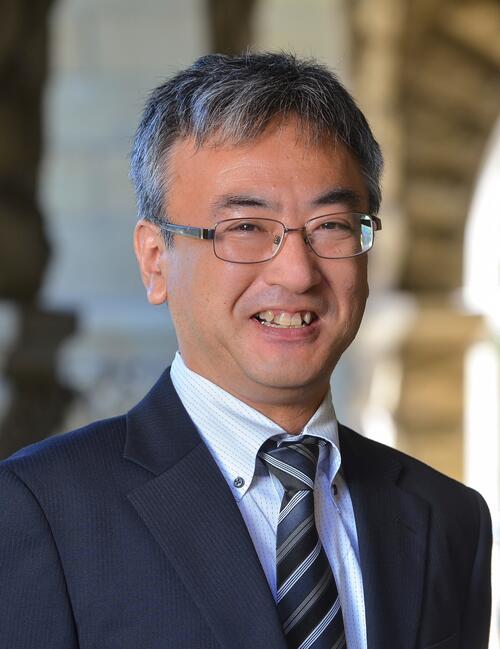
Kensaku Yamada, Mitsubishi Electric, "New Technology about the Internet of Things"

Image
The Internet of Things (IoT) is the network of physical devices such as smartphone, home electronics, medical instruments, industrial robots and sensors. IoT can improve our life or our work efficiently by collecting and analyzing the data from physical devices. Although the annual growth rate of PC and server shipments, which has been representative of IT business until now, is expected to be negative, devices connected to the network by IoT are expected to have an annual growth rate of 20% or more in the future. Most IT vendors are interested in IoT for expanding their business. In his research, Yamada focuses on the industrial IoT that is introduced by manufacturers. He investigates how manufacturers use IoT and what effect they get by using IoT.


Reliance Life Sciences
Japan Patent Office
Nissoken
Mitsubishi Electric
Seminars
Authors
News Type
News
Date
Paragraphs

When a state is “shamed” by outsiders for perceived injustices, it often proves counterproductive, resulting in worse behavior and civil rights violations, a Stanford researcher has found.

Rochelle Terman, a political scientist and postdoctoral fellow at Stanford’s Center for International Security and Cooperation (CISAC), recently spoke about how countries criticized by outsiders on issues like human rights typically respond -- and it's contrary to conventional wisdom. Terman has published findings, “The Relational Politics of Shame: Evidence from the Universal Periodic Review,” on this topic in the Review of International Organizations. She discussed her research in the interview below:

What does your research show about state "shaming"?

Shaming is a ubiquitous strategy to promote international human rights. A key contention in the literature on international norms is that transnational advocacy networks can pressure states into adopting international norms by shaming them – condemning violations and urging reform. The idea is that shaming undermines a state’s legitimacy, which then incentivizes elites into complying with international norms.

In contrast, my work shows that shaming can be counterproductive, encouraging leaders in the target state to persist or “double down” on violations. That is because shaming is seen as illegitimate foreign intervention that threatens a state’s sovereignty and independence.  When viewed in this light, leaders are rewarded for standing up to such pressure and defending the nation against perceived domination. Meanwhile, leaders who “give in” have their political legitimacy undermined at home. The result is that violations tend to persist or even exacerbate.

When and where does it work better to directly confront a country’s leadership about such injustices?

At least two factors moderate the effects of international shaming. The first is the degree to which the norm being promoted is shared between the “shamer” and the target. For instance, the West may shame Uganda or Nigeria for violating LGBT rights. But if Uganda and Nigeria do not accept the “LGBT rights” norm, and refuse to accept that homophobia constitutes bad behavior, then shaming will fail. In this case, it is more likely that shaming will be viewed as illegitimate meddling by foreign powers, and will be met with indignation and defiance.

Second, shaming is quintessentially a relational process. Insofar as it is successful, shaming persuades actors to voluntary change their behavior in order to maintain valued social relationships. In the absence of such relationship, shaming will fail. This is especially so when pressure emanates from a current or historical geopolitical adversary. In this later scenario, not only will shaming fail to work, it will likely provoke defensive hostility and defiance, having a counterproductive effect.

Combing these insights, we can say that shaming is most likely to work under two conditions: when the target is a strong ally, and the norm is shared.

What are some well-known cases where "shaming" backfired?

The main example I use in my forthcoming paper is on the infamous “anti-homosexuality bill” in Uganda. When Uganda introduced the legislation in 2009 (which in some versions applied capital punishment to offenders) it provoked harsh condemnation among its foreign allies, especially in the West. Western donor countries even suspended aid in attempt to push Yoweri Musaveni’s government to abandon the bill. According to conventional accounts, the onslaught of foreign shaming, coupled with the threat of aid cuts and other material sanctions, should have worked best in the Uganda case.

And yet what we saw was the opposite. The wave of international attention provoked an outraged and defiant reaction among the Ugandan population, turning the bill into a symbol of national sovereignty and self-determination in the face of abusive Western bullying. This reaction energized Ugandan elites to champion the bill in order to reap the political rewards at home. Indeed, the bill was the first to pass unanimously in the Ugandan legislature since the end of military rule in 1999. Museveni – who by all accounts preferred a more moderate solution to the crisis – was backed into a corner.

A Foreign Policy story quoted Ugandan journalist Andrew Mwenda as saying, “the mere fact that Obama threatened Museveni publicly is the very reason he chose to go ahead and sign the bill.” And Museveni did so in a particularly defiant fashion, “with the full witness of the international media to demonstrate Uganda’s independence in the face of Western pressure and provocation.”

Uganda anti-homosexuality law was finally quashed by its constitutional court, which ruled the act invalid because it was not passed with the required quorum. By dismissing the law on procedural grounds, Museveni – widely thought to have control over the court – was able to kill the legislation “without appearing to cave in to foreign pressure.” But by that time, defiance had already transformed Uganda’s normative order, entrenching homophobia into its national identity.

Does this 'doubling down' effect vary in domestic or international contexts?

Probably. States with a significant populist contingent, for instance, are especially hostile to international pressure, especially when it emanates from a historical adversary, like a former colonial power. Ironically, democracies may also be more susceptible to defiance, because elites are more beholden to their constituents, and thus are less able to “give in” to foreign pressure without undermining their own political power. 

The international context matters a great deal as well. States are more likely to resist certain norms if they have allies who feel the same way. For instance, we see significant polarization around LGBT rights at the international level, with most states in Africa and the Muslim world voting against resolutions that push LGBT rights forward. South Africa – originally a pioneer for LGBT rights – has changed its position following criticism from its regional neighbors. 

Does elite reaction drive this response to state "shaming?"

To be quite honest, this is a question I’m still exploring and I don’t have a very clear answer. My hunch at the moment is no. The “defiant” reaction occurs mainly at the level of public audiences, which then incentives elites to violate norms for political gain.  These audiences can be at either the domestic or international level. For instance, if domestic constituents are indignant by foreign shaming, elites are incentivized to “double down,” or at least remain silent, lest they undermine their own political legitimacy.

That said, elites can also strategize and manipulate these expected public reactions for their own political purposes. For instance, if Vladimir Putin knows that the Russian public will grow indignant following Western shaming, he might strategically promote a law that he knows will provoke such a reaction in order to benefit from the ensuing conflict. This is what likely occurred with Russia’s “anti-gay propaganda” law, which (unsurprisingly) provoked harsh condemnation from the West and probably bolstered Putin’s domestic popularity.

Any other important points to highlight?

One important point I’d like to highlight is the long-term effects of defiance. In an effort to resist international pressure, states take action that, in the long term, work to internalize oppositional norms in their national identity. In this way, shaming actually produces deviance, not the other way around.

Follow CISAC at @StanfordCISAC and  www.facebook.com/StanfordCISAC

MEDIA CONTACTS:

Rochelle Terman, Center for International Security and Cooperation: (650) 721-1378, rterman@stanford.edu,

Clifton B. Parker, Center for International Security and Cooperation: (650) 725-6488, cbparker@stanford.edu

 
Hero Image
gettyimages 158093568
Protestors march to the United Nations building during International Human Rights Day in 2012 in New York City. Activists then called for immediate action by the UN and world governments to pressure China to loosen its control over Tibet -- a form of "state shaming," as examined by CISAC fellow Rochelle Terman in her research.
Steve Platt/Getty Images
All News button
1
-

The Asia Health Policy Program at Stanford’s Shorenstein Asia-Pacific Research Center (APARC), in collaboration with scholars from Stanford Health Policy's Center on Demography and Economics of Health and Aging, the Stanford Institute for Economic Policy Research, and the Next World Program, is holding its third annual conference on the economics of ageing. The conference is one of several activities planned in 2017 to mark the 10th anniversary of the Asia Health Policy Program.

The triumph of longevity can pose a challenge to the fiscal integrity of public and private pension systems and other social support programs disproportionately used by older adults. High-income countries offer lessons – frequently cautionary tales – for low- and middle-income countries about how to design social protection programs to be sustainable in the face of population ageing. Technological change and income inequality interact with population ageing to threaten the sustainability and perceived fairness of conventional financing for many social programs. Promoting longer working lives and savings for retirement are obvious policy priorities; but in many cases the fiscal challenges are even more acute for other social programs, such as insurance systems for medical care, long-term care, and disability. Reform of entitlement programs is also often politically difficult, further highlighting how important it is for developing countries putting in place comprehensive social security systems to take account of the macroeconomic implications of population ageing.

The objective of the conference is to explore the economics of ageing from the perspective of sustainable financing for longer lives. The conference will bring together researchers to present recent empirical and theoretical research on a range of topics in this area.

The first full day of the conference – April 24 – is open to the public. The lunchtime keynote speech on the second day of the conference – April 25 – is also open to the public; the remaining portions of that day are reserved for panelists only to encourage candid conversation in a closed-door setting.

Conference Agenda

April 24

7:45                             Breakfast

8:25                             Welcome         Gi-Wook Shin, Stanford University

                                                           Karen Eggleston, Stanford University


Session I: Long-term Care and Intergenerational Support

Chair: Gopi Shah Goda, Stanford University

8:30 – 9:30                   “Housing Assets and Access to Long Term Care Services and Supports: Evidence from the Housing Bubble Burst”

                                                            Richard Frank, Harvard University

                                                            Discussant: Tom Davidoff, University of British Columbia

9:30 – 10:30               “The Demand for Long-Term Care Insurance in Canada”

                                                            Pierre-Carl Michaud, HEC Montréal and RAND

                                                            Discussant: Chris Tonetti, Stanford Graduate School of Business

10:30 – 10:45              Coffee break

10:45 – 11:45             “The Price of the East Asian Miracle: Generational Cultural Shift and Elderly Suicide”

                                                            Hyejin Ku, University College London

                                                            Discussant: Hongbin Li, Tsinghua University and Stanford University

Session II:

Co-Chairs: John Shoven and Karen Eggleston, Stanford University

11:45 – 13:45              Lunch

Keynote panel: "The policy challenges of financing longevity: Perspectives from Japan and the US"

Hirotaka Unami, Senior Director for Policy Planning and Research, Minister's Secretariat, Ministry of Finance, Japan

Olivia S. Mitchell, International Foundation of Employee Benefit Plans Professor, as well as Professor of Insurance/Risk Management and Business Economics/Policy, Wharton School, University of Pennsylvania

Session III: Financial Planning and Health

Chair: David Canning, Harvard University

14:00 – 15:00              “Cognitive Decline and Household Financial Outcomes at Older Ages”

                                                            Marco Angrisani, University of Southern California

                                                            Discussant: Kathleen McGarry, UCLA

15:00 – 15:15              Break

15:15 – 16:15             “From Compression to Expansion of Morbidity: Upcoming Challenges for Health Care and Long Term Care in China”

                                                            Bei Lu, University of New South Wales

                        Discussant: Wang Feng, Fudan University and UC Irvine

16:40                           Closing


Apri1 25

11:45 – 13:00              Lunch

                                    Policy challenges of financing longevity: Perspectives from Singapore

Kelvin Bryan Tan, Ministry of Health, Singapore


Conferences
-

The venue of this event has been moved to the Okimoto Conference room.

Dr. Ruger, a leading scholar of global and domestic health policy and public health, will speak about global and national health inequities, drawing from her research in Asia --including India, Indonesia, Malaysia, South Korea, Vietnam -- and Africa. With training in political economy, health policy, international relations, comparative social research and law, Dr. Ruger crosses disciplines to reexamine the principles and values that underlie health policy and public health and apply these principles empirically.  She created the health capability paradigm, challenging existing approaches and illuminating optimal health policies and she has developed an empirical approach to evaluate public health programs and health policies as they measure up to that paradigm.  Dr. Ruger’s scholarship has critically scrutinized the existing global health architecture in order to identify more effective global health policy responses linking public policy and law to global health theory at the global and national levels.  Dr. Ruger studies critical health policy and public health problems such as the equity and efficiency of health system access, financing, resource allocation, policy reform and the social determinants of health.  Her forthcoming book, Global Health Justice and Governance (OUP, in press), advances a theory of global health justice and governance called provincial globalism.

Image
jennifer prah ruger
Dr. Ruger received a bachelor’s degree in the honors program in political economy from the University of California-Berkeley, master’s degrees from Oxford University, the Fletcher School of Law and Diplomacy and Yale University, a doctoral degree from Harvard University, and completed a post-doctoral fellowship at Harvard's Center for Population and Development. Dr. Ruger has authored over 100 publications and is internationally recognized for her leadership and work, which has been cited by the United Nations, World Bank, World Health Organization and United States Government.  She has been Principal Investigator and Co-Investigator on awards from the National Institutes of Health, Fogarty International Center, Hewlett Foundation, Henry J. Kaiser Family Foundation and she was awarded a Guggenheim Fellowship to complete Global Health Justice and Governance (OUP, in press).

Other papers:

1. Coping with Health Care Expenses Among Poor Households: Evidence from a Rural Commune in Vietnam: https://papers.ssrn.com/sol3/papers.cfm?abstract_id=1435832

2. Impact of Health Insurance on Health Care Treatment and Cost in Vietnam: A Health Capability Approach to Financial Protection: https://papers.ssrn.com/sol3/papers.cfm?abstract_id=1515733

3. Effect of Health Expenses on Household Capabilities and Resource Allocation in a Rural Commune in Vietnam: https://papers.ssrn.com/sol3/papers.cfm?abstract_id=1435820

4. The Changing Donor Landscape in Health Sector Aid to Vietnam: A Qualitative Case Study: http://www.sciencedirect.com/science/article/pii/S0277953615001719

5. An Alternative Framework for Analyzing Financial Protection in Health: https://papers.ssrn.com/sol3/papers.cfm?abstract_id=2139693

Jennifer Prah Ruger Amartya Sen Professor of Health Equity, Economics, and Policy, School of Social Policy and Practice, University of Pennsylvania
Seminars

1265 Welch Road, Room 245
Stanford, CA 94305-5479

(650) 725-5507
0
Associate Professor in Medicine (Biomedical Informatics), Surgery, and Biomedical Data Science
hernandez-boussard.jpg PhD, MPH, MS

Dr. Hernandez-Boussard is an Associate Professor in Medicine (Biomedical Informatics), Surgery, and Biomedical Data Science at the Stanford University School of Medicine. Dr. Hernandez-Boussard's background and expertise is in the field of computational biology, with concentration on accountability measures, population health, and health policy. A key focus of her research is the application of novel methods and tools to large clinical datasets for hypothesis generation, comparative effectiveness research, and the evaluation of quality healthcare delivery.

CV
Authors
News Type
Blogs
Date
Paragraphs

If there is such a person as a universally respected and universally loved scholar, Professor Arrow was such a man. I have been trying to think of what I might write to pay tribute to him that somebody else could not say better.  I will give it a shot, though I am not qualified to do this task full justice.

Prof. Arrow was a great genius whose work will be spoken about for as long as economics remains a subject of interest. But I am sure that other economists, even someone who did not know him personally, could do an excellent job of recounting his genius. At the very least, Prof. Arrow’s impossibility theorem and his groundbreaking work on general equilibrium models will be part of the standard curriculum of economics, I believe forever. He had an incredibly wide-ranging curiosity, which led him to work that has revolutionized many empirical fields, including my field of health economics.

Let me focus instead on Prof. Arrow’s reputation for being a kind and humble man, about which I can give some specifics. The main thing I have to say about this is that his reputation was well deserved. There are many stories I could tell, but I’ll just tell one here.

In 1989, during the fall of my senior year in college, Prof. Arrow offered a class on economic inequality for undergraduate economics majors. To my surprise, the class was not oversubscribed, and so I signed up. Prof. Arrow was quietly brilliant the whole quarter. In his hands, the economics of inequality touched on an astonishing array of topics, and to this day, I cannot think about the subject except with the framework he presented there.

He was not an outstanding speaker – there was nothing flashy about his style, but there was nothing false either. His aim as a teacher was to focus his students on the material, not himself. Even when he presented his impossibility theorem, I do not remember him saying that it was his theorem.

The next part is embarrassing. The impossibility theorem says, very roughly, that in a society where there is broad disagreement about social policy, democratic processes can produce incoherent social outcomes. When Prof. Arrow taught it in the class, however, I misunderstood and thought the theorem said that democratic processes always lead to incoherent social outcomes. That evening, I found an easy – too easy! – counter-example to the incorrectly understood theorem. So I scheduled a time to go meet with Prof. Arrow to see where I had gone astray.

When we met, Prof. Arrow was very kind as he explained my error. He even apologized for being unclear in his explanation, even though I am sure most of the rest of the class had it right.

He spent the bulk of the time that day trying to find out what I wanted to do with my life. When I told him I wanted to be a doctor and not an economist, he seemed disappointed (this genuinely surprised me) and he encouraged me to think some more about it. That meeting led me for the first time to think really seriously about a career as an economist. That brief meeting with Prof. Arrow changed my life.

It is easy to be sad when someone of Prof. Arrow’s character and genius dies. I am grateful that I had the opportunity to get to know him. I will always count his touch on my life a blessing from God and I will miss him.

Hero Image
ken arrow
Ken Arrow attends Stanford Health Policy's 2020 symposium in October, 2016.
Steve Fisch
All News button
1
Authors
Siegfried S. Hecker
News Type
News
Date
Paragraphs

On February 23, 1992, less than two months after the dissolution of the Soviet Union, I landed on the tarmac in Sarov, a city the government had removed from maps to keep secret its status as a nuclear weapons center. I was then director of the Los Alamos National Laboratory and­­ accompanied by two senior scientists from my own lab plus three colleagues from the Lawrence Livermore National Laboratory. The six of us were about to walk through the birthplace of the Soviet nuclear bomb, the technological and intellectual powerhouse behind the sophisticated arsenal that had been pointed at our country for the previous 40 years.

Shockingly, after an hour-long flight from Moscow, we stepped out of the Aeroflot turboprop into the open arms of our Russian hosts: Yuli Borisovich Khariton, the scientific leader of the Soviet nuclear program, and other senior lab staff who had waited in the chilly wind to welcome us. Just as remarkable was the fact that this wasn’t the first time we met our Russian counterparts. Two weeks earlier, directors of the Russian nuclear weapons labs, VNIIEF in Sarov and VNIITF in Snezhinsk, had for the first time in history set foot in our labs in Livermore and Los Alamos. This exchange of visits a quarter century ago marked a new turn in relations between the world’s two nuclear weapons superpowers.

The road to Sarov

Our first meeting on Russian soil would have been deemed improbable just a few months earlier. The encounter on the Sarov tarmac grew out of both persistence by determined individuals and larger historical forces. As the Soviet Union scrambled to adjust domestic and international policy in the face of mounting economic and social challenges in the late 1980s, Soviet leader Mikhail Gorbachev reached across the political divide to US President Ronald Reagan to take steps toward nuclear disarmament. One such step was the Joint Verification Experiment of 1988, in which the Soviet Union and the United States asked their nuclear weapons scientists to conduct parallel nuclear-explosion yield measurements at testing grounds in Nevada and Semipalatinsk, located in what is now Kazakhstan. The experiment helped overcome a stumbling block related to verification procedures needed to ratify the 1974 Threshold Test Ban Treaty (TTBT). The 1988 nuclear tests enabled the two sides to sign a new ratification protocol in Geneva in June 1990, and the TTBT entered into force in December 1990.

As history would have it, an unintended outcome of the TTBT ratification effort proved to be the most momentous. Viktor Mikhailov, head of the Soviet team that took part in the Joint Verification Experiment and later Russian minister of atomic energy, was right when he said that “the main result of the Joint Verification Experiment was not the development of procedures and extent of nuclear test monitoring of the joint development of technical verification means, but the chance for interpersonal communications with the American nuclear physicists.”

Indeed, it was working side by side at each other’s test sites that gave rise to deep-rooted affinity and built trust. Over the years, we had only caught glimpses of our Soviet nuclear scientist counterparts at a few international conferences where they disguised their institutional affiliations, saying they were part of the Soviet Academy of Sciences. It was through months of collaboration at our test sites that the contours of their true home institutions—the nuclear weapons labs VNIIEF and VNIITF—began to emerge. As we would discover eventually, these Soviet labs were remarkably similar to our own. We realized that in addition to nuclear weapons work, they were conducting outstanding fundamental science. We became consumed with curiosity to learn more about it first-hand. The Russians were curious about our work as well.

We were all interested in cooperation, but the Russians even more so because they sensed before we did just how dramatically the Soviet Union was changing. Lev D. Ryabev, who headed the atomic ministry at the time, told me years later that Russian nuclear weapons scientists were so eager to work with their American counterparts because “we arrived in the nuclear century all in one boat—movement by any one will affect everyone. We were doomed to work together.”

It was during a 1990 trip to Moscow by Los Alamos and Lawrence Livermore lab scientists for technical discussions supporting the Geneva test ban talks that Mikhailov extended an impromptu invitation to visit the USSR’s secret nuclear city Sarov (then called Arzamas-16) for the first time.

The American scientists returned with specific proposals from the VNIIEF director and his senior scientists for collaboration with the US labs, along with an invitation to Lawrence Livermore Director John Nuckolls and me to visit the secret Russian cities.

Convinced by my Los Alamos colleagues that this was a great opportunity to collaborate scientifically in important areas of research, I tried a number of avenues in Washington to get approval for exploring potential cooperation. I got little traction until the second half of 1991, after the Soviet Union had begun to disintegrate. As it did so, President George H.W. Bush became concerned that brain drain from the Soviet nuclear complex could lead to the spread of knowledge about how to build these weapons of mass destruction.

Driven by that concern, US Energy Secretary James D. Watkins approved my request for the laboratory directors’ exchange visits, and two months after Gorbachev’s formal dissolution of the Soviet Union on December 25, 1991, we entered the surreal world of the Soviet Los Alamos.

A tradition worth sustaining 

Our visits to Sarov and Snezhinsk shattered our Cold War preconceptions of the Soviet nuclear program. We were particularly impressed by the depth of scientific talent. Although they lacked modern computers and electronics, their computational achievements were remarkable, and their experimental facilities were innovative and functional. We found the scientists’ dedication to their mission deeply patriotic, and their attention to nuclear weapons safety reassuring. During our briefings and tours, Russian scientists described leading-edge research in the fundamental science that underpinned their nuclear weapons program. The visits convinced me that our US nuclear labs should collaborate with their Russian counterparts, not only to help solve immediate problems like proliferation and loose nukes, but also because in doing so we would benefit scientifically.

Our Russian colleagues were prepared with proposals for cooperation in a surprisingly broad range of areas. During a daylong session in Chief Weapon Designer Boris Litvinov’s office in Snezhinsk, watched by portraits of Lenin and Igor Kurchatov, one of the fathers of the Soviet Bomb, we hammered out a protocol for cooperation that we would take back to our governments. We came up with a long list problems we wanted to work on together. It included enhancing the security and safety of nuclear weapons during reduction and dismantlement; preventing the proliferation of nuclear weapons knowledge; promoting the conversion and diversification of nuclear facilities; preventing non-nuclear states and terrorists from obtaining nuclear weapons; developing joint mechanisms for emergency response; enhancing the safety of nuclear arsenals; preventing unauthorized use of remaining weapons; and promoting protection and cleanup of the environment at nuclear weapons facilities.

It turned out that we scientists were far ahead of what the US government was prepared to authorize at the time. We heard that when members of the National Security Council staff, which coordinated interagency government issues with Russia, received a copy of the protocol, they declared it did not exist and threw it in the waste paper basket. However, Nuckolls and I presented the protocol to Watkins and received approval to proceed, though only in fundamental science cooperation.

By May 1992, even though the US Energy and State Departments had only agreed to general principles, the former had provided us with the necessary financial support and the latter with the required permissions for travel to Russia. Just as importantly, we had defined what we wanted to do first in the collaboration we called lab-to-lab. We planned for joint experiments in high-energy-density physics and conferences on computer modeling and simulation.

In spite of the initial US government concerns, we would eventually end up cooperating in almost all the areas outlined in the initial protocol. A spirit of collaboration prevailed for nearly a quarter century, and was essential to successfully mitigating the dangers resulting from the dissolution of the Soviet Union. Unfortunately, that cooperation has all but come to an end during the past few years as relations between Moscow and Washington have soured. But the benefits of future cooperation are potentially enormous, as a new report from the Nuclear Threat Initiative makes clear. The US and Russian governments, as well as the two countries’ scientists, should seize any opportunities that arise to rekindle nuclear cooperation.

Hero Image
sarov9213
This picture shows the 1992 visit of U.S. nuclear weapon labs directors to the Russian nuclear weapons institutes in Sarov and Snezhinsk. On the left, in a white sweater is the Russian physicist Alexander Pavlovsky. Next to him is "Russia’s Oppenheimer" Yuly Khariton, almost 88 at that time. The second and third persons on the right are Sig Hecker, director of the Los Alamos National Laboratory, and John Nuckolls, director of the Lawrence Livermore National Laboratory.
Courtesy of Siegfried Hecker
All News button
1
Subscribe to Health and Medicine