Health and Medicine

FSI’s researchers assess health and medicine through the lenses of economics, nutrition and politics. They’re studying and influencing public health policies of local and national governments and the roles that corporations and nongovernmental organizations play in providing health care around the world. Scholars look at how governance affects citizens’ health, how children’s health care access affects the aging process and how to improve children’s health in Guatemala and rural China. They want to know what it will take for people to cook more safely and breathe more easily in developing countries.

FSI professors investigate how lifestyles affect health. What good does gardening do for older Americans? What are the benefits of eating organic food or growing genetically modified rice in China? They study cost-effectiveness by examining programs like those aimed at preventing the spread of tuberculosis in Russian prisons. Policies that impact obesity and undernutrition are examined; as are the public health implications of limiting salt in processed foods and the role of smoking among men who work in Chinese factories. FSI health research looks at sweeping domestic policies like the Affordable Care Act and the role of foreign aid in affecting the price of HIV drugs in Africa.

-

Image
Mark Helfand

Mark Helfand, MD, MS, FACP, is Professor of Medicine and Professor of Medical Informatics and Clinical Epidemiology at the Oregon Health & Science University. He is board-certified in Internal Medicine and practices hospital medicine at the Portland VA Medical Center, where he is a staff physician and directs the VA Evidence Synthesis Program Coordinating Center. He founded the Oregon Evidence-based Practice Center (now the Pacific Northwest EPC) in 1997 and, in the 2000’s, led the EPC’s work for the US Preventive Services Task Force and for OHSU’s pioneering Drug Effectiveness Review Project.

Registration

After registering, you will receive a confirmation email containing information about joining the meeting.


Seminars
-

Katherine Meckel,  PhD, MA, is an Assistant Professor of Economics at the University of California San Diego and a Faculty Research Fellow at the National Bureau of Economic Research. She specializes in topics in public finance, health economics, and environmental economics.

Registration

After registering, you will receive a confirmation email containing information about joining the meeting via Zoom.

Hybrid Seminar:

The speaker will present her talk in person.

Please, no eating in the room. We ask that masks be worn for this event.

Log in on your computer or join us:
William J. Perry Conference Room
Encina Hall, Second Floor, Central, C231 
616 Jane Stanford Way, Stanford, CA 94305


Seminars
-

Arden Morris is a health services researcher, professor of surgery, and director of S-SPIRE Center. She has used claims, clinical datasets, and mixed methods to focus on race/ethnicity, socioeconomic position, and quality and outcomes of cancer care. More recently, she has focused on financial toxicity of cancer care and patient out-of-pocket costs that may influence their treatment decisions.

Seminars
-

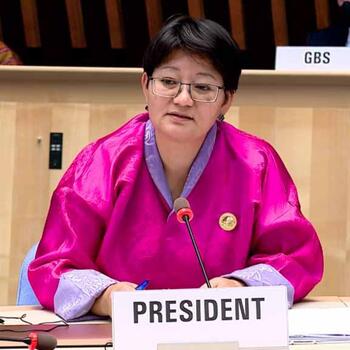
Bhutan time: Friday, February 4th, 2022, 8am to 9am.

Asia Health Policy Program (AHPP) 2021-22 Colloquium series "Aligning Incentives for Better Health and More Resilient Health Systems in Asia”

The Minister of Health of Bhutan, Her Excellency Dasho Dechen Wangmo, will share her insights and experiences from managing the national health system during the COVID-19 crisis, serving as President of the 74th World Health Assembly, and her views on health system strengthening, innovative primary care, chronic disease control, health governance, and the global implications of the pandemic as it unfolds in its third year.

Image
Bhutan Health Minister 010522
Her Excellency Dasho Dechen Wangmo, the only female Minister in the current cabinet of Bhutan, formally took charge of the Ministry of Health on 7th November 2018. Prior to joining politic in 2018, Her Excellency worked as a public health international consultant with primary focus on health systems, governance, policy and strategic planning for governments and civil societies in many countries (USA, India, Nepal, Bangladesh, PNG, Myanmar, Sri Lanka, Thailand, Senegal). She brings her background working on various global health issues including health system strengthening, health governance, grant implementation, monitoring and evaluation system to the current portfolio.

On 17th December 2020 in recognition of her outstanding service to the Nation, she was conferred the “Red Scarf”, one of highest honors a Bhutanese civilian can receive, by His Majesty the King. Her Excellency is a passionate public health advocate and social worker at heart. Hon’ble Lyonpo was nominated as the President of the 74th World Health Assembly (WHA) by Member States of the WHO’s South East Asia Region in 2020. She will hold the office of the President for a duration of one year and it is an honour bestowed on Bhutan for the first time since it became a member of the WHO in 1982.

In addition to her memberships in professional organizations, she is also a founder of the Bhutan Cancer Society, a CSO working for the well being of cancer patients in Bhutan, and a founding chairperson for Lhaksam, the HIV-positive network in the country. Her Excellency has a Master in Public Health (MPH) from Yale School of Public Health, New Haven, USA, and a Bachelor in Cardiopulmonary Science (magna cum laude) from Northeastern University, Boston, USA.

Via Zoom Webinar
Register: bit.ly/3G0tR4i

Her Excellency Lyonpo Dechen Wangmo Minister of Health of Bhutan
Seminars
-

Joshua Salomon, PhD, is a Professor of Health Policy and a Senior Fellow at the Freeman Spogli Institute for International Studies. His research focuses on public health policy and priority-setting, including modeling patterns and trends in major causes of global mortality and disease burden; evaluation of health interventions and policies; and measurement and valuation of health outcomes. He is director of the Prevention Policy Modeling Lab, a multi-institution research consortium that conducts health and economic modeling relating to infectious disease. During the COVID-19 pandemic, Dr. Salomon has worked extensively with policymakers on data synthesis, modeling and decision analysis to inform the public health response.

Encina Commons Room 114, 615 Crothers Way, Stanford, CA 94305-6006
(650) 736-9477
0
Professor, Health Policy
Senior Fellow, Freeman Spogli Institute for International Studies
josh_salomon-headshot_2023.jpg PhD

Joshua Salomon is a Professor of Health Policy in the Department of Health Policy at Stanford School of Medicine, Senior Fellow in the Freeman Spogli Institute for International Studies, and founding Director of the Prevention Policy Modeling Lab. Trained in health policy and decision science, Dr. Salomon leads multidisciplinary research teams dedicated to producing rigorous, actionable evidence to improve the public’s health and reduce health disparities. His work — supported by the National Institutes of Health, Centers for Disease Control and Prevention, and the Bill & Melinda Gates Foundation — combines data synthesis and mathematical modeling to measure and forecast health outcomes and evaluate public health programs and strategies, with particular emphasis on infectious diseases. He has spearheaded methodological innovation in measurement and valuation of health, infectious disease modeling and forecasting, and cost-effectiveness analysis. His applied modeling work on HIV/AIDS, tuberculosis, viral hepatitis, COVID-19 and other major health challenges informs local, state, national and international policies to improve health and wellbeing, particularly among under-served populations in the United States and around the world.  

Dr. Salomon established the multi-institution Prevention Policy Modeling Lab in 2014 to conduct health and economic modeling that guides reasoned public health decision-making relating to infectious disease. He has co-authored more than three hundred original peer-reviewed research articles and mentored dozens of graduate and post-graduate trainees in health policy, medicine and public health. Prior to joining the Stanford Faculty, Dr. Salomon served as a policy analyst in the Department of Evidence and Information for Policy at the World Health Organization in Geneva, and as Professor of Global Health at Harvard T.H. Chan School of Public Health. As Associate Chair for Academic Affairs and Strategy in the Department of Health Policy at Stanford, he works on faculty recruitment and development, and leads strategic initiatives to promote interdisciplinary collaborative research, practice partnerships and policy translation.

Date Label
Seminars
-

David Chan, MD, PhD, is an Associate Professor of Medicine and an investigator at the Department of Veterans Affairs, and a Faculty Research Fellow at the National Bureau of Economic Research. Drawing on labor and organizational economics, he is interested in studying how information is used in health care, how this affects productivity, and implications for design. He is the recipient of the 2014 NIH Director’s High-Risk, High-Reward Early Independence Award to study the optimal balance of information in health information technology for patient care.

David Chan
Seminars
-

About the Seminar: In this time of great challenges, our democracies urgently need to produce citizens who can move from demanding change to making it. But the skills for doing so are not innate, they are learned. In this talk, Beth Simone Noveck will discuss how both citizens and governments can take advantage of digital technology, data, and the collective wisdom of our communities to design and deliver powerful solutions to contemporary problems. Drawing on the latest methods from data and social sciences, including original survey data from around the world, she proposes a practical set of methods for public servants, community leaders, students, activists, and anyone who wants to be a catalyst for positive social change.


Register Now


Image
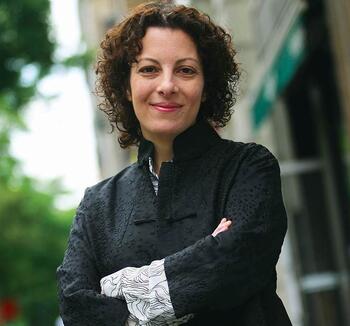
Beth Simone Noveck Headshot
About the Speaker: Beth Simone Noveck is a professor at Northeastern University, where she directs the Burnes Family Center for Global Impact and its partner project, The Governance Lab (The GovLab) and its MacArthur Research Network on Opening Governance. The author of Solving Public Problems: How to Fix Our Government and Change Our World (Yale Press 2021) (named a Best Book of 2021 by Stanford Social Innovation Review), she is also Core Faculty at the Institute for Experiential AI (IEAI) at Northeastern. New Jersey governor Phil Murphy appointed her as the state’s first Chief Innovation Officer and Chancellor Angela Merkel named her to her Digital Council in 2018. Previously, Beth served in the White House as the first United States Deputy Chief Technology Officer and director of the White House Open Government Initiative under President Obama. UK Prime Minister David Cameron appointed her senior advisor for Open Government.

In addition to Solving Public Problems, Beth is the author of Smart Citizens, Smarter State: The Technologies of Expertise and the Future of Governing (Harvard Univ Press 2015) and Wiki Government: How Technology Can Make Government Better, Democracy Stronger and Citizens More Powerful (Brookings 2009) and co-editor of The State of Play: Law, Games and Virtual Worlds (NYU Press, 2005).

Online, via Zoom.

Beth Simone Noveck Director | The GovLab
Seminars
-

Few aspects of society are being transformed by technology more than health and medical care, with health systems challenged to finance and deliver affordable access to a burgeoning array of technologies enabling longer, healthier lives. Three speakers will address different and complementary aspects of how several Asian health systems create, evaluate, and regulate transformative technologies. Dr. Masuda’s research probes policies governing domestic and cross-border control and sharing of genetic information for medical innovation. Dr. Ahn will discuss health technology assessment (HTA) for pricing and reimbursement decisions in South Korea, where there is a young yet established HTA program, compared to Japan, where a 3-year HTA pilot program has just concluded, and China, where HTA efforts are underway but have not been formally implemented. Finally, Dr. Ho will discuss the emergence of digital medicine enabling N-of-1 regimen design for patients. Truly individualizing patient treatment requires addressing a series of challenges, from dynamic patient response to treatment regimens, to accounting for drug synergies in combination therapies which can be dose-dependent, time-dependent, and patient-specific, such as in oncology. Dr. Ho will summarize several clinical studies aiming to increase accessibility to personalized, precision medicine while reducing healthcare costs.

Image
Masuda, Sachiko 020822
Sachiko Masuda is a Visiting Scholar at the Walter H. Shorenstein Asia-Pacific Research Center (Shorenstein APARC) for the 2021-22 academic year and an Associate Professor at the University of Tokyo, Research Center for Advanced Science and Technology.  Masuda is dedicated to the study of legal systems, regulations, infrastructure and industrial structures necessary for advances in technology and a safer society, especially in the pharmaceutical and medical fields. At Shorenstein APARC, she is conducting a comparative Japan-U.S. study on "Human Genetic Information for Medical Innovation: Examining Policy Issues Related to Ensuring Domestic and Transnational Sharing and Management" supported by the ABE Fellowship Program of the Social Science Research Council. Masuda received a Ph.D. (specializing in intellectual property law) in 2006 and a B.S. in Pharmaceutical Sciences in 1997 from the University of Tokyo.

Image
Ahn, Jeonghoon 020822
Dr. Jeonghoon Ahn is a full professor at the Ewha Womans University (Seoul, Korea) and an adjunct fellow at the National Evidence-based healthcare Collaborating Agency (NECA), Seoul, Korea. He is an expert on health technology assessment (HTA) and health economics. He worked 7 years in NECA and served in various decision making and advisory committees of public agencies such as the Health Insurance Review and Assessment Services (HIRA) and the Korean Centers for Disease Control (KCDC). Professor Ahn has graduated the Seoul National University Department of International Economics for undergraduate and master program. He also received a PhD in Economics from the University of Southern California (USC) and was an assistant professor of pharmaceutical economics and Policy at the USC. Dr. Ahn has served on many international professional organizations such as ISPOR, HTAi, INAHTA, and HTAsiaLink. He is the Chair of the ISPOR Asia Consortium (2020-2022) and was a president of ISPOR Korea Chapter (2012-2014). Dr. Ahn was elected as a board director of the Health Technology Assessment International (HTAi) (2014-2016) and a board director for the International Network of Agencies for Health Technology Assessment (INAHTA) for three times (2012-2016). He also contributed to form a regional Health Technology Assessment agency network, the HTAsiaLink (www.htasialink.org), along with other experts in the region.

Image
Ho, Dean 020822
Professor Dean Ho is currently Provost’s Chair Professor, Director of The N.1 Institute for Health (N.1), Director of The Institute for Digital Medicine (WisDM) and Head of the Department of Biomedical Engineering at the National University of Singapore. Prof. Ho and collaborators successfully developed and validated CURATE.AI, a powerful digital medicine platform that has optimized human treatment for broad indications ranging from oncology to infectious diseases. He co-led the first inhuman clinical trials that have resulted in completely halted disease progression and durable patient responses that substantially outperformed standard of care approaches. Prof. Ho is a Fellow of the US National Academy of Inventors (NAI), the American Institute for Medical and Biological Engineering (AIMBE), and the Royal Society of Chemistry. He was also recently named to the HIMSS Future50 Class of 2021 for his internationally-recognised leadership in digital health. His discoveries have been featured on CNN, The Economist, National Geographic, Forbes, Washington Post, NPR and other international news outlets. Prof. Ho is also a Subgroup Lead in the World Health Organization (WHO)-ITU AI for Health Working Group for Regulatory Considerations. Prof. Ho is a recipient of the Tech Heroes from Crisis Pathfinder Award from the Singapore Computer Society, NSF CAREER Award, Wallace H. Coulter Foundation Translational Research Award, and V Foundation for Cancer Research Scholar Award, among others. He has also served as the President of the Board of Directors of the Society for Laboratory Automation and Screening (SLAS), a 26,000+ member global drug development organization.

Image
ahpp_-_aparc_winter_webinar_series_2022
This event is part of the 2022 Winter webinar series, New Frontiers: Technology, Politics, and Society in the Asia-Pacific, sponsored by the Walter H. Shorenstein Asia-Pacific Research Center.

Via Zoom Webinar
Register: https://bit.ly/3GGqOhv

2021-2022 Walter H. Shorenstein Asia-Pacific Research Center Visiting Scholar, Stanford University.
Jeonghoon Ahn Professor, Ewha Womans University, and Adjunct Fellow, National Evidence-based Healthcare Collaborating Agency, Seoul, Korea.
Dean Ho Provost’s Chair Professor, Director, N.1 Institute for Health (N.1) and Institute for Digital Medicine (WisDM), Head, Department of Biomedical Engineering, National University of Singapore
Seminars
-

Asia Health Policy Program (AHPP) 2021-22 Colloquium series "Aligning Incentives for Better Health and More Resilient Health Systems in Asia”

How can policymakers quantify the net value of medical spending? For what medical conditions has the “bang for the buck” been greatest, and for what conditions has spending outstripped gains in health improvement? Join this virtual workshop to learn about cutting-edge methods that can be applied to health system data to understand the net value of changes in medical spending over time, and how policymakers can track the effectiveness of policies to increase productivity of medical spending. In addition to several Asian policymakers already involved, virtual workshop participants will have the opportunity to pose questions to the expert speakers about applying these methods to their own health system settings, including advice about data, outcomes, and relevance for specific policy questions.

Image
Cutler, David
David Cutler is the Otto Eckstein Professor of Applied Economics in the Department of Economics, Harvard University, with secondary appointments at the Kennedy School of Government and the School of Public Health. He was associate dean of the Faculty of Arts and Sciences for Social Sciences from 2003-2008. Professor Cutler served on the Council of Economic Advisers and the National Economic Council during the Clinton Administration and has advised several presidential campaigns, including as Senior Health Care Advisor for the Obama Presidential Campaign. He is a Research Associate at the National Bureau of Economic Research and a member of the Institute of Medicine, and he has held positions with the National Institutes of Health and the National Academy of Sciences

Image
Dunn, Abe
Abe Dunn is the Assistant Chief Economist at the Bureau of Economic Analysis.  His work has focused on the production and development of a new satellite account for health care and on evaluating and using alternative data sources for measurement purposes.  The Health Care Satellite Account uses billions of medical care claims from public and private sources to improve measurement for the U.S. health care sector, which allows researchers to analyze spending trends by medical condition.  Dr. Dunn has published research on a range of topics with a particular focus on health economic issues and measurement.  Most recently, his research has focused on measuring both the cost and the quality of medical care treatments. He received his PhD from the University of Texas at Austin with a primary focus in the areas of health economics and industrial organization.

Image
Weaver, Marcia 120121
Professor Marcia Weaver earned a PhD in economics at the University of Chicago. She specializes in cost-effectiveness analysis and has published 87 peer-reviewed articles. At the Institute for Health Metrics and Evaluation (IHME), she leads the research team on cost-effectiveness analyses of interventions to reduce the burden of disease. Prior to joining IHME she served as principal investigator of the Integrated Infectious Disease Capacity Building Evaluation in partnership with the Infectious Diseases Institute in Uganda. In the United States, she published on cost-effectiveness of interventions for people with HIV, chronic mental illness and substance abuse, and on a joint campaign to promote influenza and pneumococcal vaccines. Professor Weaver also has extensive experience with evaluating the effects of clinical training programs in Botswana, Indonesia, Namibia, South Africa, Thailand, and the Caribbean region, and served as a long-term advisor on health system reform to ministries of health in Niger and Central African Republic.

Via Zoom Webinar
Register: https://bit.ly/3D8yRBu

David M. Cutler Otto Eckstein Professor of Applied Economics, Harvard University
Abe C. Dunn Assistant Chief Economist, US Bureau of Economic Analysis
Marcia R. Weaver Research Professor, Health Metrics Sciences and Global Health, University of Washington
Seminars
Authors
News Type
Commentary
Date
Paragraphs

Thousands of refugees and migrants became pawns at the border between Belarus and Poland in recent weeks. Many had flown to Belarus anticipating a route into the European Union but couldn’t proceed farther because of Poland’s hard-line policies barring them entry. A number of stranded migrants died of cold and a lack of access to food and health care.

Read the rest at Monkey Cage

Hero Image
woman smiling
All News button
1
Subtitle

Countries like Belarus are counting on E.U. governments to see refugees as a security threat.

Subscribe to Health and Medicine