Science and Technology
-

This event is part of the Stanford Silicon Valley-New Japan Project Public Forum Series.


Consumption is a major driver of national economies, and scholars often study important differences across consumption patterns across countries, which influence many aspects of their societies and economies. Yet, the underlying business of logistics operations, and how they support countries’ respective retail industries, has as much, if not more impact than simply examining consumer behavior. In this public forum, Ryuichi Kakui, with deep expertise in eCommerce logistics, will explain how logistics are used in retail industries, comparing across the world’s three largest economies: the US, China, and Japan. He will introduce the concept of strategic logistics thinking and the “4C” framework and informs leading strategic logistics thinking. A conversation with Kenji Kushida, who examines how technologies and specific industry dynamics shape varying models of political economies around the world, will then link the area of logistics and retail to important systemic differences and underlying similarities across the world’s leading economies, which are pursuing contrasting models of social, economic, and political organization.


SPEAKERS

Image
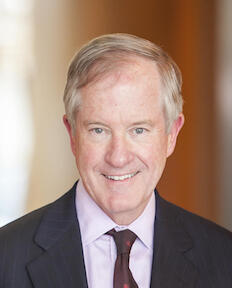
kakui headshot

Ryoichi Kakui is the founder of E-Logit, the leading eCommerce logistics company in Japan. He has published 29 books related to logistics, Amazon, and “omnichannel” distribution, which have been published in Japan, the US, China, Taiwan, South Korea, and Vietnam. He is a frequent commentator on television, radio, newspapers, magazines, and other media. Educated in Sophia University in Japan with an MBA from Golden Gate University, he founded UKETORU in 2015, a app addressing the issue of re-delivery, which escalated to a social issue in Japan.

Image
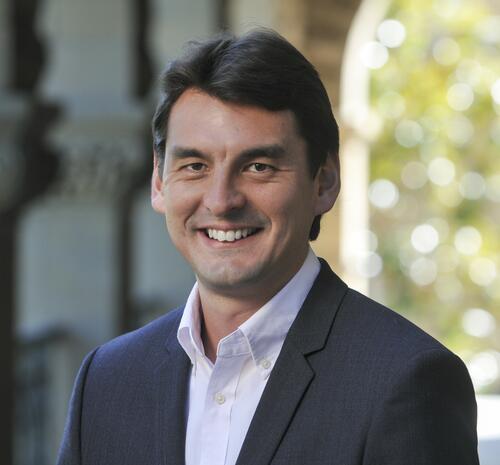
kushida profile 9 2015 cropped

Kenji Kushida is a research scholar at the Japan Program at the Walter H. Shorenstein Asia-Pacific Research Center at Stanford University. One of this research themes examines how IT technologies shape political economies around the world, and how varying national political economic models shape the development trajectories of technologies. He leads the Silicon Valley – New Japan Project, a sustained platform for research and collaboration between Silicon Valley and the new and emerging aspects as Japan transforms itself.


PARKING

Please note there is significant construction taking place on campus, which is greatly affecting parking availability and traffic patterns at the university. Please plan accordingly. Open parking at Stanford University available starting 4:00pm unless otherwise marked. Nearest parking garage is Structure 7, below the Graduate School of Business Knight School of Management.

Seminars
Paragraphs

In recent years, "innovation" has become increasingly important for Japan. Developing innovative businesses that are separate from the traditional Japanese business sphere is becoming increasingly crucial for sustained economic growth. In this report, Asakura focuses on some emerging companies that have the potential to drive innovation, and provide some reflections on the Japanese entrepreneurial environment.

All Publications button
1
Publication Type
Working Papers
Publication Date
Paragraphs

Chapter 4 of this book "Services with Everything: The ICT-Enabled Digital Transformation of Services" was written by John Zysman, Stuart Feldman, Kenji E. Kushida, Jonathan Murray, and Niels Christian Nielsen. The book is edited by Dan Breznitz and John Zysman.


All Publications button
1
Publication Type
Books
Publication Date
Authors
Paragraphs

Kenji Kushida's new book chapter, "Blockchain, a Silicon Valley Vantage on its Potential and Challenges" was published in new book, "The Future of Blockchain: How it will impact finance, industry, and society edited by Yuri Okina, Noriyuki Yanagawa, and Naoyuki Iwashita.

The book is an investigation of the potential and challenges of adopting a disruptive technology such as blockchain. Experts on blockchain applications explain the concept of blockchain, how it is being utilized in a variety of areas, and its wide-range impact on economy, industry, business and society, based on cases in Japan and overseas.


All Publications button
1
Publication Type
Books
Publication Date
Authors
Kenji E. Kushida
Paragraphs

This report provides an overview of the Silicon Valley ecosystem. It draws upon existing scholarship and original insights to derive a picture that is only partially well-known in Japan. Characteristics such as the critical role of large firms for the startup firm ecosystem, the role of Japanese firms in creating the US firms’ “open innovation” paradigm, and the severe lack of local government coordination in providing public transportation creating opportunities for disruptive startups such as Uber, are all aspects of Silicon Valley that are not well-known in Japan. This report also delves into industry-university ties in the crucial research universities of Stanford and University of California Berkeley, highlighting the multifaceted and bidirectional interactions between universities and industry that are often not captured by the common “technology licensing office”-centered view. In the final section, this report briefly reviews a representative set of challenges often cited by large Japanese firms attempting to make use of the Silicon Valley ecosystem, concluding by suggesting areas for further research.

All Publications button
1
Publication Type
Working Papers
Publication Date
Authors
Kenji E. Kushida
Authors
Donald K. Emmerson
News Type
Commentary
Date
Paragraphs

Singapore in Southeast Asia and Stanford University in the United States are focal points for discussions of AI and how it can be made to help—not hurt—human beings. In a piece written for RSIS Commentaries, Don Emmerson, Director of the Southeast Asia Program at APARC, uses a recent panel at Stanford to illustrate the difficulty and necessity of bringing both generalist and specialist perspectives to bear on the problem.


Singapore has been described as “a thriving hub for artificial intelligence.” In May 2019, Singapore’s Personal Data Protection Commission (PDPC) released the first edition of “A Proposed Model AI Governance Framework.”

That “accountability-based” document would “frame the discussions around harnessing AI in a responsible way” by “translat[ing] ethical principles into practical measures that can be implemented by organisations deploying AI solutions”. The guiding principles it proposes to operationalise are that AI systems should be “human-centric” and that decisions made by using them should be “explainable, transparent, and fair”….

Read the full article on RSiS Commentaries.

Hero Image
human hlding hands wih small robot
LONDON, ENGLAND - AUGUST 04: A robot poses as Westfield prepare to host an interactive artificial intelligence storytelling event for kids at a pop-up indoor park on August 10 at Westfield London, August 4, 2016 in London, England.
Getty Images — Jeff Spicer / Stringer
All News button
1
Authors
Thomas Holme
News Type
News
Date
Paragraphs

The world is “graying” at an unprecedented rate. According to the UN’s World Population Prospects 2019, the number of persons over the age of 65 is growing the fastest and expected to more than double by 2050, then triple in another 50 years’ time.

Some Asian countries in particular, plagued by population aging, declining fertility, and gender imbalance, are facing a grim outlook for a demographic crisis. In Japan, one in five people is now 70 or older, birthrate has dropped to a historic level, and the population declined by more than a quarter of a million last year. Meanwhile, South Korea is aging more quickly than any other developed country: with seniors on the verge of making up 14% of the population, the country is on the cusp of becoming an “aged society.” The potential impact of population aging on the labor market and the fiscal pressures on the public systems of healthcare, pensions, and social protection schemes for older adults are some of the many problems that these and other countries must tackle.

Against this background, Shorenstein APARC recently held the third annual gathering of the Stanford Asia-Pacific Innovation project, a Center-led initiative that produces academic and policy-relevant research to promote innovation and entrepreneurship in East Asia. Held in Chuncheon, South Korea and organized jointly with Hallym University’s Institute for Communication Arts and Technology, this year’s conference focused on the intersection of aging, technological development, and innovation in the region.

Gi-Wook Shin stans at a podium

(Gi-Wook Shin)

APARC Director Gi-Wook Shin opened the two-day session, introducing the conference’s themes. “What policies can promote innovation and entrepreneurship in aging populations?” Shin asked. “What opportunities do new technologies offer for addressing challenges posed by East Asia’s demographic shifts, and what are the threats involved in the adoption of these new technologies?”

Joon-Shik Park, vice president of the Office of Vision and Cooperation at Hallym University,  the conference host, noted that “East Asian countries are the most important testbeds on issues related to aging and innovation,” and that sharing meaningful research and implications from the region “will provide invaluable insights for all the societies around us.”

 Yong Suk Lee , Junichi Yamanoi , Young-Bum Kim, and Jiyoung Liu seated at a table

(From left to right, Yong Suk Lee , Junichi Yamanoi , Young-Bum Kim, and Jiyoung Liu)

Family Business Succession

Demographic forces and population aging at the macro level are altering family structures and assumptions at the micro level. For example, Junichi Yamanoi of Waseda University presented a study that examined how expectations around managerial succession at family firms had a significant impact on a firm’s long-term investments.

The study surveyed over 15,000 small and medium enterprises (SMEs) in the Tokyo metropolitan area. The participants were initially asked about their firm’s attributes, CEO demographics, and succession expectations. More than a year later (a time lag that eliminated reverse causality), a sampling of respondents was then asked about their current long-term investments (e.g., R&D, new product development, and internationalization activities).

Yamanoi and his coauthors found that, when a family business’ CEO was confident that a successor would follow, their firm was more likely to engage in long-term investment. Additionally, a CEO’s expectations that the successor would be someone other than their child resulted in an even greater likelihood of long-term investment.

As part of its policy propositions, the study recommends that government agencies and SME officers eager to increase investments by SMEs introduce external candidates to such firms. Moreover, family CEOs should be cautioned against investment decisions that are too short-term in orientation, as, due to inherent aversion to losses of socioemotional wealth for the family, they may unconsciously avoid long-term investments.

Javier Miranda presents at table

(Javier Miranda)

Rethinking Age and Entrepreneurship

At a luncheon keynote address, Javier Miranda, principal economist at the U.S. Census Bureau,  shared insights into the correlations between age and high-growth entrepreneurship, considering when in life people start firms and when they start the most successful firms.

Miranda acknowledged that youth is often perceived as being crucial to entrepreneurial success, referring to Mark Zuckerberg’s dictum, “Young people are just smarter.” Venture capitalist (VC) activity seems to support this notion, said Miranda, citing a sample of 35 VC-backed “unicorns” that resulted in a mean founder age of 31. He explained that VCs' high regard of young entrepreneurs may be attributed to a belief in young people's greater deductive reasoning, transformative thinking, and higher energy, optimism, and confidence.

But does the statistical evidence support such a view? It would seem not. Miranda’s data showed that the mean age for founders of any type of firm is 41.9. Furthermore, the mean age for founders of the most successful firms (those ready for Initial Public Offering market) was 45, and a founder at age 50 was approximately twice as likely to experience successful exit or high growth compared to a founder 20 years their junior.

In fact, dependent on the starting of a firm, the probability of a founder’s success peaked in the age range of 45-59. Pointing directly to entrepreneurs like Jobs and Bezos, Miranda conceded that even extremely talented people, who may be talented enough to succeed when young, peaked in middle age.

The results of Miranda’s study seem at odds with VC attraction to younger entrepreneurs. Experience, Miranda concluded, appeared to overwhelm any potential age advantage, but more research was needed to unpack the underlying predictors of entrepreneurial success over one’s life cycle.

Role of Technology in an Aging Populace

Day two of the conference focused on the promising role technology may play as populations age. APARC Research Scholar Kenji Kushida detailed both the current and impending problems Japan faces as its population both ages and shrinks in size, and the solutions possible through technological advancement like robotics, AI, and wearable devices.

For example, Japan’s demographic shift has had a double knock-on effect on agriculture, with the percentage of farm workers age 65 or older steadily rising over the last five years and the total cultivated agricultural land decreasing each passing year. Kushida described how ICT-enabled bulldozers allow farm owners to more precisely flatten the ground in rice paddies, resulting in both greater yields and cost savings as much as 40%.

Healthcare is another significant area of concern in Japan, as healthcare costs for people over 65 are four times that of younger people and medical costs as a proportion of GDP have been increasing sharply, especially in rural areas. Shortage of physicians and diagnostic technicians is another challenge. Kushida gave an example of a technology healthcare resource that enables clinics and hospitals to upload patient medical images which are then diagnosed by medical doctors affiliated with the tool's startup developer. This low-cost solution allows smaller, rural hospitals to tap into a larger network of physicians and specialists online.

While Japan’s technological trajectory has been driven primarily by the private sector, Kushida pointed out the important role played by government actors. Specifically, within the “Abenomics” reforms of Prime Minister Shinzo Abe, several key performance indicators include support for digitizing medical records, adoption of robotics in nursing care, and extending “healthy” life expectancy.

Edited volumes collecting the papers from the annual Stanford Asia-Pacific Innovation conferences are forthcoming. These will serve as valuable references for scholars and policymakers. The first conference was held at Stanford in 2017, and examined the industrial organization of businesses and innovation clusters and how such environments affect entrepreneurship. The second conference, held in September of 2018 in Beijing, analyzed the impact of public education and financial policies pursued by East Asian countries to promote entrepreneurship.

Presenters gathered on stage


Hero Image
Gi-Wook Shin standing at Podium at Innovation Conference
All News button
1
Authors
Donald K. Emmerson
News Type
Commentary
Date
Paragraphs

Trust but verify. That mantra from nuclear-weapons negotiation discourse during the Cold War is newly relevant today. Versions of the advice are circulating among governments in Southeast Asia and elsewhere as they weigh the security risks of partnering with this or that company to install the fifth-generation telecommunications technology known as 5G.

It is tempting to believe that a technical solution to the problem of unwanted risk exists — a clever digital tweak that will fully and permanently protect a 5G network’s users. It does not. The best one can hope for is a “good enough” balancing of faith and proof that is — arguably, not assuredly — reassuring and realistic. Characteristics of the network-offering company in its home country and of the network-purchasing government in its own country will shape the 5G seller-buyer bargain and its location. This will occur on an eventual spectrum of arrangements between the unwise and the unworkable: unverified trust at one extreme end, trust-eliminating verification at the other....

Read the full article on RSiS Commentaries.

Hero Image
Staff member works next to a 5G logo
BARCELONA, SPAIN - FEBRUARY 26: A staff member works next to a 5G logo at the Xiaomi booth on day 2 of the GSMA Mobile World Congress 2019 on February 26, 2019 in Barcelona, Spain. The annual Mobile World Congress hosts some of the world's largest communications companies, with many unveiling their latest phones and wearables gadgets like foldable screens and the introduction of the 5G wireless networks.
David Ramos/Getty Images
All News button
1
-

The diffusion and deployment of technology is not simply shaped by the technology itself. Complementary technologies are often required to derive value from the technology, and other factors such as business models for which the technology solves significant “pain points.” Business organizations that can harness the set of technologies, along with societal factors such as regulations, employment regimes, demographics, social norms, and political dynamics can critically affect how technologies diffuse.

This conference is centered on the technological development, deployment, and diffusion of various forms of human-machine interfaces. In the morning, it examines technologies utilizing AI, IA, and pushing human-machine interfaces to the next level of commercial development (morning session A). It also introduces frontier research in medical fields and focuses on how a design approach has been effective for how medical products and solutions have been developed (morning session B). In the afternoon, it turns to a discussion of policy dynamics and considerations surrounding the use of AI and IA, particularly in broad societal deployments

This conference is a joint production of the Shorenstein Asia Pacific Research Center (APARC) Japan Program’s Stanford Silicon Valley - New Japan Project, and Japanese venture community, Mistletoe, Inc.

Agenda

*Agenda subject to change

9:00 - 9:30             Registration

9:30 - 9:40             Welcome Remarks

9:40 - 11:00           Morning Session A: Next Generation Human Machine Interfaces: From Science Fiction to Reality to Industrial Deployment

Presentations followed by discussion:

Ryoichi Togashi, Program Director, Komatsu

Andrew Pedtke, Co-founder and CEO, Lim Innovations

Lochlainn Wilson, CEO, SE4

Moderator: Kenji Kushida, Research Scholar, Stanford University

11:00 - 11:15         Break

11:15 - 12:30         Morning Session B: Bio Design and Medical Technologies, and University-Industry Ecosystems

Presentations followed by discussion:

Atsushi Taira, Chief Growth Officer, Mistletoe, Inc.

Gordon Miller Saul, Executive Director,  Stanford Byers Center for Biodesign

Christoph Leuze, Research Scientist, Stanford Radiological Sciences Lab

Pushkar Apte, Director of Strategic Initiatives, CITRIS and the Banatao Institute, UC Berkeley

Moderator: Kenji Kushida, Research Scholar, Stanford University

12:30 - 13:30        Lunch

1:30 - 15:00          Afternoon Discussion: Regulations, politics, and industry dynamic with considerations of accountability and ethics

Presentations followed by discussion:

Kenji Kushida, Research Scholar, Stanford University

Mei Lin Fung, Co-Founder, People-Centered Internet

Rosanna Guadagno, Director, Information Warfare Working Group, Stanford University

Mike Nelson, Head of Public Policy, CloudFlare

Moderator: Jaclyn Selby, Research Scholar, Stanford University

15:00                    Closing Remarks

RSVP REQUIRED

Limited seating available. Seats will be filled on a first come, first serve basis.

RSVP Deadline: May 20, 2019

RSVP link: http://www.stanford-svnj.org/52119conference

-

Image
16 04 29 solomonhsiang 04 bkm
RSVP

On April 16, Solomon Hsiang, the Chancellor's Associate Professor of Public Policy at the University of California, Berkeley, and the Center's Noosheen Hashemi Visiting Scholar, will lead a discussion on data for adaption to climate change, moderated by Marshall Burke. A reception will be held from 4:30 - 5:00 pm. The main event begins at 5:00 pm.

About the speaker:

Solomon Hsiang combines data with mathematical models to understand how society and the environment influence one another. In particular, he focuses on how policy can encourage economic development while managing the global climate. His research has been published in Nature, Science, and the Proceedings of the National Academy of Sciences. 

Hsiang earned a BS in Earth, Atmospheric and Planetary Science and a BS in Urban Studies and Planning from the Massachusetts Institute of Technology, and he received a PhD in Sustainable Development from Columbia University. He was a Post-Doctoral Fellow in Applied Econometrics at the National Bureau of Economic Research (NBER) and a Post-Doctoral Fellow in Science, Technology and Environmental Policy at Princeton University. Hsiang is currently the Chancellor's Associate Professor of Public Policy at the University of California, Berkeley and a Research Associate at the NBER.


Contact: 
I Lin Chen
(650) 724-5482
ilinchen@stanford.edu


Event Sponsors: 
Stanford Center on Global Poverty and Development, Stanford Center on Food Security and the Environment
Center on Global Poverty and Development Speaker Series


Koret-Taube Conference Center

Seminars
Subscribe to Science and Technology