
Science and Technology
-

In addition to Iraq, Afghanistan, Pakistan, the financial crisis, and the housing crisis (as if that were not enough!), the next American president will have his hands full with matters on the Korean peninsula.  What will be the future of Six Party talks?  What is the status of the leadership in Pyongyang?  How do changes in leadership in Washington (and potentially in Pyongyang) affect outcomes?  What are the prospects for US-ROK relations?  And what of the KORUS FTA?  Victor Cha, former director of Asian affairs at the White House, will lead a discussion on these issues.

Professor Cha is director of Asian Studies and holds the D.S. Song Chair in the Department of Government and School of Foreign Service at Georgetown University.  He left the White House in May 2007 after serving since 2004 as Director for Asian Affairs at the National Security Council.  At the White House, he was responsible primarily for Japan, the Korean peninsula, Australia/New Zealand and Pacific Island nation affairs.   Dr. Cha was also the Deputy Head of Delegation for the United States at the Six Party Talks in Beijing, and received two Outstanding Service commendations during his tenure at the NSC.  

He is the award-winning author of Alignment Despite Antagonism: The United States-Korea-Japan Security Triangle (Stanford University Press) (winner of the 2000 Ohira Book Prize) and co-author of Nuclear North Korea: A Debate on Engagement Strategies (Columbia University Press, 2004).  He has written articles on international relations and East Asia in journals including Foreign Affairs, International Security, Political Science Quarterly, Survival, International Studies Quarterly, and Asian Survey.   Professor Cha is a former John M. Olin National Security Fellow at Harvard University, two-time Fulbright Scholar, and Hoover National Fellow,  CISAC Fellow, and William J. Perry Fellow at Stanford University.
Image
beyond the final score
He serves as an independent consultant, and has testified before Congress on Asian security issues.  He has been a guest analyst for various media including CNN, ABC Nightline, NBC Today Show, CBS Morning Show, Fox News, MSNBC, CNBC, BBC, ESPN, Sports Illustrated, and National Public Radio.

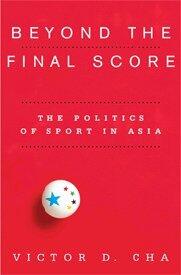
His new book Beyond the Final Score: The Politics of Sport in Asia (Columbia University Press, 2008) looks at the politics of sports and the Beijing Olympics. Cha holds a BA and Ph.D. from Columbia University, MA from University of Oxford.

This event is sponsored by the Pantech Group in Korea.

Philippines Conference Room

Victor D. Cha Director of Asian Studies Speaker Georgetown University
Seminars
-

The next U.S. president will face major science and technology challenges and opportunities. These, in turn, will have a significant influence on the nation's future standing. Unfortunately, he is likely to have limited financial resources with which to address them. This talk will discuss options for moving forward. The details will depend on who wins the election. This talk is presented by Media X and co-sponsored by SPRIE.

Arthur Bienenstock is Special Assistant to the President for Federal Research Policy and Director of the Wallenberg Research Link at Stanford University, where he also is a professor at the Stanford Synchrotron Radiation Laboratory and in the Departments of Applied Physics and Materials Science & Engineering. He is president of the American Physical Society. From November, 1997 through January, 2001, he was the Associate Director for Science of the White House Office and Science and Technology Policy (OSTP). He has also served Stanford as Vice Provost and Dean of Research and Graduate Policy (2003-6), Director of the Stanford Synchrotron Radiation Laboratory (1978-97) and Vice Provost for Faculty Affairs and Faculty Affirmative Action Officer (1972-77).

A video of Dr. Bienenstock's presentation is available courtesy of Media X.

Wallenberg Hall, Room 124

Arthur Bienenstock Special Assistant to the President for Federal Research Policy Speaker Stanford University
Seminars
-

CISAC co-founder Sidney Drell will be honored for his contributions to science at Stanford. The presentation is the first in the Stanford Pioneers in Science series.

CISAC consulting professor and former New York Times editor and reporter Philip Taubman will introduce Professor Drell, and present his professional accomplishments and their significance.  Professor Drell will be interviewed on stage about his life, values, and reflections, with a question-and-answer session to follow.

Cubberley Auditorium
School of Education

0
Affiliate
Taubman_Phil.jpg

Philip Taubman is affiliated with the Center for International Security and Cooperation at Stanford University. Before joining CISAC in 2008, Mr. Taubman worked at the New York Times as a reporter and editor for nearly 30 years, specializing in national security issues, including United States diplomacy, and intelligence and defense policy and operations. He served as Moscow bureau chief and Washington bureau chief, among other posts. He is author of Secret Empire: Eisenhower, the CIA, and the Hidden Story of America's Space Espionage (2003), The Partnership: Five Cold Warriors and Their Quest to Ban the Bomb (2012),  In the Nation's Service: The Life and Times of George P. Shultz (2023), as well as co-author (with his brother, William Taubman) of McNamara at War: A New History (2025).

Date Label
Philip Taubman Commentator
Sidney D. Drell senior fellow at the Hoover Institution and professor of theoretical physics (emeritus) Speaker the Stanford Linear Accelerator Center (SLAC), Stanford University
Seminars
-

The wars in Afghanistan and Iraq. Dependence on expensive foreign oil. Challenging diplomacy with nuclear-armed countries. America's next president needs a strong vision and stronger will to tackle these formidable tasks and those that lie ahead. Which candidate is best equipped to meet these challenges? Our panel of top advisors to the Republican and Democratic presidential nominees will address each candidate's plan to improve our international security. Join us to listen and ask questions of these experts.

Sponsored by The Commonwealth Club of California.

Mark Hopkins Intercontinental Peacock Court
999 California St.
San Francisco, CA

Hon. James Woolsey Annenberg Distinguished Visiting Fellow at the Hoover Institution, Stanford University; Former Director of Central Intelligence and the Central Intelligence Agency (1993-1995); Advisor to Senator McCain Speaker

Encina Hall
616 Jane Stanford Way
Stanford, CA 94305-6055

0
Senior Fellow, Freeman Spogli Institute for International Studies
Ken Olivier and Angela Nomellini Professor of International Studies, Department of Political Science
Peter and Helen Bing Senior Fellow, Hoover Institution
mcfaul_headshot_2025.jpg PhD

Michael McFaul is the Ken Olivier and Angela Nomellini Professor of International Studies in Political Science, Senior Fellow at the Freeman Spogli Institute for International Studies, and the Peter and Helen Bing Senior Fellow at the Hoover Institution, all at Stanford University. He joined the Stanford faculty in 1995 and served as FSI Director from 2015 to 2025. He is also an international affairs analyst for MSNOW.

McFaul served for five years in the Obama administration, first as Special Assistant to the President and Senior Director for Russian and Eurasian Affairs at the National Security Council at the White House (2009-2012), and then as U.S. Ambassador to the Russian Federation (2012-2014).

McFaul has authored ten books and edited several others, including, most recently, Autocrats vs. Democrats: China, Russia, America, and the New Global Disorder, as well as From Cold War to Hot Peace: An American Ambassador in Putin’s Russia, (a New York Times bestseller) Advancing Democracy Abroad: Why We Should, How We Can; and Russia’s Unfinished Revolution: Political Change from Gorbachev to Putin.

He is a recipient of numerous awards, including an honorary PhD from Montana State University; the Order for Merits to Lithuania from President Gitanas Nausea of Lithuania; Order of Merit of Third Degree from President Volodymyr Zelenskyy of Ukraine, and the Dean’s Award for Distinguished Teaching at Stanford University. In 2015, he was the Distinguished Mingde Faculty Fellow at the Stanford Center at Peking University.

McFaul was born and raised in Montana. He received his B.A. in International Relations and Slavic Languages and his M.A. in Soviet and East European Studies from Stanford University in 1986. As a Rhodes Scholar, he completed his D. Phil. in International Relations at Oxford University in 1991. 

CV
Date Label
Michael A. McFaul Deputy Director, Freeman Spogli Institute For International Studies and Professor of Political Science, Stanford University; Senior Fellow, Hoover Institution; Advisor to Senator Obama Speaker
Dr. Gloria C. Duffy President and CEO, The Commonwealth Club of California; Deputy Assistant Secretary of Defense under President Bill Clinton Moderator
Conferences
Paragraphs

Last May's passage of the 2008 Farm Bill raises the stakes for biofuel sustainability:
A substantial subsidy for the production of cellulosic ethanol starts the United States again down a path with uncertain environmental consequences. This time, however, the subsidy is for both the refiners ($1.01 per gallon) and the growers ($45 per ton of biomass), which will rapidly accelerate adoption and place hard-to-manage pressures on efforts to design and implement sustainable production practices-as will a 2007 legislative mandate for 16 billion gallons of cellulosic ethanol per year by 2022. Similar directives elsewhere, e.g., the European.

Union's mandate that 10% of all transport fuel in Europe be from renewable sources by
2020, make this a global issue. The European Union's current reconsideration of this target
places even more emphasis on cellulosic feedstocks. The need for knowledge- and science-based policy is urgent.

All Publications button
1
Publication Type
Journal Articles
Publication Date
Journal Publisher
Science
Authors
Holly Gibbs
Paragraphs

PESD senior fellow and Nobel laureate in Physics, Burton Richter, explains why an inclusive internationalization policy of both ends of the nuclear fuel-cycle can provide much needed carbon-free energy while limiting the potential for the proliferation of nuclear weapons. He insists that the nuclear proliferation problem can be remedied by a tightly monitored program through international policy and diplomacy where incentives to tame proliferation are increased, inspections are more rigorous, and a sanctions program is agreed upon and adhered to.

All Publications button
1
Publication Type
Journal Articles
Publication Date
Journal Publisher
Issues in Science and Technology
Authors
Subscribe to Science and Technology