
International Development

FSI researchers consider international development from a variety of angles. They analyze ideas such as how public action and good governance are cornerstones of economic prosperity in Mexico and how investments in high school education will improve China’s economy.

They are looking at novel technological interventions to improve rural livelihoods, like the development implications of solar power-generated crop growing in Northern Benin.

FSI academics also assess which political processes yield better access to public services, particularly in developing countries. With a focus on health care, researchers have studied the political incentives to embrace UNICEF’s child survival efforts and how a well-run anti-alcohol policy in Russia affected mortality rates.

FSI’s work on international development also includes training the next generation of leaders through pre- and post-doctoral fellowships as well as the Draper Hills Summer Fellows Program.

-

David Holloway (speaker) is the Raymond A. Spruance Professor of International History, a professor of political science, and an FSI senior fellow. He was co-director of CISAC from 1991 to 1997, and director of FSI from 1998 to 2003. His research focuses on the international history of nuclear weapons, on science and technology in the Soviet Union, and on the relationship between international history and international relations theory. His book Stalin and the Bomb: The Soviet Union and Atomic Energy, 1939-1956 (Yale University Press, 1994) was chosen by the New York Times Book Review as one of the 11 best books of 1994, and it won the Vucinich and Shulman prizes of the American Association for the Advancement of Slavic Studies. Since joining the Stanford faculty in 1986 -- first as a professor of political science and later (in 1996) as a professor of history as well -- Holloway has served as chair and co-chair of the International Relations Program (1989-1991), and as associate dean in the School of Humanities and Sciences (1997-1998). Before coming to Stanford, he taught at the University of Lancaster (1967-1970) and the University of Edinburgh (1970-1986). Born in Dublin, Ireland, he received his undergraduate degree in modern languages and literature, and his PhD in social and political sciences, both from Cambridge University.
Michael May
(discussant) is Professor Emeritus (Research) in the Stanford University School of Engineering and a senior fellow with the Institute for International Studies at Stanford University. He is the former co-director of Stanford University's Center for International Security and Cooperation, having served seven years in that capacity through January 2000. May is a director emeritus of the Lawrence Livermore National Laboratory, where he worked from 1952 to 1988.  He served as director of the Laboratory from 1965 to 1971. May was a technical adviser to the Threshold Test Ban Treaty negotiating team; a member of the U.S. delegation to the Strategic Arms Limitation Talks; and at various times has been a member of the Defense Science Board, the General Advisory Committee to the AEC, the Secretary of Energy Advisory Board, the RAND Corporation Board of Trustees, and the Committee on International Security and Arms Control of the National Academy of Sciences. May received the Distinguished Public Service and Distinguished Civilian Service Medals from the Department of Defense, and the Ernest Orlando Lawrence Award from the Atomic Energy Commission, as well as other awards. His current research interests are in the area of nuclear and terrorism, energy, security and environment, and the relation of nuclear weapons and foreign policy.

Reuben W. Hills Conference Room

CISAC
Stanford University
Encina Hall, E214
Stanford, CA 94305-6165

(650) 723-1737 (650) 723-0089
0
Senior Fellow Emeritus at the Freeman Spogli Institute of International Studies
Raymond A. Spruance Professor of International History
0820stanford-davidholloway-238-edit.jpg PhD

David Holloway is the Raymond A. Spruance Professor of International History, a professor of political science, and an FSI senior fellow. He was co-director of CISAC from 1991 to 1997, and director of FSI from 1998 to 2003. His research focuses on the international history of nuclear weapons, on science and technology in the Soviet Union, and on the relationship between international history and international relations theory. His book Stalin and the Bomb: The Soviet Union and Atomic Energy, 1939-1956 (Yale University Press, 1994) was chosen by the New York Times Book Review as one of the 11 best books of 1994, and it won the Vucinich and Shulman prizes of the American Association for the Advancement of Slavic Studies. It has been translated into seven languages, most recently into Chinese. The Chinese translation is due to be published later in 2018. Holloway also wrote The Soviet Union and the Arms Race (1983) and co-authored The Reagan Strategic Defense Initiative: Technical, Political and Arms Control Assessment (1984). He has contributed to the Bulletin of the Atomic Scientists, Foreign Affairs, and other scholarly journals.

Since joining the Stanford faculty in 1986 -- first as a professor of political science and later (in 1996) as a professor of history as well -- Holloway has served as chair and co-chair of the International Relations Program (1989-1991), and as associate dean in the School of Humanities and Sciences (1997-1998). Before coming to Stanford, he taught at the University of Lancaster (1967-1970) and the University of Edinburgh (1970-1986). Born in Dublin, Ireland, he received his undergraduate degree in modern languages and literature, and his PhD in social and political sciences, both from Cambridge University.

Faculty member at the Center for International Security and Cooperation
Affiliated faculty at the Center on Democracy, Development, and the Rule of Law
Affiliated faculty at The Europe Center
CV
Date Label
David Holloway Speaker
Michael May Speaker
Seminars
-
Charles Thorpe is currently an Associate Professor of Sociology at the University of California, San Diego. Previously he taught at the School of Social Sciences at Cardiff University in Wales, followed by time at the Department of Science and Technology Studies at University College London. Dr. Thorpe received his PhD in Sociology and Science Studies from the University of California, San Diego in 2001. He is the author of Oppenheimer: The Tragic Intellect, published by University of Chicago Press in 2006.

Reuben W. Hills Conference Room

Charles Thorpe Associate Professor of Sociology Speaker University of California, San Diego
Seminars
-
Frank Smith (speaker) is a PhD candidate in political science at the University of Chicago and a predoctoral fellow at CISAC. His research examines military and civilian decisions about biological warfare and tests different theories about the sources of military research, development, and doctrine, as well as the rise of civilian biodefense. In addition, he has worked on a variety of projects that address technology and national security at the RAND Corporation, Argonne National Laboratory, and the Defense Intelligence Agency. He earned his BS in biological chemistry from the University of Chicago in 2000.

Rebecca Slayton (discussant) is a lecturer in the Science, Technology and Society Program at Stanford University and a CISAC affiliate. In 2004-2005 she was a CISAC science fellow. Her research examines how technical judgments are generated, taken up, and given significance in international security contexts. She is currently working on a book which uses the history of the U.S. ballistic missile defense program to study the relationships between and among technology, expertise, and the media. Portions of this work have been published in journals such as History and Technology and have been presented at academic conferences. As a postdoctoral fellow in the Science, Technology, and Society Program at the Massachusetts Institute of Technology, she recently completed an NSF-funded project entitled Public Science: Discourse about the Strategic Defense Initiative, 1983-1988

As a physical chemist, she developed ultrafast laser experiments in condensed matter systems and published several articles in physics journals. She also received the AAAS Mass Media Science and Engineering Fellowship in 2000, and has worked as a science journalist for a daily paper and for Physical Review Focus. She earned her doctorate in chemistry from Harvard University in 2002.

Reuben W. Hills Conference Room

Frank Smith Speaker
Rebecca Slayton Speaker
Seminars
-
Dr. Chiozza investigates the popular basis of support for suicide terrorism carried out against Americans and other Western targets in Iraq. Using survey data from six countries in the Middle East and South Asia, he investigates how demographic factors, such as gender, education, and age, interact with specific predispositions and attitudes, including fear of the United States, anti-Semitism, and personal anomie, to explain who would consider suicide terrorism against American and Western targets in Iraq justifiable. Methodologically, he employs Classification and Regression Tree (CART) models, a novel methodology that allows for a parsimonious identification of interactive and non-linear effects in the data. Dr. Chiozza shows that fear of the U.S. trumps other motivations in the countries that are geographically closer to Iraq.

Giacomo Chiozza (speaker) is an Assistant Professor of Political Science in the Travers Department of Political Science at the University of California, Berkeley. He holds a PhD from Duke University and a BA from the Università degli Studi di Milano. Before joining the Berkeley Political Science department, he was a post-doctoral fellow in national security at the Olin Institute for Strategic Studies at Harvard University. His research interests include the study of foreign perceptions of the United States in the American World Order and the quantitative analysis of conflict processes. He is the author of "A Crisis like No Other? Anti-Americanism at the Time of the Iraq War" (European Journal of International Relations, forthcoming); "Disaggregating Anti-Americanism: An Analysis of Individual Attitudes Towards the United States" (In Keohane and Katzenstein, Anti-Americanisms in World Politics, 2007), as well as of articles on leaders and conflict processes that were published in the American Journal of Political Science, the Journal of Conflict Resolution, and the Journal of Peace Research.

Aila Matanock (discussant) is a doctoral student in political science at Stanford.  She received an undergraduate degree magna cum laude in Social Studies from Harvard University, while working with the Belfer Center’s Managing the Atom Project and with the Los Alamos National Laboratory.  After graduation, she took a job at the RAND Corporation as a research assistant where she analyzed projects on terrorism and nuclear weapons.  Her current research is on social support for terrorism, the effect of nuclear weapons on conventional conflict, and the reasons for varying levels of shared sovereignty in international agreements.

Reuben W. Hills Conference Room

Giacomo Chiozza Assistant Professor of Political Science Speaker University of California, Berkeley
Seminars
-

Economic security, sustainable development, clean energy and energy security, better regulations, greater innovativeness and the growing share of Polish economy in the international market; these are the main priorities of the Polish government and Ministry of Economy. How is Poland going to handle the 21st Century challenges? How will Poland find its niche in the globalized economy? These are the questions that will be discussed by the Polish Deputy Prime Minister and Minister of Economy, Mr. Waldemar Pawlak.

Born in 1959, Mr. Waldemar Pawlak graduated from the Warsaw University of Technology with an engineering degree in automotive and construction machinery. He has served as a member of the Polish Parliament since 1989; as President of the board of the Warsaw Commodities Exchange from 2001 to 2005; as Prime Minister of Poland in 1992 and again in 1993 to 1995; and as Deputy Prime Minister and Minister of Economy of Poland since November 2007.


This seminar is jointly sponsored by the Forum on Contemporary Europe, the Center for Democracy, Development and the Rule of Law, the U.S.-Polish Trade Council, and the Consulate General of the Republic of Poland in Los Angeles.

Oksenberg Conference Room

Waldemar Pawlak Deputy Prime Minister and Minister of Economy, Poland Speaker
Seminars
-
Steven E. Miller is Director of the International Security Program, Editor-in-Chief of the quarterly journal, International Security and also co-editor of the International Security Program's book series, BCSIA Studies in International Security (which is published by the MIT Press). Previously, he was Senior Research Fellow at the Stockholm International Peace Research Institute (SIPRI) and taught Defense and Arms Control Studies in the Department of Political Science at the Massachusetts Institute of Technology. Miller is a Fellow of the American Academy of Arts and Sciences, where he has been a member of their Committee on International Security Studies (CISS). He is also co-chair of the U.S. Pugwash Committee, a member of the Council of International Pugwash, a member of the Advisory Committee of the Stockholm International Peace Research Institute (SIPRI), a member of the Scientific Committee of the Landau Network Centro Volta (Italy), and formerly a member of the Council of the International Institute for Strategic Studies (IISS).  Miller was born and raised in North Hollywood, California. He did his undergraduate degree at Occidental College in Los Angeles. He received a Master of Arts in Law and Diplomacy (MALD) and a PhD in international relations from the Fletcher School of Law and Diplomacy. He is married to Deborah K. Louis. They have two sons: Jonathan (1989) and Nicholas (1997).

Reuben W. Hills Conference Room

Steven E. Miller Editor-in-Chief Speaker <i>International Security</i>
Seminars
-

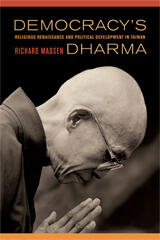
This is a CDDRL's Special Event within our Democracy in Taiwan Program. It is also co-sponsored by the Public Diplomacy/Emerging Publics Project of the Center for the Pacific Rim at University of San Francisco. In this seminar, Dr. Richard Madsen will talk about his new book that explores the religious renaissance that has reformed, revitalized, and renewed the practices of Buddhism and Daoism in Taiwan and how this religious renaissance embraces democracy modernity.  

Image
10896
Richard Madsen is distinguished professor and chair of the sociology department at the University of California, San Diego and a co-author (with Robert Bellah et al.) of The Good Society and Habits of the Heart which received the Los Angeles Times Book Award and was jury nominated for the Pulitzer Prize. He has authored or co-authored five books on China, including Morality and Power in a Chinese Village for which he received the C. Wright Mills Award; China's Catholics: Tragedy and Hope in an Emerging Civil Society; and China and the American Dream.  He also co-edited (with Tracy B. Strong) The Many and the One: Religious and Secular Perspectives on Ethical Pluralism in the Modern World. His latest book is Democracy’s Dharma: Religious Renaissance and Political Development in Taiwan.

Richard Madsen received an MA in Asian studies and a Ph.D. in sociology from Harvard.

"Madsen is a genial and well-informed guide, both to social-political change in Taiwan and to the ins and outs of religious movements. His engaging writing skillfully interweaves profound insights and themes into the descriptive analytical narrative. Democracy's Dharma presents new material based on recent research while offering a fresh spin on thinking about Asian religions."–Thomas Gold, editor of Social Connections in China: Institutions, Culture, and the Changing Nature of Guanxi

Philippines Conference Room

Richard Madsen Distinguished Professor Speaker Department of Sociology at the University of California, San Diego
Conferences
Paragraphs

Climate change is projected to have adverse impacts on public health. Cobenefits may be possible from more upstream mitigation of greenhouse gases causing climate change. To help measure such cobenefits alongside averted disease-specific risks, a health impact assessment (HIA) framework can more comprehensively serve as a decision support tool. HIA also considers health equity, clearly part of the climate change problem. New choices for energy must be made carefully considering such effects as additional pressure on the world's forests through large-scale expansion of soybean and oil palm plantations, leading to forest clearing, biodiversity loss and disease emergence, expulsion of subsistence farmers, and potential increases in food prices and emissions of carbon dioxide to the atmosphere. Investigators must consider the full range of policy options, supported by more comprehensive, flexible, and transparent assessment methods.

All Publications button
1
Publication Type
Journal Articles
Publication Date
Journal Publisher
Annual Reviews of Public Health
Authors
Holly Gibbs
-
Explore how breakthrough socially and environmentally responsible supply chain practices can fundamentally change business models, lead to overall improved business performance, and strengthen organizations

A part of the Responsible Supply Chain Conference at the Graduate School of Business.

Sponsored by The Stanford Center for Social Innovation, and Stanford Global Supply Chain Management Forum

Stanford Graduate School of Business
Stanford University
Stanford, CA 94305

Conferences
0
Former PhD student, Emmett Interdisciplinary Program in Environment & Resources
Andy_cropped_headshot.jpg

Andy earned his doctorate in the Emmett Interdisciplinary Program in Environment and Resources at Stanford University where he studied the Chilean salmon farming industry to understand human relationships with marine environments. He is in the process of writing an environmental and social history of the industry.

Before coming to Stanford, he researched aquaculture policy with Dr. Becky Goldburg at The Environmental Defense Fund; instructed in and administered marine science education programs at the Catalina Island Marine Institute; and worked for the National Marine Fisheries Service in the Alaskan pollock and California drift-gillnet swordfish fisheries.

Previously he attended the Colorado College as a Boettcher scholar to study environmental science, history and literature. His interest in environmental studies largely coalesced during a year spent teaching at Uthongathi School in Kwa-Zulu Natal, South Africa.

Subscribe to International Development