International Development

FSI researchers consider international development from a variety of angles. They analyze ideas such as how public action and good governance are cornerstones of economic prosperity in Mexico and how investments in high school education will improve China’s economy.

They are looking at novel technological interventions to improve rural livelihoods, like the development implications of solar power-generated crop growing in Northern Benin.

FSI academics also assess which political processes yield better access to public services, particularly in developing countries. With a focus on health care, researchers have studied the political incentives to embrace UNICEF’s child survival efforts and how a well-run anti-alcohol policy in Russia affected mortality rates.

FSI’s work on international development also includes training the next generation of leaders through pre- and post-doctoral fellowships as well as the Draper Hills Summer Fellows Program.

-

Controlling the Narrative: The Coordination & Disciplining Role of the People's Daily in China with Professor Joseph Piotroski, Stanford University

This seminar provides an overview of corporate news reporting in China, with a focus on understanding the political and market-based incentives behind Chinese newspapers' biased coverage of China's listed companies. And, given these prevailing incentives, we will explore how politicians in China use the Party's flagship newspaper, the People’s Daily, to coordinate the reporting of corporate news in China.


Image
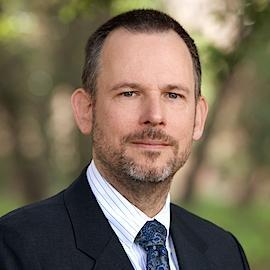
Headshot of Dr. Joseph Piotroski
About the Speaker

Joseph Piotroski is the Robert K. Jaedicke Professor of Accounting at Stanford University’s Graduate School of Business, and a Senior Fellow at the Asian Bureau of Finance and Economic Research (ABFER). Professor Piotroski earned his PhD from the University of Michigan in 1999, an MBA from Indiana University in 1994, a BS in Accounting from the University of Illinois in 1989, and worked as a tax consultant for Coopers and Lybrand in Chicago. His research focuses on corporate transparency, governance, and regulation in a global context. His current research examines the impact of legal, political, and regulatory forces on capital market behavior and corporate decision-making, most notably in China and other emerging economies. His research has been published in scholarly journals in the areas of accounting, finance, and economics, and his research on value investing has been frequently cited in the popular press and is widely used in practice. 


Seminar Series Moderators:

Image
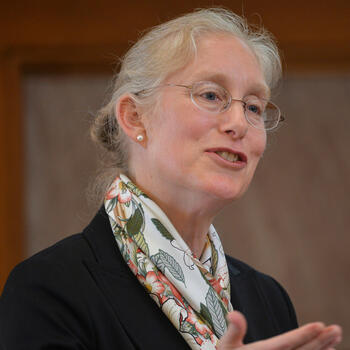
Headshot of Dr. Scott Rozelle

Scott Rozelle is the Helen F. Farnsworth Senior Fellow and Co-Director of Stanford Center on China's Economy and Institutions in the Freeman Spogli Institute for International Studies and Stanford Institute for Economic Policy Research at Stanford University. For the past 30 years, he has worked on the economics of poverty reduction. Currently, his work on poverty has its full focus on human capital, including issues of rural health, nutrition and education. For the past 20 year, Rozelle has been the chair of the International Advisory Board of the Center for Chinese Agricultural Policy, Chinese Academy of Sciences (CAS). In recent years Rozelle spends most of his time co-directing the Rural Education Action Project (REAP). In recognition of his outstanding achievements, Rozelle has received numerous honors and awards, including the Friendship Award in 2008, the highest award given to a non-Chinese by the Premier; and the National Science and Technology Collaboration Award in 2009 for scientific achievement in collaborative research.
Image
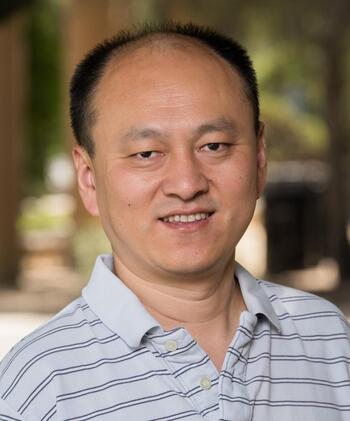
hongbin li headshot
Hongbin Li is the James Liang Senior Fellow and Co-Director of the Stanford Center on China's Economy and Institutions in Freeman Spogli Institute for International Studies and the Stanford Institute for Economic Policy Research. Hongbin obtained his Ph.D. in economics from Stanford University in 2001 and joined the economics department of the Chinese University of Hong Kong (CUHK), where he became full professor in 2007. He was also one of the two founding directors of the Institute of Economics and Finance at the CUHK. He taught at Tsinghua University in Beijing 2007-2016 and was C.V. Starr Chair Professor of Economics in the School of Economics and Management. He also founded and served as the Executive Associate Director of the China Social and Economic Data Center at Tsinghua University. He founded the Chinese College Student Survey (CCSS) in 2009 and the China Employer-Employee Survey (CEES) in 2014.

Hongbin’s research has been focused on the transition and development of the Chinese economy, and the evidence-based research results have been both widely covered by media outlets and well read by policy makers around the world . He is currently the co-editor of the Journal of Comparative Economics.


Register Here

Joseph Piotroski
Seminars
-

Stanford Libraries and the Stanford Center on China’s Economy and Institutions hosted the 2021 Dr. Sam-Chung Hsieh Memorial Lecture featuring Professor Barry Naughton speaking on The Summer of 2021: Consolidation of the New Chinese Economic Model.

Read the event recap and watch the recording on demand. 

During the summer of 2021, a “regulatory storm” shook markets in China.  While the crackdown had its most immediate effects on private education, internet business, and finance, the government has also rolled out new policies to shape manufacturing and infrastructure, and even household fertility and income distribution.  In this talk, Naughton interprets these actions as an extension of the ongoing Chinese government effort to exercise “grand steerage” of the economy.  The new policies of summer 2021 in fact represent the consolidation of a new model, in which the Chinese government decisively steers a predominantly market economy.

Watch the Recording


About the Speaker

Image
Photo of Barry Naughton giving a lecture.
Barry Naughton is the So Kwan Lok Chair of Chinese International Affairs at the School of Global Policy and Strategy at UC San Diego. He is one of the world’s most highly respected economists working on China. He is an authority on the Chinese economy with an emphasis on issues relating to industry, trade, finance and China's transition to a market economy.

Naughton’s recent research focuses on regional economic growth in China and its relationship to foreign trade and investment. He has addressed economic reform in Chinese cities, trade and trade disputes between China and the United States and economic interactions among China, Taiwan and Hong Kong.

Naughton has written the authoritative textbook “The Chinese Economy: Transitions and Growth,” which has now been translated into Chinese. His groundbreaking book “Growing Out of the Plan: Chinese Economic Reform, 1978-1993” received the Ohira Memorial Prize, and he most recently translated, edited and annotated a collection of articles by the well-known Chinese economist Wu Jinglian. Naughton writes a quarterly analysis of the Chinese economy for China Leadership Monitor. 

Read more about Professor Naughton.


The family of Dr. Sam-Chung Hsieh donated his personal archive to the Stanford Libraries' Special Collections and endowed the Dr. Sam-Chung Hsieh Memorial Lecture series to honor his legacy and to inspire future generations. Dr. Sam-Chung Hsieh (1919-2004) was former Governor of the Central Bank in Taiwan. During his tenure, he was responsible for the world's largest foreign exchange reserves, and was widely recognized for achieving stability and economic growth. In his long and distinguished career as economist and development specialist, he held key positions in multilateral institutions including the Asian Development Bank, where as founding Director, he was instrumental in advancing the green revolution and in the transformation of rural Asia.

Read more about Dr. Hsieh.


Event Sponsors:
Stanford Libraries
Stanford Center on China's Economy & Institutions

Zoom Webinar

Barry Naughton
Lectures
Authors
Gary Mukai
News Type
News
Date
Paragraphs

Stanford e-Entrepreneurship Japan is an online course offered to high school students from throughout Japan. It is offered annually in spring and fall by SPICE and the Japanese NPO e-Entrepreneurship, led by Yusuke Matsuda. The instructors are Maiko Tamagawa Bacha (spring) and Irene Bryant (fall).

On August 11, 2021, the top students in the 2020 spring and fall cohorts were honored in a virtual ceremony. They are listed below alphabetically.  

  • Naho Abe, The American School Foundation in Mexico City
  • Yasuko Kinoshita, graduate of Akita Senior High School, Akita Prefecture
  • Rion Kurihara, Shibuya Senior High School, Tokyo
  • Sungyeon “Sunny” Park, The British School in Tokyo

The goal of Stanford e-Entrepreneurship Japan is to foster creative thinking and problem-solving skills in students with a focus on innovation to address social issues. During the ceremony, the honorees made presentations that focused on history textbook controversies in Japan (Abe); aging communities in rural prefectures like Akita (Kinoshita); gun control in the United States (Kurihara); and poverty alleviation (Park).

While listening to the presentations, Bacha and Bryant were struck by the diversity represented by the honorees. Bryant, who is a former Coordinator of International Relations on the Japan Exchange and Teaching (JET) Program in Sendai, Miyagi Prefecture, reflected, “As an American who has lived outside of the United States for many years, I have no doubt that Naho’s attendance at a high school in Mexico City and Sunny’s attendance at The British School in Tokyo will have a profound effect on their college studies and possibly careers, just as my overseas experiences have had a profound effect on my life.” Bacha similarly reflected, “As a Japanese national who attended graduate school in California and also worked in San Francisco, I think it’s great that Yasuko, who is from the rural prefecture of Akita, will be enrolling at Minerva University in San Francisco this year, and hope that Rion will fulfill her dream of enrolling in a university in the United States as well.”

Bryant and Bacha are most grateful to the following educators in Japan for their support throughout the 2020 courses:

  • Mana Miura, Curriculum Designer, NPO e-Entrepreneurship
  • Roy Lee, former teacher at Seiko Jr. and Sr. High School
  • Sara Inoue, currently a student at Harvard University’s Graduate School of Education

The spring 2020 Stanford e-Entrepreneurship Japan course was generously supported by the Water Dragon Foundation. The fall 2020 Stanford e-Entrepreneurship Japan course was generously supported by Noriko Honda Chen and the Capital Group, Norman Chen, Andrew Ogawa, and Mako Ogawa.

For more information about SPICE’s online courses for students, visit our Student Programs page.

Read More

Stanford e-Entrepreneurship Japan student Naho Abe in Mexico City
Blogs

Stanford e-Entrepreneurship Japan: Fostering Innovative Ways to Address Social Issues

The following reflection is a guest post written by Naho Abe, an alumna of Stanford e-Entrepreneurship Japan.
Stanford e-Entrepreneurship Japan: Fostering Innovative Ways to Address Social Issues
Hero Image
Stanford e-Entrepreneurship Japan honorees with their instructors
All News button
1
Subtitle

On August 11, 2021, SPICE honored the top students in the 2020 Stanford e-Entrepreneurship Japan Program in a virtual ceremony.

-

*For fall quarter 2021, CISAC will be hosting hybrid events. Many events will offer limited-capacity in-person attendance for Stanford faculty, staff, fellows, visiting scholars, and students in accordance with Stanford’s health and safety guidelines, and be open to the public online via Zoom. All CISAC events are scheduled using the Pacific Time Zone.


REGISTRATION


Seminar Recording

About the Event: According to the Theory of the Nuclear Revolution (TNR), nuclear weapons have stabilized relations between great powers, making deterrence easier than compellence. This view is currently under attack. Recent work has documented Washington’s competitive approach to arms control agreements and the fragility of the nuclear stalemate. However, these critiques have not explained how policymakers could hope to extract coercive benefits from nuclear weapons. This paper revisits this question using a game-theoretic model. It shows that if the compellent state is able to bolster the credibility of its threat through standard techniques, i.e. burning bridges, probabilistic threats, or the rationality of irrationality, then compellence may succeed. However, greater military capabilities bolster coercion by increasing the risk of disaster, with first-strike capabilities being especially destabilizing. TNR was correct to warn about the risks of nuclear competition.

View paper


About the Speaker: 

Alexandre Debs is Associate Professor of Political Science at Yale University. 

His research focuses on the causes of war, nuclear proliferation, and democratization, and it has appeared in top journals such as the American Political Science Review, the American Journal of Political Science, the Journal of PoliticsInternational Organization, and International Security. He wrote with Nuno Monteiro the book Nuclear Politics: The Strategic Causes of Proliferation (2017, Cambridge University Press).

Alexandre received a Ph.d. in Economics from M.I.T., an M.Phil. in Economic and Social History from the University of Oxford as a Rhodes scholar, and a B.Sc. in Economics and Mathematics from Universite de Montreal.

Virtual Only. This event will not be held in person.

​Alexandre Debs Associate Professor Yale University
Seminars
-

* Please note all CISAC events are scheduled using the Pacific Time Zone.

This event is hosted by the Hoover Institution and co-sponsored by CISAC.

Registration required to attend in person.

Event and Registration Link: https://www.hoover.org/events/spies-lies-and-algorithms

About the Event: Spying has never been more ubiquitous―or less understood. The world is drowning in spy movies, TV shows, and novels, but universities offer more courses on rock and roll than on the CIA and there are more congressional experts on powdered milk than espionage. This crisis in intelligence education is distorting public opinion, fueling conspiracy theories, and hurting intelligence policy. In Spies, Lies, and Algorithms, Amy Zegart separates fact from fiction as she offers an engaging and enlightening account of the past, present, and future of American espionage as it faces a revolution driven by digital technology.

Drawing on decades of research and hundreds of interviews with intelligence officials, Zegart provides a history of U.S. espionage, from George Washington’s Revolutionary War spies to today’s spy satellites; examines how fictional spies are influencing real officials; gives an overview of intelligence basics and life inside America’s intelligence agencies; explains the deadly cognitive biases that can mislead analysts; and explores the vexed issues of traitors, covert action, and congressional oversight. Most of all, Zegart describes how technology is empowering new enemies and opportunities, and creating powerful new players, such as private citizens who are successfully tracking nuclear threats using little more than Google Earth. And she shows why cyberspace is, in many ways, the ultimate cloak-and-dagger battleground, where nefarious actors employ deception, subterfuge, and advanced technology for theft, espionage, and information warfare.

Order Now


About the Speaker: 

Amy Zegart is the Morris Arnold and Nona Jean Cox Senior Fellow at the Hoover Institution and Professor of Political Science (by courtesy) at Stanford University. She is also a Senior Fellow at Stanford’s Freeman Spogli Institute for International Studies, Chair of Stanford’s Artificial Intelligence and International Security Steering Committee, and a contributing writer at The Atlantic. She specializes in U.S. intelligence, emerging technologies and national security, grand strategy, and global political risk management.

In person at Hauck Auditorium Hoover Institution and Livestreamed at https://www.hoover.org/events/spies-lies-and-algorithms

Hoover Institution
Stanford University
Stanford, CA 94305-6010

0
Senior Fellow, by courtesy, at the Freeman Spogli Institute for International Studies
Professor of Political Economy in the Graduate School of Business
Professor of Political Science
Thomas and Barbara Stephenson Senior Fellow on Public Policy at the Hoover Institution
crice_headshot_2026.jpg.jpeg PhD

Condoleezza Rice is the Tad and Dianne Taube Director of the Hoover Institution and a Senior Fellow on Public Policy. She is the Denning Professor in Global Business and the Economy at the Stanford Graduate School of Business. In addition, she is a founding partner of Rice, Hadley, Gates & Manuel LLC, an international strategic consulting firm.

From January 2005 to January 2009, Rice served as the 66th Secretary of State of the United States, the second woman and first black woman to hold the post. Rice also served as President George W. Bush’s Assistant to the President for National Security Affairs (National Security Advisor) from January 2001 to January 2005, the first woman to hold the position.

Rice served as Stanford University’s provost from 1993 to 1999, during which time she was the institution’s chief budget and academic officer. As Professor of Political Science, she has been on the Stanford faculty since 1981 and has won two of the university’s highest teaching honors.

From February 1989 through March 1991, Rice served on President George H.W. Bush’s National Security Council staff. She served as Director, then Senior Director, of Soviet and East European Affairs, as well as Special Assistant to the President for National Security. In 1986, while an International Affairs Fellow of the Council on Foreign Relations, Rice also served as Special Assistant to the Director of the Joint Chiefs of Staff.

She has authored and co-authored numerous books, most recently To Build a Better World: Choices to End the Cold War and Create a Global Commonwealth (2019), co-authored with Philip Zelikow. Among her other volumes are three bestsellers, Democracy: Stories from the Long Road to Freedom (2017); No Higher Honor: A Memoir of My Years in Washington (2011); and Extraordinary, Ordinary People: A Memoir of Family (2010). She also wrote Political Risk: How Businesses and Organizations Can Anticipate Global Insecurity (2018) with Amy B. Zegart; Germany Unified and Europe Transformed: A Study in Statecraft (1995) with Philip Zelikow; edited The Gorbachev Era (1986) with Alexander Dallin; and penned The Soviet Union and the Czechoslovak Army; 1948-1983: Uncertain Allegiance (1984).

In 1991, Rice co-founded the Center for a New Generation (CNG), an innovative, after-school academic enrichment program for students in East Palo Alto and East Menlo Park, California. In 1996, CNG merged with the Boys & Girls Club of the Peninsula, an affiliate club of the Boys & Girls Clubs of America (BCGA). CNG has since expanded to local BGCA chapters in Birmingham, Atlanta, and Dallas. Rice remains an active proponent of an extended learning day through after-school programs.

Since 2009, Rice has served as a founding partner at Rice, Hadley, Gates, & Manuel LLC, an international strategic consulting firm based in Silicon Valley and Washington, D.C. The firm works with senior executives of major companies to implement strategic plans and expand in emerging markets. Other partners include former National Security Advisor Stephen J. Hadley, former Secretary of Defense Robert M. Gates, and former diplomat, author, and advisor on emerging markets, Anja Manuel.

In 2022, Rice became a part-owner of the Denver Broncos as a part of the Walton-Penner Family Ownership Group. In 2013, Rice was appointed to the College Football Playoff Selection Committee, formerly the Bowl Championship Series. She served on the committee until 2017.

Rice currently serves on the boards of C3.ai, an AI software company; and Makena Capital Management, a private endowment firm. In addition, she is Vice Chair of the Board of Governors of the Boys & Girls Clubs of America and a trustee of the Aspen Institute. Previously, Rice served on various boards, including Dropbox; the George W. Bush Institute; the Commonwealth Club; KiOR, Inc.; the Chevron Corporation; the Charles Schwab Corporation; the Transamerica Corporation; the Hewlett-Packard Company; the University of Notre Dame; the Foundation of Excellence in Education; the John F. Kennedy Center for the Performing Arts; and the San Francisco Symphony.

Born in Birmingham, Alabama, Rice earned her bachelor’s degree in political science, cum laude and Phi Beta Kappa, from the University of Denver; her master’s in the same subject from the University of Notre Dame; and her Ph.D., likewise in political science, from the Graduate School of International Studies at the University of Denver.

Rice is a Fellow of the American Academy of Arts and Sciences and has been awarded over fifteen honorary doctorates.

Date Label
Seminars
Authors
Gary Mukai
News Type
News
Date
Paragraphs

On August 9, 2021, a virtual award ceremony was held to honor SPICE’s Spring and Fall 2020 Stanford e-Japan honorees and 2021 Reischauer Scholars Program honorees. The honorees performed at the highest levels of their courses as determined by Stanford e-Japan Instructors Waka Brown and Meiko Kotani, Reischauer Scholars Program Instructor Naomi Funahashi, and research paper review committees.

Spring and Fall 2020 Stanford e-Japan Program Honorees and Their Research Paper Topics

  • Coco Kawaguchi (Keio Girls Senior High School, Tokyo), “To Infinity and Beyond! National Survival in the Era of Venture Space Development”
  • Sotaro Kunieda (Suwa Seiryo High School, Nagano), “Fostering Social Enterprises in Japan: Lessons from the United States”
  • Yun-Tzu (Allison) Lin (Canadian Academy, Kobe), “Nuclear Deterrence Theory: An Evaluation of Its Effectiveness in Preventing Future Deployment of Nuclear Weapons”
  • Minami Matsushima (Senri & Osaka International Schools of Kwansei Gakuin, Osaka), “The Price We Pay for Men to Be Men: Toxic Masculinity in the United States”
  • Yuna Naoi (Tokyo Metropolitan Hibiya High School, Tokyo), “Online Secondary School Education in Japan and the U.S. Amid the COVID-19 Crisis”
  • Kenta Yoshii (Shukutoku Junior and Senior High School, Tokyo), “In Search of a Realistic Substitute for U.S. Extended Deterrence for Japan”

Honorable Mentions: Risako Nomura (Yokohama Senior High School of International Studies, Kanagawa); Satoru Uchida (Tokyo Metropolitan High School, Tokyo)

2021 Reischauer Scholars Program Honorees and Their Research Paper Topics

  • Erica Cai (The Harker School, San Jose, California), “The Darkness in Pursuing Lightness: Western Perspectives on Japanese Colorism”
  • Kristine Pashin (Notre Dame High School, San Jose, California), “The Rite of Rights: An Examination of Socio-Cultural Precedent in Japanese Law”
  • Kasha Tyranski (St. Petersburg High School, St. Petersburg, Florida), “Gastrodiplomacy: Examining the Soft Power of Food in U.S.–Japan Relations”

Honorable Mentions: Noah Kurima (Sage Creek High School, Carlsbad, California); Kalia Lai (The College Preparatory School, Oakland, California); Benjamin Thomas (Garfield High School, Seattle, Washington)

Image
Deputy Consul General Higuchi headshot

The Honorable Keiichi Higuchi, Deputy Consul General of Japan in San Francisco, made opening comments. “I commend each and every one of you for your hard work and dedication to complete your program in spite of your regular school responsibilities,” he remarked. “You have demonstrated your initiative and determination to further your understanding of Japan and the United States. However, this should not be the end but just the beginning of your journey. I strongly encourage you to continue your studies, and I hope that your experiences in these programs will inspire you to think about a career involving Japan and the United States. I look forward to the day when I hear that some of you will be actively engaged in furthering the Japan–U.S. relationship in your careers and in your lives.”

He continued, “I would like you to know that the special expertise and knowledge that you gained makes you uniquely qualified to take a leading role in promoting Japan–U.S. relations… With young people like you, I have full confidence that the Japan–U.S. relationship will continue to grow and thrive for many years to come.”

Following Deputy Consul General Higuchi’s comments, the student honorees made presentations based on their research papers and expertly fielded questions from the audience.

Yu Higashisawa, Osaka University North American Center for Academic Initiatives, commented, “It’s been a pleasure and honor to be invited to Japan Day for several years. It’s wonderful to see that SPICE has provided a platform for high school students in Japan and the United States to exchange ideas and build relationships remotely. The presentations by the honorees of the RSP and Stanford e-Japan always amaze me and open my eyes to new perspectives. They are ready to go out into the world and make changes in our future!”

Funahashi hopes that her students will someday have the opportunity to study abroad at universities like Osaka University, and Brown and Kotani hope that their students will someday have the opportunity to study abroad at universities like Stanford in the United States.  

The Yanai Tadashi Foundation is the current supporter of Stanford e-Japan, and Daisuke Kato represented the Yanai Tadashi Foundation during the ceremony. SPICE is grateful to Tadashi Yanai for his generous support and to Daisuke Kato and Chikano Shiroma of the Yanai Tadashi Foundation for their regular correspondence and encouragement. Naoaki and Yuka Mashita are the current supporters of the Reischauer Scholars Program, and SPICE is thankful to them for their generous support. These courses and the ceremony would not have been possible without them.

The Reischauer Scholars Program’s next application period will begin September 6, 2021. Stanford e-Japan’s next application period will begin mid-November 2021.

Read More

high school girl standing amidst park greenery
Blogs

Finding My Place in the RSP & the U.S.–Japan Relationship

The following reflection is a guest post written by Kristine Pashin, an alumna of the Reischauer Scholars Program, which will begin accepting student applications on September 6, 2021.
Finding My Place in the RSP & the U.S.–Japan Relationship
Japanese scholar and Ambassador Armacost chatting in a conference room
News

Four Stanford e-Japan Alumni Awarded Yanai Tadashi Foundation Scholarships

In 2015, SPICE launched the inaugural online course, Stanford e-Japan, for high school students in Japan.
Four Stanford e-Japan Alumni Awarded Yanai Tadashi Foundation Scholarships
Hero Image
Japan Day honorees Zoom image
Japan Day honorees with Deputy Consul General Higuchi and their instructors
All News button
1
Subtitle

Congratulations to the 2020 Stanford e-Japan and 2021 RSP honorees.

-

SEMINAR RECORDING


All CISAC events are scheduled using the Pacific Time Zone. This event is part of the year-long initiative on “Ethics & Political Violence” jointly organized by the Center for International Security and Cooperation (CISAC) and The McCoy Family Center for Ethics in Society. This event is hosted by CISAC and is co-sponsored by Society for International Affairs at Stanford, McCoy Family Center for Ethics in Society, Center for South Asia.


About the Event: The dramatic scenes the world witnessed during the fall of Kabul in 2021 following the withdrawal of US and allied forces from Afghanistan nearly coincided with the twentieth anniversary of the 9/11 attacks by Al Qaeda and the subsequent US and allied invasion of Afghanistan. The United States committed trillions of dollars, dispatched soldiers, diplomats and spies across the globe, and made dramatic alterations to domestic and international law to combat terrorism. The material, humanitarian and normative consequences of two decades of war have been significant, both globally and in Afghanistan specifically. In this panel, Dr. Felter, Dr. Mir and Professor Zegart will assess U.S. responses during the global war on terror, identify unexpected outcomes and lessons learned, and ultimately weigh the costs and benefits of this two-decade struggle against terrorism.


About the Speakers: 

Joe Felter is a William J. Perry Fellow at the Center for International Security and Cooperation and research fellow at the Hoover Institution.  From 2017 to 2019, Felter served as US deputy assistant secretary of defense for South Asia, Southeast Asia, and Oceania. There he was the principal advisor for all policy matters pertaining to development and implementation of defense strategies and plans in the region and responsible for managing bilateral security relationships and guiding Department of Defense (DoD) engagement with multilateral institutions.  


Asfandyar Mir is a senior expert in the Asia Center at USIP. Previously, heheld various fellowships at the Center for International Security and Cooperation at Stanford University. His research interests include the international relations of South Asia, U.S. counterterrorism policy and political violence — with a regional focus on Afghanistan and Pakistan. Asfandyar Mir’s research has appeared in peer-reviewed journals, such as International Security, International Studies Quarterly and Security Studies. He received his doctorate in political science from the University of Chicago and a master’s and bachelor’s from Stanford University.


Amy Zegart is the Morris Arnold and Nona Jean Cox Senior Fellow at the Hoover Institution and Professor of Political Science (by courtesy) at Stanford University. She is also a Senior Fellow at Stanford’s Freeman Spogli Institute for International Studies, Chair of Stanford’s Artificial Intelligence and International Security Steering Committee, and a contributing writer at The Atlantic. She specializes in U.S. intelligence, emerging technologies and national security, grand strategy, and global political risk management.

Virtual to Public. Only those with an active Stanford ID with access to William J Perry Conference Room in Encina Hall may attend in person. 

0
rsd19_072_0386a.jpg

Asfandyar Mir is an affiliate with the Center for International Security and Cooperation, Stanford University. Previously he has held predoctoral and postdoctoral fellowships at the center. His research interests are in the international relations of South Asia, US counterterrorism policy, and political violence, with a regional focus on Afghanistan and Pakistan. His research has appeared in peer-reviewed journals of International Relations, such as International Security, International Studies Quarterly and Security Studies, and his commentary has appeared in Foreign Affairs, Foreign Policy, H-Diplo, Lawfare, Modern War Institute, Political Violence at a Glance, Politico, and the Washington Post.

Asfandyar received his PhD in political science from the University of Chicago and a masters and bachelors from Stanford University.

Affiliate

CISAC
Stanford University
Encina Hall, E216
Stanford, CA 94305-6165

(650) 725-9754 (650) 723-0089
0
Senior Fellow at the Freeman Spogli Institute for International Studies
Morris Arnold and Nona Jean Cox Senior Fellow at the Hoover Institution
Senior Fellow at the Stanford Institute for Human-Centered AI
Professor, by courtesy, of Political Science
amyzegart-9.jpg PhD

Dr. Amy Zegart is the Morris Arnold and Nona Jean Cox Senior Fellow at the Hoover Institution. The author of five books, she specializes in U.S. intelligence, emerging technologies, and national security. At Hoover, she leads the Technology Policy Accelerator and the Oster National Security Affairs Fellows Program. She also is an associate director and senior fellow at the Stanford Institute for Human-Centered AI; a senior fellow at the Freeman Spogli Institute; and professor of political science by courtesy, teaching 100 students each year about how emerging technologies are transforming espionage.

Her award-winning research includes the leading academic study of intelligence failures before 9/11: Spying Blind: The CIA, the FBI, and the Origins of 9/11 (Princeton, 2007) and the bestseller Spies, Lies, and Algorithms: The History and Future of American Intelligence (Princeton, 2022), which was nominated by Princeton University Press for the Pulitzer Prize. She also coauthored Political Risk: How Businesses and Organizations Can Anticipate Global Insecurity, with Condoleezza Rice (Twelve, 2018). Her op-eds and essays have appeared in Foreign Affairs, Politico, the New York Times, the Washington Post, and the Wall Street Journal.

Zegart has advised senior officials about intelligence and foreign policy for more than two decades. She served on the National Security Council staff and as a presidential campaign foreign policy advisor and has testified before numerous congressional committees. Before her academic career, she spent several years as a McKinsey & Company consultant.

Zegart received an AB in East Asian studies from Harvard and an MA and a PhD in political science from Stanford. She serves on the boards of the Council on Foreign Relations, Kratos Defense & Security Solutions, and the American Funds/Capital Group.

Date Label
Seminars
-

About the Seminar: Nick surveyed the universe of recent applicants to the Indonesian civil service to study the effects of high-stakes examinations on political attitudes. Leveraging applicants' scores on the civil service examination, he employs a regression discontinuity design to compare the attitudes of applicants who narrowly failed against those who narrowly passed. Nick shows that the simple fact of failure on the civil service examination negatively affects applicants’ belief in the legitimacy of the process, some attitudes towards outgroups, and national identification. Next, Nick found that applicants who were offered – and accepted – employment in the civil service reported higher satisfaction with the process, greater amity towards outgroups, and higher national identification. Since more applicants fail than pass, these results suggest that civil service examination outcomes may have unintended consequences for social cohesion – particularly in contexts where successful applicants disproportionately hail from specific ethnic, racial, or religious groups.


For Fall Quarter 2021, we will be hosting a hybrid weekly Research Seminar Series. All events will be open to the public online via Zoom, and a limited-capacity in-person element for Stanford affiliates may be added in accordance with the County's health and safety guidelines.
 

About the Speaker: Nick is a Ph.D. candidate in political science at the University of California, Berkeley, studying comparative politics. Most of his research is interested in identifying whether and when certain political institutions worsen group-based antagonisms. He has a particular regional interest in Southeast Asia.

Image
Nicholas Kuipers

Online, via Zoom

1
CDDRL Predoctoral Scholar, 2021-22
nick_kuipers.jpg

Nicholas Kuipers is a Ph.D. candidate in political science at the University of California, Berkeley, studying comparative politics and political economy. Nicholas’ research has been supported by the Institute for International Studies, the National Science Foundation (NSF), the Southeast Asia Research Group (SEAREG), and the Weiss Family Fund. His research has been published in Asian Survey, British Journal of Political Science, Journal of Politics, and Journal of Experimental Political Science. A graduate of Oberlin College, he previously worked in Jakarta at Saiful Mujani Research & Consulting, a political consultancy specializing in public opinion surveys.

Nick Kuipers Ph.D. Candidate, UC Berkeley CDDRL Predoctoral Fellow
Seminars
-

THIS EVENT HAS MOVED TO THURSDAY, JULY 29, 2021 from 12:00 PM - 1:00 PM

This event will be held via Zoom: REGISTER HERE

Image
S. Tsikhanouskaya

The Freeman Spogli Institute (FSI) is honored to host Sviatlana Tsikhanouskaya for a roundtable discussion on the future of democracy in Belarus. Tsikhanouskaya is a human rights and pro-democracy activist who ran as an independent presidential candidate for Belarus in 2020. Her campaign attracted a wide range of support from across Belarus’s political opposition, and her loss to sitting president Alexander Lukashenko spurred allegations of wide-spread voting fraud and led to the largest public protests in the history of post-Soviet Belarus.


Tsikhanouskaya continues to advocate for the democratic future of Belarus despite her self-exile to Lithuania following her election loss. Her remarks at FSI are in conjunction with her July tour of the United States to spread awareness of the pro-democracy cause and lobby the Biden administration to impose additional sanctions against Belarusian industry. She will share her experiences as a leader and organizer for change and  discuss the challenges she sees for Belarus moving forward. FSI Director Michael McFaul will moderate the discussion.


Sviatlana Tsikhanouskaya <I>Leader of democratic Belarus</i>
Workshops
-

Join Recruitment and Admissions Manager Meghan Moura to learn more about the Master's in International Policy program and how to apply. Please register in advance.

The Ford Dorsey Master's in International Policy (MIP) is a two year, full-time, professional graduate degree program. The M.A. degree is earned through completion of core and elective coursework, an area of specialization, and a capstone project. The program is interdisciplinary in nature, and students are encouraged to pursue coursework that spans academic fields at Stanford. Specializations within the program include: Cyber Policy and Security (CYBER); Energy, Natural Resources, and the Environment (ENRE); Global Health (GH) [incorporated into the GOVDEV specialization as of Septemeber 2020]; Governance and Development (GOVDEV); and International Security (ISEC).

Workshops
Subscribe to International Development