International Development

FSI researchers consider international development from a variety of angles. They analyze ideas such as how public action and good governance are cornerstones of economic prosperity in Mexico and how investments in high school education will improve China’s economy.

They are looking at novel technological interventions to improve rural livelihoods, like the development implications of solar power-generated crop growing in Northern Benin.

FSI academics also assess which political processes yield better access to public services, particularly in developing countries. With a focus on health care, researchers have studied the political incentives to embrace UNICEF’s child survival efforts and how a well-run anti-alcohol policy in Russia affected mortality rates.

FSI’s work on international development also includes training the next generation of leaders through pre- and post-doctoral fellowships as well as the Draper Hills Summer Fellows Program.

-

Wednesday, March 9, 2022 | 4:00-5:15 pm Pacific Time

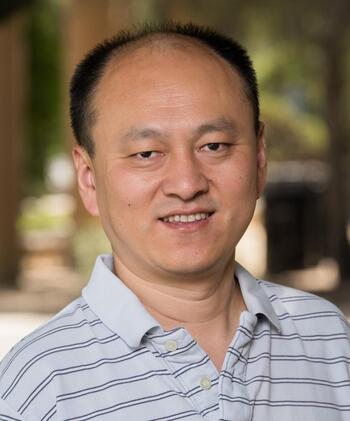
Integrating Nature into Policy & Finance for Transformation in China

In response to escalating ecosystem degradation, China has avowed to transform its development model and build an “ecological civilization” that “harmonizes humanity and nature”. I will discuss science-based policy innovation designed to achieve three key goals in support of this vision.  The first is to secure the vital benefits of nature to people – such as climate stability, water security, and food security – targeting key regions and sectors.  The second is to drive investments in protecting and revitalizing both natural capital and also human livelihoods and well-being.  The third is to evaluate and track progress, moving beyond gross domestic product (GDP) to include a new system of accounts and high-level metric called gross ecosystem product (GEP).  


About the Speaker


Dr. Ouyang Zhiyun is Professor and director, Research Center for Eco-Environmental Sciences, Chinese Academy of Sciences.  His research interests include ecosystem assessment, ecosystem services, ecosystem restoration and biodiversity conservation. In recent years, he has made his main efforts in mainstreaming ecosystem services in policy making for ecosystem conservation, restoration and land management in China, including national ecosystem survey and assessment of China, national framework of ecological redline planning, national key ecological functional area identification, national park network planning, giant panda protection, and national ecological transfer payment. Dr. Ouyang has played a key role in conservation policy innovation in China since 2000.


Seminar Series Moderators

Image
Headshot of Dr. Scott Rozelle

Scott Rozelle is the Helen F. Farnsworth Senior Fellow and the co-director of Stanford Center on China's Economy and Institutions in the Freeman Spogli Institute for International Studies and Stanford Institute for Economic Policy Research at Stanford University.  For the past 30 years, he has worked on the economics of poverty reduction. Currently, his work on poverty has its full focus on human capital, including issues of rural health, nutrition and education. For the past 20 year, Rozelle has been the chair of the International Advisory Board of the Center for Chinese Agricultural Policy, Chinese Academy of Sciences (CAS). Most recently, Rozelle's research focuses on the economics of poverty and inequality, with an emphasis on rural education, health and nutrition in China. In recognition of this work, Dr. Rozelle has received numerous honors and awards. Among them, he became a Yangtse Scholar (Changjiang Xuezhe) in Renmin University of China in 2008. In 2008 he also was awarded the Friendship Award by Premiere Wen Jiabao, the highest honor that can be bestowed on a foreigner. 

Image
hongbin li headshot

Hongbin Li is the Co-director of Stanford Center on China's Economy and Institutions, and a Senior Fellow of Stanford Institute for Economic Policy Research (SIEPR) and the Freeman Spogli Institute for International Studies (FSI). Hongbin obtained his Ph.D. in economics from Stanford University in 2001 and joined the economics department of the Chinese University of Hong Kong (CUHK), where he became full professor in 2007. He was also one of the two founding directors of the Institute of Economics and Finance at the CUHK. He taught at Tsinghua University in Beijing 2007-2016 and was C.V. Starr Chair Professor of Economics in the School of Economics and Management. He founded the Chinese College Student Survey (CCSS) in 2009 and the China Employer-Employee Survey (CEES) in 2014.

Hongbin’s research has been focused on the transition and development of the Chinese economy, and the evidence-based research results have been both widely covered by media outlets and well read by policy makers around the world. He is currently the co-editor of the Journal of Comparative Economics.


Register Here

Register once to receive the Zoom meeting link that will be used for all lectures in this series.

Academic Seminar | Zoom Meeting
Registration Required

Ouyang Zhiyun
Seminars
-

This event is co-sponsored by  Center for South Asia and is part of Shorenstein APARC's winter 2022 webinar series, New Frontiers: Technology, Politics, and Society in the Asia-Pacific

How does India’s democratic system foster or impede the country’s command of key technologies? Conversely, how can technology reinforce or undermine the health of Indian democracy? Technological expertise and democratic vitality are both widely viewed as central features of Indian national identity and sources of Indian national power. But technology and democracy interact in complex and sometimes surprising ways. This webinar will explore how the Indian state can harness technology, and how technology impacts its democratic credentials – especially with the emergence of revolutionary new technologies, and the continuing evolution of the Indian political landscape.

Speakers:
Arun SukumarArun Mohan Sukumar is a PhD candidate at The Fletcher School, Tufts University, and a pre-doctoral research fellow at Fletcher’s Centre for International Law and Governance. He previously headed the Cyber Initiative at the Observer Research Foundation, one of India’s biggest think-tanks. His first book, Midnight’s Machines: A Political History of Technology in India, won the Ramnath Goenka Award for Non-Fiction (2019) and was shortlisted for several other awards. Arun was previously a member of World Economic Forum’s Global Future Council on the Digital Economy and Society, and appointed by India’s National Security Advisor to a 'Study Group on Cyber Norms' that advised the Indian government on a national strategy towards the development and negotiation of global cybersecurity norms.

Julie OwonoJulie Owono is the Executive Director of the Content Policy & Society Lab (CPSL) and a fellow of the Program on Democracy and the Internet (PDI) at Stanford University. She is also the Executive Director of digital rights organization Internet Sans Frontières, one of the inaugural members of the Facebook Oversight Board, and an affiliate at the Berkman Klein Center at Harvard University. She holds a Master’s degree in International Law from la Sorbonne University in Paris, and practiced as a lawyer at the Paris Bar. Julie is a member of the Global Partnership on AI (GPAI) created by France and Canada, as well as a member of the World Economic Forum’s Global Future Council on AI for Humanity, and of the WEF Council on the Connected World.

Arzan Tarapore, South Asia Research Scholar of APARC at Stanford University, will moderate the discussion.

Via Zoom. Register at  https://bit.ly/3KQ6JZ8

Seminars
News Type
News
Date
Paragraphs

The Shorenstein APARC Predoctoral Fellowship supports Stanford students working within a broad range of topics related to contemporary Asia. APARC is now accepting applications for the 2022-23 Predoctoral Fellowship. Up to three fellowships are available to Ph.D. candidates who have completed all fieldwork and are nearing the completion of their dissertation. Applications are due by April 15, 2022.

The Center will give priority to candidates who are prepared to finish their degree by the end of the 2022-23 academic year.

This opportunity is open to current Stanford students only.

APARC offers a stipend of $37,230 for the 2022-23 academic year, plus Stanford's Terminal Graduate Registration (TGR) fee for three quarters. We expect fellows to remain in residence at the Center throughout the year and to participate in Center activities.

Read More

Stanford
News

Call for Stanford Student Applications: APARC Hiring 2022 Summer Research Assistants

To support Stanford students working in the area of contemporary Asia, the Shorenstein Asia-Pacific Center is offering research assistant positions for summer 2022. The deadline for submitting applications and letters of recommendation is March 1, 2022. 
Call for Stanford Student Applications: APARC Hiring 2022 Summer Research Assistants
Stanford arch and text calling for nominations for APARC's 2022 Shorenstein Journalism Award.
News

2022 Shorenstein Journalism Award Open to Nomination Entries

Sponsored by Stanford University’s Shorenstein Asia-Pacific Research Center, the annual award recognizes outstanding journalists and journalism organizations for excellence in coverage of the Asia-Pacific region. News editors, publishers, scholars, and organizations focused on Asia research and analysis are invited to submit nominations for the 2022 award through February 15.
2022 Shorenstein Journalism Award Open to Nomination Entries
Kate Imy
Q&As

How Feminist Military History Sheds Light on Colonial Rule and Warfare

In this interview, Lee Kong Chian NUS-Stanford Fellow on Southeast Asia Kate Imy discusses her research into identity in the twentieth-century British imperial world and her current book project on the colonial roots of winning "hearts and minds" in war, specifically focusing on Malaya and Singapore.
How Feminist Military History Sheds Light on Colonial Rule and Warfare
Hero Image
Encina Commons, Stanford with text about APARC's 2022-23 predoctoral fellowship
All News button
1
Subtitle

Up to three fellowships are available to Stanford Ph.D. candidates. Submissions are due by April 15, 2022.

Authors
Gary Mukai
News Type
Blogs
Date
Paragraphs

December 7, 2021 marked the 80th anniversary of the Japanese attack on Pearl Harbor. On the occasion of the anniversary, Professor Yujin Yaguchi, Graduate School of Interdisciplinary Information Studies, University of Tokyo, gave a lecture on Pearl Harbor to high school students enrolled in SPICE’s Stanford e-Japan, which is taught by Instructor Meiko Kotani. Yaguchi has been an advisor to both Stanford e-Japan and SPICE’s Reischauer Scholars Program (RSP), an online course about Japan and U.S.–Japan relations that is offered to high school students in the United States and is taught by Instructor Naomi Funahashi. From 2004 to 2009, I worked with Yaguchi during the “Pearl Harbor: History, Memory, and Memorial” summer institutes for American and Japanese teachers that were hosted by the AsiaPacificEd Program for Schools, East-West Center, Honolulu.

Prior to Yaguchi’s lecture, Kotani compiled questions from her students to share with Yaguchi, and he used them to conceptualize his lecture. The students were also required to view a lecture by Stanford Emeritus Professor Peter Duus on the Japanese attack on Pearl Harbor. Yaguchi informed the students that he would be introducing diverse perspectives on the Pearl Harbor attack and also encouraged students to think about the questions that they had written while he delivered his lecture. He encouraged them to consider two questions that he devised based on the students’ questions: “Why do you ask such questions?” and “What do the questions tell you about how you think of the past and today?” Yaguchi noted, “I am kind of spinning the table around.”

Yaguchi set the context for his talk by giving a brief geographic and historical background of Pearl Harbor. He pointed out that for ancient Hawaiians, the name of the harbor now known as Pearl Harbor was Puʻuloa, regarded as the home of the shark goddess, Kaʻahupāhau. Following the overthrow of the Hawaiian Kingdom, the U.S. Navy established a base on the island in 1899. Over the years, Pearl Harbor, along with the Naval Base San Diego, remained a main base for the U.S. Pacific Fleet after World War II. He also noted that Pearl Harbor is the most popular destination in Hawaii for American visitors.

Yaguchi pointed out that the excellent questions from the students were primarily about the United States and Japan. He posed the question, “But is Pearl Harbor really only about the U.S. and Japan?” and encouraged students to critically consider the following points, which were the five key points of his lecture.

  1. We need to see history in a longer and wider perspective.
  2. History is not only about powerful nation states.
  3. History is not only about (mostly male) politicians and leaders making decisions.
  4. Pearl Harbor means different things to many people.
  5. We need to see Pearl Harbor from multiple angles—especially from the perspectives of race and gender (non-white, non-Japanese, non-male)—those who have been making/writing history.
     

He followed up each point with specific questions. For example, “What does Pearl Harbor mean to the indigenous people of Hawaii or the Native Hawaiians?”; and “Was Pearl Harbor an attack on the United States” or “Was Pearl Harbor an attack on Native Hawaiians as well?” were follow-up questions to point number four. Yaguchi pointed out that he was born and raised in Hokkaido, the northern-most main island of Japan, and to his surprise one of the students mentioned that he lives in Kushiro, a city in Hokkaido that is Yaguchi’s ancestral hometown. Since the Ainu are an indigenous people from the northern region of Japan, particularly Hokkaido, Yaguchi’s questions prompted some students to think about parallels between the Ainu and Native Hawaiians.

At the University of Tokyo, I really encourage students to think about why you learn history in specific ways. Who decides what you need to study?

The five key points of his lecture led to many questions during the question-and-answer period. One student asked, “Is there anything that you keep in mind when teaching Japanese about American history or specific events such as Pearl Harbor?” Yaguchi replied, “At the University of Tokyo, I really encourage students to think about why you learn history in specific ways. Who decides what you need to study? I also encourage students to be critical of the education that you receive. University years are a time for you to reassess what you learn… We living in Japan or educating in Japan tend to connect Pearl Harbor as the beginning and the atomic bombs as the ending… or the cause and the effect. And this is a very common way of framing history. People in the United States do not necessarily think so.”

While listening to Yaguchi’s lecture, I reflected upon UTokyo Compass, which is the University of Tokyo President Teruo Fujii’s statement of the guiding principles of the University of Tokyo—the ideals to which the university should aspire and the direction it should take, under the title “Into a Sea of Diversity: Creating the Future through Dialogue.” In his lecture, Yaguchi extended the reach of UTokyo Compass to Stanford e-Japan high school students throughout Japan. Kotani and I were most appreciative the ripple effect of UTokyo Compass that he provided through his lecture. Kotani stated, “I am so grateful to Professor Yaguchi for introducing my students to not only diverse perspectives on Pearl Harbor but also for engaging them in questions related to epistemology.”

UTokyo Compass prompted me think about the importance of one’s “moral compass,” or a person’s ability to judge what is right and wrong and to act accordingly. Through Stanford e-Japan and the RSP, Kotani, Funahashi, and I hope to encourage high school students to remember to navigate their academic and professional careers with their own moral compass. In addition, as a compass always follows true north, I think that leaders should follow a set of unwavering personal values, including integrity. The students in Stanford e-Japan and the RSP are among the best and brightest in Japan and the United States and future leaders. I encourage them to singlehandedly change the world, to be changemakers.

KotaniMeiko WEB

Meiko Kotani

Instructor, Stanford e-Japan
Full Bio

Read More

gate to University of Tokyo
Blogs

A Gateway to Collaboration: SPICE/Stanford and CASEER/University of Tokyo

The SPICE/Stanford–CASEER/UTokyo Lecture Series provides a platform to share current educational research and practice.
A Gateway to Collaboration: SPICE/Stanford and CASEER/University of Tokyo
collage of honoree headshots
News

Winners Announced for the Spring 2021 Stanford e-Japan Award

Congratulations to our newest student honorees.
Winners Announced for the Spring 2021 Stanford e-Japan Award
Japan Day honorees Zoom image
News

Japan Day: Recognizing Top Students in Stanford e-Japan and the Reischauer Scholars Program

Congratulations to the 2020 Stanford e-Japan and 2021 RSP honorees.
Japan Day: Recognizing Top Students in Stanford e-Japan and the Reischauer Scholars Program
Hero Image
Professor Yujin Yaguchi in front of the main library at University of Tokyo
Professor Yujin Yaguchi at the University of Tokyo; photo courtesy Risako Kondo
All News button
1
Subtitle

Professor Yujin Yaguchi introduced diverse perspectives on Pearl Harbor to 27 high school students in Stanford e-Japan.

Authors
News Type
Blogs
Date
Paragraphs

SPICE recommends the use of a 13-minute lecture—titled “Civil and Human Rights: The Martin Luther King, Jr. Legacy” by Dr. Clayborne Carson—for use at the high school and college levels. Dr. Carson is the Martin Luther King, Jr. Centennial Professor Emeritus at the Center on Democracy, Development, and the Rule of Law, FSI, at Stanford University. In the video lecture, Professor Carson not only discusses Martin Luther King, Jr. as a civil rights leader but also examines his larger vision of seeing the African American struggle as a worldwide struggle for citizenship rights and human rights.

A free classroom-friendly discussion guide for this video is available for download on the website above. The organizing questions that are listed in the guide are:

  • What are civil and human rights?
  • What were the significant achievements of the Civil Rights Movement?
  • What is Martin Luther King, Jr.’s legacy in terms of civil and human rights?
  • How are Martin Luther King, Jr.’s vision, ideas, and leadership still relevant today?
  • How is the American Civil Rights Movement similar and different from other rights-related movements?


SPICE also recommends the resources on the following websites for use in classrooms.

  • The World House Project works to realize Martin Luther King, Jr.’s vision of the world as a large house in which “we must learn somehow to live with each other in peace.” Dr. Carson is the director of the Project.

Read More

headshots of eight high school students
Blogs

What Does It Mean to Be an American?: Reflections from Students (Part 6)

Reflections of eight students on the website “What Does It Mean to Be an American?”
What Does It Mean to Be an American?: Reflections from Students (Part 6)
Zoom screenshots of EPIC fellows
Blogs

2021 Education Partnership for Internationalizing Curriculum Symposium

On Saturday, May 22, 2021, SPICE’s Jonas Edman moderated two panels during the 2021 EPIC Fellowship Program Symposium for community college educators.
2021 Education Partnership for Internationalizing Curriculum Symposium
Banner
Blogs

What Does It Mean to Be an American?: A Web-based Curriculum Toolkit

“What Does It Mean to Be an American?” is a free educational web-based curriculum toolkit for high school and college students that examines what it means to be an American developed by the Mineta Legacy Project and Stanford’s SPICE program.
What Does It Mean to Be an American?: A Web-based Curriculum Toolkit
Hero Image
screenshot of dr. clayborne carson's video lecture
Dr. Clayborne Carson
All News button
1
Subtitle

SPICE recommends the use of a short lecture—titled “Civil and Human Rights: The Martin Luther King, Jr. Legacy” by Dr. Clayborne Carson—for high school and college levels.

-

About the Seminar: Joseph Needham famously asked why China did not have its own Industrial Revolution. Using a newly constructed database, Yasheng Huang will show that China’s technological collapse happened much earlier than previously thought and the collapse coincided closely with the rise of autocracy and ideological homogeneity.
 

Register Now

About the Speaker:

Image
Yasheng Huang
Yasheng Huang is Epoch Foundation professor of international management, professor of global economics and management, and faculty director of action learning at Sloan School of Management, Massachusetts Institute of Technology. He is currently involved in research projects in three broad areas: 1) political economy of contemporary China, 2) historical technological and political developments in China, and 3) as a co-PI in “Food Safety in China: A Systematic Risk Management Approach” (supported by Walmart Foundation, 2016-). He has published numerous articles in academic journals and in media and 11 books in English and Chinese. His book, The Rise and the Fall of the EAST: Examination, Autocracy, Stability, and Technology in Chinese History and Today, will be published by Yale University Press in 2023.


Online, via Zoom.

Yasheng Huang Professor MIT Sloan School of Management
Seminars
News Type
News
Date
Paragraphs

Shorenstein APARC invites highly motivated and dedicated undergraduate- and graduate-level students to join our team as paid research assistant interns for the duration of the summer 2022 quarter. The research assistants work with assigned APARC faculty members on projects focused on contemporary Asia, studying varied issues related to the politics, economies, populations, security, foreign policies, and international relations of the countries of the Asia-Pacific region.

All research assistant positions are open to current Stanford students only.

Apply Now
 

APARC is now accepting applications for our summer 2022 RA positions. The deadline for submitting applications and letters of recommendation is March 1, 2022

All summer research assistant positions will be on campus for eight weeks. The hourly pay rate is $17 for undergraduate students, $25 for graduate students.

Decisions regarding the options for telecommuting work will be made closer to the appointment start dates in accordance with the evolving COVID-19 situation and the University's recommendations.


Please follow these application guidelines

I. Prepare the following materials:

II. Fill out the online application form for summer 2022, including the above two attachments, and submit the complete form.

III. Arrange for a letter of recommendation from a faculty to be sent directly to Shorenstein APARC.
Please note: the faculty members should email their letters directly to Kristen Lee at kllee@stanford.edu.

We will consider only applications that include all supporting documents.

Read More

Stanford arch and text calling for nominations for APARC's 2022 Shorenstein Journalism Award.
News

2022 Shorenstein Journalism Award Open to Nomination Entries

Sponsored by Stanford University’s Shorenstein Asia-Pacific Research Center, the annual award recognizes outstanding journalists and journalism organizations for excellence in coverage of the Asia-Pacific region. News editors, publishers, scholars, and organizations focused on Asia research and analysis are invited to submit nominations for the 2022 award through February 15.
2022 Shorenstein Journalism Award Open to Nomination Entries
Portrait of Ma'ili Yee, 2020-21 APARC Diversity Fellow
News

Student Spotlight: Ma’ili Yee Illuminates a Vision for Building the Blue Pacific Continent

With support from Shorenstein APARC’s Diversity Grant, coterminal student Ma’ili Yee (BA ’20, MA ’21) reveals how Pacific island nations are responding to the U.S.-China rivalry by developing a collective strategy for their region.
Student Spotlight: Ma’ili Yee Illuminates a Vision for Building the Blue Pacific Continent
Kate Imy
Q&As

How Feminist Military History Sheds Light on Colonial Rule and Warfare

In this interview, Lee Kong Chian NUS-Stanford Fellow on Southeast Asia Kate Imy discusses her research into identity in the twentieth-century British imperial world and her current book project on the colonial roots of winning "hearts and minds" in war, specifically focusing on Malaya and Singapore.
How Feminist Military History Sheds Light on Colonial Rule and Warfare
Hero Image
Stanford Rod Searcey
All News button
1
Subtitle

To support Stanford students working in the area of contemporary Asia, the Shorenstein Asia-Pacific Center is offering research assistant positions for summer 2022. The deadline for submitting applications and letters of recommendation is March 1, 2022. 

-

Tuesday, February 15, 2022 | 4:00-5:15 pm Pacific Time

Carbon Trading vs. Direct Allocation:  Theory and Application to China's Carbon Abatement

The Emission Trading System (ETS) and Direct Allocation Scheme (DAS) are two popular schemes to achieve a given target of carbon abatement. We compare their welfare implications under incomplete information and with local externalities of such abatement (e.g., changes in air pollution). We show that the ETS addresses incomplete information but not heterogeneous local externalities; the opposite is true for the DAS. Therefore, the policy choice depends on the relative significance of incomplete information and heterogeneous local externalities. We apply the theoretical results to the Chinese data and discuss why a national ETS can be undesirable.


About the Speaker

Picture

Guojun He is an economist working on environmental, development, and governance issues. Currently, he is an associate professor in Economics and Management & Strategy at the University of Hong Kong (HKU). He holds a concurrent appointment at the Energy Policy Institute of the University of Chicago (EPIC) and serves as the research director of its China center (EPIC-China). He is a co-editor of Journal of Environmental Economics and Management and China Economic Review

His research tries to address some of the most challenging problems faced by developing countries and seeks to produce empirically-grounded estimates for optimal policy design. The majority of his work focuses on understanding the benefits and costs of environmental policies, while he also has a broader research interest in development and governance issues. His work has been published in leading economics journals (like QJEAER: InsightsAEJ: Applied) and science journals (like PNASNature: SustainabilityNature Human Behavior, and The BMJ). 

He has won multiple academic awards, including the Best Paper Award from China Health Policy and Management Society, Masahiko Aoki Best Paper Award Nomination, and notably two Gregory Chow Best Paper Awards from the Chinese Economists Society. He was named a Young Scientist by the World Economic Forum.  

He obtained his Ph.D. degree in Agricultural and Resource Economics from U.C. Berkeley and received undergraduate education from School of Economics at Peking University. ​Before joining HKU, he worked at Hong Kong University of Science and Technology and Harvard University.​


Seminar Series Moderators:

Image
Headshot of Dr. Scott Rozelle

Scott Rozelle is the Helen F. Farnsworth Senior Fellow and the co-director of Stanford Center on China's Economy and Institutions in the Freeman Spogli Institute for International Studies and Stanford Institute for Economic Policy Research at Stanford University.  For the past 30 years, he has worked on the economics of poverty reduction. Currently, his work on poverty has its full focus on human capital, including issues of rural health, nutrition and education. For the past 20 year, Rozelle has been the chair of the International Advisory Board of the Center for Chinese Agricultural Policy, Chinese Academy of Sciences (CAS). Most recently, Rozelle's research focuses on the economics of poverty and inequality, with an emphasis on rural education, health and nutrition in China. In recognition of this work, Dr. Rozelle has received numerous honors and awards. Among them, he became a Yangtse Scholar (Changjiang Xuezhe) in Renmin University of China in 2008. In 2008 he also was awarded the Friendship Award by Premiere Wen Jiabao, the highest honor that can be bestowed on a foreigner. 

Image
hongbin li headshot

Hongbin Li is the Co-director of Stanford Center on China's Economy and Institutions, and a Senior Fellow of Stanford Institute for Economic Policy Research (SIEPR) and the Freeman Spogli Institute for International Studies (FSI). Hongbin obtained his Ph.D. in economics from Stanford University in 2001 and joined the economics department of the Chinese University of Hong Kong (CUHK), where he became full professor in 2007. He was also one of the two founding directors of the Institute of Economics and Finance at the CUHK. He taught at Tsinghua University in Beijing 2007-2016 and was C.V. Starr Chair Professor of Economics in the School of Economics and Management. He founded the Chinese College Student Survey (CCSS) in 2009 and the China Employer-Employee Survey (CEES) in 2014.

Hongbin’s research has been focused on the transition and development of the Chinese economy, and the evidence-based research results have been both widely covered by media outlets and well read by policy makers around the world. He is currently the co-editor of the Journal of Comparative Economics.


Register Here

Register once to receive the Zoom meeting link that will be used for all lectures in this series.

Academic Seminar | Zoom Meeting
Registration Required

Guojun He
Seminars
Date Label
Authors
News Type
Blogs
Date
Paragraphs

Moving from Tokyo to California in second grade, I knew very little about my home country. I may have looked and spoken Japanese, but the more time I spent in the United States, the more I felt like my identity strayed away from my Japanese cultural roots. For most of my life, I was hesitant to proudly call myself a Japanese American simply due to the lack of knowledge I had about my home country.

That was until I stumbled upon Stanford’s Reischauer Scholars Program (RSP), an online program that introduced Japanese history, society, culture, and the U.S.–Japan relationship. With its focus on deepening cross-cultural knowledge, this was the perfect opportunity to reconnect with my cultural roots.

On the first day of the RSP, I was astounded by the diversity of the students that were present. Students in the program were from all around the country, each showing unique individual interests and strengths that they added to the class. Alongside these friendly and committed students led by our brilliant instructor Ms. Naomi Funahashi, the RSP provided a motivated and collaborative environment to learn about my home country. The activities in our virtual classes included not only the review of insightful readings that we were assigned, but also the once-in-a-lifetime opportunities to meet top scholars and experts in U.S.–Japan relations and ambassadors. Having had the chance to converse with these speakers, we were introduced to significant ideas and insights about the U.S.–Japan relationship that developed my diverse perspective on the topic.

Throughout the course of the program, the inclusive environment of the virtual classrooms allowed us to comfortably share and challenge ideas we would bring up. With each of us from very different backgrounds, we were able to have insightful conversations about the cause of isolationism in Japan, the effect of industrialization on the Japanese economy, and many other concepts about Japanese history and culture.

With each new perspective that my peers would view the topic from, I was given a broader understanding of each concept we covered, expanding my knowledge about my home country.

To me, the most memorable days of the RSP were the joint virtual classrooms with the Stanford e-Japan program. Through these joint classrooms, we had the opportunity to converse with Japanese high school students, where we were able to deepen our mutual cross-cultural understanding. From the bunkasai, to the undokai, to juku, these joint classrooms gave us the opportunity to learn more about the exciting Japanese culture and contemporary society from a primary source. With nearly no opportunity to speak with Japanese students outside of my family during my time in the United States, I was able to take away many valuable insights I keep to this day thanks to the unique opportunity given by the RSP. With each meeting with these students, I was given a clearer image of what it truly meant to be “Japanese.”

Read More

high school girl standing amidst park greenery
Blogs

Finding My Place in the RSP & the U.S.–Japan Relationship

The following reflection is a guest post written by Kristine Pashin, an alumna of the Reischauer Scholars Program, which will begin accepting student applications on September 6, 2021.
Finding My Place in the RSP & the U.S.–Japan Relationship
Brandon Cho at Todaiji Temple, Nara
Blogs

A Journey Through Time: The RSP as a Gateway from the Past to My Future

The following reflection is a guest post written by Brandon Cho, an alumnus of the Reischauer Scholars Program.
A Journey Through Time: The RSP as a Gateway from the Past to My Future
Naomi Funahashi after receiving the 2017 Elgin Heinz Teacher Award
News

SPICE’s Naomi Funahashi receives 2017 Elgin Heinz Teacher Award

SPICE’s Naomi Funahashi receives 2017 Elgin Heinz Teacher Award
Hero Image
a student standing in front of a modern-looking building
Hikaru Sean Isayama at MIT; photo courtesy Isayama family
All News button
1
Subtitle

The following reflection is a guest post written by Hikaru Sean Isayama, a 2020 alumnus of the Reischauer Scholars Program.

-

Tuesday, February 1, 2022 | 4:00-5:15 pm Pacific Time

The Impacts of Pollution Levies on Chinese Firms

China's rollout of emission fee reform since 2007 provides a quasi-natural experiment to study the effectiveness of pollution levy on firm emissions and economic consequences. Using firm-level financial and pollution data, we find that doubling the levy rate leads to a 6.87% reduction in SO2 emissions. Firms achieve emission abatement through reducing output and coal consumption rather than end-of-the-pipe solutions. 


About the Speaker

Image
Junjie Zhang

Junjie Zhang is Associate Professor of Environmental Economics in the Nicholas School of the Environment at Duke University. Since 2016, he has founded the Environmental Research Center and International Master of Environmental Policy Program at Duke Kunshan University. During 2021-22, he serves as Volkswagen Visiting Chair in Sustainability in the Schwarzman College at Tsinghua University. Zhang is a co-chair for the Environmental Economics Committee in the Chinese Academy of Environmental Science, an advisory board member for the Nicholas Institute for Environmental Policy Solutions, and a board member for the Professional Association for China's Environment. He has also served on the editorial board of several academic journals. Before his current position, he was an associate professor in the School of Global Policy and Strategy at the University of California, San Diego. Zhang's research centers on empirical policy issues in air pollution, energy transition, and climate change. He has received fundings from the U.S. National Science Foundation, U.S. National Oceanic and Atmospheric Administration, China National Natural Science Foundation, China's Ministry of Ecology and Environment, China Council for International Cooperation on Environment and Development, Energy Foundation, Packard Foundation, World Bank, and Asian Development Bank. He holds a B.S. from Renmin University of China, a B.S. and an M.S. from Tsinghua University, and a Ph.D. from Duke University.


Seminar Series Moderators:

Image
Headshot of Dr. Scott Rozelle

Scott Rozelle is the Helen F. Farnsworth Senior Fellow and the co-director of Stanford Center on China's Economy and Institutions in the Freeman Spogli Institute for International Studies and Stanford Institute for Economic Policy Research at Stanford University.  For the past 30 years, he has worked on the economics of poverty reduction. Currently, his work on poverty has its full focus on human capital, including issues of rural health, nutrition and education. For the past 20 year, Rozelle has been the chair of the International Advisory Board of the Center for Chinese Agricultural Policy, Chinese Academy of Sciences (CAS). Most recently, Rozelle's research focuses on the economics of poverty and inequality, with an emphasis on rural education, health and nutrition in China. In recognition of this work, Dr. Rozelle has received numerous honors and awards. Among them, he became a Yangtse Scholar (Changjiang Xuezhe) in Renmin University of China in 2008. In 2008 he also was awarded the Friendship Award by Premiere Wen Jiabao, the highest honor that can be bestowed on a foreigner. 

Image
hongbin li headshot

Hongbin Li is the Co-director of Stanford Center on China's Economy and Institutions, and a Senior Fellow of Stanford Institute for Economic Policy Research (SIEPR) and the Freeman Spogli Institute for International Studies (FSI). Hongbin obtained his Ph.D. in economics from Stanford University in 2001 and joined the economics department of the Chinese University of Hong Kong (CUHK), where he became full professor in 2007. He was also one of the two founding directors of the Institute of Economics and Finance at the CUHK. He taught at Tsinghua University in Beijing 2007-2016 and was C.V. Starr Chair Professor of Economics in the School of Economics and Management. He founded the Chinese College Student Survey (CCSS) in 2009 and the China Employer-Employee Survey (CEES) in 2014.

Hongbin’s research has been focused on the transition and development of the Chinese economy, and the evidence-based research results have been both widely covered by media outlets and well read by policy makers around the world. He is currently the co-editor of the Journal of Comparative Economics.


Register Here

Register once to receive the Zoom meeting link that will be used for all lectures in this series.

Academic Seminar | Zoom Meeting
Registration Required

Junjie Zhang
Seminars
Date Label
Subscribe to International Development