
 FSI researchers consider international development from a variety of angles. They analyze ideas such as how public action and good governance are cornerstones of economic prosperity in Mexico and how investments in high school education will improve China’s economy.
They are looking at novel technological interventions to improve rural livelihoods, like the development implications of solar power-generated crop growing in Northern Benin.
FSI academics also assess which political processes yield better access to public services, particularly in developing countries. With a focus on health care, researchers have studied the political incentives to embrace UNICEF’s child survival efforts and how a well-run anti-alcohol policy in Russia affected mortality rates.
FSI’s work on international development also includes training the next generation of leaders through pre- and post-doctoral fellowships as well as the Draper Hills Summer Fellows Program.


U.S.-Japan Dialogue: Innovation, Entrepreneurship, and Job Creation
News Type
News
Date
Paragraphs
On February 23, John Roos, U.S. Ambassador to Japan, Robert Hormats, U.S. Under Secretary of State, and Norihiko Ishiguro, Director-General of Japan's Ministry of Economy, Trade, and Industry, will join the Walter H. Shorenstein Asia-Pacific Research Center's Michael H. Armacost, William F. Miller, and Robert Eberhart, as well as prominent Japanese and American business leaders, academic experts, and government officials, will meet at Stanford for a roundtable dialogue on entrepreneurship and innovation in Japan. Larry Sonsini, Chairman of Wilson, Sonsini, Goodrich, and Rosati, will give the keynote address.
After the first Dialogue on Japanese Entrepreneurship held in February 2010, representatives from the U.S. and Japanese governments met in Tokyo on May 27, 2010, to consider ways to foster an environment that would promote new businesses and job creation. Utilizing data from the Stanford Project on Japanese Entrepreneurship (STAJE) and the American Chamber of Commerce of Japan, business representatives shared their views with officials of both governments on policies and practices that would encourage such growth. On November 13, 2010, the White House and the Prime Minister's Office formally launched the U.S.-Japan Dialogue to Promote Innovation, Entrepreneurship, and Job Creation, elevating it to a policy-level dialogue, with SPRIE-STAJE providing academic expertise. The February 23 event aims to build on the conversation about how to foster innovation through entrepreneurship.
The event will consist of a roundtable discussion on policies and ecologies to promote entrepreneurship and job growth. Following the keynote address, a panel discussion on smart grid technologies will take place with representatives from Cisco Systems, Toshiba, GE, Panasonic, Toyota, IBM, and officials of the U.S. and Japanese governments.
This event will be held closed session to facilitate more open dialogue and will involve Stanford students and scholars, business leaders, and government officials.
Hero Image

U.S. Ambassador to Japan John Roos, speaking at a STAJE event in November 2010.
All News button
1
Inter-Korean Relations: Rivalry, Reconciliation, and Reunification
This curriculum unit provides students with a multifaceted view of inter-Korean relations, asking them to study the relationship through the lenses of history, politics, economics, security, and socio-cultural and human dynamics. Finally, students apply their knowledge of inter-Korean relations to consider future prospects for the Korean peninsula.
Students learn real-world policy skills
News Type
News
Date
Paragraphs
How do you effectively
advise senior-level policymakers when a political crisis emerges? Stanford
students taking the course U.S. Policy
Towards Northeast Asia (IPS 244), sponsored by the Walter H. Shorenstein
Asia-Pacific Research Center (Shorenstein APARC), are learning and putting into
practice these very skills. Over the ten weeks of the 2011 winter quarter,
students will learn about contemporary U.S. policy towards Japan, China, and
Korea, and about how to write and present policy-style memoranda to top-level
government decision makers. They will also take part in an in-class simulation
of a Six-Party meeting to negotiate North Korea's nuclear program.
Students cover a great deal of content in a short amount of time. "Ten weeks
goes by pretty quickly," says course leader Michael H. Armacost, the Shorenstein
Fellow at FSI and a former U.S. Ambassador to Japan and the Philippines. The
real-world approach to the course is similar to what you would find in a
professional international relations school, he explains. In previous years,
Armacost has taught the course both alone and as part of a team with other
former U.S. senior-level policy officials. The current course has been offered in the Ford Dorsey Program in International Policy Studies (IPS) for the last
three years. It is co-taught with Daniel C. Sneider, the associate director for
research at Shorenstein APARC and a former long-time foreign correspondent in
Asia; David Straub, the associate director of the Stanford Korean Studies
Program and a former U.S. senior foreign service officer; and Thomas Fingar,
the Oksenberg/Rohlen Distinguished Fellow at FSI and a former Chairman of the
National Intelligence Council.
In addition to providing a strong understanding of the U.S. foreign
policymaking process, each week of the course is dedicated to a different
aspect of the relationship of the United States with the countries of Northeast
Asia, including Taiwan and the Russian Federation. Students will closely
examine the history and dynamics between the great powers of the region; U.S.
security relations with Japan and China; East Asian regionalism;
democratization in South Korea; the North Korean nuclear crisis; and economics
and human rights in China.
Although the case studies that the policy-writing exercises are based upon are
hypothetical, they are closely tied to real-world issues and events. A previous
year's case study dealt with tensions between China and Japan over rival claims
to the Senkaku/Diaoyu Islands, anticipating the September 2010 conflict between
Japan and China in the waters around these islands. The simulation exercise,
another highlight of the course when students have the opportunity to
collaborate with one another, is also closely tied to current regional events.
In addition to the rich content of the course and the expertise of its
instructors, the diverse background of the students lends itself to the overall
learning experience. Some of the students are pursuing a master's degree
through IPS or the Center for East Asian Studies, while others come from the
Graduate School of Business and various other Stanford units. Each year, there
are always a few undergraduate students, who Armacost describes as "very
strong," as well as early-career foreign affairs and military officials from
Northeast Asia.
Interest in the course remains strong each year, and Shorenstein APARC will
continue to offer it in order to provide solid, real-world policy training for
the next generation of scholars and government officials.
Hero Image

Michael H. Armacost, course leader for IPS 244, talks to students about the history of U.S. policy towards Northeast Asia.
Sarah Lin Bhatia
All News button
1
SPRIE's Entrepreneurship Week special event featured Tim Draper
News Type
News
Date
Paragraphs
As part of Entrepreneurship Week at Stanford University, SPRIE and Alibaba.com hosted "Entrepreneurship in the Global Marketplace," a special seminar featuring noted venture capitalists, entrepreneurs and executives.
Hero Image

Tim Draper
All News button
1
Rafiq Dossani emphasizes the importance of acknowledging Gujarat's past as it looks to the future
News Type
News
Date
Paragraphs
India's western state of Gujarat is positioning itself for overseas investment, having already attracted investment pledges from major domestic entities such as the Anil Dhirubhai Ambani Group and the Tata Group. Shorenstein APARC senior research scholar Rafiq Dossani, who participated in the January 2011 Vibrant Gujarat road show, emphasizes that amidst the excitement over economic growth, the state must still deal with the legacy of the communal riots in 2002 that killed hundreds of people and has led to the ghettoization of the state’s Muslims, who represent 10% of its population.
Hero Image

Gujarat has attracted investment commitments for both traditional gas and coal power plants and renewable energy projects.
Dave Morris
All News button
1
Why Did Japan Stop Growing?
-
The Japanese economy has been stagnating for almost two decades. During this event, Takeo Hoshi will describe the findings of a report that he co-authored with Anil Kashyap of the Booth School of Business at the University of Chicago, the National Bureau of Economic Research (NBER), and the Federal Reserve Bank of Chicago. In the report, Hoshi and Kashyap utilized the neoclassical growth model in order to try to explain the causes of this stagnation and to identify policy choices that might help restore growth. Their focus was intentionally on longer-term issues, rather than the immediate challenges that are associated with the fallout from the global recession.
Looking at financial globalization and the collapse of the fixed exchange rate regime they found that by the end of the 1970s Japan could not rely on an undervalued currency to boost its exports. It had to rearrange its production system and other economic institutions to cope with globalization to reduce its reliance on external demand.
Japan's population structure was shifting and becoming increasingly elderly. Aging meant slower growth of the labor force. Declining fertility combined with aging eventually reduced the domestic saving that supported economic expansion during the rapid economic growth period.
Finally, monetary and fiscal policy performed poorly. The Bank of Japan consistently undershot its inflation objective. The government pursued massive fiscal stimulus during the 1990s and 2000s, so much so that Japan went from having the best debt position amongst advanced economies to the worst.
Hoshi is a Pacific Economic Cooperation Professor in international economic relations at the Graduate School of International Relations and Pacific Studies at the University of California, San Diego. He is also a research associate at the Tokyo Center for Economic Research, and is on the board of directors for Union Bank. His major research area is the study of the financial aspects of the Japanese economy, especially corporate finance and governance.
He is a recipient of the 2011 Reischauer International Education award, the 2006 Enjoji Jiro Memorial Prize, and the 2005 JEA-Nakahara Prize. Among his many publications is Corporate Financing and Governance in Japan: The Road to the Future (MIT Press, 2001), which received the Nikkei Award for the Best Economics Books in 2002.
Philippines Conference Room
Takeo Hoshi
0
Former Henri H. and Tomoye Takahashi Senior Fellow in Japanese Studies at the Freeman Spogli Institute for International Studies
Former Professor, by courtesy, of Finance at the Graduate School of Business
Takeo Hoshi was Henri and Tomoye Takahashi Senior Fellow at the Freeman Spogli Institute for International Studies (FSI), Professor of Finance (by courtesy) at the Graduate School of Business, and Director of the Japan Program at the Shorenstein Asia-Pacific Research Center (APARC), all at Stanford University. He served in these roles until August 2019.
Before he joined Stanford in 2012, he was Pacific Economic Cooperation Professor in International Economic Relations at the Graduate School of International Relations and Pacific Studies (IR/PS) at University of California, San Diego (UCSD), where he conducted research and taught since 1988.
Hoshi is also Visiting Scholar at Federal Reserve Bank of San Francisco, Research Associate at the National Bureau of Economic Research (NBER) and at the Tokyo Center for Economic Research (TCER), and Senior Fellow at the Asian Bureau of Finance and Economic Research (ABFER). His main research interest includes corporate finance, banking, monetary policy and the Japanese economy.
He received 2015 Japanese Bankers Academic Research Promotion Foundation Award, 2011 Reischauer International Education Award of Japan Society of San Diego and Tijuana, 2006 Enjoji Jiro Memorial Prize of Nihon Keizai Shimbun-sha, and 2005 Japan Economic Association-Nakahara Prize. His book titled Corporate Financing and Governance in Japan: The Road to the Future (MIT Press, 2001) co-authored with Anil Kashyap (Booth School of Business, University of Chicago) received the Nikkei Award for the Best Economics Books in 2002. Other publications include “Will the U.S. and Europe Avoid a Lost Decade? Lessons from Japan’s Post Crisis Experience” (Joint with Anil K Kashyap), IMF Economic Review, 2015, “Japan’s Financial Regulatory Responses to the Global Financial Crisis” (Joint with Kimie Harada, Masami Imai, Satoshi Koibuchi, and Ayako Yasuda), Journal of Financial Economic Policy, 2015, “Defying Gravity: Can Japanese sovereign debt continue to increase without a crisis?” (Joint with Takatoshi Ito) Economic Policy, 2014, “Will the U.S. Bank Recapitalization Succeed? Eight Lessons from Japan” (with Anil Kashyap), Journal of Financial Economics, 2010, and “Zombie Lending and Depressed Restructuring in Japan” (Joint with Ricardo Caballero and Anil Kashyap), American Economic Review, December 2008.
Hoshi received his B.A. in Social Sciences from the University of Tokyo in 1983, and a Ph.D. in Economics from the Massachusetts Institute of Technology in 1988.
Former Director of the Japan Program at the Shorenstein Asia-Pacific Research Center
CV
Document
hoshicv2016.pdf
(183.49 KB)
File title
hoshicv2016.pdf
Seminars
African Agricultural R&D and Productivity Growth in a Global Setting
-
Food and agricultural policy experts Prabhu Pingali and Philip Pardey will each speak on trends in productivity and investments in technology, survey of constraints to productivity, incentives and investment, and opportunities to raise productivity.
The Green Revolution - past successes, unfinished business, and the way forward
Pingali will review strategic components of the Green Revolution and its achievement and limits in terms of agricultural productivity improvement and broader impact at social, environmental and economic levels, including its impact on food and nutrition security. Lessons learned and the strategic insights these provide will be reviewed as the world is preparing a "redux" version of the Green Revolution with more integrative environmental and social impact combined with agricultural and economic development. Pingali will also point to core research & policy gaps that can enhance further spread and sustainable adoption of productivity enhancing technologies.
Image
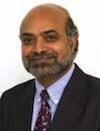
Prabhu Pingali is the Deputy Director of Agricultural Development at the Bill and Melinda Gates Foundation. Formerly, he served as Director of the Agricultural and Development Economics Division of the Food and Agriculture Organization (FAO) of the United Nations. Pingali was elected to the U.S. National Academy of Sciences as a Foreign Associate in May 2007, and he was elected Fellow of the American Agricultural Economics Association in 2006. Pingali was the President of the International Association of Agricultural Economists (IAAE) from 2003-06. Pingali has over twenty five years of experience in assessing the extent and impact of technical change in agriculture in developing countries, including Asia, Africa and Latin America.
African Agricultural R&D and Productiivity Growth in a Global Setting
Given the continuing importance of agriculture in most African economies, an in-depth understanding of the past and likely future productivity performance of African agriculture is key to assessing the overall economic growth and development prospects of the region. African agriculture operates in increasingly interconnected global commodity markets, so the relative productivity performance of African vis-à-vis rest-of-world agriculture is also relevant. This talk will present new evidence on African agricultural productivity performance and place that evidence in relation to the evolving pattern of agricultural productivity growth worldwide. Technological change is a principal driver of productivity growth, and new, updated evidence on the trends in R&D investments that give rise to these technological changes will also be presented and discussed. The productivity effects of R&D play out over comparatively long periods of time demanding a long-run look at these developments.
Image

Philip Pardey is Professor of Science and Technology Policy in the Department of Applied Economics, and Director of the University of Minnesota's International Science and Technology Practice and Policy (InSTePP) center. His research deals with the finance and conduct of R&D globally, methods for assessing the economic impacts of research, and the economic and policy (especially intellectual property) aspects of genetic resources and the biosciences. He is a Fellow of the American Agricultural Economics Association and a Distinguished Fellow of the Australian Agricultural and Resource Economics Society.
Bechtel Conference Center
Prabhu Pingali
Deputy director, Agricultural Development
Speaker
Bill & Melinda Gates Foundation
Philip Pardey
Professor of Science and Technology, Applied Economics
Speaker
University of Minnesota
Symposiums