International Development

FSI researchers consider international development from a variety of angles. They analyze ideas such as how public action and good governance are cornerstones of economic prosperity in Mexico and how investments in high school education will improve China’s economy.

They are looking at novel technological interventions to improve rural livelihoods, like the development implications of solar power-generated crop growing in Northern Benin.

FSI academics also assess which political processes yield better access to public services, particularly in developing countries. With a focus on health care, researchers have studied the political incentives to embrace UNICEF’s child survival efforts and how a well-run anti-alcohol policy in Russia affected mortality rates.

FSI’s work on international development also includes training the next generation of leaders through pre- and post-doctoral fellowships as well as the Draper Hills Summer Fellows Program.

-
Gita Wirjawan and text about his Oct 17, 2022 talk, "Whither Southeast Asia?"

What are Southeast Asia’s prospects?  How well equipped and prepared are its people to cope with current and future shocks from inside and outside their region?  With significant exceptions including the wars in Indochina after 1945 and the 1965-66 bloodshed in Indonesia, Southeast Asia’s modern history since World War II has been relatively peaceful.  In recent times the region has had its share of turbulence.  Nevertheless, the multidimensional 2022 Global Peace Index ranks nine of the ten Southeast Asian states as more peaceful than the United States.  On the 2021 Democracy Index, four of the Southeast Asian ten are outright “authoritarian,” while the other six join the US in being “flawed democracies.”  What do these and related trends imply?  In addition to politics and geopolitics, visiting scholar Gita Wirjawan’s view of Southeast Asia’s future will touch upon socioeconomic, cultural, and environmental aspects as well.

Image
Gita Wirjawan 101722
Gita Wirjawan is an Indonesian entrepreneur and philanthropist and a 2022-23 visiting scholar at APARC.  Having established a successful investment business in Indonesia, the Ancora Group, he created the Ancora Foundation.  The foundation has endowed scholarships for Indonesians to attend Stanford and other high-ranked universities around the world and has funded the training of teachers at hundreds of Indonesian kindergartens serving underprivileged children.  Wirjawan’s public service has included positions as Indonesia’s minister of trade, chairman of its Investment Coordinating Board, and chair of a 159-nation WTO ministerial conference in 2012 that focused on easing global trade barriers.  He led his country’s national badminton association in 2012-16 when Indonesia won four gold medals in the sport at world championships including the Olympics.  He advises Indonesia’s School of Government and Public Policy (SGPP) and Yale’s School of Management, among other institutions.  At SGPP he hosts a public-policy podcast called endgame, to which an estimated 471 thousand people subscribe.  His degrees are from the Harvard Kennedy School (MPA), Baylor University (MBA), and the University of Texas at Austin (BSc).

Donald K. Emmerson

Via Zoom Webinar

0
Visiting Scholar at APARC, 2022-24
Gita_Wirjawan.jpg

Gita Wirjawan joined the Walter H. Shorenstein Asia-Pacific Research Center (Shorenstein APARC) as a visiting scholar for the 2022-23 and 2023-2024 academic years. In the 2024-25 year, he is a visiting scholar with Stanford's Precourt Institute for Energy. Wirjawan is the chairman and founder of Ancora Group and Ancora Foundation, as well as the host of the podcast "Endgame." While at APARC, he researched the directionality of nation-building in Southeast Asia and sustainability and sustainable development in the U.S. and Southeast Asia.

Date Label
2022-23 Visiting Scholar, APARC
Seminars
-

SCCEI Fall Seminar Series 


Tuesday, November 15, 2022      11:00 am -12:15 pm Pacific Time

Goldman Room E401, Encina Hall, 616 Jane Stanford Way | Zoom Meeting 


Inequality by Design: China’s Distinctive Political Economy

With modest income differences and virtually no private wealth four decades ago, China’s inequalities of income and wealth are now almost as extreme as in the United States and Russia. This development is more puzzling than commonly recognized, and analyses of the determinants of household income do not address its institutional origins. Widening inequality is a byproduct of China’s highly distinctive political economy, which is designed to preserve communist party control and enforce the priorities of the central state. These include an enduringly large capital-intensive state sector supported by a financial system unusually reliant on state-owned banks; a tax base highly dependent on business volume rather than profits; a distorted fiscal system that drives local governments into property development; and political constraints on documenting and taxing private assets. These structures create large concentrations of capital and favor those with access to it, transferring incomes from households to corporations while crippling the state’s capacity to remediate resulting inequalities.


About the Speaker 
 

Image
Andrew G. Walder

Andrew Walder is the Denise O'Leary and Kent Thiry Professor at Stanford University, where he is also a senior fellow in the Freeman Spogli Institute. Previously, he served as chair of the department of sociology, and as director of the Walter H. Shorenstein Asia-Pacific Research Center and of the Division of International, Comparative and Area Studies.

A political sociologist, Walder has long specialized on the sources of conflict, stability, and change in communist regimes and their successor states. His publications on China have ranged from the political and economic organization of the Mao era to changing patterns of stratification, social mobility, and political conflict in the post-Mao era. His current research focuses on popular political mobilization in late-1960s China and the subsequent collapse and rebuilding of the Chinese party-state. He holds an AB from Johns Hopkins University and a PhD from the University of Michigan.


Seminar Series Moderators

Image
Headshot of Dr. Scott Rozelle

Scott Rozelle is the Helen F. Farnsworth Senior Fellow and the co-director of Stanford Center on China's Economy and Institutions in the Freeman Spogli Institute for International Studies and Stanford Institute for Economic Policy Research at Stanford University.  For the past 30 years, he has worked on the economics of poverty reduction. Currently, his work on poverty has its full focus on human capital, including issues of rural health, nutrition and education. For the past 20 year, Rozelle has been the chair of the International Advisory Board of the Center for Chinese Agricultural Policy, Chinese Academy of Sciences (CAS). Most recently, Rozelle's research focuses on the economics of poverty and inequality, with an emphasis on rural education, health and nutrition in China. In recognition of this work, Dr. Rozelle has received numerous honors and awards. Among them, he became a Yangtse Scholar (Changjiang Xuezhe) in Renmin University of China in 2008. In 2008 he also was awarded the Friendship Award by Premiere Wen Jiabao, the highest honor that can be bestowed on a foreigner. 


Image
hongbin li headshot

Hongbin Li is the Co-director of Stanford Center on China's Economy and Institutions, and a Senior Fellow of Stanford Institute for Economic Policy Research (SIEPR) and the Freeman Spogli Institute for International Studies (FSI). Hongbin obtained his Ph.D. in economics from Stanford University in 2001 and joined the economics department of the Chinese University of Hong Kong (CUHK), where he became full professor in 2007. He was also one of the two founding directors of the Institute of Economics and Finance at the CUHK. He taught at Tsinghua University in Beijing 2007-2016 and was C.V. Starr Chair Professor of Economics in the School of Economics and Management. He founded the Chinese College Student Survey (CCSS) in 2009 and the China Employer-Employee Survey (CEES) in 2014.

Hongbin’s research has been focused on the transition and development of the Chinese economy, and the evidence-based research results have been both widely covered by media outlets and well read by policy makers around the world. He is currently the co-editor of the Journal of Comparative Economics.


A NOTE ON LOCATION

This seminar is a hybrid event. Please join us in person in the Goldman Conference Room located within Encina Hall on the 4th floor of the East wing, or join remotely via Zoom.

Questions? Contact Heather Rahimi at hrahimi@stanford.edu


Scott Rozelle
Hongbin Li

Hybrid Event: Goldman Room E409, Encina Hall | Zoom Meeting

Shorenstein APARC
Stanford University
Encina Hall E301
Stanford, CA 94305-6055

(650) 723-4560 (650) 723-6530
0
Senior Fellow at the Freeman Spogli Institute for International Studies
Denise O'Leary and Kent Thiry Professor
walder_2019_2.jpg PhD

Andrew G. Walder is the Denise O'Leary and Kent Thiry Professor at Stanford University, where he is also a senior fellow in the Freeman Spogli Institute for International Studies. Previously, he served as Chair of the Department of Sociology, Director of the Walter H. Shorenstein Asia-Pacific Research Center, and Head of the Division of International, Comparative and Area Studies in the School of Humanities and Sciences.

Walder has long specialized in the sources of conflict, stability, and change in communist regimes and their successor states. His publications on Mao-era China have ranged from the social and economic organization of that early period to the popular political mobilization of the late 1960s and the subsequent collapse and rebuilding of the Chinese party-state. His publications on post-Mao China have focused on the evolving pattern of stratification, social mobility, and inequality, with an emphasis on variation in the trajectories of post-state socialist systems. His current research is on the growth and evolution of China’s large modern corporations, both state and private, after the shift away from the Soviet-inspired command economy.

Walder joined the Stanford faculty in 1997. He received his Ph.D. in sociology at the University of Michigan in 1981 and taught at Columbia University before moving to Harvard in 1987. From 1995 to 1997, he headed the Division of Social Sciences at the Hong Kong University of Science and Technology.

Walder has received fellowships and grants from the Guggenheim Foundation, the National Science Foundation, the National Academy of Sciences, the Henry Luce Foundation, the Ford Foundation, the Social Science Research Council, and the Center for Advanced Study in the Behavioral Sciences. His books and articles have won awards from the American Sociological Association, the Association for Asian Studies, and the Social Science History Association. He is an elected member of the American Academy of Arts and Sciences.

His recent and forthcoming books include  Fractured Rebellion: The Beijing Red Guard Movement  (Harvard University Press, 2009);  China Under Mao: A Revolution Derailed  (Harvard University Press, 2015);  Agents of Disorder: Inside China’s Cultural Revolution  (Harvard University Press, 2019); and  A Decade of Upheaval: The Cultural Revolution in Feng County  (Princeton University Press, 2021) (with Dong Guoqiang); and Civil War in Guangxi: The Cultural Revolution on China’s Southern Periphery (Stanford University Press, 2023).  

His recent articles include “After State Socialism: Political Origins of Transitional Recessions.” American Sociological Review  80, 2 (April 2015) (with Andrew Isaacson and Qinglian Lu); “The Dynamics of Collapse in an Authoritarian Regime: China in 1967.”  American Journal of Sociology  122, 4 (January 2017) (with Qinglian Lu); “The Impact of Class Labels on Life Chances in China,”  American Journal of Sociology  124, 4 (January 2019) (with Donald J. Treiman); and “Generating a Violent Insurgency: China’s Factional Warfare of 1967-1968.” American Journal of Sociology 126, 1 (July 2020) (with James Chu).

Director Emeritus of the Shorenstein Asia-Pacific Research Center
Director Emeritus of the Division of International, Comparative and Area Studies
Faculty Affiliate at the Stanford Center on China's Economy and Institutions
Faculty Fellow at the Stanford Center at Peking University, July to November of 2013
Graduate Seminar Instructor at the Stanford Center at Peking University, August to September of 2017
Seminars
Date Label

Encina Commons,
615 Crothers Way Room 100,
Stanford, CA 94305-6006

0
Assistant Professor, Health Policy
fae_photo_2020-10-29-closeup358268.jpg PhD

Fernando Alarid-Escudero, PhD, is an Assistant Professor of Health Policy at Stanford University School of Medicine. He is a decision scientist specializing in disease simulation, decision-analytic modeling, and cost-effectiveness analysis to inform health policy questions that cannot be readily answered through clinical studies alone. He has also developed novel methods to quantify the value of future research and calibrate simulation models using emulator-based Bayesian methods. Alarid-Escudero is a member of three cancer working groups (colorectal [CRC], bladder, and gastric) in the Cancer Intervention and Surveillance Modeling Network (CISNET) consortium, a group of investigators sponsored by the National Cancer Institute in the United States that uses simulation modeling to evaluate the impact of cancer control interventions (e.g., prevention, screening, and treatment) on population trends in incidence and mortality.

Alarid-Escudero co-founded the Decision Analysis in R for Technologies in Health (DARTH) workgroup and the Collaborative Network on Value of Information (ConVOI);  international and multi-institutional collaborative efforts that develop transparent and open-source solutions to implement decision analysis and quantify the value of potential future investigation for health policy analysis.

Date Label
Authors
Nora Sulots
News Type
Blogs
Date
Paragraphs

Every September, rising seniors in the Fisher Family Honors Program travel to the nation's capitol for CDRRL's Honors College. During this week-long program, students visit a wide variety of policy-related institutions in Washington, D.C., and gain firsthand exposure to how these organizations, the federal government, and think tanks work to advance democracy and development around the world.

Throughout the week, students will have the opportunity to learn about the government's vision for democracy at the National Security Council, explore an academic view of development from scholars at the World Bank, and dive into the challenges and advantages of empowering local democratic activists — particularly in countries hostile to democracy — with speakers at the National Endowment for Democracy, among other exciting site visits. They are also encouraged to use this time to connect with experts related to their thesis question. The culminating event of the trip will bring current honors students together with alumni from across the greater D.C. area for a networking happy hour.

CDDRL’s Fisher Family Honors Program brings together undergraduates from diverse fields and methodologies who are united by their passion for understanding democracy, development, and rule of law (DDRL). The aim of the program is for students to carry out original, policy-relevant research on DDRL and produce a coherent, eloquently argued, well-written honors thesis.

This year's Honors College begins on Sunday, September 18, and will be led by Didi Kuo and Stephen Stedman, who jointly direct the honors program, alongside Mosbacher Senior Fellow in Global Democracy Larry Diamond.

Check back throughout the week for photos and updates from our students.

Read More

CDDRL honors class of 2022 with Steve Stedman, Sako Fisher, and Didi Kuo
News

Graduating CDDRL Honors Students Recognized for Outstanding Theses

Adrian Scheibler ('22) is a recipient of the 2022 Firestone Medal and Michal Skreta ('22) has won the CDDRL Outstanding Thesis Award.
Graduating CDDRL Honors Students Recognized for Outstanding Theses
Phi Beta Kappa
News

CDDRL Congratulates Newly Elected Phi Beta Kappa Members

Sylvie Ashford (honors class of 2021) and Carolyn Chun (honors class of 2022) are among the newest members of this prestigious academic honors society.
CDDRL Congratulates Newly Elected Phi Beta Kappa Members
Hero Image
Washington Monument, Washington, United States Jacob Creswick via Unsplash
All News button
1
Subtitle

From September 18 through 24, the Fisher Family Honors Program class of 2023 will attend CDDRL's annual Honors College, gaining firsthand exposure to how the federal government, policy organizations, and think tanks work to advance democracy and development around the world.

0
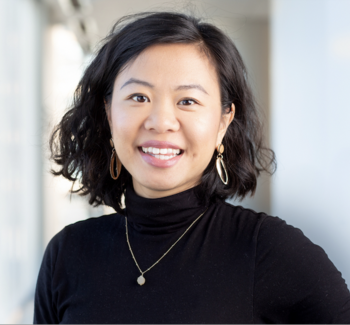
IreneKyoung_2023_Headshot

Irene Kyoung was a Research Associate for the Korea Program and Stanford Next Asia Policy Lab (SNAPL) at Shorenstein APARC, where she supported research projects regarding Korean politics and society and US-China relations. Irene received her MA in Political Science from Columbia University and graduated with honors in Government and Legal Studies from Bowdoin College. 

Former Research Associate, Korea Program
Date Label
0
Visiting Scholar at APARC, 2022-24
Gita_Wirjawan.jpg

Gita Wirjawan joined the Walter H. Shorenstein Asia-Pacific Research Center (Shorenstein APARC) as a visiting scholar for the 2022-23 and 2023-2024 academic years. In the 2024-25 year, he is a visiting scholar with Stanford's Precourt Institute for Energy. Wirjawan is the chairman and founder of Ancora Group and Ancora Foundation, as well as the host of the podcast "Endgame." While at APARC, he researched the directionality of nation-building in Southeast Asia and sustainability and sustainable development in the U.S. and Southeast Asia.

Date Label
1
Visiting Scholar at APARC, 2022-23, 2023-24
China Policy Fellow, 2022-23, 2023-24
Laura Stone.jpeg

Laura M. Stone joined the Walter H. Shorenstein Asia-Pacific Research Center (Shorenstein APARC) as Visiting Scholar and China Policy Fellow for the 2022-2023 and 2023-2024 academic years. She currently serves the U.S. Department of State, recently as Deputy Coordinator for the Secretary's Office for COVID Response and Health Security. While at APARC, she conducted research with the China Program and Professor Jean Oi regarding contemporary China affairs and U.S.-China policy.

Date Label

Shorenstein APARC
Stanford University
Encina Hall, E301
Stanford,  CA  94305-6055

0
Visiting Scholar at APARC, 2022-23
Nirvikar_Singh.jpg Ph.D.

Professor Nirvikar Singh joined the Walter H. Shorenstein Asia-Pacific Research Center (Shorenstein APARC) as a Visiting Scholar for the 2022-2023 academic year. Singh serves as a Distinguished Professor in Economics at the University of California, Santa Cruz. While at APARC, he researched the political economic dynamics of India and the role of innovation in driving economic growth, especially in Asia.

Authors
Noa Ronkin
News Type
News
Date
Paragraphs

The Walter H. Shorenstein Asia-Pacific Research Center (APARC) is pleased to invite applications for a suite of fellowships in contemporary Asia studies to begin fall quarter 2023.

The Center offers postdoctoral fellowships that promote multidisciplinary research on contemporary Japan and contemporary Asia broadly defined, inaugural postdoctoral fellowships and visiting scholar positions as part of the newly launched Stanford Next Asia Policy Lab, and a fellowship for experts on Southeast Asia. Learn more about each opportunity and its eligibility and specific application requirements:

Postdoctoral Fellowship on Contemporary Japan

Hosted by the Japan Program at APARC, the fellowship supports research on contemporary Japan in a broad range of disciplines including political science, economics, sociology, law, policy studies, and international relations. Appointments are for one year beginning in fall quarter 2023. The application deadline is December 1, 2022.
 

Shorenstein Postdoctoral Fellowship on Contemporary Asia

APARC offers two postdoctoral fellowship positions to junior scholars for research and writing on contemporary Asia. The primary research areas focus on political, economic, or social change in the Asia-Pacific region (including Northeast, Southeast, and South Asia), or international relations and international political economy in the region. Appointments are for one year beginning in fall quarter 2023. The application deadline is December 1, 2022.
 

Read More

Protesters in Myanmar stand on a picture of General Min Aung Hlaing
Commentary

It’s Time to Help Myanmar’s Resistance Prevail

The country’s brutal coup regime is no candidate for political compromise.
It’s Time to Help Myanmar’s Resistance Prevail
Chinese soldier
Commentary

China Hasn’t Reached the Peak of Its Power

Why Beijing can afford to bide Its time
China Hasn’t Reached the Peak of Its Power
Members of K-pop band BTS speak at a press briefing at the White House.
Commentary

Will Hallyu Swell to a Tidal Wave? Korea's Future as a Cultural Superpower

The Korean Wave, which has unique characteristics and continues to evolve in intriguing directions, could become a first mover on the global cultural scene.
Will Hallyu Swell to a Tidal Wave? Korea's Future as a Cultural Superpower
Hero Image
Stanford campus archway and text about call for applications for APARC 2023-24 fellowships
All News button
1
Subtitle

The Center offers a suite of fellowships for Asia researchers to begin fall quarter 2023. These include postdoctoral fellowships on contemporary Japan and the Asia-Pacific region, inaugural postdoctoral fellowships and visiting scholar positions with the newly launched Stanford Next Asia Policy Lab, and fellowships for experts on Southeast Asia.

Authors
News Type
News
Date
Paragraphs

This article was originally published in The Stanford Daily on August 22, 2022

For nearly two decades, Stanford has played host to what has quietly become one of the most influential pipelines to world leadership. Drawing 32 rising democratic leaders from 26 countries, Stanford’s Center on Democracy, Development and the Rule of Law (CDDRL) takes on a daunting annual task: Help shape the next generation of international decision-makers, many of whom will soon be at the forefront of global change.

Clearly, the program leaders — preeminent political scientists including democracy scholar Larry Diamond ’73 M.A. ’78 Ph.D. ’80, world-renowned political philosopher Francis Fukuyama, law professor Erik Jensen, CDDRL Mosbacher Director Kathryn Stoner, and former United States Ambassador to Russia Michael McFaul M.A. ’86 — are up to the task.

“When you see pictures today of Ukrainian President Volodymyr Zelenskyy in his bunker in Kyiv, Serhiy Leshchenko is right next to him. He’s one of our graduates,” Fukuyama said.

The Draper Hills Summer Fellows Program is an intensive academic training summit hosted by CDDRL that selects each class of global democratic leaders based on the existing work they have done to promote and protect democratic norms, as well as their potential to create more impact following the training program. 

“It all started in 2005 with Michael McFaul’s audacious idea that we could launch a Summer Fellows Program and try to train and interact with 30 of the brightest, most promising practitioners we could find around the world,” said law professor and Draper Hills lecturer Erik Jensen.

Erik Jensen Draper Hills 2022
Erik Jensen lectures on the rule of law at the Bechtel Conference Center. | Nora Sulots

Since then, Jensen said, the program has grown significantly, thanks to the generous support of Bill Draper and Ingrid von Mangoldt Hills, with even “more faculty who wanted to participate than we could accommodate.”

According to Fukuyama, Draper Hills has become an important forum for training democratic leaders around the world. 

“We try to provide a mixture of practical skills, networking tools and a stronger intellectual foundation so they can think about their future careers to determine the most strategically impactful way they can behave and act in the present,” he said.

In recent years, the program has shifted its focus toward technology, global warming, and poverty, which increasingly figure large roles in the fight for democracy, according to Jensen. Case studies, panels, and guest lectures from international experts fill the fellows’ three weeks on campus.

Outside of their classes in the Bechtel Center, the fellows tour San Francisco landmarks and enjoy group dinners hosted by the core faculty. In previous years, for example, fellows have visited local technology firms like Twitter, Google, and Facebook to explore “how democracies and autocracies can use technology to promote their goals,” Stoner said.

Draper Hills fellows discuss in class
Draper Hills Fellows discuss a case study on Indonesia’s Corruption Eradication Commission. | Nora Sulots

With help from the program, Draper Hills Fellows have consistently become leaders in law, politics, civil society organizations, and international development after graduation, with a growing alumni network of almost 400. Renchinnyam Amarjargalis, the former Prime Minister of Mongolia, was a fellow in 2005, along with other alumni who have risen to international prominence. 

Diamond added that the Foreign Affairs Minister of the government in exile of Myanmar, Zin Mar Aung, is also a former Draper Hills Fellow and has become “one of the most important leaders of the opposition in Burma fighting for democracy.”

The Draper Hills program gives its fellows more confidence and tools to see their work and struggles in a larger context, according to Diamond.

“Once you realize it’s part of a global pattern, you don’t feel that your national situation is quite so cursed,” he said. “You can draw strength from this solidarity and the sharing of experiences.”

Larry Diamond shares field experiences with fellows.
Larry Diamond shares field experiences with fellows. | Nora Sulots

Beyond the three weeks of the program, fellows remain connected to one another through on-campus gatherings, WhatsApp channels, and regional workshops around the world.

“As fellows, we are part of a very great network that always reminds us that, as activists for democracy and human rights, we are not alone,” said former Peruvian Minister of Education and current Draper Hills Fellow Daniel Alfaro. “There are others like us who are great fighters.” 

Participants, many of whom are already rising leaders in international democratic movements, are starting to see how valuable the program will be for their future work.

“Draper Hills has already expanded my horizons in terms of the roles that I can play in Mexican society to promote change, and provided many important allies and a network that can support these changes,” said current fellow Mariela Saldivar Villalobos, a Mexican activist and politician. “I feel deeply honored to have this opportunity. And I hope one day, Stanford will feel proud of investing its time and talent in me.”

Read More

Some of the original Ukrainian alumni from the Draper Hills Summer Fellowship gather in Kyiv in 2013.
News

A History of Unity: A Look at FSI’s Special Relationship with Ukraine

Since 2005, the Freeman Spogli Institute for International Studies has cultivated rich academic ties and friendships with Ukrainian scholars and civic leaders as part of our mission to support democracy and development domestically and abroad.
A History of Unity: A Look at FSI’s Special Relationship with Ukraine
Hero Image
Larry Diamond, Kathryn Stoner, Erik Jensen and Francis Fukuyama at the opening session of the 2022 Draper Hills Fellows Program
Larry Diamond, Kathryn Stoner, Erik Jensen and Francis Fukuyama at the opening session of the 2022 Draper Hills Fellows Program.
Nora Sulots
All News button
1
Subtitle

The Draper Hills Summer Fellows Program reconvened in person for the first time, bringing budding leaders together with the world’s most influential democracy scholars.

Subscribe to International Development