International Development

FSI researchers consider international development from a variety of angles. They analyze ideas such as how public action and good governance are cornerstones of economic prosperity in Mexico and how investments in high school education will improve China’s economy.

They are looking at novel technological interventions to improve rural livelihoods, like the development implications of solar power-generated crop growing in Northern Benin.

FSI academics also assess which political processes yield better access to public services, particularly in developing countries. With a focus on health care, researchers have studied the political incentives to embrace UNICEF’s child survival efforts and how a well-run anti-alcohol policy in Russia affected mortality rates.

FSI’s work on international development also includes training the next generation of leaders through pre- and post-doctoral fellowships as well as the Draper Hills Summer Fellows Program.

-

This talk will address a primary foreign policy challenge for independent Ukraine which has been to strike a proper balance between its relations with the West and those with Russia.  Today, democratic backsliding is upsetting the balance, which will undermine President Yanukovych’s ability to achieve his professed foreign policy aims.


Steven Pifer
is a senior fellow at the Brookings Institution’s Center on the United States and Europe and director of the Brookings Arms Control Initiative.  He focuses on nuclear arms control, Russia and Ukraine.  He has offered commentary on these issues on CNN, Fox News, BBC, National Public Radio and VOA, and his articles have run in the International Herald Tribune, New York Times, Washington Post and Moscow Times, among others.

A retired Foreign Service officer, his more than 25 years with the State Department focused on U.S. relations with the former Soviet Union and Europe, as well as arms control and security issues.  He served as deputy assistant secretary of state in the Bureau of European and Eurasian Affairs with responsibilities for Russia and Ukraine (2001-2004), U.S. ambassador to Ukraine (1998-2000), and special assistant to the president and senior director for Russia, Ukraine and Eurasia on the National Security Council (1996-1997).

His publications include “Ukraine’s Perilous Balancing Act,” Current History (March 2012), “NATO, Nuclear Weapons and Arms Control,” Brookings Arms Control Series (July 2011); “The Next Round:  The United States and Nuclear Arms Reductions After New START,” Brookings Arms Control Series (November 2010); “Ukraine’s Geopolitical Choice, 2009,” Eurasian Geography and Economics (July 2009); and “Reversing the Decline:  An Agenda for U.S.-Russian Relations in 2009,” Brookings Foreign Policy Paper (January 2009).

Ambassador Pifer is a 1976 graduate of Stanford University with a B.A. in Economics.  He is a member of the Council on Foreign Relations. 


Co-sponsored by the Center for Russian, East European, and Eurasian Studies

Reuben W. Hills Conference Room

Steve Pifer Senior Fellow at the Brookings Institution’s Center on the United States and Europe and Director of the Brookings Arms Control Initiative Speaker
Seminars
Authors
News Type
News
Date
Paragraphs

The Program on Human Rights concluded its ninth and final installment of the Sanela Diana Jenkins International Speakers Series on March 13 with presentations with Dr. Mohammed Mattar, executive director of the Protection Project and professor at Johns Hopkins University and Professor Alison Brysk, chair of Global Governance, Global and International Studies at UC Santa Barbara.

Dr. Mattar noted that while effective anti-trafficking laws depend on law enforcement and survivor protection, the key intellectual and ethical rationale of such laws is the concept of the exploitation of vulnerable people in vulnerable circumstances. Dr. Mattar explained the legal distinction between “human trafficking” and “slavery,” emphasizing that the latter is based on twin ideas of human beings as commodities to be bought and sold, as well as the exercise of ownership of one person over another. “There is no doubt that human trafficking is a degrading and severe violation of basic human rights and fundamental freedoms, but it is unnecessary to label human trafficking as slavery because to do so we would need to identify the exercise of powers attached to the right of ownership,” Mattar said.

Among the challenges for a more effective anti-trafficking effort, Dr. Mattar listed the need to hold corporations responsible for their acts, to provide access to justice that allows for victim compensation, the engagement of civil society, and criminal enforcement and accountability under existing national and international law.

Professor Brysk explained that globalization has produced pernicious side effects.  The acceleration of migration, especially of women, increases the incidence of gender violence and the commodification of “disposable people.” All these factors enable the increase of human trafficking. Brysk observed that international recognition of trafficking as a form of contemporary slavery has been helpful in influencing policy change. “There is a slavery spectrum,” Brysk said. “We need to work to guarantee physical integrity of people, migration rights and children’s rights.”

She also noted that the focus on sex slavery has high costs because it is based on “protection and not empowerment,” and “rescue over rights.” The individualistic emphasis and sexual focus of anti-trafficking efforts fails to recognize many forms of exploitative globalized labor. Women and children are put in dangerous and debilitating non-sexual jobs. There are also many forms of sexual and gender violence in other forms of exploitative globalized labor, such as in sweatshops.

Together, the speakers in the final session of the Program on Human Rights speaker series made a strong plea for more sophisticated understanding of the dynamics of human trafficking in the 21st century. Sustained research that accounts for contemporary conditions, they told the Stanford audience, is needed to give policy makers and legislators the information and tools they need to combat the alarming global acceleration of human trafficking.

All News button
1
-

Stanford University's Center on Democracy, Development, and the Rule of Law, invites you to celebrate the launch of the Program on Social Entrepreneurship (PSE) and the arrival of the first cohort of Social Entrepreneurs-in Residence.


Image

Bechtel Conference Center

Taida Horozovic Social Entrepreneur-in-Residence Panelist
Steve Williams Social Entrepreneur-in-Residence Panelist
Ramzi Jaber Social Entrepreneur-in-Residence Panelist
Zawadi Nyong'o Social Entrepreneur-in-Residence Panelist
Kavita N. Ramdas Executive Director, PSE Moderator CDDRL

FSI
Stanford University
Encina Hall C140
Stanford, CA 94305-6055

(650) 736-1820 (650) 724-2996
0
Satre Family Senior Fellow, Freeman Spogli Institute for International Studies
kathryn_stoner_1_2022_v2.jpg MA, PhD

Kathryn Stoner is the Mosbacher Director of the Center on Democracy, Development and the Rule of Law (CDDRL) and the Satre Family Senior Fellow at the Freeman Spogli Institute for International Studies (FSI). From 2017 to 2021, she served as FSI's Deputy Director. She is Professor of Political Science (by courtesy) at Stanford and teaches in the Department of Political Science, the Program on International Relations, and the Ford Dorsey Master's in International Policy Program. She is also a Senior Fellow (by courtesy) at the Hoover Institution.

Prior to coming to Stanford in 2004, she was on the faculty at Princeton University for nine years, jointly appointed to the Department of Politics and the Princeton School for International and Public Affairs (formerly the Woodrow Wilson School). At Princeton, she received the Ralph O. Glendinning Preceptorship, awarded to outstanding junior faculty. She also served as a Visiting Associate Professor of Political Science at Columbia University and an Assistant Professor of Political Science at McGill University. She has held fellowships at Harvard University as well as the Woodrow Wilson Center in Washington, D.C. 

In addition to many articles and book chapters on contemporary Russia, she is the author or co-editor of six books: Transitions to Democracy: A Comparative Perspective, written and edited with Michael A. McFaul (Johns Hopkins 2013);  Autocracy and Democracy in the Post-Communist World, co-edited with Valerie Bunce and Michael A. McFaul (Cambridge, 2010);  Resisting the State: Reform and Retrenchment in Post-Soviet Russia (Cambridge, 2006); After the Collapse of Communism: Comparative Lessons of Transitions (Cambridge, 2004), coedited with Michael McFaul; and Local Heroes: The Political Economy of Russian Regional Governance (Princeton, 1997); and Russia Resurrected: Its Power and Purpose in a New Global Order (Oxford University Press, 2021).

She received a BA (1988) and MA (1989) in Political Science from the University of Toronto, and a PhD in Government from Harvard University (1995). In 2016, she was awarded an honorary doctorate from Ilia State University in Tbilisi, the Republic of Georgia.

Download full-resolution headshot; photo credit: Rod Searcey.

Mosbacher Director, Center on Democracy, Development and the Rule of Law
Professor of Political Science (by courtesy), Stanford University
Senior Fellow (by courtesy), Hoover Institution
CV
Date Label
Kathryn Stoner-Weiss Faculty Co-director, PSE Host CDDRL
Deborah Rhode Ernest W. McFarland Professor of Law Host Stanford Law School

CDDRL
Stanford University
Encina Hall, C147
616 Jane Stanford Way
Stanford, CA 94305-6055

(650) 724-6448 (650) 723-1928
0
Mosbacher Senior Fellow in Global Democracy at the Freeman Spogli Institute for International Studies
William L. Clayton Senior Fellow at the Hoover Institution
Professor, by courtesy, of Political Science and Sociology
diamond_encina_hall.png MA, PhD

Larry Diamond is the William L. Clayton Senior Fellow at the Hoover Institution, the Mosbacher Senior Fellow in Global Democracy at the Freeman Spogli Institute for International Studies (FSI), and a Bass University Fellow in Undergraduate Education at Stanford University. He is also professor by courtesy of Political Science and Sociology at Stanford, where he lectures and teaches courses on democracy (including an online course on EdX). At the Hoover Institution, he co-leads the Project on Taiwan in the Indo-Pacific Region and participates in the Project on the U.S., China, and the World. At FSI, he is among the core faculty of the Center on Democracy, Development and the Rule of Law, which he directed for six and a half years. He leads FSI’s Israel Studies Program and is a member of the Program on Arab Reform and Development. He also co-leads the Global Digital Policy Incubator, based at FSI’s Cyber Policy Center. He served for 32 years as founding co-editor of the Journal of Democracy.

Diamond’s research focuses on global trends affecting freedom and democracy and on U.S. and international policies to defend and advance democracy. His book, Ill Winds: Saving Democracy from Russian Rage, Chinese Ambition, and American Complacency, analyzes the challenges confronting liberal democracy in the United States and around the world at this potential “hinge in history,” and offers an agenda for strengthening and defending democracy at home and abroad.  A paperback edition with a new preface was released by Penguin in April 2020. His other books include: In Search of Democracy (2016), The Spirit of Democracy (2008), Developing Democracy: Toward Consolidation (1999), Promoting Democracy in the 1990s (1995), and Class, Ethnicity, and Democracy in Nigeria (1989). He has edited or coedited more than fifty books, including China’s Influence and American Interests (2019, with Orville Schell), Silicon Triangle: The United States, China, Taiwan the Global Semiconductor Security (2023, with James O. Ellis Jr. and Orville Schell), and The Troubling State of India’s Democracy (2024, with Sumit Ganguly and Dinsha Mistree).

During 2002–03, Diamond served as a consultant to the US Agency for International Development (USAID) and was a contributing author of its report, Foreign Aid in the National Interest. He has advised and lectured to universities and think tanks around the world, and to the World Bank, the United Nations, the State Department, and other organizations dealing with governance and development. During the first three months of 2004, Diamond served as a senior adviser on governance to the Coalition Provisional Authority in Baghdad. His 2005 book, Squandered Victory: The American Occupation and the Bungled Effort to Bring Democracy to Iraq, was one of the first books to critically analyze America's postwar engagement in Iraq.

Among Diamond’s other edited books are Democracy in Decline?; Democratization and Authoritarianism in the Arab WorldWill China Democratize?; and Liberation Technology: Social Media and the Struggle for Democracy, all edited with Marc F. Plattner; and Politics and Culture in Contemporary Iran, with Abbas Milani. With Juan J. Linz and Seymour Martin Lipset, he edited the series, Democracy in Developing Countries, which helped to shape a new generation of comparative study of democratic development.

Download full-resolution headshot; photo credit: Rod Searcey.

Former Director of the Center on Democracy, Development and the Rule of Law
Faculty Chair, Jan Koum Israel Studies Program
Date Label
Larry Diamond Director Host CDDRL
Panel Discussions
Authors
News Type
News
Date
Paragraphs

North Korea’s government announced it will launch a long-range rocket to orbit a satellite within a few days of the 100th anniversary of founder Kim Il Sung’s birthday on Apr. 15.

The statement comes on the heels of an important U.S.-North Korea agreement on Feb. 29, in which the United States promised to provide North Korea with 240,000 tons of food aid over the next year while North Korea would refrain from nuclear and long-range missile tests and allow international inspection of its declared nuclear facilities. The situation echoes that of 2009, when North Korea also gave advance notice of a "peaceful" long-range rocket launch. North Korea’s 2009 missile test prompted a United Nations condemnation, after which North Korea conducted its second test of a nuclear device.

David Straub, associate director of Stanford’s Korean Studies Program and a former State Department Korea expert, speaks about North Korea’s latest statement.

Why is the new North Korea announcement of possible concern?

This type of launch is something the U.N. Security Council earlier condemned and forbade North Korea to do again. There is a large overlap in the technologies used for such a rocket and for a long-range ballistic missile, and the international community is deeply suspicious that North Korea will use what it learns from such launches to develop long-range missile technology.

The larger concern is that North Korea intends eventually to pair long-range missiles with nuclear warheads, creating a much greater threat to other countries, including the United States.

Was there any indication North Korea would issue this statement?

Given North Korea’s history of reneging on deals, the Obama administration wisely noted at the time of the Feb. 29 announcement that it was a "limited" agreement. Secretary of State Hillary Clinton warned that North Korea’s upholding of its side of the agreement would be the key to the deal’s overall success.

There is no doubt the U.S. government would not have announced this agreement if it had anticipated that North Korea would almost immediately have declared its intention to launch another long-range rocket.

Why would North Korea decide to announce a rocket launch?

At this point, we can only speculate about North Korea’s motivations for the announcement. It could be related to the recent leadership succession in North Korea. Kim Jong Un, the grandson of Kim Il Sung, is an inexperienced leader still in his 20s. He and his advisors may feel it is necessary to defy the United States so blatantly to demonstrate at home how strong a leader he is. 

Or perhaps, after testing two nuclear devices and several long-range missiles, the North Korean government has become more confident about its diplomatic ability to withstand international condemnations and sanctions.

In any event, it is a stunning slap in the face of the Obama administration, which will need to react firmly. Already, less than 24 hours after the North Korean announcement, the Department of State has publicly said that the entire Feb. 29 agreement, including the delivery of food aid, has been put on hold.  

What should we expect to happen next?

A real danger is that the events of 2009 will be repeated. The North Korean government reacted angrily to the U.N. Security Council’s presidential statement against it three years ago, and withdrew from the Six-Party Talks. Pyongyang then proceeded to conduct a nuclear test only a month later.

The most worrisome aspect is the possibility that the new leadership in North Korea feels insecure at home and thus obliged to act tough, and also has poor judgment about the United States and the international community as a whole. If so, the North Korea issue could become significantly more confrontational—and dangerous—in the coming months.

ADDITIONAL RESOURCES

U.S. Department of State: North Korean announcement of missile launch

Reuters: North Korea’s missile and "satellite" programs

Hero Image
StatueKimIlSung NEWSFEED
A bronze statue of North Korean founder Kim Il Sung, Sept. 2007. North Korea will celebrate the 100th anniversary of Kim's birth this year on Apr. 15.
Flickr/Will De Freitas
All News button
1
-

Abstract:

We present a new framework for conceptualizing and assessing the extent to which countries adhere to the rule of law in practice. This framework constitutes the backbone of the WJP Rule of Law Index® and is organized around nine basic concepts or factors: limited government powers; absence of corruption; order and security; fundamental rights; open government; effective regulatory enforcement; access to civil justice; effective criminal justice; and informal justice. These factors are further disaggregated into 52 sub-factors. We estimate numerical scores of these factors and sub-factors for a group of 66 countries and jurisdictions. These estimates are built from two novel data sources in each country: (1) a general population poll; and (2) qualified respondents’ questionnaires. All in all, the data contain more than 400 variables drawn from the assessments of over 66,000 people and 2,000 local experts. Our presentation will conclude with an overview of some highlights from Index data findings, as well as examples of ways in which the data have been applied in different contexts.

The World Justice Project (WJP) is an independent, non-profit organization that works to advance the rule of law for the development of communities of opportunity and equity worldwide. The WJP’s multinational and multidisciplinary efforts are aimed at: government reforms; development of practical programs on the ground in support of the rule of law; and increased awareness about the concept and impact of the rule of law. The Project has three complementary programs: Research and Scholarship, the World Justice Project Rule of Law Index, and mainstreaming practical on-the-ground programs to strengthen the rule of law.

Speaker Bio: 

Image
Dr. Alejandro Ponce joined The World Justice Project as Senior Economist in 2009. He is a co-author of the WJP Rule of Law Index. Dr. Ponce has extensive experience in the development of cross-country indicators. Before joining the World Justice Project, he served as an Economist at the World Bank collaborating in the design of surveys to measure financial inclusion around the world. Earlier in his career, he worked as a consultant in the design of the index of judicial efficiency and regulation of dispute resolution as part of the Doing Business Indicators of the World Bank and served as Deputy Director for the Mexican Banking and Securities Commission (CNBV). Dr. Ponce has also conducted research on behavioral economics, financial inclusion and on the linkage between economic development and the rule of law. He holds a B.A. in Economics from ITAM inMexico, and a M.A. and Ph.D. in Economics from Stanford University.

Speaker Bio: 

Image
Mr. Juan Carlos Botero is The World Justice Project's Interim Executive Director and Director of the Rule of Law Index, where he has led the development of an innovative quantitative tool to measure countries’ adherence to the rule of law worldwide. Mr. Botero’s previous experience includes service as Chief International Legal Counsel of the Colombian Ministry of Commerce; Deputy-Chief Negotiator of the US-Colombia Free Trade Agreement; Consultant for the World Bank; Associate Researcher atYaleUniversity; and Judicial Clerk at theColombian Constitutional Court. He has taught legal theory and comparative law at the Universidad de los Andes in Colombia and Universidad Privada Boliviana in Bolivia. His academic publications focus on the areas of rule of law, access to justice, labor regulation, and child labor. Mr. Botero is a member of the World Economic Forum's Global Agenda Council on the Rule of Law 2011. A national of Colombia, Mr. Botero holds a law degree from Universidad de los Andes and a Master of Laws from Harvard University. He is also a Doctor of Juridical Science (SJD) candidate at the Georgetown University Law Center.

CISAC Conference Room

Alejandro Ponce Senior Economist Speaker The World Justice Project
Juan Botero Rule of Law Index Director Speaker The World Justice Project
Seminars
-

Abstract:

The hegemony of the democratic ideal may be waning. Until recently, even the custodians of dictatorships claimed democratic status for their regimes. Many still do. But other rulers now drop the pretense of democracy and claim that their nondemocratic regimes provide the people with conditions that are superior to those found in democracies. They portray themselves as demophiles rather than democrats, and claim that their concern for their people provides a superior alternative to popular control over the state. What is more, some actually do pursue policies that differ meaningfully from the predation that characterizes the behavior of elites in many nondemocratic regimes. How may we understand contemporary demophily, and how does it challenge democracy?

Speaker Bio:

M. Steven Fish is a comparative political scientist who studies democracy and regime change in developing and postcommunist countries, religion and politics, and constitutional systems and national legislatures. He is the author of Are Muslims Distinctive? A Look at the Evidence (Oxford, 2011). He is also author of Democracy Derailed in Russia: The Failure of Open Politics (Cambridge, 2005), which was the recipient of the Best Book Award of 2006, presented by the Comparative Democratization Section of the American Political Science Association, and Democracy from Scratch: Opposition and Regime in the New Russian Revolution (Princeton, 1995). He is coauthor of The Handbook of National Legislatures: A Global Survey (Cambridge, 2009) and Postcommunism and the Theory of Democracy (Princeton, 2001). He served as a Senior Fulbright Fellow and Visiting Professor at the Airlangga University, Surabaya, Indonesia, in 2007 and at the European University at St. Petersburg, St. Petersburg, Russia, in 2000-2001. In 2005, he was the recipient of the Distinguished Social Sciences Teaching Award of the Colleges of Letters and Science, University of California-Berkeley.

CISAC Conference Room

M. Steven Fish Political Scientist Speaker UC Berkeley
Seminars

Not in residence

0
Rajeev Motwani Professor in the School of Engineering and Professor of Electrical Engineering
Co-director of the Stanford Computer Security Lab
Co-director of the Stanford Cyber Initiative
Affiliate Faculty at CISAC
dabo.jpg MA, PhD

Professor Boneh heads the applied cryptography group and co-direct the computer security lab. Professor Boneh's research focuses on applications of cryptography to computer security. His work includes cryptosystems with novel properties, web security, security for mobile devices, and cryptanalysis. He is the author of over a hundred publications in the field and is a Packard and Alfred P. Sloan fellow. He is a recipient of the 2014 ACM prize and the 2013 Godel prize. In 2011 Dr. Boneh received the Ishii award for industry education innovation. Professor Boneh received his Ph.D from Princeton University and joined Stanford in 1997.

-

This event is co-sponsored with The Europe Center

Abstract:

Ruby Gropas is a lecturer in international relations at the law faculty of the Democritus University of Thrace (Komotini) and research fellow at the Hellenic Foundation for European and Foreign Policy (ELIAMEP). Gropas was in residence at CDDRL in 2011 as a visiting scholar. In this seminar she will discuss the ongoing Greek economic and political crisis, and what it means for the future of the European Union and monetary system. Is the crisis in Greece ‘internal’ or is it symptomatic of a wider European failure? Is the Greek crisis the result of failed modernity, or rather a precursor of things to come? Why has Greece become so important and why has it dominated global politics and world news for the past two years?  Are its malignancies purely domestic or are they representative of a wider malaise within Europe and possibly beyond? The collapse and orderly default of a eurozone country at the heart of the Western financial system arguably marks the end of an era. It has brought with it the deepest social and political crisis that modern Greecehas faced since the restoration of democracy and it has also led to Europe's deepest existential crisis. With the EU struggling to effectively managing the eurozone crisis and the burst of recent movements opposing neo-liberal orthodoxy and the “Occupy” movements – what does this mean for Europe? And what is next?

Speaker Bio: 

Ruby Gropas has worked on asylum and migration issues for UNHCR in Brussels and worked for McKinsey & Co. in Zurich and Athens (2000-2002). As part of the ELIAMEP team, her research concentrates on European integration and foreign policy, Transatlantic relations, human rights, migration and multiculturalism. She was Managing Editor of the Journal of Southeast European and Black Sea Studies (Taylor & Francis) between January 2006 and October 2009. Ruby has taught at the University of Athens and at College Year in Athens. She was Southeast Europe Policy Scholar at the Woodrow Wilson International Center for Scholars in Washington DC in 2007 and again in 2009. She is Vice-President of the Alexander S. Onassis Public Benefit Foundation Scholars' Association since June 2009, and was Member of the Academic Organisation Committee of the Global Forum for Migration and Development, Civil Society Days, Athens 2009.

Ruby studied Political Science at the Université Libre de Bruxelles (1994) and undertook graduate studies at the University of Leuven (MA in European Studies) and at Cambridge University (MPhil in International Relations). She holds a PhD in History from Cambridge University (New Hall, 2000).

Encina Ground Floor Conference Room

Encina Hall
Stanford, CA 94305-6055

0
R_Gropas.jpg PhD

Ruby Gropas is Lecturer in International Relations at the Law Faculty of the Democritus University of Thrace (Komotini) and Research Fellow at the Hellenic Foundation for European and Foreign Policy (ELIAMEP).

Ruby has worked on asylum and migration issues for UNHCR in Brussels and worked for McKinsey & Co. in Zurich and Athens (2000-2002). As part of the ELIAMEP team, her research concentrates on European integration and foreign policy, Transatlantic relations, human rights, migration and multiculturalism. She was Managing Editor of the Journal of Southeast European and Black Sea Studies (Taylor & Francis) between January 2006 and October 2009. Ruby has taught at the University of Athens and at College Year in Athens. She was Southeast Europe Policy Scholar at the Woodrow Wilson International Center for Scholars in Washington DC in 2007 and again in 2009. She is Vice-President of the Alexander S. Onassis Public Benefit Foundation Scholars' Association since June 2009, and was Member of the Academic Organisation Committee of the Global Forum for Migration and Development, Civil Society Days, Athens 2009.

Ruby studied Political Science at the Université Libre de Bruxelles (1994) and undertook graduate studies at the University of Leuven (MA in European Studies) and at Cambridge University (MPhil in International Relations). She holds a PhD in History from Cambridge University (New Hall, 2000).

CV
Ruby Gropas Lecturer in International Relations at the Law Faculty of the Speaker Democritus University of Thrance (Komotini)
Seminars

Center for Chinese Agricultural Policy,
Chinese Academy of Sciences
Room 3830, Anwai Datun Road, 11A
Beijing, 100101, P. R. China

0
REAP Project Manager for Keeping Kids in School
JC_REAP.jpg MA

James Chu manages the Keeping Kids in School projects at REAP. He has five years of experience researching educational issues in China. His research experience involves extensive quantitative and qualitative fieldwork in Shaanxi province and Beijing migrant schools. He has also designed and implemented several projects in Beijing benefiting migrant students. He is fluent in Mandarin and received his MA in Sociology at Stanford University.

Authors
Scott Rozelle
Karen Eggleston
Jean C. Oi
Xueguang Zhou
Ang Sun
News Type
News
Date
Paragraphs

Full text available at YaleGlobal.

Children of China's Future – Part II

 
Aging population and poverty require stronger investment in China’s rural youth
Karen Eggleston, Jean Oi, Scott Rozelle, Ang Sun, Xueguang Zhou
YaleGlobal, 14 March 2012
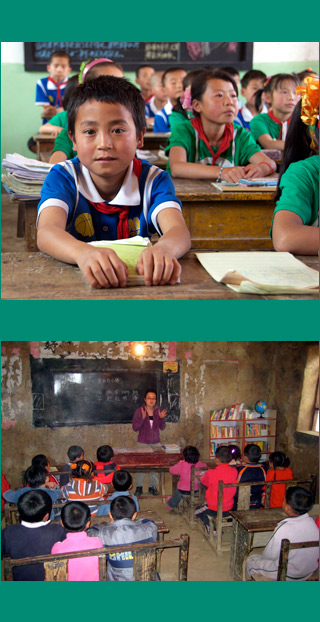
Poor education mortgaging the future? Students in a Gansu province school, where many are anemic (top); another class room in Loess Plateau. (Top Photo: Adam Gorlick)

DINGXI PREFECTURE: Wang Hongli, 8 years old, lives in a remote rural village on the Loess Plateau in one of China’s poorest and most agricultural provinces, Gansu. His prospects for living the good life are as bleak as the landscape. He is not on track to become part of China’s emerging middle class, the free-spending, computer-savvy, person-of-the-world often featured in the western media.

Hongli is a pseudonym. His parents work in a faraway industrial zone, coming home for only three weeks at Chinese New Year. His grandmother takes care of him and his siblings on the weekends, and during the week he lives in a dorm, three to a bed with 36 other students in an unheated room 4 by 4 meters.

Hongli suffers from iron-deficient anemia, but neither his family nor his teacher knows he is sick. Even if his anemia is discovered and treated by the researchers who have documented 30 percent anemia among children in poor rural areas, it likely will recur after he finishes the study, with furnished dietary supplements. Despite educational pamphlets, he’ll likely revert to a diet of staple grains and bits of pickled vegetables.

Unsurprisingly, Hongli’s grades are not good. In China’s competitive school system, he has only a slight chance of attending high school, much less college. In China’s future high-wage economy, all Hongli can hope for is a menial job in the provincial capital, Lanzhou, or as a temporary migrant elsewhere. Without urban permanent residency, hukou, he will have limited access to urban social services. He may suffer chronic unemployment, or resort to the gray economy or crime. He also may never marry – one of the millions of “forced bachelors” created by China’s large gender imbalance.

In China’s future high-wage economy, 
all the rural poor can hope for is menial jobs in a provincial capital.

Hongli is not alone. In fact, he’s one of 50 million school-age youth in China’s vast poor rural hinterlands. Recent studies by Stanford and Chinese collaborators show that 39 percent of fourth-grade students in Shaanxi Province are anemic, with similarly high rates elsewhere in the northwest; up to 40 percent of rural children in the poor southwest regions, e.g., Guizhou, are infected with intestinal worms. Millions of poor rural students throughout China are nearsighted, but do not wear glasses.

Because China’s urbanites have fewer children, poor rural kids like Hongli represent almost a third of China’s school-aged children, a large share of the future labor force. These young people must be healthy, educated and productive if China is to have any chance of increasing labor productivity to offset the shrinking size of its aging workforce.

Many observers presume that China’s growth will continue unabated, drawing upon a vast reservoir of rural labor to staff manufacturing plants for the world. In fact, to a considerable extent, China’s rural areas have already been emptied out, leaving many villages with only the old and the very young. The growth of wages for unskilled workers exceeds GDP growth.

Better pay should be good news for poverty alleviation. However, rising wages push up the opportunity cost of staying in school – especially since high school fees, even at rural public schools, are among the highest in the world.

It’s myopic to allow rural students to drop out of junior high and high school – mitigating the current labor shortage, but mortgaging their futures. Recent studies demonstrate that eliminating high school tuition – or reducing the financial burden on poor households – improves junior high achievement and significantly increases continuation on to high school. Yet unlike many other developing countries, China does not use incentives to keep children in school, such as conditional cash transfers. The public health and educational bureaucracies also do not proactively cooperate to remedy nutritional and medical problems – including mental health – that school-based interventions could address cost effectively.

Less than half of youth in China’s poor rural areas go to academic high school; less than 10 percent head to college.

The educational system, based on rote memory and drill, doesn’t teach children how to learn. The vocational education system is ineffective. Instead, China’s schools tend to focus resources on elite students. Tracking starts early, and test scores are often the sole criterion for success. A recent comparative study documents that China’s digital divide, with lower access to computers in poor rural areas, is among the widest in the world.

China’s government is increasing expenditures for school facilities and raising teacher salaries. However, these steps are far from adequate. During South Korea’s high growth, almost all Korean students finished high school. Today, less than half of youth in China’s poor rural areas go to academic high school, and the percent going to college remains in the single digits.

Greater investment in public health and education for the young people in China’s poor rural areas is urgent. If the government waits 10 years, it may be too late to avert risks for China’s stability and sustained economic growth.

Surely China could easily address this problem? A third of Chinese were illiterate in the early 1960s; now, fewer than 5 percent are. By 2010, about 120 million Chinese had completed a college degree. Chinese also enjoy a relatively long life expectancy compared to India and many other developing countries, and basic health insurance coverage is almost universal.

But the pace of change and citizens’ expectations are higher as well. Most Chinese assume that basic nutritional problems and intestinal worms were eradicated in the Mao era. China’s mortality halved in the 1950s; fertility halved in the 1970s. As a result, China will get old before it gets rich. Population aging, rapid urbanization and a large gender imbalance represent intertwined demographic challenges to social and economic governance. The policy options are complicated, the constraints significant, the risks of missteps real and ever-present.

China’s prosperity depends on youth mastering skills to thrive in a technology-driven world.

Timely policy response is complicated by competition for resources – pensions, long-term care, medical care for the elderly and more – as well as significant governance challenges arising from a countryside drained of young people. The well-intentioned programs for what government regards a “harmonious society” create large unfunded mandates for local authorities. Attempts to relocate rural residents to new, denser communities provoke anger at being uprooted and skepticism that local authorities simply want to expropriate land for development.

Millions of migrant workers – like Wang Hongli’s parents – return to their rural homes during economic downturns. Urbanization weakens this capacity to absorb future economic fluctuations. Government efforts at “social management” – strengthening regulatory control of informal social groups and strategies for diffusing social tensions – expand the bureaucratic state, a central target of popular discontent.

Premier Wen Jiabao’s announcement of a 7.5 percent growth target – the lowest in two decades – has been expected. Future economic growth will moderate partly because of demographics, but mostly because productivity gains slow as an economy runs out of surplus rural labor and converges on the technological frontier. Costly upgrading of industrial structure will squeeze the government’s ability to deliver on its promise of a better future for all, stoking social tensions.

China’s stability and prosperity, and that of the region and the globe, depends on how well today’s youth master the knowledge and skills that enable them to thrive in the technology-driven globalized world of the mid-21st century. Resilient public and private sector leaders of the future must be able to think creatively. Therefore, China’s government should respond to population aging by acting now to invest more in the health and education of youth, especially the rural poor.


Hero Image
5734696609 a3b10b4c8f z
All News button
1
Subscribe to International Development