International Development

FSI researchers consider international development from a variety of angles. They analyze ideas such as how public action and good governance are cornerstones of economic prosperity in Mexico and how investments in high school education will improve China’s economy.

They are looking at novel technological interventions to improve rural livelihoods, like the development implications of solar power-generated crop growing in Northern Benin.

FSI academics also assess which political processes yield better access to public services, particularly in developing countries. With a focus on health care, researchers have studied the political incentives to embrace UNICEF’s child survival efforts and how a well-run anti-alcohol policy in Russia affected mortality rates.

FSI’s work on international development also includes training the next generation of leaders through pre- and post-doctoral fellowships as well as the Draper Hills Summer Fellows Program.

The CDDRL special events draw scholars and practitioners to the Center to comment on the most relevant and timely topics impacting the field of democracy, development, and the rule of law. The events attract members of the Stanford academic community and beyond who bring original analysis and thinking to bear on debates taking place within this field of study. 

Paragraphs

The fourteenth session of the Korea-U.S. West Coast Strategic Forum, held Stanford University on June 25, 2015, convened senior South Korean and American policymakers, scholars and regional experts to discuss North Korea policy and recent developments on the Korean Peninsula. Hosted by the Korea Program at the Walter H. Shorenstein Asia-Pacific Research Center at Stanford University, the Forum is also supported by the Korea National Diplomatic Academy.

All Publications button
1
Publication Type
Policy Briefs
Publication Date
Encina Hall616 Serra StreetStanford, CA 94305-6055
0
zaira.jpg

Zaira Razu is a research Associate and Project Manager at the Program on Poverty and Governance at CDDRL. She is currently working on the Governance of Public Health in Mexico project, focusing on the differences in mortality rates across income groups to analyze health disparities in the country. She is also collaborating in the design of impact and process evaluations of different interventions that seek to reduce youth violence in Mexico and the US, as well as to better understand the key dimensions of youth criminal careers: recruitment, incentives, training, and desistance. Zaira’s previous responsibilities at PovGov included a review on the current state of Political Economy scholarship in Mexico and the creation of a database of Oaxaca municipalities to analyze the relationship between community participation and the quality of public goods provision.

Zaira graduated from Stanford in June 2014 with an MA in International Policy Studies, concentrating in Democracy, Development, and the Rule of Law. She also holds a BA in Political Science from Instituto Tecnológico Autónomo de Mexico (ITAM). Zaira is interested in applied research on youth, health, and poverty alleviation policies. She has experience in impact evaluation (at the Inter-American Development Bank), and in policy design and implementation (at Fundación IDEA and in the Center Mario Molina, Mexico).


Publications

Díaz- Cayeros, A., & Razú, Z. (2014). ¿ Hacia dónde va la economía política en México?. El Trimestre Económico, 81(324), 783-806.


Project Manager and Research Assistant, Governance of Public Health in Mexico Project
News Type
News
Date
Paragraphs

Video of A career in Economics...it's much more than you think

Marcella Alsan, an assistant professor of Medicine and CHP/PCOR core faculty member, shows how economics is a broader field than most people realize in this video produced by the American Economic Association (AEA).  Along with other top economists, she discusses the interdisciplinary nature of economics, specifically as it relates to global health.  Alsan states that "without understanding economic principals and economic forces, [there is] a real gaping hole in actually practicing medicine."  Understanding economics can help us to understand policy decisions and to tackle the broad problems of society.

Hero Image
aea video
AEA
All News button
1
Authors
News Type
News
Date
Paragraphs

Marking seventy years since the end of World War II, Japanese Prime Minister Shinzo Abe expressed “profound grief” on Friday for his country’s actions. While pointing to short comings in the statement, the Stanford scholars said the prime minister’s words represented a genuine effort to reflect on the past and provided opportunities to improve relations in the region.

The highly anticipated statement, issued on behalf of the Japanese cabinet, was closely followed by its East Asian neighbors who have raised concerns over Japan’s views of the wartime era.

Leaders of South Korea and China have said Japan has not apologized fully for crimes committed during WWII and each dispute historical narratives seen in the others’ textbooks, popular culture and other domains.

Advancing historical reconciliation in East Asia is a key research area of the Walter H. Shorenstein Asia-Pacific Research Center. The center leads a research project, Divided Memories and Reconciliation, which has produced numerous articles and books, including a ground breaking comparative study of high school history textbooks in China, Japan, South Korea, Taiwan and the United States.

In May 2014, the center convened an international conference “Pathways to Reconciliation” on historical issues, co-sponsored by the Trilateral Cooperation Secretariat, the governmental organization promoting Japan-China-South Korea trilateral cooperation.

Earlier this year, the Japan Program asked Stanford scholars to write their own version of the 70th anniversary statement as if they were the prime minister of Japan. The scholars’ statements were compiled into a report, published in May 2015.

Eight scholars contributed to the exercise in an effort “to understand the diversity of reasonable views on the issue of Japan’s responsibility for the cruel and violent war and Japan’s role in building a peaceful and prosperous world,” the introduction stated.

Themes that emerged in the report included a need for Abe to show heartfelt remorse about Japan’s actions during WWII and its desire to work toward a peaceful future.

Three noted Japan experts who contributed to that report offered their analysis of the prime minister’s statement issued yesterday in Tokyo.


Below are brief summaries of their analysis, you may click on each link to expand in full.


Image
Response by Peter Duus

Duus recognizes that Abe’s statement offers a reiteration of the statements made by Prime Ministers Murayama and Koizumi by including four key words – aggression, colonial rule, apology and remorse. Unlike past statements, however, Abe’s begins by putting war in the historical context and offers a more explicit statement of the victims of the war, not only the three million Japanese but also citizens of China, Southeast Asia and the Pacific islands. The statement can be viewed as “a small but important step toward a truce in the history wars that have raged in East Asia for the last three decades,” he says. However, Abe's attempt at reconciliation will have little effect if he does not rein in contrary actions by neo-nationalists in his own party.

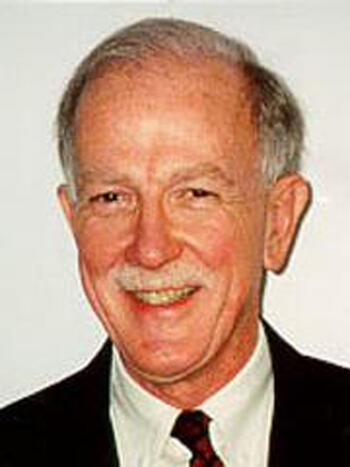
Peter Duus is the William H. Bonsall Professor of Japanese History, emeritus; and a senior fellow, by courtesy, Hoover Institution, Stanford University.


Image

Response by Takeo Hoshi

Hoshi notes that Abe’s statement mentions past apologies expressed by the Japanese government, but has no explicit apology from the current administration. He says there are two surprising elements about the statement. The first is the length – it is much larger than predecessors Murayama and Koizumi at 1,664 words in English and 3,970 characters in Japanese. The second is the emphasis on history rather than on forward-looking components. He says it is commendable that Abe provided an expanded view of history. Hoshi notes that it is nearly impossible to satisfy everyone’s views in such a statement, as scholars witnessed firsthand when working on the Japan Program project.

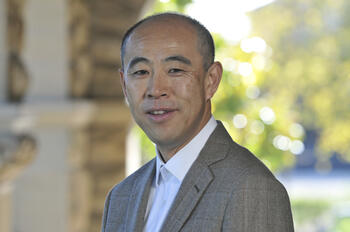
Takeo Hoshi is the Henri H. and Tomoye Takahashi Senior Fellow in Japanese Studies in the Freeman Spogli Institute for International Studies; a professor (by courtesy) of finance at the Graduate School of Business; and director of the Japan Program at the Shorenstein Asia-Pacific Research Center, Stanford University.


Image
Response by Daniel Sneider

Sneider says Abe’s statement must be judged on following criteria: that it is a valid effort to draw lessons from Japan’s wartime past and that it contributes to the improvement of relations in Northeast Asia. He says the statement advances these goals, but there remain a few caveats. Sneider says the version of history communicated “will not satisfy many people, including many historians,” but that it does move away from the idea that revisionist Japan was in a war of self-defense not aggression. To move Japan, China and South Korea toward reconciliation, the prime minister and his cabinet must embrace the spirit of the statement in full and open the door to convening a long-delayed trilateral summit.

A version of this essay was also published by Nippon in Japanese and English.

Daniel Sneider is the associate director for research at the Shorenstein Asia-Pacific Research Center, Stanford University.

Hero Image
abe flickr csis
Shinzo Abe, Prime Minister of Japan. | Flickr/CSIS
All News button
1
Encina Hall E301616 Serra StreetStanford, CA94305-6055
(650) 723-6530
0

Li Shanyou joins the Walter H. Shorenstein Asia-Pacific Research Center (APARC) as a visiting scholar for the 2015-16 year.  He is an Adjunct Professor of Entrepreneurship and Executive Director of the Centre for Entrepreneurship and Investment at CEIBS. He joined CEIBS on September 1, 2011. Prior to that, in 2006, he founded Ku6.com Inc. In June of 2010, he led the company to be the first China video site independently listed on NASDAQ. Before starting his own business, he was the Senior Vice President and Editor-in-Chief of Sohu.com Inc.

Mr. Li, who graduated from Nan Kai University with a Bachelor’s degree in Mathematics, enrolled in CEIBS EMBA programme in 2004. He is striving to combine traditional Chinese philosophy – of which he has a deep understanding – with modern enterprise management theories to form a unique Chinese style modern leadership model. His past practices and theoretical thoughts are outlined in the book Lectures on Management – Attaining Accomplishment in Both Self-Cultivation and Leadership Positions.

Mr. Li’s rich and dynamic business and management experience began as early as 1994. He has, at different times, held various Human Resources executive positions in companies like Motorola (Tianjin) Inc., Alcoa Inc., Bausch & Lomb Inc., Sohu.com Inc., etc.  In 2001, he transferred to a new position in Sohu.com Inc: Editor-in-Chief. In that role he successfully helped Sohu News recover from rough times, and he was later promoted to Senior Vice President. In 2006, he resigned from Sohu.com Inc. after reaching a new peak in his career, and founded Ku6.com Inc. Under his management, Ku6.com Inc. became the first Chinese media video site to be listed on overseas stock markets. In March 2011, Mr. Li decided to leave Ku6.com Inc. to pursue a new chapter of his career as an educator; he joined CEIBS as an Entrepreneurial Studies Professor. Over the past 18 years, he has accumulated various experiences and lessons in HR Management, Internet and Media Management, Venture Development as well as the Mergers and Acquisition fields. 

Mr. Li is a seasoned public speaker and trainer. He has lectured more than ten management courses, and was named among “Beijing’s Top 10 Trainers.” His outstanding public speaking and training skills have been well received by many students. He is among those conferred with the Award of 2010 China’s Top Ten CEOs, One Hundred Most Influential Celebrities in Chinese Online Media in the Past Decade, 2010 Most Influential Leader of New Media Era in China etc.

Visiting Scholar
Encina Hall E301616 Serra StreetStanford, CA94305-6055
(650) 723-6530
0
shuichiro_nishioka_headshot_crop.jpg Ph.D.

Shuichiro Nishioka joins the Walter H. Shorenstein Asia-Pacific Research Center (Shorenstein APARC) during the 2015-16 academic year from the West Virginia University’s Department of Economics where he serves as an Associate Professor.

His research covers the broad issues on International Trade, Economic Development, and East Asian Economies. During his time at Shorenstein APARC, Nishioka will conduct research projects on the expanding inequality in China and Japan.

Nishioka previously affiliated for research and teaching at the Research Institute of Economy, Trade and Industry, the University of Pittsburgh and Hitotsubashi University. He contributes to articles to publications including the Journal of International Economics, the Journal of Development Economics, and European Economic Review.

Nishioka holds a PhD and an MA in Economics from the University of Colorado at Boulder, and a BA in Economics from Yokohama National University. 

Visiting Scholar
News Type
News
Date
Paragraphs

Karl Eikenberry, a distinguished fellow at Stanford’s Freeman Spogli Institute for International Studies, will serve on the Commission on Language Learning at the American Academy of Arts and Sciences (AAAS). The new commission is part of a national effort to examine the state of American language education.

The commission will work with scholarly and professional organizations to gather research about the benefits of language instruction and to initiate a national conversation about language training and international education.

Eikenberry joins eight other commissioners, including: Martha Abbott, executive director of the American Council on the Teaching of Foreign Languages; Nicholas Dirks, chancellor of the University of California at Berkeley; and Diane Wood, chief judge, of the 7th U.S. Circuit Court of Appeals. The group is led by Paul LeClerc, director of Columbia University’s Global Center in Paris.

Eikenberry, who is also a member of the AAAS Commission on Humanities and Social Sciences, contributed to “The Heart of the Matter,” a 2013 report that aims to advance dialogue on the importance of humanities and social sciences for the future of the United States.

Hero Image
karl eikenberry headline
All News button
1
Authors
News Type
News
Date
Paragraphs

Thirty U.S. secondary school teachers, representing 11 states and multiple subject areas, came to Stanford for a three-day professional development conference that seeks to help teachers better incorporate Korean studies in the classroom.

Korea is arguably one of the most stable democracies in the world and its economic model often praised. Yet Korea-focused curriculum in the United States rarely covers much outside of the Korean War context, leaving a potential gap in students’ understanding of the Pacific nation. The Hana–Stanford Conference on Korea seeks to change that reality.

In its fourth year, the conference offers a venue for specialists on Korea to share knowledge with secondary school educators and creates an opportunity for educators to form a cross-cultural professional network toward the vision of enhancing their curriculum with Korean studies. 

For three days, scholars from Stanford and peer institutions taught the U.S. teachers about Korean history, economy, culture and the nation's regional and global relations. Speakers included economist Yong Lee and career diplomat David Straub, both scholars at the Walter H. Shorenstein Asia-Pacific Research Center (APARC), as well as Middlebury professor Rachael Miyung Joo, also a Stanford alum. Teachers and students from Hana Academy Seoul, a private high school in Korea, also shared perspectives with the American teachers. The full agenda is viewable here.

Supported by the Hana Financial Group, the conference is organized by Shorenstein APARC and the Stanford Program on International and Cross-Cultural Education (SPICE), a program that makes globally focused Stanford research accessible to K–12 grade levels.

SPICE’s Jonas Edman and Rylan Sekiguchi followed the lectures with curriculum demonstrations. Each teacher left the conference with a set of comprehensive lesson plans and strategies for putting the curriculum into practice.

Shorenstein APARC caught up with a few of the teachers (pictured below from right to left): Anne Schaefer from San Jose Middle School (Novato, CA), Orah Bilmes from Alvarez High School (Providence, RI), and Jeffrey Scharfen and Graham Rutherford from Cardinal Newman High School (Santa Rosa, CA). An abridged version of the conversation is below.

What has surprised you about Korea?

Anne: The process it took for Korea to have such strong economic growth—so quickly—and to understand all of the components that led to that growth really surprised me. Moving from an autocratic regime through many stages to where it is today, and the interesting role that education played in its development. Education really became a motivating factor for everybody. I found that a very unique, complex phenomenon.

Jeffrey: Hearing from scholars from both Korea and the United States about the Korean experience has given me a better sense of history. For instance, the Korean-American experience in Los Angeles during the 1992 Rodney King riots. I remember being there during those riots. For me, they were defining moments, but on the other hand, I never truly had a sense of the powerful impact it had on the Korean community.

What Korean cultural themes can U.S. students most relate to? Do your students consume Korean culture?

Orah: I teach many students from the Dominican Republic. One of the presentations gave me ideas for putting together activities for students to compare baseball in the Dominican Republic with baseball in Korea. When comparing cultures, starting with something that’s accessible allows students to develop the vocabulary needed to jump into higher-level discussions.

Jeffrey: My students are very connected to Korean pop themes. My own awareness actually comes from my own children and a student that I’ve taught who was adopted from Korea. For that student, Korean pop culture gave her a sense of identity and her interests emanated, so there was a multiplying factor and her friends became interested too.

Kimchi…you learned how to make the dish and sampled it, too. How’d it go?

Graham: I enjoyed watching and seeing how kimchi is made. It’s more than a name, it has this place in society. I’ve had kimchi before but it was neat to see and hear about its background. The variety of styles was surprising. And it was really good with rice.

Jeffrey: I love kimchi. I think I was first introduced to kimchi in 1973 and I’ve been eating it regularly since then. It’s one of those culinary pleasures that breaks down barriers and gives you an entrée into other relationships. In a way, it’s a kind of diplomacy.

Anne: The culture of kimchi as a family thing – having one’s own set of tastes and different ingredients depending on family history was fun to learn about. The conference made apparent that culinary history is important and creates an understanding of a culture.

What’s one lesson from the conference you’d share with other teachers?

Orah: I teach many immigrant and refugee students. For some, they left behind very poor countries. The information on Korea’s economic policies and history has my head spinning to have students try to “apply” the Korean economic approach to their home countries, analyze its strengths and weaknesses, and decide if one country’s approach can also work for another.

Anne: One of the tangential themes was that, despite all the talk of globalization, culture continues to exist in Korea and other countries. The Internet connects everyone, but I go to “this place” and it’s still “this place.” Culture—and the fact that we can still retain it even in today’s globalized world—is truly beautiful.

Graham: I try to get my students to not just look back at the problems they are studying but to also put themselves back into the time period—to realize that the decisions made then have to be understood in that moment in time. North Korea can be examined through that lens. And while it’s easy to look back and see the problems, it’s also worth encouraging students to look ahead and consider how the Korean divide could be solved.

Image
teaching resources korea 50pt
Hero Image
img 5009
Students from Hana Academy Seoul perform traditional Korean percussion at the Hana-Stanford Conference, July 28, 2015. Watch their performance here: https://youtu.be/iS_2owfT6iA. | Heather Ahn
All News button
1
Subscribe to International Development