Foreign Policy
-

Seminar Recording: https://youtu.be/nTFLMMdK9Zc


Abstract: What is Putin up to? In this lecture, Taylor argues that Russian foreign policy is best understood as a product of both Russian power and purpose. Purpose is understood as the worldview and mentality of Team Putin, which Taylor has defined as “The Code of Putinism” (as elaborated in his 2018 book of that name). Power and purpose combined produce a foreign policy strategy driven by Russia’s consistent attempts to “punch above its weight.” The disjuncture between this Russian mentality and foreign policy strategy and traditional US approaches to world politics explain the current low point in US-Russian relations.


Speaker's Biography:

Brian Taylor Brian Taylor
Brian Taylor is Professor and Chair of Political Science in the Maxwell School at Syracuse University. Taylor is the author of three books on Russian politics: The Code of Putinism (Oxford University Press, 2018); State Building in Putin’s Russia: Policing and Coercion after Communism (Cambridge University Press, 2011); and Politics and the Russian Army: Civil-Military Relations, 1689-2000 (Cambridge University Press, 2003). He received his B.A. from the University of Iowa, an M.Sc. from the London School of Economics and Political Science, and a Ph.D. from the Massachusetts Institute of Technology.   

Brian Taylor Professor and Chair of Political Science Syracuse University
Seminars
Shorenstein APARCStanford UniversityEncina Hall E301Stanford, CA 94305-6055
0
Koret Fellow, 2019-20
Visiting Scholar at APARC
robert_king.png Ph.D.

Robert R. King was a Visiting Scholar, Koret Fellow at the Walter H. Shorenstein Asia-Pacific Research Center (Shorenstein APARC) during the 2019 fall term.  He is the former U.S. Special Envoy for North Korean Human Rights Issues at the U.S. Department of State (2009-2017).  He is Special Advisor to the Korea Chair at the Center for Strategic and International Studies (CSIS), a non-resident Fellow at the Korea Economic Institute, and a member of the board of the Committee for Human Rights in North Korea. 

Ambassador King’s research interests include North Korea human rights, Northeast Asia, U.S. foreign policy, and the Congressional role in U.S. foreign affairs.  During his time at Shorenstein APARC, he researched the United States efforts to promote human rights in North Korea.

Before assuming his position at the Department of State, King was Staff Director and Minority Staff Director of the Foreign Affairs Committee of the U.S. House of Representatives (2001-2009).  He served as Chief of Staff to Congressman Tom Lantos of California (1983-2008).  He was a White House Fellow on the staff of the National Security Council (1977-1978), and Senior Analyst and Assistant Director of Research at Radio Free Europe in Munich, Germany (1970-1977).

King holds a PhD and an MALD in international relations from the Fletcher School of Law and Diplomacy and a BA in political Science from Brigham Young University.

-

The Sino-Japanese competition for influence in Asia is often overlooked by Western observers. While the US-Japan Alliance has been the cornerstone of security in East Asia for over a half-century, under Prime Minister Shinzo Abe, Japan has modernized its military, steadily enhanced it regional activities, and deepened relations with countries around the region. Economically, as well, Tokyo has offered a counterpart to Chinese investment and development aid. The alliance with the United States is a indispensable element in Japan's regional strategy, one which Beijing would like to disrupt. How has China pursued its goal of driving a wedge between Tokyo and Washington? From military buildup, through pressure in the East China Sea, to diplomatic initiatives, Beijing has sought to raise the perceived risk to both Japan and the United States of maintaining their unique relationship. What are the prospects for the future of the US-Japan alliance, especially in the post-Abe era?


SPEAKER

Image
auslin headshout

Michael Auslin is the Payson J. Treat Fellow in Contemporary Asia at the Hoover Institution, Stanford University. A historian by training, he specializes in contemporary and historical U.S. policy in Asia and political and security issues in the Indo-Pacific region. A best-selling author, Dr. Auslin’s latest book is The End of the Asian Century:  War, Stagnation, and the Risks to the World’s Most Dynamic Region (Yale). He is a longtime contributor to the Wall Street Journal and National Review, and his writing appears in other leading publications, including The Atlantic, Financial Times, Foreign Affairs, and Politico. He comments regularly for U.S. and foreign print and broadcast media. Previously, Dr. Auslin was an associate professor of history at Yale University, a resident scholar at the American Enterprise Institute, and a visiting professor at the University of Tokyo.  He is a Fellow of the Royal Historical Society, and has been named a Young Global Leader by the World Economic Forum, a Fulbright Scholar, and a Marshall Memorial Fellow by the German Marshall Fund, among other honors, and serves on the board of the Wilton Park USA Foundation. He received a BSc from Georgetown University’s School of Foreign Service and his PhD in History from the University of Illinois at Urbana-Champaign.


PARKING

Please note there is significant construction taking place on campus, which is greatly affecting parking availability and traffic patterns at the university. Please plan accordingly. Nearest parking garage is Structure 7, below the Graduate School of Business Knight School of Management.
 

Seminars
-

President Trump has stopped even mentioning North Korea’s abysmal human rights record in order to secure meetings with Leader Kim Jong-un ostensibly to make progress on serious security issues with North Korea.  After 18 months of White House effort and two and a half summits, however, there has been little progress on denuclearization.  Ambassador King argues that we must push North Korea on human rights in order to encourage the government in Pyongyang to respond positively the wishes of its own citizens.  Unless we do this, we are unlikely to see real progress on shifting North Korea’s focus from nuclear weapons and missiles to the wellbeing of its own people.

Image
robert r king 3x2
Ambassador Robert R. King is former Special Envoy for North Korean human rights issues at the Department of State (2009-2017).  Since leaving that position, he has been senior advisor to the Korea Chair at the Center for Strategic and International Studies (CSIS), a senior fellow at the Korea Economic Institute (KEI), and a board member of the Committee for Human Rights in North Korea (HRNK) in Washington, D.C.  Previously, Ambassador King served for 25 years on Capitol Hill (1983-2008) as chief of staff to Congressman Tom Lantos (D-California), and staff director of the House Foreign Affairs Committee (2001-2008).


Robert R. King <i>2019-20 Koret Fellow, Shorenstein APARC, Stanford University</i>
Seminars
-

THE EVENT IS OPEN TO THE PUBLIC, BUT REGISTRATION IS REQUIRED. SEE BELOW FOR REGISTRATION LINK.

Japan and South Korea enjoyed a period of relatively stable trade and diplomatic relations, with expanding trade, deepening cultural and social ties, and a consistent but relatively managed level of friction. They both remain critical US allies in the region, with North Korea’s security threats and the rising power of China creating uncertainty in the regional security landscape. However, the sudden escalation of diplomatic and trade disputes between South Korea and Japan has alarmed numerous observers, angered people in both countries, and is generally confusing to many around the world to whom the two countries seem to have much to lose and little to gain by this escalation.

This event will shed light into the critical questions surrounding this current conflict. What has been the historical trajectory of the two countries’ diplomatic and trade relations? Is the current escalation part of the historical pattern of cycles of conflict and tension, or an aberration? What are the underlying forces at work that are driving the conflict? Are these new forces, or the same historical forces coming to a head? How much are factors from the international environment, such as the behavior of the United States, influencing the current escalation of trade conflict? What are the domestic political dynamics at work in each of the countries? What has been the historical role of the US in the South Korea-Japan relationship, and is it different this time? This conference brings together experts in the international affairs and trade relations of South Korea, Japan, and the United States. 

This event is sponsored jointly by Japan Program and Korea Program at the Shorenstein APARC, Stanford University.
 

AGENDA

1:00pm-1:05pm         Opening Remarks, Gi-Wook Shin, Director of Shorenstein APARC, Stanford University

1:05pm-2:25pm         Panel 1 – Diplomacy and International Relations

Panelists

Kak-Soo Shin, former Korean Ambassador to Japan

Hitoshi Tanaka, Chairman of the Institute for International Strategy at the Japan Research Institute, ltd.

Joseph Yun, former Deputy Assistant Secretary of the State for Korea and Japan; former Special Representative on North Korea

Kenji Kushida (Moderator), Research Scholar, Shorenstein APARC Japan Program, Stanford University

2:25pm-2:45pm         Panel 1 Audience Q&A

2:45pm-3:00pm         Break

3:00pm-4:20pm         Panel 2 - Trade Issues                   

Panelists

Yukiko Fukagawa, Professor, School of Political Science and Economics at Waseda University

Seokyoung Choi, former Korean Ambassador to WTO and UN in Geneva; former Deputy Minister for Trade

Aiko Lane, Executive Director of the US-Japan Business Council, U.S. Chamber of Commerce

Yong Suk Lee (Moderator), Deputy Director, Shorenstein APARC Korea Program, Stanford University

4:20pm-4:40pm         Panel 2 Audience Q&A

4:40pm-4:45pm         Closing Remarks, Gi-Wook Shin, Director of Shorenstein APARC


PARKING

Pay parking spaces for the event will be available in the Galvez Event Lot and parking instructions including walking directions from the Galvez Lot to Encina Hall will be sent out to all registered attendees the week of the event.

RSVP

Required by 10/17/19. Limited seating available.

Registration link: https://www.eventbrite.com/e/japan-south-korea-on-the-brink-escalating-friction-amidst-an-uncertain-world-tickets-72308158649

MEDIA

If you are part of the media and attending the event, please contact Noa Ronkin at noa.ronkin@stanford.edu

Bechtel Conference Center
Encina Hall, First floor, Central
616 Serra Mall, Stanford, CA 94305

Panel Discussions
-

DAY 1: Friday October 11


8:30 – 9:00am         Breakfast


9:00 – 9:15am         Introductory Remarks


9:15 – 11:15am       Panel 1: The Boundaries of Authoritarianism post-Arab Uprisings

Amr Hamzawy, Stanford University

“The Discourse of Authoritarianism in Egypt”

Sean Yom, Temple University

“Mobilization without Movement: The Curse of the Arab Spring in Jordan”

Samia Errazzouki, University of California, Davis

“Political and Economic Stagnation in Morocco: Twenty Years into King Mohamed VI’s Reign”

Chair: Lisa Blaydes, Stanford University


11:15-11:30am        Coffee Break


11:30-1:30pm          Panel 2: Popular Uprisings and Uncertain Transitions

Thomas Serres, University of California, Santa Cruz

“Beyond the ‘Isaba: A Political Economy of the Algerian Hirak”

Lindsay Benstead, Portland State University

“Religious Ideology or Clientelism? Explaining Voter Preferences in Tunisia’s Transitional Elections”

Khalid Medani, McGill University

"The Prospects and Challenges of Democratic Consolidation in Sudan: Understanding the Roots, Dynamics and Potential of an “Impossible” Revolution""

Chair: Hicham Alaoui, Harvard University


1:30-2:30pm             Lunch


2:30-4:30pm             Panel 3: Politics, Succession and Sectarianism in the GCC States

Toby Matthiesen, Oxford University

“Saudi Arabia and the Arab Counter-Revolution”

Michael Herb, Georgia State University

“Monarchical Institutions and the Decay of Family Rule in the Gulf”

Farah Al-Nakib, California Polytechnic State University

“Kuwait's New Urbanism: Palace Projects and the Erosion of the Public”                                   

Chair: Hesham Sallam, Stanford University


DAY 2: Saturday October 12


8:30 – 9:00am          Breakfast


9:00 – 11:00am       Panel 4: Social Strife and Proxy Conflict in the Middle East

Lina Khatib, Chatham House

“Syria’s Conflict: The Intersections of the International and the Domestic”

Stacey Philbrick Yadav, Hobart and William Smith Colleges,

“Can Allies in War Become Partners in Peace? 
Foreign Agendas, Foreign Investment, and Peacebuilding in Yemen”

David Patel, Brandeis University

“Institutions and Competition in Post-Occupation Iraq”

Chair: Amr Hamzawy, Stanford University


11:00-11:15am        Coffee Break


11:15-1:15pm          Panel 5: International Forces in the Arab Political Arena

Lisa Blaydes, Stanford University

“Will China's 'Belt and Road' Initiative Steady or Destabilize Arab Authoritarians?”  

Abbas Milani, Stanford University,

“Iran and its Role in the Prospects of Democracy in the Arab World”

Colin Kahl, FSI, Stanford University

“US Policy Toward a Changing Middle East”

Ayca Alemdaroglu, FSI, Stanford University

“The Rise and Fall of ‘neo-Ottomanism’”

Chair: Larry Diamond, Stanford University


SPEAKER BIOS


Image
hicham alaoui

Hicham Alaoui is an established voice calling for political reform in the Arab world. He is currently a research fellow based at the Weatherhead Center for International Affairs at Harvard University, and is pursuing a D.Phil. at the University of Oxford.  Previously at Stanford, he was a Consulting Professor at the Center for Democracy, Development, and Rule of Law, and advisory board member at the Freeman Spogli Institute. He has published on democratic reforms in the Middle East for journals such as Politique Internationale, Le Debat, Pouvoirs, Le Monde Diplomatique, and Journal of Democracy. He has contributed to The New York Times, Le Monde, La Nouvelle Observateur, El Pais, and Al-Quds. He also served on the MENA Advisory Committee for Human Rights Watch. He holds degrees from Princeton and Stanford. [Back to top]


Image
ayca

Ayça Alemdaroğlu (Ph. D. Cambridge, 2011) (Ph. D. Cambridge, 2011) is the associate director of the Keyman Modern Turkish Studies Program and research assistant professor of sociology at Northwestern University. Her research has engaged with a broad range of theoretical and ethnographic issues, including youth culture and politics, gender and sexuality, experiences of modernity, nationalism, eugenics and higher education. Between 2011-2015, Alemdaroğlu taught in the Anthropology Department and Introductory Studies at Stanford University. Her most publications include "Spatial Segregation and Class Subjectivity in Turkey” published in Social and Cultural Geography; and “Dialectics of Reform and Repression: Unpacking Turkey’s Authoritarian Turn” (with Sinan Erensu) in ROMES. [Back to top]


Image
lindsay b 2

Lindsay J. Benstead  is Associate Professor of Political Science in the Mark O. Hatfield School of Government and Director of the Middle East Studies Center (MESC) at Portland State University. Previously, she served as Fellow in the Middle East Program and the Women’s Global Leadership Initiative at the Woodrow Wilson International Center for Scholars in Washington, DC (2018-2019) and Kuwait Visiting Professor at SciencesPo in Paris (fall 2016). She is an Affiliated Scholar in the Program on Governance and Local Development (GLD) at the University of Gothenburg and Yale University. Benstead has conducted surveys in Morocco, Algeria, Tunisia, Libya, and Jordan and contributes to the Transitional Governance Project. Her research on women and politics, public opinion, and survey methodology has appeared in Perspectives on Politics, International Journal of Public Opinion Research, Governance, and Foreign Affairs. She holds a Ph.D. in Public Policy and Political Science from the University of Michigan in Ann Arbor and served as a doctoral fellow at Yale University and a post-doctoral fellow at Princeton University. [Back to top]


Image
lisa blaydes

Lisa Blaydes is a Professor of Political Science at Stanford University and a Senior Fellow at the Freeman Spogli Institute for International Studies. She is the author of Elections and Distributive Politics in Mubarak’s Egypt (Cambridge University Press, 2011). Her articles have appeared in the American Political Science ReviewInternational Studies QuarterlyInternational OrganizationJournal of Theoretical PoliticsMiddle East Journal, and World Politics. She holds degrees in Political Science (PhD) from the University of California, Los Angeles and International Relations (BA, MA) from Johns Hopkins University. [Back to top]


Image
Larry Diamond

Larry Diamond is a senior fellow at the Hoover Institution and at the Freeman Spogli Institute for International Studies. For more than six years, he directed FSI’s Center on Democracy, Development, and the Rule of Law, where he now leads its Program on Arab Reform and Democracy and its Global Digital Policy Incubator. He is the founding co-editor of the Journal of Democracy and also serves as Senior Consultant at the International Forum for Democratic Studies of the National Endowment for Democracy. His research focuses on democratic trends and conditions around in the world, and on policies and reforms to defend and advance democracy. His 2016 book, In Search of Democracy, explores the challenges confronting democracy and democracy promotion, gathering together three decades of his writing and research, particularly on Africa and Asia. He is author of Ill Winds: Saving Democracy from Russian Rage, Chinese Ambition, and American Complacency, published in 2019 by Penguin Press. He is now writing a textbook on democratic development. [Back to top]


Image
samia e

Samia Errazzouki is a PhD student focusing on early modern Northwest African history. Prior to UC Davis, she worked as a journalist based in Morocco reporting for the Associated Press, and later, with Reuters. Samia also worked as a research associate in Morocco with the University of Cambridge, researching the dynamics of surveillance and citizen media in light of the "Arab Spring." She is currently a co-editor with Jadaliyya. Her work and commentary has appeared in various platforms including The Washington PostBBCForeign PolicyThe GuardianAl Jazeera, the Carnegie Endowment's Sada Journal, the Journal of North African Studies, and the Middle East Institute, among others. Samia holds an MA in Arab Studies from Georgetown University and a BA in Global Affairs from George Mason University. [Back to top]


Image
amr hamzawy cropped

Amr Hamzawy is a Senior Research Scholar at CDDRL. He studied political science and developmental studies in Cairo, The Hague, and Berlin. He was previously an associate professor of political science at Cairo University and a professor of public policy at the American University in Cairo. Between 2016 and 2017, he served as a senior fellow in the Middle East program and the Democracy and Rule of Law program at the Carnegie Endowment for International Peace, Washington, DC. His research and teaching interests as well as his academic publications focus on democratization processes in Egypt, tensions between freedom and repression in the Egyptian public space, political movements and civil society in Egypt, contemporary debates in Arab political thought, and human rights and governance in the Arab world. He is currently writing a new book on contemporary Egyptian politics, titled Egypt’s New Authoritarianism. Hamzawy is a former member of the People’s Assembly after being elected in the first Parliamentary elections in Egypt after the January 25, 2011 revolution. He is also a former member of the Egyptian National Council for Human Rights. Hamzawy contributes a weekly op-ed to the Egyptian independent newspaper al-Shorouk and a weekly op-ed to the London based newspaper al-Quds al-Arabi[Back to top]


Image
michael herb square 620x620

Michael Herb is professor and chair of political science at Georgia State University. His work focuses on Gulf politics, monarchism and the resource curse. He is the author of The Wages of Oil: Parliaments and Economic Development in Kuwait and the UAE (Cornell University Press, 2014) and All in the Family: Absolutism, Revolution, and Democracy in the Middle Eastern Monarchies (SUNY ‎‎1999), in addition to numerous articles. He maintains the Kuwait Politics Database, a comprehensive and authoritative source of information on Kuwaiti elections.  He has twice won Fulbright awards to study in Kuwait. [Back to top]


Image
colin kahl

Colin H. Kahl is co-director of the Center for International Security and Cooperation, the inaugural Steven C. Házy Senior Fellow at the Freeman Spogli Institute for International Studies, and a Professor, by courtesy, in the Department of Political Science at Stanford University. He is also a Strategic Consultant to the Penn Biden Center for Diplomacy and Global Engagement. From October 2014 to January 2017, he was Deputy Assistant to the President and National Security Advisor to the Vice President. In that position, he served as a senior advisor to President Obama and Vice President Biden on all matters related to U.S. foreign policy and national security affairs, and represented the Office of the Vice President as a standing member of the National Security Council Deputies’ Committee. From February 2009 to December 2011, Dr. Kahl was the Deputy Assistant Secretary of Defense for the Middle East at the Pentagon. In this capacity, he served as the senior policy advisor to the Secretary of Defense for Egypt, Iran, Iraq, Israel and the Palestinian territories, Saudi Arabia, Syria, Yemen, and six other countries in the Levant and Persian Gulf region. In June 2011, he was awarded the Secretary of Defense Medal for Outstanding Public Service by Secretary Robert Gates. From 2007 to 2017 (when not serving in the U.S. government), Dr. Kahl was an assistant and associate professor in the Security Studies Program at Georgetown University's Edmund A. Walsh School of Foreign Service. From 2007 to 2009 and 2012 to 2014, he was also a Senior Fellow at the Center for a New American Security (CNAS), a nonpartisan Washington, DC-based think tank. From 2000 to 2007, he was an assistant professor of political science at the University of Minnesota. In 2005-2006, Dr. Kahl took leave from the University of Minnesota to serve as a Council on Foreign Relations International Affairs Fellow in the Office of the Secretary of Defense, where he worked on issues related to counterinsurgency, counterterrorism, and responses to failed states. In 1997-1998, he was a National Security Fellow at the John M. Olin Institute for Strategic Studies at Harvard University. Current research projects include a book analyzing American grand strategy in the Middle East in the post-9/11 era. A second research project focuses on the implications of emerging technologies on strategic stability. He has published numerous articles on international security and U.S. foreign and defense policy in Foreign Affairs, Foreign Policy, International Security, the Los Angeles Times, Middle East Policy, the National Interest, the New Republic, the New York Times, Politico, the Washington Post, and the Washington Quarterly, as well as several reports for CNAS. His previous research analyzed the causes and consequences of violent civil and ethnic conflict in developing countries, focusing particular attention on the demographic and natural resource dimensions of these conflicts. His book on the subject, States, Scarcity, and Civil Strife in the Developing World, was published by Princeton University Press in 2006, and related articles and chapters have appeared in International Security, the Journal of International Affairs, and various edited volumes. Dr. Kahl received his B.A. in political science from the University of Michigan (1993) and his Ph.D. in political science from Columbia University (2000). [Back to top]


Image
lina khatib

Lina Khatib is Head of the Middle East and North Africa Program at Chatham House. She was formerly director of the Carnegie Middle East Center in Beirut and co-founding Head of the Program on Arab Reform and Democracy at Stanford University’s Center on Democracy, Development, and the Rule of Law. Her research focuses on the international relations of the Middle East, Islamist groups and security, political transitions and foreign policy, with special attention to the Syrian conflict. She is a research associate at SOAS, was a senior research associate at the Arab Reform Initiative and lectured at Royal Holloway, University of London. She has published seven books and also written widely on public diplomacy, political communication and political participation in the Middle East. She is a frequent commentator on politics and security in the Middle East and North Africa at events around the world and in the media. [Back to top]


Image
toby m press photo tm

Toby Matthiesen is a Senior Research Fellow in the International Relations of the Middle East at the Middle East Centre, St. Antony’s College, University of Oxford. He was previously a Research Fellow at Pembroke College, Cambridge, and at the London School of Economics and Political Science and gained his doctorate from the School of Oriental and African Studies (SOAS). He is the author of Sectarian Gulf: Bahrain, Saudi Arabia, and the Arab Spring That Wasn't (Stanford University Press, 2013), and The Other Saudis: Shiism, Dissent and Sectarianism (Cambridge University Press, 2015). His current research focuses on Sunni-Shii relations and the legacies of the Cold War in the Middle East. [Back to top]


Image
Medani 2 sc

Khalid Medani is currently associate professor of political science and Islamic studies at McGill University, and has also taught at Oberlin College and Stanford University. Dr. Medani received an A.B. in development studies from Brown University (1987), an MA in development studies from the Center for Contemporary Arab Studies at Georgetown University (1994), and a PhD in political science from the University of California, Berkeley (2003). His research focuses on the political economy of Islamic and ethnic politics in Egypt, Sudan and Somalia. He has published widely on the roots of civil conflict and the funding of the Islamic movement in Sudan, the question of informal finance and terrorism in Somalia, the obstacles to state building in Iraq, and the role of informal networks in the rise of Islamic militancy. Dr. Medani has worked as a researcher at the Brookings Institution and at Stanford University’s Center for International Security and Cooperation (CISAC). He also served as a Homeland Security Fellow at Stanford University from 2006-2007, and has worked with a variety of international organizations including the United Nations Development Program (UNDP), and the UN Office of the Coordinator of Humanitarian Affairs. Dr. Medani has also served as a senior consultant for a variety of governments on issues such as the roots of Islamic militancy, the Darfur crisis, youth politics in Sudan, and electoral reforms in Morocco including the governments of the United States, the Netherlands, the United Kingdom, and Norway. He is a previous recipient of a Carnegie Scholar on Islam award from the Carnegie Corporation of New York. [Back to top]


Image
milani

Abbas Milani is the Hamid & Christina Moghadam Director of Iranian Studies and Adjunct Professor at the Center on Democracy, Development and Rule of Law at the Freeman Spogli Institute at Stanford University. He has been one of the founding co-directors of the Iran Democracy Project and a research fellow at the Hoover Institution. His expertise is U.S.-Iran relations as well as Iranian cultural, political, and security issues. Until 1986, he taught at Tehran University’s Faculty of Law and Political Science, where he was also a member of the Board of Directors of the university’s Center for International Relations. After moving to the United States, he was for fourteen years the Chair of the Political Science Department at the Notre Dame de Namur University. For eight years, he was a visiting Research Fellow in University of California, Berkeley’s Middle East Center. [Back to top]


Image
al nakib headshot

Farah Al-Nakib is Assistant Professor of History at California Polytechnic State University in San Luis Obispo.  She received her PhD (2011) and MA (2006) in History from the School of Oriental and African Studies in London. Her book Kuwait Transformed: A History of Oil and Urban Life (Stanford University Press, 2016) analyzes the relationship between the urban landscape, the patterns and practices of everyday life, and social behaviors and relations in Kuwait, and traces the historical transformation of these three interrelated realms in the shift from the pre-oil to oil eras. Her current research focuses on collective memory and forgetting in Kuwait, and on the Iraqi invasion and occupation of Kuwait in 1990-91.  Her articles have been published in numerous peer reviewed journals and various edited volumes. Until 2018 Al-Nakib was Associate Professor of History and Director of the Center for Gulf Studies at the American University of Kuwait. [Back to top]


Image
dspatel medium

David Siddhartha Patel is the Associate Director for Research at the Crown Center for Middle East Studies at Brandeis University. His research focuses on religious authority, social order, and identity in the contemporary Arab world. He conducted independent field research in Iraq on the role of mosques and clerical networks in generating order after state collapse, and his book, Order Out of Chaos: Islam, Information, and Social Order in Iraq, is being prepared for publication by Cornell University Press. Patel has also recently written about the Jordanian Muslim Brotherhood; ISIS in Iraq; and dead states in the Middle East. He teaches courses on Middle Eastern politics, research design, and GIS and spatial aspects of politics. Before joining the Crown Center, Patel was an assistant professor of government at Cornell University. Patel received his B.A. from Duke University in Economics and Political Science and his Ph.D. from Stanford University in Political Science, where he also was a fellow at CDDRL and CISAC. He studied Arabic in Lebanon, Yemen, Morocco, and Jordan. [Back to top]


Image
hesham sallam headshot

Hesham Sallam is a Research Associate at CDDRL and serves as the Associate-Director of the Program on Arab Reform and Democracy. He is also a co-editor of Jadaliyya ezine and a former program specialist at the U.S. Institute of Peace. His research focuses on Islamist movements and the politics of economic reform in the Arab World. Sallam’s research has previously received the support of the Social Science Research Council and the U.S. Institute of Peace. Past institutional affiliations include Middle East Institute, Asharq Al-Awsat, and the World Security Institute. He is editor of Egypt's Parliamentary Elections 2011-2012: A Critical Guide to a Changing Political Arena (Tadween Publishing, 2013). Sallam received a Ph.D. in Government (2015) and an M.A. in Arab Studies (2006) from Georgetown University, and a B.A. in Political Science from the University of Pittsburgh (2003). [Back to top]


Image
thomas

Thomas Serres is a lecturer in the Politics Department at UC Santa Cruz and a specialist of North African and Mediterranean politics and his scholarship focuses on questions of crisis, economic restructuring and authoritarian upgrading. His first book was published in French by Karthala in 2019. It studies the politics of catastrophization in post-civil war Algeria and is entitled Algeria and the Suspended Disaster: Managing the Crisis and Blaming the People under Bouteflika. He has also recently co-edited the volume North Africa and the Making of Europe: Governance, Institutions, Culture, which was published by Bloomsbury Academic Press in 2018. [Back to top]


Image
stacey philbrick yadav

Stacey Philbrick Yadav is Associate Professor and chair of the Department of Political Science at Hobart and William Smith Colleges. She has written extensively about Islamist-Leftist and intra-Islamist dynamics in Yemen, including Islamists and the State: Legitimacy and Institutions in Yemen and Lebanon, and was a contributor to the “Rethinking Political Islam” project at the Brookings Institution. Focusing increasingly on Yemen’s evolving war dynamics, she co-edited Politics, Governance, and Reconstruction in Yemen’s War for the Project on Middle East Political Science and the spring 2019 issue of Middle East Report devoted to the conflict. Philbrick Yadav serves on the executive committee of the American Institute for Yemeni Studies, and is currently a non-resident fellow at the Crown Center for Middle East Studies at Brandeis University. [Back to top]


Image
sean yom headshot closeup

Sean Yom is Associate Professor of Political Science at Temple University and Senior Fellow in the Middle East Program at the Foreign Policy Research Institute. His research explores authoritarian politics, institutional stability, and historical identity in these countries, as well as their implications for US foreign policy. His publications include From Resilience to Revolution: How Foreign Interventions Destabilize the Middle East (Columbia University Press, 2016); the Routledge textbooks Societies of the Middle East and North Africa (2019) and Government and Politics of the Middle East and North Africa (2019); and numerous articles in academic journals and popular media. He is currently writing a new book, under contract, on the history and politics of Jordan. [Back to top]

Conferences
Authors
Noa Ronkin
News Type
Commentary
Date
Paragraphs

A group of more than 100 leading American Asia specialists, former U.S. officials and military officers, and foreign policy experts has signed an open letter calling on President Trump and Congress to develop a U.S. approach to China that is focused on creating enduring coalitions with other countries in support of economic and security objectives rather than on efforts to contain China’s engagement with the world.

The signatories include five FSI scholars: Shorenstein APARC Fellow Thomas Fingar, Oksenberg-Rohlen Fellow David M. Lampton, FSI Senior Fellow and APARC’s China Program Director Jean C. Oi, CISAC Senior Fellow Scott D. Sagan, and FSI Senior Fellow Andrew G. Walder.

In the letter, published in the Washington Post, the signatories express their concern about the growing deterioration in U.S.-China relations and outline several elements of what they describe as a more effective U.S. policy toward China.

China’s troubling behavior in recent years, the signatories write, presents serious challenges that require a firm U.S. response. The best American strategy “is to work with our allies and partners to create a more open and prosperous world in which China is offered the opportunity to participate.”

China’s engagement in the international system is essential to the system’s survival, argue the signatories, and “efforts to isolate China will simply weaken those Chinese intent on developing a more humane and tolerant society.”

Read the full letter in the Washington Post.


The views expressed by the signatories to the open letter are their own and are not opinion or information of Stanford University or of FSI.


Hero Image
Journalists watch a live broadcast of China's President Xi Jinping speaking during the first session of the G20 summit on June 28, 2019 in Osaka, Japan.
Journalists watch a live broadcast of China's President Xi Jinping speaking during the first session of the G20 summit on June 28, 2019 in Osaka, Japan. President Trump and Xi met at the G20 for the first time in seven months to discuss deteriorating ties between the world's two largest economies.
Tomohiro Ohsumi/Getty Images
All News button
1
Authors
News Type
News
Date
Paragraphs

A U.S. foreign policy that cuts money to nongovernmental organizations performing or promoting abortions abroad has actually led to an increase in abortions, according to Stanford researchers who have conducted the most comprehensive academic study of the policy’s impact.

Eran Bendavid and Grant Miller — both associate professors at Stanford University School of Medicine and core faculty members at Stanford Health Policy — and doctoral candidate Nina Brooks find that abortions increased among women living in African countries where NGOs, such as the International Planned Parenthood Federation, were most vulnerable to the policy’s requirements.

The policy, widely known as the Mexico City Policy, explicitly prohibits U.S. foreign aid from flowing to any NGO that will not abide by the policy’s main condition: no performing or discussing abortion as a method of family planning, even if just in the form of education or counseling.

The policy has been a political hot potato since its inception. Enacted under Ronald Reagan in 1984, it’s been enforced by subsequent Republican administrations while Democrats in the White House revoked the policy within days of taking office.

The study by Brooks, Bendavid and Miller, published June 27 in The Lancet Global Health, looked at the policy’s effects in more than two dozen African countries over a span of 20 years under three presidents: Bill Clinton, George W. Bush and Barack Obama. It finds that, when the policy was in place during the Bush years, abortions were 40 percent higher relative to the Clinton and Obama administrations.

When the policy was suspended during Obama’s two terms, the research shows that the upward trend in abortion rates reversed.

“Our research suggests that a policy that is supported by taxpayers ostensibly wishing to drive down abortion rates worldwide does the opposite,” said Bendavid, a faculty affiliate of the Stanford King Center on Global Development, which is part of the Stanford Institute for Economic Policy Research (SIEPR).

A key reason for the uptick in abortions is that many NGOs affected by the policy also provide contraceptives – and funding cuts mean birth control is harder to get, said Brooks.

“By undercutting the ability to supply modern contraceptives, the unintended consequence is that abortion rates increase,” she said.

And the policy’s scope has expanded under the Trump administration. While it originally restricted aid directed only toward providing family planning and reproductive health services, President Trump has extended the policy to cover any group engaged in global health, including organizations providing services for HIV or child health – not just family planning.

Groundbreaking Research

The stakes are high. America is the world’s largest provider of development assistance and spent about $7 billion on international health aid in 2017. Many women in sub-Saharan Africa depend on this aid for contraceptives.

In sub-Saharan Africa, NGOs are often primary providers of family planning services. Two of the world’s largest family planning organizations – International Planned Parenthood Federation and Marie Stopes International – have forfeited large sums of U.S. cash for refusing to comply with the policy, according to news reports.

The research findings were based on records of nearly 750,000 women in 26 sub-Saharan African countries from 1995 to 2014. When the policy was in effect under George W. Bush, contraceptive use fell by 14 percent, pregnancies rose by 12 percent and abortions rose by 40 percent relative to the Clinton and subsequent Obama years – an impact sharply timed with the policy and in proportion to the importance of foreign assistance across sub-Saharan Africa.

The paper is the second study of the rule’s impact by Bendavid and Miller, who are both faculty members of Stanford Health Policy. The research is also one of the very few evidence-based analyses of the policy.

Their earlier research, the first quantitative, large-scale effort to examine the policy’s impacts, looked at a smaller set of African countries during the Clinton and Bush administrations and also found an increase in abortion rates when the policy was enacted in 2001.

“Our latest study strengthened our earlier findings because we were able to look at what happens when the rule was turned off, then on, and then off again,” said Bendavid, referring to the policy’s whipsawing under Clinton, Bush and then Obama.

Miller, who is the director of the King Center and a SIEPR senior fellow, says the team’s research reveals a deeply flawed policy.

“We set out to provide the best and most rigorous evidence on the consequences of this policy,” he said. “What we found is a clear-cut case of government action that everyone on all sides of the abortion debate should agree is not desirable.”

Signs of a Global Pushback

Brooks also notes that their findings may underestimate the rule’s full impact.

“The excess abortions performed due to the policy are more likely to be performed unsafely, potentially harming women beyond pregnancy terminations,” she said.

Under Trump, the international response to U.S. funding cuts has shifted. Norway, Canada and several other countries have pledged to increase funding of international NGOs affected by the policy – though not by enough to cover the expected shortfall, says Miller.

“This shows us,” he said, “that despite the intense partisanship in the U.S. over the rule and its implementation, there are ways that policymakers around the world can offset its effects – by ensuring higher levels of family planning funding, for example.”

Hero Image
gettyimages sudanese women Getty Images-Sudanese Women
All News button
1
Authors
Noa Ronkin
News Type
News
Date
Paragraphs

Forty years after the establishment of diplomatic relations between the United States and China, the two superpowers are competing and contesting every arena, from trade to AI research and from space exploration to maritime rights. Instead of what Americans referred to as engagement and Chinese called reform and opening, many experts and analysts now characterize the relations between the two countries as dangerously brittle. Some see a new kind of Cold War in the making. Such assertions, however, argues Shorenstein APARC Fellow Thomas Fingar, “both ignore history and impute a level of fragility that has not existed for many years.”

Fingar reflects on the U.S.-China bilateral relationship in a new article, “Forty years of formal—but not yet normal—relations,” published in the China International Strategy Review. He claims that the relationship is resilient and not destined for conflict, albeit it is beset by a host of aspirational, perceptual, and structural differences.

A political scientist and China specialist who served over two decades in senior government positions, Fingar urges readers to remember that assertions of fragility of the U.S.-China relationship undervalue the strength, scope, and significance of interdependence, shared interests, and constituencies in both countries. These, he says, have a substantial stake in the maintenance of at least minimally cooperative relations.

U.S.-China relations are indeed highly asymmetrical: Chinese citizens and organizations have far greater access to the United States than Americans do to China, notes Fingar. He also recognizes that the troubles that have soured the relationship are more intricate and often more sensitive than those of the past. Decades ago, most of the issues that arose were handled at the governmental level. But now “the number and variety of players with stakes in the relationship and disputes with counterpart actors are much greater.” Furthermore, explains Fingar, the U.S. business community is expressing a stronger voice for government action to change Chinese behavior and is not as consistent an advocate of stability in U.S. policy toward China as it used to be. “This is an extremely important development,” he says, “because it reverses a key dynamic in the U.S.-China relationship.”

Ultimately, however, the two countries and our institutions and people are linked by myriad ties that bring mutual benefits as well as the constraints of interdependence. “I remain confident that we will continue to be able to manage the relationship,” concludes Fingar. He expresses disappointment, though, that normalization of U.S.-China relations remains a work in progress and cautions that merely managing the relationship to prevent it from deteriorating is an unsatisfactory goal that should be unacceptable to both sides. Not only does such a low bar limit what each counterpart can achieve, but it also inhibits the kind of cooperation required to address transnational challenges like climate change, infectious disease, and proliferation of dangerous technologies.


Hero Image
A display for facial recognition and artificial intelligence is seen on monitors at Huawei's Bantian campus on April 26, 2019 in Shenzhen, China.
A display for facial recognition and artificial intelligence is seen on monitors at Huawei's Bantian campus in Shenzhen, China. The U.S. government battle with the Chinese telecom giant represents multiple concerns about China's technological prowess.
Kevin Frayer/ Getty Images
All News button
1
Authors
Noa Ronkin
News Type
News
Date
Paragraphs


By 1978, after the “epic impoverishment” borne of Mao’s non-market, ideologically-driven economy, China was almost like “a hot air balloon [that had been held] ten feet underwater” and suddenly let go, described Daniel Rosen, founding partner of the Rhodium Group, before an audience at a recent colloquium organized by Shorenstein APARC’s China Program.

Rosen—who leads the Rhodium Group’s work in China, India, and Asia—drew on his 26 years of professional experience analyzing China’s economy, commercial sector, and external interactions, to share his insights on the implications of China’s recent divergence from liberal market norms even as the U.S. and China are trying to reach an agreement that could end a protracted trade war.

With its explosive rise, increasing U.S.-China economic tensions, argued Rosen, were inevitable. By reverting to non-market principles under Xi Jinping, however, China’s divergence from advanced economic norms has triggered a hostile reaction from the United States.  He acknowledged that China has “the sovereign right to choose the system it thinks best for itself,” including reverting to non-market principles.  But, he noted, “as an old adage goes, paraphrased, China’s freedom to swing its fists stops where other noses begin.”

China, with its thirteen trillion-dollar economy is now the world’s second largest economy.  China’s economic footprint, too—as trader, foreign investor, and lender, among others—is enormous around the world.  Thus, Rosen pointed out, now when “China sneezes, the rest of the world can catch a cold or pneumonia.”  By disavowing the primacy of market principles, furthermore, China’s decisions will now have spillover consequences for not only the way the rest of the global economy functions but also for economic prospects of the United States.

Rosen highlighted, in particular, three aspects of China’s divergence from market norms:  its financial markets, competitive regimes; and IP protection rules.  China’s capital markets give preferential treatment to its domestic state firms and discriminates against not only foreign firms but also its private firms.  He also stressed China’s uneven competition policies—as most dramatically epitomized in its “Made in 2025” policy—that establish asymmetric market access for foreign firms in China versus Chinese firms abroad; China’s state and sub-state financial subsidies set up to advantage domestic firms; and China’s domestic control of intellectual property in large swathes of critical industries.  China’s “Made in 2025” policy thereby, for example, distorts the innovation ecosystem of the world and the United States.  As Rosen asserted, “We depend for our vitality on structural conditions that non-market policy choices by a systemically important national could disrupt.”

In Rosen’s assessment, President Xi Jinping had begun his tenure with a far-reaching set of economic reforms called the “60 Decisions” of the Third Plenum Resolution in 2013.  But these market-centered initiatives, many of which Xi’s administration did push initially, led to “mini” (and “many”) crises, he stated.  These reforms, therefore, have stalled.  “The shadow over U.S.-China economic engagement comes not because China refused to reform in the Xi Jinping years,” Rosen asserted, “but because lately it has stumbled in attempting to do so.”

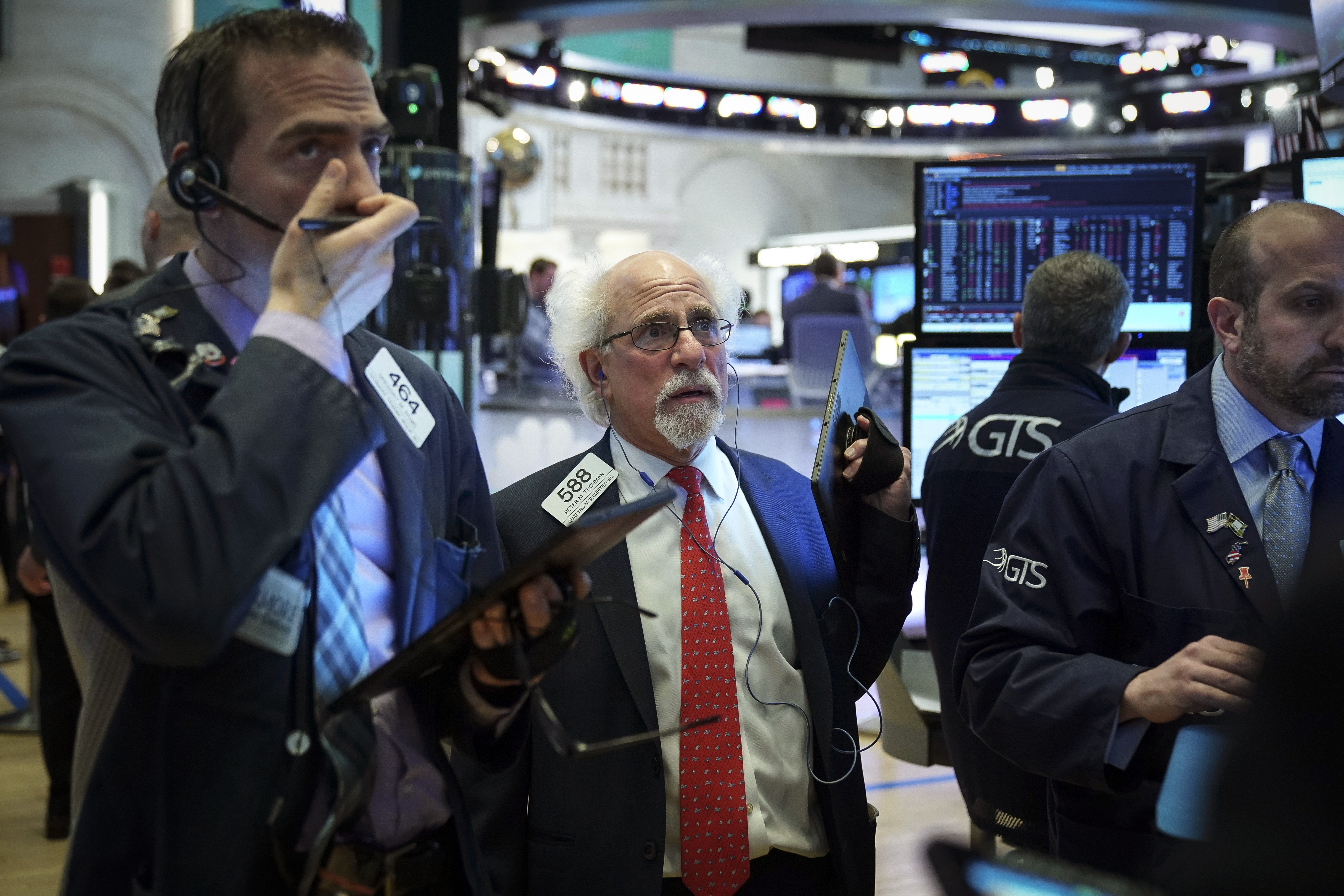
NEW YORK, NY - MAY 6: Traders and financial professionals work at the opening bell on the floor of the New York Stock Exchange (NYSE), May 6, 2019 in New York City. The Dow Jones Industrial Average dropped over 360 points at the open on Monday morning after U.S. President Donald Trump said that the U.S. will raise tariffs on goods imported from China. China also threatened to skip upcoming trade talks following tariff threats from President Trump.

According to Rosen, hardening U.S. approach to Chinese trade policy and the current discussion of possible “disengagement” with China are the result of U.S. recognition that China had changed course away from convergence with the liberal international economic order.  It, in fact, stems from the U.S.’s valid need to protect its economic welfare and the welfare of other market economies from the deleterious effects of China’s illiberal policies.  In the same way, he claimed, that the U.S. is not as deeply engaged with Italy as it is with Germany, and that we are not as deeply engaged with Germany as we are with Great Britain, it is not “heresy” to say that nations that do not share the same basic economic framework cannot be as engaged together—or as interoperable—as nations that do.  

But, Rosen predicted, China’s own turn away from market principles is bound to fail.  Liberal market reforms delivered double-digit growth for China since Deng Xiaoping’s Opening and Reform.  And “[u]nless everything we think we know about the relative efficiency and dynamism of free markets over politically controlled economies is wrong, the present Chinese policy turn will be, in the end, a dead-end,” Rosen remarked.  According to his prediction, therefore, we will either see a weakened China that poses less of an economic and national security threat to the U.S. or a China that eventually returns to market norms (i.e., “a reversion back to what will work.”).

In the meantime, therefore, he suggested that the American response must be “provisional,” “partial,” and “peaceful.”  American policy must be adaptable and readily reversible such that our ability to reengage to the maximum with China is carefully protected.  Secondly, it must be “partial” rather than absolute.  And, lastly, it must be “peaceful.”  When Beijing’s non-market policies fail, as it will, Rosen averred, and China re-orients itself towards economic convergence with advanced economy norms once more, we must ensure a “foundation of good will” between the U.S. and China to which China can return.

Rosen also cautioned against the U.S. abandoning its own source of national strength—i.e., its openness.  Arguing that economic protectionism has too often been confused with national security, Rosen argued that primary threats to U.S. national security now stem more from new causes like climate change, pandemics, migration pressures and access to weapons of mass destruction.  “Economic protection will do little to nothing to address those risks,” Rosen pointed out.

Rosen spoke at Shorenstein APARC as part of the China Program’s Colloquia Series “A New Cold War?: Sharp Power, Strategic Competition, and the Future of U.S.-China Relations.”  The series continues on May 3 with Ambassador Chas W. Freeman, Jr.’s seminar “On Hostile Coexistence with China.”

Hero Image
Traders and financial professionals work at the opening bell on the floor of the New York Stock Exchange (NYSE), May 6, 2019
NEW YORK, NY - MAY 6: Traders and financial professionals work at the opening bell on the floor of the New York Stock Exchange (NYSE), May 6, 2019 in New York City. The Dow Jones Industrial Average dropped over 360 points at the open on Monday morning after U.S. President Donald Trump said that the U.S. will raise tariffs on goods imported from China. China also threatened to skip upcoming trade talks following tariff threats from President Trump.
Getty Images / Drew Angerer
All News button
1
Subscribe to Foreign Policy