Foreign Policy
Authors
Kiyoteru Tsutsui
News Type
Commentary
Date
Paragraphs

This op-ed by Kiyoteru Tsutsui was originally published in The Hill.


With the specter of a cold war with China arising, allies in Asia-Pacific are increasingly important for the United States, whether in fighting pandemics, negotiating trade deals, or containing territorial disputes. Japan historically has been one of the most important partners for American interests in the region and a steadfast ally in the post-World War II era. 

For Japan, too, the U.S.-Japan security alliance has been the cornerstone of its foreign policy for decades, and the Japanese public clearly understands that. Reflecting this understanding, every new security decision in Japan, from the relocation of a U.S.-base in Okinawa to the recent cancellation of Aegis Ashore deployment, spurs intense public debates about the future of the U.S.-Japan alliance. (Continue reading the full article at The Hill.)


[Subscribe to our newsletters to get the latest commentary from APARC scholars.]

Read More

South Koreans participate in a rally to denounce Japan's new trade restrictions and Japanese Prime Minister Shinzo Abe on August 24, 2019 in Seoul, South Korea.
News

Japan and South Korea on the Brink: International Affairs and Trade Relations Experts Elucidate the Conflict between the Two U.S. Allies

Japan and South Korea on the Brink: International Affairs and Trade Relations Experts Elucidate the Conflict between the Two U.S. Allies
U.S. Navy Patrols Philippines Sea
News

Experts Discuss Future of the International Order in East Asia

Experts Discuss Future of the International Order in East Asia
Hero Image
Prime Minister Shinzō Abe of Japan and President Donald Trump of the United States walk alongside the White House in Washington D.C.
Prime Minister Shinzō Abe of Japan and President Donald Trump walk alongside the White House in Washington D.C.
Getty Images
All News button
1
Subtitle

As political tensions in the Asia-Pacific increase, Kiyoteru Tsutsui, senior fellow and Japan Program director, cautions the United States from taking long-standing economic and military allies like Japan for granted.

Authors
Callista Wells
News Type
News
Date
Paragraphs

To celebrate its May Release, the Stanford China Program hosted a virtual book launch event for Fateful Decisions: Choices That Will Shape China’s Future (Stanford University Press) on June 2nd. Joining co-authors Thomas Fingar (Shorenstein APARC Fellow, Stanford University) and Jean C. Oi (Director, Stanford China Program; William Haas Professor of Chinese Politics, Stanford University) were contributors Karen Eggleston (Senior Fellow at FSI; Director of the Asia Health Policy Program, Shorenstein APARC, Stanford University), Barry Naughton (Sokwanlok Chair of Chinese International Affairs, School of Global Policy and Strategy, UC San Diego), and Andrew Walder (Senior Fellow at FSI; Denise O'Leary and Kent Thiry Professor, Stanford University). As Fingar and Oi point out in their volume, despite China’s extraordinary growth over the past 40 years, the country’s future is uncertain. China has enjoyed optimal conditions for development since the 1980s, but new hurdles including an aging populace, the loss of comparative economic advantage, a politically entrenched elite, and a population with rising expectations will test the country’s leaders. With each focusing on a different facet of China’s challenges, the panelists gathered to share their expertise and provide the audience with a glimpse into what the future might hold for this important country.

Following an introduction from Professor Jean Oi, the program kicked off with Professor Barry Naughton of University of California, San Diego, who discussed his chapter entitled “Grand Steerage.” Professor Naughton argued that, as it plans for the future, China’s policymaking is becoming increasingly technology-focused, particularly in the realm of economic policy. Naughton further notes that China’s economy is becoming simultaneously more state-guided and more centered around technology. This decision is a gamble, though: China is investing heavily in high-tech industries, advancing massive, centrally steered projects like the Greater Bay Area initiative and the Xiong’an New District. If they are successful, says Naughton, this will indeed be an incredible success. But, if they are not, China’s losses will be major: “There’s not really a middle ground.”

After Professor Naughton was Professor Karen Eggleston, an expert on health policy in Asia. Professor Eggleston’s chapter, “Demographic and Healthcare Challenges,” deals with emerging obstacles for China’s healthcare system, including population aging and the problems that come with it, like chronic diseases and elder care. Although China’s healthcare system has improved dramatically in recent decades, it has done so unevenly, notes Eggleston: life expectancy has greatly increased, but with disparities according to income, region, and urban vs. rural status; universal healthcare is available, but the benefit level is low, effectively limiting the standard of care many can receive. The ratio of health spending to GDP is also increasing, yet it is still modest compared to high-income countries. The COVID-19 crisis has, of course, introduced even more challenges: Will China be able to distribute future vaccines equitably? Will this crisis negatively affect young people’s decisions to choose healthcare as a career? Will telemedicine, which has seen a surge under the pandemic, improve or exacerbate existing disparities? China faces a multitude of constraints and choices going forward if it hopes to meet its population’s healthcare needs.

The audience then had a chance to hear from co-editor Thomas Fingar, speaking on his chapter, “Sources and Shapers of China’s Foreign Policy.” Fingar noted three key takeaways from both his chapter and his talk: Firstly, China’s foreign policy is a fundamental part of its national policy. Secondly, the global political environment plays an important role in shaping both foreign and domestic policy which, thirdly, plays an important role in shaping foreign policy. The conditions that allowed China to flourish over the past 40 years, emphasized Fingar, are very different from those of the present. In the 1970s and 80s, China was able to take advantage of Cold War bipolarity, globalization was in its infancy, and “China was the only significant developing country willing to embark, at that time, on the export-led path of development.” In recent years, though, China’s behavior internationally has alienated other countries; there are many competitors pursuing its style of development; and its needs and aspirations have changed, requiring more raw materials and depending upon multi-national economic agreements. Fingar suggests two potential foreign policy options: China could continue with its wolf warrior diplomacy, which has “alienated essentially all China’s neighbors to some degree,” or it could return to a style more similar to that of the 1980s and 90s Reform and Opening era. It remains to be seen which style will win out.

Finally, Professor Andrew Walder concluded the program with his discussion of China’s political future at large. His chapter, “China’s National Trajectory,” follows China’s remarkable advancement in recent years and “tr[ies] to divine what a lower growth era will mean for China’s political future.” The last 40 years of rapid growth have generated support for China’s political system, more patriotism, the near eradication of democracy movements, and an elite unity not seen in the 1970s and 80s. However, low growth rates could mean a reversal for many of these trends, says Walder. While the aforementioned support for and stability of the Chinese government was maintained by ever-improving living standards and upward mobility, a low growth period (coupled with an aging population) means the government will no longer be able to rely on these trends for popular support. Rather, it will need to improve its provision of public services to address present-day challenges. Regardless, argues Walder, the low growth era will undoubtedly lead to “dynamic changes underneath the façade of stability of Chinese politics….”

For more insights on the modern obstacles China faces and what they mean for the country’s future, check out Fateful Decisions: Choices That Will Shape China's Future, available for purchase now.

Read More

Elderly Chinese citizens sit together on a park bench.
Q&As

Karen Eggleston Examines China’s Looming Demographic Crisis, in Fateful Decisions

Karen Eggleston Examines China’s Looming Demographic Crisis, in Fateful Decisions
Quote from Thomas Fingar and Jean Oi from, "China's Challeges: Now It Gets Much Harder"
Commentary

Now It Gets Much Harder: Thomas Fingar and Jean Oi Discuss China’s Challenges in The Washington Quarterly

Now It Gets Much Harder: Thomas Fingar and Jean Oi Discuss China’s Challenges in The Washington Quarterly
Hero Image
Fateful Decisions book cover
All News button
1
1
Oksenberg-Rohlen Fellow
scot_marciel.jpg

Scot Marciel was the Oksenberg-Rohlen Fellow at the Freeman Spogli Institute for International Studies, affiliated with the Walter H. Shorenstein Asia-Pacific Research Center from 2022-2024. Previously, he was a 2020-22 Visiting Scholar and Visiting Practitioner Fellow on Southeast Asia at APARC.  A retired diplomat, Mr. Marciel served as U.S. Ambassador to Myanmar from March 2016 through May 2020, leading a mission of 500 employees during the difficult Rohingya crisis and a challenging time for both Myanmar’s democratic transition and the United States-Myanmar relationship.  Prior to serving in Myanmar, Ambassador Marciel served as Principal Deputy Assistant Secretary for East Asia and the Pacific at the State Department, where he oversaw U.S. relations with Southeast Asia.

From 2010 to 2013, Scot Marciel served as U.S. Ambassador to Indonesia, the world’s fourth most populous country.  He led a mission of some 1000 employees, expanding business ties, launching a new U.S.-Indonesia partnership, and rebuilding U.S.-Indonesian military-military relations.  Prior to that, he served concurrently as the first U.S. Ambassador for ASEAN Affairs and Deputy Assistant Secretary of State for Southeast Asia from 2007 to 2010.

Mr. Marciel is a career diplomat with 35 years of experience in Asia and around the world.  In addition to the assignments noted above, he has served at U.S. missions in Turkey, Hong Kong, Vietnam, Brazil and the Philippines.  At the State Department in Washington, he served as Director of the Office of Maritime Southeast Asia, Director of the Office of Mainland Southeast Asia, and Director of the Office of Southern European Affairs.  He also was Deputy Director of the Office of Monetary Affairs in the Bureau of Economic and Business Affairs.

Mr. Marciel earned an MA from the Fletcher School of Law and Diplomacy, and a BA in International Relations from the University of California at Davis.  He was born and raised in Fremont, California, and is married with two children.

Date Label

This twelfth annual Koret Workshop had originally been scheduled to be held on March 13, 2020, but had to be cancelled due to COVID-19 pandemic. Now the workshop participants are able to convene virtually to discuss North Korea human rights issues in relation to policy toward North Korea. The conference will cover the following topics:

Day 1: The Role of U.N. in Generating Changes in North Korea

Day 2: Freedom of Information — How Access to Information is Changing North Korea

Day 3: Human Rights and Denuclearization of North Korea — Help or Hinderance?

Read related article here.

The annual Koret Workshop is made possible through the generous support of the Koret Foundation.


Via Zoom

Conferences
News Type
Commentary
Date
Paragraphs

Stretching from China in the north to Indonesia in the south, the South China Sea – the third largest of the world’s 100-plus seas – possesses rich oil and natural gas reserves, constitutes a thriving fishing zone, and transits a vast amount of trade. It is also the center of disputes over issues of territorial sovereignty and maritime rights and interests involving China, Brunei, Indonesia, Malaysia, the Philippines, Taiwan, and Vietnam.

No Chinese behavior in Southeast Asia illustrates the “binary of strength over weakness more clearly than Beijing’s unilateral, adamant, and expansive assertion of full sovereignty over or proprietary rights in virtually all of the waters and land features in the South China Sea,” writes APARC’s Southeast Asia Program Director Donald K. Emmerson in his upcoming volume The Deer and the Dragon: Southeast Asia and China in the 21st Century. The fallout from COVID-19 and increased military activity in the region raise the risk of conflict between China and the United States, which has a strong interest in preventing China from controlling the disputed waterway.

Shorenstein APARC · Strategy in the South China Sea | Donald K. Emmerson

Against this background, the U.S. Embassy in Kuala Lumpur, Malaysia, hosted a virtual conversation with Emmerson, titled “Strategy in the South China Sea.” Held on May 12, 2020 (May 13 in Kuala Lumpur), the discussion drew attendees from across the United States and Southeast Asia. Emmerson's analysis focuses on issues such as the tactics China has used to advance its goal in the South China Sea; how the countries of Southeast Asia are reacting to the situation and whether they are pursuing defined strategies regarding the tensions in the region; and what an ASEAN strategy in the South China Sea might look like. Listen to his presentation above or on our SoundCloud channel.

Read More

Michael McFaul, Xueguang Zhou, Karen Eggleston, Gi-Wook Shin, Don Emmerson, and Yong Suk Lee
News

FSI Hosts APARC Panel on COVID-19 Impacts in Asia

Scholars from each of APARC's programs offer insights on policy responses to COVID-19 throughout Asia.
FSI Hosts APARC Panel on COVID-19 Impacts in Asia
People queue while wearing face masks
Blogs

COVID-19 in the Philippines – at a Glance

Marjorie Pajaron, assistant professor at the University of the Philippines School of Economics, describes the unfolding of the pandemic in the country and how Filipinos have coped with the evolving situation.
COVID-19 in the Philippines – at a Glance
Ambassador Dan Kritenbrink and Donald Emmerson seated at a conference room during a group discussion
News

U.S. Ambassador to Vietnam Meets with Stanford Experts

U.S. Ambassador to Vietnam Meets with Stanford Experts
Hero Image
Fiery Cross Reef, Spratly Islands
Fiery Cross Reef, Spratly Islands.
Loco Steve via Flickr, CC BY-SA 2.0.
All News button
1
Subtitle

Donald K. Emmerson analyzes China’s tactics in the South China Sea and how the countries of Southeast Asia are reacting to the tensions in the disputed waterway.

-

This event is available through livestream only. Please register in advance for the webinar by using the link below.

REGISTRATION LINKhttps://bit.ly/2WSJxRx


As the complex and multi-layered US-China relationship has become increasingly strained with the global pandemic led by the US political leadership, Japan-China relations appears to have taken a different path. Despite continued security tensions in the East China Sea, Japan and China seem to have moved closer in crucial ways, according to some important popular opinion surveys and diplomatic cooperation. At the same time, the relationship is complex with Japanese manufacturers rushing to diversify production networks and supply chains to other parts of Asia and with security issues in the oceans surrounding China continuing. 

This panel brings together deep, balanced expertise on Japan-China relations and will examine an array of areas with a focus on moving forward constructively. Panelists will cover diplomatic, security, and public opinion dimensions as well as introducing China's advanced digital technology used for medical care, education, e-commence and the rapid recovery of Japanese companies supported by China's central and local governments.

PANELISTS

Image
tiberghien headshot

Yves Tiberghien, Professor, Political Science and Co-Director, Center for Japanese Research, University of British Columbia

Yves Tiberghien (Ph.D. Stanford University, 2002 and Harvard Academy Scholar 2006) is a Professor of Political Science, Faculty Associate in the School of Public Policy and Global Affairs, Director Emeritus of the Institute of Asian Research, Co-Director of the Center for Japanese Research, and Executive Director of the China Council at the University of British Columbia (UBC). Yves is currently a visiting professor at Tokyo University and at Sciences Po Paris.

Yves is also a Distinguished Fellow at the Asia-Pacific Foundation of Canada. He serves as the International Steering Committee Member representing Canada at Pacific Trade and Development Conference (PAFTAD). In November 2017, he was made a Chevalier de l’ordre national du mérite by the French President.

Yves' research specializes in East Asian comparative political economy, international political economy, and global economic and environmental governance, with an empirical focus on Japan, as well as China and Korea. His published books include Entrepreneurial States: Reforming Corporate Governance in France, Japan, and Korea. 2007. Cornell University Press in the Political Economy Series directed by Peter Katzenstein and Leadership in Global Institution-Building: Minerva’s Rule, edited volume, Palgrave McMillan, 2013. He is currently working on articles related to Japan’s role in the Liberal and International Order and a book, titled Up for Grabs: Disruption, Competition and the Remaking of the Global Economic Order."

Image
seguchi headshot updated

Kiyoyuki Seguchi, Research Director, Canon Institute for Global Studies
 
Kiyoyuki Seguchi is the Research Director at the Canon Institute for Global Studies. His research focuses on the Chinese economy and the U.S.-China-Japan trilateral relationship. Mr. Seguchi worked for the Bank of Japan from 1982 to 2009. During this time, he was Chief Representative of the Representative Office at BOJ in Beijing from 2006 to 2008. Mr. Seguchi was also the international visiting Fellow at RAND Corporation (Los Angeles, CA) from 2004 to 2005. Mr. Seguchi received his bachelor’s degree in economics from the University of Tokyo.

Image
Portrait of Kenji Kushida

Kenji Kushida, Research Scholar, Shorenstein APARC Japan Program (Moderator)

Kenji E. Kushida is a Japan Program Research Scholar at the Walter H. Shorenstein Asia-Pacific Research Center and an affiliated researcher at the Berkeley Roundtable on the International Economy. Kushida’s research interests are in the fields of comparative politics, political economy, and information technology. He has four streams of academic research and publication: political economy issues surrounding information technology such as Cloud Computing; institutional and governance structures of Japan’s Fukushima nuclear disaster; political strategies of foreign multinational corporations in Japan; and Japan’s political economic transformation since the 1990s. Kushida has written two general audience books in Japanese, entitled Biculturalism and the Japanese: Beyond English Linguistic Capabilities (Chuko Shinsho, 2006) and International Schools, an Introduction (Fusosha, 2008). Kushida holds a PhD in political science from the University of California, Berkeley. He received his MA in East Asian studies and BAs in economics and East Asian studies, all from Stanford University.

Virtually via Zoom.

Registration Link: https://bit.ly/2WSJxRx

Yves Tiberghien, University of British Columbia
Kiyoyuki Seguchi, Canon Institute for Global Studies
Kenji Kushida, Stanford University
Seminars
-

This is a virtual event. Please click here to register and generate a link to the talk. 
The link will be unique to you; please save it and do not share with others.


To celebrate its May release, contributors Karen Eggleston, Barry Naughton, and Andrew Walder will join editors Thomas Fingar and Jean Oi for a panel discussion of their volume Fateful Decisions: Choices That Will Shape China’s Future (Stanford University Press).  China has enjoyed an extraordinary run of rapid growth and development over the last 40 years.  Yet, as Fingar and Oi point out, China’s future is hardly set in stone.  Sustained economic growth, social welfare and stability will depend upon tough policy decisions confronting Beijing’s leaders today in what is a watershed moment.  Casting doubt on Beijing’s aversion to major reforms and its return to certain Mao-era policy tools, Oi and Fingar argue that China’s challenges are not only complex, but high-stakes – challenges that have become even more daunting in the aftermath of COVID-19.  As China battles the difficulties caused by an aging population, the loss of comparative economic advantage, a politically entrenched elite, and a population with rising expectations, today’s policy decisions will weigh heavily on its future. Topics explored in the volume include China's healthcare challenges in a slowing economy, its global ambitions and track record, economic aims and realities, the country’s mounting governance pressures, and more. 


Fateful Decisions is available for purchase here.


Fore more information on Fateful Decisions, check out these articles:

Karen Eggleston Examines China’s Looming Demographic Crisis, in Fateful Decisions

Now It Gets Much Harder: Thomas Fingar and Jean Oi Discuss China’s Challenges in The Washington Quarterly

China’s Challenges: Now It Gets Much Harder


Portrait of Karen EgglestonKaren Eggleston is a senior fellow at the Freeman Spogli Institute for International Studies (FSI) at Stanford University, director of the Stanford Asia Health Policy Program, and deputy director of the Walter H. Shorenstein Asia-Pacific Research Center at FSI. She is also a fellow with the Stanford Center for Innovation in Global Health and a faculty research fellow of the National Bureau of Economic Research (NBER). Eggleston earned her PhD in public policy from Harvard University, studied in China for two years, and was a Fulbright scholar in South Korea. Her research focuses on comparative health systems and health reform in Asia, especially China; government and market roles in the health sector; supply-side incentives; healthcare productivity; and economic aspects of demographic change.


Portrait of Thomas FingarThomas Fingar is a Shorenstein Distinguished Fellow in the Shorenstein Asia-Pacific Research Center at Stanford University. From May 2005 through December 2008, he served as the first deputy director of national intelligence for analysis and, concurrently, as chairman of the National Intelligence Council. Previous positions include assistant secretary of state for Intelligence and Research (2000-2001, 2004–2005), principal deputy assistant secretary (2001–2003), deputy assistant secretary for analysis (1994–2000), director of the Office of Analysis for East Asia and the Pacific, and chief of the China Division. Fingar is a graduate of Cornell University (AB in government and history) and Stanford University (MA and PhD, both in political science). His most recent books are Uneasy Partnerships: China’s Engagement with Japan, the Koreas, and Russia in the Era of Reform (editor) (Stanford University Press, 2017); The New Great Game: China’s Relations with South and Central Asia in the Era of Reform (editor) (Stanford University Press, 2016); and Reducing Uncertainty: Intelligence Analysis and National Security (Stanford University Press, 2011).
 

Image
Photo of Barry Naughton
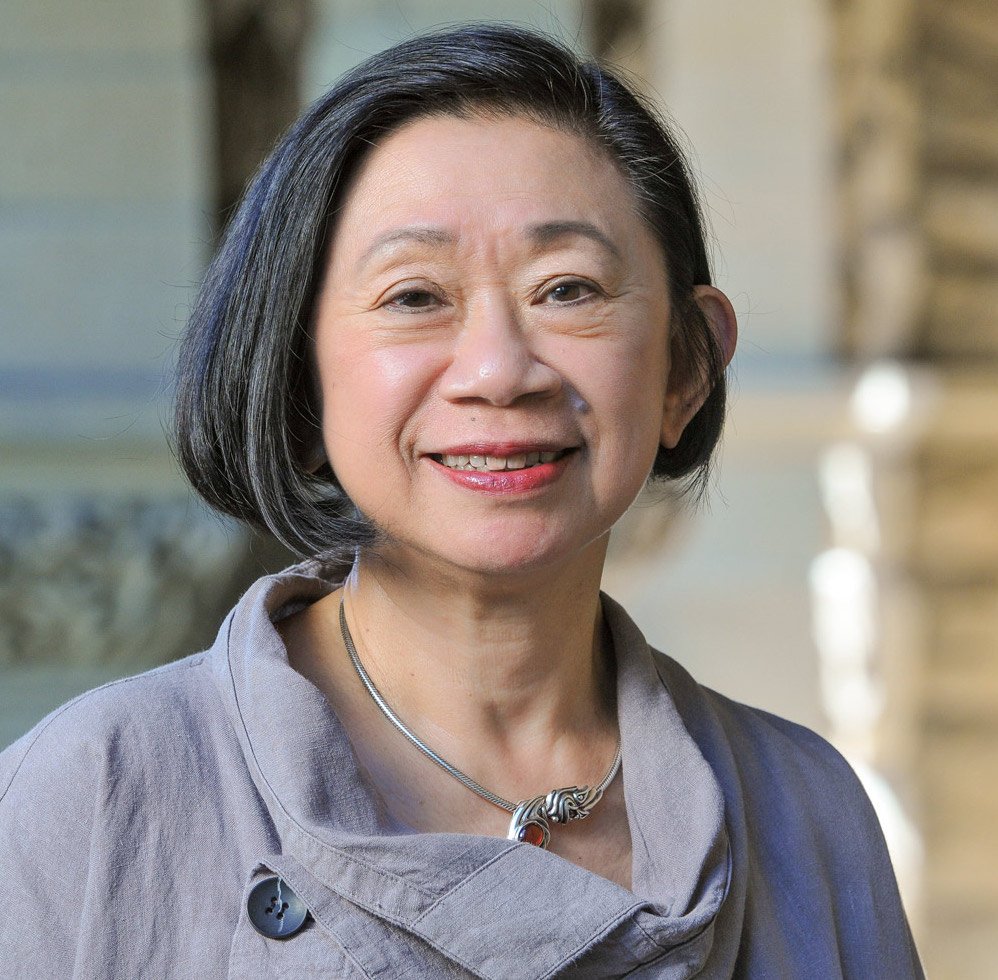
Barry Naughton is the So Kwanlok Professor at the School of Global Policy and Strategy, University of California–San Diego. Naughton’s work on the Chinese economy focuses on market transition; industry and technology; foreign trade; and political economy. His first book, Growing Out of the Plan, won the Ohira Prize in 1996, and a new edition of his popular survey and textbook, The Chinese Economy: Adaptation and Growth, appeared in 2018. Naughton did his dissertation research in China in 1982 and received his PhD in economics from Yale University.


Jean C. OiJean C. Oi is the William Haas Professor of Chinese Politics in the Department of Political Science and a senior fellow in the Freeman Spogli Institute for International Studies at Stanford University. She directs the China Program at the Walter H. Shorenstein Asia-Pacific Research Center and is the Lee Shau Kee Director of the Stanford Center at Peking University. Oi has published extensively on China’s reforms. Recent books include Zouping Revisited: Adaptive Governance in a Chinese County, coedited with Steven Goldstein (Stanford University Press, 2018), and Challenges in the Process of China’s Urbanization, coedited with Karen Eggleston and Yiming Wang (2017). Current research is on fiscal reform and local government debt, continuing SOE reforms, and the Belt and Road Initiative.


Portrait of Andrew WalderAndrew G. Walder is the Denise O’Leary and Kent Thiry Professor of Sociology in the School of Humanities and Sciences, and a senior fellow in the Freeman Spogli Institute for International Studies at Stanford University. A political sociologist, Walder has long specialized in the study of contemporary Chinese society and political economy. After receiving his PhD at the University of Michigan, he taught at Columbia, Harvard, and the Hong Kong University of Science and Technology. At Stanford he has served as chair of the Department of Sociology, director of the Asia-Pacific Research Center, and director of the Division of International, Comparative, and Area Studies in the School of Humanities and Sciences. His most recent books are Fractured Rebellion: The Beijing Red Guard Movement (2009), China under Mao: A Revolution Derailed (2015), and Agents of Disorder: Inside China’s Cultural Revolution (2019).

Via Zoom Webinar.
Register at: https://bit.ly/2WiwPvm

Karen Eggleston <br> Senior Fellow at FSI; Director of the Asia Health Policy Program, Shorenstein APARC, Stanford University <br><br>
Thomas Fingar <br> Shorenstein APARC Fellow, Stanford University <br><br>
Barry Naughton <br> Sokwanlok Chair of Chinese International Affairs, School of Global Policy and Strategy, UC San Diego <br><br>
Jean C. Oi <br> Director, Stanford China Program; William Haas Professor of Chinese Politics, Stanford University <br><br>
Andrew Walder <br> Senior Fellow at FSI; Denise O'Leary and Kent Thiry Professor, Stanford University <br><br>
Panel Discussions
Authors
Noa Ronkin
News Type
Q&As
Date
Paragraphs

U.S.-China relations had deteriorated long before the coronavirus outbreak. Over the last decade, many observers have concluded that China’s actions in the foreign policy arena have become more assertive, ambitious, and worrisome to the U.S.-led international order. APARC Fellow Thomas Fingar, however, argues that China’s foreign policy has changed far less than its rhetoric and the characterization of many commentators suggest. “I don’t think China is eager to displace the United States,” he says in our recent video Q&A.

[To receive more stories like this in your inbox sign up for our newsletters]

Fingar considers how the difficult choices facing the Chinese leadership – now exacerbated by the coronavirus pandemic – are poised to determine the future course of the country’s international behavior and what successful management of the relationship with China requires. “The requirement for them and us,” he emphasizes, “is to figure out how to transform the international order into something more sustainable, and the tragedy of the last three years is that we have surrendered much of the leadership role and a great deal of the confidence others have in the wisdom of the United State.” Watch:

These issues are the focus of Fingar’s chapter, “Sources and Shapers of China’s Foreign Policy,” in the new volume Fateful Decisions: Choices that Will Shape China’s Future, now out from Stanford University Press. Coedited by Fingar and APARC’s China Program Director Jean Oi, this volume is part of APARC’s monograph series with SUP.

Fingar argues that China’s foreign policy and international behavior are key components of Beijing’s overall objectives to maximize opportunities for economic growth and modernization. As economic growth slows and Beijing finds it increasingly difficult to meet its domestic challenges, incentives to continue to work with and within the U.S.-led international order remain compelling. In Fingar’s view, the realities of interdependence and the perceived need to maintain high rates of growth and ambitious developmental targets constrain Beijing to maintain more-or-less the same foreign policy practices it has followed since the dawn of the Reform and Opening era.

However, China’s decision to pursue its interests by working within the U.S.-led international order does not mean that it would remain a largely passive participant coerced (in Beijing’s view) to abide by rules and institutions that would restrain Beijing’s freedom of action, says Fingar. Beijing expects China to play a more influential role in shaping the global order, but it does not (yet) aspire to lead it.

This is the fourth installment in a series leading up to the publication of the volume Fateful Decisions. Explore the previous parts in the series via the links below.

Read More

BEIJING, CHINA - Workers sit near a CRH (China Railway High-speed) "bullet train" at the Beijing South Railway Station under reconstruction.
News

High-Speed Rail Holds Promise and Problems for China, Explains David M. Lampton

In a new audio interview, Lampton discusses some of the challenges, uncertainties, and decisions that loom ahead of China's Belt and Road Initiative.
High-Speed Rail Holds Promise and Problems for China, Explains David M. Lampton
Quote from Thomas Fingar and Jean Oi from, "China's Challeges: Now It Gets Much Harder"
Commentary

Now It Gets Much Harder: Thomas Fingar and Jean Oi Discuss China’s Challenges in The Washington Quarterly

Now It Gets Much Harder: Thomas Fingar and Jean Oi Discuss China’s Challenges in The Washington Quarterly
Elderly Chinese citizens sit together on a park bench.
Q&As

Karen Eggleston Examines China’s Looming Demographic Crisis, in Fateful Decisions

Karen Eggleston Examines China’s Looming Demographic Crisis, in Fateful Decisions
Hero Image
Ancient and modern buildings in Beijing.
Ancient buildings and modern skyline in Beijing.
DuKai/ Getty Images
All News button
1
Subtitle

In a video Q&A, Fingar discusses the challenges for the U.S.-China relationship and the principles that shape China’s foreign policy and international behavior.

News Type
News
Date
Paragraphs

APARC's China Program recently hosted Center Fellow Thomas Fingar for the webinar "Was America’s China Policy a Foolish Failure? The Logic and Achievements of Engagement." In this talk, Fingar examines the longtime U.S. strategy of engagement with China as well as the potential shift toward a strategy of decoupling. "Much recent commentary on U.S. relations with China claims that the policy of 'Engagement' was a foolish and failed attempt to transform the People’s Republic into an American style democracy that instead created an authoritarian rival," he says. "This narrative mocks the policies of eight U.S. administrations to justify calls for 'Decoupling' and 'Containment 2.0.'” Fingar argues that the policy of Engagement has been fruitful and that Decoupling is not only inadvisable but also unattainable. Watch:

Read More

An empty Pennsylvania Avenue in Washington, D.C. seen with the United States Capitol  in the background.
News

APARC Fellow Thomas Fingar on the U.S. Intelligence Report that Warned of a Coronavirus Pandemic

In our online conversation, Fingar discusses the 2008 National Intelligence Council report he oversaw and that urged action on coronavirus pandemic preparedness, explains the U.S. initial failed response to the COVID-19 outbreak, and considers the implications of the current crisis for U.S.-China relations.
APARC Fellow Thomas Fingar on the U.S. Intelligence Report that Warned of a Coronavirus Pandemic
Quote from Thomas Fingar and Jean Oi from, "China's Challeges: Now It Gets Much Harder"
Commentary

Now It Gets Much Harder: Thomas Fingar and Jean Oi Discuss China’s Challenges in The Washington Quarterly

Now It Gets Much Harder: Thomas Fingar and Jean Oi Discuss China’s Challenges in The Washington Quarterly
BEIJING, CHINA - Workers sit near a CRH (China Railway High-speed) "bullet train" at the Beijing South Railway Station under reconstruction.
News

High-Speed Rail Holds Promise and Problems for China, Explains David M. Lampton

In a new audio interview, Lampton discusses some of the challenges, uncertainties, and decisions that loom ahead of China's Belt and Road Initiative.
High-Speed Rail Holds Promise and Problems for China, Explains David M. Lampton
All News button
1
Subtitle

Decoupling, according to Fingar, is not only inadvisable but also unattainable. 

-

ABSTRACT

Democracy promotion has been a longstanding goal of US foreign policy in the Middle East and elsewhere. President George W. Bush championed democracy promotion as a way to counter the ideology and extremism that led to the September 11, 2001 terror attacks against the United States. After Bush’s attempts ended in abject failure, President Barack Obama sought to repair relations with the Muslim world but also withdraw the US footprint in the Middle East. But Obama was forced to take a far more hands-on approach with the outbreak of the 2010-2011 uprisings known as the Arab Spring. President Donald Trump, who has displayed an almost allergic aversion to Obama’s policies, has openly embraced the region’s autocrats with little regard for their abuse of human rights or absence of attention to political or economic freedom. How the United States approaches the region matters – both for aspiring democrats and for those who wish to silence them. Despite the rise of Russia and China, the United States remains the sole superpower, with the loudest voice on the world stage. Thus, the shift from democracy promoter – albeit reluctantly at times – to authoritarian enabler has made the task of democratic political reform far more challenging for people across the Middle East. This discussion will examine the recent democracy promotion efforts of the United States, with a focus on the Obama and Trump years.

SPEAKER BIO

Image
yerkes color large 2017
Sarah Yerkes is a fellow in the Carnegie Endowment for International Peace’s Middle East Program, where her research focuses on Tunisia’s political, economic, and security developments as well as state-society relations in the Middle East and North Africa.  She has been a visiting fellow at the Brookings Institution and a Council on Foreign Relations international affairs fellow and has taught in the Security Studies Program at Georgetown University and at the Elliott School of International Affairs at the George Washington University. Yerkes is a former member of the State Department’s policy planning staff, where she focused on North Africa. Previously, she was a foreign affairs officer in the State’s Department’s Office of Israel and Palestinian affairs. Yerkes also served as a geopolitical research analyst for the U.S. military’s Joint Staff Strategic Plans and Policy Directorate (J5) at the Pentagon, advising the Joint Staff leadership on foreign policy and national security issues.

Online, via Zoom: REGISTER

Sarah Yerkes Carnegie Endowment for International Peace
Seminars
Subscribe to Foreign Policy