Institutions and Organizations
-

This is a virtual event. Please click here to register and generate a link to the talk. 
The link will be unique to you; please save it and do not share with others.

Since the death of Mao Zedong in 1976, the Communist Party of China (CCP) has been vexed by a simple question: What is it fighting for? As the country began to adopt market reforms in the 1980s and 1990s, CCP theorists were forced into contortions providing ideological justifications for policies that appeared overtly capitalist. Deng Xiaoping’s concept of “Socialism with Chinese characteristics” came to be seen as a theoretical fig leaf rather than a description of an egalitarian economic system, and by the 2000s, a consensus emerged that the CCP had completely abandoned any pretense of pursuing the Marxist vision it purported to hold. With the rise of Xi Jinping, however, the Party talks with renewed vigor about Marxism-Leninism and the goal of achieving actual, existing socialism. Has the CCP re-discovered communism?  In this talk, CSIS Freeman Chair in China Studies Jude Blanchette will discuss the abandoned and existing legacies of Mao Zedong, Marxism-Leninism, and the CCP’s vision of socialism.
 

Image
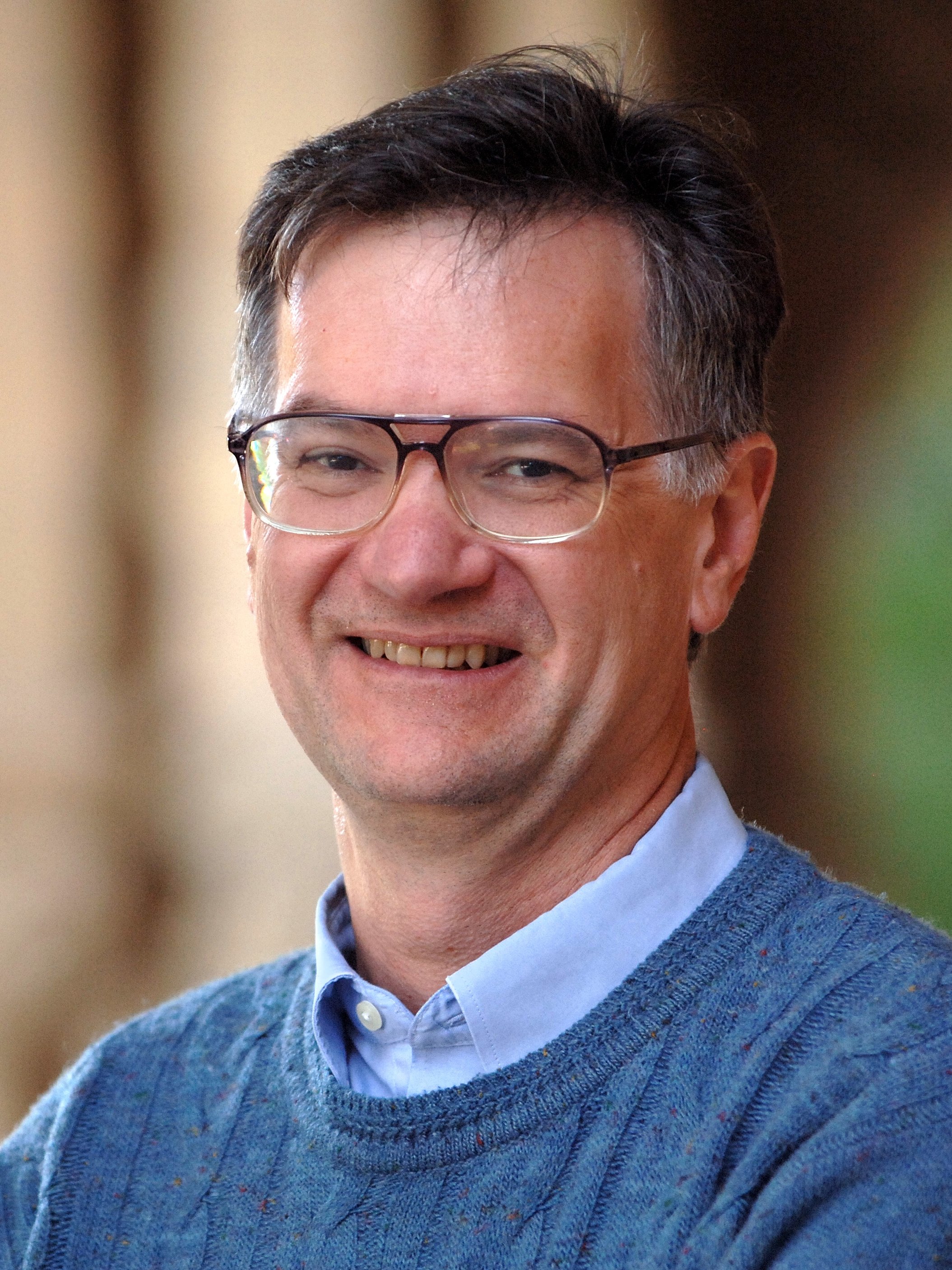
Portrait of Jude Blanchette
Jude Blanchette holds the Freeman Chair in China Studies at the Center for Strategic and International Studies (CSIS).  Previously, he was engagement director at The Conference Board’s China Center for Economics and Business in Beijing, where he researched China’s political environment with a focus on the workings of the Communist Party of China and its impact on foreign companies and investors.  Prior to working at The Conference Board, Blanchette was the assistant director of the 21st Century China Center at the University of California, San Diego.  Blanchette has written for a range of publications, including Foreign Affairs and Foreign Policy, and his Chinese translations have appeared in the Wall Street Journal and the Financial Times. His book, China’s New Red Guards: The Return of Radicalism and the Rebirth of Mao Zedong, was published by Oxford University Press in 2019.


Image
American and Chinese flags
This event is part of the 2021 Winter/Spring Colloquia series, Biden’s America, Xi’s China: What’s Now & What’s Next?, sponsored by APARC's China Program.


Via Zoom Webinar. Register at: https://bit.ly/35KfpgE

Jude Blanchette Freeman Chair in China Studies, Center for Strategic and International Studies
Seminars
-

This is a virtual event. Please click here to register and generate a link to the talk. 
The link will be unique to you; please save it and do not share with others.

As US-China competition intensifies, experts debate the degree to which the current strategic environment resembles that of the Cold War. Those that argue against the analogy often highlight how China is deeply integrated into the US-led world order. They also point out that, while tense, US-China relations have not turned overtly adversarial. But there is another, less optimistic reason the comparison is unhelpful: deterring and defeating Chinese aggression is harder now than it was against the Soviet Union. In this talk, Dr. Mastro analyzes how technology, geography, relative resources and the alliance system complicate U.S. efforts to enhance the credibility of its deterrence posture and, in a crisis, form any sort of coalition.


Photo of Oriana MastroOriana Skylar Mastro is a Center Fellow at Stanford University’s Freeman Spogli Institute for International Studies (FSI). Within FSI, she works primarily in the Shorenstein Asia-Pacific Research Center (APARC) and the Center for International Security and Cooperation (CISAC) as well. She is also a fellow in Foreign and Defense Policy Studies at the American Enterprise Institute and an inaugural Wilson Center China Fellow.

Mastro is an international security expert with a focus on Chinese military and security policy issues, Asia-Pacific security issues, war termination, and coercive diplomacy. Her research addresses critical questions at the intersection of interstate conflict, great power relations, and the challenge of rising powers. She has published widely, including in Foreign Affairs, International Security, International Studies Review, Journal of Strategic Studies, The Washington Quarterly, The National Interest, Survival, and Asian Security, and is the author of The Costs of Conversation: Obstacles to Peace Talks in Wartime (Cornell University Press, 2019).

She also continues to serve in the United States Air Force Reserve, for which she works as a Strategic Planner at INDOPACOM. Prior to her appointment at Stanford in August 2020, Mastro was an assistant professor of security studies at the Edmund A. Walsh School of Foreign Service at Georgetown University. She holds a B.A. in East Asian Studies from Stanford University and an M.A. and Ph.D. in Politics from Princeton University.


Image
American and Chinese flags
This event is part of the 2021 Winter/Spring Colloquia series, Biden’s America, Xi’s China: What’s Now & What’s Next?, sponsored by APARC's China Program.


Via Zoom Webinar. Register at: bit.ly/2MYJAdw

Oriana Skylar Mastro Center Fellow at the Freeman Spogli Institute for International Studies
Seminars
-

Webinar recording: https://youtu.be/8oDHKdyhZO0


In recognition of Human Rights Day on December 10, SPICE is honored to feature Dr. Kiyoteru Tsutsui, Professor of Sociology at Stanford University. Tsutsui’s research and scholarship on the globalization of human rights and its impact on local policy and politics—particularly with regards to minority groups in Japan—has helped to shape student awareness and understanding of the multitude of issues surrounding the protection of human rights.

In this webinar, Tsutsui will address the following:

  • How did “human rights” emerge as a universal norm and become institutionalized into various international treaties, organs, and instruments?
  • What impact have all the international institutions had on actual local human rights practices?
  • How do the case studies of the three most salient minority groups in Japan—the Ainu, Koreans, and Burakumin—help us to understand the transformative effect of global human rights ideas and institutions on minority activists?

Tsutsui’s in-depth historical comparative analysis in his book, Rights Make Might: Global Human Rights and Minority Social Movements in Japan, offers rare windows into local, micro-level impact of global human rights and contributes to our understanding of international norms and institutions, social movements, human rights, ethnoracial politics, and Japanese society.

This webinar is a joint collaboration between the Japan Program at the Shorenstein Asia-Pacific Research Center, Center for East Asian Studies, and SPICE at Stanford University.


Featured Speaker:

Kiyoteru Tsutsui, PhD 

Image
Portrait of Kiyoteru Tsutsui
Kiyoteru Tsutsui is the Henri H. and Tomoye Takahashi Professor and Senior Fellow in Japanese Studies at Shorenstein APARC, the Director of the Japan Program at APARC, a Senior Fellow of the Freeman Spogli Institute for International Studies, and Professor of Sociology at Stanford University. Prior to his appointment at Stanford in July 2020, Tsutsui was Professor of Sociology, Director of the Center for Japanese Studies, and Director of the Donia Human Rights Center at the University of Michigan, Ann Arbor. Tsutsui’s research interests lie in political/comparative sociology, social movements, globalization, human rights, and Japanese society. More specifically, he has conducted (1) cross-national quantitative analyses on how human rights ideas and instruments have expanded globally and impacted local politics and (2) qualitative case studies of the impact of global human rights on Japanese politics. 

His research on the globalization of human rights and its impact on local politics has appeared in numerous academic publications and social science journals. His recent book publications include Rights Make Might: Global Human Rights and Minority Social Movements in Japan (Oxford University Press 2018), and the co-edited volume Corporate Social Responsibility in a Globalizing World (with Alwyn Lim, Cambridge University Press 2015). He has been a recipient of the National Endowment for the Humanities Fellowship, National Science Foundation grants, and the SSRC/CGP Abe Fellowship, among numerous other grants and awards. Tsutsui received his bachelor’s and master’s degrees from Kyoto University and earned an additional master’s degree and PhD from Stanford’s sociology department in 2002.


Via Zoom Webinar. Registration Link: https://bit.ly/3mMf8Aj.

Kiyoteru Tsutsui, PhD Stanford University
Workshops
Authors
Donald K. Emmerson
News Type
Commentary
Date
Paragraphs

This op-ed by Donald K. Emmerson originally appeared in The Diplomat.


On November 20, 8,300 people in 83 countries attended a virtual Global Town Hall to watch and hear 66 speakers in multiple countries discuss “Rebuilding from the Covid-19 World.” Organized in Jakarta by the Foreign Policy Community of Indonesia (FPCI), the event ran 15 consecutive hours.

Few would choose virtual diplomacy over the in-person kind, other things being equal. When speakers are confined to flat boxes on small screens watched by strangers, the disincentives to candor and creativity are too high—not to mention the necessarily disadvantageous clashing of time zones. Gone are the clues and nuances of physical proximity, the creative chats in coffee breaks, the security from digitally prying eyes and ears afforded by a conversational stroll outdoors. But the technology of virtual discourse is here to stay, at least until such time as direct brain-to-brain or bot-to-bot communication is innovated and programmed on a planetary scale.

[Subscribe to APARC's newsletters to never miss an update from our scholars.]

Viewed in this cautionary light, the November town hall was distinctive and promising. It was organized not in the world of industrialized democracies where the ubiquity of electronic gatherings has already prompted webinar fatigue.  Nor was it sponsored by the United Front Department of the Communist Party of China or by Russia’s Internet Research Agency to propagandize for Beijing or Moscow. Indonesia’s virtual Global Town Hall was the brainchild of Dr. Dino Patti Djalal, a public figure well known in and outside his country for having founded and led the FPCI. (Although I know him, I played no role in the event or its preparation.)

The Community’s mission is to encourage “healthy internationalism” in Indonesia; “resist xenophobia”; “bring foreign policy to the grassroots”; and serve as “a dynamic meeting point” where Indonesians can interact on foreign affairs with each other and with foreigners “as equals.”

The Global Town Hall lived up to these promises in the size of its audience, the length and scope of its program, and the diversity of its many panels and speakers. Topics discussed during the marathon ranged from narrow to vast—from vaccines against Covid-19 to broad concepts and challenges such as the Indo-Pacific and climate change; development and democracy; nationalism and populism; emerging leaders and world order.

The conference was designed to call for new beginnings in a post-pandemic world.  One session debated the need for a “great social reset.” Another considered the contours of a no less urgent “geo-political reset.”  A third looked for “the light at the end of [a] tunnel” of global contagion and conflict, while a fourth pictured “the worst economic recession of our time” as “the edge of a cliff.” Just as Djalal and his team had intended, the sense of a global turning point calling for creative responses was palpable throughout.

Soft power is perishable. Goodwill can be transient. But the pop-up Global Town Hall delivered an encouraging reminder: America is welcome.
Donald K. Emmerson
Southeast Asia Prograom Director

The pandemic is not only planet-wide.  It is an all-of-society problem that cannot be reduced to adjustments in foreign policy. Accordingly, the town hall’s speakers were not only from different countries but from different walks of life as well.  Impressively, they included, alongside the foreign ministers of Australia, China, the European Union, India, Indonesia, Russia, and South Africa, influencers and analysts from think tanks, international organizations, and universities around the world.

The absence of someone from the Trump administration did not create a vacuum filled by China. On the contrary, the five speakers from the PRC were outnumbered three-to-one by the 15 Americans who spoke.  Yet the program was not stacked against Beijing.  Brainstorming in public is not China’s forte. In any conference that invites originality, creativity, and diversity, China is structurally disadvantaged by its authoritarian system, which limits what people are willing to say. Why invite speakers who are limited to thinking and speaking inside the box traced by a one-party line?

Only one Chinese think tank was among the town hall’s 44 sponsors and partners—the China Institute of International Studies (CIIS), an adjunct of China’s foreign ministry. Beijing actively promotes Chinese centers of research and opinion as no less deserving of praise and influence than their counterparts in democratic countries. But that campaign for global legitimacy is not helped by the oxymoronic status of free thinking and speaking in an unfree society.

Barack Obama greets attendants at the Young Southeast Asian Leaders Initiave (YSEALI) Town Hall event at Taylor's University Lakeside Campus on November 22, 2015.
Barack Obama greets attendants at the Young Southeast Asian Leaders Initiave (YSEALI) Town Hall event at Taylor's University Lakeside Campus on November 22, 2015. | Flikr, United States Embassy Kuala Lumpur

A case in point is the Pangoal Institution, an ostensibly non-governmental think tank in Beijing. On its website, it upholds “objectiveness, openness, inclusiveness,”  and “innovation.” Yet in 2018, its president warned China’s think tanks to shun “the Western model” of what a think tank should be; eschew “so-called ‘independence’”; and adhere instead “to the leadership of the [Chinese Communist Party] and socialism with Chinese characteristics.” The risk of not channeling the groupthink required by the CPC was implied, as was the need to think “Xi Jinping Thought,” a guideline added to the CPC’s constitution in 2017.

China’s handicap in free speech and candor was also implicitly displayed at the very end of the conference, in its 12th and final panel. Harvard’s Joseph Nye and a balanced set of Washington-based analysts freely and critically discussed a range of sensitive issues in foreign and domestic policy including the jeopardized transition to a Joe Biden presidency. The event was coordinated with the Center for Strategic and International Studies, one of three American think tanks chosen by FPCI to partner in holding the town hall.

[For more news from the Southeast Asia Program, be sure to sign up for updates.]

Even more telling than the remarks the Americans made at that final panel, however, was its title, chosen by Djalal and the FPCI, which amounted to a collective sigh of relief after Donald Trump: “Welcome Back, America!”  The welcome suggested that the challenge of “Rebuilding from the Covid-19 World” posed by the Global Town Hall could not be met without the United States fully on board, as if, once on board, Joe Biden would do the right thing.

In November 2019, by a two-to-one margin, elite respondents in Southeast Asia named China over the U.S. as the outside power with the most “political and strategic influence” in their region. But of those who picked China, merely 15 percent welcomed Chinese influence, a fraction of the 53 percent of U.S.-choosers who welcomed American influence.

Soft power is perishable. Goodwill can be transient. But the pop-up Global Town Hall put together so creatively by Djalal and his colleagues in Indonesia, apart from its value as an experiment in worldwide policy discourse, delivered an encouraging reminder: America is welcome. The anti-multilateral jingoism of Donald Trump has failed to destroy the willingness of Djalal, his colleagues, and policy influentials elsewhere in Southeast Asia to work with a United States that can once again, openly and self-critically, interact with others to achieve common goals.

Read More

President-elect Joseph Biden addresses a campaign crowd
Commentary

Biden in Asia: America Together?

Southeast Asia Program Director Donald K. Emmerson considers how the incoming Biden administration's "internationalization" agenda may affect U.S.-Asia relations and partnerships with the global community.
Biden in Asia: America Together?
Leaders from the ASEAN league gather onstage at the 33rd ASEAN Summit in 2018 in Singapore.
Commentary

Southeast Asia's Approach to China and the Future of the Region

In an interview with The Diplomat, Donald Emmerson discusses how factors like the South China Sea, U.S.-China competition, and how COVID-19 are affecting relations between Southeast Asia, China, and the United States.
Southeast Asia's Approach to China and the Future of the Region
Hero Image
Barack Obama addresses a crowd of young leaders from ASEAN nations.
Barack Obama hosts the Young Southeast Asian Leaders Initiave (YSEALI) Town Hall event at Taylor's University Lakeside Campus on November 22, 2015
Flikr, United States Embassy Kuala Lumpur
All News button
1
Subtitle

Despite the reversals of the Trump era, a flurry of online diplomacy served as a reminder that the U.S. is welcome in Southeast Asia writes Donald K. Emmerson in The Diplomat.

Authors
Callista Wells
News Type
News
Date
Paragraphs

The China Program at Shorenstein APARC had the pleasure of hosting Professor Min Ye of Boston University’s Pardee School of Global Studies on October 14, 2020. Her program, moderated by China Program Director Jean Oi, focused on the much-discussed but poorly-understood Belt and Road Initiative (BRI), announced in 2013 by President Xi Jinping. While it is not widely known exactly what the BRI is or what Beijing hopes it will accomplish, it has been described as something of a modern silk road, connecting China to dozens of other countries through trade and extensive infrastructure projects. Based on research conducted for her recently published book, The Belt Road and Beyond: State-Mobilized Globalization in China: 1998-2018, Professor Ye enlightened the audience on a surprisingly critical element of this global program: the domestic component.

While Ye began her research with the assumption that many hold about the BRI—that it is primarily a global, internationally-focused initiative—as she continued her research, she found that many, if not most, BRI projects are either entirely domestic or have strong ties to domestic programs. To this end, she posed three questions during her program: Why did Chinese leadership launch the BRI in 2013? How did the Chinese state and businesses implement the BRI? and, What are the internal and external outcomes of the BRI?

To answer these questions, Ye explained the theoretical frameworks she used to understand both the BRI and China's "state-mobilized globalization." Firstly, Ye's "Chinese-State Framework" breaks the Chinese governmental system into three parts: Party Leadership, State Bureaucracy, and Subnational Actors. Each of these elements affect the others, as well as policy surrounding the BRI. However, this division also creates fragmentation in authority and ideology. Secondly, her “State-Mobilized Globalization” framework explains the process surrounding Chinese national strategy. Ye posits that national strategies are generally prompted by crises faced at lower levels of government, particularly when a lack of efficiency or communication is causing “state paralysis.” Once the strategy is announced in order to coordinate efforts and solve the crisis, it enters a feedback loop in which plans are adjusted and changed according to ground-level conditions. These frameworks informed the empirical studies used to answer Ye’s research questions.

The drivers of the BRI, argues Ye, were threefold: strategic, diplomatic, and economic. It was believed by interested parties within China that such an international initiative could ease tensions related to the United States and maritime Asia, as well as generally improve diplomatic relations for the country. China’s industries were also facing problems related to overcapacity, and economic and financial groups wished to use their excess capital to invest abroad. Actors from several different levels in China, including national agencies, local governments, and private entrepreneurs, were involved in executing BRI projects intended to alleviate these tensions. Different cities saw different sides of this implementation: Chongqing, one of China’s largest cities, is heavily dominated by state capital, with its main BRI actors being State-Owned Enterprises (SOEs). Wenzhou, a port city in Zhejiang province, is by contrast dominated by private entrepreneurs.

With diverse implementation comes diverse outcomes. Ye argues that some BRI projects have been helpful in reforming cities’ structural economy, while others have helped upgrade industry. The BRI has managed to alleviate some of the tensions listed above, but at the same time, it has created its own problems. While there has been a massive internal mobilization effort for BRI projects, there exists a disconnect between the domestic situation and demands for transparency from outside actors.

Ye concluded her talk by tying her research to current developments related to COVID-19. While one might imagine that a global pandemic would be a significant inhibitor to an international trade and infrastructure project, Ye finds just the opposite. Because the BRI is, in fact, quite domestically focused, many BRI projects are continuing at a rapid pace, albeit with digital adjustments. Some projects, such as the New Infrastructure Plan, were actually fast-tracked in the wake of the pandemic outbreak. Ye predicts that as COVID-19 restrictions ease and the world returns to “normal,” these domestic and digital elements will be combined with the BRI’s original projects.

An audio recording of this program is available at the link below, and a video recording is available upon request. Please contact Callista Wells, China Program Coordinator at cvwells@stanford.edu with any inquiries.

Read More

Photograph of the UN building in Geneva, Switzerland
News

Rebuilding International Institutions Will be Tough but Necessary, Say Stanford Experts Thomas Fingar and Stephen Stedman

Fingar and Stedman spoke as part of the APARC program “Rebuilding International Institutions,” which examined the future of international institutions such as the United Nations (UN), World Trade Organization (WTO), and World Health Organization (WHO) in our evolving global political landscape.
Rebuilding International Institutions Will be Tough but Necessary, Say Stanford Experts Thomas Fingar and Stephen Stedman
Cover of the book Fateful Decisions: Choices That Will Shape China's Future
News

Thomas Fingar and Jean Oi Analyze the Choices and Challenges Facing China’s Leaders

Fingar and Oi joined the National Committee on U.S.-China Relations to discuss their edited volume, ‘Fateful Decisions: Choices that Will Shape China’s Future.’
Thomas Fingar and Jean Oi Analyze the Choices and Challenges Facing China’s Leaders
Hero Image
Min Ye speaking
All News button
1

Department of Political Science
Stanford University
Encina Hall West, Room 307
Stanford, CA 94305-6044

(650) 725-7987
0
CDDRL Affiliated Faculty
Associate Professor, Political Science
adam_bonica.jpg

Adam Bonica is an Associate Professor of Political Science. His research is at the intersection of data science and politics, with interests in money in politics, campaigns and elections, the courts, and political methodology. His research has been published in journals such as the American Journal of Political Science, Political Analysis, Journal of Economic Perspectives, Journal of Law, Economics, and Organization, and JAMA Internal Medicine. His book, The Judicial Tug of War: How Lawyers, Politicians, and Ideological Incentives Shape the American Judiciary (with Maya Sen), examines the politicization of the American judiciary. 

CV
Date Label
Authors
News Type
News
Date
Paragraphs

On September 29, the APARC China Program hosted Thomas Fingar and Stephen Stedman for the program “Rebuilding International Institutions.” The program, which was moderated by China Program Director Jean Oi, examined the future of international institutions such as the United Nations (UN), World Trade Organization (WTO), and World Health Organization (WHO) in our evolving global political landscape. While Fingar and Stedman acknowledged that such institutions facilitated attainment of unprecedented peace and prosperity after WWII, they also asked difficult questions: Are these institutions still adequate? And if not, how will we change them?

Shorenstein APARC Fellow Thomas Fingar kicked off the session by asking whether or not US-China tensions would impede cooperation on major global challenges, or if those challenges were so serious as to render such rivalries immaterial. Perhaps the most obvious example of such a crisis is the current COVID-19 pandemic. The efforts to curb the virus’ spread not only by individual countries, but also by international organizations like the WHO, have proven largely inadequate. According to Fingar, our existing institutions need to be reformed or supplemented to deal with these types of threats. However, such an overhaul of our international systems will be difficult, he says.

How, then, will we go about such a massive project? Stephen Stedman, Deputy Director at Stanford’s Center on Democracy, Development, and the Rule of Law (CDDRL), responded by explaining that the current failure of international cooperation makes such undertakings tough. Globalization has been a double-edged sword: On one hand, more contact, perhaps inherently, leads to increased tension. The resurgence of traditional notions of sovereignty in 2010, kickstarted by the opposition of countries like Russia and China to what was seen as UN overreaching, has led to a reduction of international cooperation overall. On the other hand, Fingar posits that our interconnectedness may force us toward cooperation despite rivalries as we face more and more transnational threats. International institutions create rules to organize and manage our many interconnected relationships so that we can deal with our problems effectively and reduce friction.

Stedman also pointed to the upcoming US elections and the major impact their outcome will have on how these problems are addressed—or not. In the last four year, the United States has pulled back significantly from international institutions and agreements, leaving a gap that China has started to fill. Furthermore, despite the US’s retreat from international responsibility, the country still remains a critical actor in global initiatives. China’s embrace of a global leadership role is not inherently negative, but its future relationship with the US will need to be “managed in a way that you get greater cooperation and not just paralysis.” Stedman says that it is likely that progress will need to be made on a bilateral front in order to have productive conversations about international issues with China.

Concluding on an optimistic note, Fingar voiced his hope that the current tensions and negative perceptions between rivals might ultimately “be mitigated by success in dealing with a common problem,” because “experience does shape perceptions.”

A video recording of this program is available upon request. Please contact Callista Wells, China Program Coordinator at cvwells@stanford.edu with any inquiries.

Read More

View of building roof in the Forbidden City complex and the Beijing skyline in the background
News

New Fellowship on China Policy Seeks to Strengthen U.S.-China Relations

Stanford University’s Shorenstein Asia-Pacific Center invites applications for the inaugural 2021-22 China Policy Fellowship from experts with research experience on issues vital to the U.S. China policy agenda and influence in the policymaking process.
New Fellowship on China Policy Seeks to Strengthen U.S.-China Relations
Cover of the book Fateful Decisions: Choices That Will Shape China's Future
News

Thomas Fingar and Jean Oi Analyze the Choices and Challenges Facing China’s Leaders

Fingar and Oi joined the National Committee on U.S.-China Relations to discuss their edited volume, ‘Fateful Decisions: Choices that Will Shape China’s Future.’
Thomas Fingar and Jean Oi Analyze the Choices and Challenges Facing China’s Leaders
Hero Image
Photograph of the UN building in Geneva, Switzerland Image by Mat Reding on Unsplash
All News button
1
Subtitle

Fingar and Stedman spoke as part of the APARC program “Rebuilding International Institutions,” which examined the future of international institutions such as the United Nations (UN), World Trade Organization (WTO), and World Health Organization (WHO) in our evolving global political landscape.

Date Label
Authors
Ryan A. Musto
News Type
Commentary
Date
Paragraphs

Abstract: This paper examines the U.S. approach to the idea of arming the United Nations with nuclear weapons in the earliest decades of the Cold War. The main protagonist is Harold Stassen, who in 1945 publicly proposed a nuclear-armed UN air force as a way to control the bomb, stop proliferation, and strengthen the UN. The Truman Administration rejected the idea because of the questions it raised about the use of atomic weapons and the capabilities of the UN, as well as the threat it posed to the U.S. atomic monopoly. But the idea reemerged in the Eisenhower Administration. U.S. Ambassador to the UN Henry Cabot Lodge, Jr. and Secretary of State John Foster Dulles sought to provide the UN with agency in nuclear decision-making, a pitch that inspired Stassen to revisit his earlier enthusiasm for a nuclear-armed UN. Stassen again touted its deterrent effects, but, unlike before, looked to use the proposal to consolidate an unequal nuclear order. After the Eisenhower Administration rebuffed Stassen’s “Atoms for Police” proposal, the idea transitioned to plans for general and complete disarmament and became a tenuous feature of an initiative put forth by the Kennedy Administration. Overall, the idea spoke to the struggle of the United States to achieve progress in disarmament while it clung to its nuclear arsenal. To highlight its core principles, this paper concludes with a brief comparison to the UN’s 2017 Treaty on the Prohibition of Nuclear Weapons.  

Read the rest at  The Wilson Center

Hero Image
man smiling
All News button
1
Subtitle

In commemoration of the UN’s 75th anniversary, Ryan Musto unveils the forgotten history of the dream to arm the UN with nuclear weapons and why three U.S. presidential administrations ultimately rejected the idea in the earliest decades of the Cold War.

-

This is a virtual event. Please click here to register and generate a link to the talk. 
The link will be unique to you; please save it and do not share with others.

Most people attribute the Belt and Road Initiative (BRI) to Beijing’s imperialist ambitions. In her talk, Professor Min Ye will go beyond top-level rhetoric, however, and investigate BRI’s origins, its implementation, and its on-the-ground effects inside China. She will unpack different local governments' approaches to the BRI by discussing how subnational entities have leveraged Beijing’s grand strategy and how the implementation of projects and programs related to the BRI facilitate local economic agendas. China’s local developmentalism, which has undergirded not only the BRI but also other national-level strategies (like the Western Development Program and China Goes Global policy), has propelled the Chinese economy from a middle power in 1998 to a superpower in 2018. The talk will conclude with a discussion of COVID-19’s impact on China’s BRI as well as preliminary findings from Professor Ye’s current research into other state-mobilized development initiatives in China.
 

Image
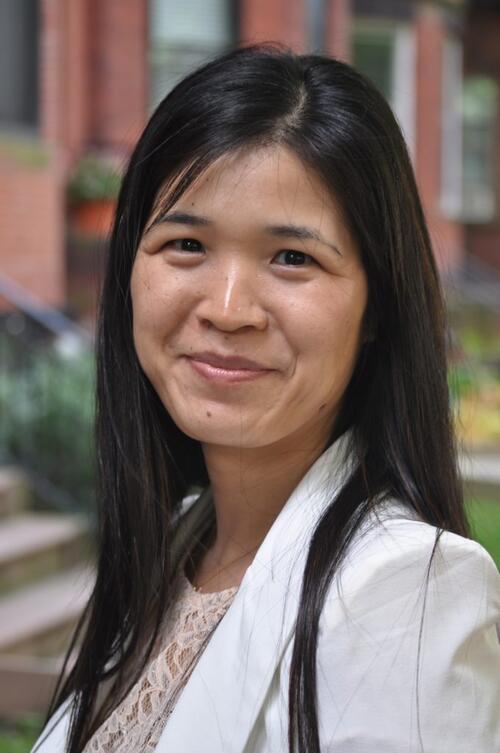
Portrait of Professor Min Ye
Min Ye is an Associate Professor at the Pardee School of Global Studies, Boston University. Her research lies in the nexus between domestic and global politics and economics and security, focusing on China, India, and regional relations. Her publications include The Belt, Road, and Beyond: State-Mobilized Globalization in China 1998 -- 2018 (Cambridge University Press, 2020), Diasporas and Foreign Direct Investment in China and India (Cambridge University Press, 2014), and The Making of Northeast Asia (with Kent Calder, Stanford University Press, 2010). She has received a Smith Richardson Foundation grant (2016-2018), the East Asia Peace, Prosperity, and Governance Fellowship (2013), Princeton-Harvard China and the World Program post-doctoral fellowship (2009-2010), and Millennium Education Scholarship in Japan (2006). In 2014-2016, Min Ye was an NCUSCR Public Intellectual Program fellow. Ye is currently the 2020 Rosenberg Scholar of East Asian Studies at Suffolk University.

Via Zoom Webinar. Register at: https://bit.ly/3kJlhM9

Min Ye Associate Professor, Pardee School of Global Studies, Boston University
Seminars
Authors
News Type
News
Date
Paragraphs

Since regaining its independence in the aftermath of the Soviet Union’s collapse nearly 30 years ago, Ukraine has sought to build links with the West. This includes ties with institutions such as NATO, with which Ukraine has established a distinctive partnership. Kyiv has been keen on deepening those ties. Its interest in becoming a NATO member has continued to grow since 2014, as it views NATO as a means to protect Ukrainian sovereignty and territorial integrity from its aggressive neighbor, Russia.

Although NATO-Ukraine cooperation has intensified, and the Alliance maintains its “open door” policy, NATO members appear reluctant to put Ukraine on a membership track. Despite the fact that Russia continues a low-intensity conflict against Ukraine—and occupies Ukrainian territory—Kyiv can expand its practical cooperation with NATO. However, in the near term, Kyiv will have to keep its expectations about membership modest.

Read the rest at Turkish Policy Quarterly

Hero Image
photo of man smiling
All News button
1
Subtitle

Since regaining its independence in the aftermath of the Soviet Union’s collapse nearly 30 years ago, Ukraine has sought to build links with the West. This includes ties with institutions such as NATO, with which Ukraine has established a distinctive partnership.

Subscribe to Institutions and Organizations