Institutions and Organizations
-

Abstract

The Trans-Pacific Partnership (TPP) is widely regarded as the economic component of the US strategy of “rebalance” to Asia. As a major trading partner of many of the founding members, Taiwan has obvious economic and security interests at stake and is therefore seeking to join the TPP in the next round. But an overlooked aspect of the TPP for Taiwan is its potential impact on sovereignty. Trade agreements provide a revealing window into the evolving conceptions of modern sovereignty. The way Taiwan’s unique form of statehood and international status is defined in trade agreements could strengthen its position under international law and contribute to its national security. This talk will consider how Taiwan was defined as a sui generis legal entity in its application to join the World Trade Organization (WTO) and as a party to the Cross-Straits Economic Cooperation Framework Agreement (ECFA), with lessons for future negotiations to join the TPP.   


Speaker Bio

Image
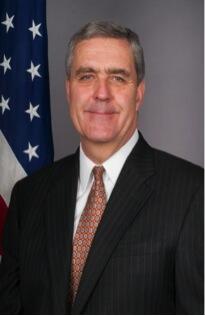
Joseph Yen-ching Chao
Joseph Yen-ching Chao is an Executive Officer in the Department of International Cooperation and Economic Affairs. A member of Taiwan’s Ministry of Foreign Affairs (MOFA) diplomatic corps since 2005, he has previously served as a German-language interpreter for the Presidential Office, an officer in the Department of Treaty and Legal Affairs, and as a deputy secretary of Taiwan’s permanent mission to the World Trade Organization in Geneva, Switzerland.  He holds an LL.M. from Ruprecht-Karls University in Heidelberg and a Doctor juris from Albert-Ludwige University, Frieberg, Germany. Dr. Chao is in residence at Stanford from May-July 2015, where his research examines Taiwan’s prospects for entry into the Trans-Pacific Partnership (TPP).


This event is hosted by the Taiwan Democracy Project.

TPP and Taiwan
Download pdf
Joseph Yen-ching Chao Visiting Fellow Ministry of Foreign Affairs, Republic of China (Taiwan)
Seminars
Authors
News Type
News
Date
Paragraphs

As the fifteenth class of CISAC Honors students prepares to receive their hard-earned honors conferrals, members of the sixteenth class are excited to embark on their honors journey.

“I wanted to do this since freshman year,” said Sarah Sadlier, who will be one of twelve members of the 2016 honors class. “One of my friends and mentors was Ryan Mayfield (Class of 2013) who did the honors program and he invited me to watch his thesis presentation and he talked to me about his thesis throughout the year. It seemed like a fun process.”

Aaron Zelinger and Alexa Andaya, who will be joining Sadlier this fall, also became interested in the honors program their freshman year.

“I took PoliSci 104S with CISAC Co-Director Amy Zegart and CISAC Honors Co-Director Martha Crenshaw and I just loved the international exposure that it provided but also how interdisciplinary it was. They pitched CISAC and I knew I wanted to do it. I want to be in an immersive program surrounded by like-minded peers with a professor challenging my ideas,” said Zelinger.

“I wrote a paper on CISAC for a class so I got to know a little about the program and spoke with Martha Crenshaw. I realized how much work and guidance the honors students get and I realized that it’s a unique undergraduate experience and I figured it would be a good way to immerse myself in this topic before I move on to graduate school,” Andaya said.

The other 2016 honors students are Kayla Bonstrom, Abby Fanlo, Chelsea Green, Varun Gupta, Daniel Kilimnik, Ben Mittelberger, Matthew Nussbaum, Jana Persky, and Carolyn Wheatley.

The CISAC Honors program, established in 2000, accepts applications from interested juniors every winter quarter. The program is highly selective, with class sizes usually capped at twelve students. Students from any disciplinary major may apply.

“We look for students with high academic accomplishment, genuine interest in international security, and sufficient commitment, energy, and motivation to research and write a thesis. We also look for a mix of majors and backgrounds,” said Martha Crenshaw, who co-directs the program along with FSI Senior Fellow Coit Blacker.

Honors students begin their immersion in September when they will travel to Washington, D.C. for a two-week Honors College. Crenshaw and Former Ambassador Karl Eikenberry, a CISAC affiliate, will be leading this fall’s Honors College.

“The Honors College provides students a superb exposure to many of the organizations and actors who shape and influence America's national security policies. The experience also helps them begin to develop their thesis as they test their propositions with those with whom they meet and through interactions with the Honors College faculty,” Eikenberry said.

This will be Eikenberry’s third time participating in the Honors College. “Without exaggeration, I look forward to every day of the Honors College. The meetings are extraordinary learning opportunities for students and faculty alike, and I find it rewarding to help contribute to the education of some very talented students. I am especially excited about the visit to the Gettysburg National Park where we will explore the timeless threads of continuity in strategy and warfare with a Civil War historian and veterans of the wars in Iraq and Afghanistan,” he said.

Surprises often happen during students’ time in D.C. For example the class of 2015 met with President Obama advisor and Stanford alumna Valerie Jarrett as well as Admiral Michael Mullen, the former Chair of the Joints Chiefs of Staff. In 2007, honors students in a meeting with Steve Hadley at the National Security Council were surprised when President George W. Bush walked in and invited them into the Oval Office. Students sometimes have a chance to connect with CISAC Honors alums. This year they will meet with Varun Sivaram, Class of 2011, now an expert at the Council on Foreign Relations. Sivaram will introduce the Class of 2016 to a Middle East expert and will also talk about his post-CISAC career trajectory.

The centerpiece of the honors program is the honors thesis. Sadlier’s research focus is on Brazil and its interest in the Middle East and how it sees itself as an emerging power. Zelinger plans on researching how China’s investments in new technology for asymmetric capabilities are a form of deterrence, and, if so, what their strategic outlook looks like with respect to the U.S. Andaya is interested in comparing Al Qaeda with ISIS.

Students are provided individual guidance by thesis advisors and CISAC Honors Teaching Assistant Shiri Krebs. Next year will be her third year serving as T.A.

She meets with students, reads and comments on their drafts, and helps them with their projects and the challenges that come with them. She also teaches sessions on various methodological issues including interviews, surveys, experiments, and bibliographical software.

“I just love helping the students making their intellectual dreams come true,” she said.

Next year’s class is already thinking about how they will realize them. 

Hero Image
honors 2014 jarrett Jay Mallin Photos
All News button
1
Authors
News Type
News
Date
Paragraphs

U.S. Sen. Dianne Feinstein (D-Calif.) told a Stanford audience Thursday that mass surveillance programs are designed to find possible terrorists, not snoop on American citizens.

She pointed to the rise of groups like ISIS – now in 12 countries, she said – and the gruesome spectacles of their brand of terrorism as proof that the world is more dangerous than ever.

"I don't think during my lifetime I've ever seen the degree of evil that is out there in the world today," said Feinstein, noting mass murders and beheadings of innocent civilians, including children. "These [surveillance] programs aim to protect this country, pure and simple. They're not aimed to go after Americans."

Feinstein was the final speaker in the yearlong series titled "The Security Conundrum." She spoke in a colloquy format with Stanford's Philip Taubman, consulting professor at Stanford's Center for International Security and Cooperation (CISAC) and former Washington bureau chief of the New York Times. 

Sen. Dianne Feinstein was the final speaker in the yearlong series titled 'The Security Conundrum.' 

Image

The discussion comes during a national debate on how to strike the right balance between security and liberty when technology now makes it possible for the government to collect phone and email data on citizens. With the USA Freedom Act expiring on June 1, Congress is considering legislation to reform the National Security Agency's mass surveillance program.

"We recognize that some reform is in order," said Feinstein, who plans to fly back to Washington for a rare Sunday Senate session on the expiring law.

"The big reform is that the data would be held by the phone companies and not the NSA," she said. If red flags resulted in queries, then warrants would have to be approved.

She took issue with descriptions of those programs as "mass surveillance." In 2013, warrants were sought in just 12 cases out of 288 queries about possible suspects. She said it is a selective process to find a suspect who raises enough concerns to trigger a query.

Feinstein's talk, titled "Congressional Oversight and the Intelligence Community," was held at CEMEX Auditorium.

Feinstein served as chair of the Senate Select Committee on Intelligence from 2009 to 2014 and is now the ranking minority member. She played a leading role in the Senate investigation of the Central Intelligence Agency detention and interrogation program following the terrorist attacks of Sept. 11, 2001.

'Miscarriages of justice'

Taubman asked Feinstein if she was worried that the surveillance programs could track law-abiding citizens, like more primitive efforts in the 1960s and '70s that targeted political and civil rights groups. Feinstein acknowledged that abuses happened in the past, but that congressional oversight of the programs – as is the case today – is essential to a fair process.

In particular, Feinstein decried the government's interrogation process of terrorism suspects at Guantanamo Bay that resulted in claims of torture. Her committee reviewed considerable intelligence data on that issue. "We found there were terrible miscarriages of justice," she said.

She described intelligence agencies as akin to "presidents" in the power they wield. "How do you make these agencies follow the law?" she asked. The only way is to "get in deep enough and close enough" to make it impossible for them to tell an "untruth" in a congressional hearing, she said.

Taubman suggested that it's extremely hard for a few dozen congressional staffers and members to oversee large agencies that employ thousands of people. "You're outgunned," he said.

Feinstein replied that "we have to look beyond the hearing." She said bipartisanship and a focus on producing effective legislation that addresses real problems is critical. "That's the nature of what we do."

She added that no other country in the world has an intelligence committee with as strong an oversight function as does the United States. China and Russia, for example, have growing intelligence agencies but no one watching them.

Feinstein agreed with Taubman that too much secrecy is detrimental to a democratic society. She said she wished she would have held more open, public meetings while in charge of the intelligence committee.

Feinstein expects that renewing the legislation will depend on perhaps three votes in the Senate. "It's possible. If not, the law ends at midnight and that creates a chink in our armor. There's no question in my mind," she said.

Feinstein said there is a "backup" bill that is similar to the USA Freedom Act, but she would prefer to reform the original legislation.

Taubman asked her if the surveillance efforts were actually preventing terrorist acts.

Feinstein said that people are arrested every week under the program, and that relevant information also goes to other countries to help them.

But more than ever, she noted, it's the private sector – not the government – that is extremely enterprising in collecting vast amounts of data from people, such as how they use their cellphones or surf the web.

CIA, China an issue

A California Democrat and Stanford graduate, Feinstein has served in the U.S. Senate since 1993.

When asked why she continues to work as a public servant, she said that 9/11 was a pivotal point in her life. That tragic event and flawed intelligence regarding the justification for the war in Iraq convinced her that a senior position on the intelligence committee would give her a way to help protect her country and fellow citizens.

Taubman expressed amazement that the CIA was actually spying on Feinstein's committee during its review of the hostage intelligence data.

"It was a real dust-up, there's no question about. I think it was a real violation of the separation of powers," she said.

On other issues, such as the rise of China, Feinstein said that country is now practicing "soft power" and flexing its muscles in the South China Sea. Plus, China is "eating our lunch" in regard to cybersecurity.

"I am very worried," she said. "I do not see China as a necessary enemy, but it seems to be going the opposite direction now."

In addition to CISAC, sponsors of "The Security Conundrum" series included the Freeman Spogli Institute for International Studies, the Hoover InstitutionStanford Continuing StudiesStanford in Government and Stanford Law School.

The series "was designed to be an open inquiry in the ongoing debate on how to balance security and liberty," said Amy Zegart, co-director of CISAC and a senior fellow at the Hoover Institution.

This year the series has also included Gen. Michael Hayden, the former director of the National Security Agency and the CIA; journalist Barton Gellman; and former U.S. Sen. Mark Udall.

Hero Image
camera logo 0
All News button
1
-

Due to the overwhelming response we received for this event and to our space constraints, registration is now closed. We regret that we are unable to accommodate any more visitors. 

Representatives of the five permanent members of the Security Council and Germany may be nearing agreement with Iran on an agreement that would limit important aspects of its nuclear program and impede its ability to acquire nuclear weapons.  This panel of Stanford-based specialists with extensive experience on nuclear weapons, Iranian politics, and US intelligence capabilities will discuss the scope and importance of a possible agreement and the challenges of verifying compliance.

Panelists:  

  • Sig Hecker, Senior Fellow at FSI, Research Professor of Management Science and Engineering at Stanford University and former director at Los Alamos National Laboratory --Technical Considerations of an agreement
  • Abbas Milani, Hamid and Christina Moghadam Director of Iranian Studies and Professor (by courtesy) in the Division of Stanford Global Studies Stanford University--Iranian Views of an Agreement
  • Tom Fingar, FSI Senior Fellow, Oksenberg-Rohlen Distinguished Fellow at FSI and former Deputy Director of National Intelligence for Analysis--Verification Challenges of an Agreement

Professor Scott Sagan, Senior Fellow at FSI, Senior Fellow at CISAC, and Caroline S.G. Munro Professor of Political Science at Stanford University, will moderate the panel.

Encina Hall (2nd floor)

616 Serra Street

Stanford University

CISAC
Stanford University
Encina Hall, C220
Stanford, CA 94305-6165

(650) 725-6468 (650) 723-0089
0
Senior Fellow, Freeman Spogli Institute for International Studies, Emeritus
Research Professor, Management Science and Engineering, Emeritus
hecker2.jpg PhD

Siegfried S. Hecker is a professor emeritus (research) in the Department of Management Science and Engineering and a senior fellow emeritus at the Freeman Spogli Institute for International Studies (FSI). He was co-director of CISAC from 2007-2012. From 1986 to 1997, Dr. Hecker served as the fifth Director of the Los Alamos National Laboratory. Dr. Hecker is an internationally recognized expert in plutonium science, global threat reduction, and nuclear security.

Dr. Hecker’s current research interests include nuclear nonproliferation and arms control, nuclear weapons policy, nuclear security, the safe and secure expansion of nuclear energy, and plutonium science. At the end of the Cold War, he has fostered cooperation with the Russian nuclear laboratories to secure and safeguard the vast stockpile of ex-Soviet fissile materials. In June 2016, the Los Alamos Historical Society published two volumes edited by Dr. Hecker. The works, titled Doomed to Cooperate, document the history of Russian-U.S. laboratory-to-laboratory cooperation since 1992.

Dr. Hecker’s research projects at CISAC focus on cooperation with young and senior nuclear professionals in Russia and China to reduce the risks of nuclear proliferation and nuclear terrorism worldwide, to avoid a return to a nuclear arms race, and to promote the safe and secure global expansion of nuclear power. He also continues to assess the technical and political challenges of nuclear North Korea and the nuclear aspirations of Iran.

Dr. Hecker joined Los Alamos National Laboratory as graduate research assistant and postdoctoral fellow before returning as technical staff member following a tenure at General Motors Research. He led the laboratory's Materials Science and Technology Division and Center for Materials Science before serving as laboratory director from 1986 through 1997, and senior fellow until July 2005.

Among his professional distinctions, Dr. Hecker is a member of the National Academy of Engineering; foreign member of the Russian Academy of Sciences; fellow of the TMS, or Minerals, Metallurgy and Materials Society; fellow of the American Society for Metals; fellow of the American Physical Society, honorary member of the American Ceramics Society; and fellow of the American Academy of Arts and Sciences.

His achievements have been recognized with the Presidential Enrico Fermi Award, the 2020 Building Bridges Award from the Pacific Century Institute, the 2018 National Engineering Award from the American Association of Engineering Societies, the 2017 American Nuclear Society Eisenhower Medal, the American Physical Society’s Leo Szilard Prize, the American Nuclear Society's Seaborg Medal, the Department of Energy's E.O. Lawrence Award, the Los Alamos National Laboratory Medal, among other awards including the Alumni Association Gold Medal and the Undergraduate Distinguished Alumni Award from Case Western Reserve University, where he earned his bachelor's, master's, and doctoral degrees in metallurgy.

Date Label
Siegfried Hecker Senior Fellow at FSI, Research Professor of Management Science and Engineering Panelist Stanford University
Abbas Milani Hamid & Christina Moghadam Director of Iranian Studies Panelist Stanford University

Freeman Spogli Institute for International Studies
Stanford University
Encina Hall, C-327
Stanford, CA 94305-6055

(650) 723-9149 (650) 723-6530
0
Shorenstein APARC Fellow
Affiliated Scholar at the Stanford Center on China's Economy and Institutions
tom_fingar_vert.jpg PhD

Thomas Fingar is a Shorenstein APARC Fellow in the Freeman Spogli Institute for International Studies at Stanford University. He was the inaugural Oksenberg-Rohlen Distinguished Fellow from 2010 through 2015 and the Payne Distinguished Lecturer at Stanford in 2009.

From 2005 through 2008, he served as the first deputy director of national intelligence for analysis and, concurrently, as chairman of the National Intelligence Council. Fingar served previously as assistant secretary of the State Department’s Bureau of Intelligence and Research (2000-01 and 2004-05), principal deputy assistant secretary (2001-03), deputy assistant secretary for analysis (1994-2000), director of the Office of Analysis for East Asia and the Pacific (1989-94), and chief of the China Division (1986-89). Between 1975 and 1986 he held a number of positions at Stanford University, including senior research associate in the Center for International Security and Arms Control.

Fingar is a graduate of Cornell University (A.B. in Government and History, 1968), and Stanford University (M.A., 1969 and Ph.D., 1977 both in political science). His most recent books are From Mandate to Blueprint: Lessons from Intelligence Reform (Stanford University Press, 2021), Reducing Uncertainty: Intelligence Analysis and National Security (Stanford University Press, 2011), The New Great Game: China and South and Central Asia in the Era of Reform, editor (Stanford University Press, 2016), Uneasy Partnerships: China and Japan, the Koreas, and Russia in the Era of Reform (Stanford, 2017), and Fateful Decisions: Choices that will Shape China’s Future, co-edited with Jean Oi (Stanford, 2020). His most recent article is, "The Role of Intelligence in Countering Illicit Nuclear-Related Procurement,” in Matthew Bunn, Martin B. Malin, William C. Potter, and Leonard S Spector, eds., Preventing Black Market Trade in Nuclear Technology (Cambridge, 2018)."

Selected Multimedia

CV
Date Label
Thomas Fingar Senior Fellow at FSI, and Former Deputy Director of National Intelligence for Analysis Panelist Stanford University

CISAC
Stanford University
Encina Hall, E202
Stanford, CA 94305-6165

(650) 725-2715 (650) 723-0089
0
The Caroline S.G. Munro Professor of Political Science
The Bass University Fellow in Undergraduate Education  
Senior Fellow, Freeman Spogli Institute for International Studies
rsd25_073_1160a_1.jpg PhD

Scott D. Sagan is Co-Director and Senior Fellow at the Center for International Security and Cooperation, the Caroline S.G. Munro Professor of Political Science, and the Bass University Fellow in Undergraduate Education at Stanford University. He also serves as Co-Chair of the American Academy of Arts and Sciences’ Committee on International Security Studies. Before joining the Stanford faculty, Sagan was a lecturer in the Department of Government at Harvard University and served as special assistant to the director of the Organization of the Joint Chiefs of Staff in the Pentagon.

Sagan is the author of Moving Targets: Nuclear Strategy and National Security (Princeton University Press, 1989); The Limits of Safety: Organizations, Accidents, and Nuclear Weapons (Princeton University Press, 1993); and, with co-author Kenneth N. Waltz, The Spread of Nuclear Weapons: An Enduring Debate (W.W. Norton, 2012). He is the co-editor of Insider Threats (Cornell University Press, 2017) with Matthew Bunn; and co-editor of The Fragile Balance of Terror (Cornell University Press, 2022) with Vipin Narang. Sagan was also the guest editor of a two-volume special issue of DaedalusEthics, Technology, and War (Fall 2016) and The Changing Rules of War (Winter 2017).

Recent publications include “Creeds and Contestation: How US Nuclear and Legal Doctrine Influence Each Other,” with Janina Dill, in a special issue of Security Studies (December 2025); “Kettles of Hawks: Public Opinion on the Nuclear Taboo and Noncombatant Immunity in the United States, United Kingdom, France, and Israel”, with Janina Dill and Benjamin A. Valentino in Security Studies (February 2022); “The Rule of Law and the Role of Strategy in U.S. Nuclear Doctrine” with Allen S. Weiner in International Security (Spring 2021); “Does the Noncombatant Immunity Norm Have Stopping Power?” with Benjamin A. Valentino in International Security (Fall 2020); and “Just War and Unjust Soldiers: American Public Opinion on the Moral Equality of Combatants” and “On Reciprocity, Revenge, and Replication: A Rejoinder to Walzer, McMahan, and Keohane” with Benjamin A. Valentino in Ethics & International Affairs (Winter 2019).

In 2022, Sagan was awarded Thérèse Delpech Memorial Award from the Carnegie Endowment for International Peace at their International Nuclear Policy Conference. In 2017, he received the International Studies Association’s Susan Strange Award which recognizes the scholar whose “singular intellect, assertiveness, and insight most challenge conventional wisdom and intellectual and organizational complacency" in the international studies community. Sagan was also the recipient of the National Academy of Sciences William and Katherine Estes Award in 2015, for his work addressing the risks of nuclear weapons and the causes of nuclear proliferation. The award, which is granted triennially, recognizes “research in any field of cognitive or behavioral science that advances understanding of issues relating to the risk of nuclear war.” In 2013, Sagan received the International Studies Association's International Security Studies Section Distinguished Scholar Award. He has also won four teaching awards: Stanford’s 1998-99 Dean’s Award for Distinguished Teaching; Stanford's 1996 Hoagland Prize for Undergraduate Teaching; the International Studies Association’s 2008 Innovative Teaching Award; and the Monterey Institute for International Studies’ Nonproliferation Education Award in 2009.     

Co-director of the Center for International Security and Cooperation
CV
Date Label
Scott Sagan Caroline S.G. Munro Professor of Political Science Moderator Stanford University
Panel Discussions
Authors
News Type
News
Date
Paragraphs

U.S. Sen. Dianne Feinstein will speak at Stanford next Thursday, May 28, about striking a balance between security and liberty at a time when Congress is considering legislation to reform the National Security Agency's mass surveillance programs.

Feinstein, D-Calif., is the final speaker in the yearlong Security Conundrum lecture series. She will engage in conversation with Stanford's Philip Taubman, a consulting professor at Stanford'sCenter for International Security and Cooperation and former Washington bureau chief of the New York Times.

Feinstein is expected to discuss Congress' role in overseeing America's intelligence agencies, such as the National Security Agency and the Central Intelligence Agency, and laws that govern their operations. The idea behind the Security Conundrum series is to invite national experts to Stanford to explore issues raised by the federal government's mass surveillance programs, especially in the area of national security, privacy and civil liberties.

The talk, titled "The Security Conundrum: An Evening with Senator Dianne Feinstein," is free and open to the public. It starts at 6:30 p.m., and will be held at the Cemex Auditorium, 641 Knight Way on campus. No TV cameras or film equipment are permitted. Advance registration is required – register here for tickets.

Feinstein has been at the center of the debate about the NSA since Edward Snowden's disclosures exposed an array of mass surveillance programs in 2013. She served as chair of the Senate Select Committee on Intelligence from 2009-2014 and is now the ranking minority member.

Feinstein also played a leading role in the Senate investigation of the CIA detention and interrogation program following the terrorist attacks of Sept. 11, 2001. She pressed to make the Senate report public, and some parts of it were eventually released. A Stanford graduate, Feinstein has served in the U.S. Senate since 1993.

The Security Conundrum is co-sponsored by Stanford's Freeman Spogli Institute for International Studies, the Center for International Security and Cooperation, the Hoover Institution, Stanford Continuing Studies, Stanford in Government and Stanford Law School.

Amy Zegart, CISAC co-director and a senior fellow at the Hoover Institution, has said CISAC and the Hoover Institution would conduct a similar series on international cybersecurity challenges in the coming academic year.

The Security Conundrum series for this past year included Gen. Michael Hayden, the former director of the National Security Agency and the CIA; journalist Barton Gellman; and former U.S. Sen. Mark Udall.

Hero Image
15243 feinstein news
Sen. Dianne Feinstein, D-Calif., will appear at Stanford on May 28 as the final speaker in the university's Security Conundrum series.
Becky Hammel
All News button
1
Subscribe to Institutions and Organizations