


High expectations for Moon amid mounting challenges
News Type
Commentary
Date
Paragraphs
As expected, Moon Jae-in has been elected as South Korea’s 19th president. In a five-way contest, Moon garnered 41.1 percent of the vote, with strong support from those in their 20s to 50s, winning most of the regions in the country.
South Koreans’ longing for change had been expressed through the now-famous candlelight demonstrations that lasted for almost twenty consecutive weekends culminating in the impeachment of now former president Park Geun-hye. It was also reflected in the highest voter turnout in two decades, at 77.2 percent.
Just hours after his decisive victory, Moon began his five-year term without the usual practice of a transition team. Moreover, he took office during turbulent times — domestically and internationally — perhaps even more so than when former president Kim Dae-jung took office in 1998 when the nation was struggling with the Asian financial crisis.
First and foremost, Moon must deal with the mounting social and economic challenges that the country is facing. Having entered a period of low-growth coupled with an aging population, the economy confronts a host of difficult issues, including high levels of youth unemployment, income inequality, household debt, elderly poverty and rising social welfare expenditures.
The Moon administration immediately established a ‘job creation committee’ and pledged to create 810,000 jobs in the public sector. But it will not be easy to amass the financial resources needed by a government already struggling with serious budget deficits. Most agree that ‘economic democratisation’ is needed, but the details of how to achieve that — including reforming the chaebol — remain unclear.
Economic uncertainties have been a key factor contributing to social unrest. Words in vogue among South Koreans in their 20s and 30s reflect the social discontent with youth unemployment and inequality that ultimately erupted in the demonstrations.
‘Hell Joseon’ captures a sentiment of what it means to live in South Korea’s hellish reality. ‘Golden Spoons Dirt Spoons’ levels the charge that one’s life course is decided for good by one’s family background. ‘Gapjil’ refers to acts of impunity by the powerful against the weak, while the ‘Sampo generation’ is a generation forced to give up three things: courtship, marriage and children. If Moon fails to live up to the expectations of the country’s youth, a bloc that widely supported him, social discontent and symptoms of unrest will likely return.
Moon also faces daunting tasks in national security matters. North Korea has continued to develop weapons of mass destruction and relations have been all but completely severed. As controversy over the deployment of THAAD (Terminal High Altitude Area Defense) has shown, South Korea remains caught in the middle of a hegemonic struggle between the United States and China.
If that wasn’t enough, South Korea made a deal with Japan on the comfort women issue in late 2015 but the public now demands its renegotiation. South Korean–Russian relations are also at their grimmest. To top it all off, Moon must deal with a formidable set of nationalist and populist leaders — Donald Trump, Xi Jinping, Shinzo Abe, Kim Jong-un and Vladimir Putin — all known for their very strong characters, in stark contrast to Moon’s nice-guy, everyman personality.
The most urgent but also most challenging task is managing inter-Korean relations. As Pyongyang steps up its nuclear and missile programs, Seoul must reaffirm to the international community that it will continue its efforts to denuclearise the North. At the same time, relations between the two Koreas must be improved to strengthen South Korea’s strategic position in the region as well as reduce tensions on the peninsula.
Trump has been sending out confusing messages probably because he has no suitable plan to deal with Pyongyang. As such, if Seoul were to bring to the table a persuasive policy of engagement, Washington would be receptive unless it weakens US efforts towards denuclearisation. Both Beijing (pressured by Washington to solve the North Korean nuclear issue) and Pyongyang (concerned about becoming overly dependent on China) would welcome Seoul taking the initiative to improve inter-Korean relations.
Some pundits at home and abroad worry that the Moon administration might follow in the footsteps of the Roh administration (2003–2008), whose outcomes lagged too far behind its good will to bring about reform. Moon served as Roh’s chief of staff and the two administrations overlap in manpower. But Moon and his team have also learned many lessons from the trial and error of the Roh administration, preparing themselves over the past ten years of conservative rule.
With the new administration in place, political turmoil over the last six months has finally ended. Moon’s first moves as president, including key appointments in the Blue House and opening up communication channels with the public, have been well received. A public poll conducted by Gallup Korea one week after the inauguration showed that 87 percent of the respondents expected him to do well. Despite mounting challenges, South Koreans remain hopeful that their new leader can take the nation to the next level.
This piece was originally carried by East Asia Forum on May 23, 2017, and reposted with permission.
Hero Image

All News button
1


Korea experts encouraged by Moon Jae-in election win, hopeful over prospects for inter-Korean dialogue
News Type
News
Date
Paragraphs
Researchers urge Moon Jae-in to form a close working relationship with Donald Trump and to establish a new special envoy role for North Korea policy emulating the “Perry Process”
Researchers from the Shorenstein Asia-Pacific Research Center (APARC) said they are optimistic about the election of South Korean president Moon Jae-in who assumed office last week following waves of protest across the country.
Now that the vacancy left in the wake of former President Park Geun-hye’s impeachment has been filled, the South Korean government needs to work to strengthen bilateral relations with the United States amid escalating tensions in Northeast Asia, they said.
The Moon administration should immediately engage U.S. President Donald Trump and his senior staff at the White House and government agencies, said Kathleen Stephens, the William J. Perry Fellow at Shorenstein APARC.
“Moon would do well to establish a personal relationship with Trump,” said Stephens, who was U.S. ambassador to South Korea from 2008 to 2011. “The new administration must set up a meeting as early as possible and be ready to engage on a range of issues.”
“In a sense, Moon has to play catch-up,” said Shorenstein APARC Director Gi-Wook Shin, who noted that Trump already held in-person meetings with other Asian heads of state in the United States, including summits with Chinese President Xi Jinping and Japanese Prime Minister Shinzo Abe.
Shin added that a coherent U.S. strategy toward Asia and senior staff appointments in the State and Defense Departments would also aid in supporting the foundation upon which the South Korean and American governments work together on policy challenges, especially North Korea.
North Korea’s nuclear and missile capabilities have become more and more advanced over the past few months, and provocations have continued to ratchet up, including its firing of a ballistic missile that landed in the sea near Russia on Sunday and repeat threats to conduct a sixth nuclear test.
The Moon administration must focus on establishing trust and cooperation with the Trump administration because it is the only pathway to finding a resolution to North Korea’s program, said Siegfried Hecker, a senior fellow at the Center for International Security and Cooperation, an additional center in the Freeman Spogli Institute.
“Any solution must be compatible with the interests of Seoul, but it has to be done in concert with Washington to get Pyongyang’s attention,” said Hecker, who served as director of the Los Alamos National Laboratory and has traveled to North Korea seven times since 2004 to survey its nuclear facilities.
During the campaign, Moon repeatedly spoke of his proposals to reengage the North Korean regime, such as holding talks with its leader Kim Jong-un and re-opening Kaesong Industrial Complex, a joint economic zone on the North Korean side of the border.
Stephens and Shin said Moon’s proposals for North Korean engagement would be a step in the right direction if pursued in due time and led under the direction of a special envoy from South Korea emulating the American “Perry Process.”
The Perry Process, proposed by former U.S. Secretary of Defense William Perry and implemented in the late 1990s under the Clinton administration, entails the appointment of a senior-level, bipartisan representative to pursue a two-track approach of engagement through joint projects and of continued dialogue on denuclearization with North Korea.
Appointing one person in South Korea to lead North Korea policy would help centralize and streamline its organization, which currently requires coordination of activities across dozens of government agencies, the two researchers noted.
“We recognize that establishing such a position and filling the position would be far from easy,” said Shin, co-author of the study Tailored Engagement. “But the magnitude of the nuclear crisis requires restructuring the way in which the South Korean government deals with North Korea, achieving domestic consensus, and shoring up international support for its efforts.”
The United States, China, Japan and Russia are the key international countries concerned with the peace and stability of Northeast Asia, yet South Korea has both an acute need and the potential to assume greater leadership of North Korea policy, said Shorenstein APARC Fellow Thomas Fingar.
China, as North Korea’s largest trade partner, exercises influence over North Korea by maintaining a commercial relationship in the hope of avoiding a collapse of the regime. Yet, its leverage only goes so far, he added.
The Moon administration should consider the limits of Chinese influence before making policy decisions regarding North Korea, Fingar said, for example, whether to freeze or remove the U.S. anti-ballistic missile system, Thermal High Altitude Area Defense (THAAD), deployed last April in South Korea, which the Chinese government strongly opposed.
“There is little that Beijing can or will do that would persuade Pyongyang to be more receptive to initiatives from Seoul than it would otherwise be,” said Fingar, a China specialist who served as chairman of the U.S. National Intelligence Council. “Seoul should not ‘pay’ much to obtain Chinese assistance because China already supports reengagement and would not do more no matter what Seoul offered as an inducement.”
It is of vital importance the Moon administration seeks to strengthen trilateral cooperation between South Korea, Japan and the United States, and to consider holding a summit to address areas of collaboration, all of which would function alongside the China-Japan-South Korea trilateral structure toward creating stability in the region, according to Daniel Sneider, associate director for research at Shorenstein APARC.
“Such cooperation is essential to the security of the region – without it, the United States cannot fulfill its obligation to defend South Korea against the threat posed by North Korea,” said Sneider, who leads the Divided Memories and Reconciliation research project. “Moreover, it’s in the interest of all three countries to tighten such cooperation to balance the rise of China.”
The Moon administration should, above all else, take time to consider its first steps despite pressures to perform early, said Michael Armacost, a fellow at Shorenstein APARC who held a 24-year career in the U.S. government.
“Getting things right is more important than making a quick splash,” said Armacost, a former U.S. undersecretary of state for political affairs. “I would advise any new president to proceed at a deliberate pace, focusing particularly on the key personal issues first, and consulting widely before enunciating major policy departures.”
Related links:
South Korea's election: Shorenstein APARC scholars offer insight
Yonhap News: 미 한반도 전문가 그룹 "한국형 페리 프로세스 필요" (May 16, 2017)
VOA: 미 전문가들 "한국 정부, 미국과 북 핵 협력 중요...대북특사도 임명해야" (May 17, 2017)
Hero Image

All News button
1
South Korea's election: Shorenstein APARC scholars offer insight
News Type
Commentary
Date
Paragraphs
Moon Jae-in was elected South Korea’s president on a pledge to address domestic inequality and to renew dialogue with North Korea. In the midst of Tuesday’s vote, Shorenstein APARC scholars offered insight to local and international media outlets.
Gi-Wook Shin, professor of sociology and director of Shorenstein APARC’s Korea Program, provided comment to The Economist about the challenges facing an administration led by Moon, a progressive candidate who is assuming power when an active conservative camp remains. He is also cited in an article in the New York Times focused on Moon's economic agenda and featured in a video from a Korea Society event that examines next steps for the new president.
Rennie Moon, the Koret Fellow in the Korea Program, co-authored an analysis piece on the East Asia Forum with Shin analyzing recent polls and the Moon administration's economic and security agenda.
Daniel Sneider, associate director for research at Shorenstein APARC, wrote an analysis piece for The National Bureau of Asian Research. In the piece, he explores how the election could impact the U.S.-Republic of Korea alliance amid escalating tensions on the Korean Peninsula.
Kathleen Stephens, the William J. Perry Fellow at Shorenstein APARC, appeared in a live interview on CNBC. In the taping, she discusses the significance of the vote and the new administration’s priorities as Moon swiftly takes office following the removal of his predecessor.
Hero Image

All News button
1
Eileen Donahoe
Encina Hall
616 Jane Stanford Way
Stanford, CA 94305-6055
0
eileen.donahoe@stanford.edu
eileen_head_shot_2024.jpeg
Eileen Donahoe is the co-founder and an affiliated scholar at the Global Digital Policy Incubator (GDPI) at Stanford University's Center on Democracy, Development and the Rule of Law. (Previously, she served as GDPI’s executive director.) GDPI is a global multi-stakeholder collaboration hub for the development of policies that reinforce human rights and democratic values in a digitized society. Current research priorities include: international trends in AI governance, technical methods for aligning AI with democratic norms and standards, evolution of digital authoritarian policies and practices, and emerging blockchain and AI-enabled tools to support democracy.
Eileen served in the Biden administration as US Special Envoy for Digital Freedom at the Department of State. She also served in the Obama administration as the first US Ambassador to the UN Human Rights Council in Geneva during a period of significant institutional reform and innovation. After the Obama administration, she joined Human Rights Watch as Director of Global Affairs, where she represented the organization worldwide on human rights foreign policy, with special emphasis on digital rights, cybersecurity, and internet governance. Earlier in her career, she was a technology litigator at Fenwick & West in Silicon Valley.
Eileen serves as Vice Chair of the National Endowment for Democracy Board of Directors; on the Carnegie Endowment for International Peace Board of Directors; and on the Dartmouth College Board of Trustees. She is a member of the Global Network Initiative (GNI), the World Economic Forum AI Governance Alliance, and the Resilient Governance and Regulation working group. Previously, she served on the Transatlantic Commission on Election Integrity, the University of Essex Advisory Board on Human Rights, Big Data and Technology, the NDI Designing for Democracy Advisory Board, and the Freedom Online Coalition Advisory Network. Degrees: BA, Dartmouth; J.D., Stanford Law School; MA East Asian Studies, Stanford; M.T.S., Harvard; and Ph.D., Ethics & Social Theory, GTU Cooperative Program with UC Berkeley. She is a member of the Council on Foreign Relations.
CDDRL Affiliated Scholar
Hide publication sections
Off
Eight Threats to Freedom of Expression in India
Related Multimedia

A Conversation with Jake Sullivan
-
- This joint CISAC/FSI event is at maximum capacity. RSVPs are for waitlist only. Thank you for your interest -
About the Event: Jake Sullivan, Martin R. Flug Visiting Lecturer at Yale Law School and Senior Policy Adviser for Hillary Clinton’s 2016 Presidential Campaign, will be interviewed by Michael McFaul, Director of the Freeman Spogli Institute for International Studies (FSI) and a Senior Fellow at FSI. Dr. McFaul is also a Professor of Political Science and Peter and Helen Bing Senior Fellow at the Hoover Institution. Audience members will have an opportunity to ask questions after the interview.
About the Speaker: Jake Sullivan is a Martin R. Flug Visiting Lecturer in Law at Yale Law School. He served in the Obama administration as national security adviser to Vice President Joe Biden and Director of Policy Planning at the U.S. Department of State, as well as deputy chief of staff to Secretary of State Hillary Clinton. He was the Senior Policy Adviser on Secretary Clinton's 2016 presidential campaign. Previously, he served as deputy policy director on Hillary Clinton's 2008 presidential primary campaign, and a member of the debate preparation team for Barack Obama's general election campaign. Sullivan also previously served as a senior policy adviser and chief counsel to Senator Amy Klobuchar from his home state of Minnesota, worked as an associate for Faegre & Benson LLP, and taught at the University of St. Thomas Law School. He clerked for Judge Stephen Breyer of the Supreme Court of the United States and Judge Guido Calabresi of the U.S. Court of Appeals for the Second Circuit. Sullivan holds undergraduate and law degrees from Yale and a master's degree from Oxford.
Encina Hall, 3rd floor
Jake Sullivan
National security adviser (former)
Office of the Vice-President of the United States
Michael A. McFaul
Encina Hall
616 Jane Stanford Way
Stanford, CA 94305-6055
0
Senior Fellow, Freeman Spogli Institute for International Studies
Ken Olivier and Angela Nomellini Professor of International Studies, Department of Political Science
Peter and Helen Bing Senior Fellow, Hoover Institution
Michael McFaul is the Ken Olivier and Angela Nomellini Professor of International Studies in Political Science, Senior Fellow at the Freeman Spogli Institute for International Studies, and the Peter and Helen Bing Senior Fellow at the Hoover Institution, all at Stanford University. He joined the Stanford faculty in 1995 and served as FSI Director from 2015 to 2025. He is also an international affairs analyst for MSNOW.
McFaul served for five years in the Obama administration, first as Special Assistant to the President and Senior Director for Russian and Eurasian Affairs at the National Security Council at the White House (2009-2012), and then as U.S. Ambassador to the Russian Federation (2012-2014).
McFaul has authored ten books and edited several others, including, most recently, Autocrats vs. Democrats: China, Russia, America, and the New Global Disorder, as well as From Cold War to Hot Peace: An American Ambassador in Putin’s Russia, (a New York Times bestseller) Advancing Democracy Abroad: Why We Should, How We Can; and Russia’s Unfinished Revolution: Political Change from Gorbachev to Putin.
He is a recipient of numerous awards, including an honorary PhD from Montana State University; the Order for Merits to Lithuania from President Gitanas Nausea of Lithuania; Order of Merit of Third Degree from President Volodymyr Zelenskyy of Ukraine, and the Dean’s Award for Distinguished Teaching at Stanford University. In 2015, he was the Distinguished Mingde Faculty Fellow at the Stanford Center at Peking University.
McFaul was born and raised in Montana. He received his B.A. in International Relations and Slavic Languages and his M.A. in Soviet and East European Studies from Stanford University in 1986. As a Rhodes Scholar, he completed his D. Phil. in International Relations at Oxford University in 1991.
International Working Group on Russian Sanctions
The International Working Group on Russian Sanctions aims to provide expertise and experience to governments and companies around the world by assisting with the formulation of sanctions proposals that will increase the cost to Russia of invading Ukraine, and support democratic Ukraine in the defense of its territorial integrity and national sovereignty.
Read more
Global Populisms
A new project examining the global surge in populist movements and what it means for established democratic rules and institutions.
Read More
CV
Document
mcfaul-cv-1-25-2026.pdf
(473.05 KB)
Hide publication sections
Off
Panel Discussions
Reflections on Journalism Across Asia
News Type
News
Date
Paragraphs
Emerging technologies, stemming from the heart of Silicon Valley and extending to Asia and beyond, have pushed the bounds of how stories are told by journalists and the way in which readers interact with them. The Shorenstein Journalism Award, an annual prize given by the Shorenstein Asia-Pacific Research Center (APARC), celebrates 15 years of recognizing distinguished journalists for their innovative and responsible journalism amid social and technological change.
The prize began with “the idea of a media award for a person who has the most significant impact on the relationship with Asia-Pacific nations in the United States,” according to Walter H. Shorenstein, who spoke about his twin interests of Asia and the press in a 2010 oral history project interview and was the benefactor after whom the center is named.
Shorenstein APARC and Harvard’s Shorenstein Center on Media, Politics and Public Policy jointly presented the award for six years. Shorenstein APARC has continued the initiative, and each year, brings the award winner to Stanford to talk with the broader campus community, and since 2011, has alternated between a recipient from the West, who has mainly addressed an American audience, and a recipient from Asia.
The prize seeks to inspire the next generation of U.S. journalists focused on Asia, as well as Asian journalists, who pave the way for press freedom in their countries.
Award winners have explored a multitude of topics over the years, from human rights in North Korea to the rise of democracy in Indonesia and from the U.S.-Japan alliance to gender equality in India. And this year adds an additional view on China; veteran journalist Ian Johnson will address religion and value systems in a panel discussion on May 1 with Xueguang Zhou, Stanford professor of sociology, and Orville Schell, director of the Asia Society's Center on U.S.-China Relations, moderated by Daniel C. Sneider, Shorenstein APARC associate director for research.
To mark the award’s tenure, Shorenstein APARC asked award alumni to answer the question, “What do you think the future holds for journalism in/about Asia?” Their responses are below.
Image

Barbara Crossette is the U.N. correspondent for The Nation and a columnist for India Abroad. She received the Shorenstein Journalism Award in 2010.
Image
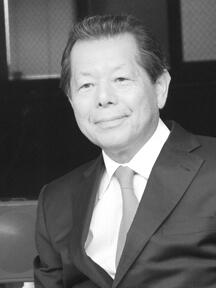
Journalism in Asia has had a long history of covering revolutions and wars. However, peace has reigned over Asia for near on 40 years. Yet, the peace and stability in Asia looks increasingly precarious. Asia too is not immune to populist nationalism. In this climate, Asia could yet again become the battleground for dislocation, revolution and war. Journalism, on top of reacting to potential crises, will be critical for proactively finding ways to prevent and defuse crises in the region.
Yoichi Funabashi is the chairman of the Rebuild Japan Initiative Foundation. He received the Shorenstein Journalism Award in 2015.
Image

Ian Buruma is a writer and the Paul W. Williams Professor of Democracy, Human Rights, and Journalism at Bard College. He received the Shorenstein Journalism Award in 2008.
Image
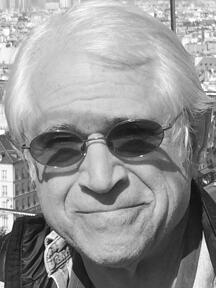
Seth Mydans is a contributing writer for the New York Times. He received the Shorenstein Journalism Award in 2009.
Image
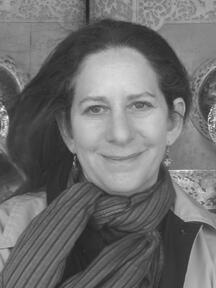
Barbara Demick is the Los Angeles Times’ bureau chief in New York and was formerly bureau chief in Beijing and in Seoul. She is the author of Nothing to Envy: Ordinary Lives in North Korea and Logavina Street: Life and death in a Sarajevo Neighborhood. She received the Shorenstein Journalism Award in 2012.
Image

Aung Zaw is the founder and editor-in-chief of The Irrawaddy. He received the Shorenstein Journalism Award in 2013.
Image
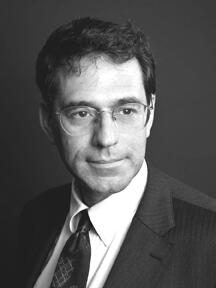
Jacob Schlesinger is a senior Washington correspondent for the Wall Street Journal. He received the Shorenstein Journalism Award in 2014.
Image

Orville Schell is the Arthur Ross Director of the Center on U.S.-China Relations at the Asia Society in New York, and former dean of the School of Journalism at the University of California, Berkeley. He received the Shorenstein Journalism Award in 2003.
Image

John Pomfret was a foreign correspondent with the Washington Post for many years. He is the author of The Beautiful Country and the Middle Kingdom: America and China from 1776 to the Present. He received the Shorenstein Journalism Award in 2007.
Hero Image

All News button
1