-

After a successful launch of the first “Essential Interpersonal Dynamics” (EID) China program in July 2018, we are pleased to announce that the 3rd session will take place in December 27-30, 2018, at the Stanford Center at Peking University. The program aims to help increase our ability to forge strong relationships with others, to improve emotional intelligence and leadership through better communications with self and others. The program is adapted from Interpersonal Dynamics, one of most acclaimed and long-running programs at the Stanford Graduate School of Business, known to many as “Touchy Feely”. 

The program is being launched following a 2-year pilot overseen by Interpersonal Dynamics faculty member Leslie Chin in which the program design was adapted to Chinese culture and context. Participants will be awarded a certificate issued jointly by Dr. David Bradford, Stanford Graduate School of Business Eugene O’Kelly II Senior Lecturer Emeritus in Leadership and Co-founder of the Interpersonal Dynamics Program, and Leslie Chin, Interpersonal Dynamics faculty member and lecturer in Management. 

Program dates:  December 27 – 30, 2018

Venue:               Stanford Center at Peking University, Beijing

Language:          English

Program fee:      RMB 18,600

Deadline for registration: November 30, 2018

______________________________________________

Schedule:

Dec 27              17:00 – 22:00 (dinner included, from 17:00 – 17:30)

Dec 28              9:00 – 21:00 (lunch & dinner included)

Dec 29              9:00 – 21:00 (lunch & dinner included)

Dec 30.             9:00 – 16:00 (lunch included)

______________________________________________

Given the small group size and interactive nature of the program, successful applicants must commit to staying throughout the program. Interviews are required for admission. For more information, please contact lapli@stanford.edu

To register, please fill in the form by November 30th:

http://web.stanford.edu/~lapli/EIDP2018Dec.fb


Stanford Center at Peking University
The Lee Jung Sen Building
Langrun Yuan
Peking University
No.5 Yiheyuan Road
Haidian District
Beijing, P.R.China 100871


Workshops
-

Please RSVP by emailing Phoebus Cotsapas by October 24, 2018.

The French Culture Workshop is co-sponsored by the Stanford Humanities Center, the DLCL Research Unit, the France-Stanford Center, and the Europe Center at the Freeman Spogli Institute.


Pigott hall (language corner) RM 252

450 Serra Mall, Bldg. 260

Stanford University

Rob Taper Fayetteville State University
Workshops
-

Please RSVP by emailing Phoebus Cotsapas by October 3, 2018.

The French Culture Workshop is co-sponsored by the Stanford Humanities Center, the DLCL Research Unit, the France-Stanford Center, and the Europe Center at the Freeman Spogli Institute.

Pigott hall (language corner) RM 252

450 Serra Mall, Bldg. 260

Stanford University


Rebecca Powers Speaker University of California - Santa Barbara
Workshops
-

The event has reached the maximum capacity of the room. We are no longer accepting RSVPs.

The world is aging rapidly, and China’s older population is growing faster than in any other country. This demographic transition is a defining issue of our time, and it poses unprecedented challenges for China due to increasing demand for health care, long-term care and other social services.

The health system has not yet adapted to the shift in the disease burden and health care needs driven by the aging population. Although the government has introduced three public health insurance programs since 1998, the benefit packages provide limited coverage for outpatient management and care of NCDs and chronic conditions. In addition, there has been a lack of investment in training geriatric medicine professionals and incorporating geriatric principles into clinical practice.

The higher burden of total cost of health and long-term care is inevitable. How do we tackle these challenges? We will need more innovative approaches to develop multi-sector and integrated solutions to issues concerning the aging population. While the system-level efforts, such as social protection system and universal health coverage, continue to be led by the government, Public-Private Partnerships (PPP) will play a catalytic role in adding capacity to ensure the sustainability of such systems through advancement of technology, human resources and innovation. There will be an increasing need for defining the conditions and application of PPPs that are compatible with adjustments to healthcare, pension and retirement policies and  labor and capital markets. More importantly, political and public will is key to successful implementation of PPPs.

This workshop will feature PPP Initiative Ltd.’s recent efforts to develop PPP solutions for the aging population, followed by a discussion with experts from Beijing and participants on how to move from awareness to action in China. 

Agenda

5:00 - 5:30 Keynote speech by Alan M. Trager

5:30 - 5:40 Discussion with two experts from Beijing

Dr. Gordon Liu, PKU Yangtze River Scholar Professor of Economics, Peking University National School of Development (NSD) &  Director, PKU China Center for Health Economic Research (CCHER)

Dr. Linlin Hu, Associate Professor, Executive Chair, Department of Health Policy and Management, School of Public Health, Peking Union Medical College

5:40 - 6:00 Question & Answers moderated by Alan M. Trager


<!-- /* Font Definitions */ @font-face {font-family:Times; panose-1:2 0 5 0 0 0 0 0 0 0; mso-font-charset:0; mso-generic-font-family:auto; mso-font-pitch:variable; mso-font-signature:3 0 0 0 1 0;} @font-face {font-family:"MS 明朝"; mso-font-charset:78; mso-generic-font-family:auto; mso-font-pitch:variable; mso-font-signature:-536870145 1791491579 18 0 131231 0;} @font-face {font-family:"Cambria Math"; panose-1:2 4 5 3 5 4 6 3 2 4; mso-font-charset:0; mso-generic-font-family:auto; mso-font-pitch:variable; mso-font-signature:-536870145 1107305727 0 0 415 0;} @font-face {font-family:Cambria; panose-1:2 4 5 3 5 4 6 3 2 4; mso-font-charset:0; mso-generic-font-family:auto; mso-font-pitch:variable; mso-font-signature:-536870145 1073743103 0 0 415 0;} /* Style Definitions */ p.MsoNormal, li.MsoNormal, div.MsoNormal {mso-style-unhide:no; mso-style-qformat:yes; mso-style-parent:""; margin:0in; margin-bottom:.0001pt; mso-pagination:widow-orphan; font-size:12.0pt; font-family:Cambria; mso-ascii-font-family:Cambria; mso-ascii-theme-font:minor-latin; mso-fareast-font-family:"MS 明朝"; mso-fareast-theme-font:minor-fareast; mso-hansi-font-family:Cambria; mso-hansi-theme-font:minor-latin; mso-bidi-font-family:"Times New Roman"; mso-bidi-theme-font:minor-bidi; mso-fareast-language:JA;} p {mso-style-noshow:yes; mso-style-priority:99; mso-margin-top-alt:auto; margin-right:0in; mso-margin-bottom-alt:auto; margin-left:0in; mso-pagination:widow-orphan; font-size:10.0pt; font-family:Times; mso-fareast-font-family:"MS 明朝"; mso-fareast-theme-font:minor-fareast; mso-bidi-font-family:"Times New Roman";} .MsoChpDefault {mso-style-type:export-only; mso-default-props:yes; font-size:10.0pt; mso-ansi-font-size:10.0pt; mso-bidi-font-size:10.0pt; font-family:Cambria; mso-ascii-font-family:Cambria; mso-ascii-theme-font:minor-latin; mso-fareast-font-family:"MS 明朝"; mso-fareast-theme-font:minor-fareast; mso-hansi-font-family:Cambria; mso-hansi-theme-font:minor-latin; mso-bidi-font-family:"Times New Roman"; mso-bidi-theme-font:minor-bidi; mso-fareast-language:JA;} @page WordSection1 {size:8.5in 11.0in; margin:1.0in 1.25in 1.0in 1.25in; mso-header-margin:.5in; mso-footer-margin:.5in; mso-paper-source:0;} div.WordSection1 {page:WordSection1;} -->  <!-- /* Font Definitions */ @font-face {font-family:Times; panose-1:2 0 5 0 0 0 0 0 0 0; mso-font-charset:0; mso-generic-font-family:auto; mso-font-pitch:variable; mso-font-signature:3 0 0 0 1 0;} @font-face {font-family:"MS 明朝"; mso-font-charset:78; mso-generic-font-family:auto; mso-font-pitch:variable; mso-font-signature:-536870145 1791491579 18 0 131231 0;} @font-face {font-family:"Cambria Math"; panose-1:2 4 5 3 5 4 6 3 2 4; mso-font-charset:0; mso-generic-font-family:auto; mso-font-pitch:variable; mso-font-signature:-536870145 1107305727 0 0 415 0;} @font-face {font-family:Cambria; panose-1:2 4 5 3 5 4 6 3 2 4; mso-font-charset:0; mso-generic-font-family:auto; mso-font-pitch:variable; mso-font-signature:-536870145 1073743103 0 0 415 0;} /* Style Definitions */ p.MsoNormal, li.MsoNormal, div.MsoNormal {mso-style-unhide:no; mso-style-qformat:yes; mso-style-parent:""; margin:0in; margin-bottom:.0001pt; mso-pagination:widow-orphan; font-size:12.0pt; font-family:Cambria; mso-ascii-font-family:Cambria; mso-ascii-theme-font:minor-latin; mso-fareast-font-family:"MS 明朝"; mso-fareast-theme-font:minor-fareast; mso-hansi-font-family:Cambria; mso-hansi-theme-font:minor-latin; mso-bidi-font-family:"Times New Roman"; mso-bidi-theme-font:minor-bidi; mso-fareast-language:JA;} p {mso-style-noshow:yes; mso-style-priority:99; mso-margin-top-alt:auto; margin-right:0in; mso-margin-bottom-alt:auto; margin-left:0in; mso-pagination:widow-orphan; font-size:10.0pt; font-family:Times; mso-fareast-font-family:"MS 明朝"; mso-fareast-theme-font:minor-fareast; mso-bidi-font-family:"Times New Roman";} .MsoChpDefault {mso-style-type:export-only; mso-default-props:yes; font-size:10.0pt; mso-ansi-font-size:10.0pt; mso-bidi-font-size:10.0pt; font-family:Cambria; mso-ascii-font-family:Cambria; mso-ascii-theme-font:minor-latin; mso-fareast-font-family:"MS 明朝"; mso-fareast-theme-font:minor-fareast; mso-hansi-font-family:Cambria; mso-hansi-theme-font:minor-latin; mso-bidi-font-family:"Times New Roman"; mso-bidi-theme-font:minor-bidi; mso-fareast-language:JA;} @page WordSection1 {size:8.5in 11.0in; margin:1.0in 1.25in 1.0in 1.25in; mso-header-margin:.5in; mso-footer-margin:.5in; mso-paper-source:0;} div.WordSection1 {page:WordSection1;} --> 

Image
alantrager

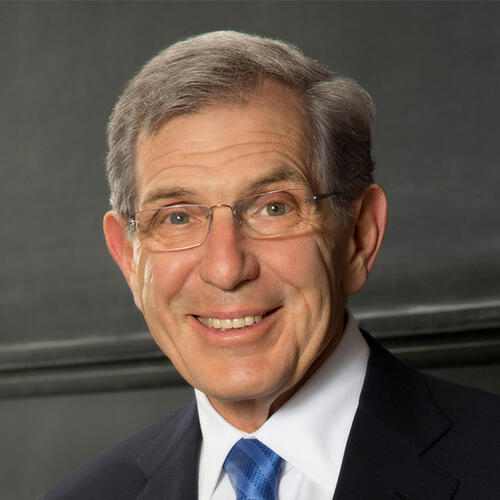
Alan M. Trager is the Founder and President of the PPP Initiative Ltd. (pppinitiative.org), where he leads an institutional collaborative effort using public-private partnerships to address healthcare issues in Asia.  He is also the Principal Researcher of the PPP Healthcare Case Study Program, an independent research project managed by PPP Initiative Ltd., with financial support from Amgen Inc; Technical Expert, WHO Independent High-level Commission on NCDs; and Global Expert, Global Initiative on Health and the Economy, USCC.

Mr. Trager serves as Chief Specialist, International, at the Tsinghua University Center for PPP Research (TUPPP) in Beijing. Trager is the only foreign Chief Specialist at Tsinghua University.  He was a Senior Research Professor and Director, PPP Initiative, John Hopkins SAIS before forming the PPP Initiative.

 

Presentation
Download pdf

Highly Immersive Classroom

Stanford Graduate School of Business

Knight Management Center 
655 Knight Way, Basement 
Stanford, CA 94305-7298

Alan M. Trager Founder and President of the PPP Initiative Ltd
Workshops
-

After a successful launch of the first “Essential Interpersonal Dynamics” (EID) China program in July 2018, we are pleased to announce that the 2nd session will take place in August 23-26, 2018, at the Stanford Center at Peking University. The program aims to help increase our ability to forge strong relationships with others, to improve emotional intelligence and leadership through better communications with self and others. The program is adapted from Interpersonal Dynamics, one of most acclaimed and long-running programs at the Stanford Graduate School of Business, known to many as “Touchy Feely”. 

The program is being launched following a 2-year pilot overseen by Interpersonal Dynamics faculty member Leslie Chin in which the program design was adapted to Chinese culture and context. Participants will be awarded a certificate issued jointly by Dr. David Bradford, Stanford Graduate School of Business Eugene O’Kelly II Senior Lecturer Emeritus in Leadership and Co-founder of the Interpersonal Dynamics Program, and Leslie Chin, Interpersonal Dynamics faculty member and lecturer in Management. 


Program dates: August 23 – 26, 2018

Venue: Stanford Center at Peking University, Beijing

Language: English

Program fee: RMB 18,600

Deadline for registration: August 2, 2018


Schedule:

August 23        17:00 – 21:00 (dinner included, from 17:00 – 17:30)

August 24        9:00 – 21:00 (lunch & dinner included)

August 25        9:00 – 21:00 (lunch & dinner included)

August 26        10:00 – 14:00 (lunch included)


Given the small group size and interactive nature of the program, successful applicants must commit to staying throughout the program. Interviews are required for admission. For more information, please contact lapli@stanford.edu


To register, please fill in the form by August 2nd:

http://web.stanford.edu/~lapli/essentialAug2018.fb


Stanford Center at Peking University
The Lee Jung Sen Building
Langrun Yuan
Peking University
No.5 Yiheyuan Road
Haidian District
Beijing, P.R.China 100871

Workshops
-

The 10th Annual Koret Workshop

The aim of this year's workshop is to assess the current situation surrounding North Korea, and to examine all possible options for dealing with North Korea, from military intervention, containment, or sanctions to diplomatic engagement.

The annual Koret Workshop is made possible through the generous support of the Koret Foundation.

Stanford University

Workshops
-

This module addresses the challenges faced by public sector leaders as they foster economic growth in politically charged environments. Offered in partnership with the Leadership Academy for Development (LAD) at Stanford University and Johns Hopkins University School of Advanced International Studies, it uses case studies on how public policy can help the private sector be a constructive force for economic growth and development. A driving principle of the LAD module is that policy reform is not like engineering or other technical fields that have discrete skills and clear, optimal solutions. Instead, successful reformers must be politically aware and weigh a broad range of factors that influence policy outcomes. They must have a solid grasp of country-specific economic, financial, political and cultural realities. Most importantly, they must have a sense of how to set priorities, sequence actions and build coalitions. LAD provides participants with an analytical framework to build these leadership abilities and operate effectively under adverse conditions. 

University of Sarajevo

Faculty of Political Science

Workshops
-

Please note that this workshop is open to Stanford faculty, students, visiting scholars, and staff only.

Migration is obviously the single biggest challenge for European countries and the European Union today. It is closely linked to questions of (national) identity, social pluralism, and diversity. However, it is mostly understood as a purely contemporary phenomenon, something ahistorical, as though migration had no history in Europe and as though migration has not been altering societies and cultures since ever before. With a special focus on Austria and Germany and with different case studies, the workshop puts the current so-called “refugee crisis” in the context of the broader history of the 19th and 20th century. It also discusses general questions like the status of migration in the hegemonic collective memory and the challenges it poses for historiography.
 

SCHEDULE:

9:30am: Welcome and Introductions

Dirk Rupnow, Visiting Austrian Chair Professor, The Europe Center, Stanford University, and Professor of Modern History, University of Innsbruck
 

9:35am: Austria, Germany, and Migration: Putting the Current European “Refugee Crisis” in Historical Perspective

Dirk Rupnow, Visiting Austrian Chair Professor, The Europe Center, Stanford University, and Professor of Modern History, University of Innsbruck

Austria and Germany were crucial actors in the so-called “refugee crisis” during the summer of 2015. Both countries have a distinct, but in part also a shared, history of migration. The talk focuses on Austria as an example and puts the current so-called “refugee crisis” in the context of the broader history of the postwar Austrian Republic. It discusses the status of migration in the hegemonic collective memory and the challenges it poses for historiography.


10:15am: Migration Backed Securities: European Migrants and the Transatlantic Bond Market

Benjamin Hein, PhD candidate in Modern European History, Stanford University

Historians often think about migration as a story that unfolds between two key actors: the sovereign state and the (im)migrant. But what if the state was only an intermediary channeling another party’s interests? In the 19th century German Empire, progressive legislation aimed at improving the lives of emigrants to the Americas has been interpreted as part and parcel of the Bismarckian welfare state. There is evidence to suggest, however, that such legislation emerged not as a matter of German government policy but instead as a result of enterprising bankers who sought to prop up nascent transatlantic securities markets. In this paper, I will consider the case of Kaiserreich Germany to complicate narratives about migration that have followed a more traditional sovereign state versus (im)migrant binary.
 

11:05am: In Transit or Asylum Seekers? Austria and the Cold War Refugees from the Communist Bloc

Maximilian Graf, Visiting Scholar, The Europe Center, Stanford, and Project Leader, Austrian Academy of Sciences

The presumption of an extraordinary humanitarian engagement is an integral part of Austria’s popular postwar history and memory. The country’s aid for refugees from the communist bloc continues to shape this image until today. In each case – the “Hungarian Revolution” in 1956, the “Prague Spring” in 1968, the crisis in Poland 1980/81, and the revolutions of 1989 in East Germany and Romania – within a short period of time, tens of thousands fled to Austria, although constellations differed significantly. Even though Austria earned considerable merits in handling the early stages of the Cold War “refugee crises”, the resulting picture requires a demythologization: Austria never aimed at serving as a refugee’s haven, but as a transit country only. By critically reassessing the existing master narrative, a first comparative analysis of the major “waves“ of Cold War refugees reaching Austria will be provided.
 

11:45am: Sending Foreigners Home: Historical Origins of EU Voluntary Repatriation Programs

Michelle Kahn, PhD Candidate in Modern European History, Stanford University

A central question amid today’s refugee crisis is if, when, and how the refugees will ever return to their home countries. Yet this question has deeper historical origins. As early as the 1970s, European nation-states began devising programs aimed at the voluntary repatriation of refugees, labor migrants, and other foreign nationals. This talk examines the case of West Germany, focusing on the controversial 1983 “Law for the Promotion of Voluntary Return” (Rückkehrförderungsgesetz). Aimed at reducing the Turkish population at a time of rising anti-foreigner sentiment, the law offered unemployed former guest workers a “return premium” of 10,500 Deutschmarks to return to their home countries. The talk explores contemporary debates surrounding the law, as well as parallels to the development of German and EU-wide voluntary repatriation programs still in use today.


12:25pm: Wrap Up

Dirk Rupnow, Visiting Austrian Chair Professor, The Europe Center, Stanford University, and Professor of Modern History, University of Innsbruck


Speakers:

Maximilian Graf is a Visiting Scholar at The Europe Center.  He studied history in Vienna and worked as a Junior Scholar and Postdoc at the Austrian Academy of Sciences and the University of Vienna. He is currently project leader at the Institute for Modern and Contemporary Historical Research of the Austrian Academy of Sciences. His main areas of research are Cold War history and the history of Communism. He was Chercheur Associée at the Centre Marc Bloch in Berlin and was awarded the Karl von Vogelsang Prize for the History of Social Sciences in 2014 and the Dr. Alois Mock Prize in 2015. Selected publications: Österreich und die DDR 1949–1990. Politik und Wirtschaft im Schatten der deutschen Teilung (2016); (co-ed.) Österreich im Kalten Krieg. Neue Forschungen im internationalen Kontext (2016); (co-ed.) Orient und Okzident. Begegnungen und Wahrnehmungen aus fünf Jahrhunderten (2016).

Benjamin Hein is a PhD candidate in modern European history at Stanford University. He received his B.A. in history and economic (summa cum laude) from Emory University. Currently, Benjamin is completing his dissertation entitled "Emigration and the Industrial Revolution in German Europe, 1820-1900," in which he explores the impact of sustained emigration to North America on the evolution of key economic institutions and commercial law in German-speaking Europe. Benjamin teaches and is interested in topics in the history of capitalism; the history of migration; Atlantic World and Global History; and political economy.

Michelle Kahn is a PhD Candidate in Modern European History at Stanford University. Her dissertation, “Becoming Almancı: The Transnational History of Turkish-German Migrants, 1961–2011” explores the political, social, and economic history of Turkish immigrants’ transnational connections to their home country. Her research and teaching interests include German and Turkish history, transnational history, migration history, and the histories of race, gender, and sexuality. After serving as a 2015–2016 German Chancellor Fellow of the Alexander von Humboldt Foundation, Michelle is currently completing her dissertation in Cologne. She has an office at her primary archive, the Documentation Centre and Museum for Migration in Germany (DOMiD), where she contributes voluntarily as a Research Associate. She is also a Guest Scholar at the University of Cologne’s Historical Institute.

Dirk Rupnow is Stanford University's 2016-2017 Visiting Austrian Chair Professor and is in residence at The Europe Center.  He is Professor of Contemporary History and head of the Institute for Contemporary History at the University of Innsbruck where he is also the founding coordinator of the Research Center Migration & Globalization. He earned his M.A. in 1999 (Vienna), PhD in 2002 (Klagenfurt) and Habilitation in 2009 (Vienna). Rupnow was project researcher with the Historian’s Commission of the Republic of Austria in 1999/2000. He has been awarded numerous research stays and fellowships in Austria, Germany, France, Israel, and the US, as well as the 2009 Fraenkel Prize in Contemporary History of the Wiener Library, London. His main research interests are 20th Century European History, Holocaust and Jewish Studies, Cultures and Politics of Memory, Intellectual and Migration History. Selected publications: (co-ed.), “Holocaust”-Fiktion. Kunst jenseits der Authentizität (2015); Judenforschung im Dritten Reich. Wissenschaft zwischen Politik, Propaganda und Ideologie (2011); (co-ed.), Zeitgeschichte ausstellen in Österreich. Museen – Gedenkstätten – Ausstellungen (2011); (co-ed.), Pseudowissenschaft. Konzeptionen von Nichtwissenschaftlichkeit in der Wissenschaftsgeschichte (2008); Vernichten und Erinnern. Spuren nationalsozialistischer Gedächtnispolitik (2005).


Encina Hall
616 Serra Street
Stanford, CA  94305-6165

0
Distinguished Visiting Austrian Chair Professor (2016-2017)
Professor of Contemporary History, University of Innsbruck
dirk_rupnow.jpg

Prof. Dr. Dirk Rupnow studied history, German literature, art history and philosophy in Berlin and Vienna, earning his M.A. in 1999 (Vienna), Ph.D. in 2002 (Klagenfurt) and Habilitation in 2009 (Vienna). Prof. Rupnow was Project Researcher with the Historian’s Commission of the Republic of Austria in 1999/2000. He has been awarded numerous research stays and fellowships in Austria, Germany, France, Israel, and the USA and the 2009 Fraenkel Prize in Contemporary History of the Wiener Library, London. Prof. Rupnow has been on faculty at the University of Innsbruck since 2009 and the Head of the Institute for Contemporary History since 2010. His main research interests are 20th Century European History, Holocaust and Jewish Studies, Cultures and Politics of Memory, Intellectual and Migration History.

Prof. Rupnow will be teaching the course "The Holocaust and its Aftermath" for the Department of History in the Spring Quarter.


Head, Institute for Contemporary History, University of Innsbruck
Founding Coordinator, Center for Migration & Globalization, University of Innsbruck
Visiting Austrian Chair Professor University of Innsbruck

Encina Hall
616 Serra Street
Stanford, CA  94305-6165

0
Visiting Scholar at The Europe Center, 2016-2017
maximilian_graf.jpg

Maximilian Graf is a Visiting Scholar from the Institute for Modern and Contemporary Historical Research of the Austrian Academy of Sciences. He specializes in Cold War Studies and the History of Communism. In November/December 2013, he was chercheur associée at the Centre Marc Bloch in Berlin. In 2014, he received the Karl von Vogelsang Prize – Austrian State Prize for the History of Social Sciences, and in 2015 the Dr.-Alois-Mock-Wissenschaftspreis. In September 2017, he will start a new position at the European University Institute in Florence. At the moment, he is working on a book with the working title Overcoming the Iron Curtain. A New History of Détente in Cold War Central Europe.

Graf's most recent publications include his first book on Austrian–East German relations during the Cold War Österreich und die DDR 1949–1990. Politik und Wirtschaft im Schatten der deutschen Teilung (Vienna: ÖAW, 2016); the edited volumes Franz Marek. Beruf und Berufung Kommunist. Lebenserinnerungen und Schlüsseltexte (Vienna: Mandelbaum, 2017); Österreich im Kalten Krieg. Neue Forschungen im internationalen Kontext (Göttingen: V&R unipress, 2016); Orient & Okzident. Begegnungen und Wahrnehmungen aus fünf Jahrhunderten (Vienna: Neue Welt Verlag 2016, ²2017); and numerous articles and book chapters, including: together with Wolfgang Mueller, "An Austrian mediation in Vietnam? The superpowers, neutrality, and Kurt Waldheim’s good offices," in the Sandra Bott/Jussi Hanhimaki/Janick Schaufelbuehl/Marco Wyss (eds.) book Neutrality and Neutralism in the Global Cold War. Between or within the blocs?, (London: Routledge, 2016), 127–143; "(Kalter) Krieg am Bergisel. Skispringen im Spannungsfeld von Politik, Sport und Nation: Österreich und die DDR als Fallbeispiele," in Zeitgeschichte 42 (2015) 4, 215–232; "The Rise and Fall of 'Austro-Eurocommunism'. On the 'Crisis' within the KPÖ and the Significance of East German Influence in the 1960s," in the Journal of European Integration History 20 (2014) 2, 203–218.

Visiting Scholar Austrian Academy of Science
Benjamin Hein PhD candidate in modern European History Stanford
Michelle Kahn PhD candidate in modern European History Stanford
Workshops
Subscribe to Workshops