In an age of terrorism, where should a democratic society draw the line on government surveillance? Edward Snowden’s explosive disclosures about the National Security Agency’s intelligence-collection operations have ignited an intense debate about the appropriate balance between security and liberty in America. In a special series this year, nationally prominent experts will explore the critical issues raised by the NSA’s activities, including their impact on our security, privacy, and civil liberties. This timely series will address one of the most challenging questions the nation faces today as it tries to strike the right balance between safety and liberty. The Security Conundrum will look behind and beyond the headlines, examining the history and implementation of the NSA operations, the legal questions generated by them, the media’s role in revealing them, and the responsibility of Congress to oversee them. It will also address the NSA’s uneasy and evolving relationship with Silicon Valley. Each session in the series is designed to explore these issues from a different vantage point. The guest speakers, in conversation with Stanford scholars, will probe the problems, explain the political, legal, and technological contours of the NSA actions, and outline ways to preserve the nation’s security without sacrificing our freedoms. 

Inside the Newsroom: The Media and Edward Snowden: An Evening with Barton Gellman 

When Edward Snowden decided in 2013 that the time had come to reveal the deepest secrets of the National Security Agency, one of the first journalists he approached was Barton Gellman of The Washington Post. Snowden gave Gellman a code name: BRASSBANNER. The name he chose for himself was VERAX, “truth teller” in Latin. So began one of the most dramatic chapters in the history of modern American journalism. In the ensuing months, Gellman received dozens of top-secret documents from Snowden, traveled to Moscow to meet him, and wrestled with tough questions about what, and what not, to publish. The Washington Post shared the 2014 Pulitzer Prize for Public Service, the nation’s highest journalism honor, for Gellman’s reporting about the Snowden materials and the NSA. 

In a conversation with Philip Taubman, Gellman will recount his dealings with Snowden and describe how he and his editors weighed how to handle the Snowden materials. Few questions are more difficult for American journalists than determining how far a free press can venture in disclosing national security secrets without imperiling the nation’s security. 

Barton Gellman
Journalist
Barton Gellman is a three-time Pulitzer Prize–winning journalist. In 2002, he was a member of the Washington Post team that received the Pulitzer Prize for National Reporting for its coverage of the 9/11 attacks. Gellman is a senior fellow at The Century Foundation and a visiting professional specialist and author-in-residence at Princeton’s Woodrow Wilson School of Public and International Affairs. He is the author of Angler: The Cheney Vice Presidency.

Philip Taubman
Consulting Professor, Center for International Security and Cooperation, Stanford; Former Moscow and Washington Bureau Chief, The New York Times
Philip Taubman served as a reporter and editor at The New York Times for nearly thirty years, specializing in national security coverage. He is author of Secret Empire: Eisenhower, the CIA, and the Hidden Story of America’s Space Espionage, and The Partnership: Five Cold Warriors and Their Quest to Ban the Bomb

The Security Conundrum is co-sponsored by Stanford’s Freeman Spogli Institute for International Studies, the Hoover Institution, Stanford Continuing Studies, Stanford in Government, and the Stanford Law School.

CEMEX Auditorium

Knight Management Center

641 Knight Way, Stanford University

Bart Gellman Senior Fellow Speaker The Century Foundation
0
Affiliate
Taubman_Phil.jpg

Philip Taubman is affiliated with the Center for International Security and Cooperation at Stanford University. Before joining CISAC in 2008, Mr. Taubman worked at the New York Times as a reporter and editor for nearly 30 years, specializing in national security issues, including United States diplomacy, and intelligence and defense policy and operations. He served as Moscow bureau chief and Washington bureau chief, among other posts. He is author of Secret Empire: Eisenhower, the CIA, and the Hidden Story of America's Space Espionage (2003), The Partnership: Five Cold Warriors and Their Quest to Ban the Bomb (2012),  In the Nation's Service: The Life and Times of George P. Shultz (2023), as well as co-author (with his brother, William Taubman) of McNamara at War: A New History (2025).

Date Label
Philip Taubman Consulting Professor, Center for International Security and Cooperation, Stanford; Former Moscow and Washington Bureau Chief, The New York Times Speaker CISAC
Lectures

In an age of terrorism, where should a democratic society draw the line on government surveillance? Edward Snowden’s explosive disclosures about the National Security Agency’s intelligence-collection operations have ignited an intense debate about the appropriate balance between security and liberty in America. In a special series this year, nationally prominent experts will explore the critical issues raised by the NSA’s activities, including their impact on our security, privacy, and civil liberties. This timely series will address one of the most challenging questions the nation faces today as it tries to strike the right balance between safety and liberty.

The Security Conundrum will look behind and beyond the headlines, examining the history and implementation of the NSA operations, the legal questions generated by them, the media’s role in revealing them, and the responsibility of Congress to oversee them. It will also address the NSA’s uneasy and evolving relationship with Silicon Valley. Each session in the series is designed to explore these issues from a different vantage point. The guest speakers, in conversation with Stanford scholars, will probe the problems, explain the political, legal, and technological contours of the NSA actions, and outline ways to preserve the nation’s security without sacrificing our freedoms. 

Inside the NSA: An Evening with General Michael Hayden 

General Michael Hayden was director of the National Security Agency on September 11, 2001. After the attacks, at the request of the White House, he intensified and expanded NSA wiretapping operations of various communications between Americans and terrorist suspects abroad in hopes of detecting and preventing another terrorist attack. These initial efforts were executed without a court order and after being revealed by The New York Times, were subsequently placed under judicial review. Over time, the NSA’s efforts grew into the multidimensional programs exposed by Edward Snowden, including the collection and storage of phone and email metadata covering billions of calls and messages between American citizens. 

In conversation with Amy Zegart, General Hayden will provide an insider’s account about the origins and development of the NSA programs. He will also discuss the directives and mechanisms to control them, and the disagreements within the Bush administration about the extent of the wiretapping. He will offer his views on the justification, legal status, scale, and effectiveness of the NSA monitoring.

Michael V. Hayden
Former Director of the CIA and the NSA
Michael V. Hayden served as Director of the CIA (2006–2009), First Principal Deputy Director of National Intelligence (2005–2006), and Director of the National Security Agency (1999–2005). He is a retired United States Air Force four-star general and is now a principal of The Chertoff Group.

Amy Zegart
Davies Family Senior Fellow and Associate Director, Hoover Institution; Professor, by courtesy, of Political Science; Co-Director, Stanford Center for International Security and Cooperation
Amy Zegart’s publications include Spying Blind: The CIA, the FBI, and the Origins of 9/11 and Eyes on Spies: Congress and the United States Intelligence Community. She has served on the National Research Council’s panel on improving intelligence analysis.

The Security Conundrum is co-sponsored by Stanford’s Freeman Spogli Institute for International Studies, the Center for International Security and Cooperation, the Hoover Institution, Stanford Continuing Studies, Stanford in Government, and the Stanford Law School.

CEMEX Auditorium

Knight Management Center

641 Knight Way, Stanford University

General Michael Hayden Former Director of the CIA and the NSA Speaker CIA, NSA

CISAC
Stanford University
Encina Hall, E216
Stanford, CA 94305-6165

(650) 725-9754 (650) 723-0089
0
Senior Fellow at the Freeman Spogli Institute for International Studies
Morris Arnold and Nona Jean Cox Senior Fellow at the Hoover Institution
Senior Fellow at the Stanford Institute for Human-Centered AI
Professor, by courtesy, of Political Science
amyzegart-9.jpg PhD

Dr. Amy Zegart is the Morris Arnold and Nona Jean Cox Senior Fellow at the Hoover Institution. The author of five books, she specializes in U.S. intelligence, emerging technologies, and national security. At Hoover, she leads the Technology Policy Accelerator and the Oster National Security Affairs Fellows Program. She also is an associate director and senior fellow at the Stanford Institute for Human-Centered AI; a senior fellow at the Freeman Spogli Institute; and professor of political science by courtesy, teaching 100 students each year about how emerging technologies are transforming espionage.

Her award-winning research includes the leading academic study of intelligence failures before 9/11: Spying Blind: The CIA, the FBI, and the Origins of 9/11 (Princeton, 2007) and the bestseller Spies, Lies, and Algorithms: The History and Future of American Intelligence (Princeton, 2022), which was nominated by Princeton University Press for the Pulitzer Prize. She also coauthored Political Risk: How Businesses and Organizations Can Anticipate Global Insecurity, with Condoleezza Rice (Twelve, 2018). Her op-eds and essays have appeared in Foreign Affairs, Politico, the New York Times, the Washington Post, and the Wall Street Journal.

Zegart has advised senior officials about intelligence and foreign policy for more than two decades. She served on the National Security Council staff and as a presidential campaign foreign policy advisor and has testified before numerous congressional committees. Before her academic career, she spent several years as a McKinsey & Company consultant.

Zegart received an AB in East Asian studies from Harvard and an MA and a PhD in political science from Stanford. She serves on the boards of the Council on Foreign Relations, Kratos Defense & Security Solutions, and the American Funds/Capital Group.

Date Label
Amy Zegart Co-director, CISAC; Senior Fellow, Hoover Institution Speaker FSI, CISAC, Hoover Insitution
Lectures
-

This lecture is part of a seminar series (open to the public) organized by the US-Asia Technology Management Center.

Co-Sponsored by the Stanford Silicon Valley-New Japan Project, Japan Program


The US-ATMC Autumn 2014 seminar series theme is New Trends in Start-up Company Acceleration: Toward the Rise of the Global Start-up. The series features new incubator and accelerator programs in Silicon Valley and select Asia economies that promote early development of international business operation by start-up companies. How can start-up companies cope with the challenges of business globalization? What are the implications these new models of incubation for the future of Asia economies and for Silicon Valley?


Thursdays, Oct. 2 – Dec. 4, 2014
4:15 – 5:30 pm
HP Auditorium (B01), Gates Computer Science Building

Public Welcome • Light Refreshments

US-Asia Technology Management Center Lecture Series


Instructor: Richard Dasher <rdasher [at] stanford [dot] edu>
Course Assistant: Mianmian Wen <mianmian [at] stanford [dot] edu>

EE402A Course Syllabus

Follow @AsiaTechSU and #EE402A on Twitter for a live feed of our discussions.

E-mail Siejen Yin-Stevenson, Assistant Director, at <siejeny@stanford.edu> with questions about the seminar series.


Lecture by Gen Isayama on 10/2/2014    VIDEO

Recreating Japan into a Startup Nation
Download pdf

Stanford University, Gates Computer Science Building B01 – 353 Serra Mall, Stanford, CA 94305 [Campus Map]
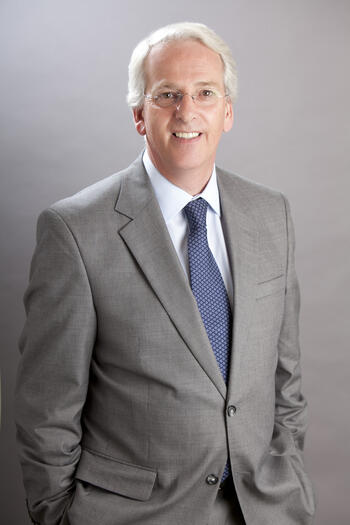
Gen Isayama Co-Founder, World Innovation Lab (WiL)
Lectures
-

Image
Amb. Ivo Daalder
Ivo H. Daalder is president of The Chicago Council on Global Affairs. Founded in 1922, the Council is a leading independent, nonpartisan organization committed to educating the public and influencing the discourse on global issues of the day. Prior to joining the Council in July 2013, Daalder served as the Ambassador to the North Atlantic Treaty Organization for more than four years. Daalder also served on the National Security Council staff as director for European Affairs from 1995-97. 

Before his appointment as Ambassador to NATO by President Obama in 2009, Daalder was a senior fellow in foreign policy studies at the Brookings Institution, specializing in American foreign policy, European security and transatlantic relations, and national security affairs. Prior to joining Brookings in 1998, he was an Associate Professor at the University of Maryland’s School of Public Policy and director of research at its Center for International and Security Studies. Ambassador Daalder was educated at Oxford and Georgetown Universities, and received his PhD in political science from the Massachusetts Institute of Technology.


Ivo Daalder Speaker President of the Chicago Council on Global Affairs and former US Ambassador to NATO
Lectures

Image
Image of Professor Gerrhard Besier
Gerhard Besier is a theologian, historian and psychologist. He held Chairs in Contemporary (Church) History and European Studies  at the Universities of Berlin, Heidelberg and Dresden. He is currently the Director of the Sigmund Neumann Institute for the Research on Freedom, Liberty and Democracy. Professor Besier has published widely on the themes of German-Polish antagonisms, transformation processes in Europe since 1945, European dictatorships, confessional controversies in Germany, Europe and the USA, and on stereotypes and prejudices. His latest book Neither Good Nor Bad. Why Human Beings Behave How They Do was published in English by Cambridge Scholars Publishing (Newcastle upon Tyne) in June 2014.

Co-sponsored by the Department of History and The Europe Center.

Lane History Corner, Room 307

Gerhard Besier Director Speaker Sigmund Neumann Institute for the Research on Freedom, Liberty and Democracy, Dresden
Lectures
-

THOMAS FINGAR, Oksenberg-Rohlen Distinguished Fellow, Freeman Spogli Institute for International Studies, Stanford University

The Obama Administration’s “Re-Balance” to Asia has been poorly explained, widely misunderstood, and deliberately misconstrued by officials and commentators on both sides of the Pacific. Stanford Professor and former Assistant Secretary of State Thomas Fingar will analyze the origins and objectives of the Re-Balance and attempt to explain and address questions and concerns raised by the Chinese and others in the region.

From May 2005 through December 2008, Fingar served as the first Deputy Director of National Intelligence for Analysis and, concurrently, as Chairman of the National Intelligence Council. He served previously as Assistant Secretary of the State Department’s Bureau of Intelligence and Research (2004-2005), Principal Deputy Assistant Secretary (2001-2003), Deputy Assistant Secretary for Analysis (1994-2000), Director of the Office of Analysis for East Asia and the Pacific (1989-1994), and Chief of the China Division (1986-1989). 

Stanford Center at Peking University
The Lee Jung Sen Building
Langrun Yuan
Peking University
No.5 Yiheyuan Road
Haidian District
Beijing, P.R.China 100871

Maps/Directions

Thomas Fingar Oksenberg-Rohlen Distinguished Fellow, Freeman Spogli Institute for International Studies Stanford University
Lectures
-

TERRY LAUTZ, Visiting Professor, Syracuse University, and former Henry Luce Foundation Vice President

As the world has become more interconnected, modern governments have recognized the need for soft power and the value of cultural diplomacy. For these reasons, Japan, South Korea, and Taiwan have established active cultural diplomacy programs to enhance the study of Asia in other countries.  China now provides significant support for Chinese language and cultural studies overseas.  This talk, from an American perspective, will evaluate China’s soft power push and compare the practice of cultural diplomacy in East Asia and the United States. 

Terry Lautz graduated from Harvard College and holds a Ph.D. from Stanford University.  He is a trustee of the Harvard-Yenching Institute, a director of the National Committee on U.S.-China Relations, a member of the Council on Foreign Relations, and has served as trustee and board chair of the Lingnan Foundation and the Yale-China Association. His recent publications deal with U.S.-China educational and cultural relations. 

Stanford Center at Peking University
The Lee Jung Sen Building
Langrun Yuan
Peking University
No.5 Yiheyuan Road
Haidian District
Beijing, P.R.China 100871

Maps/Directions

Terry Lautz Visiting Professor, Syracuse University, and former Henry Luce Foundation Vice President Syracuse University
Lectures
-

KARL EIKENBERRY -  William J. Perry Fellow in International Security at the Center for International Security and Cooperation, Distinguished Fellow with the Shorenstein Asia-Pacific Research Center at Stanford University

The 2014 presidential election, if successfully concluded, will mark the first democratic transition of power in Afghanistan's political history.  The new president and his administration will face a daunting set of security, governance, and economic challenges, even as the U.S.-led NATO coalition continues the drawdown of its combat forces.  Karl Eikenberry, who previously served as U.S. Ambassador in Afghanistan and commanded international military forces in that country, has just returned from travel to Islamabad and Kabul, and will discuss Afghanistan's future prospects as well as possible areas for Sino-American cooperation. Ambassador Karl Eikenberry is an affiliated faculty member with Stanford’s Center for Democracy, Development, and Rule of Law, and researcher with The Europe Center. Prior to his arrival at Stanford, he served as the U.S. Ambassador to Afghanistan from May 2009 until July 2011, where he led the civilian surge directed by President Obama to reverse insurgent momentum and set the conditions for transition to full Afghan sovereignty. Before appointment as Chief of Mission in Kabul, Eikenberry had a thirty-five year career in the United States Army, retiring in April 2009 with the rank of Lieutenant General. 


Post-Karzai Arghanistan

Stanford Center at Peking University
The Lee Jung Sen Building
Langrun Yuan
Peking University
No.5 Yiheyuan Road
Haidian District
Beijing, P.R.China 100871

Maps/Directions

Karl Eikenberry William J. Perry Fellow in International Security at the Center for International Security and Cooperation, Distinguished Fellow with the Shorenstein Asia-Pacific Research Center Stanford University - Freeman Spogli Institute for International Studies
Lectures
-

Image
flyer weyant cropped


Stanford Center at Peking University
The Lee Jung Sen Building
Langrun Yuan
Peking University
No.5 Yiheyuan Road
Haidian District
Beijing, P.R.China 100871

Directions/Map

John P. Weyant Professor of Management Science and Engineering, Deputy Director of Precourt Institute for Energy Efficiency Stanford University
Lectures
-

Image

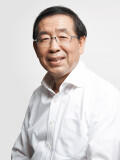
The Honorable Park Won Soon is the 35th mayor of Seoul, South Korea. He was initially elected in Oct. 2011, and recently reelected for another four-year term in June 2014. Park was elected as an indepedent candidate, with the support of the Democratic Party and Democractic Labor Party.

In his keynote speech, Mayor Park will share his philosophy on civic participation and local governance, reflecting on his career in- and outside government. He will explore communication strategies that local government can employ to better engage citizens and motivate collective action, using best practices from Seoul to illustrate his point.

Before assuming office, Park was a human rights lawyer and passionate activist who founded several NGOs. In his early university years at Seoul National University, Park was arrested and expelled for participating in a student rally against the military dictatorship of President Park Chung Hee, and was subsequently imprisoned for four months.

Park passed the state bar exam in 1980, and worked as a public prosecutor in the Daegu District Court in Gyeongsang Province (1982–3), afterward launching a private law practice in Seoul. In 2006, Park founded the Hope Institute, a think tank that aims to apply policy alternatives based on ideas generated by Korea’s citizens.

He also founded the People’s Solidarity for Participatory Democracy in 1994, a nonprofit organization dedicated to promoting justice and human rights in Korean society through civic participation.

In 2000, Park founded the Beautiful Foundation, a nonprofit organization that aims to promote a culture of philanthropy and a just society in Korea, and in 2002, the Beautiful Store, a secondhand store that raises funds for the Foundation’s initiatives.

Park holds a diploma in international law from the London School of Economics and Political Science and a bachelor’s degree in history from Dankook University. In 1993, he was a visiting research fellow in the Human Rights Program at the School of Law at Harvard University and from 2005-6 he was a distinguished practitioner at the Shorenstein Asia-Pacific Research Center, Stanford University.

This event is part of the Asia-Pacific Leaders Forum.

The video of this presentation is located on the Shorenstein APARC YouTube channel.


McCaw Hall

Stanford Alumni Association
Frances C. Arrillaga Alumni Center
326 Galvez Street
Stanford, CA 94305-6105
Parking, Map & Directions.


Park Won Soon Mayor of Seoul
Lectures
Subscribe to Lectures